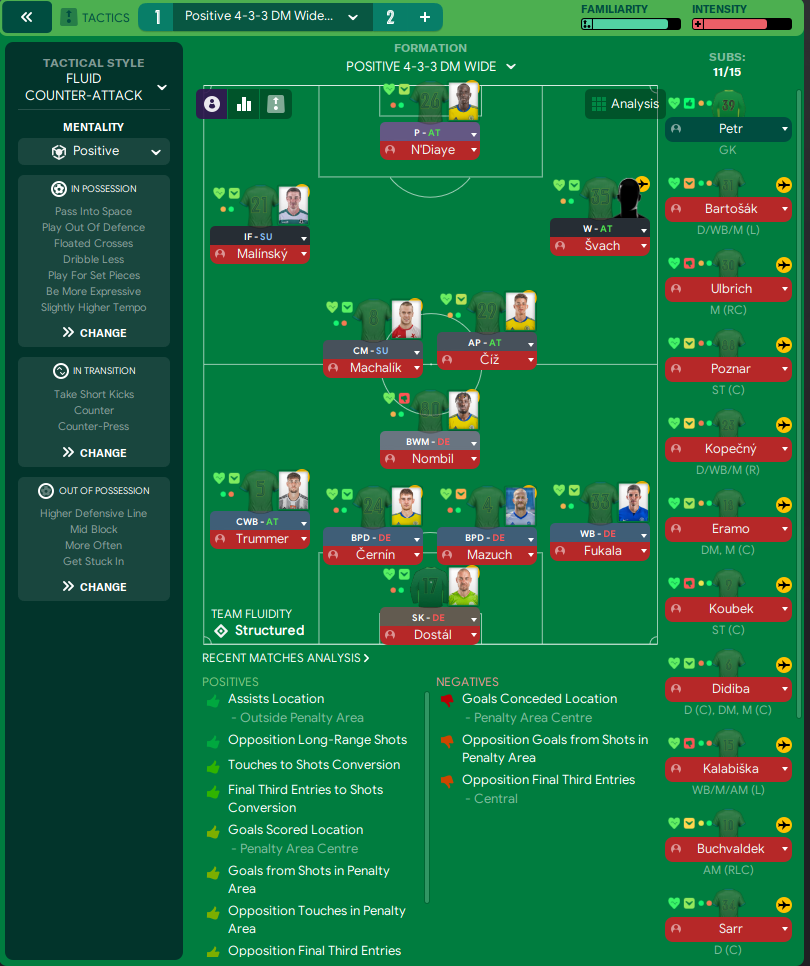
Uploaded Tactic
Formation & Style
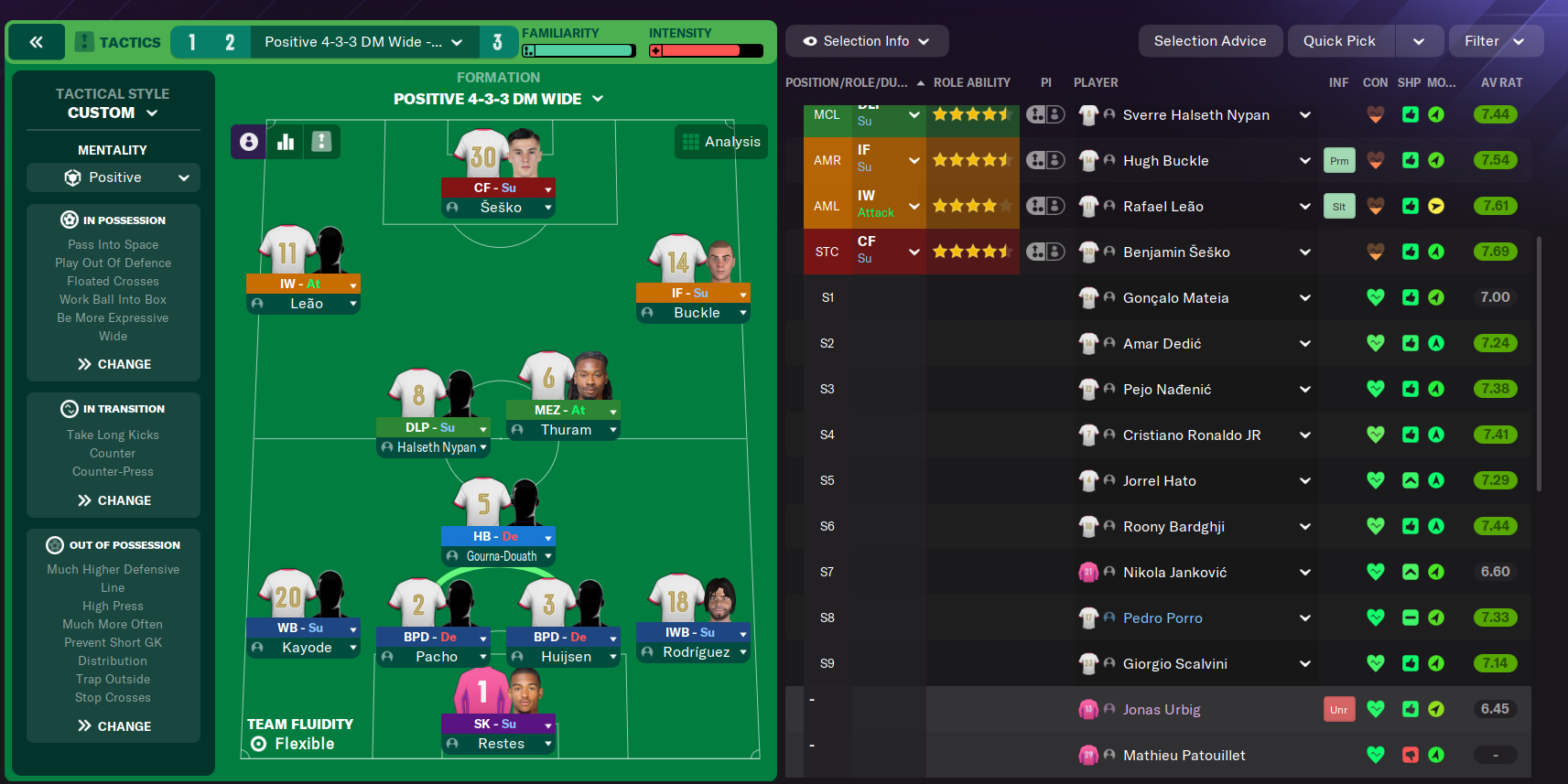
Tactical Style:Custom
Mentality:Positive
Formation:4-3-3 DM Wide
Team Fluidity:Flexible
In Possession
Pass Into Space
Play Out Of Defence
Floated Crosses
Work Ball Into Box
Be More Expressive Wide
In Transition
Take Long Kicks
Counter
Counter-Press
Out of Possession
Much Higher Defensive Line
High Press
Much More Often Prevent Short GK Distribution
Trap Outside
Stop Crosses
Team Shape Without Ball
Shape:3-2-4-1
Description:A compact three-man defense supported by two midfielders enhances both defensive stability and ball distribution options.
Evidence:BPD-De at [2,2], BPD-De at [2,3], HB-De at [2,1]
Team Shape With Ball
Shape:3-3-4
Description:The formation allows wing play and central penetration with wide players pushing up to support the striker.
Evidence:IW-A at [6,1], IF-Su at [6,2], CF-Su at [6,3]
Phase Description
Attacking Play
Utilizing width through the inverted wing and inside forwards, the team aims to stretch the opposition while working the ball into the box.
Defensive Transition
Quick counter-press to regain possession promptly, accompanied by a high defensive line to pressure opponents.
Main Focus
Ball retention and creating scoring opportunities through patient build-up play from the back.
Key Strengths
Width in Attack
Inverted wingers and wide forwards create space and options inside the opponent's defensive third, making it difficult for defenders to cover all angles.
Fluid Midfield
A combination of a deep-lying playmaker and a mezzala provides both stability and attacking support, making transitions smoother.
High Pressing Strategy
A much higher defensive line and high pressing can suffocate opposition builds, disrupting their rhythm.
Conflicting Directions
Defensive Vulnerability
A high defensive line can expose defenders to pacey counters, especially against teams with quick forwards.
Over-reliance on Width
Heavy emphasis on wide players could lead to predictability in attacking patterns, making it easier for opponents to defend.
Risky Build-Up Play
While playing out of defense is essential for build-up, it may invite unnecessary pressure if poorly executed.
Tactical Suggestions
Adjust Defensive Line
Consider dropping the defensive line slightly to protect against counterattacks and retain defensive solidity.
Incorporate a Target Man
Introducing a player with a target forward role may help to better utilize crosses and retain possession under pressure.
Balance Midfield Duties
Ensure the deep-lying playmaker and mezzala have complementary duties to avoid being too vulnerable defensively.
Ask Questions About Your Lineup
Related Tactics
Guides for this formation
The tactical theory behind the 4-3-3 DM Wide: roles, instructions, and the trade-offs that decide whether the system holds up.
Foundations
Understanding the 4-3-3 Formation
Master the classic 4-3-3: player roles, tactical variations, and the trade-offs that decide whether it sings or stalls.
Read guide
Player pairings
Midfield Trios
Holder, runner, creator: the role distribution rule for three-man midfields, the AMC variants, and the antipatterns that break them.
Read guide
Playing styles
Gegenpressing: A Full Guide
Klopp-style gegenpressing in FM, including squad profile, line-and-press pairing, sustainable workload, and the antipatterns to avoid.
Read guide