Uploaded Tactic
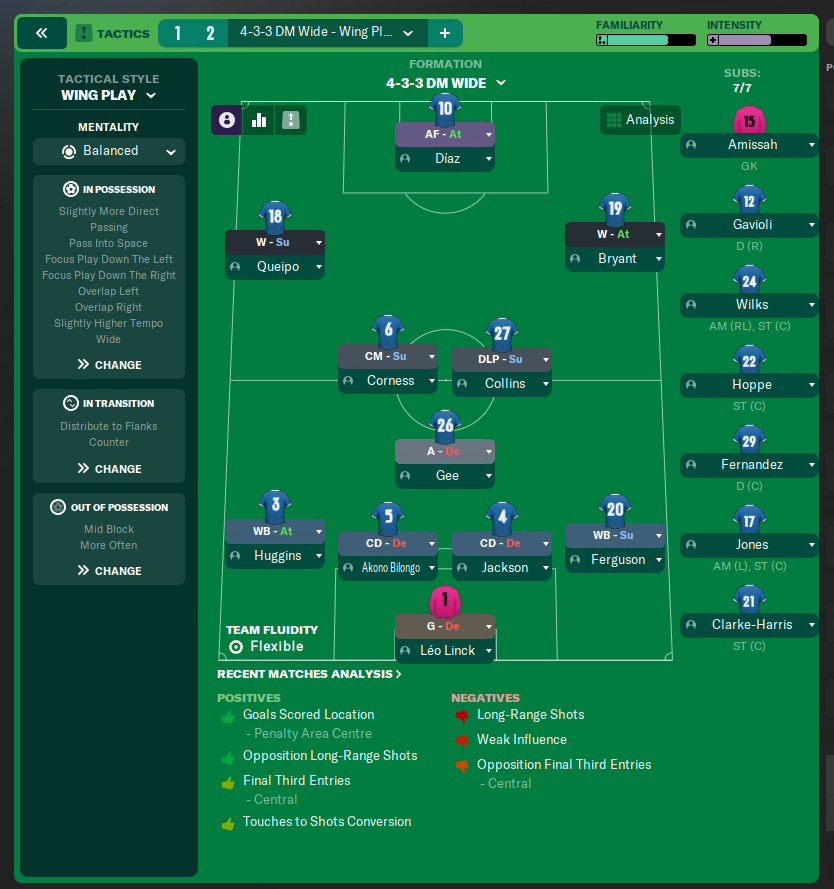
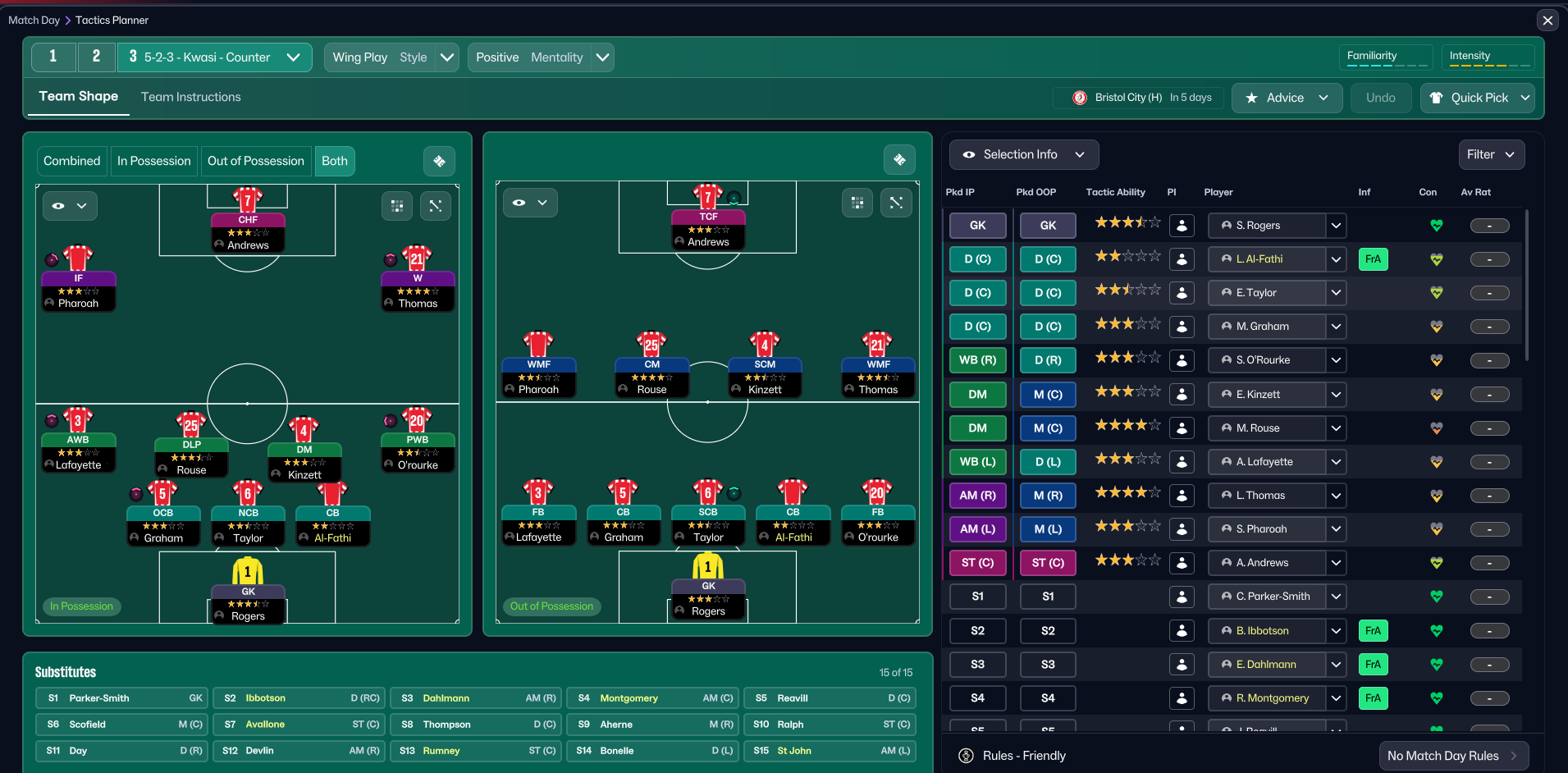
Formation & Style
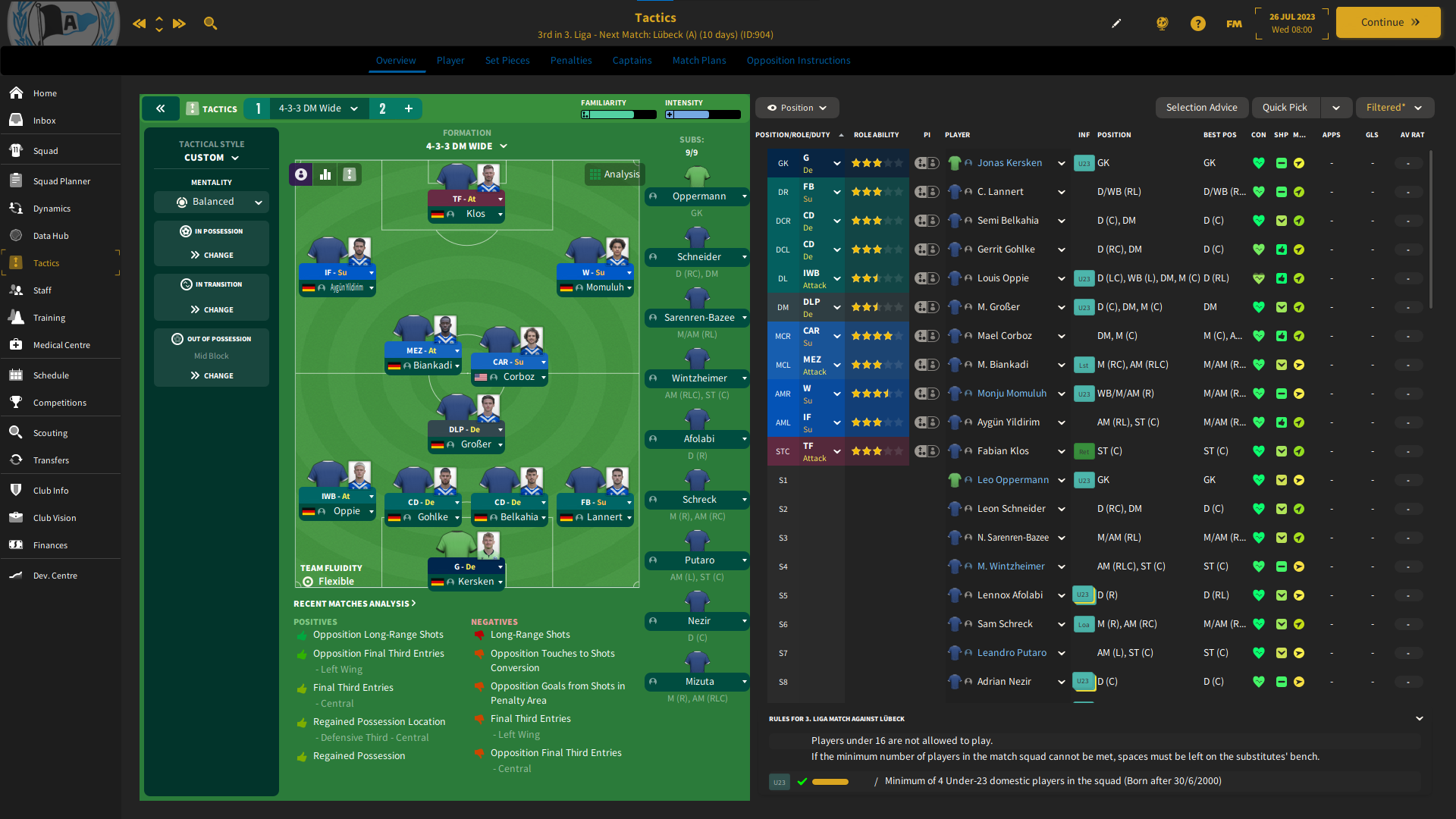
Tactical Style:Wing Play
Mentality:Balanced
Formation:4-3-3 DM Wide
Team Fluidity:Flexible
In Possession
Slightly More Direct Passing
Pass Into Space
Focus Play Down The Left
Focus Play Down The Right
Overlap Left
Slightly Higher Tempo
In Transition
Distribute To Flanks
Counter
Out of Possession
Mid Block
More Often
Team Shape Without Ball
Shape:Mid Block
Description:A compact formation with two lines of four when defending, limiting space for opposition.
Evidence:Mid Block set in Out Of Possession strategy with CD-De roles at [2,2] and [2,3].
Team Shape With Ball
Shape:Wide Play
Description:Utilizes wing-backs and wingers to create width, allowing central players to occupy key positions.
Evidence:W-Su at [6,1] and [6,5] combined with AF at [6,3] enhances attacking options.
Phase Description
Attacking Play
Focuses on utilizing wide play to stretch the opposition, creating space for attackers.
Defensive Transition
Quickly shifts to a mid block to contain opposition threats while preparing for counter-attacks.
Main Focus
Creating chances from wide areas while maintaining a balanced approach.
Key Strengths
Positional Play
Effective use of width puts defenses under pressure, allowing for better spacing in the final third.
Midfield Control
The three midfielders (CM-Su, DLP-Su, CM-Su) provide stability and ball retention.
Flexibility in Attack
Adaptability of the front three allows for fluid movements and chances creation.
Conflicting Directions
Defensive Compactness
A mid block may struggle against teams utilizing high pressing.
Lack of Central Control
Focus on wide play may leave the central areas exposed to counter-attacks.
Vulnerability to Long Shots
Positioning could lead to an increase in long-range shots against the team.
Tactical Suggestions
Adjust Midfield Roles
Consider adding a deeper playmaker to improve central presence.
Experiment with Higher Line
Trying a higher defensive line can stifle opposition attacks more effectively.
Refine Wing Play Approach
Consider adjusting overlap instructions to optimize wing-play efficiency.
Ask Questions About Your Lineup
Related Tactics
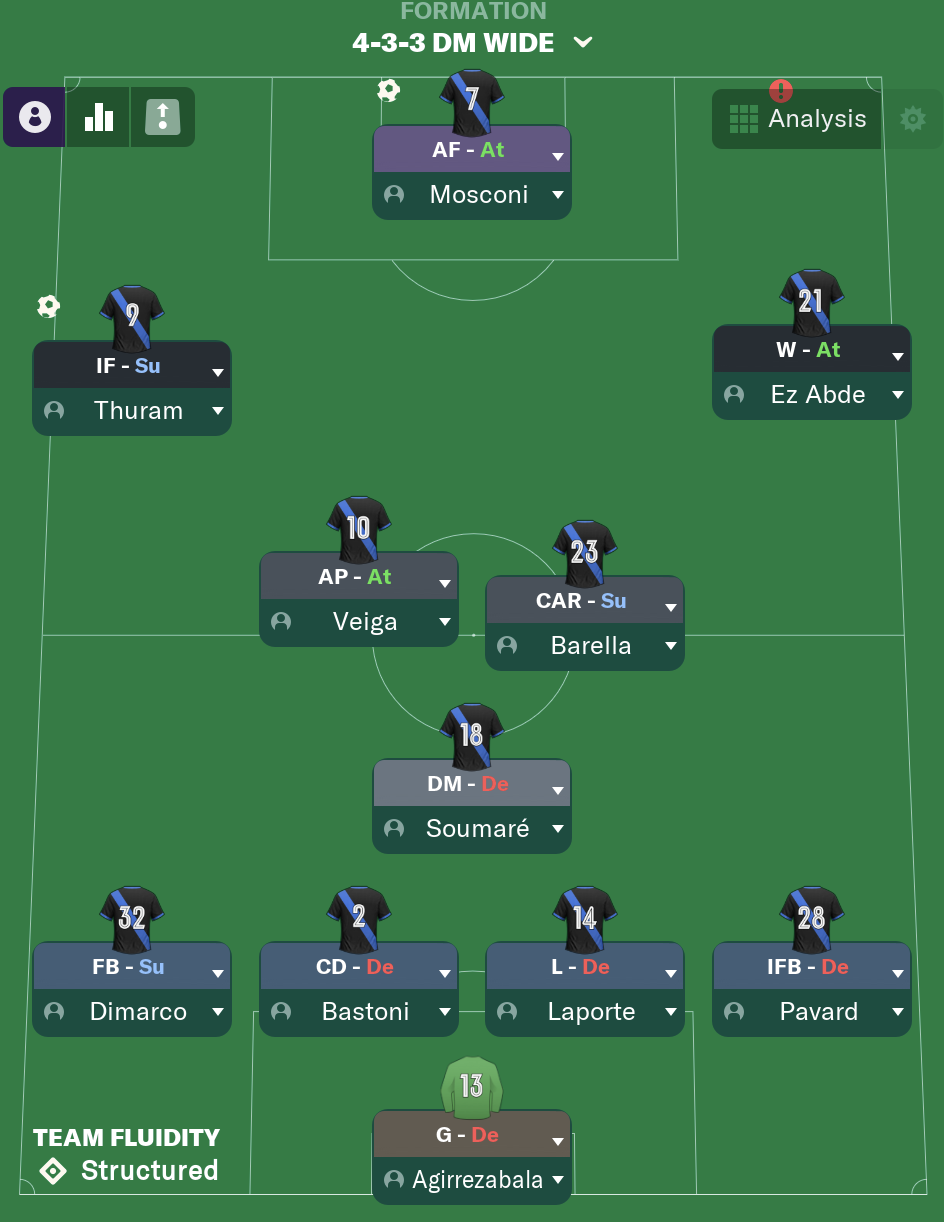
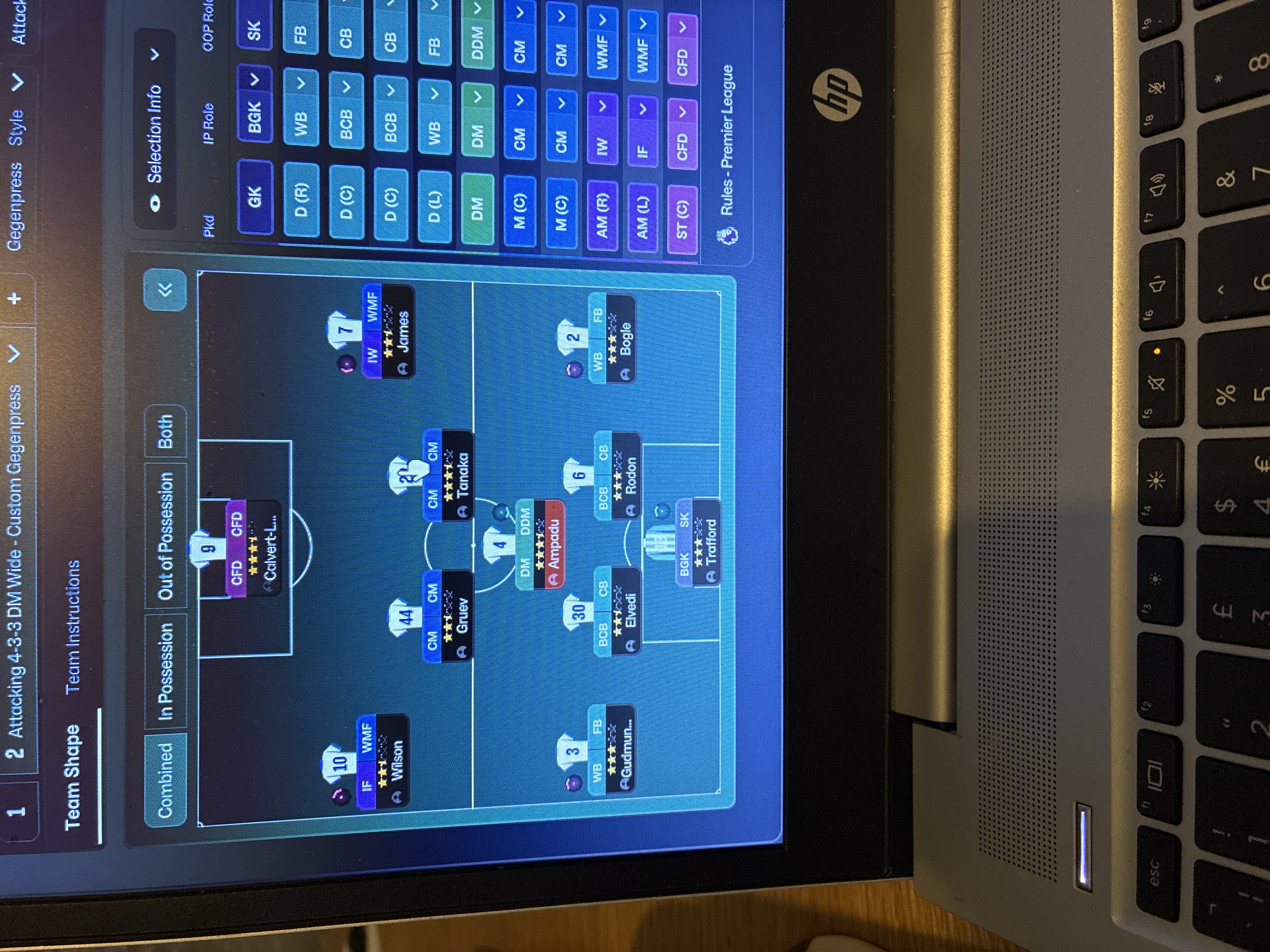
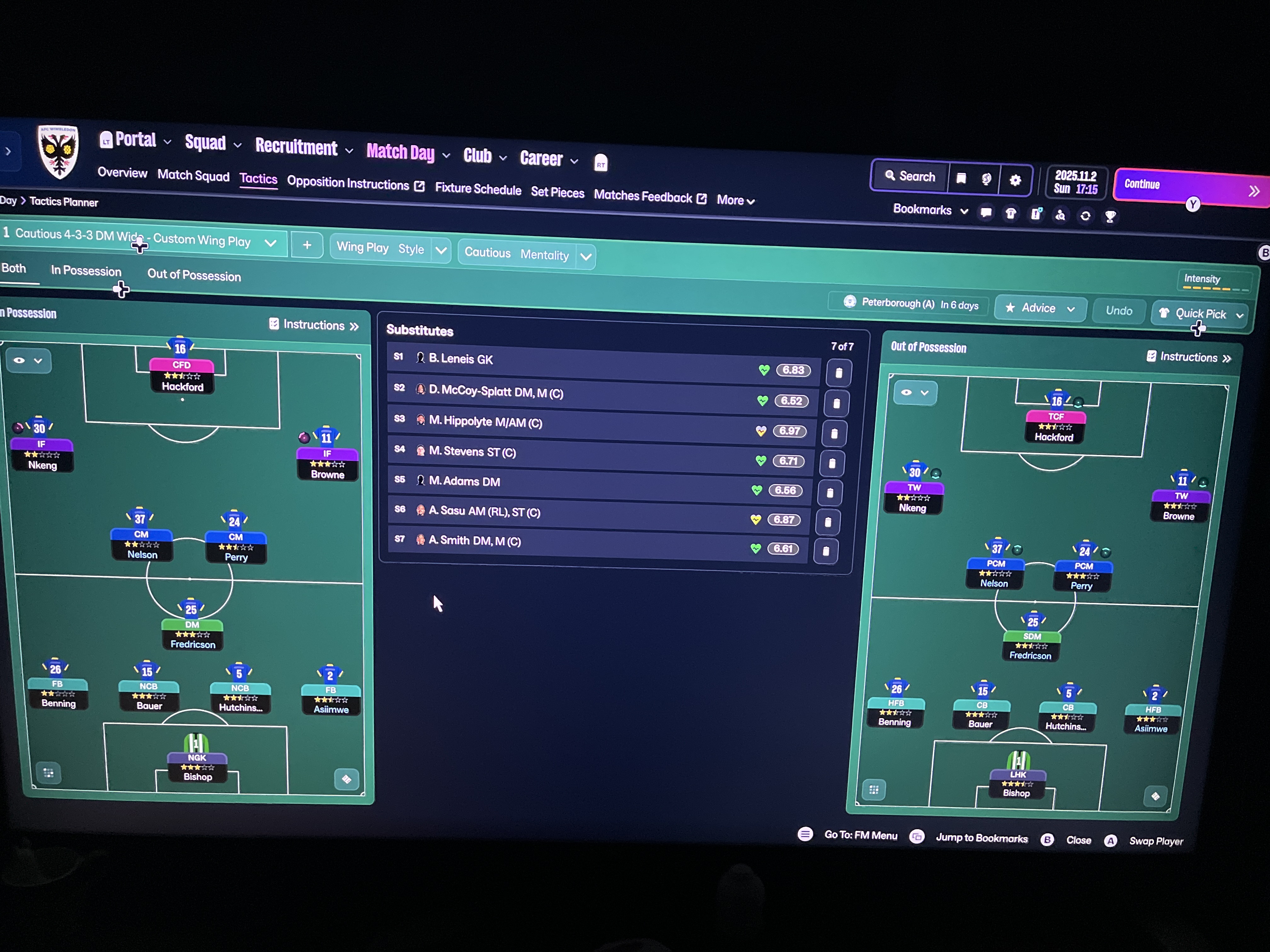
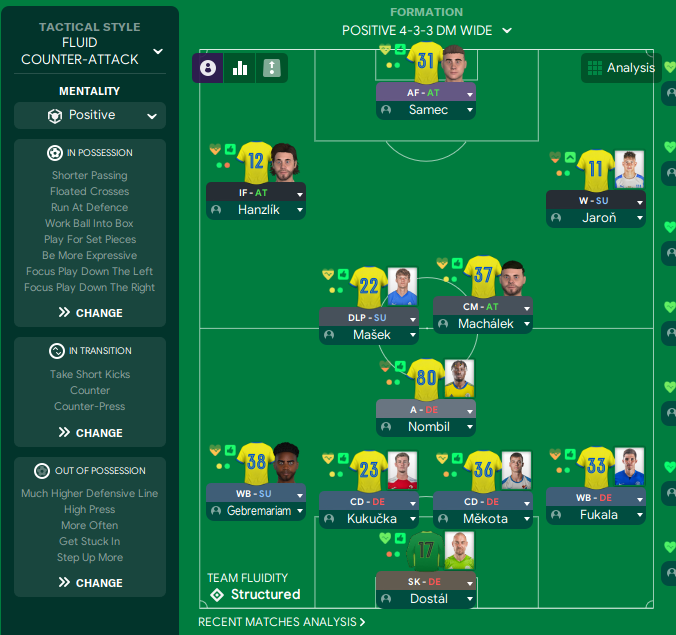
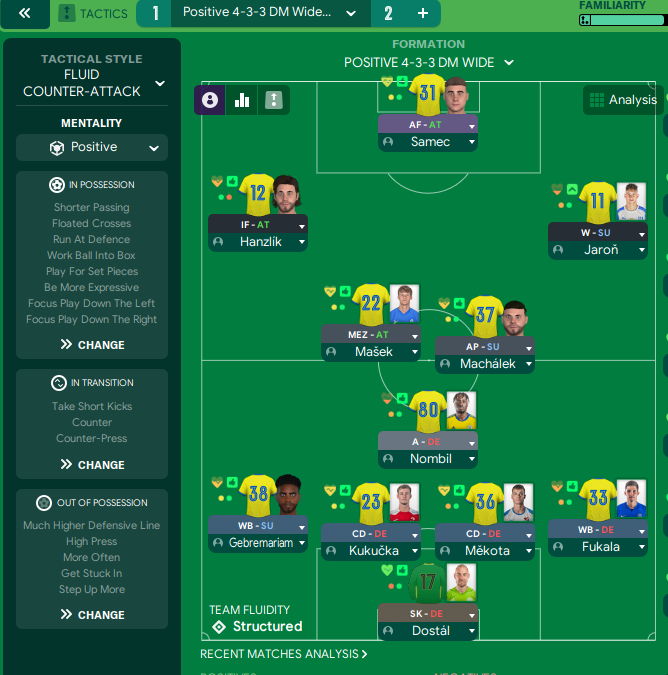
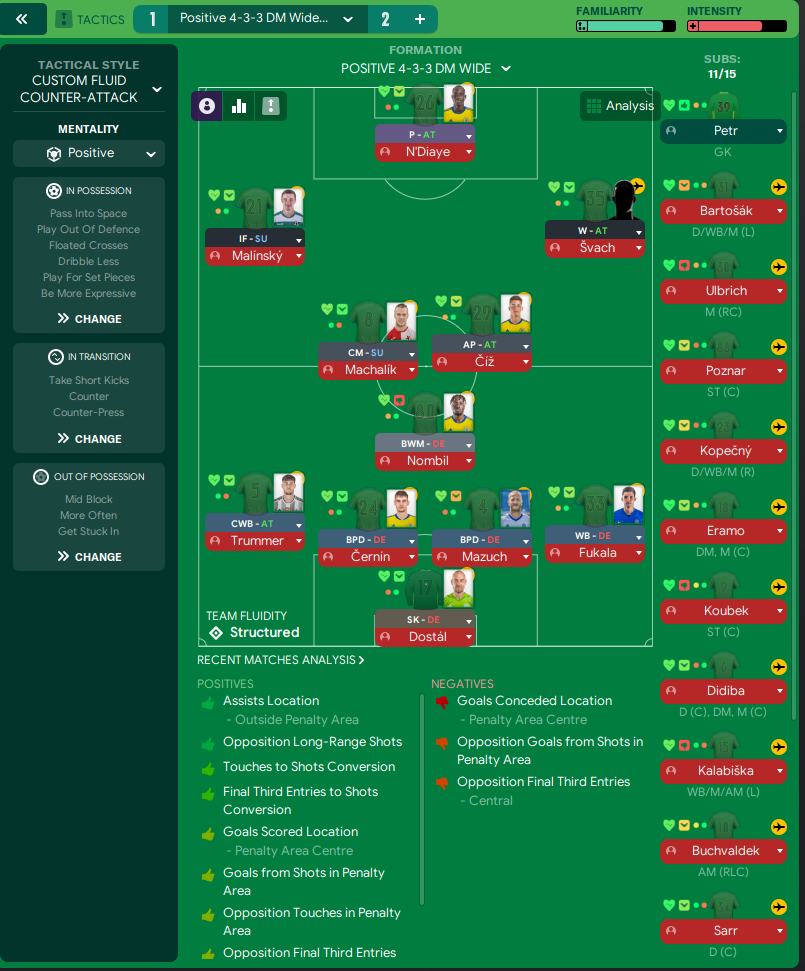
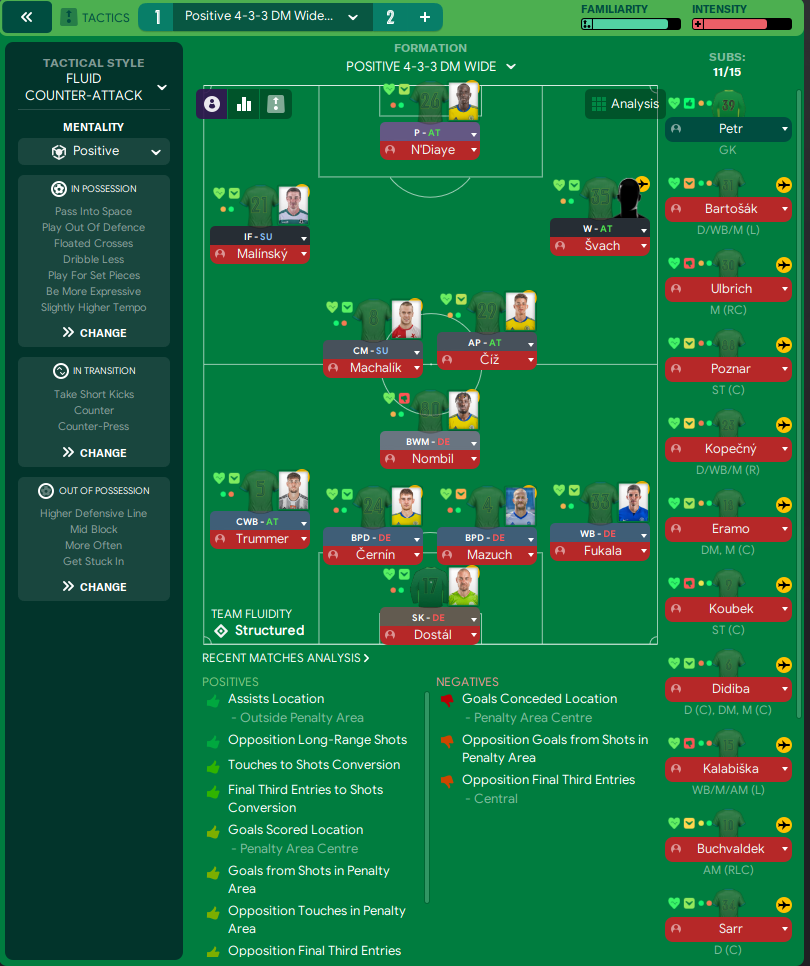
More Wing Play tactics
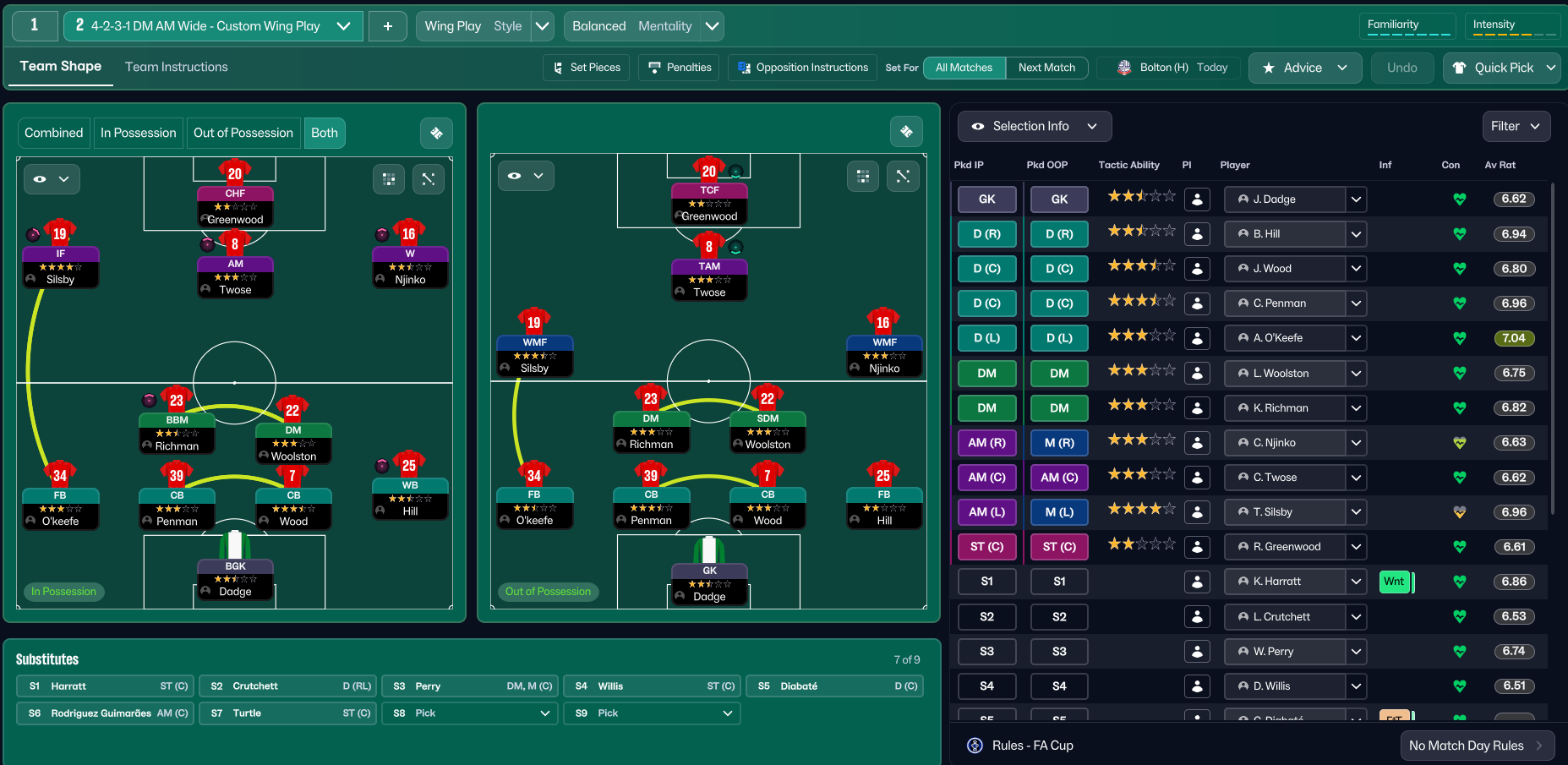
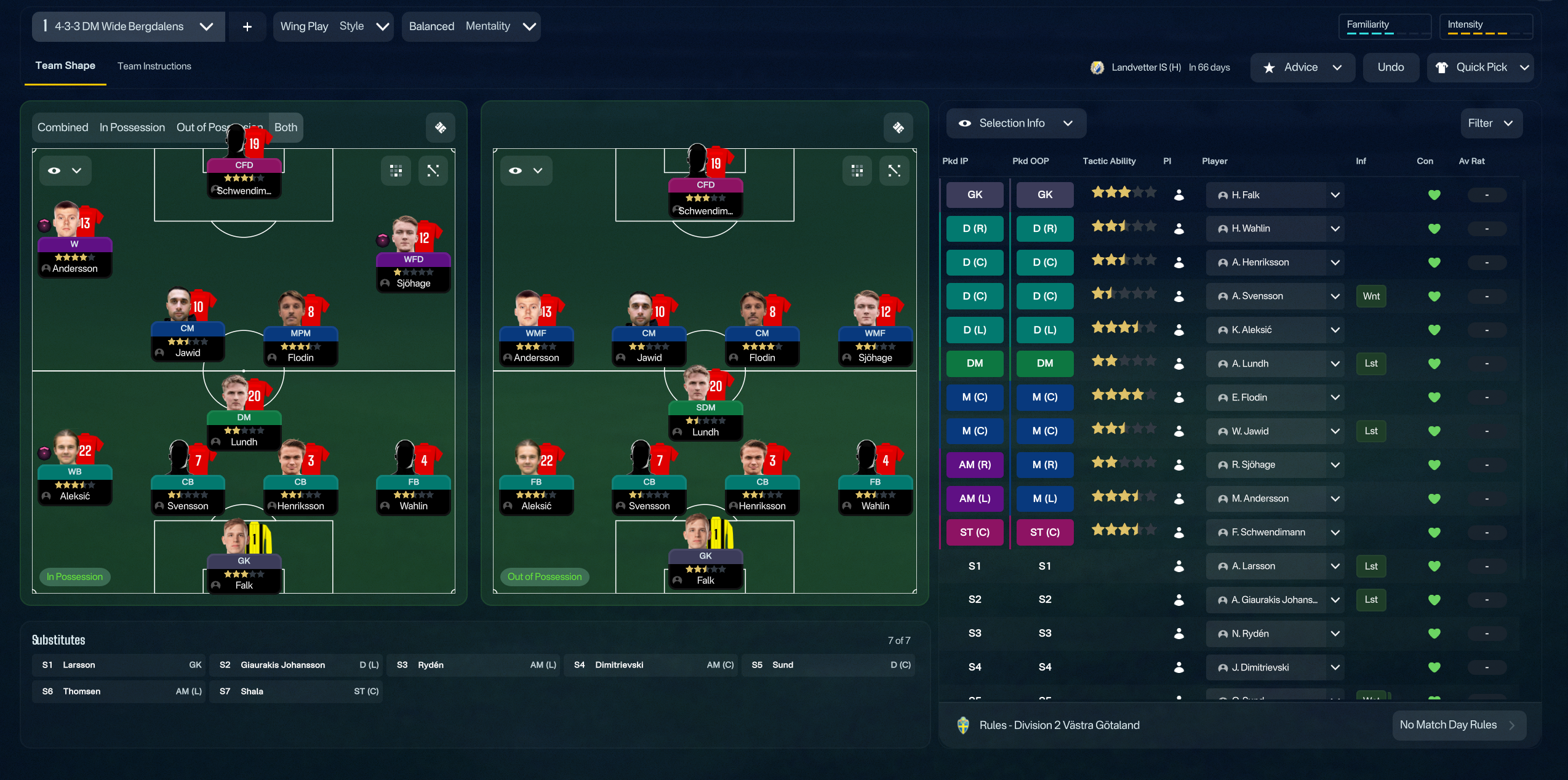
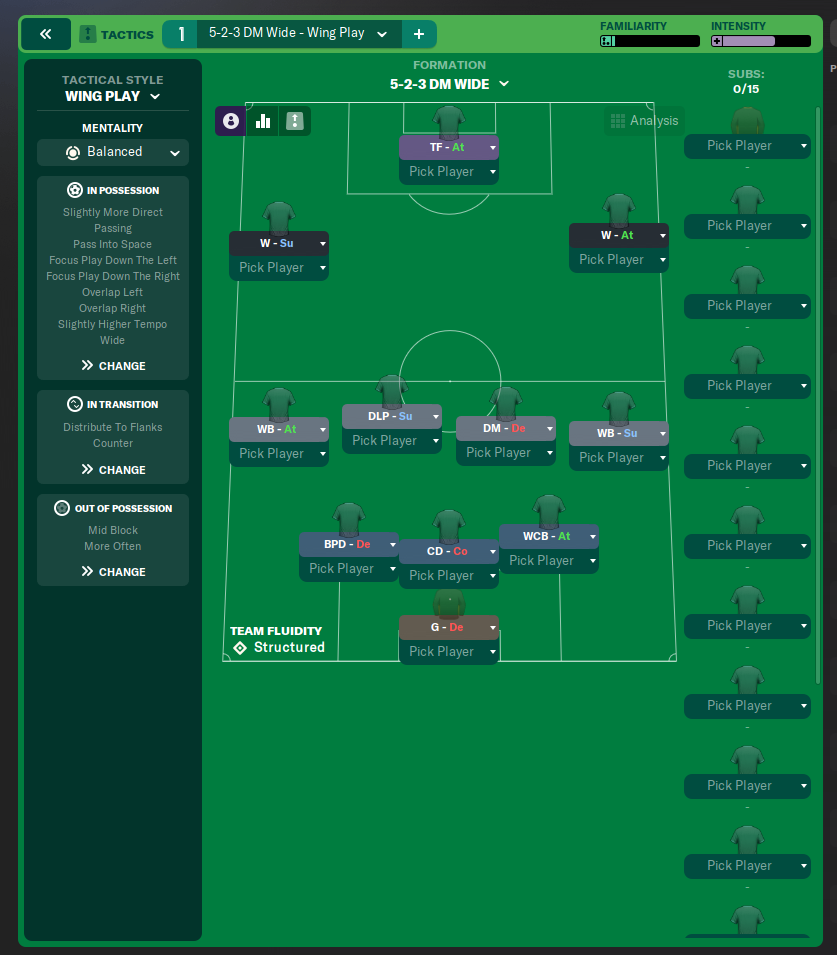
Guides for this formation
The tactical theory behind the 4-3-3 DM Wide: roles, instructions, and the trade-offs that decide whether the system holds up.
Foundations
Understanding the 4-3-3 Formation
Master the classic 4-3-3: player roles, tactical variations, and the trade-offs that decide whether it sings or stalls.
Read guide
Player pairings
Midfield Trios
Holder, runner, creator: the role distribution rule for three-man midfields, the AMC variants, and the antipatterns that break them.
Read guide
Playing styles
Gegenpressing: A Full Guide
Klopp-style gegenpressing in FM, including squad profile, line-and-press pairing, sustainable workload, and the antipatterns to avoid.
Read guide