Uploaded Tactic
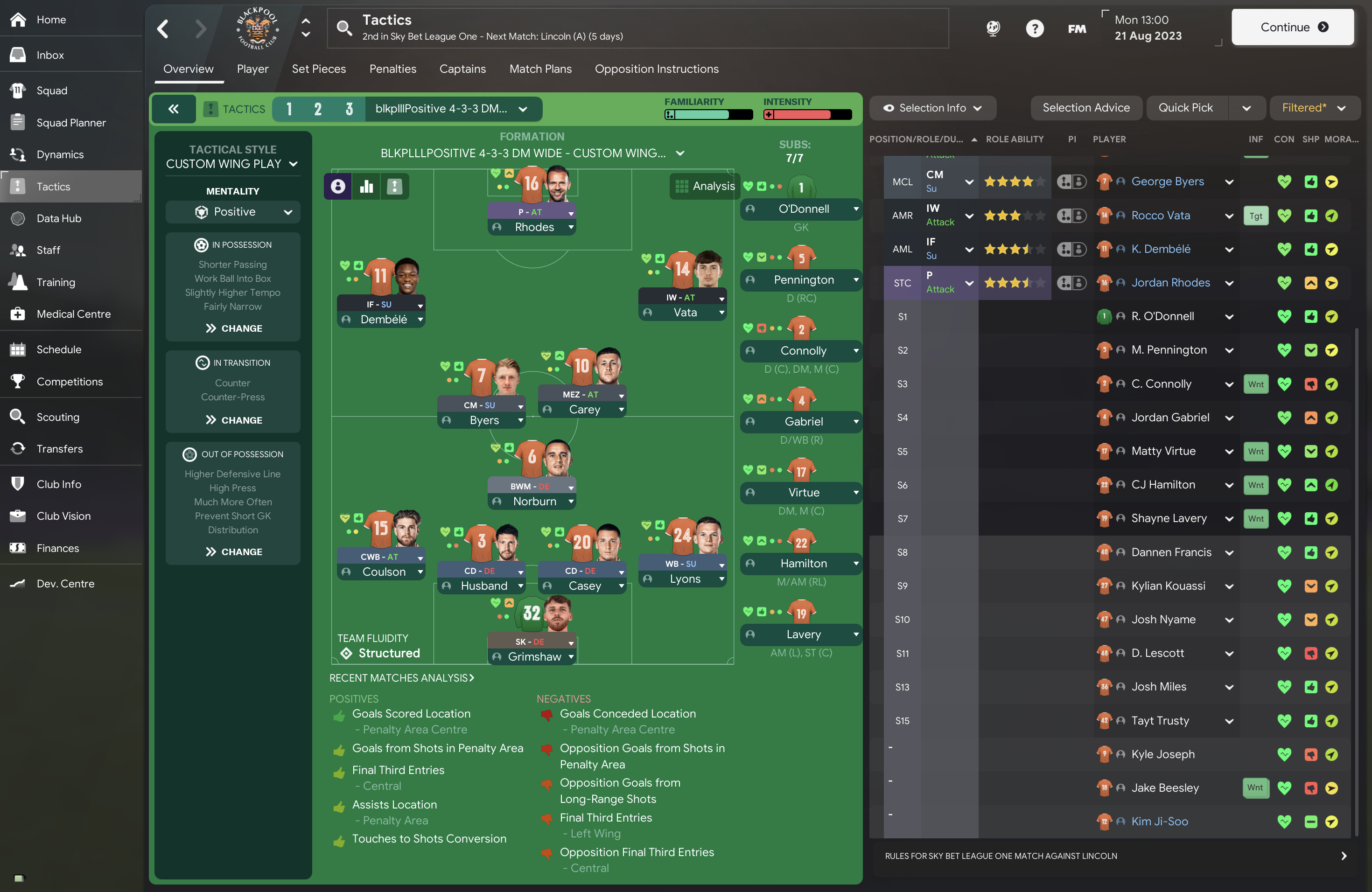
Formation & Style
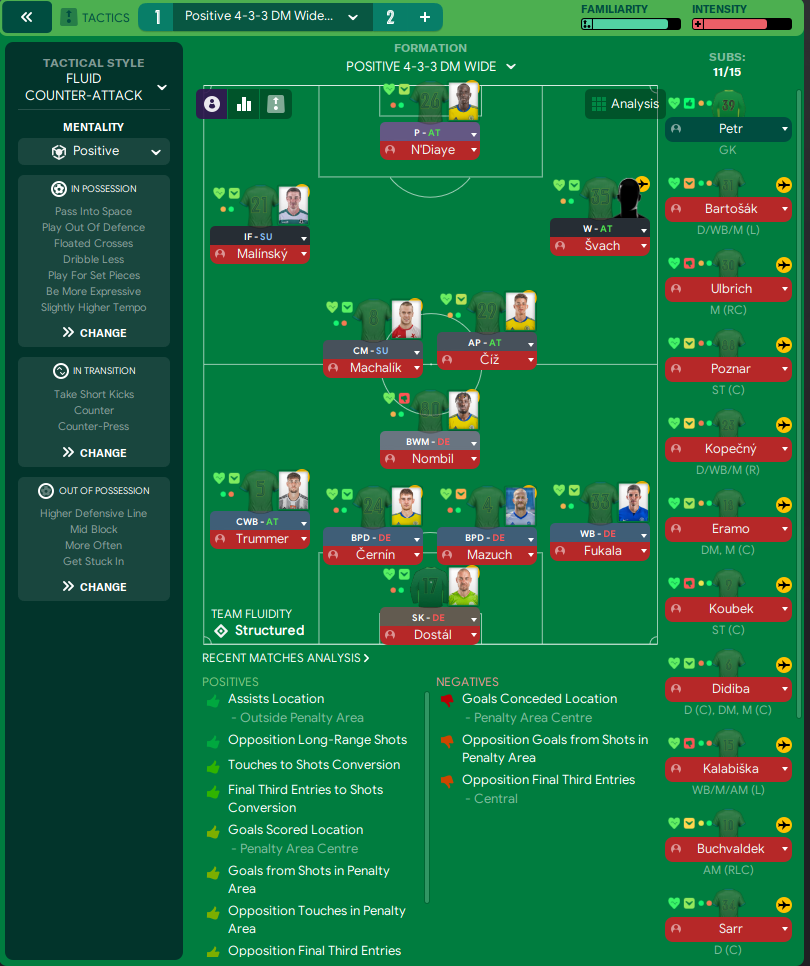
Tactical Style:Custom Wing Play
Mentality:Positive
Formation:4-3-3 DM Wide
Team Fluidity:Structured
In Possession
Shorter Passing
Work Ball Into Box
Slightly Higher Tempo
Fairly Narrow
In Transition
Counter
Counter-Press
Out of Possession
Higher Defensive Line
High Press
Much More Often Prevent Short GK Distribution
Team Shape Without Ball
Shape:Compact
Description:Defensive line is positioned higher, creating a compact shape to limit space.
Evidence:Higher Defensive Line with High Press
Team Shape With Ball
Shape:Fluid
Description:Wing-backs providing width while the attackers interconnect to penetrate the opposition.
Evidence:Wing-Backs (FB-S) at [2,4] and [2,5] supporting a front three.
Phase Description
Attacking Play
Utilizing width through wing-backs to provide crosses and support forwards, with a focus on shorter passing.
Defensive Transition
Immediate counter-pressing with the intent to regain possession quickly upon losing the ball.
Main Focus
Effective use of width and pressing to create goal-scoring opportunities.
Key Strengths
Width in Attack
The use of wing-backs to stretch the opposition.
Ball Recovery
Effective counter-pressing that maximizes recovery of possession.
Interchangeable Attackers
Versatile attacking roles allow fluid movement and goal-scoring opportunities.
Conflicting Directions
Overly Narrow Play
Despite a focus on width, the positive mentality may lead to congested central areas.
High Defensive Line Risks
A higher defensive line may leave space behind for fast counter-attacks.
Dependency on Wing-Backs
Heavy reliance on wing-backs for width may expose the flanks defensively.
Tactical Suggestions
Adjust Mentality to Balanced
A more balanced mentality may help control central areas without compromising width.
Reduce Defensive Line Height
Lowering the defensive line can mitigate exposure to counter-attacks.
Incorporate Playmaker Role
Using a playmaker in midfield could enhance creativity and passing options.
Ask Questions About Your Lineup
Related Tactics
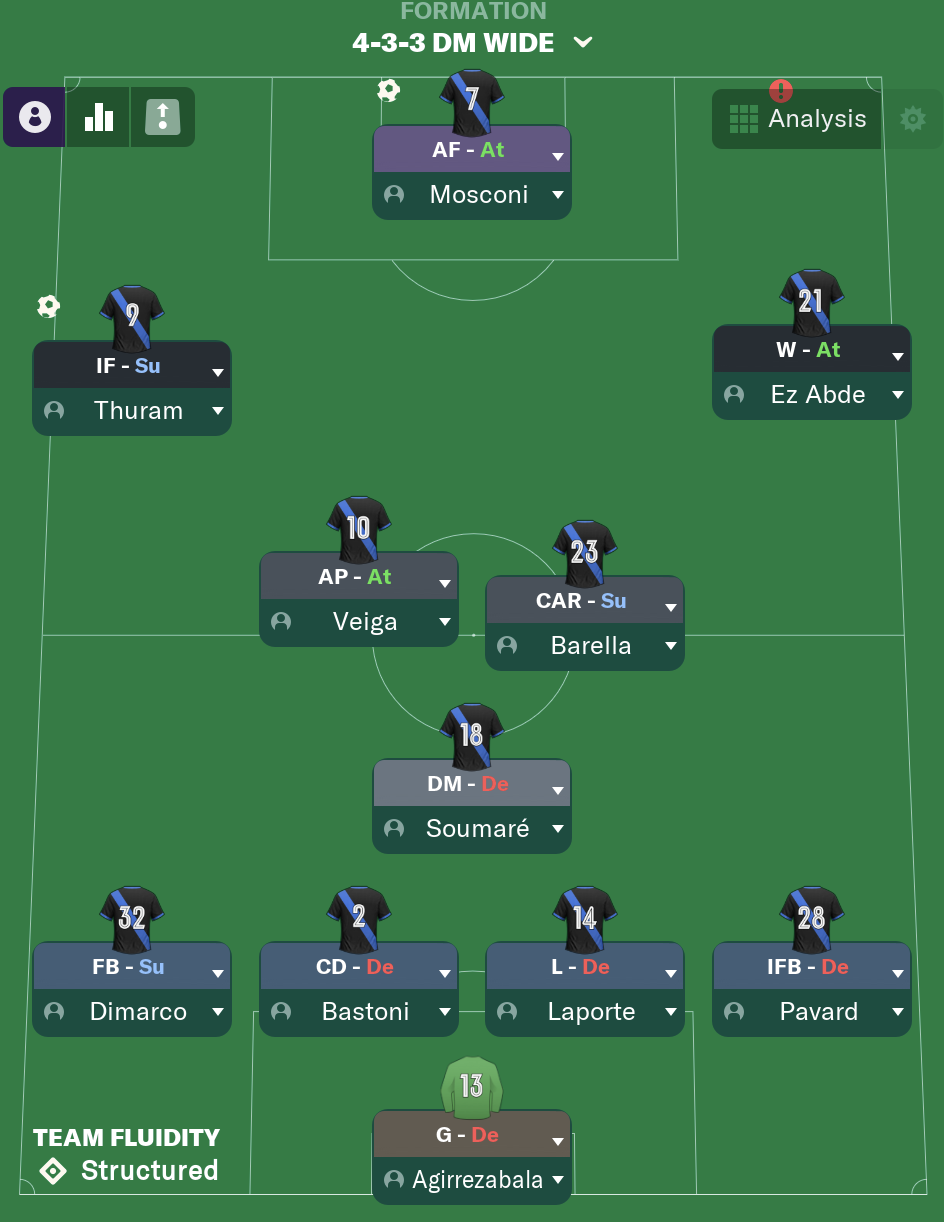
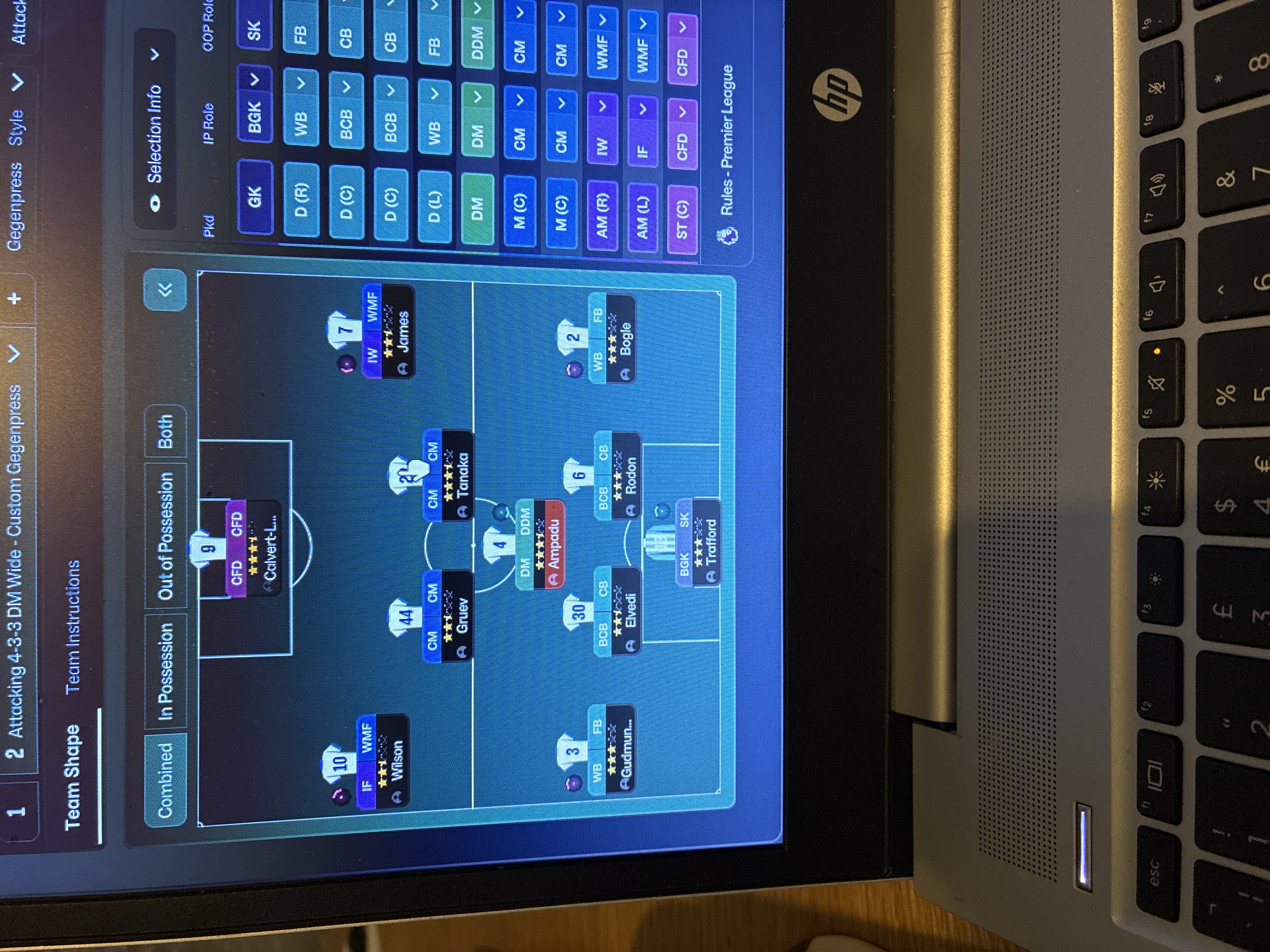
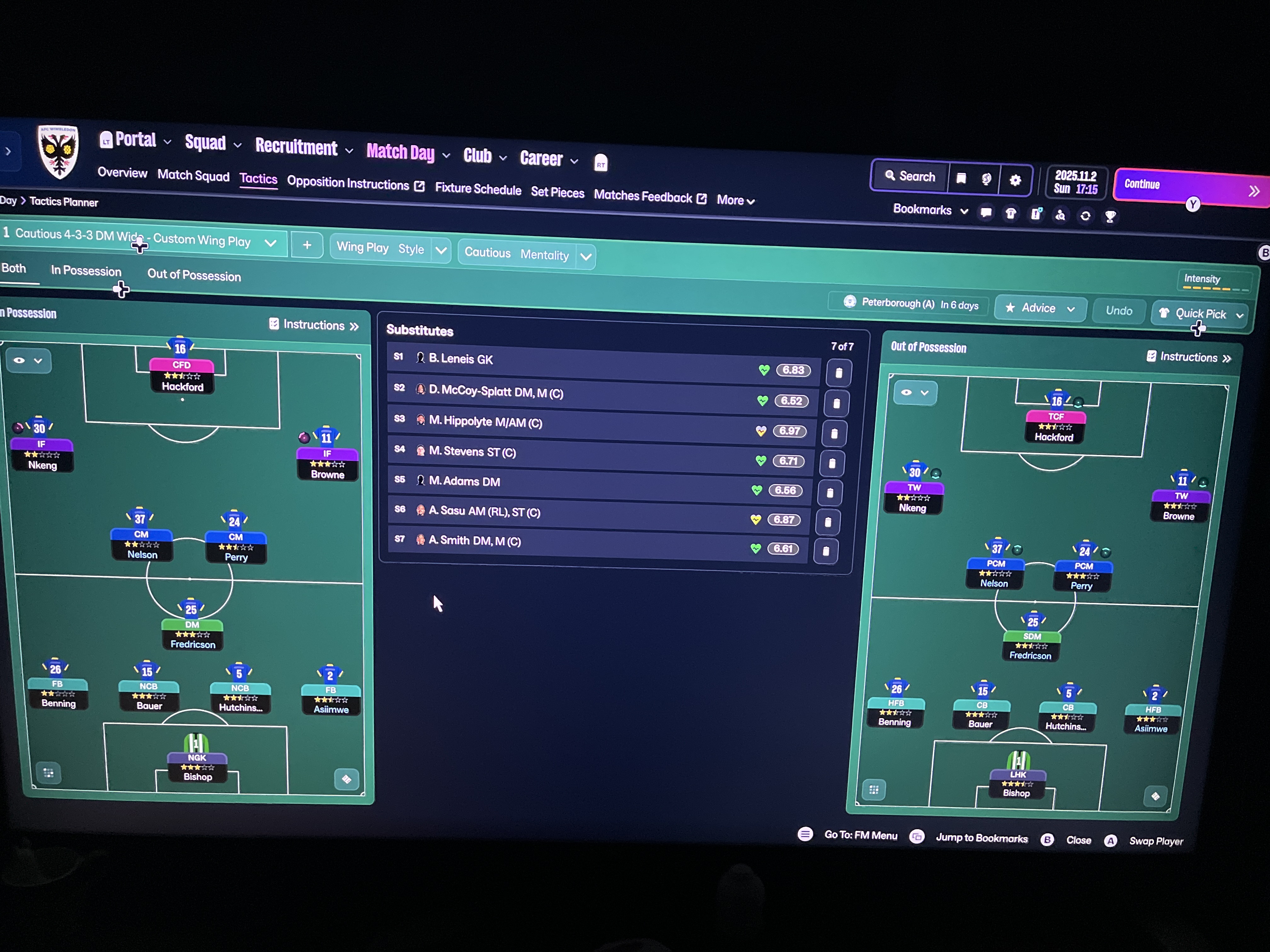
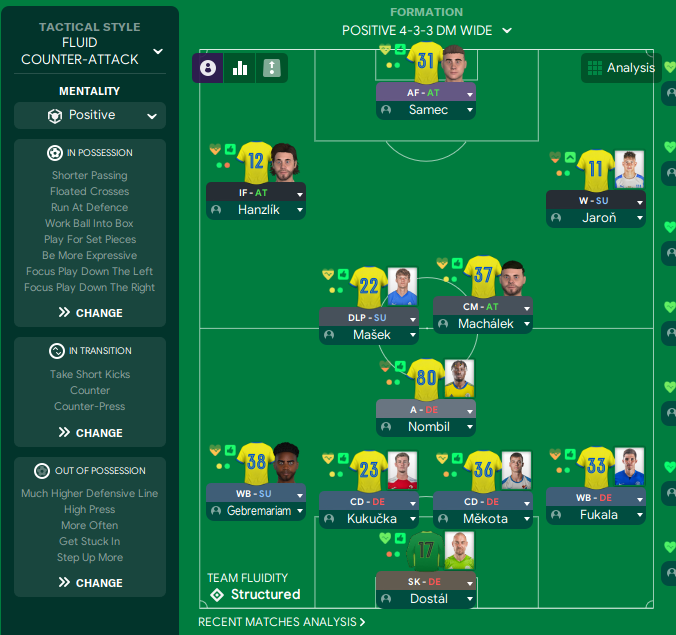
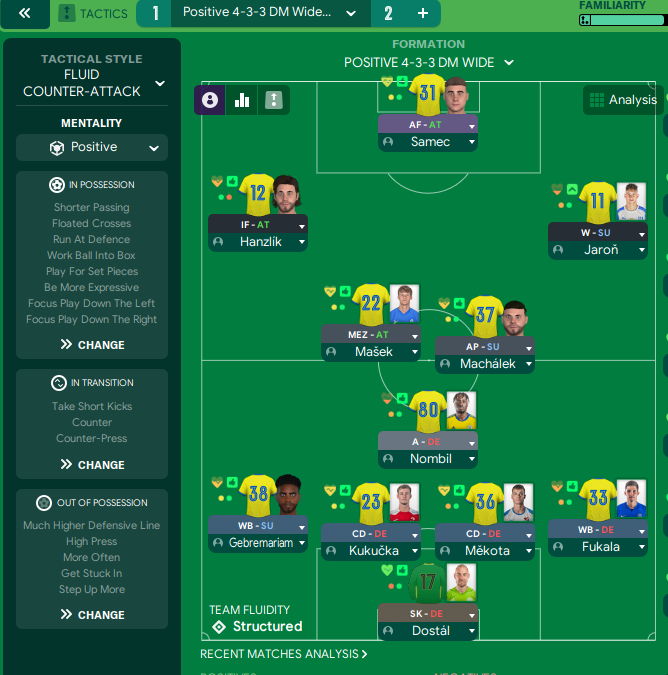
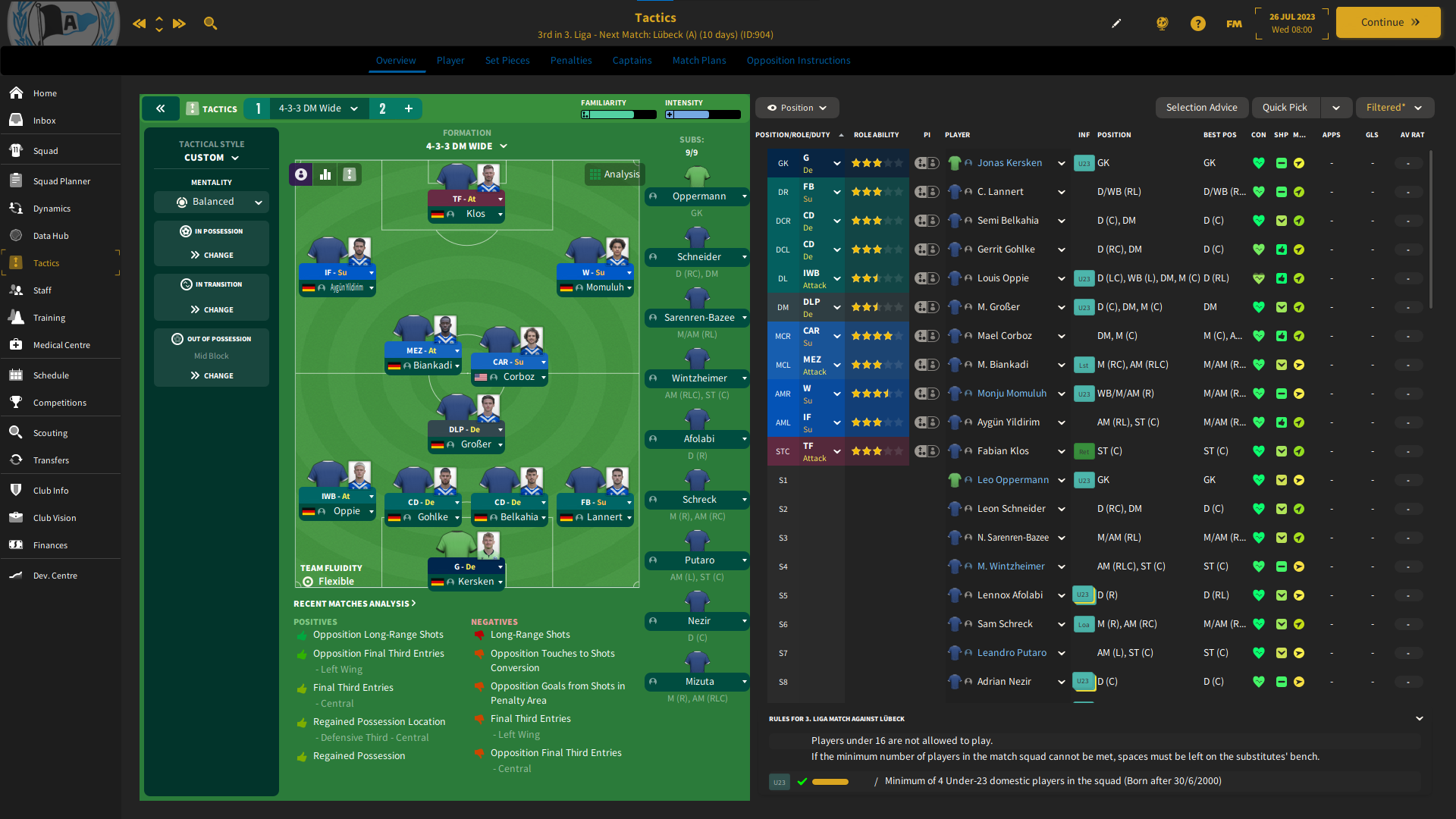
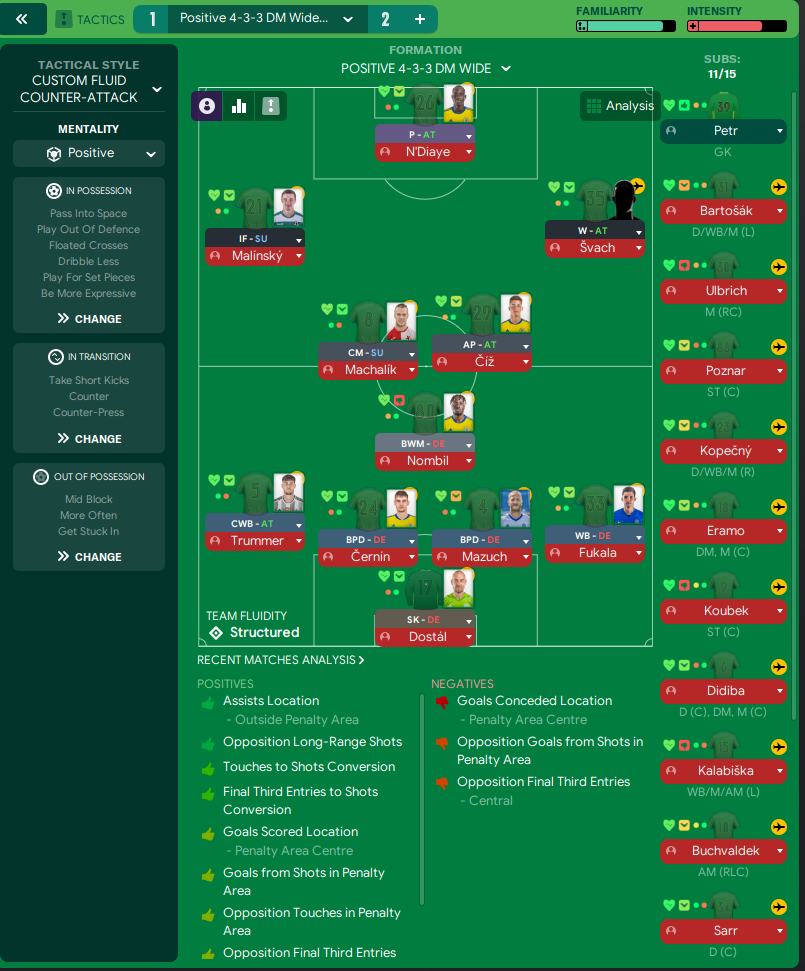
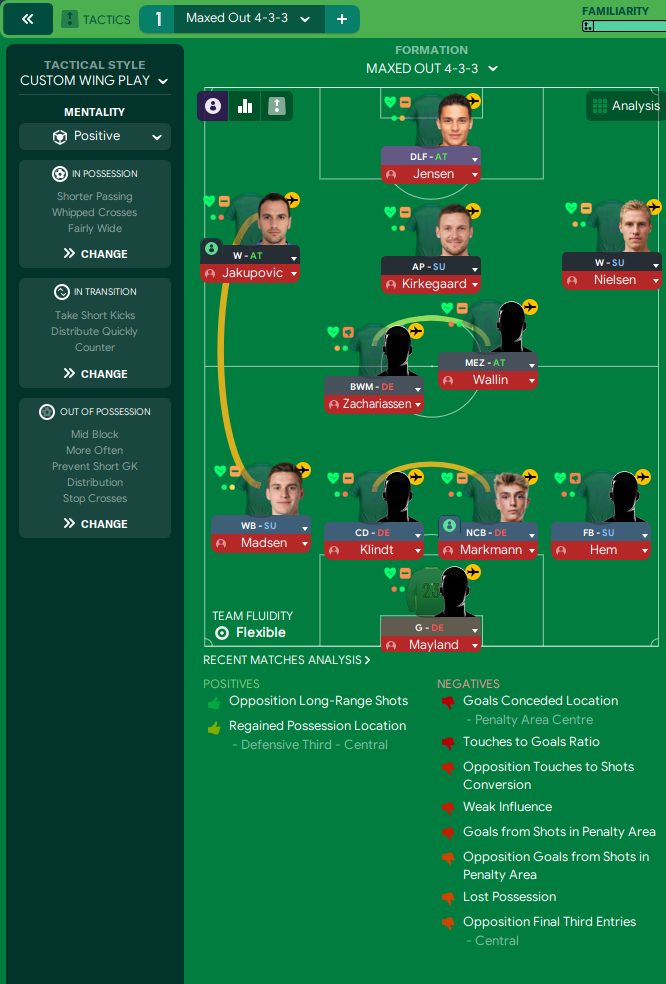
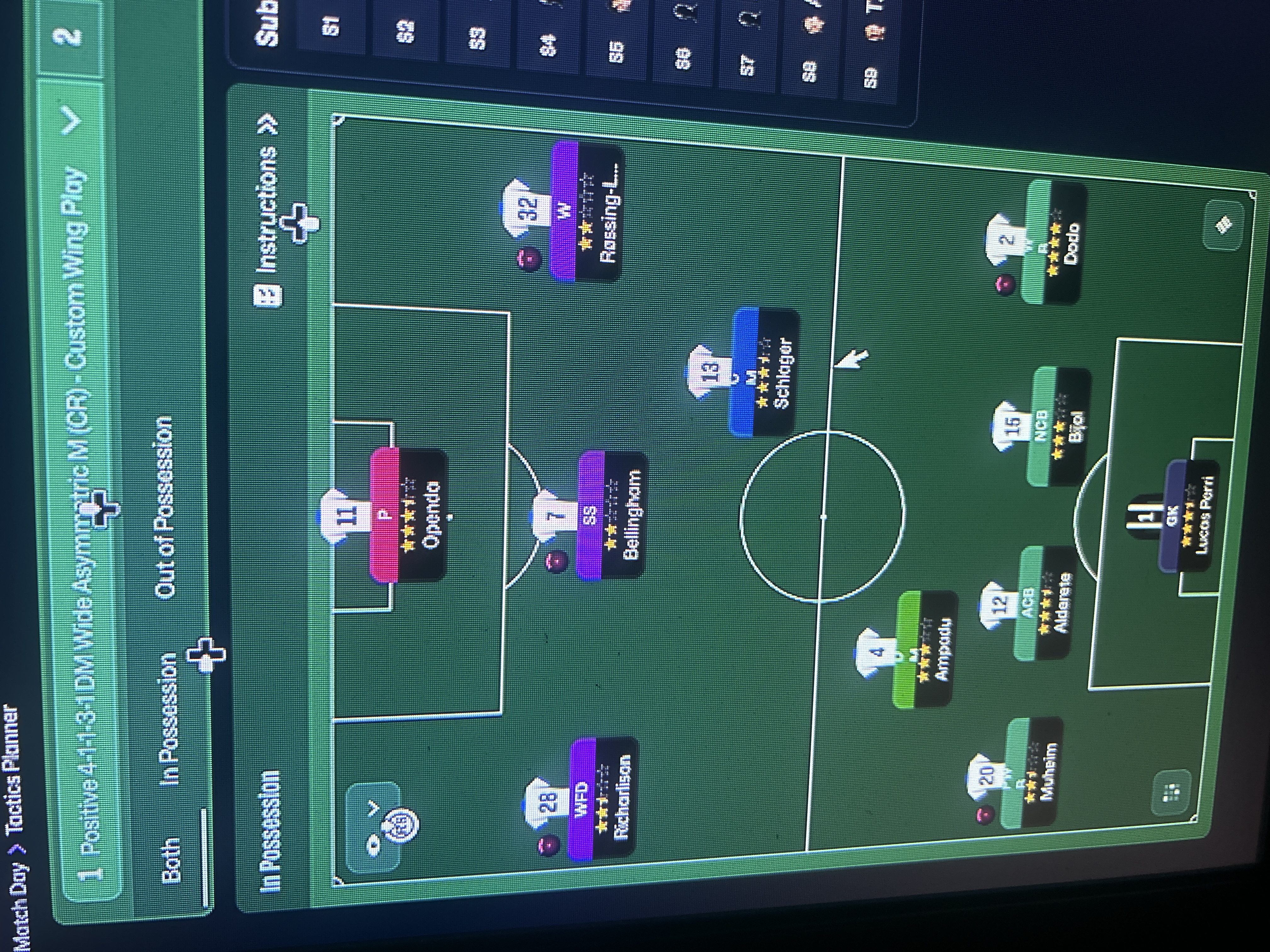
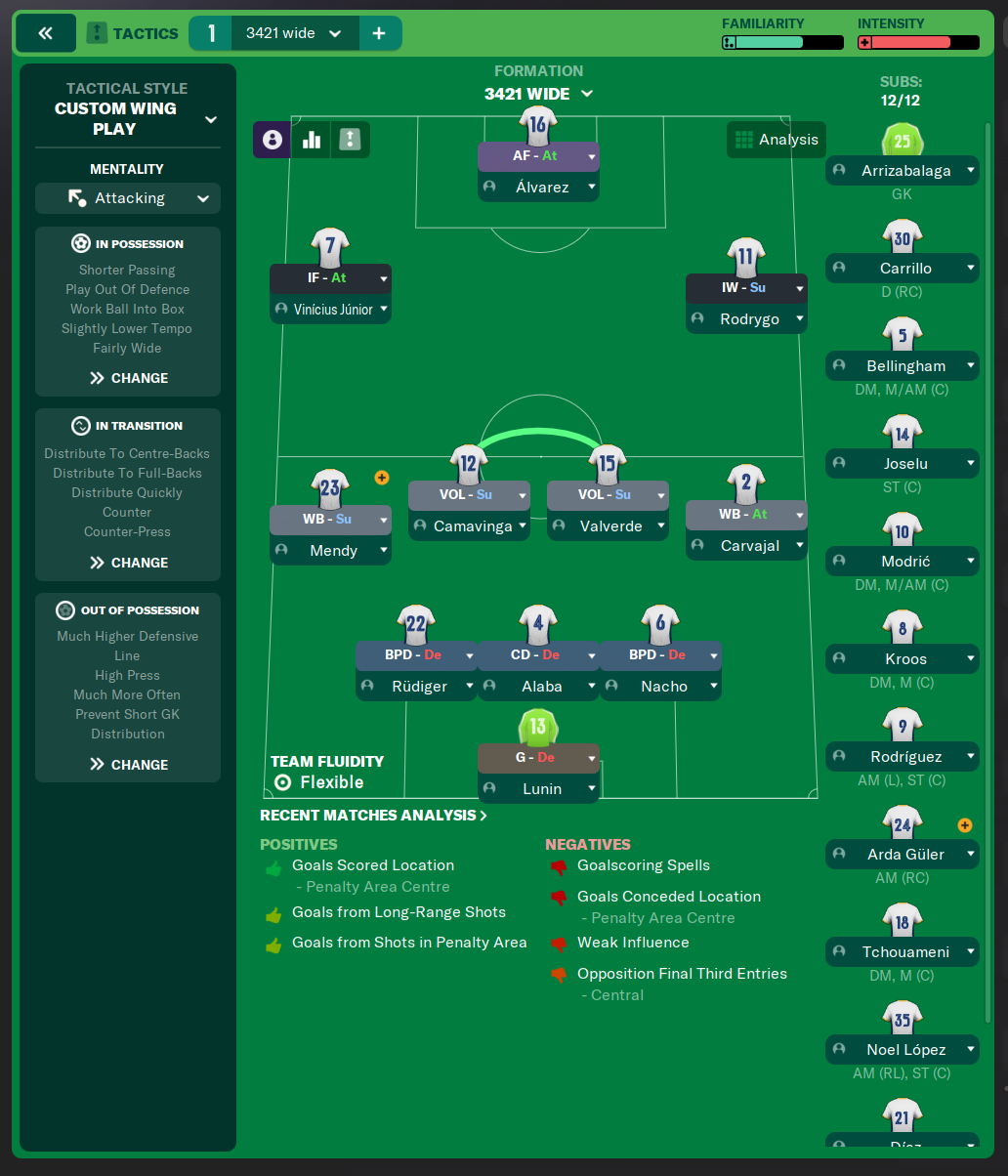
More Custom Wing Play tactics
Guides for this formation
The tactical theory behind the 4-3-3 DM Wide: roles, instructions, and the trade-offs that decide whether the system holds up.
Foundations
Understanding the 4-3-3 Formation
Master the classic 4-3-3: player roles, tactical variations, and the trade-offs that decide whether it sings or stalls.
Read guide
Player pairings
Midfield Trios
Holder, runner, creator: the role distribution rule for three-man midfields, the AMC variants, and the antipatterns that break them.
Read guide
Playing styles
Gegenpressing: A Full Guide
Klopp-style gegenpressing in FM, including squad profile, line-and-press pairing, sustainable workload, and the antipatterns to avoid.
Read guide