Uploaded Tactic
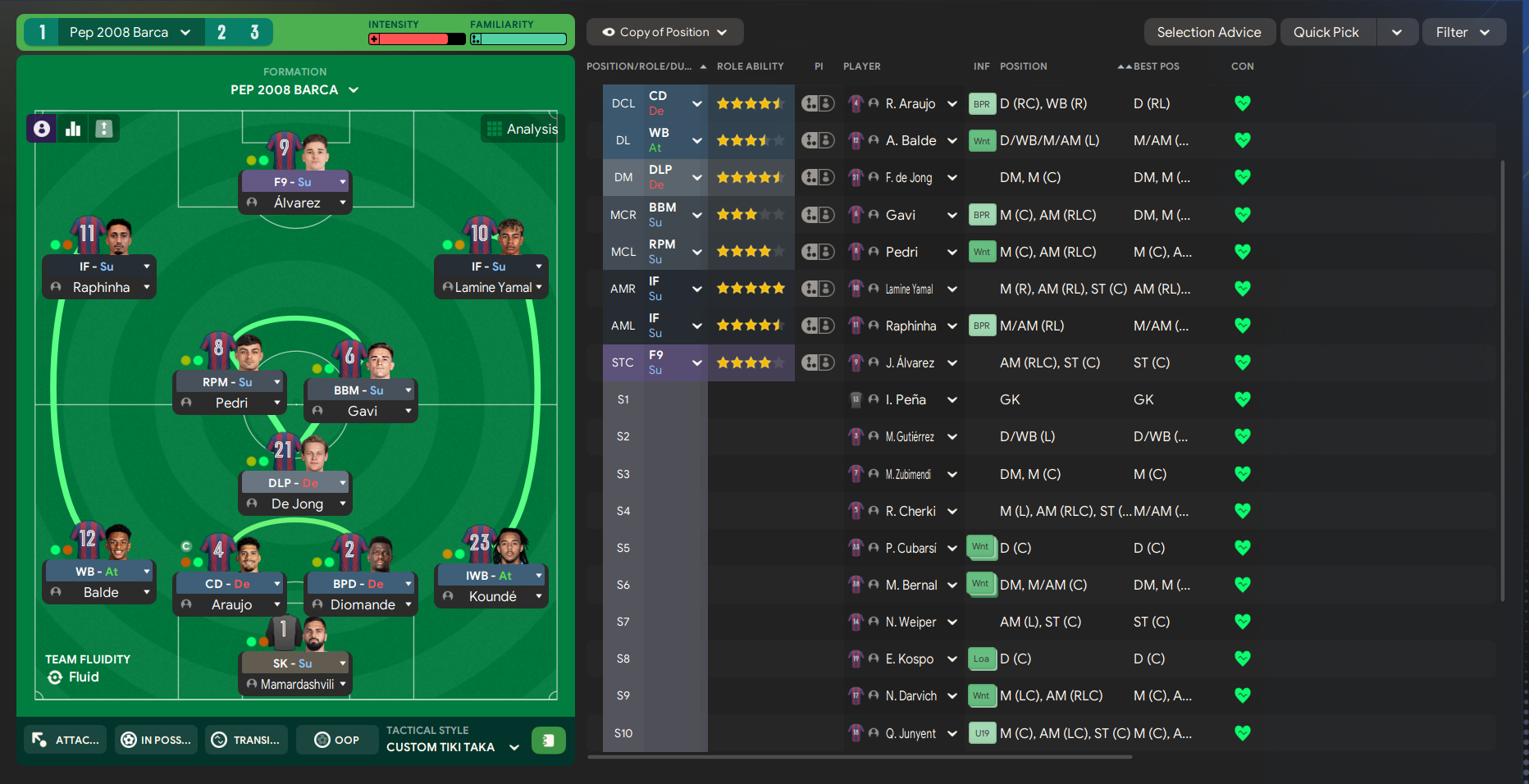
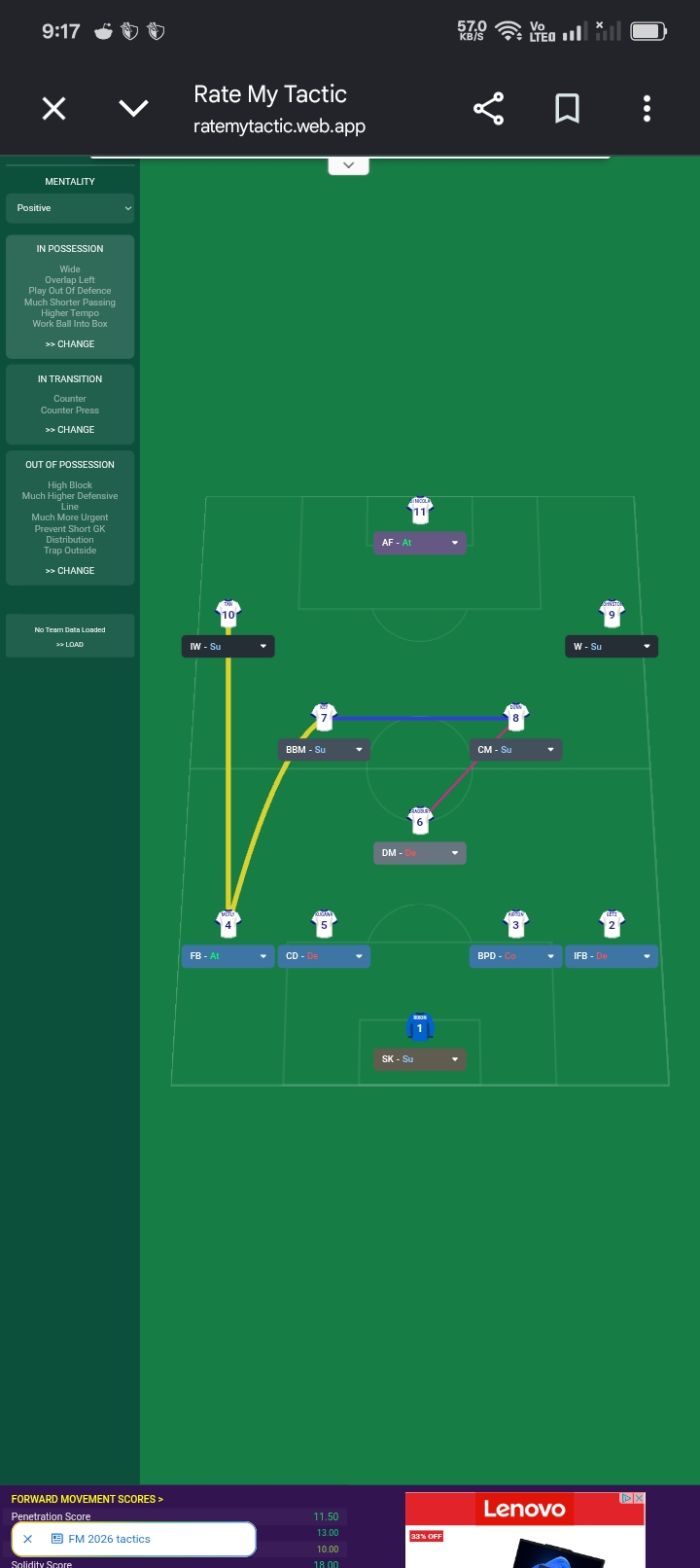
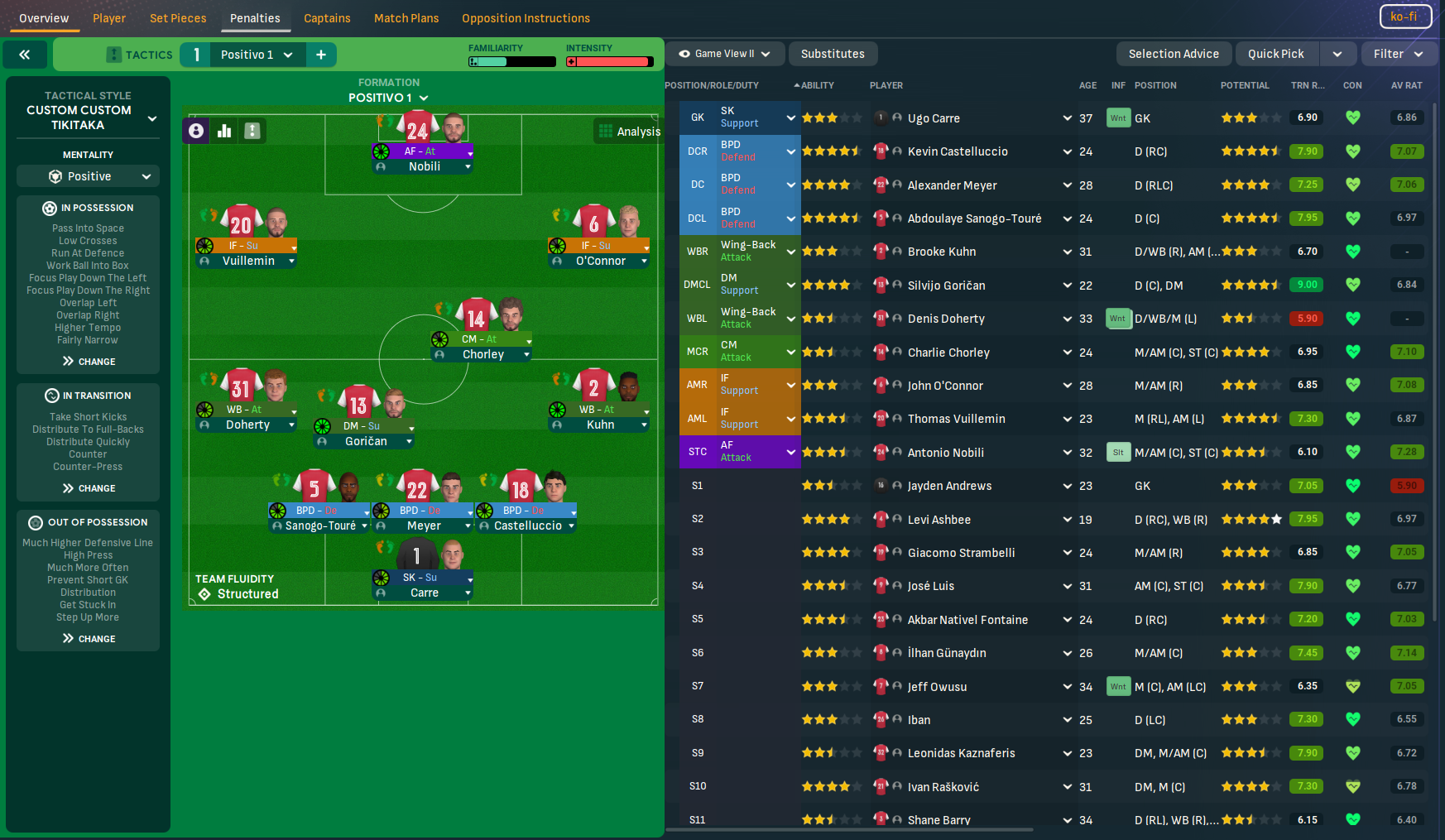
Formation & Style
Tactical Style:Custom Tiki Taka
Mentality:Positive
Formation:4-3-3
Team Fluidity:Fluid
In Possession
Shorter Passing
Work Ball Into Box
Focus Play Down Left
Overlap on Left
In Transition
Counter-Press
Counter
Out of Possession
Higher Defensive Line
Higher Line of Engagement
Prevent Short GK Distribution
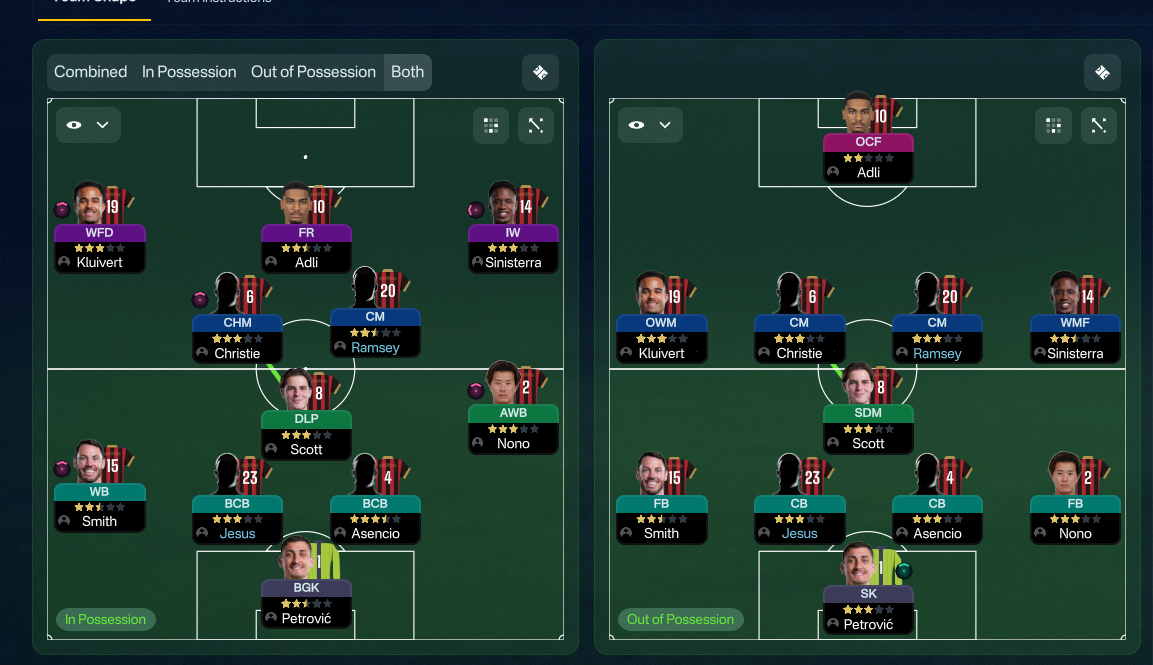
Team Shape Without Ball
Shape:4-4-2
Description:Compact defensive shape with the midfield supporting the backline.
Evidence:DC and DL provide central strength while the wing-backs cover wide spaces.
Team Shape With Ball
Shape:4-3-3
Description:Attacking width is provided mainly by inside forwards and the attacking wing-back.
Evidence:Inside forwards cutting in while the wing-back overlaps allows for dynamic attacking patterns.
Phase Description
Attacking Play
The team maintains possession through short, structured passing and seeks to create wide overloads primarily on the left flank.
Defensive Transition
Upon losing the ball, immediate counter-press is implemented to regain possession quickly.
Main Focus
Dominate possession while creating high-quality scoring opportunities.
Key Strengths
Positional Fluidity
Players are able to interchange positions frequently, causing confusion for defenders.
Midfield Control
The presence of a Deep-Lying Playmaker and two supportive central midfielders enables strong possession.
Wide Play Threat
The attacking width provided by the wing-back and inside forwards creates constant pressure.
Conflicting Directions
Defensive Vulnerability on the Right
With a focus on the left flank, there might be an imbalance leading to vulnerabilities on the right.
Fluidity May Cause Confusion
Whilst interchanging positions can be beneficial, it might lead to miscommunication.
Dependency on Overlaps
The reliance on full-backs for width could be detrimental if they are marked out of the game.
Tactical Suggestions
Enhance Defensive Structure
Consider adding an additional midfielder to reinforce the center and shield the defense more effectively.
Aim for Balanced Width
Encourage the right inside forward to provide more width to avoid lopsided attacks.
Utilize Counter-Attacks
Incorporate counter-attacking strategies alongside the possession game to keep opponents guessing.
Ask Questions About Your Lineup
Related Tactics
More Custom Tiki Taka tactics
Guides for this formation
The tactical theory behind the 4-3-3: roles, instructions, and the trade-offs that decide whether the system holds up.
Foundations
Understanding the 4-3-3 Formation
Master the classic 4-3-3: player roles, tactical variations, and the trade-offs that decide whether it sings or stalls.
Read guide
Player pairings
Midfield Trios
Holder, runner, creator: the role distribution rule for three-man midfields, the AMC variants, and the antipatterns that break them.
Read guide
Playing styles
Gegenpressing: A Full Guide
Klopp-style gegenpressing in FM, including squad profile, line-and-press pairing, sustainable workload, and the antipatterns to avoid.
Read guide