Uploaded Tactic
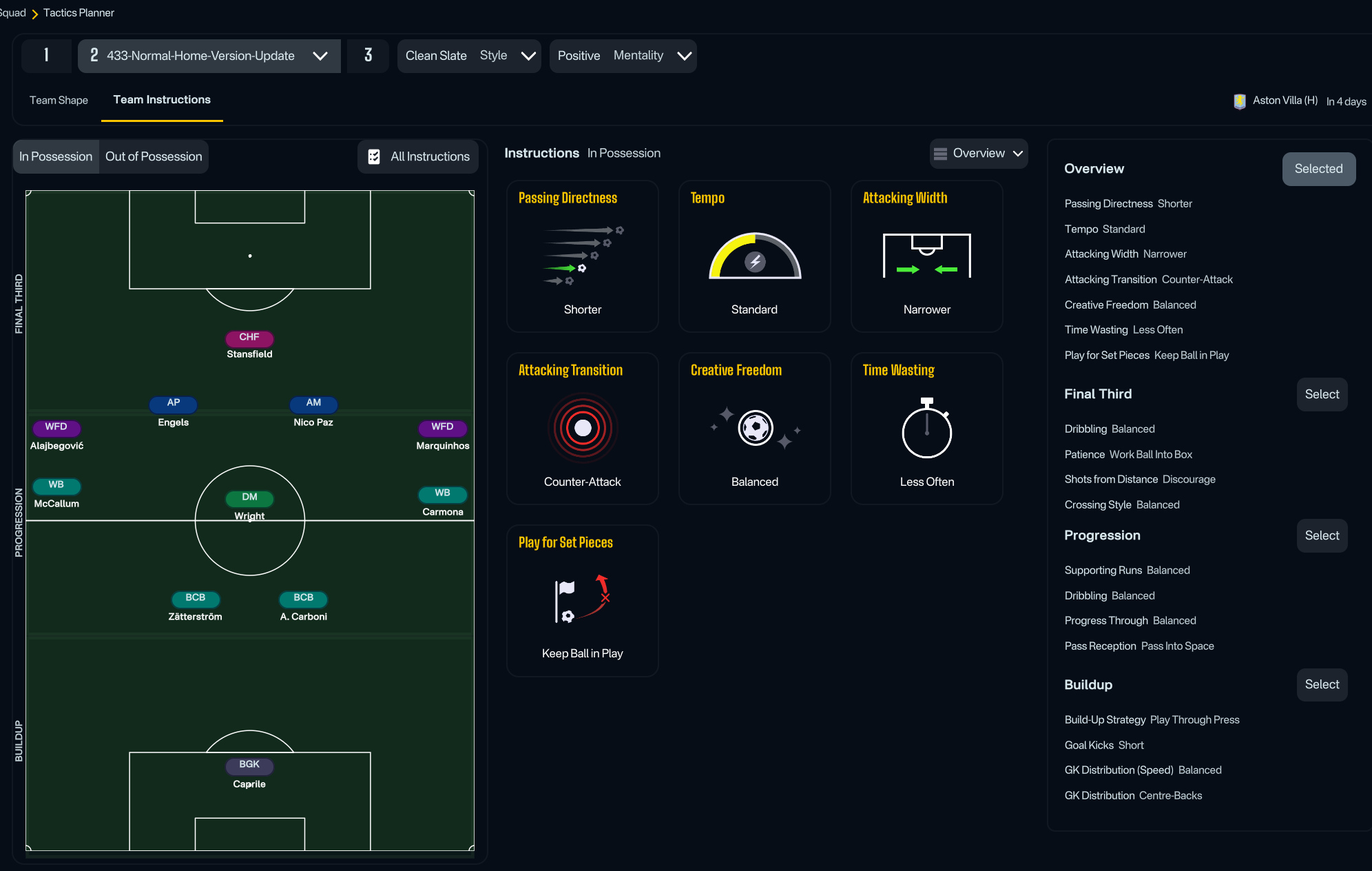
Formation & Style
Tactical Style:Balanced
Mentality:Positive
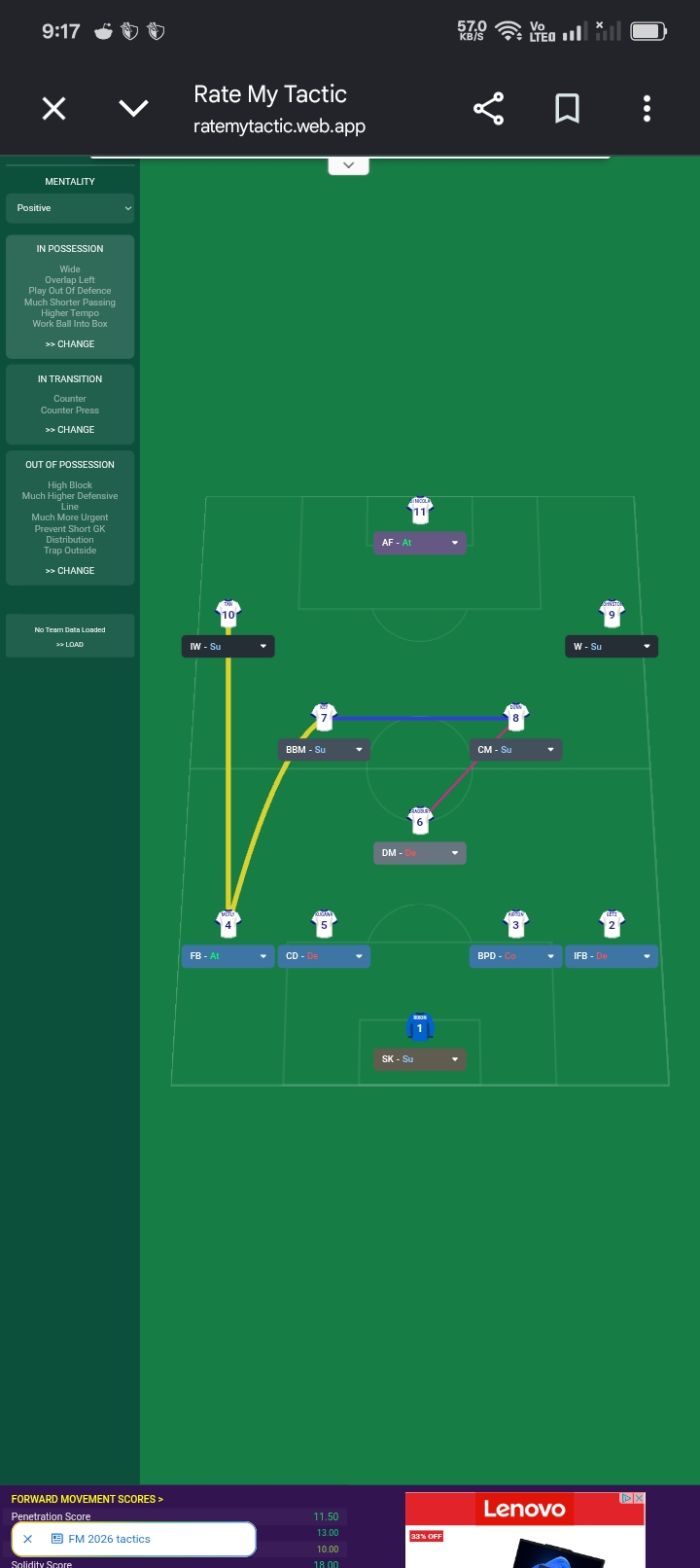
Formation:4-3-3
Team Fluidity:Structured
In Possession
Shorter Passing
Standard Tempo
Narrower Width
Counter-Attack Transition
Balanced Creative Freedom
Less Often Time Wasting
Keep Ball in Play for Set Pieces
In Transition
Counter-Attack:Enabled
Counter-Press:Immediate
Goalkeeper Distribution:Short
Throw-ins:Quick
Out of Possession
Defensive Line:Higher
Line of Engagement:Higher
Pressing Intensity:More Urgent
Offside Trap:Yes
Team Shape Without Ball
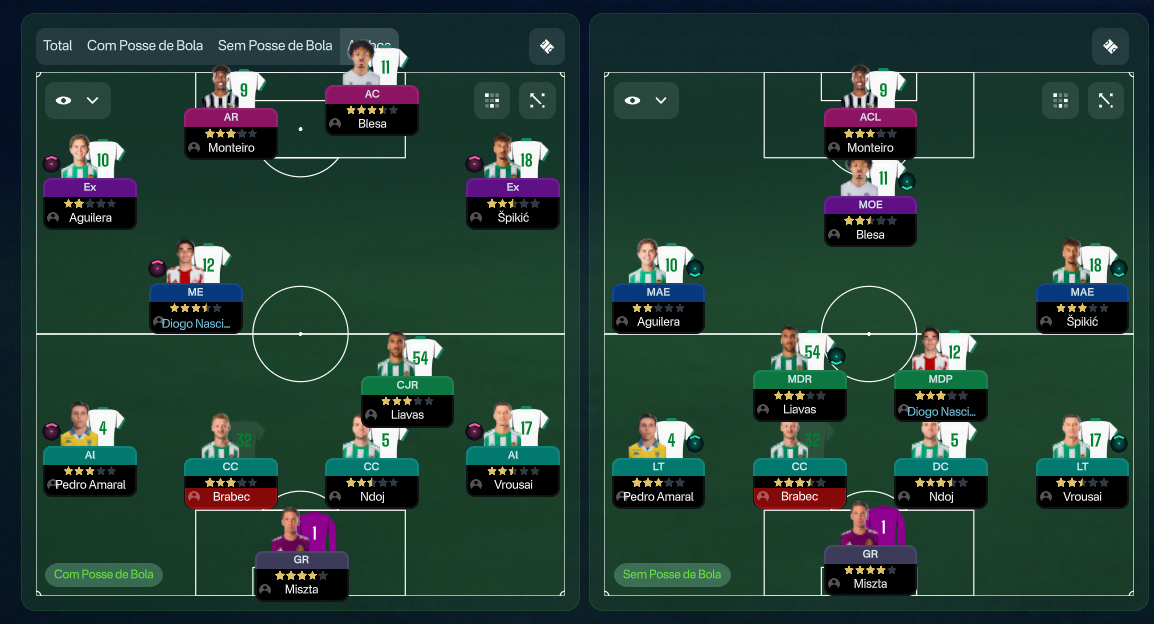
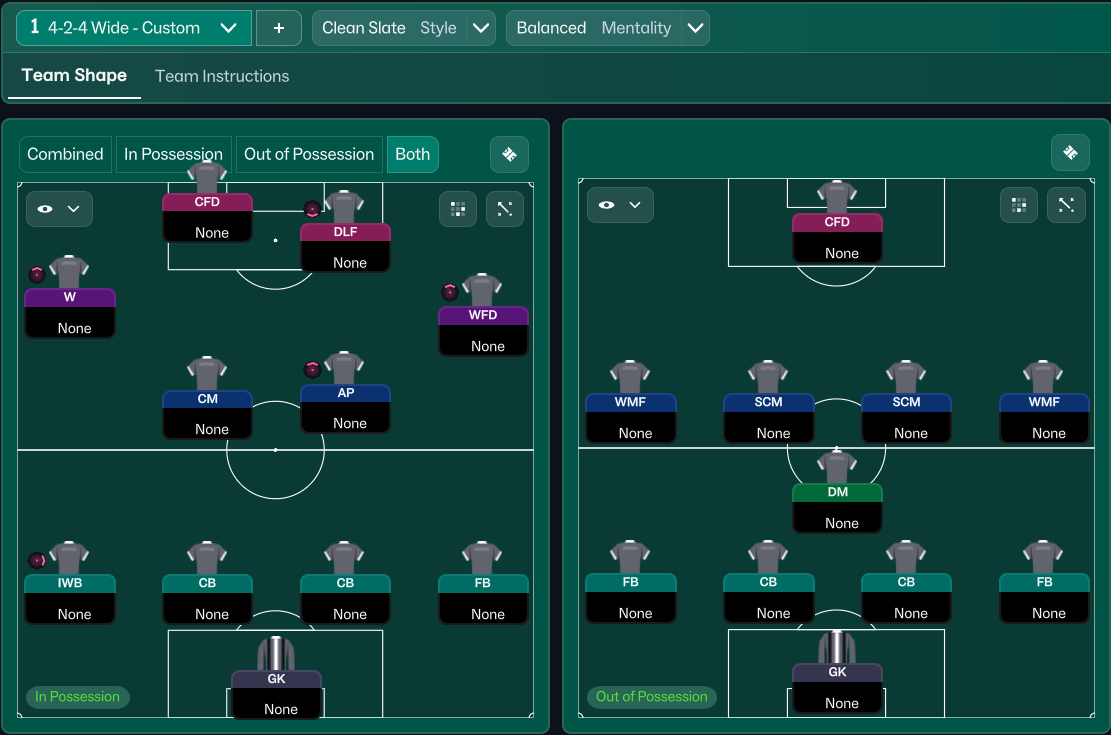
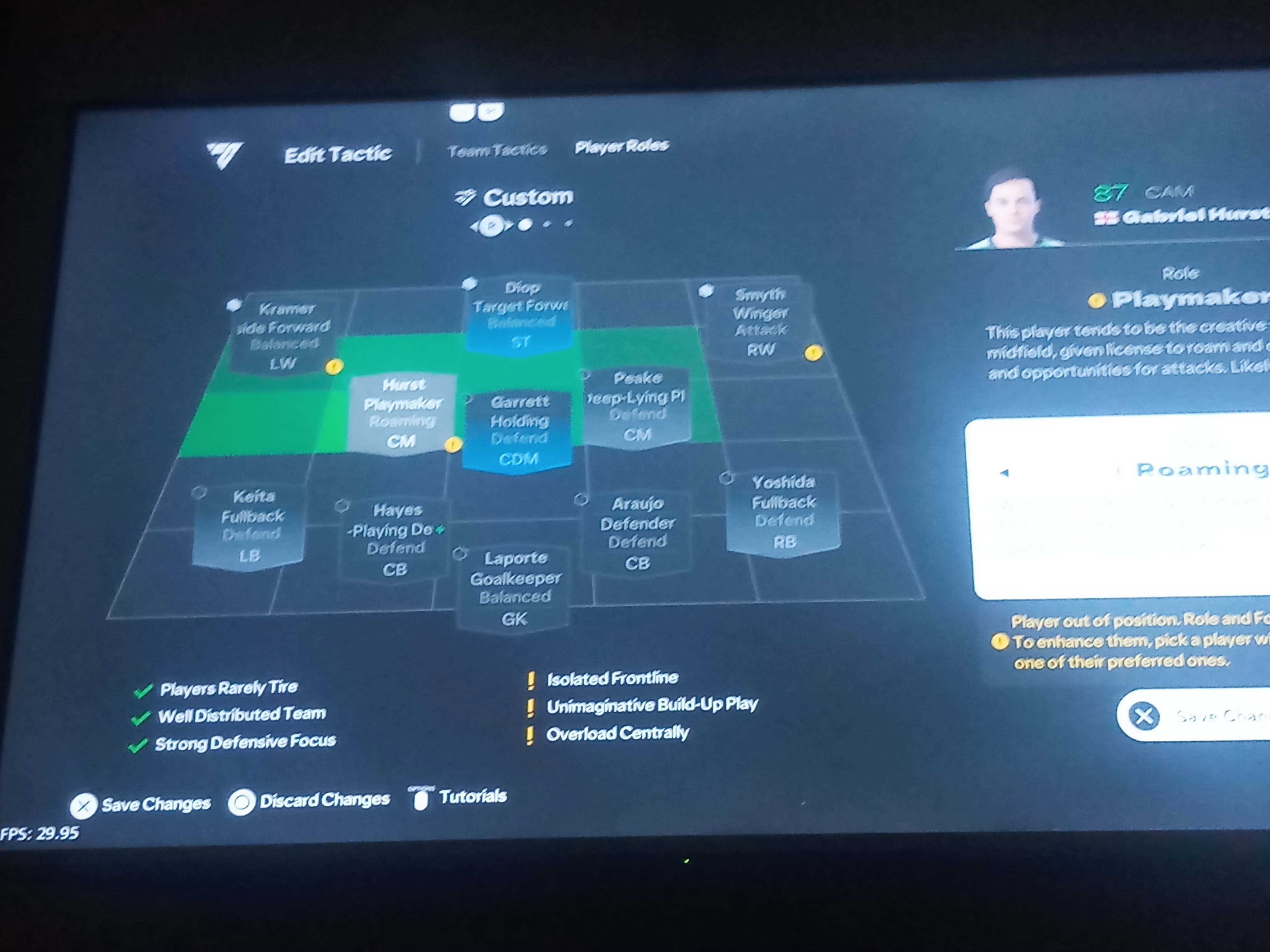
Shape:4-1-4-1
Description:A solid defensive block with a deep-lying midfielder providing cover for the defense.
Evidence:DM at [3,3] supports two CBs at [2,2] and [2,4] to reinforce defensive solidity.
Team Shape With Ball
Shape:4-3-3
Description:Wide offensive set-up with wingers stretching the play and a central forward leading the line.
Evidence:Wingers (WFD) at [6,1] and [6,5] and an AM (AM) at [5,3] create attacking overloads.
Phase Description
Attacking Play
Utilizes a shorter passing game, focusing on working the ball into the box through intricate play on the flanks.
Defensive Transition
null
Main Focus
Counter-attacks prompted by fast transitions after winning the ball back.
Key Strengths
Strong Wing Play
The use of Wingers on both flanks allows for varied attacking options and width.
Balanced Midfield Structure
Having a deep-lying midfielder allows for both defensive cover and creative distribution.
Quick Transitions
The counter-attacking strategy enables quick transitions into the final third.
Conflicting Directions
Short Passing vs. Counter-Attacking
Short passing may be too slow for effective counter-attacking play.
Narrow Width in Attack
Narrow attacking width may limit wingers' effectiveness.
Standard Tempo with Counter-Adjustment
A standard tempo might not suit a counter-attacking approach.
Tactical Suggestions
Increase Tempo
Elevating the tempo can complement the counter-attacking strategy, enhancing team speed on transitions.
Adjust Width
Widening the attacking shape can benefit the wingers and stretch the opposition defense.
Consider Passing Directness
Changing to a more direct passing style may help exploit transitions effectively.
Ask Questions About Your Lineup
Related Tactics
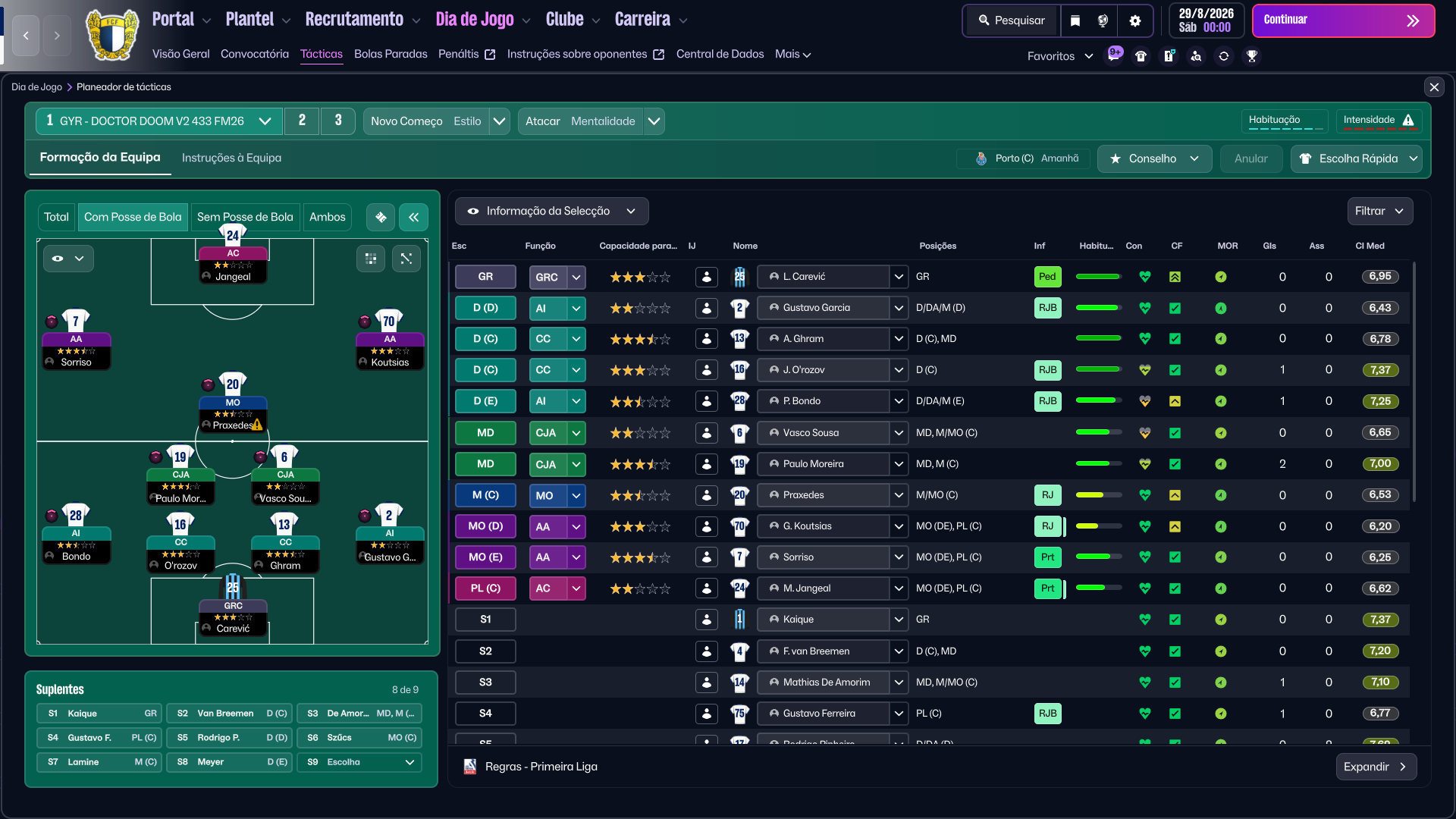
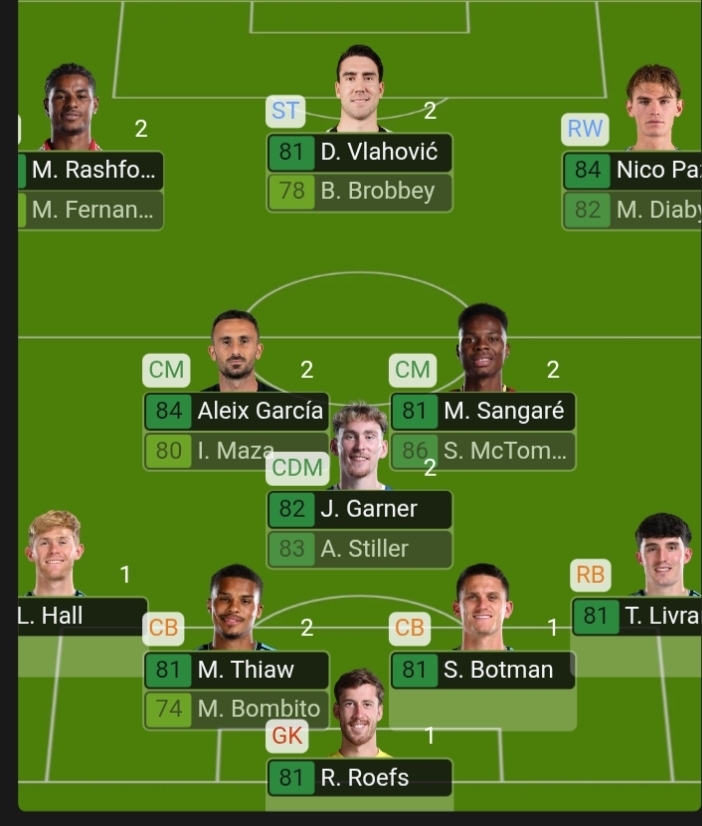
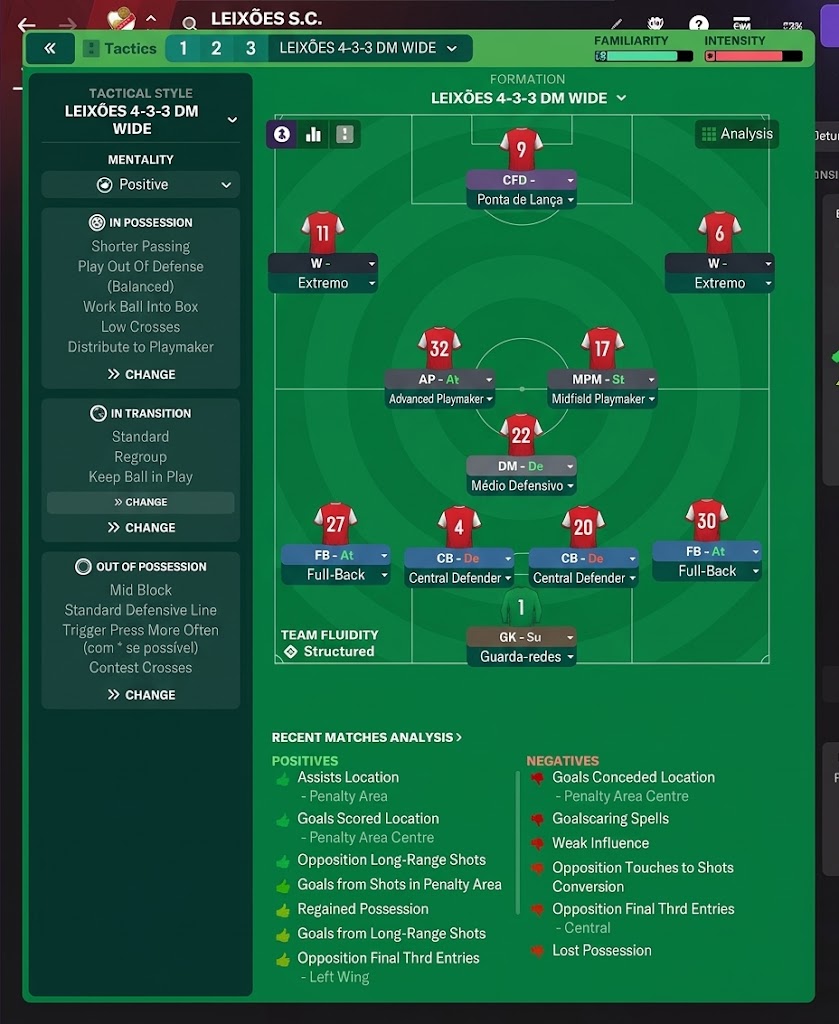
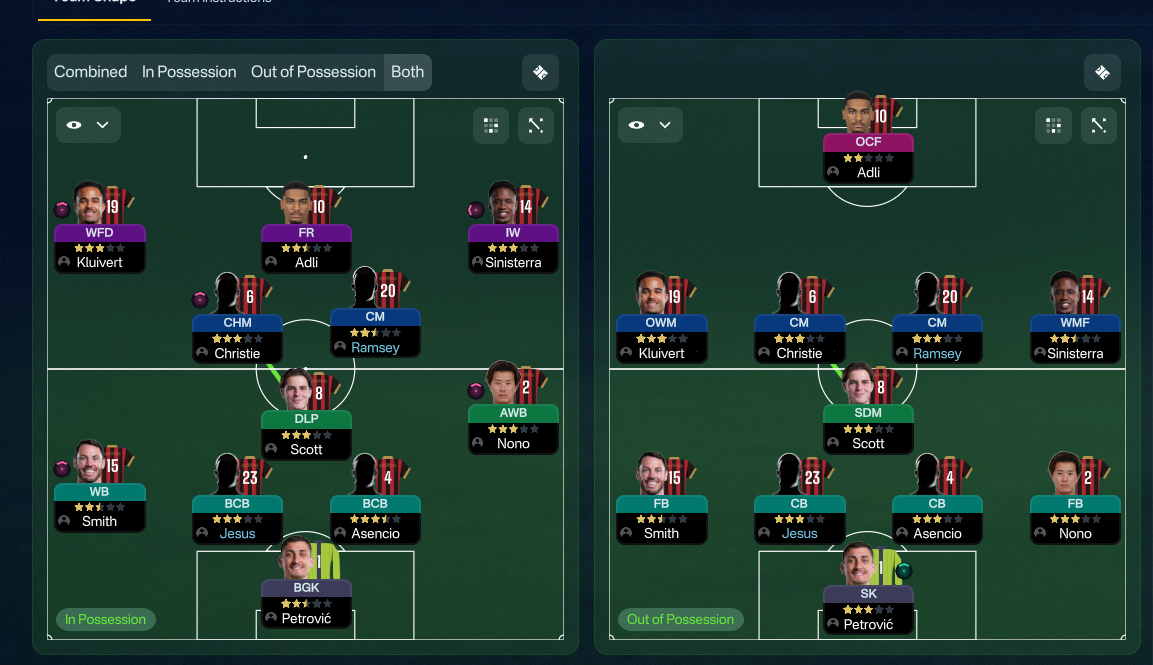
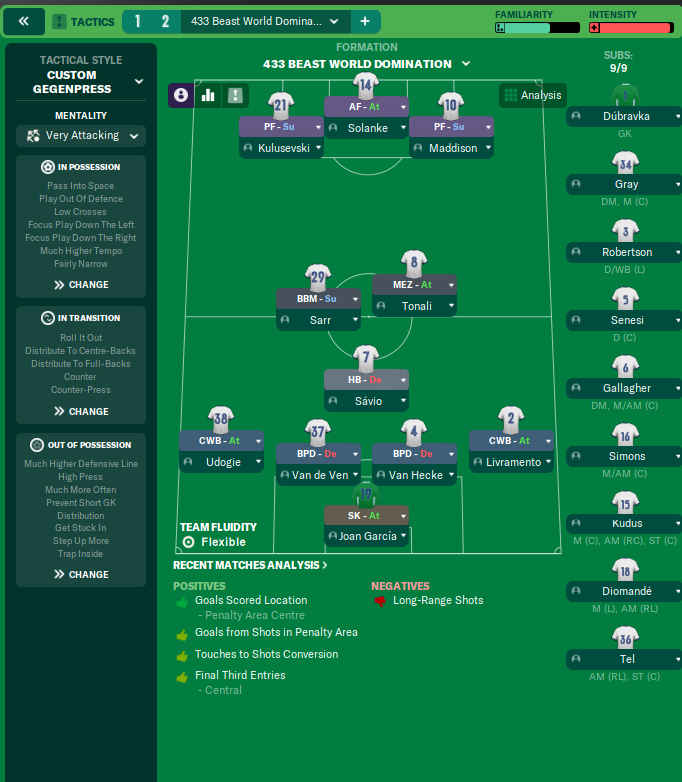
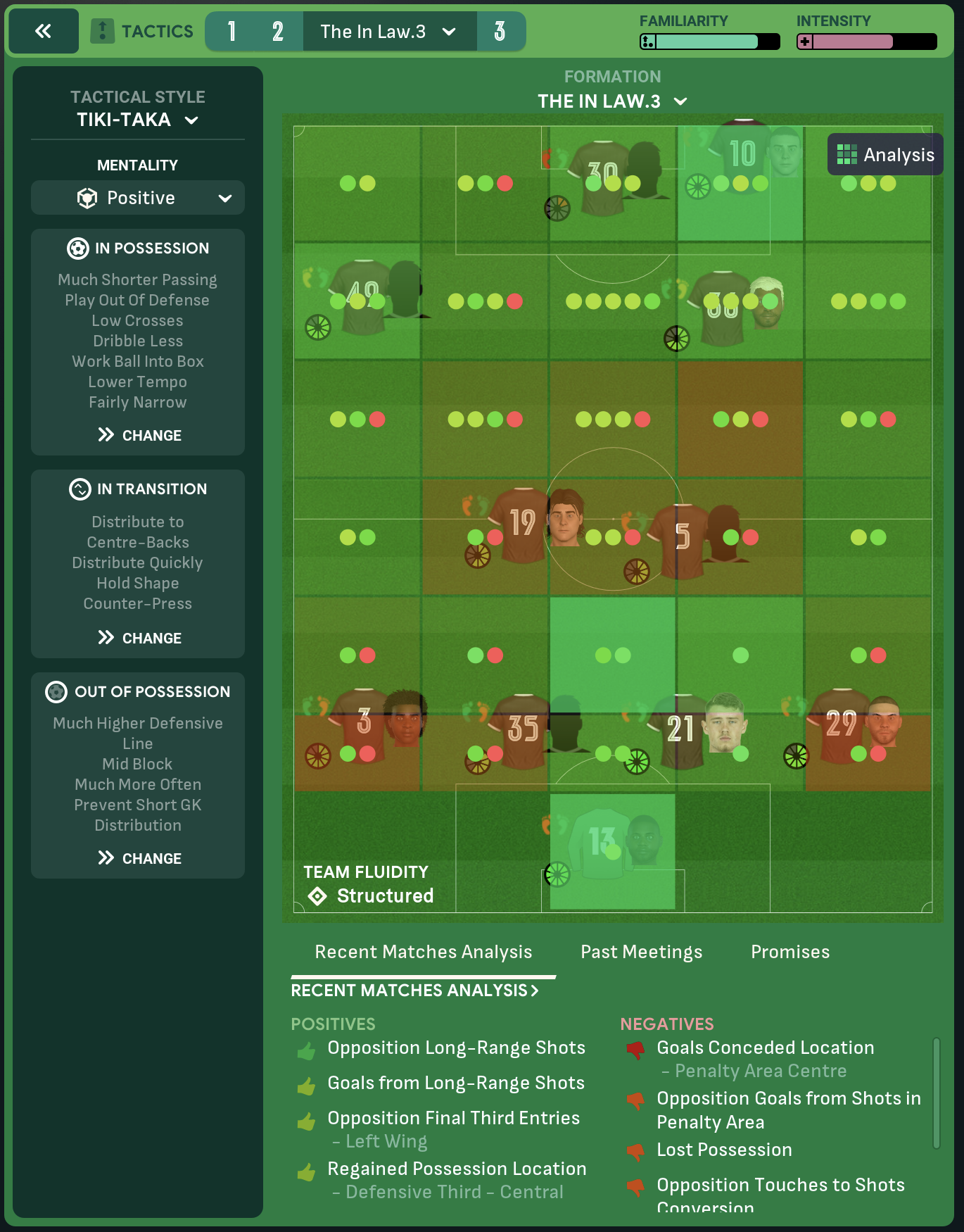
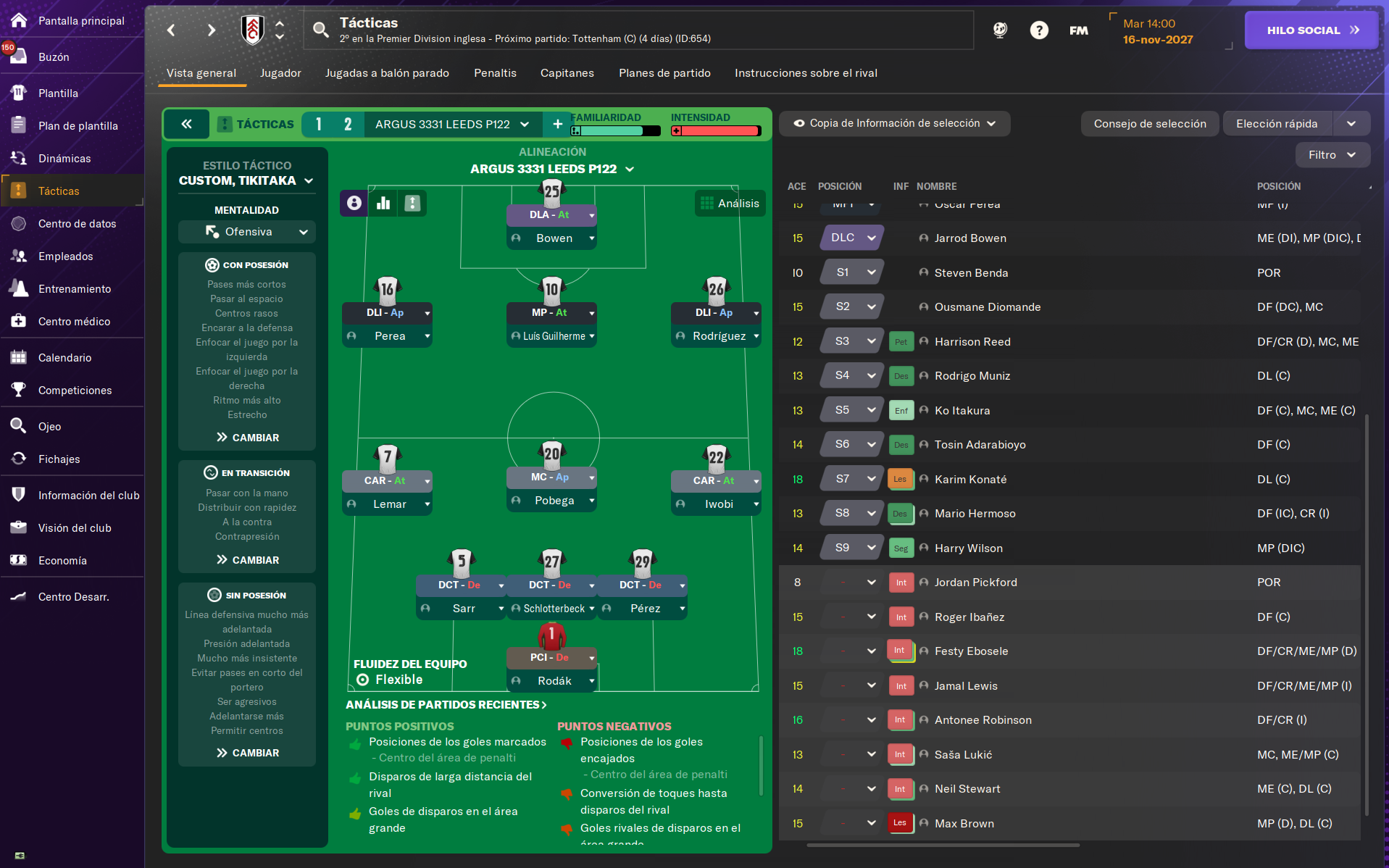
More Balanced tactics
Guides for this formation
The tactical theory behind the 4-3-3: roles, instructions, and the trade-offs that decide whether the system holds up.
Foundations
Understanding the 4-3-3 Formation
Master the classic 4-3-3: player roles, tactical variations, and the trade-offs that decide whether it sings or stalls.
Read guide
Player pairings
Midfield Trios
Holder, runner, creator: the role distribution rule for three-man midfields, the AMC variants, and the antipatterns that break them.
Read guide
Playing styles
Gegenpressing: A Full Guide
Klopp-style gegenpressing in FM, including squad profile, line-and-press pairing, sustainable workload, and the antipatterns to avoid.
Read guide