Uploaded Tactic
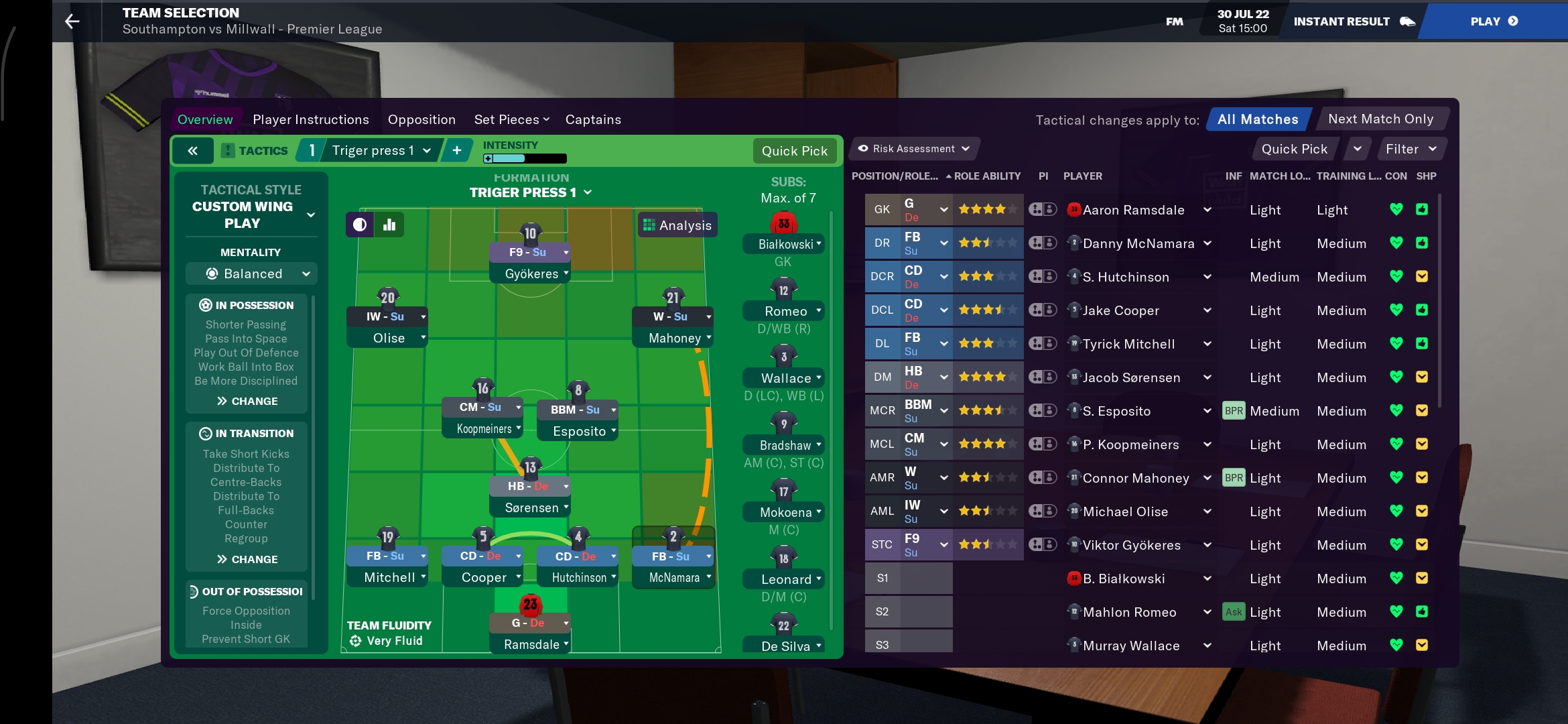
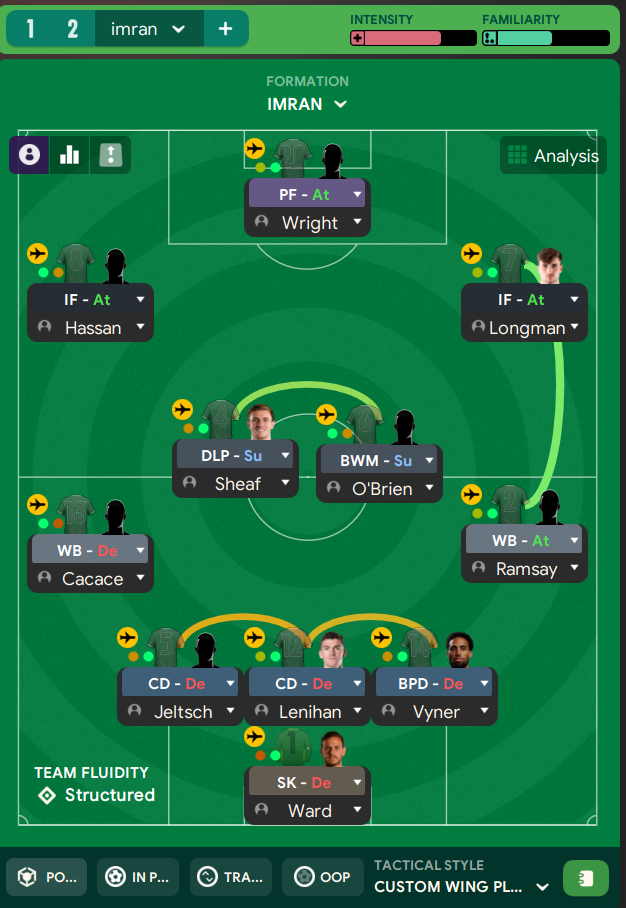
Formation & Style
Tactical Style:Custom Wing Play
Mentality:Balanced
Formation:4-3-3
Team Fluidity:Very Fluid
In Possession
Shorter Passing
Pass Into Space
Play Out of Defence
Work Ball Into Box
Be More Disciplined
In Transition
Take Short Kicks
Distribute To Centre-Backs
Distribute To Full-Backs
Counter
Regroup
Out of Possession
Force Opposition Inside
Prevent Short GK Distribution
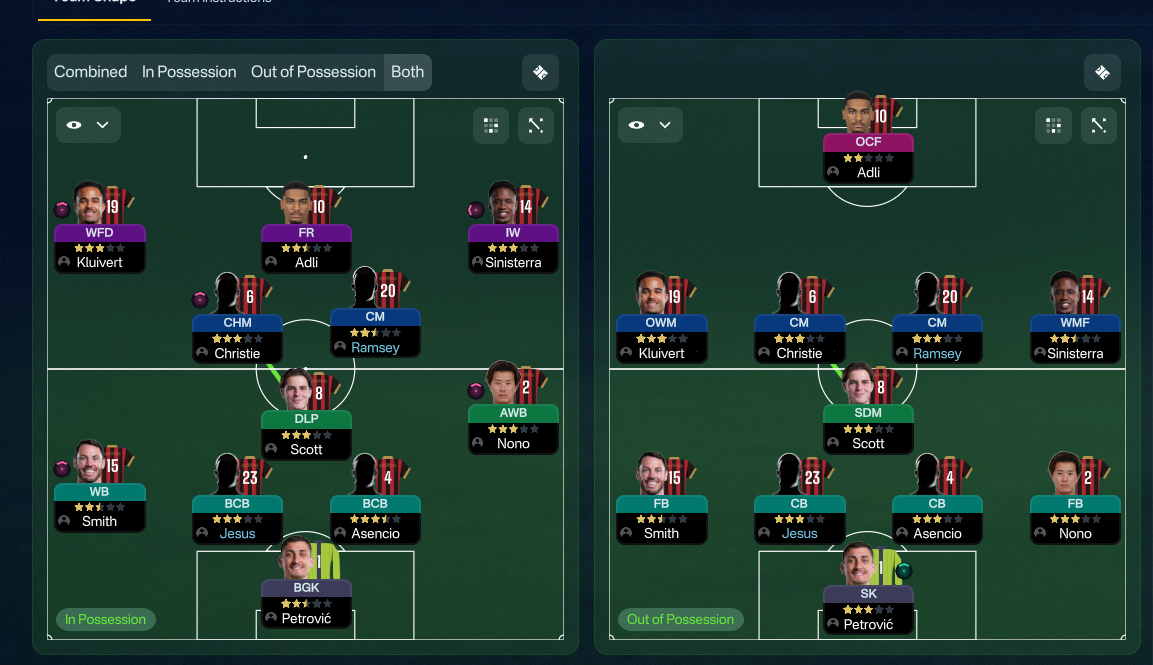
Team Shape Without Ball
Shape:Compact
Description:The team remains compact in defensive phases, preventing the opposition from playing through the middle.
Evidence:HB-De at [3,3] to shield back four and CD-De [2,2],[2,3]
Team Shape With Ball
Shape:Exploit Width
Description:Utilizing the width offered by wingers to create chances and stretch the opponent's defence.
Evidence:W-Su and IW-Su occupying wide areas for effective attacking play.
Phase Description
Attacking Play
Quick transitions with an emphasis on using width through the wingers and allowing the false nine to drop deeper.
Defensive Transition
Immediate regrouping with the holding midfielder offering protection to the backline.
Main Focus
Creating width and getting the ball into wide areas for crosses or cutting back to supporting midfielders.
Key Strengths
Width in Attacking Play
The wingers can create space and provide options for overlapping full-backs.
Midfield Control
Three midfielders allow for ball retention and control in the center of the park.
Transition Management
Effective use of the holding midfielder to transition quickly from defence to attack.
Conflicting Directions
Potential Overreliance on Width
If play is too focused on wingers, the team might become predictable and easy to defend against.
Lack of Height in Attack
With a false nine and smaller wingers, aerial threats may be limited.
Defensive Vulnerability on the Flanks
Full-backs pushing high could leave spaces behind if possession is lost.
Tactical Suggestions
Introduce a Target Forward
Adding a physical presence in attack could help with holding up play and creating more diverse attacking options.
Adjust Full-Back Roles
Consider changing one of the full-backs to a more defensively minded role when under pressure.
Fine-tune Defensive Shape
Should ensure the holding midfielder drops deeper during offensive phases to prevent counter-attacks.
Ask Questions About Your Lineup
Related Tactics
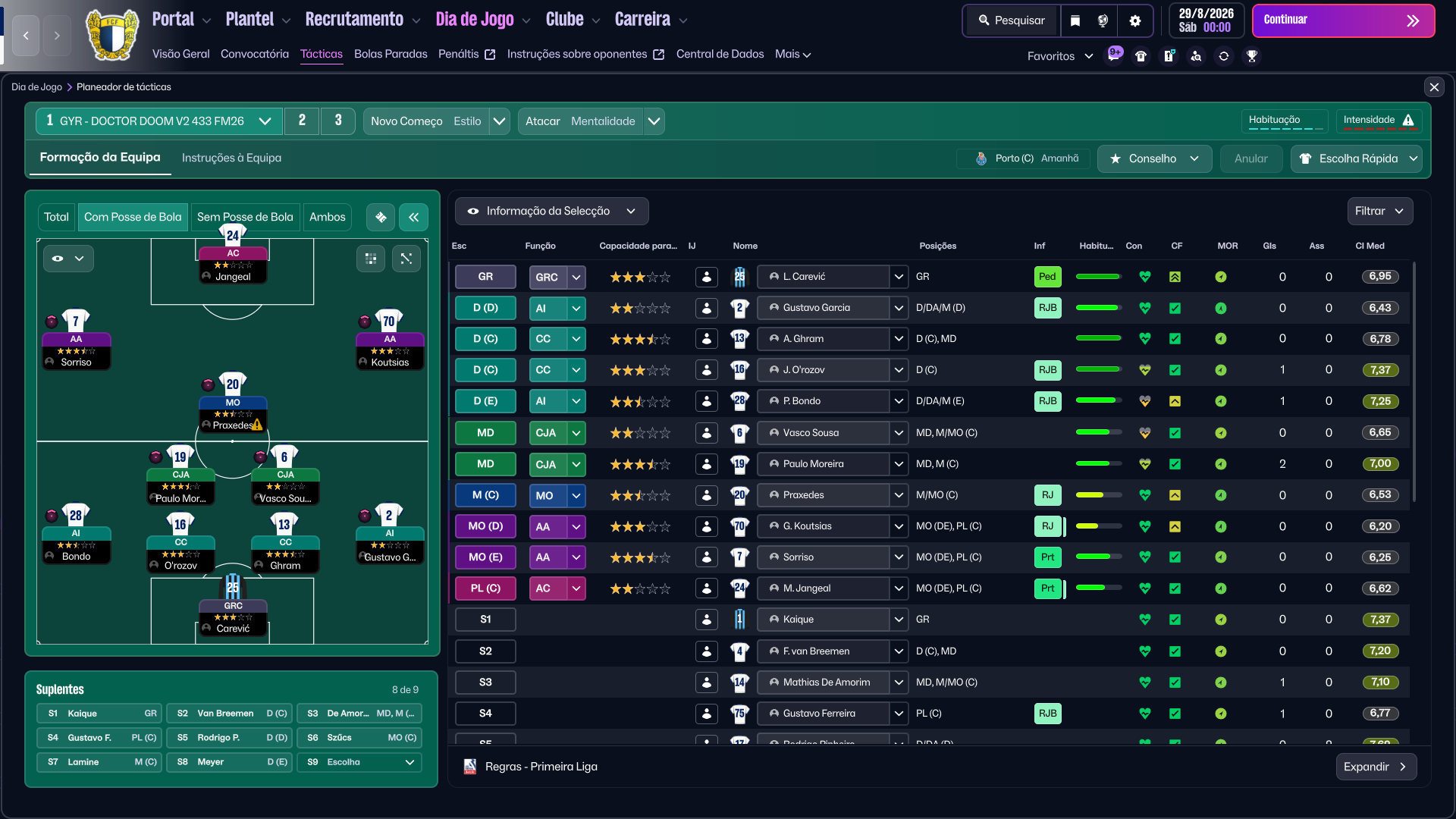
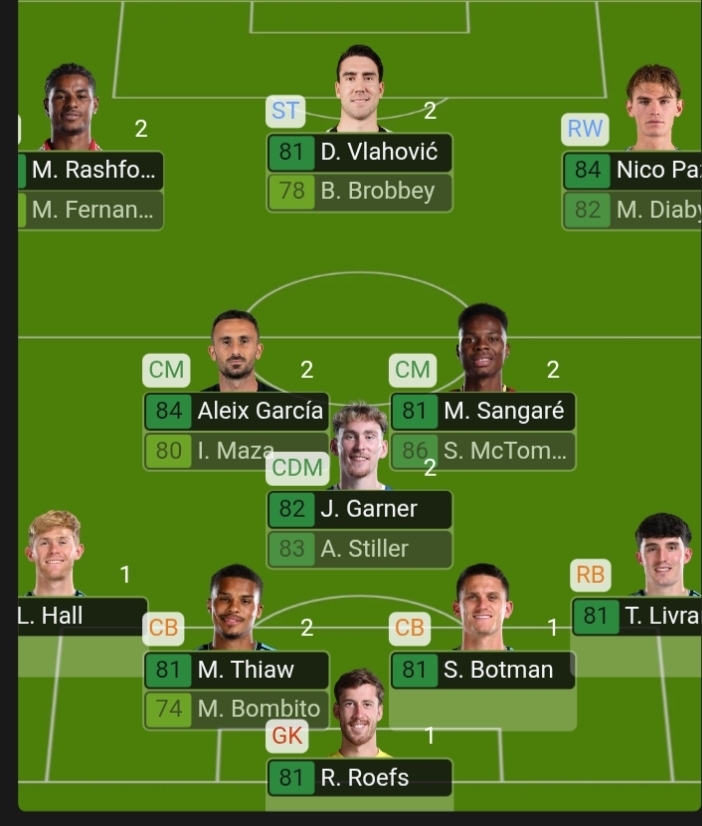
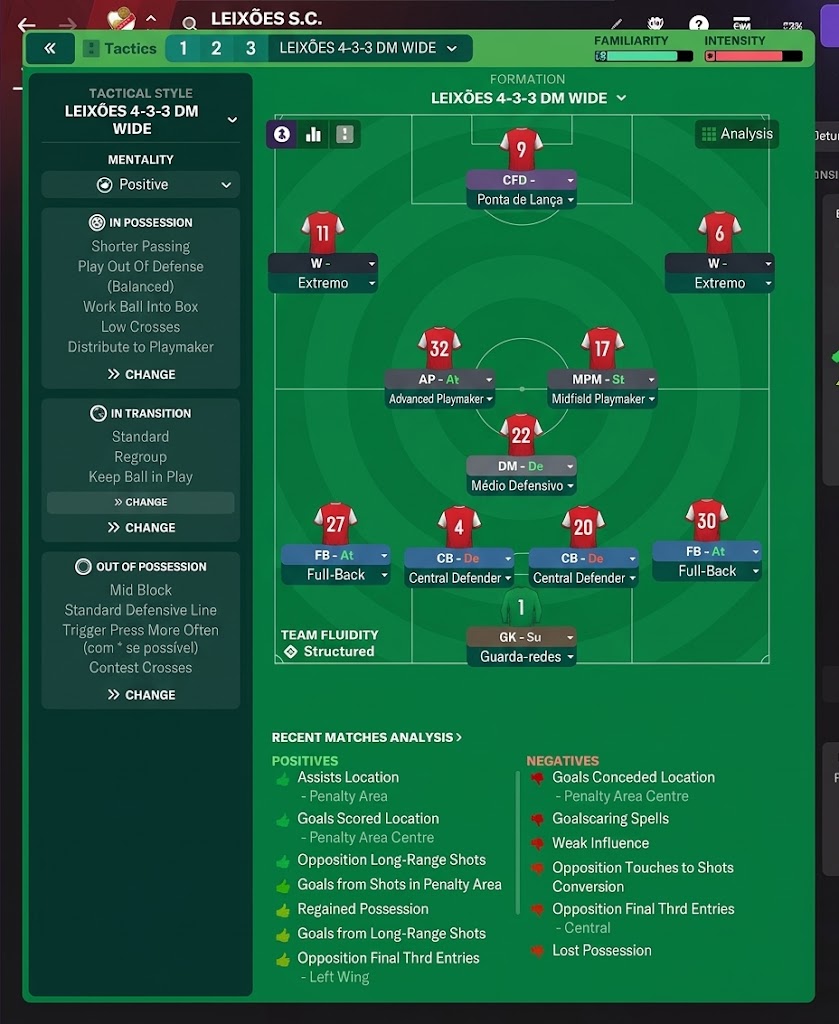
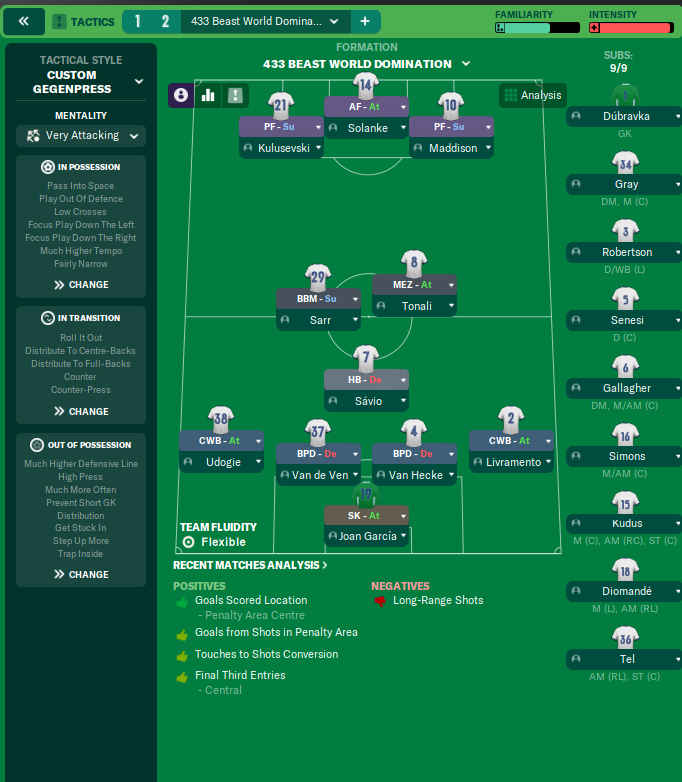
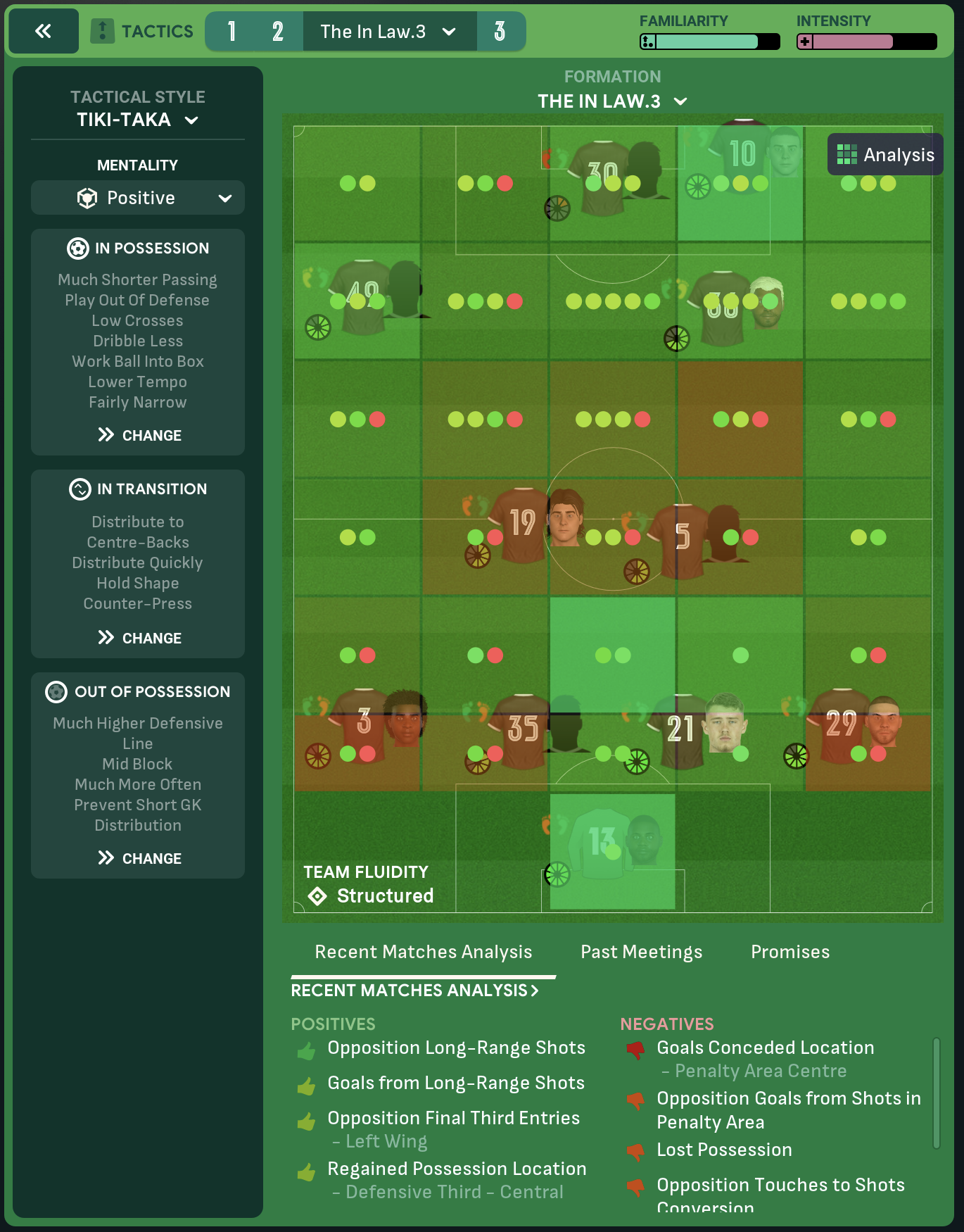
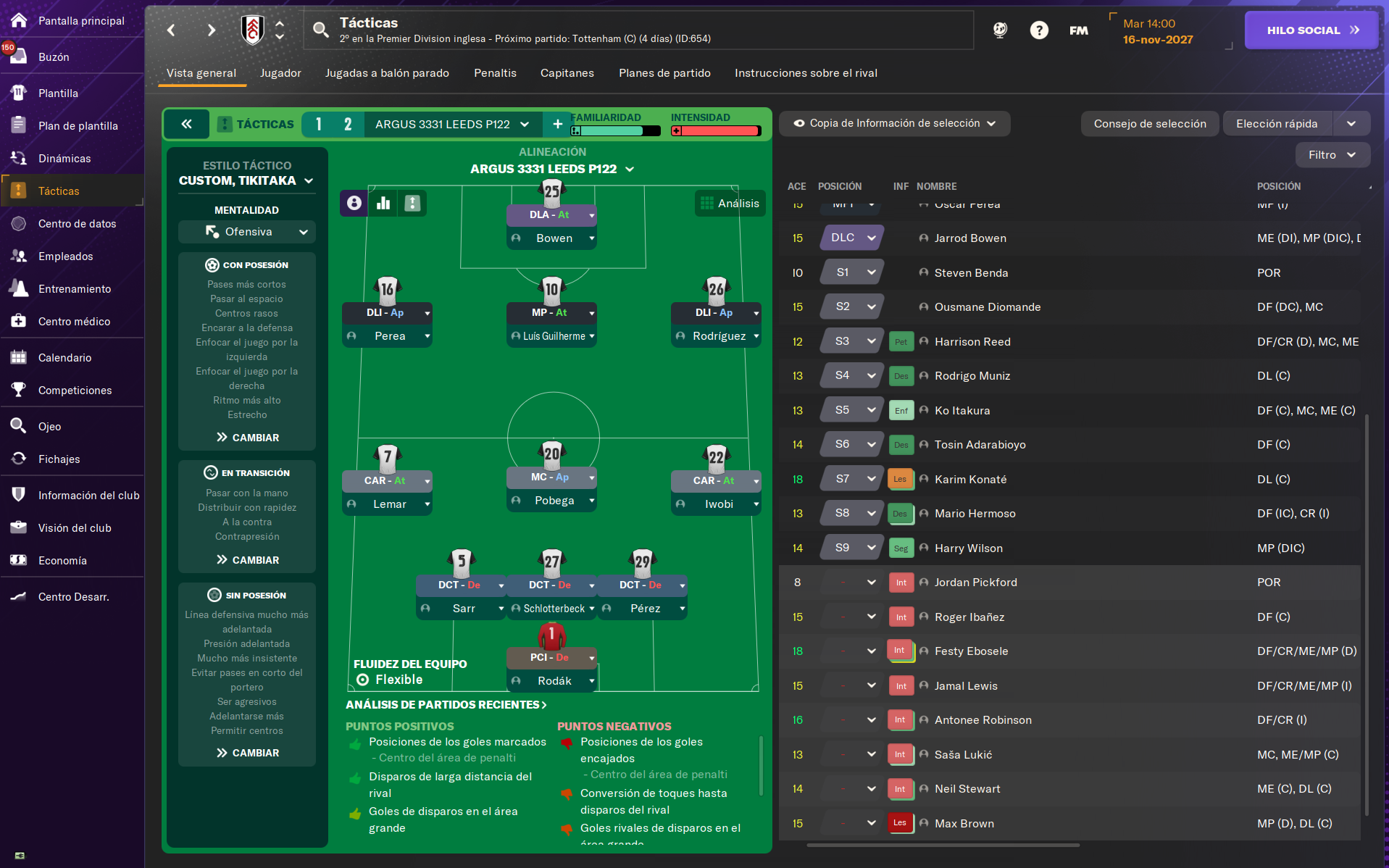
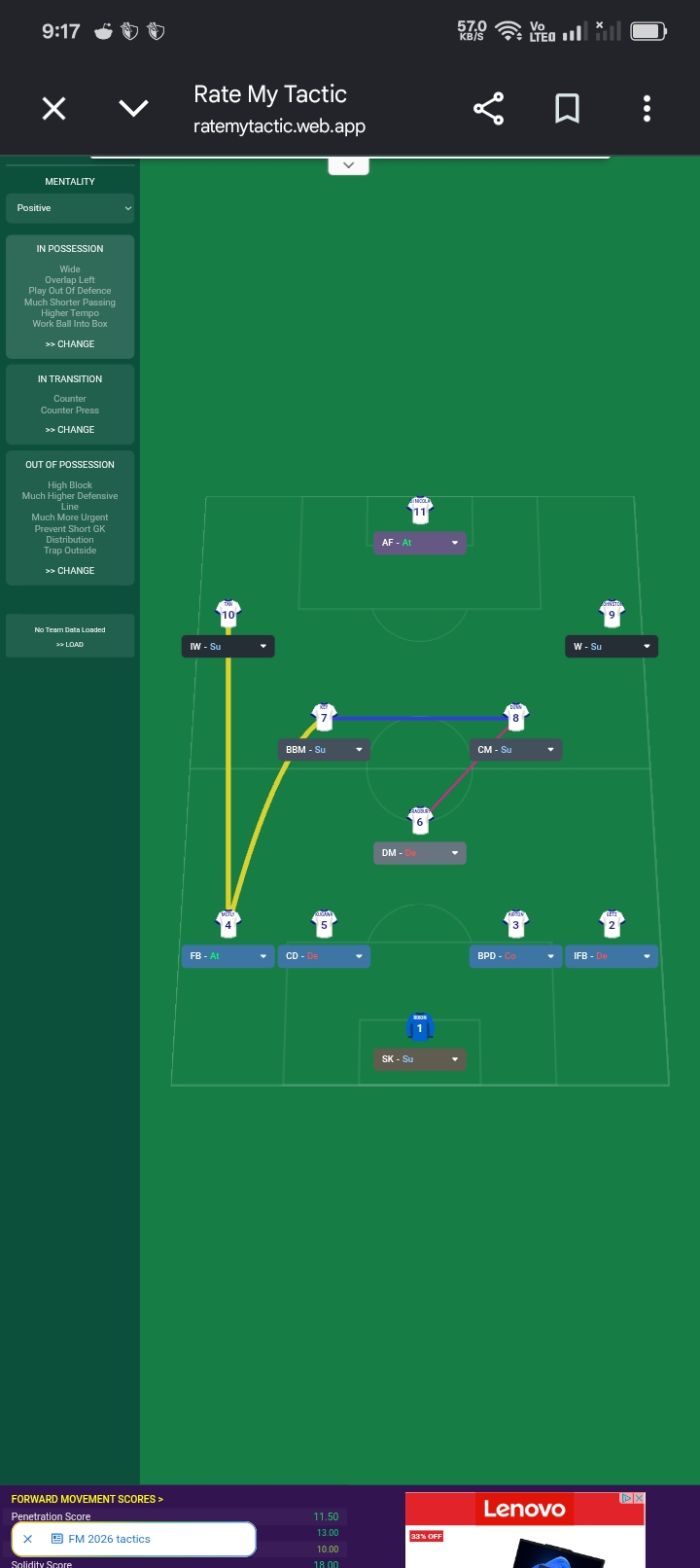
More Custom Wing Play tactics
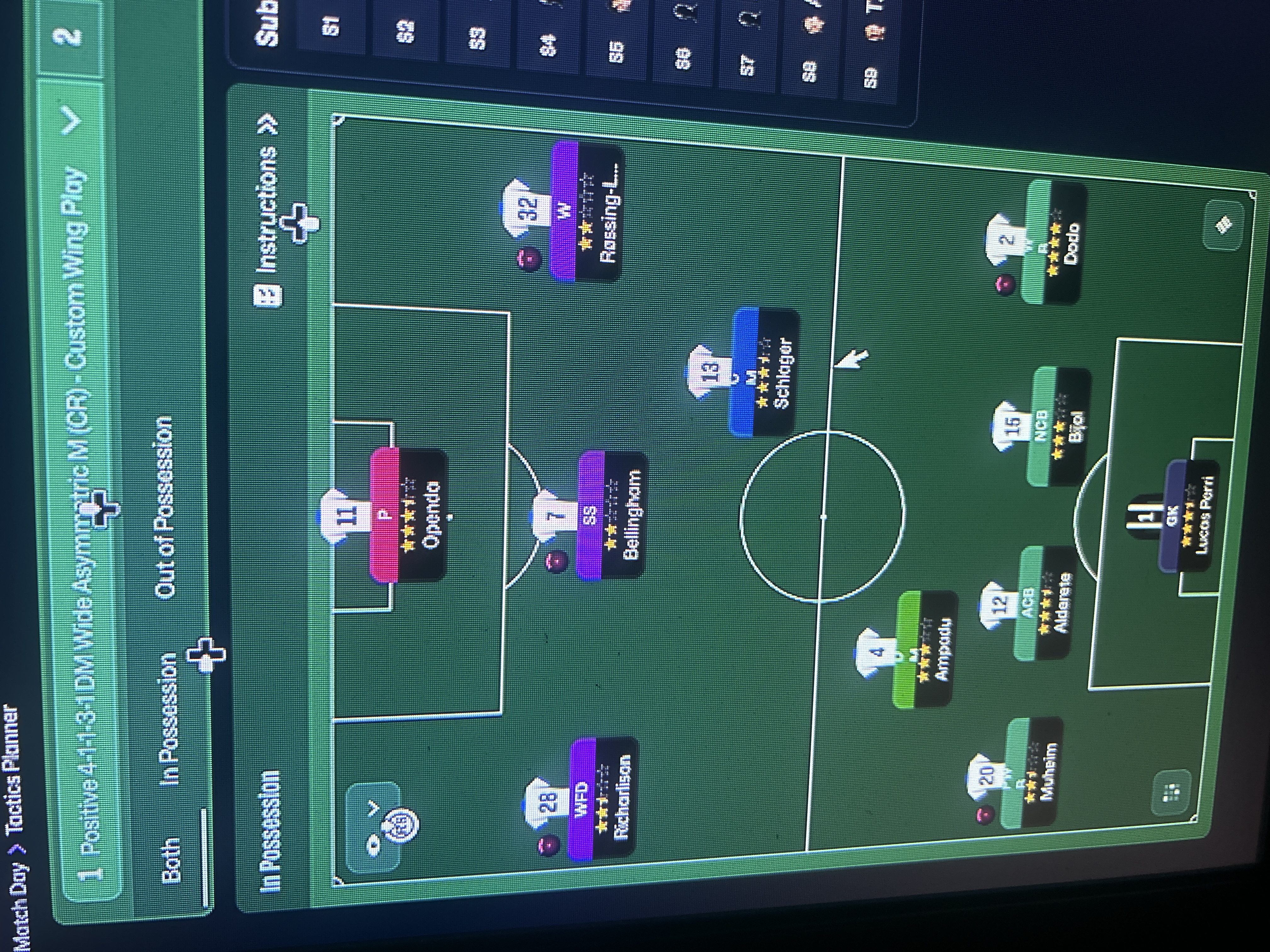
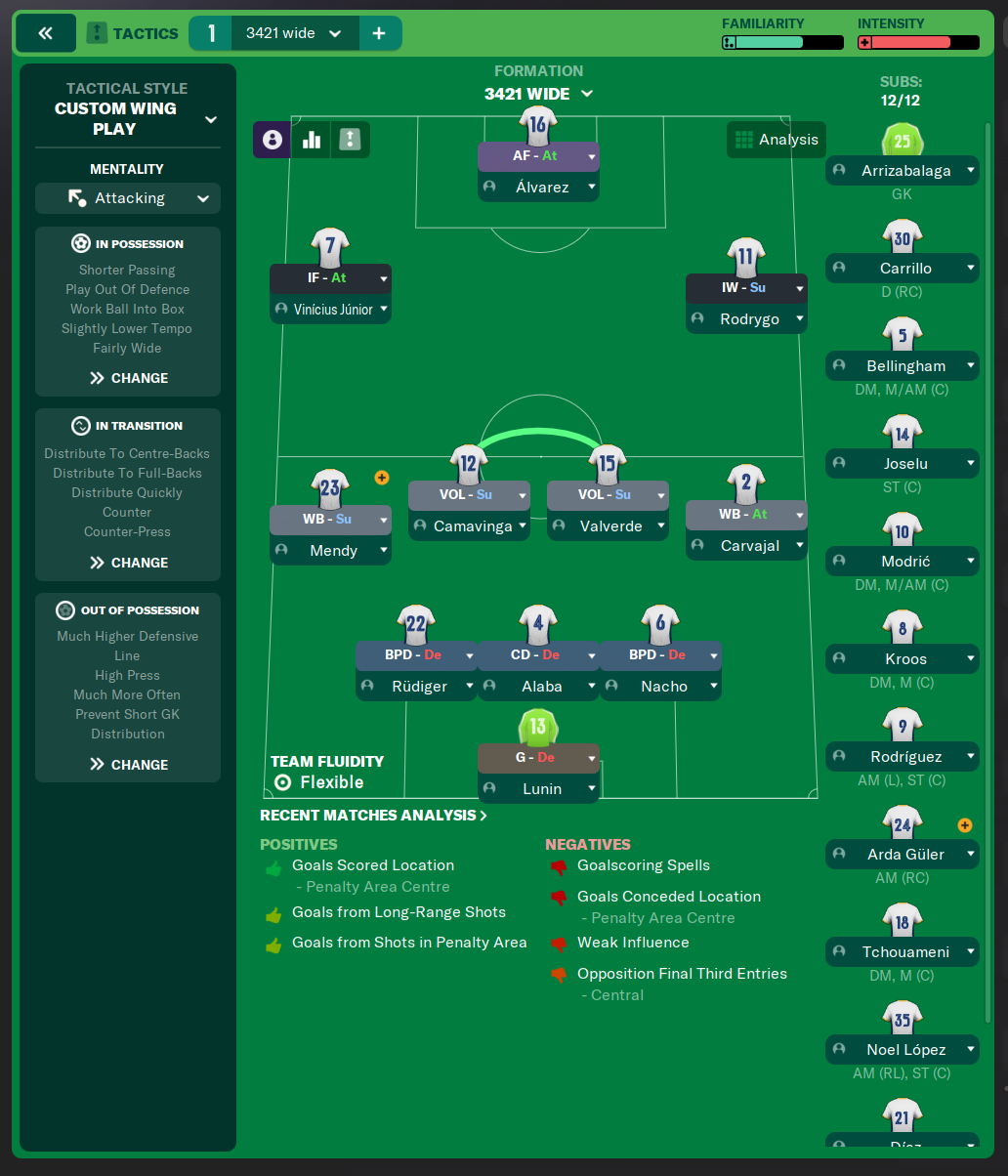
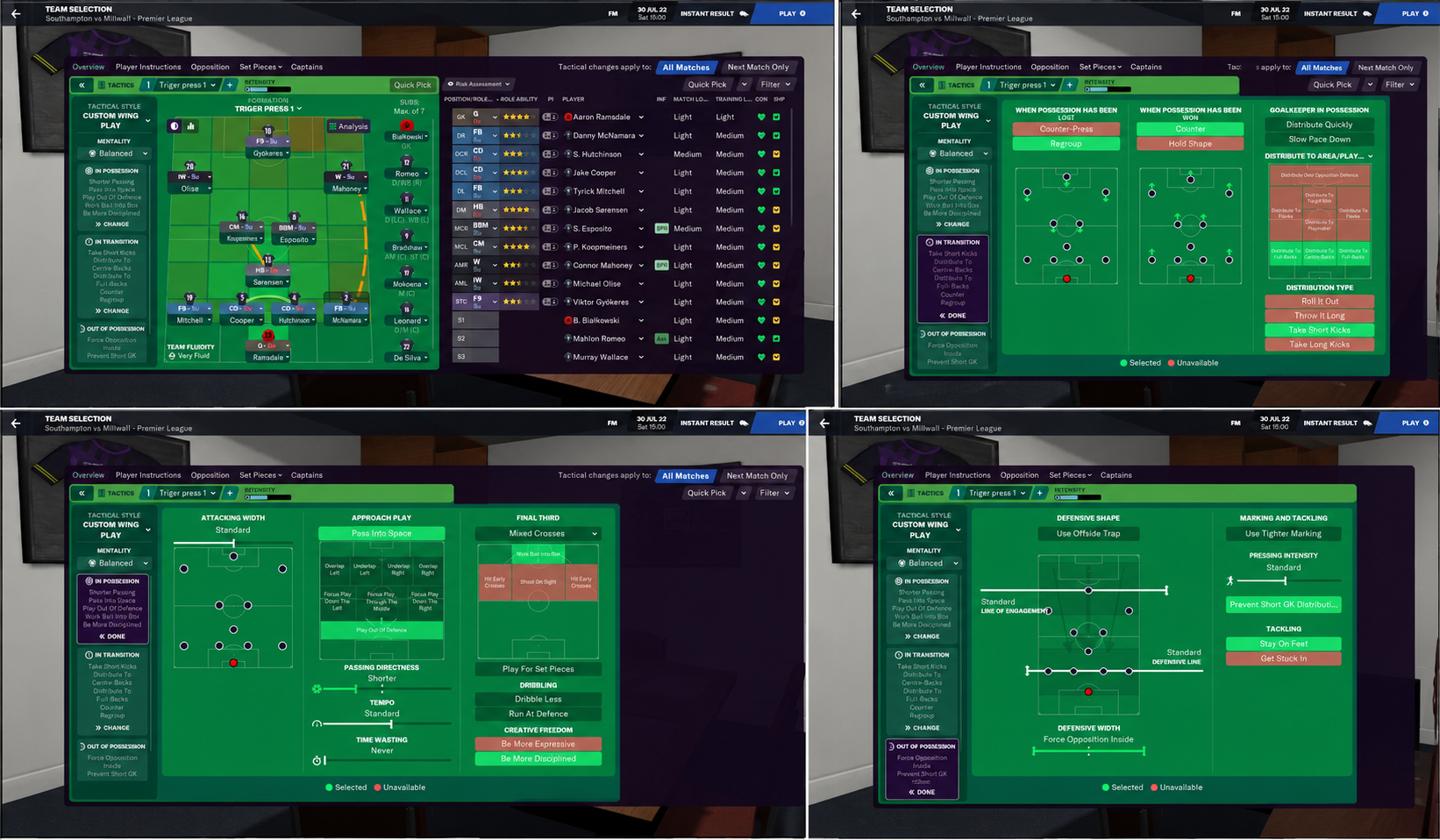
Guides for this formation
The tactical theory behind the 4-3-3: roles, instructions, and the trade-offs that decide whether the system holds up.
Foundations
Understanding the 4-3-3 Formation
Master the classic 4-3-3: player roles, tactical variations, and the trade-offs that decide whether it sings or stalls.
Read guide
Player pairings
Midfield Trios
Holder, runner, creator: the role distribution rule for three-man midfields, the AMC variants, and the antipatterns that break them.
Read guide
Playing styles
Gegenpressing: A Full Guide
Klopp-style gegenpressing in FM, including squad profile, line-and-press pairing, sustainable workload, and the antipatterns to avoid.
Read guide