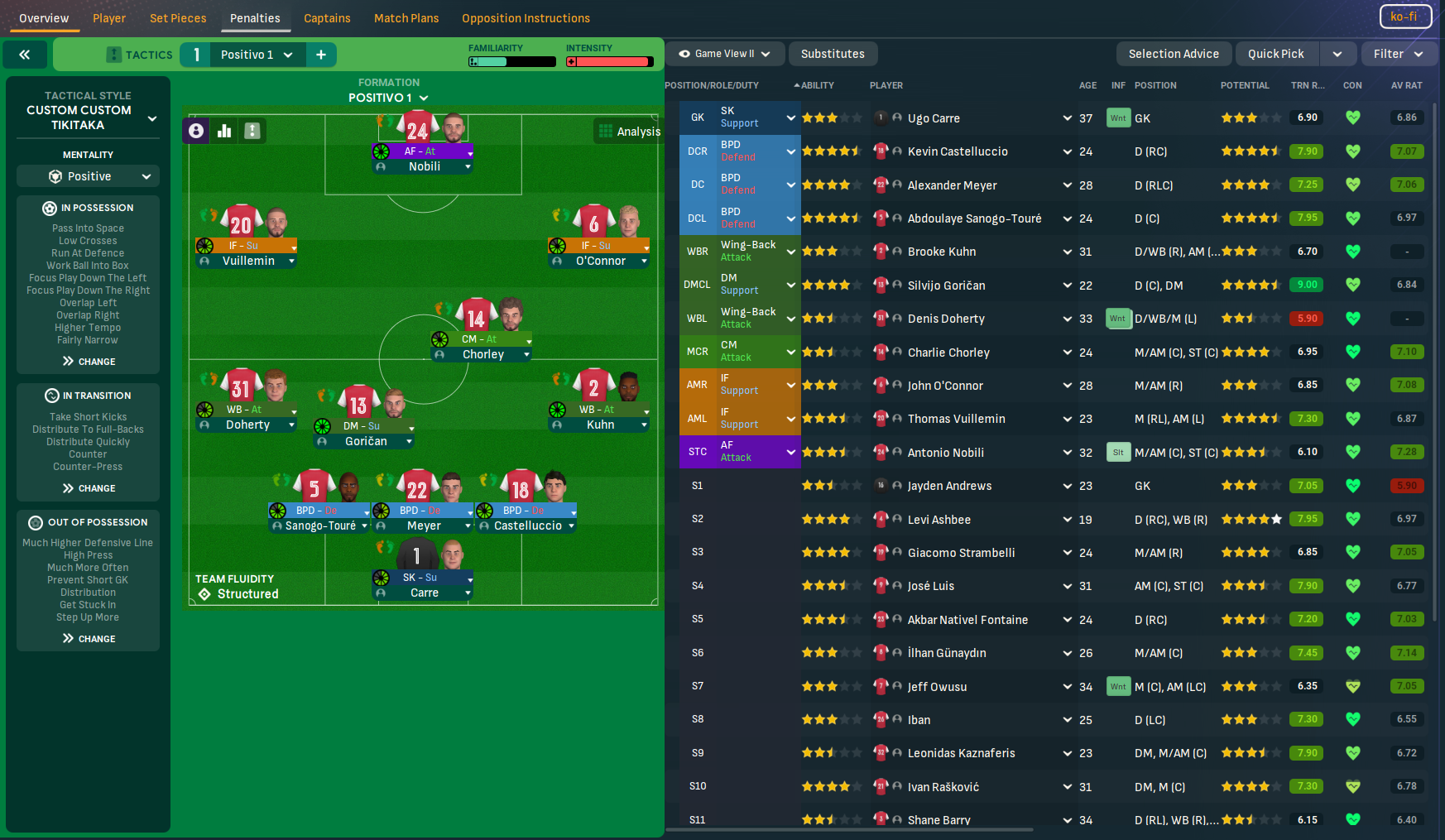
Uploaded Tactic
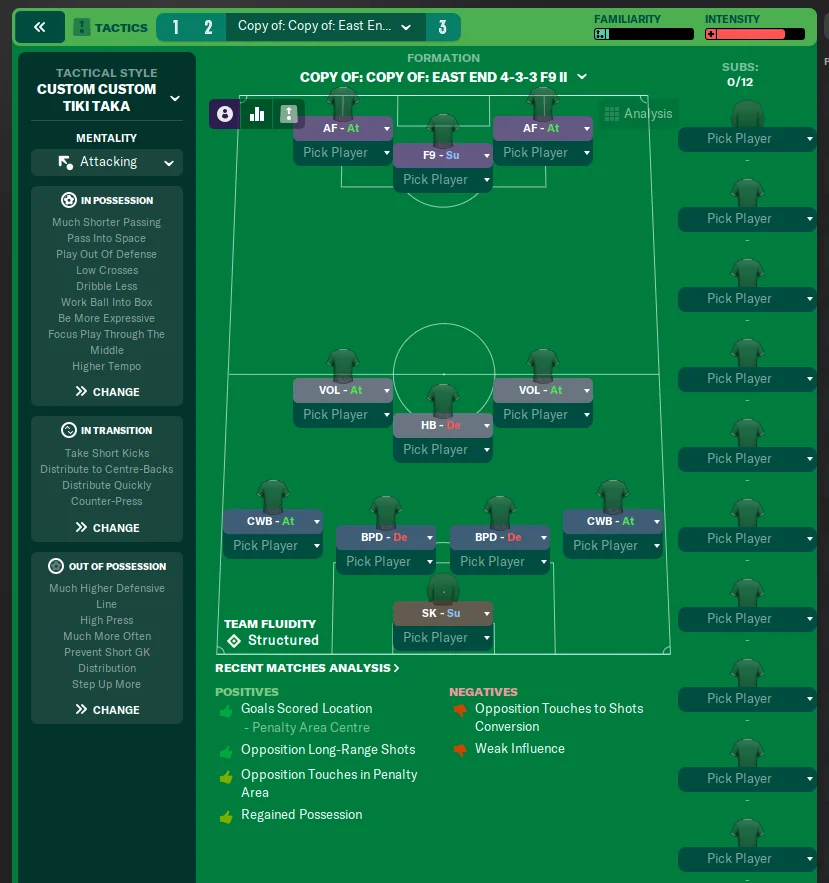
Formation & Style
Tactical Style:Custom Tiki Taka
Mentality:Attacking
Formation:4-3-3
Team Fluidity:Structured
In Possession
Much Shorter Passing
Pass Into Space
Play Out Of Defence
Low Crosses
Dribble Less
Work Ball Into Box
Be More Expressive
Focus Play Through The Middle
Higher Tempo
In Transition
Take Short Kicks
Distribute to Centre-Backs
Distribute Quickly
Counter-Press
Out of Possession
Much Higher Defensive Line
High Press
Much More Often
Prevent Short GK Distribution
Step Up More
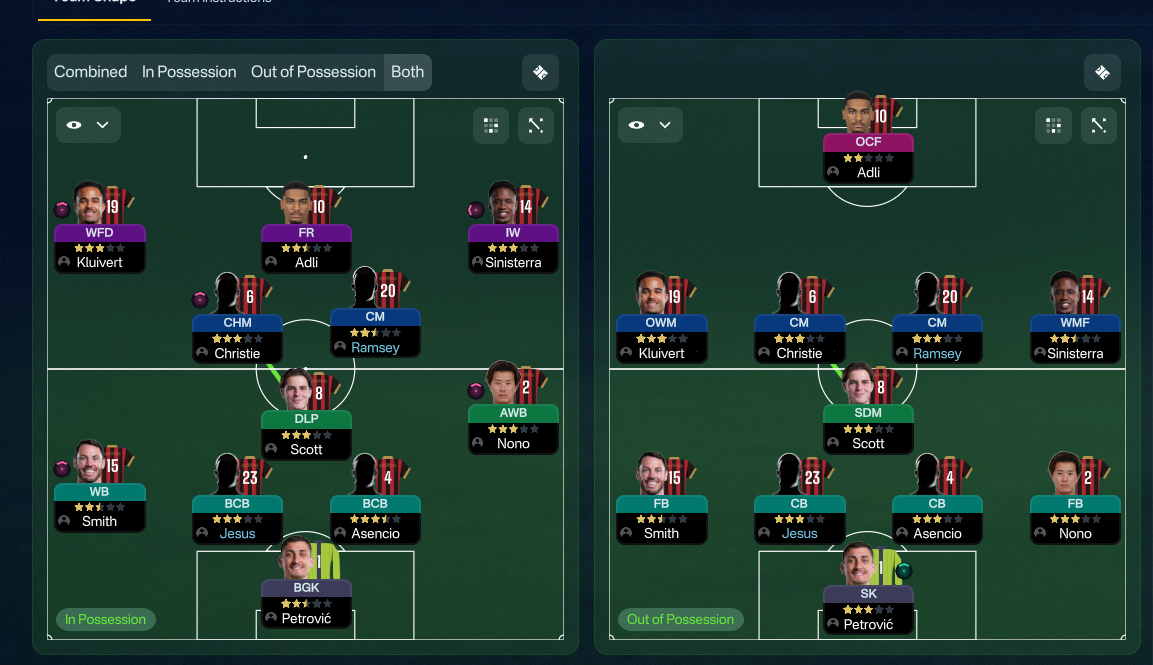
Team Shape Without Ball
Shape:4-1-2-3
Description:A compact shape with a Half Back dropping deeper to provide cover to the defense.
Evidence:HB-De at [3,3] supports two BPDs at [2,2] and [2,4].
Team Shape With Ball
Shape:3-3-4
Description:In possession, wing-backs push forward providing width while midfielders link with forwards.
Evidence:CWB-A at [2,1] and [2,5], Volantes at [3,3] and [3,4], and AF-A at [6,2].
Phase Description
Attacking Play
The attacking play is built through patient passing, maintaining possession until a high-quality opportunity arises, facilitated by the midfield and wing-backs overlapping.
Defensive Transition
Upon losing possession, the team quickly transitions to counter-press in high areas to regain control of the ball.
Main Focus
Creating scoring opportunities from the central and wide areas while keeping possession and controlling the tempo.
Key Strengths
Possession Retention
The team's focus on shorter passing and playing out of defense helps maintain possession.
Dynamic Wing Play
Using Complete Wing-Backs effectively stretches the opponent's defense.
Effective Pressing
High press combined with tactical instructions allows quick ball recovery.
Conflicting Directions
Risk of Counterattacks
While pressing high, the team can leave gaps at the back, exposing them to counterattacks.
Over-Reliance on Wide Play
Excessive focus on wing play may lead to predictability if options inside are limited.
Midfield Vulnerability
With two attacking Volantes, potential gaps can exist in midfield if possession is lost.
Tactical Suggestions
Adjust Defensive Line
Consider lowering the defensive line to mitigate counterattack risks.
Introduce a Holding Midfielder
Adding a more defensive-minded midfielder could balance the attack and defense.
Diversify Attacking Play
Incorporate alternative attacking methods to balance wing play with central penetration.
Ask Questions About Your Lineup
Related Tactics
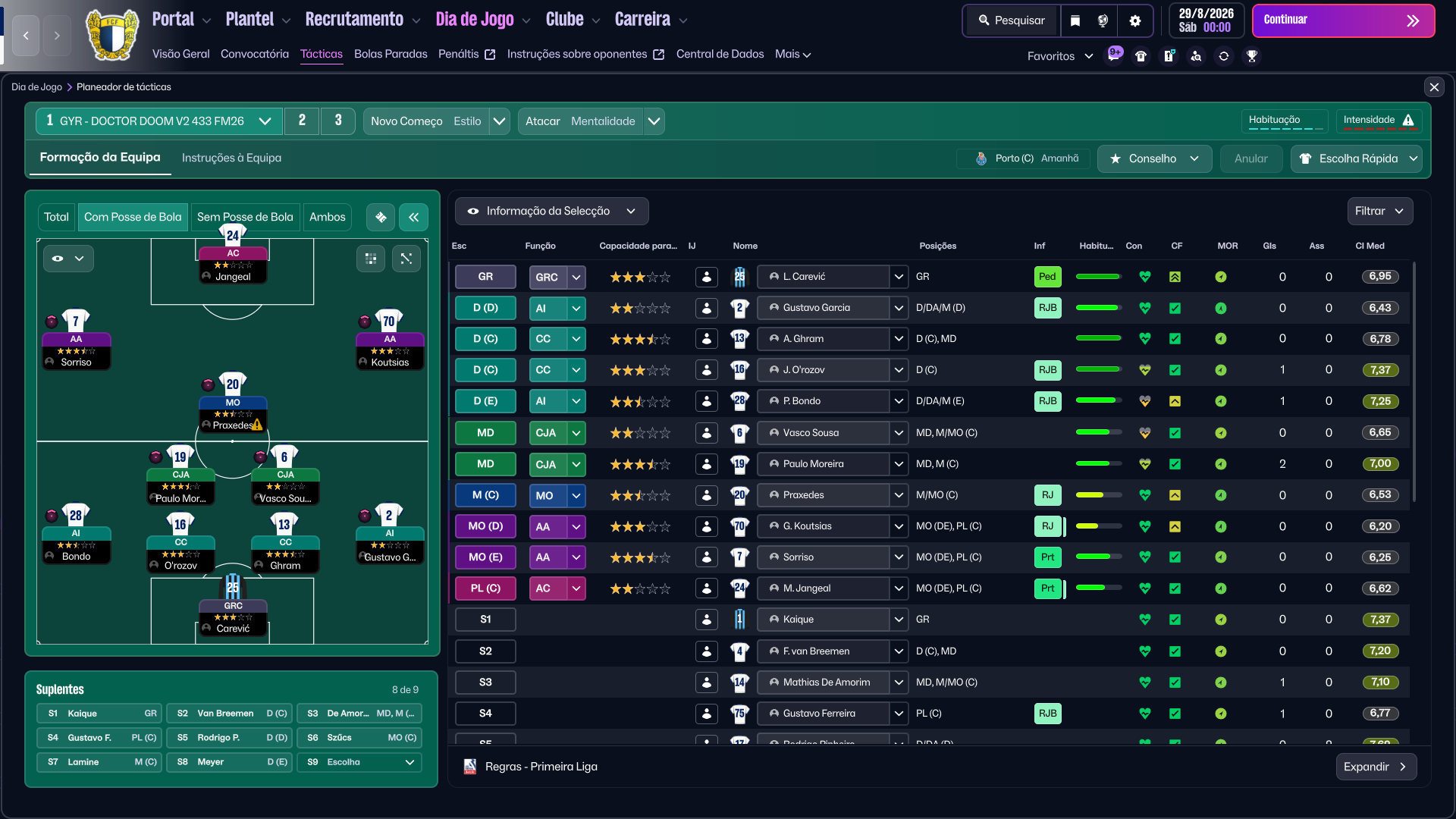
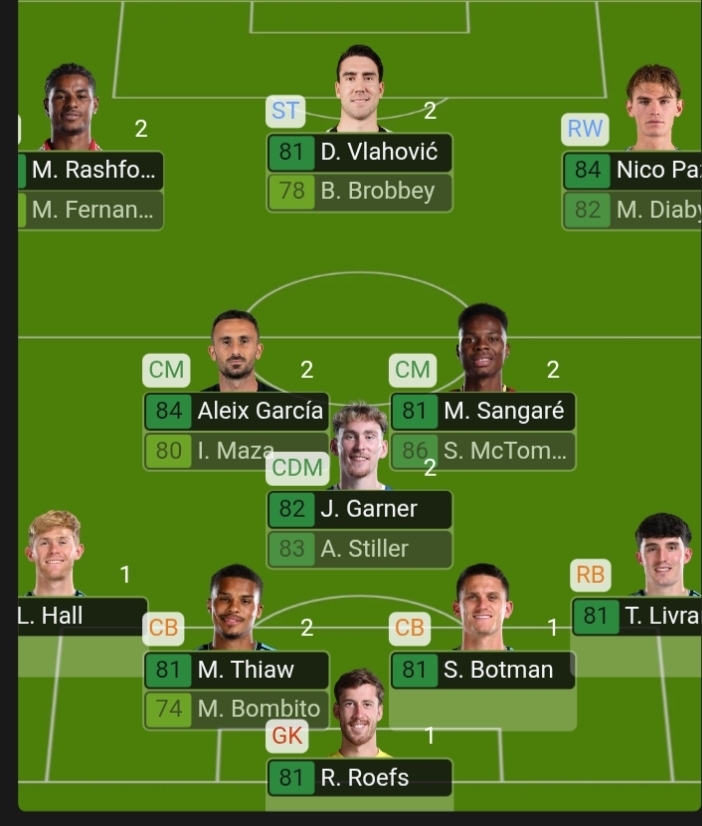
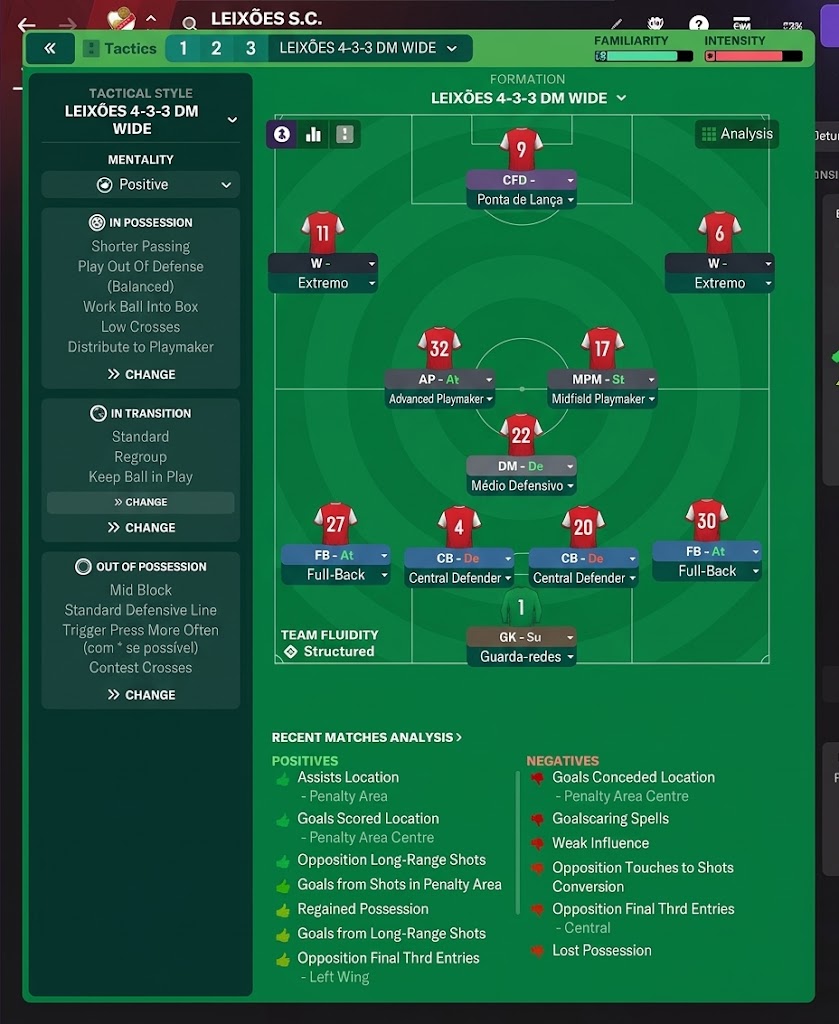
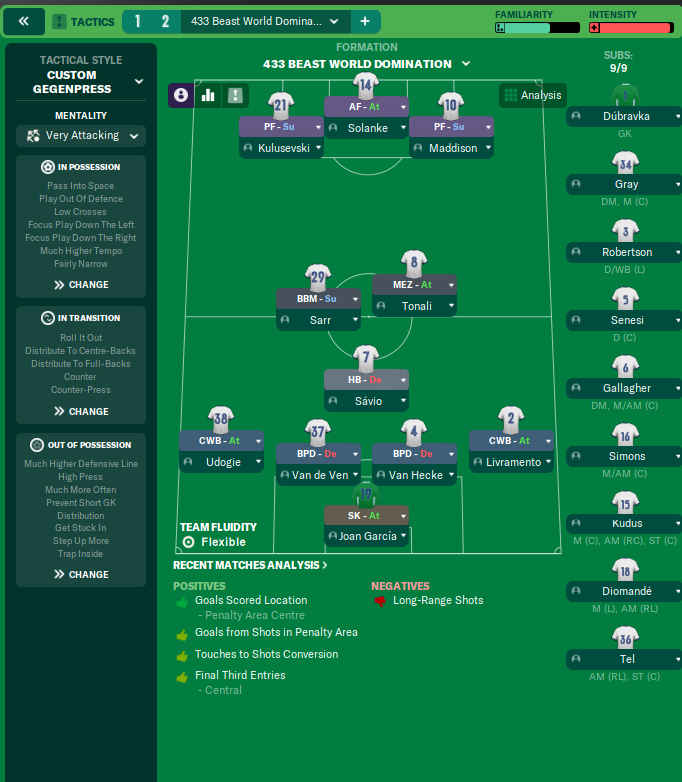
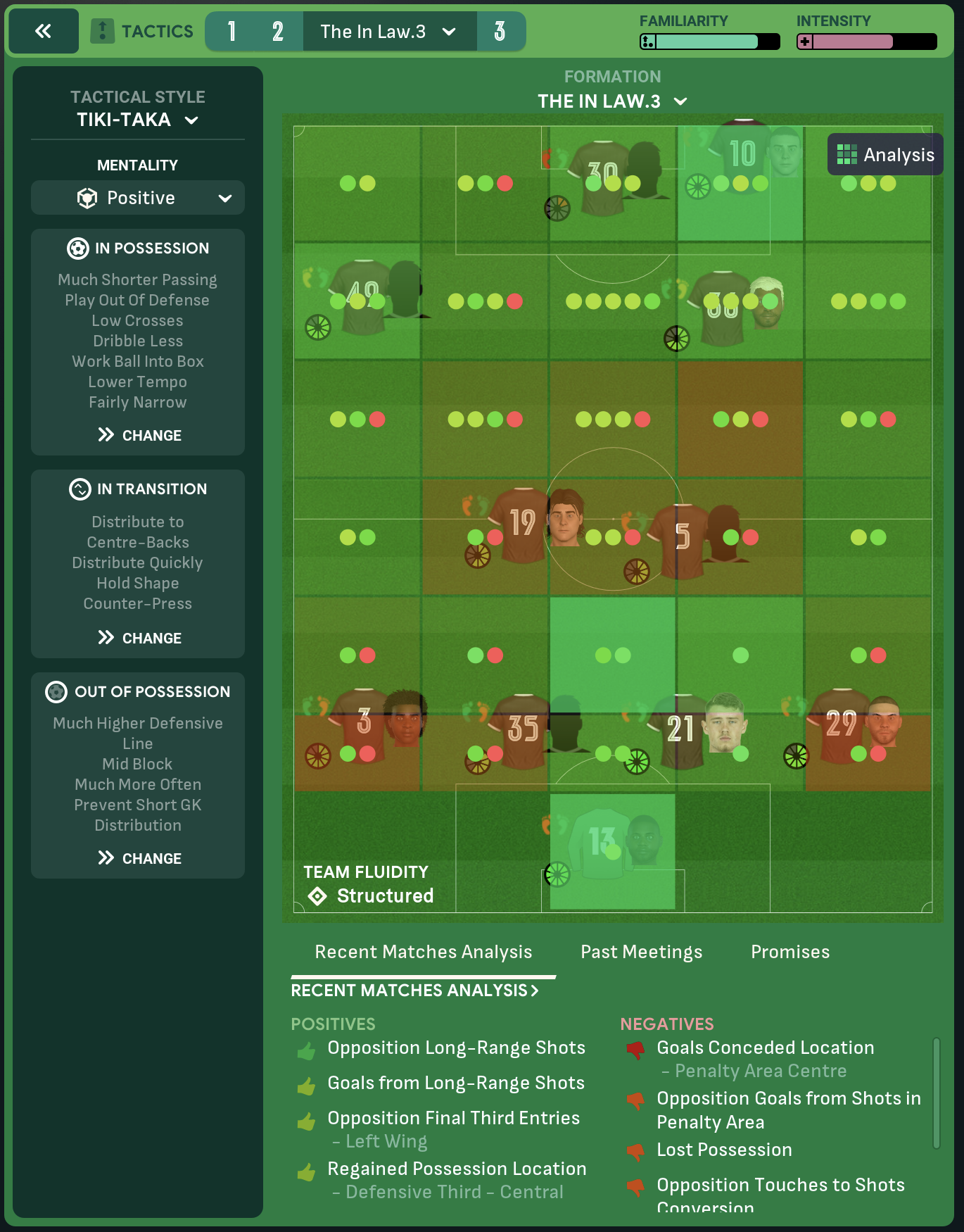
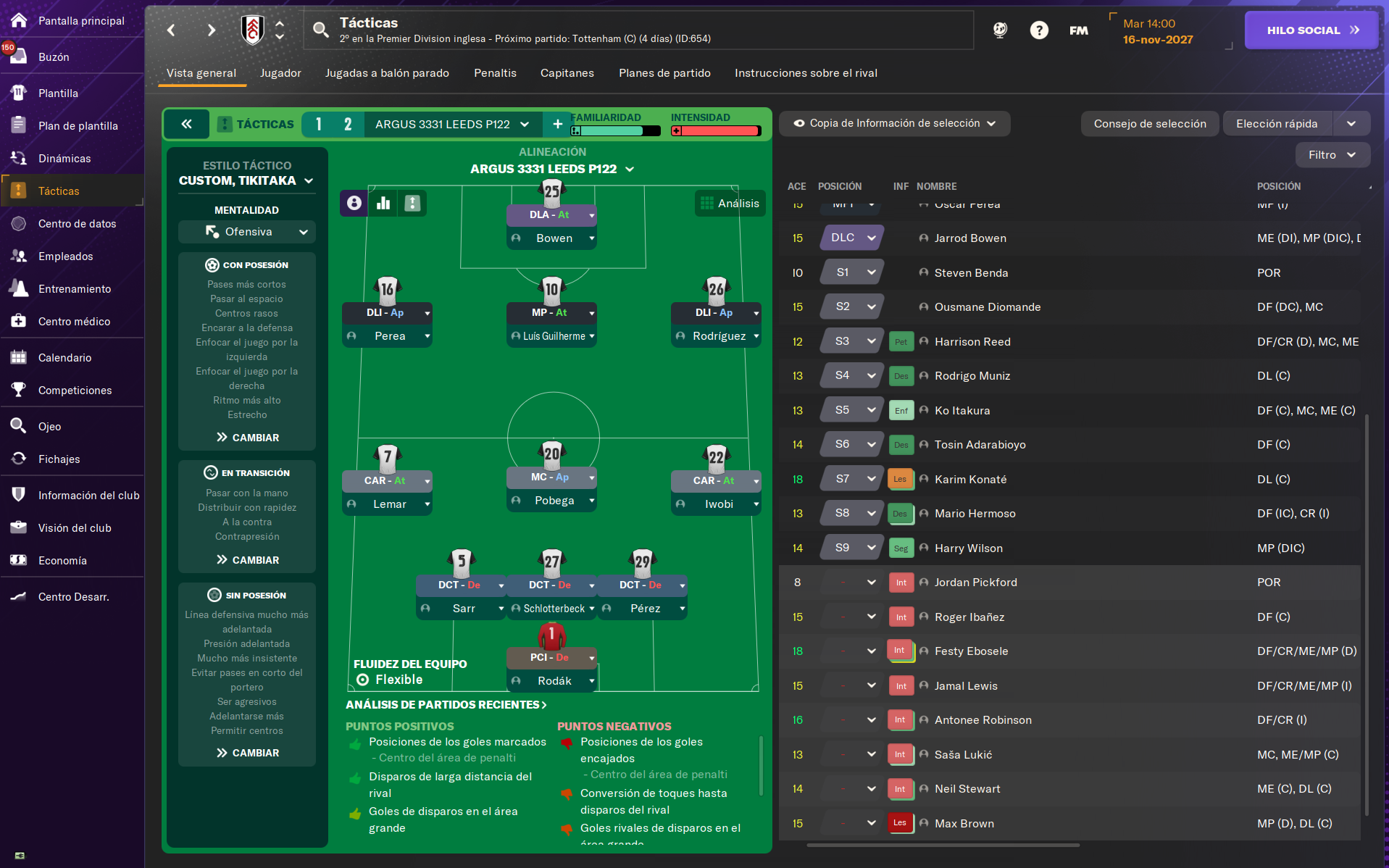
More Custom Tiki Taka tactics
Guides for this formation
The tactical theory behind the 4-3-3: roles, instructions, and the trade-offs that decide whether the system holds up.
Foundations
Understanding the 4-3-3 Formation
Master the classic 4-3-3: player roles, tactical variations, and the trade-offs that decide whether it sings or stalls.
Read guide
Player pairings
Midfield Trios
Holder, runner, creator: the role distribution rule for three-man midfields, the AMC variants, and the antipatterns that break them.
Read guide
Playing styles
Gegenpressing: A Full Guide
Klopp-style gegenpressing in FM, including squad profile, line-and-press pairing, sustainable workload, and the antipatterns to avoid.
Read guide