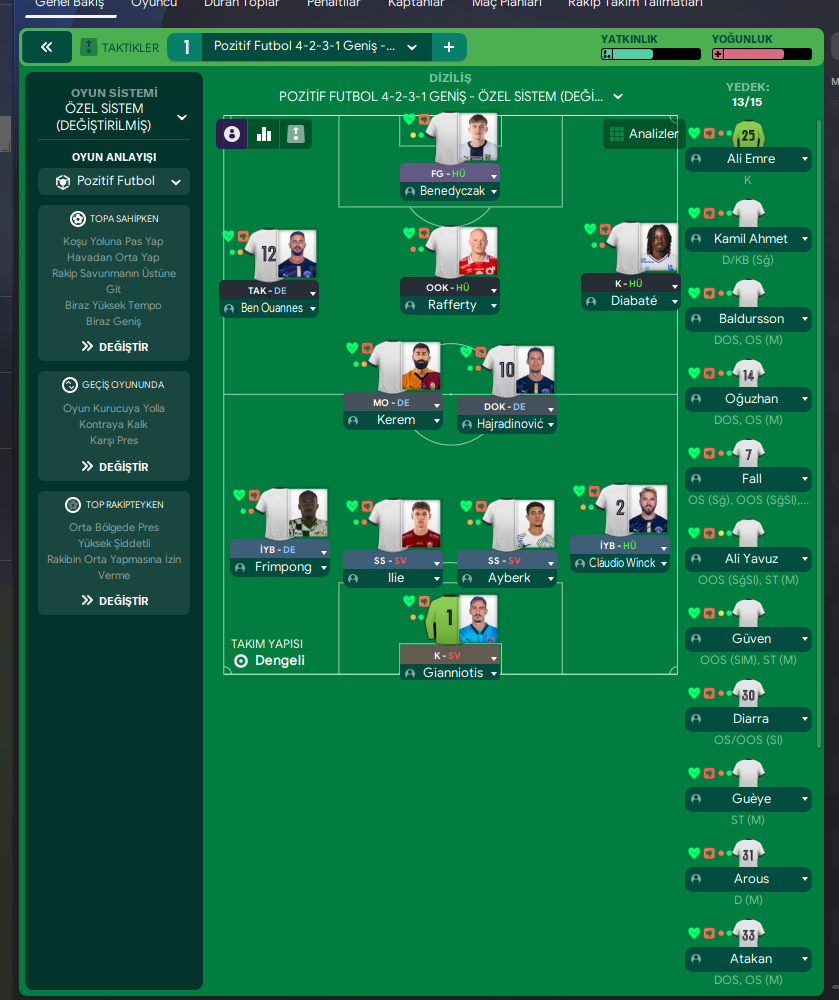
Uploaded Tactic
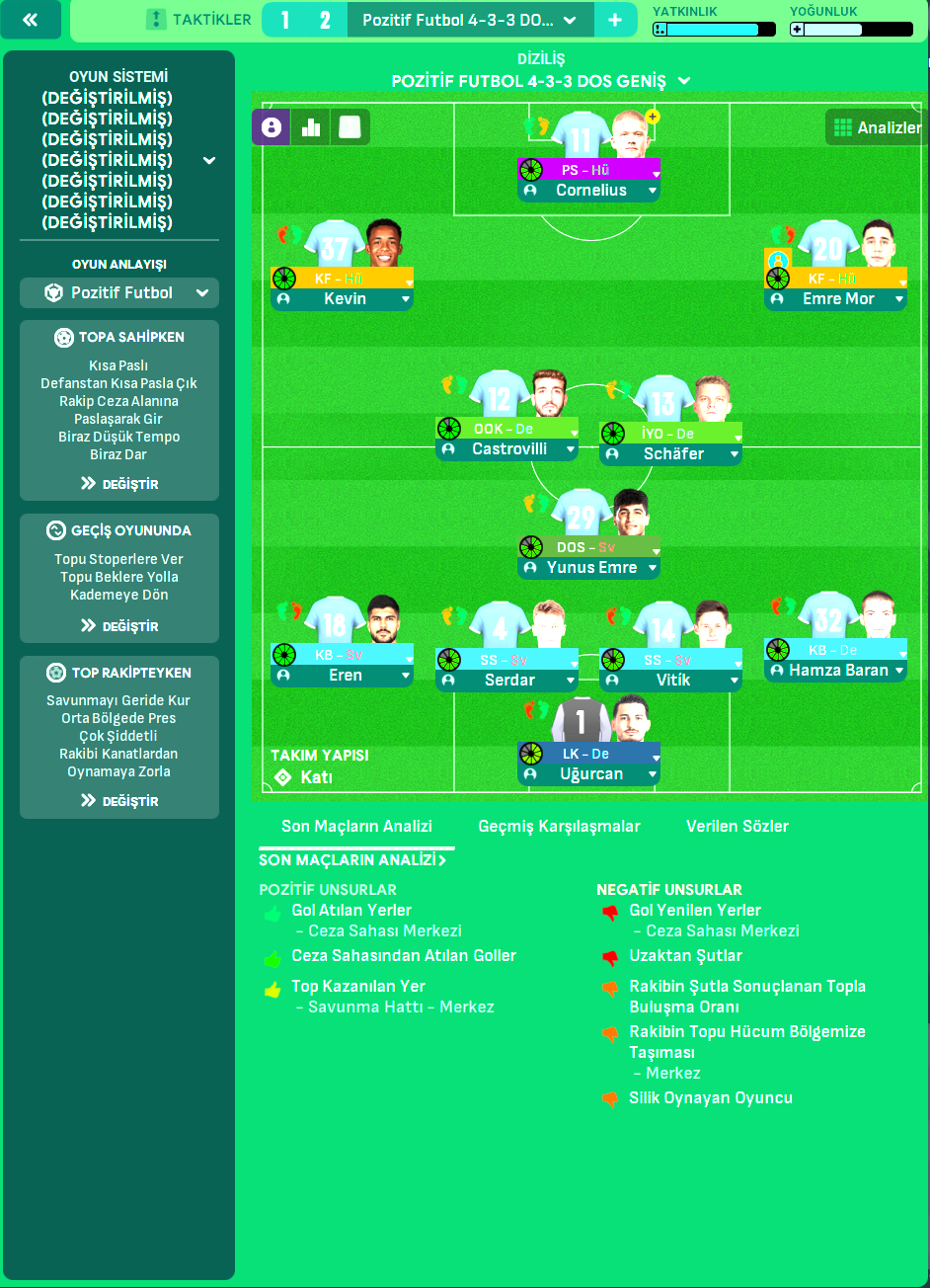
Formation & Style
Tactical Style:Positive Football
Mentality:Positive
Formation:4-3-3 Wide
Team Fluidity:Rigid
In Possession
Short Passing Play
Pass Into Space
Higher Tempo
Dribbling
In Transition
Counter
Slow Build-Up
Out of Possession
Tighter Marking
High Press
Force Opponent Wide
Team Shape Without Ball
No team shape without ball data available
Team Shape With Ball
No team shape with ball data available
Key Strengths
Attacking Width
Utilizing wingers effectively to create space and stretch the opposition defense.
Pressing
High pressing strategy to regain possession quickly and put pressure on the opposition's back line.
Midfield Control
Strong presence in midfield with Box to Box and Deep Lying roles providing balance between attack and defense.
Creative Movement
Inside forwards and pressing forward roles create dynamic movement, making it harder for defenders to mark.
Conflicting Directions
Rigid Team Fluidity
The rigid setup may limit player creativity and fluid movements during attacking phases.
High Press vs. Defensive Line
High pressing may leave spaces if defensive line isn’t positioned well, allowing counter-attacks.
Tempo Management
Higher tempo may result in loss of possession if not matched with effective passing accuracy.
Defensive Width
Forcing opponents wide while having fewer players in central defense could invite trouble.
Tactical Suggestions
Increase Team Fluidity
Enhancing fluidity could improve attacking transitions and player synchronization during plays.
Adjust Full-Back Roles
Consider alternative duties for the wing-backs to add more defensive stability or attacking support.
Balance in Midfield
Consider one more defensive-minded player in midfield to enhance protection against counter-attacks.
Set-Piece Strategies
Focus on set-piece routines to capitalize on height and create more scoring opportunities.
Ask Questions About Your Lineup
Related Tactics
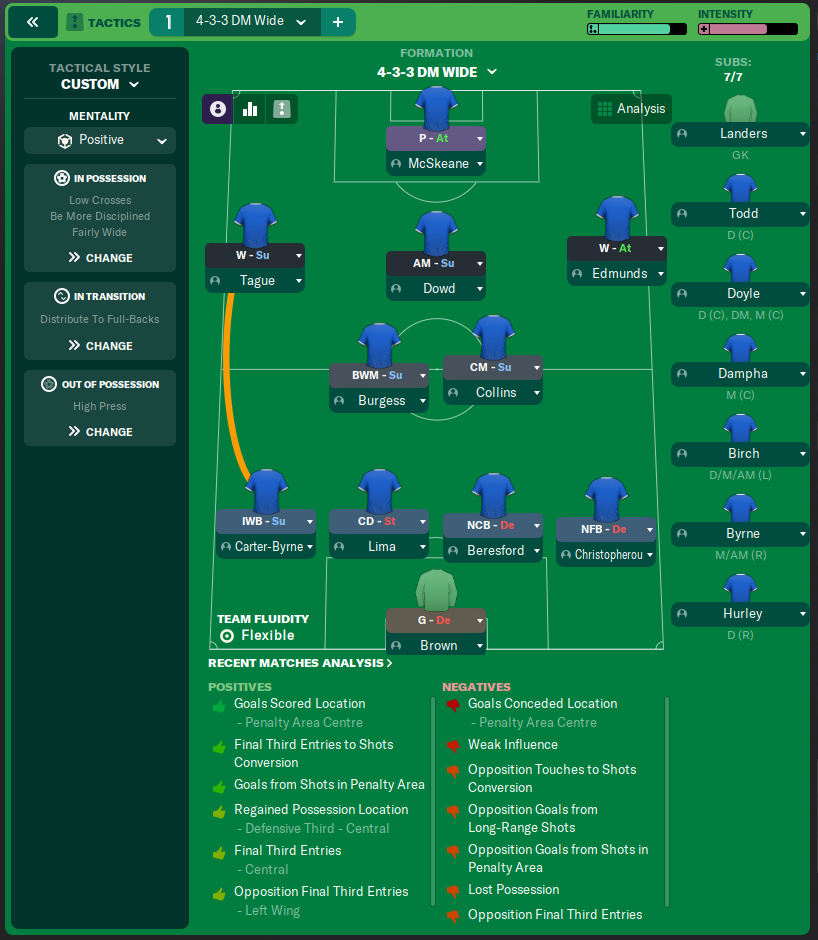
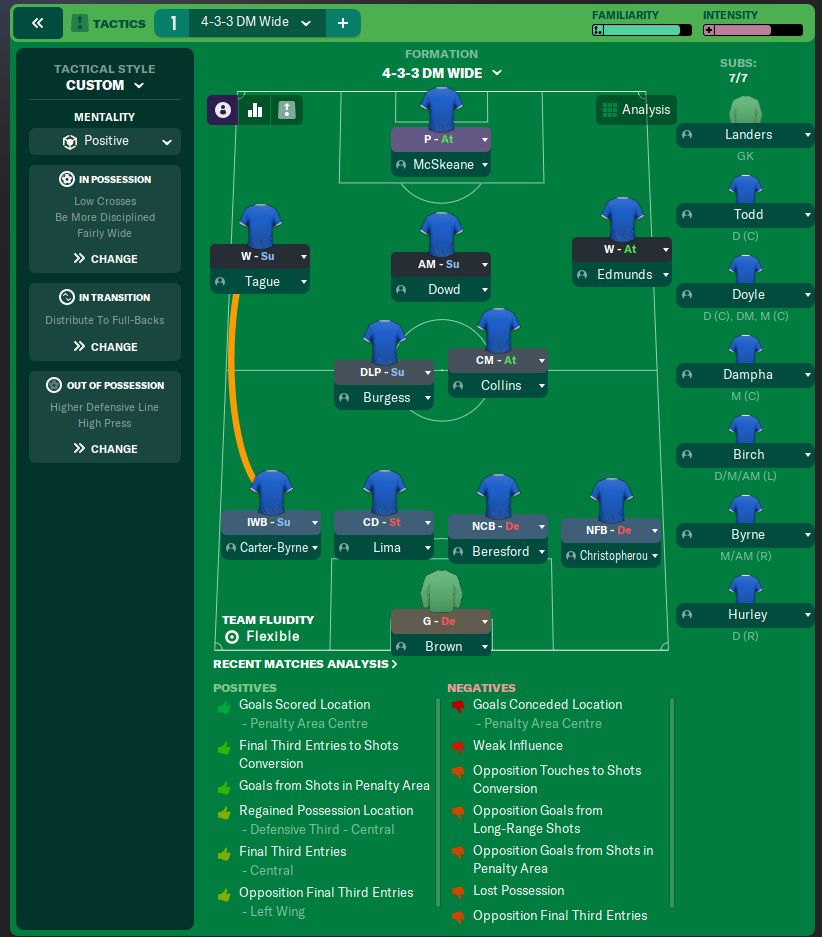
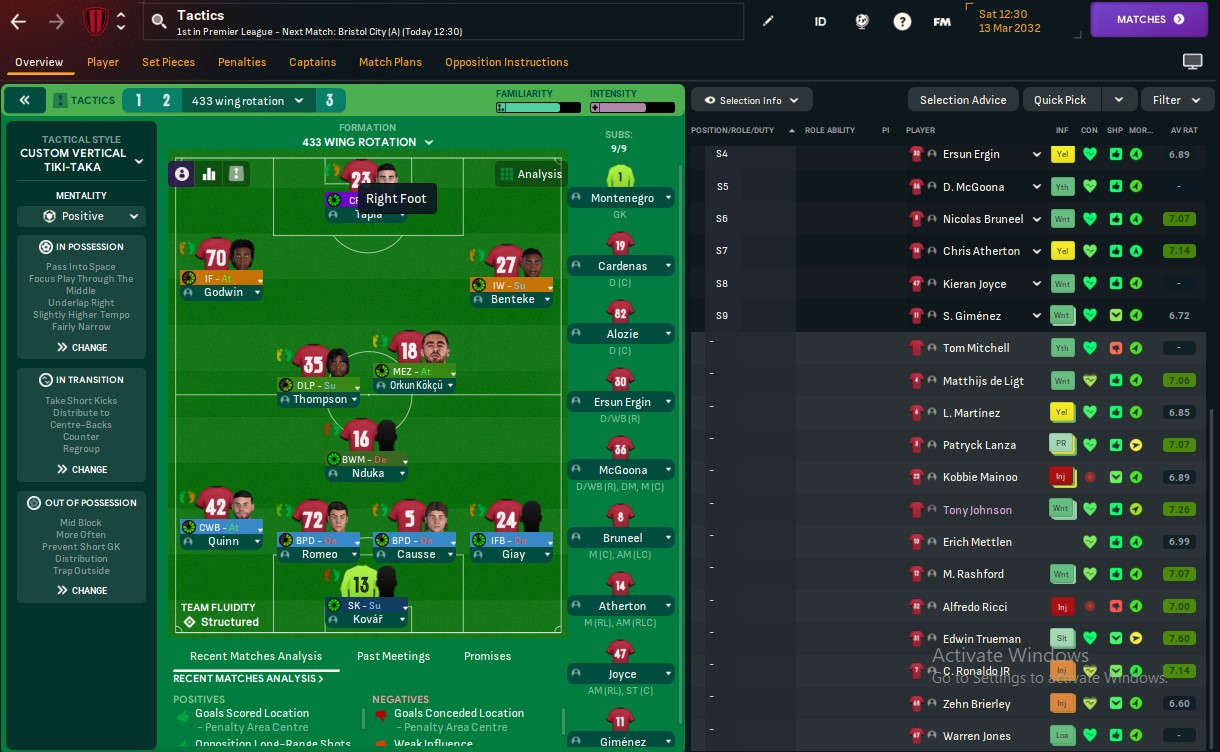
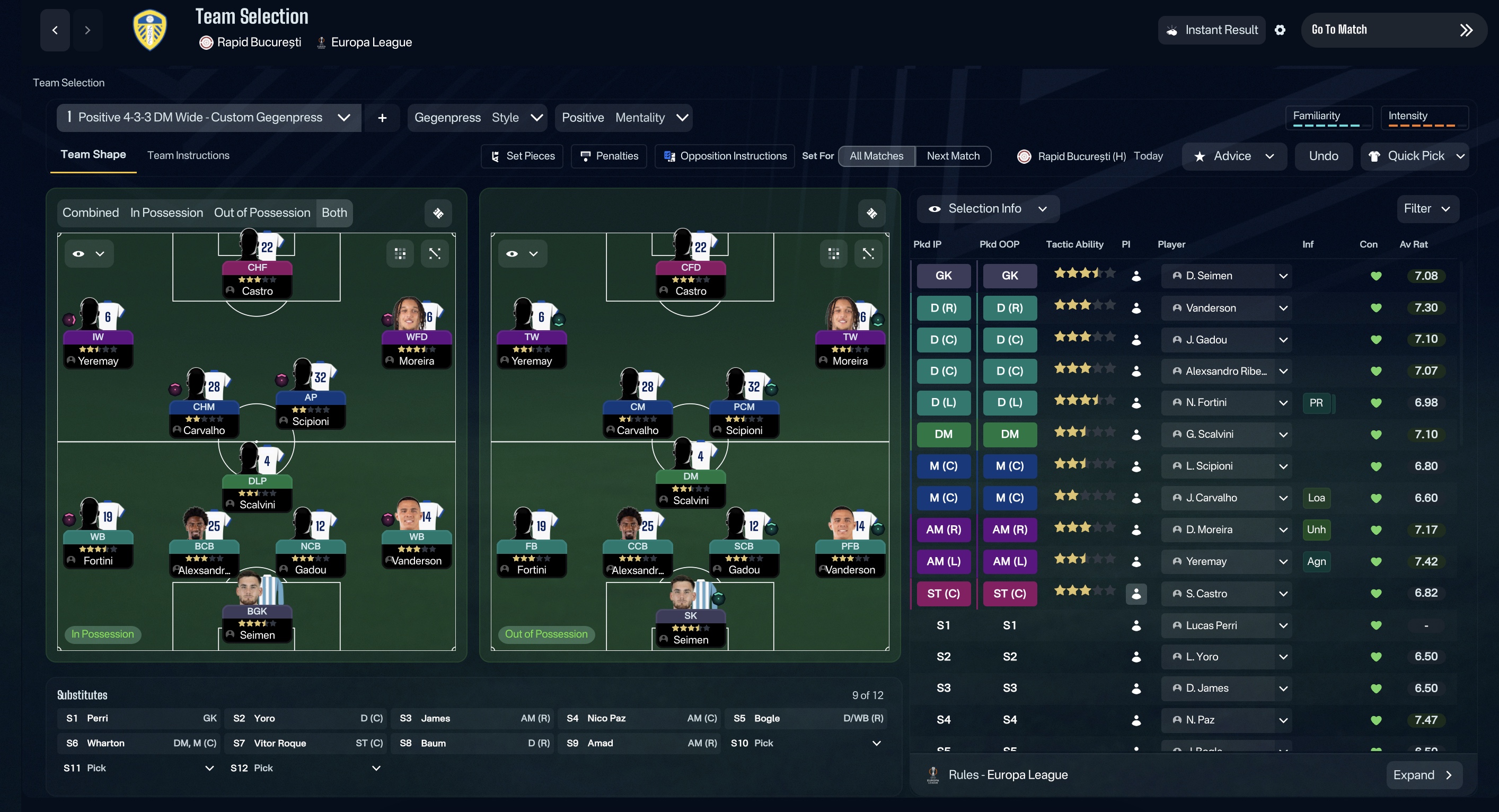
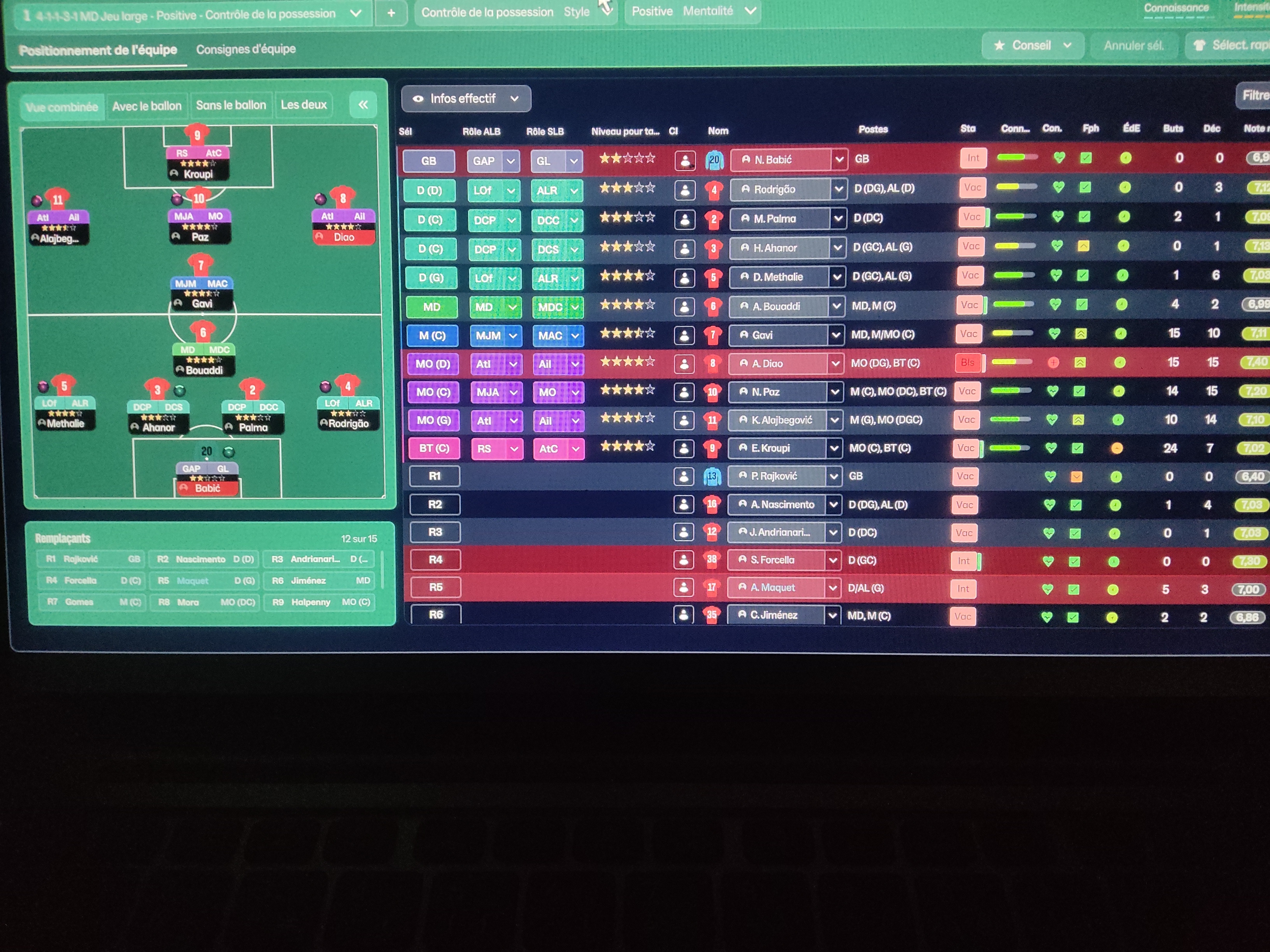
More Positive Football tactics
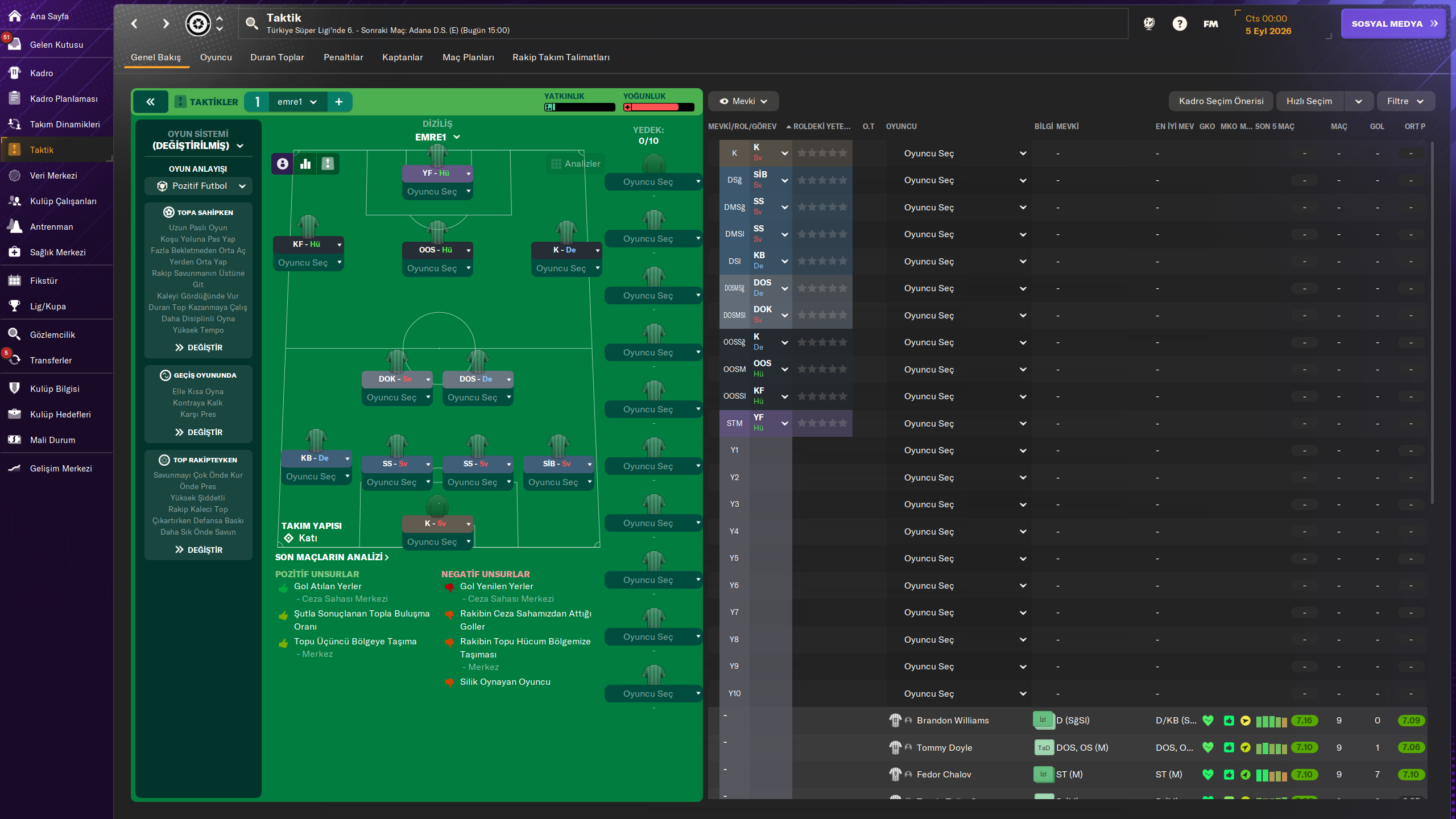
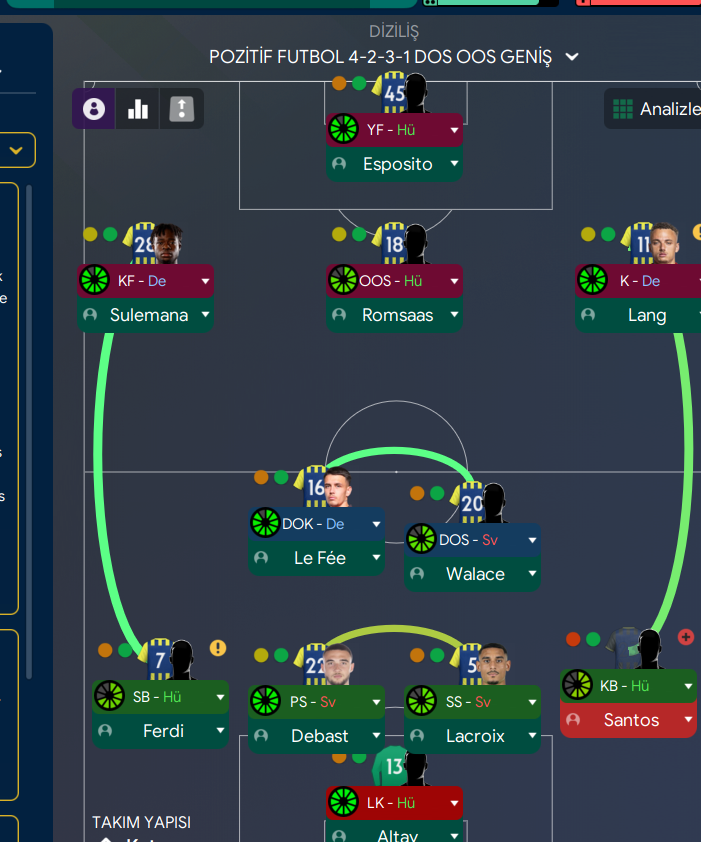
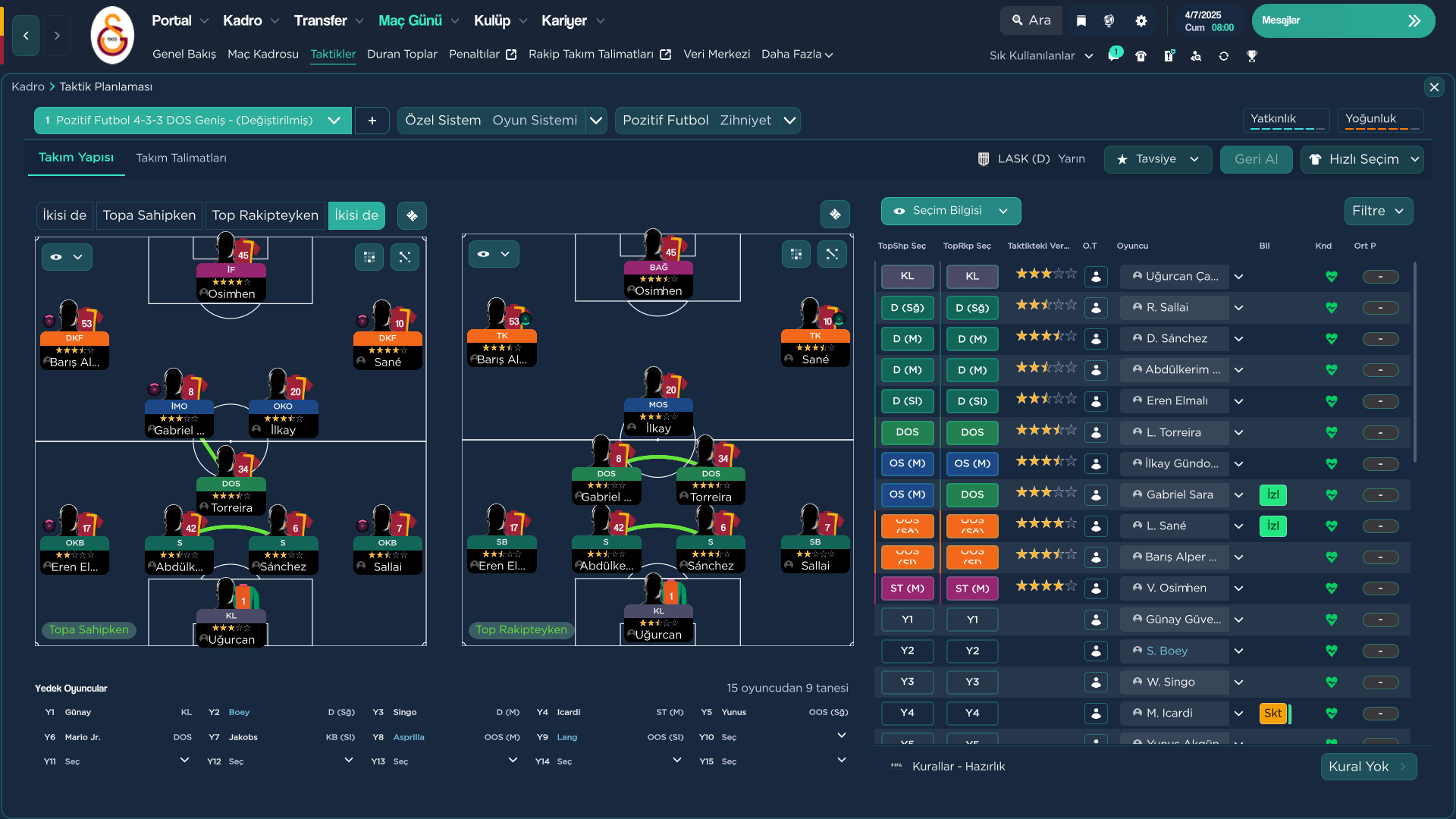
Guides for this formation
The tactical theory behind the 4-3-3 Wide: roles, instructions, and the trade-offs that decide whether the system holds up.
Foundations
Understanding the 4-3-3 Formation
Master the classic 4-3-3: player roles, tactical variations, and the trade-offs that decide whether it sings or stalls.
Read guide
Player pairings
Midfield Trios
Holder, runner, creator: the role distribution rule for three-man midfields, the AMC variants, and the antipatterns that break them.
Read guide
Playing styles
Gegenpressing: A Full Guide
Klopp-style gegenpressing in FM, including squad profile, line-and-press pairing, sustainable workload, and the antipatterns to avoid.
Read guide