Uploaded Tactic
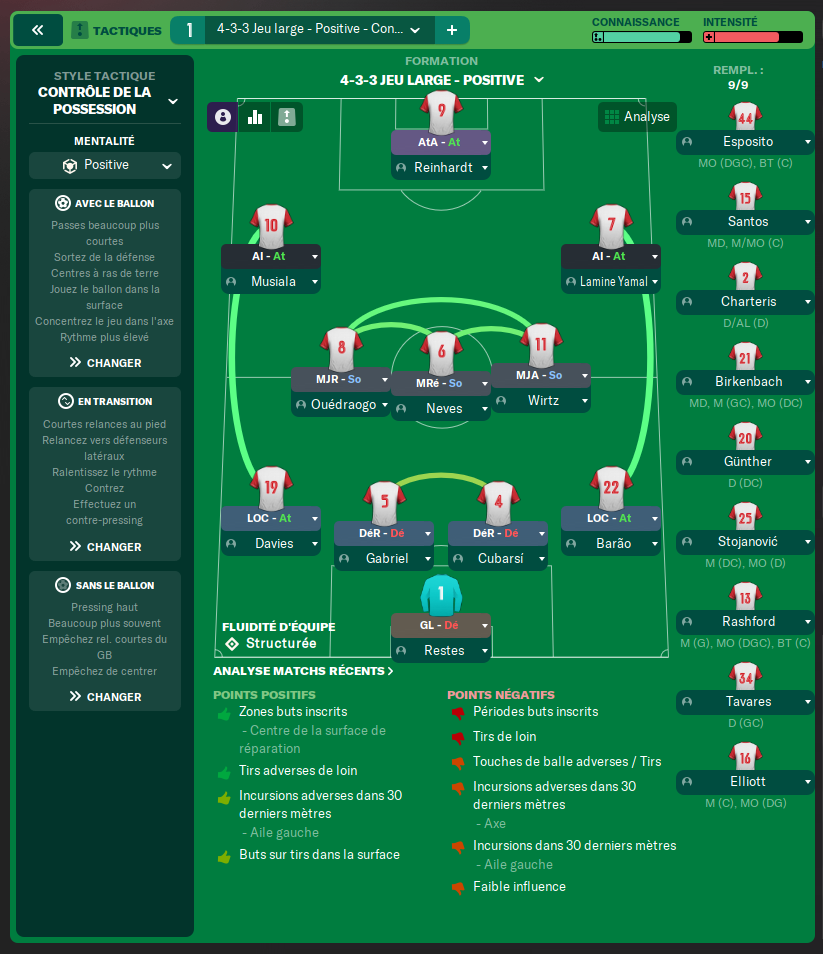
Formation & Style
Tactical Style:Possession-Based
Mentality:Positive
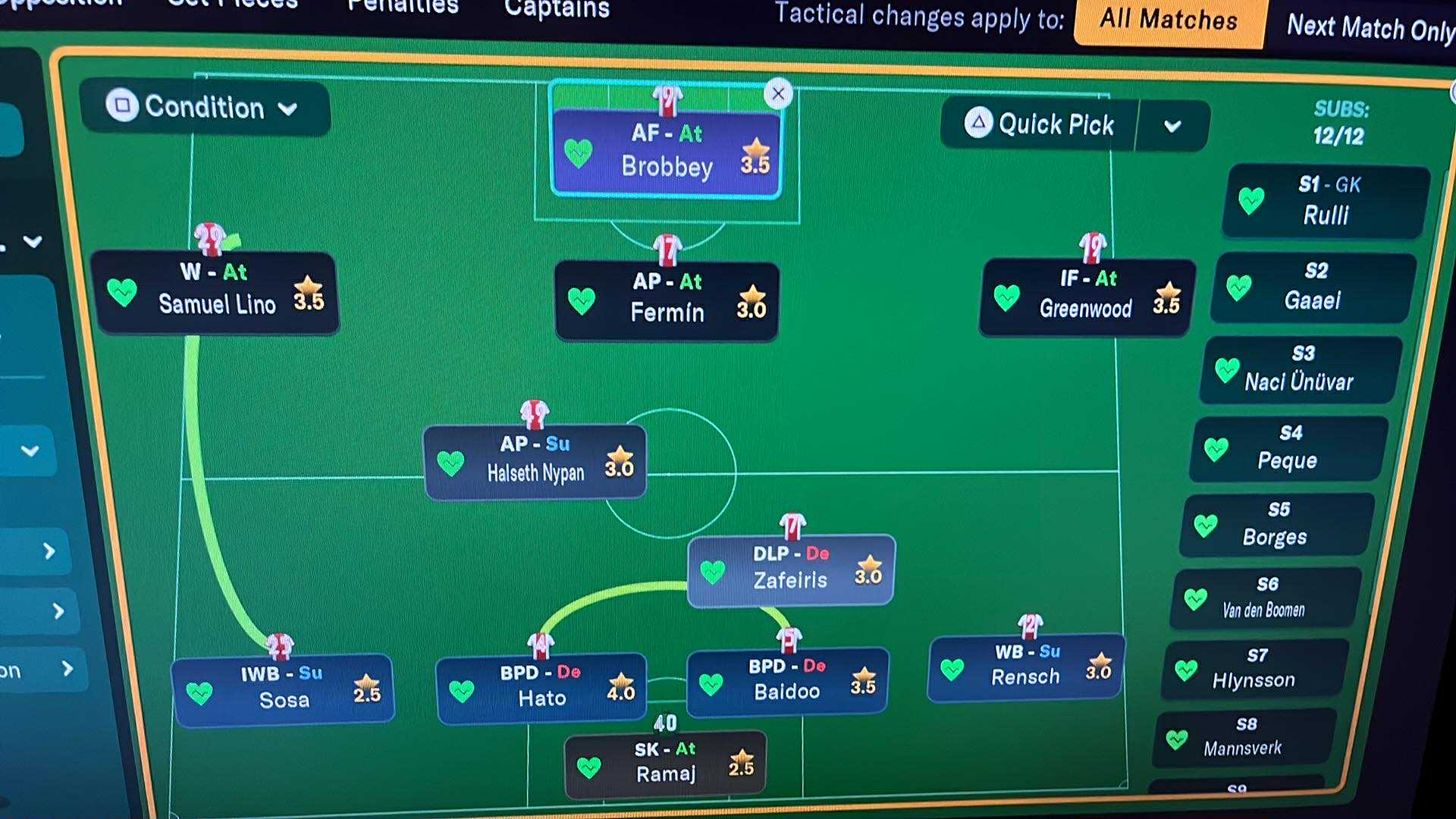
Formation:4-3-3 Wide
Team Fluidity:Structured
In Possession
Shorter passing
Get ball into the final third
Play out of defence
In Transition
Counter-press
Distribute to full-backs
Slow down tempo
Out of Possession
High pressing
Prevent short GK distribution
Tight marking
Team Shape Without Ball
Shape:4-1-4-1
Description:The defensive shape maintains a compact formation with the DM providing cover.
Evidence:DM (DLP-S at [3,3]) shields the backline while full-backs (FB-D at [2,1] and [2,5]) provide width.
Team Shape With Ball
Shape:4-3-3
Description:Fluid attack with an emphasis on width and dynamic runs from inside forwards.
Evidence:AML and AMR (IF-A at [6,1] and [6,5]) creating overlaps with advanced support from the full-backs.
Phase Description
Attacking Play
Quick buildup using short passes, focusing on exploiting spaces wide and cutting into the box.
Defensive Transition
Immediate pressure on the ball after losing possession to regain control quickly.
Main Focus
Possession retention while gradually progressing towards the opponent's goal.
Key Strengths
Possession Control
Shorter passing allows better control and retention of the ball.
Flexibility in Midfield
Diverse midfield roles allow for varied attacking strategies.
Wide Attack
Utilizing inside forwards to stretch the opposition, creating space for central players.
Conflicting Directions
Counter-Attack Vulnerability
High pressing leaves gaps for quick counter-attacks.
Over-Reliance on Full-Backs
Defensive duties may restrict offensive contribution from full-backs.
Midfield Complacency
With three midfielders, pressure on the ball may dwindle if not coordinated.
Tactical Suggestions
Increase Midfield Press
Encourage midfielders to press more consistently for ball recovery.
Activate Full-Backs in Attack
Allow full-backs to make overlapping runs to provide width in the final third.
Utilize Targeting Short Corners
Use short corners to exploit the space created by full-backs and inside forwards.
Ask Questions About Your Lineup
Related Tactics
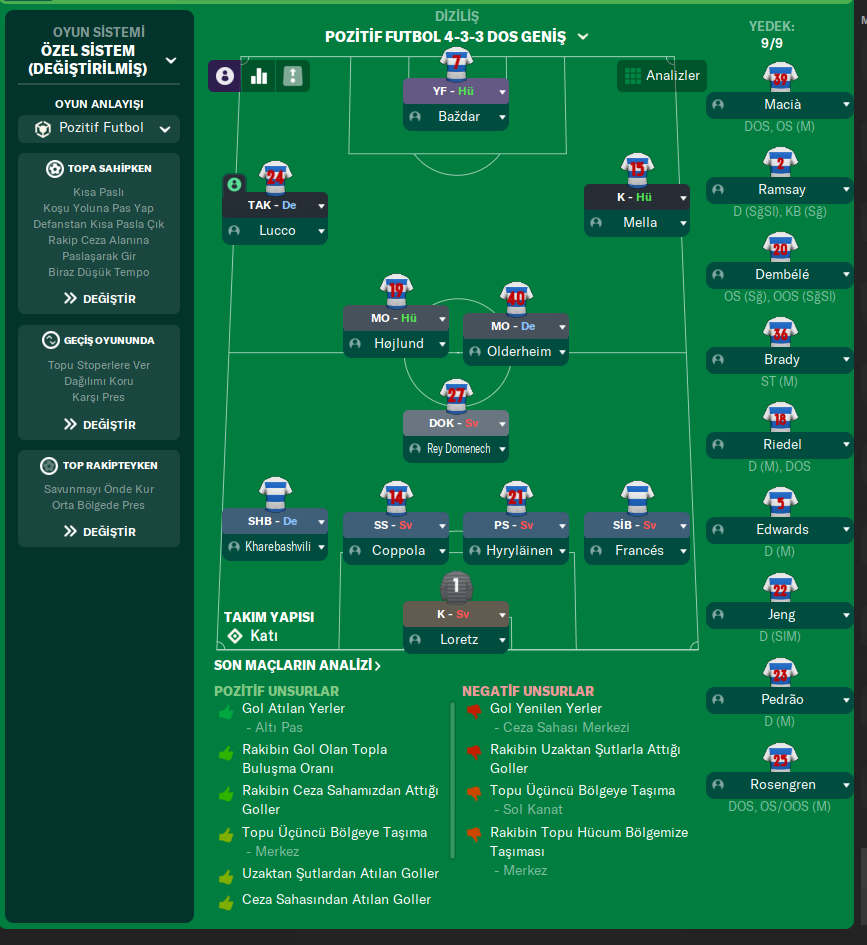
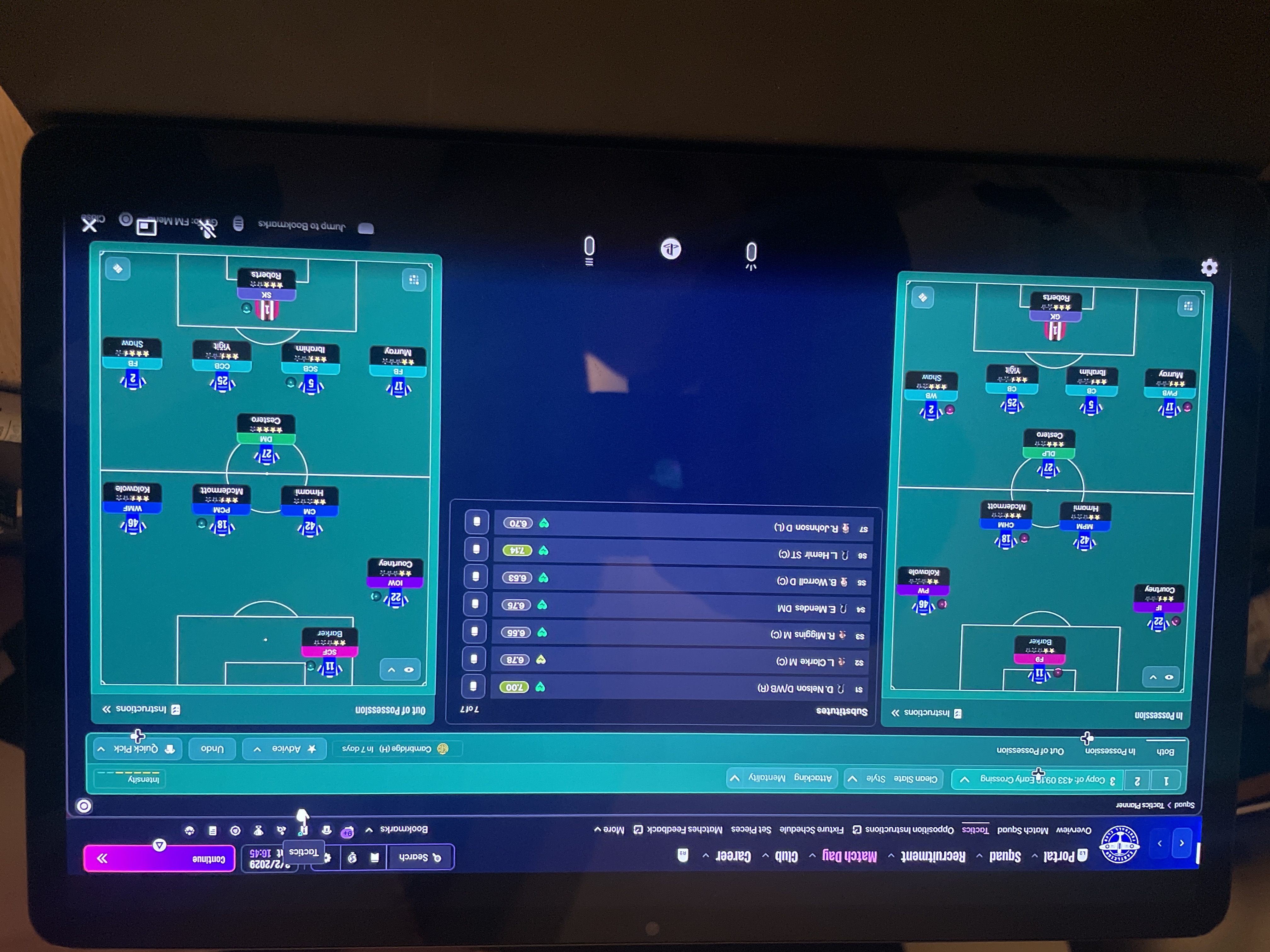
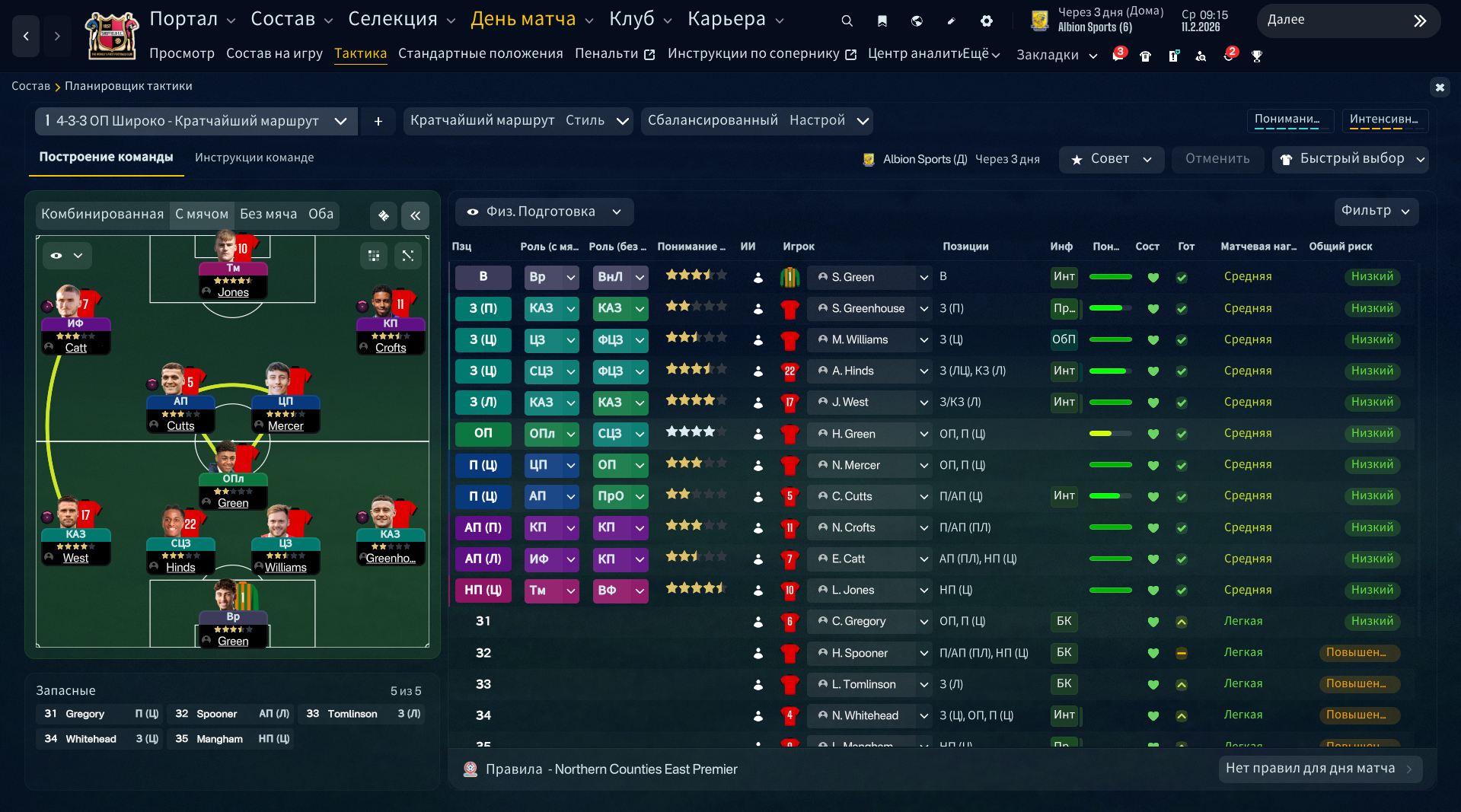
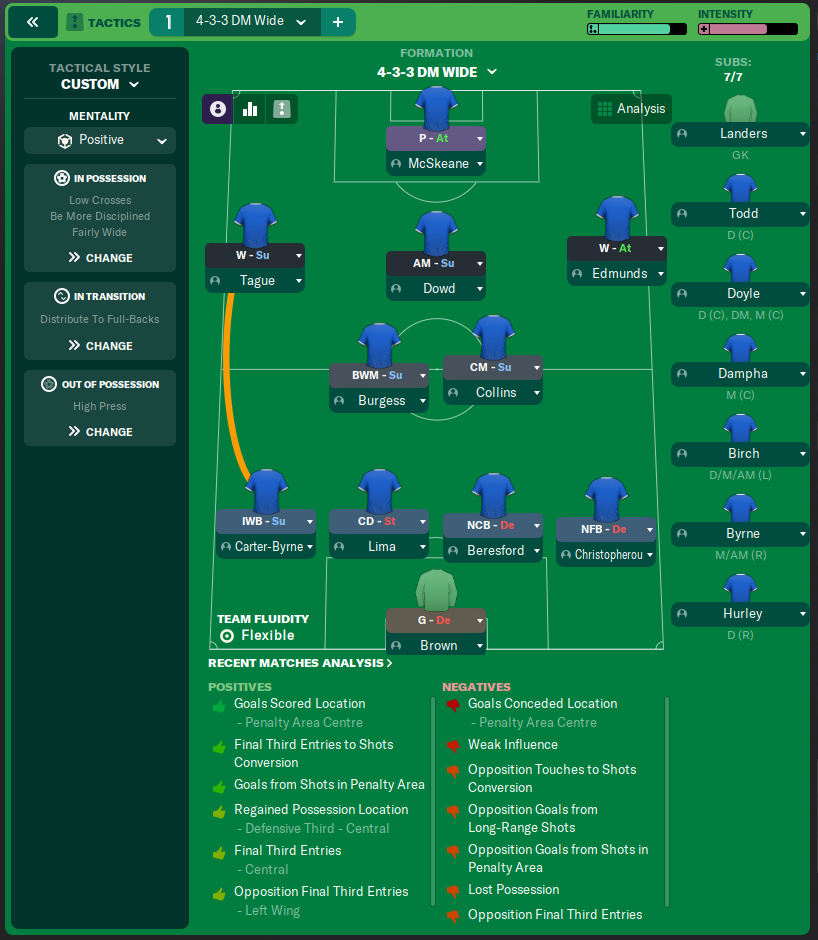
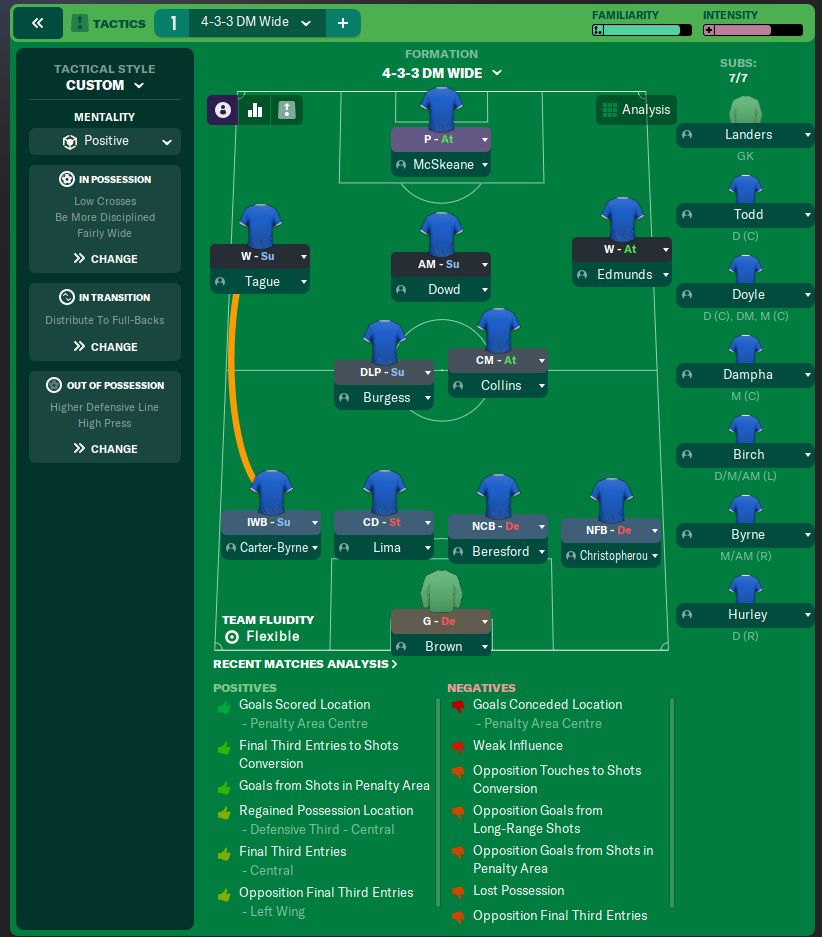
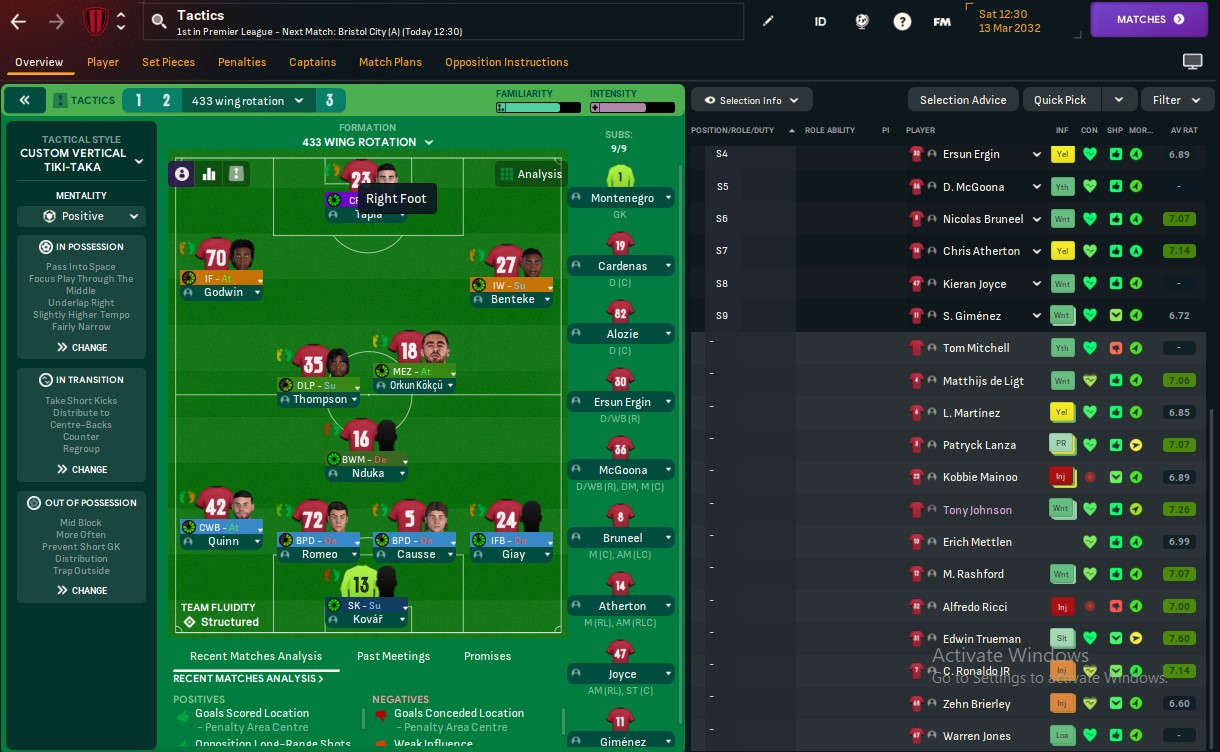
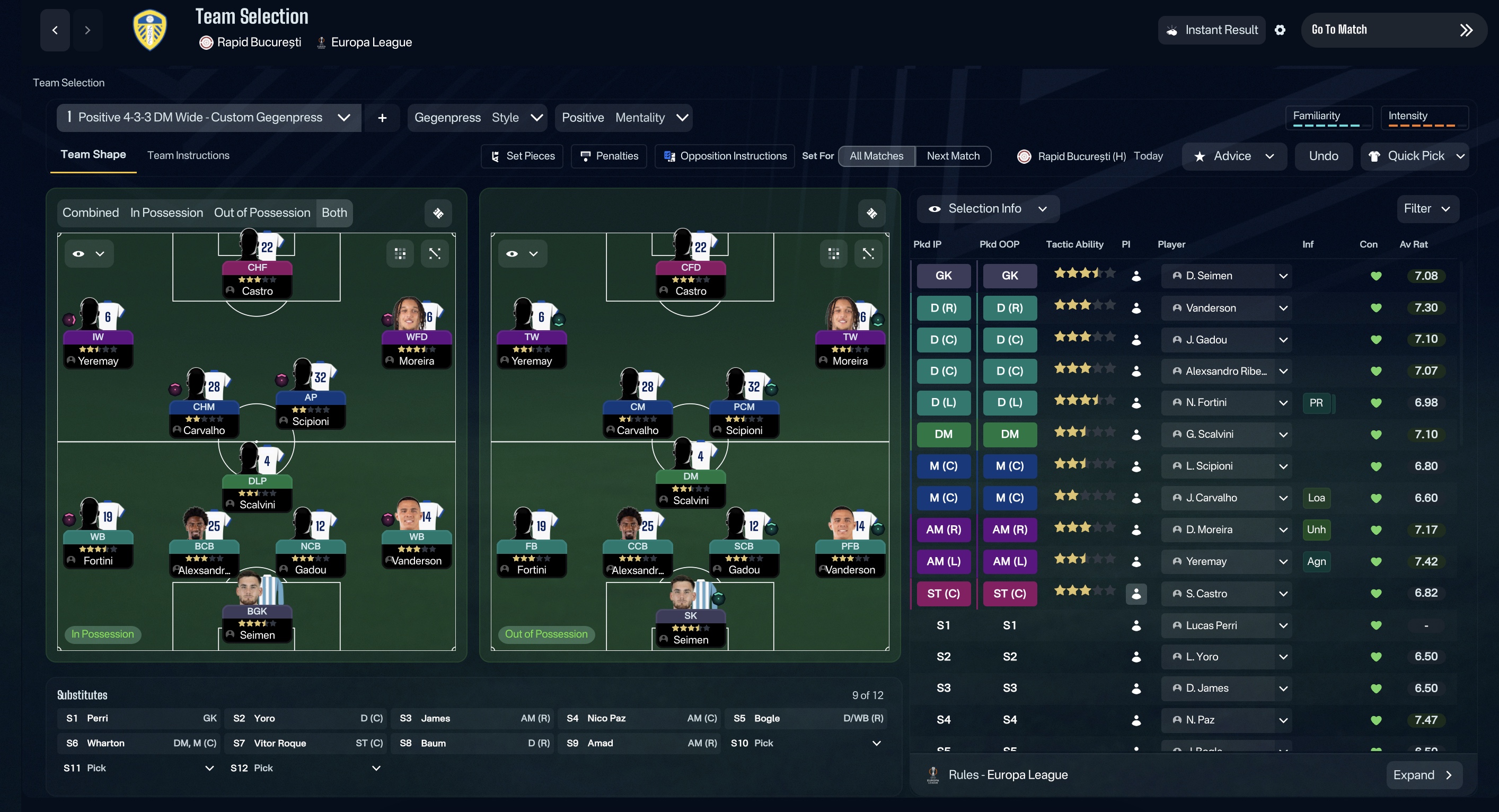
More Possession-Based tactics
Guides for this formation
The tactical theory behind the 4-3-3 Wide: roles, instructions, and the trade-offs that decide whether the system holds up.
Foundations
Understanding the 4-3-3 Formation
Master the classic 4-3-3: player roles, tactical variations, and the trade-offs that decide whether it sings or stalls.
Read guide
Player pairings
Midfield Trios
Holder, runner, creator: the role distribution rule for three-man midfields, the AMC variants, and the antipatterns that break them.
Read guide
Playing styles
Gegenpressing: A Full Guide
Klopp-style gegenpressing in FM, including squad profile, line-and-press pairing, sustainable workload, and the antipatterns to avoid.
Read guide