Uploaded Tactic
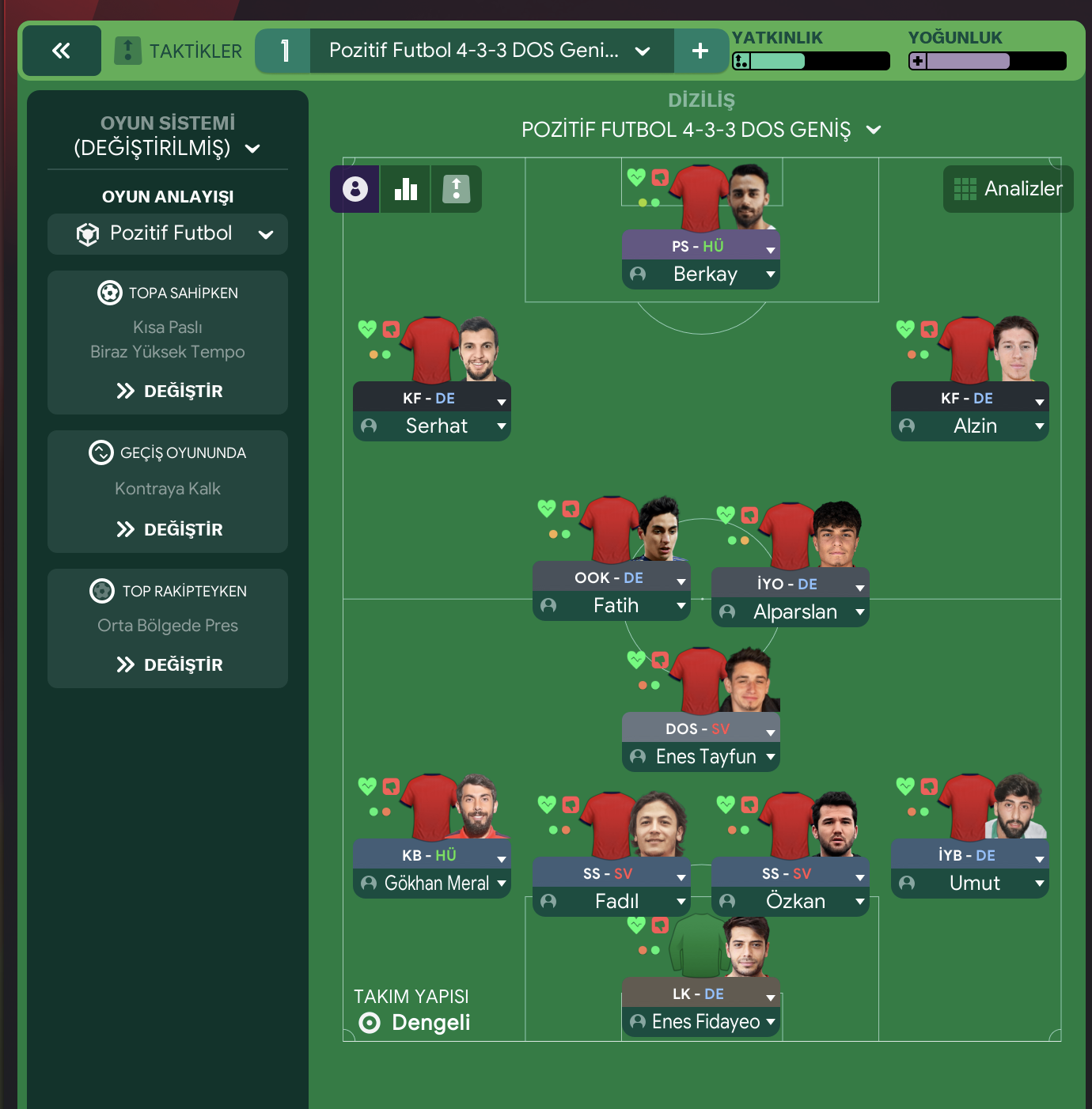
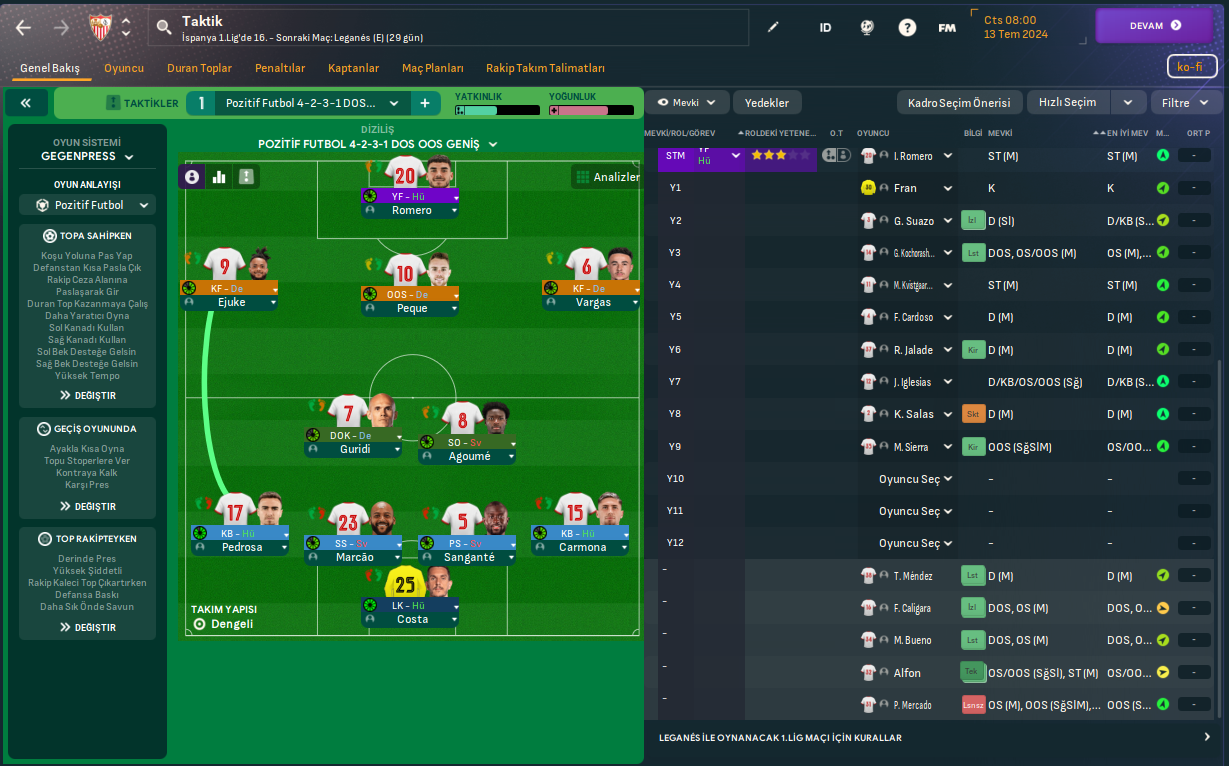
Formation & Style
Tactical Style:Pozitif Futbol
Mentality:Positive
Formation:4-3-3 Wide
Team Fluidity:Balanced
In Possession
Short Passing
Slightly Higher Tempo
In Transition
Counter-Press
Out of Possession
Press Often
Team Shape Without Ball
Shape:Compact
Description:The team maintains a compact shape, especially in the midfield, making it challenging for opponents to penetrate.
Evidence:The presence of two defensive midfielders helps in creating a barrier against opposing attacks.
Team Shape With Ball
Shape:Expansive
Description:Utilizing the width from the inside forwards, the team stretches the opposition while central players create overloads.
Evidence:Inside forwards combined with an advanced playmaker aim to exploit gaps in the opposition defence.
Phase Description
Attacking Play
The team looks to maintain possession with short passes while utilizing width from the inside forwards.
Defensive Transition
Upon losing possession, the team aims to quickly regain the ball with a counter-press strategy.
Main Focus
Balancing possession-based play while maintaining high pressing to win back possession.
Key Strengths
High Pressing Game
The pressing forward and inside forwards work together to apply pressure on opposing defenders.
Fluid Attacking Play
The fluidity from inside forwards allows for dynamic movement and goal-scoring opportunities.
Compact Defensive Shape
The team maintains a solid defensive unit that is hard to break down.
Conflicting Directions
Potential Over-Reliance on Width
With a focus on attacking through the flanks, the team's play might become predictable.
Lack of Defensive Midfield Support
While compact, the midfield may sometimes get outnumbered in transitions.
Vulnerability to Counter-Attacks
The aggressive pressing approach can leave gaps at the back when possession is lost.
Tactical Suggestions
Add a More Cautious Full-Back
Implement a full-back on support duty to balance offensive and defensive responsibilities.
Introduce a Third Central Midfielder
Consider adding a third midfielder to control central areas and improve defensive coverage.
Increase Width in Attacking Phase
Utilizing wingers in the setup may help stretch defenses and create more crossing opportunities.
Ask Questions About Your Lineup
Related Tactics
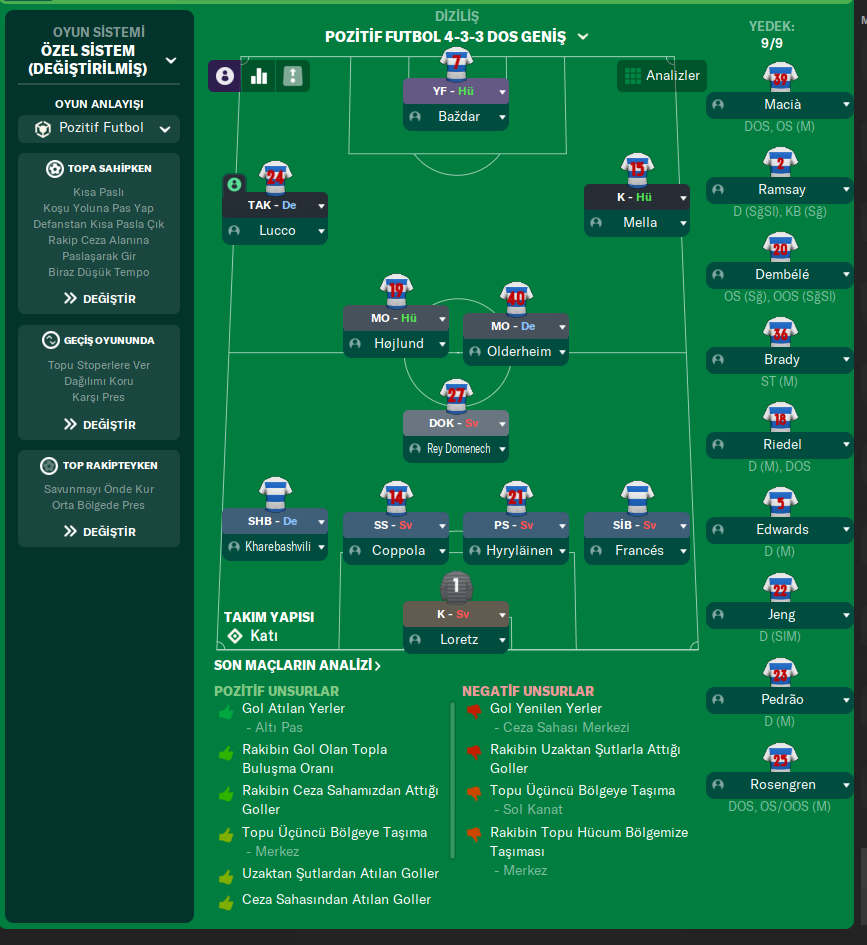
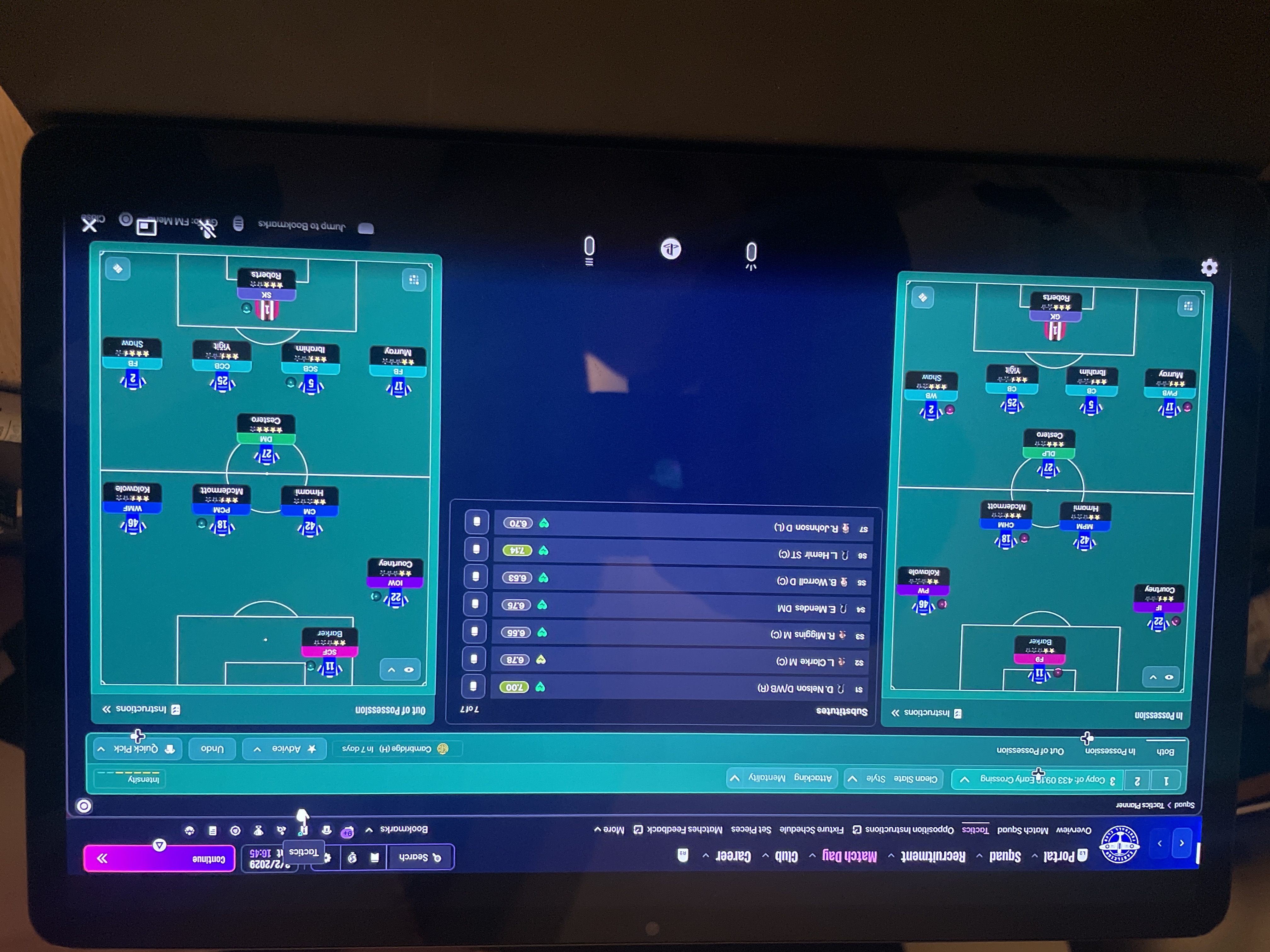
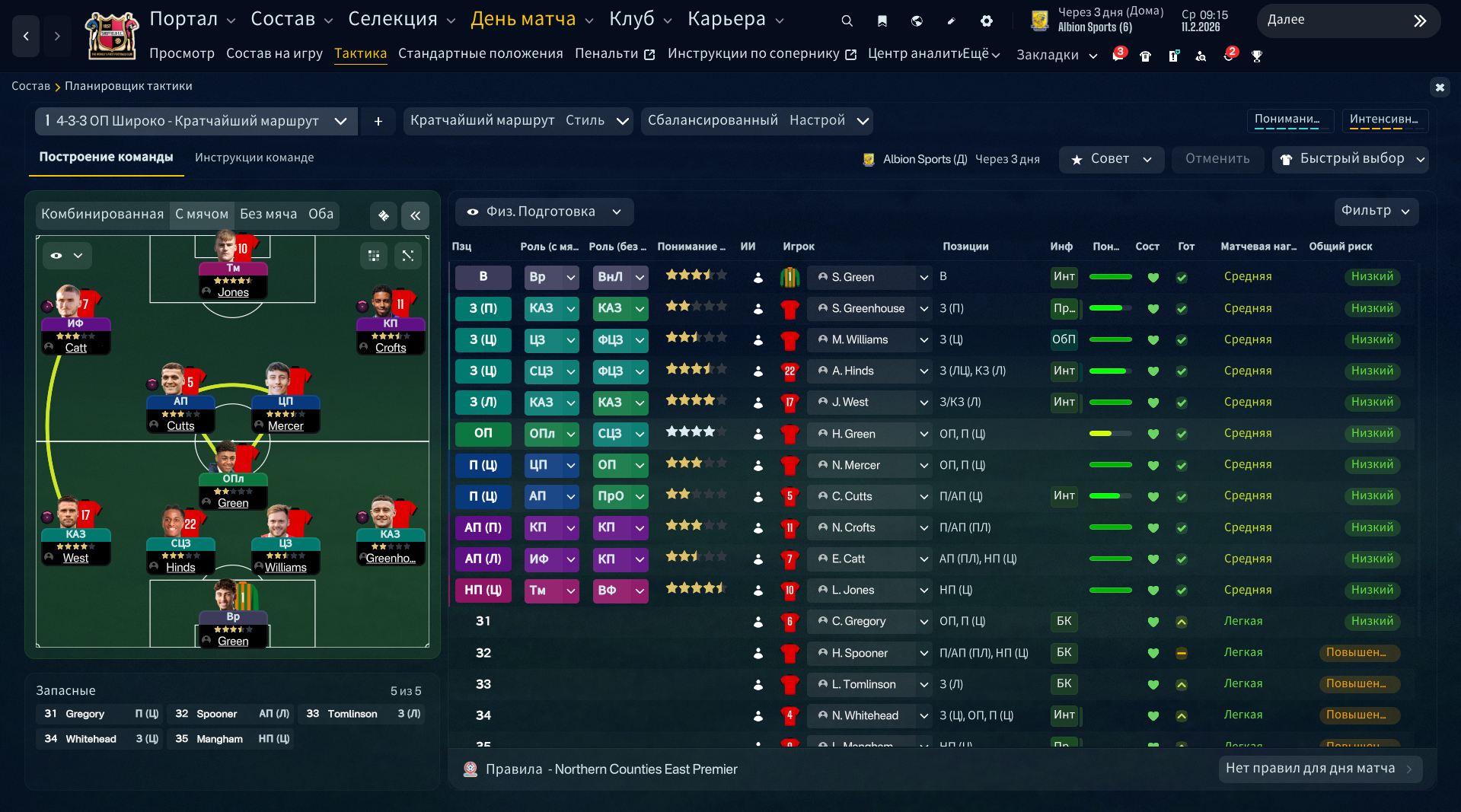
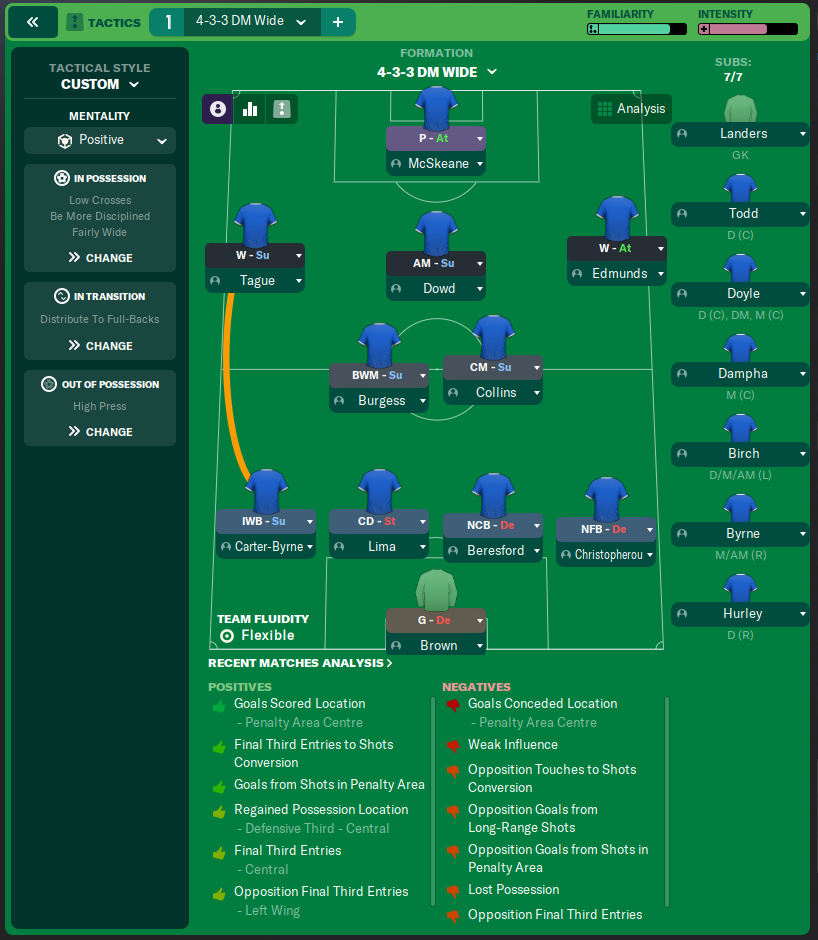
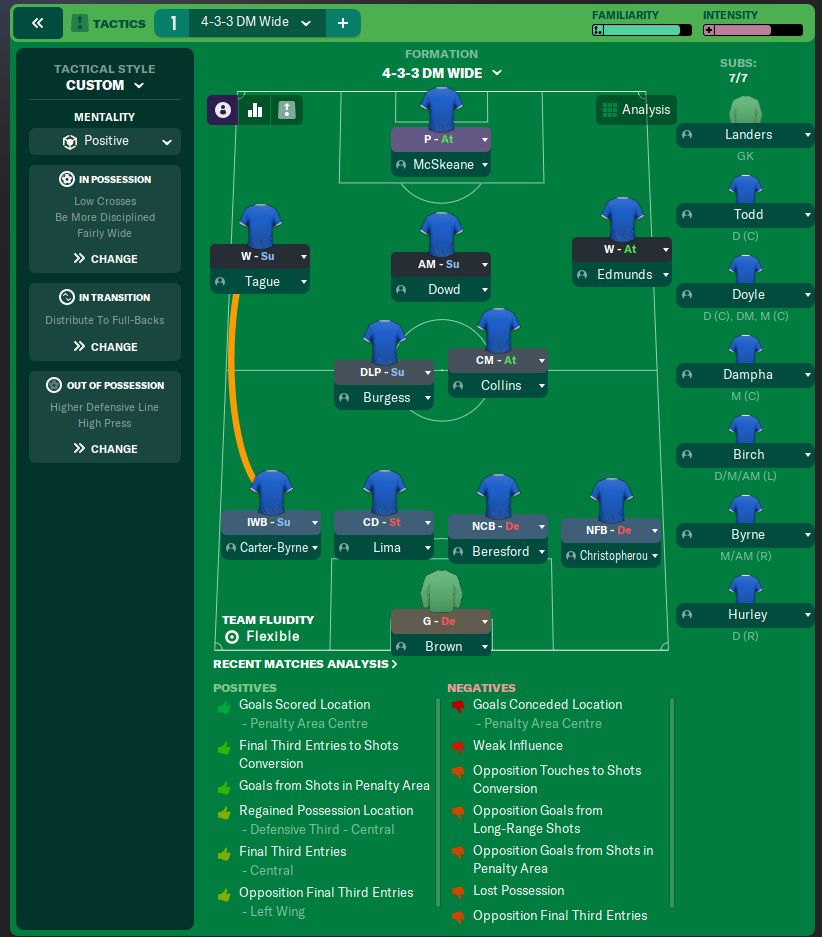
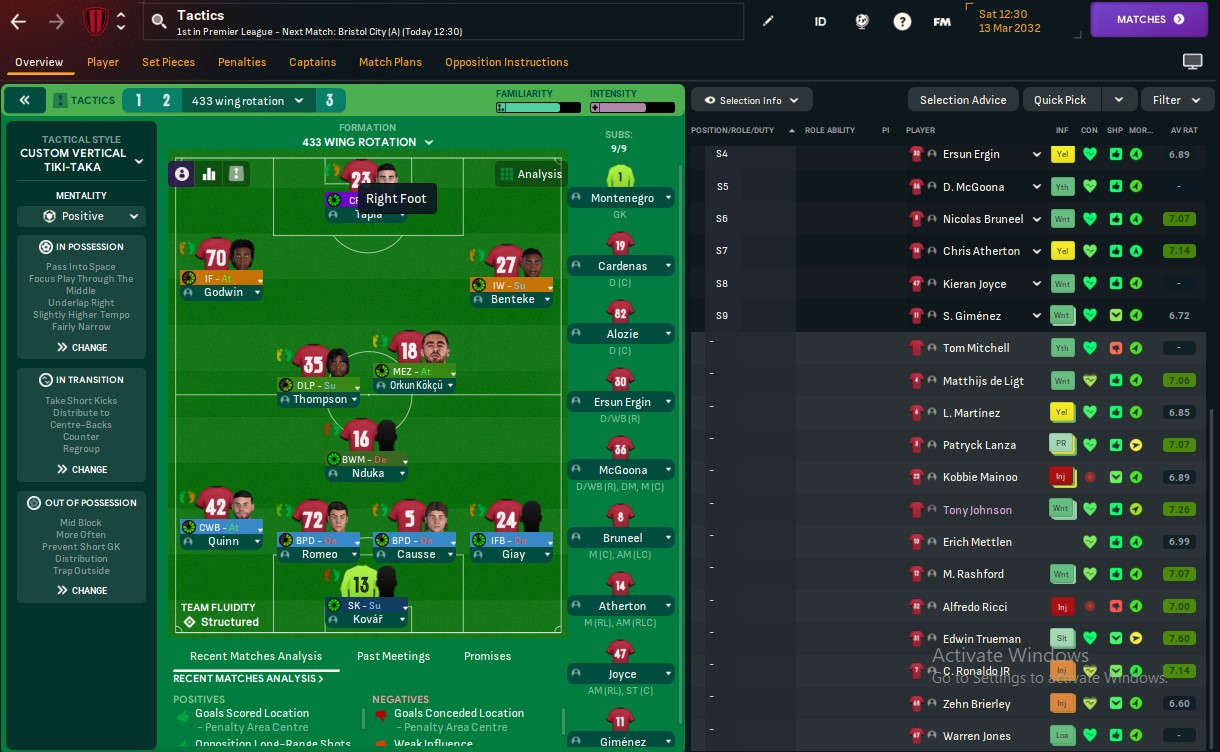
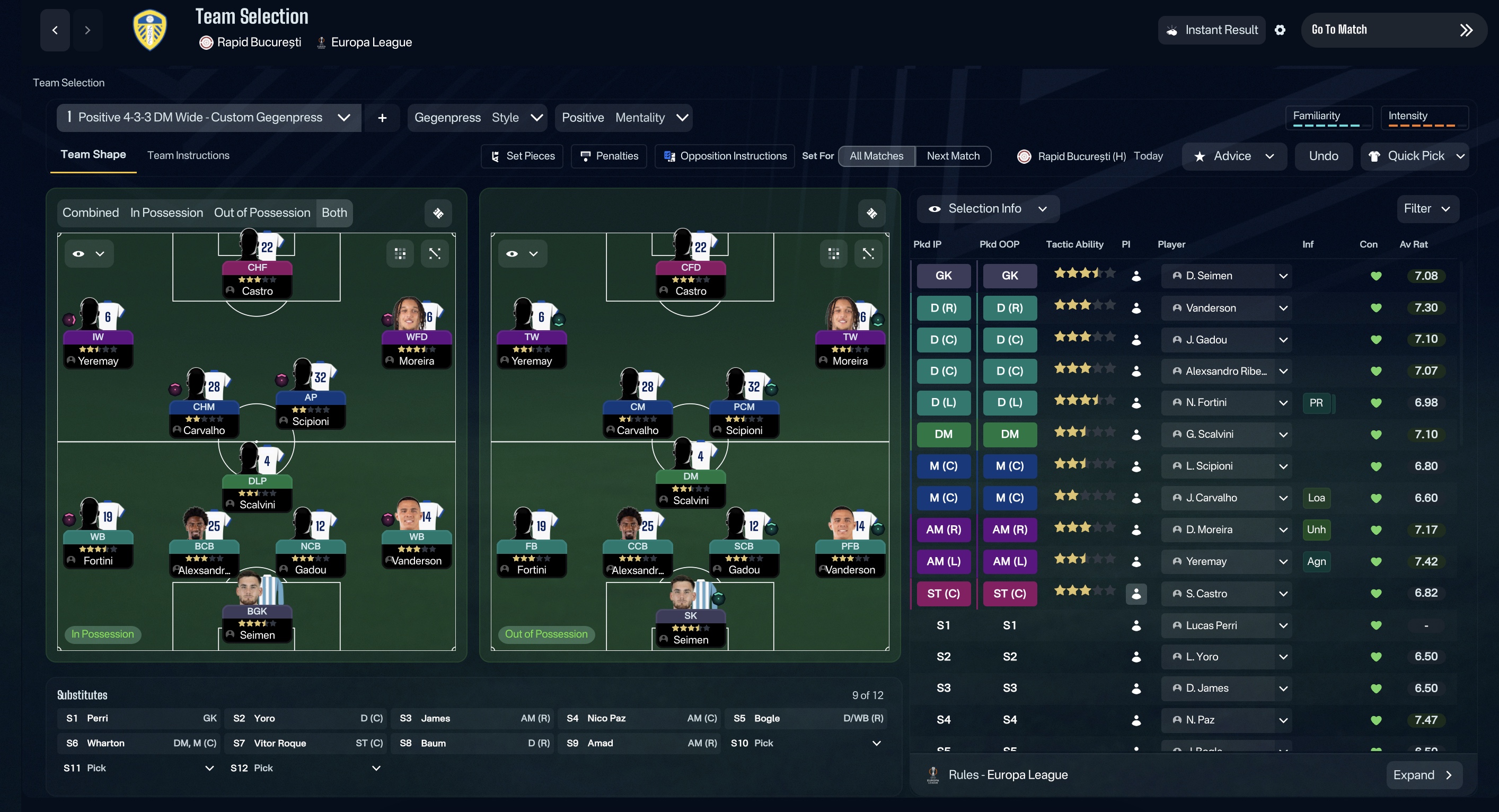
More Pozitif Futbol tactics
Guides for this formation
The tactical theory behind the 4-3-3 Wide: roles, instructions, and the trade-offs that decide whether the system holds up.
Foundations
Understanding the 4-3-3 Formation
Master the classic 4-3-3: player roles, tactical variations, and the trade-offs that decide whether it sings or stalls.
Read guide
Player pairings
Midfield Trios
Holder, runner, creator: the role distribution rule for three-man midfields, the AMC variants, and the antipatterns that break them.
Read guide
Playing styles
Gegenpressing: A Full Guide
Klopp-style gegenpressing in FM, including squad profile, line-and-press pairing, sustainable workload, and the antipatterns to avoid.
Read guide