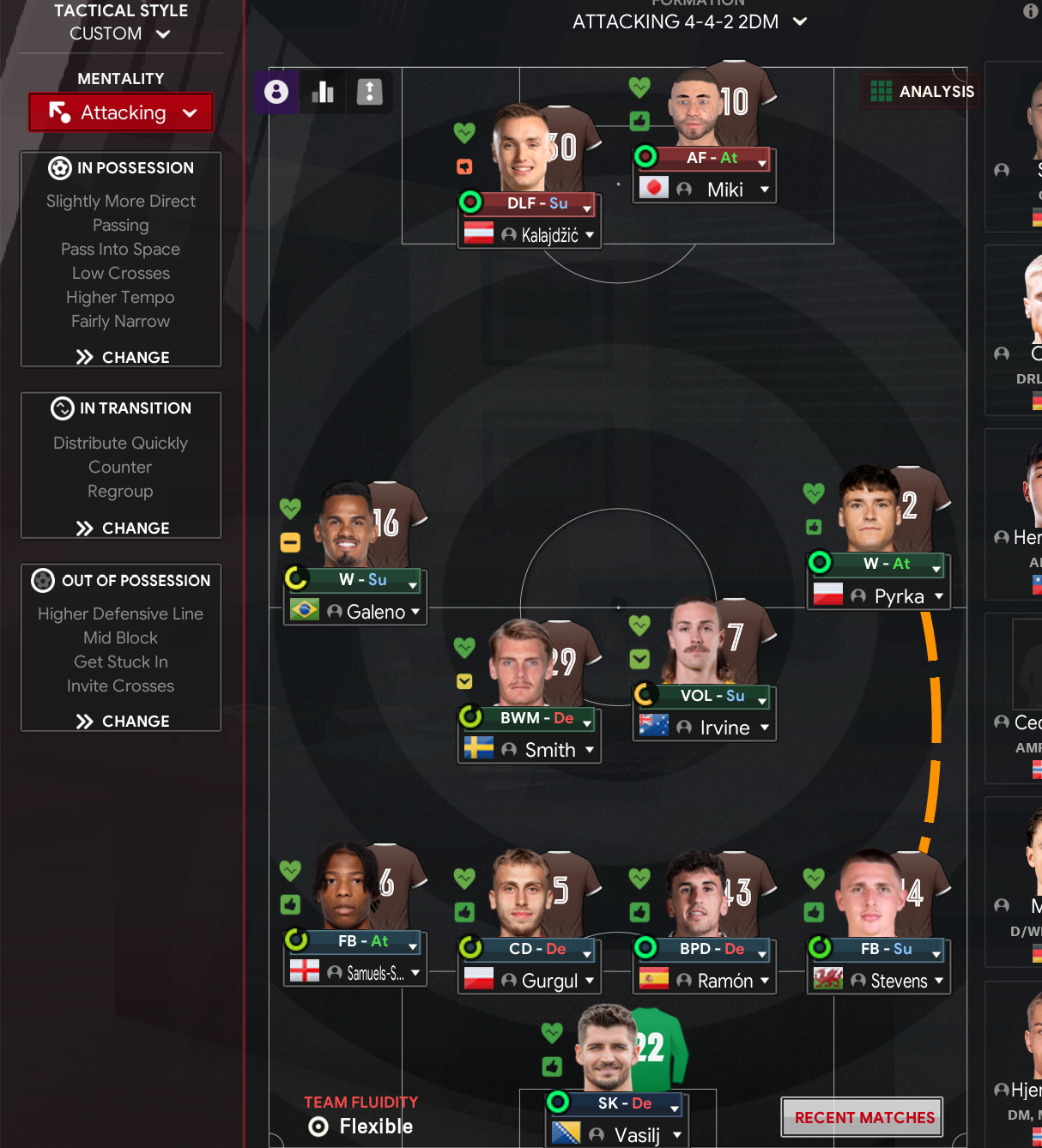
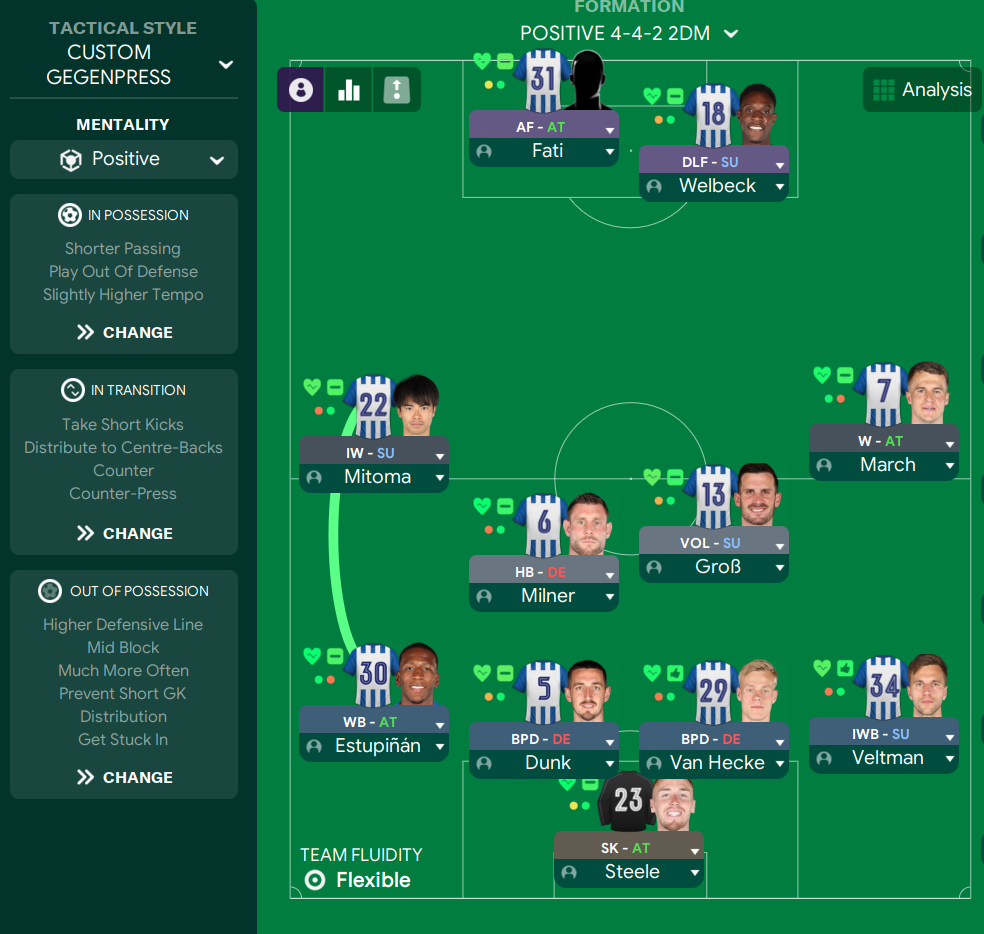
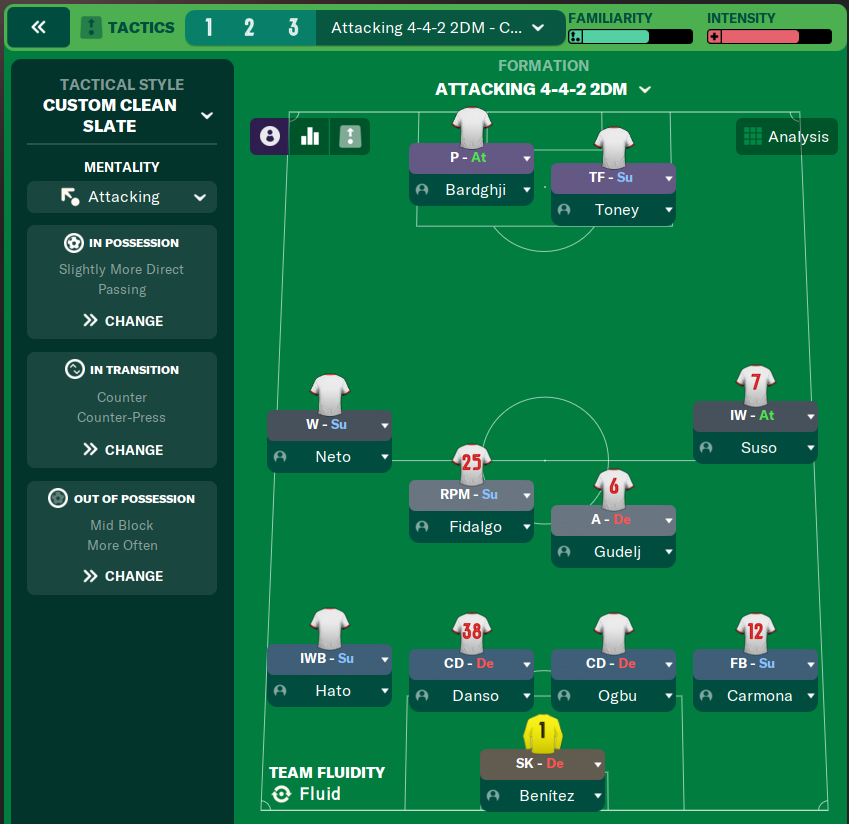
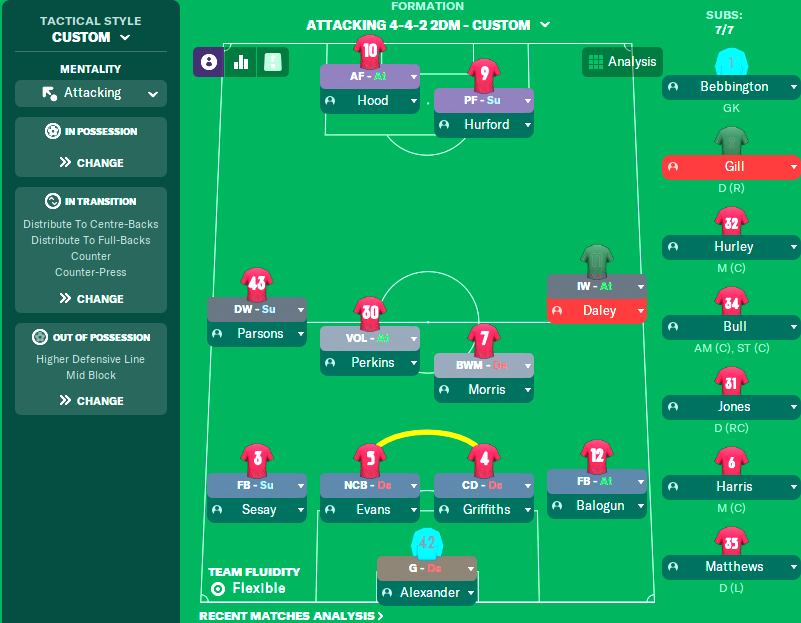
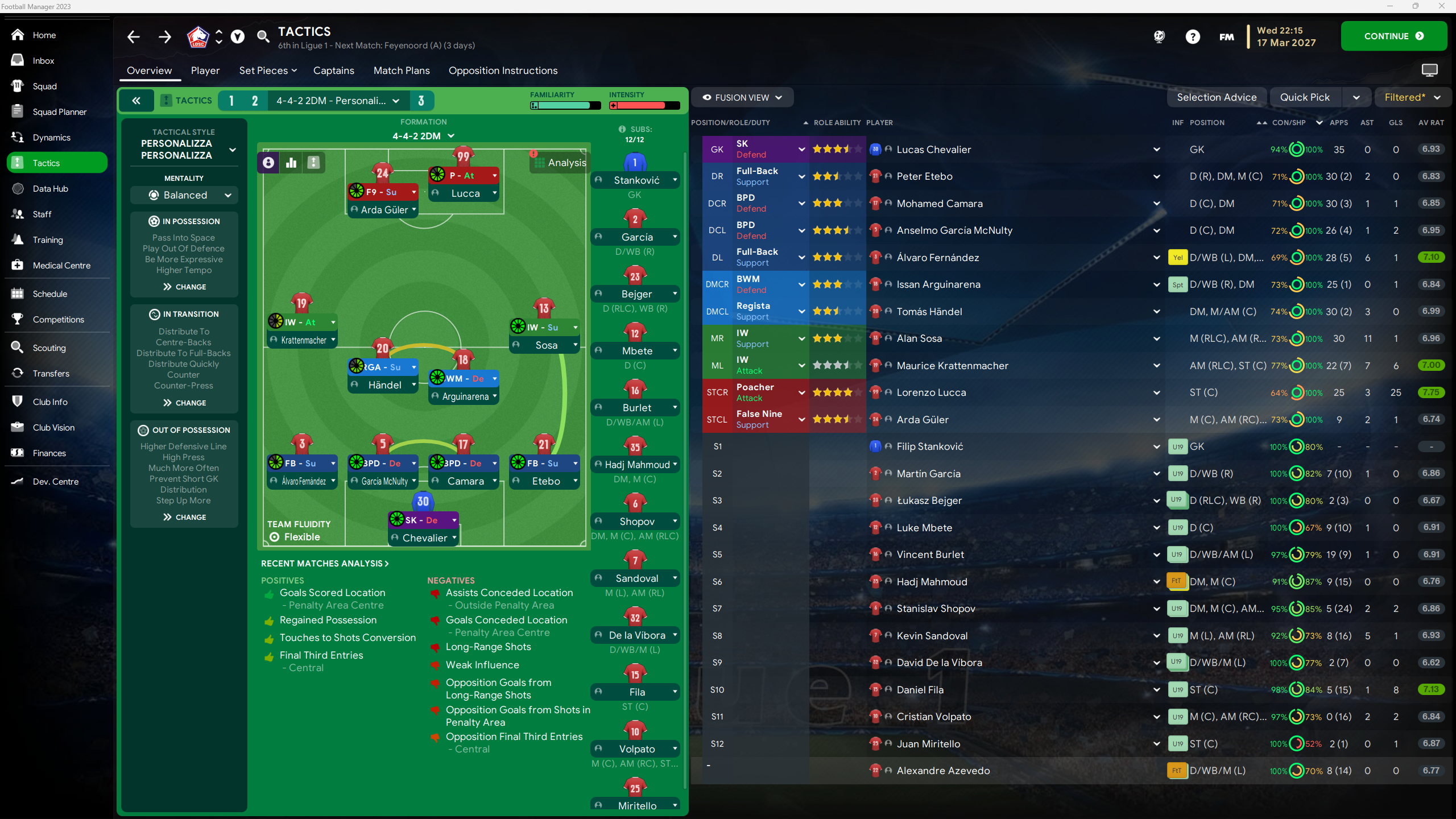
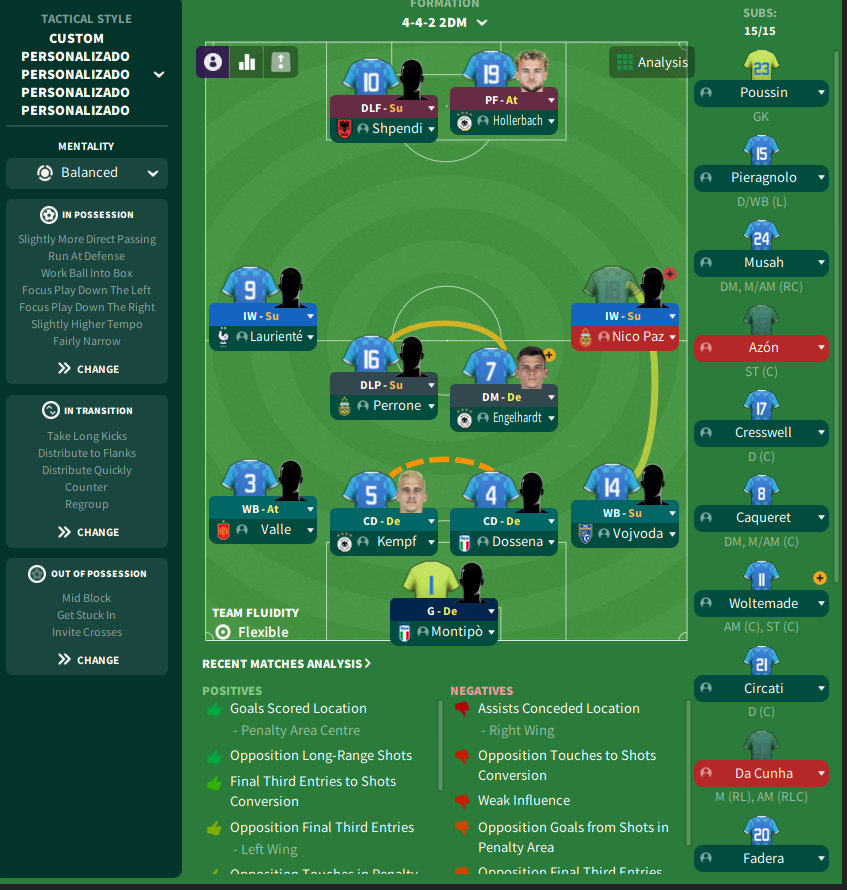
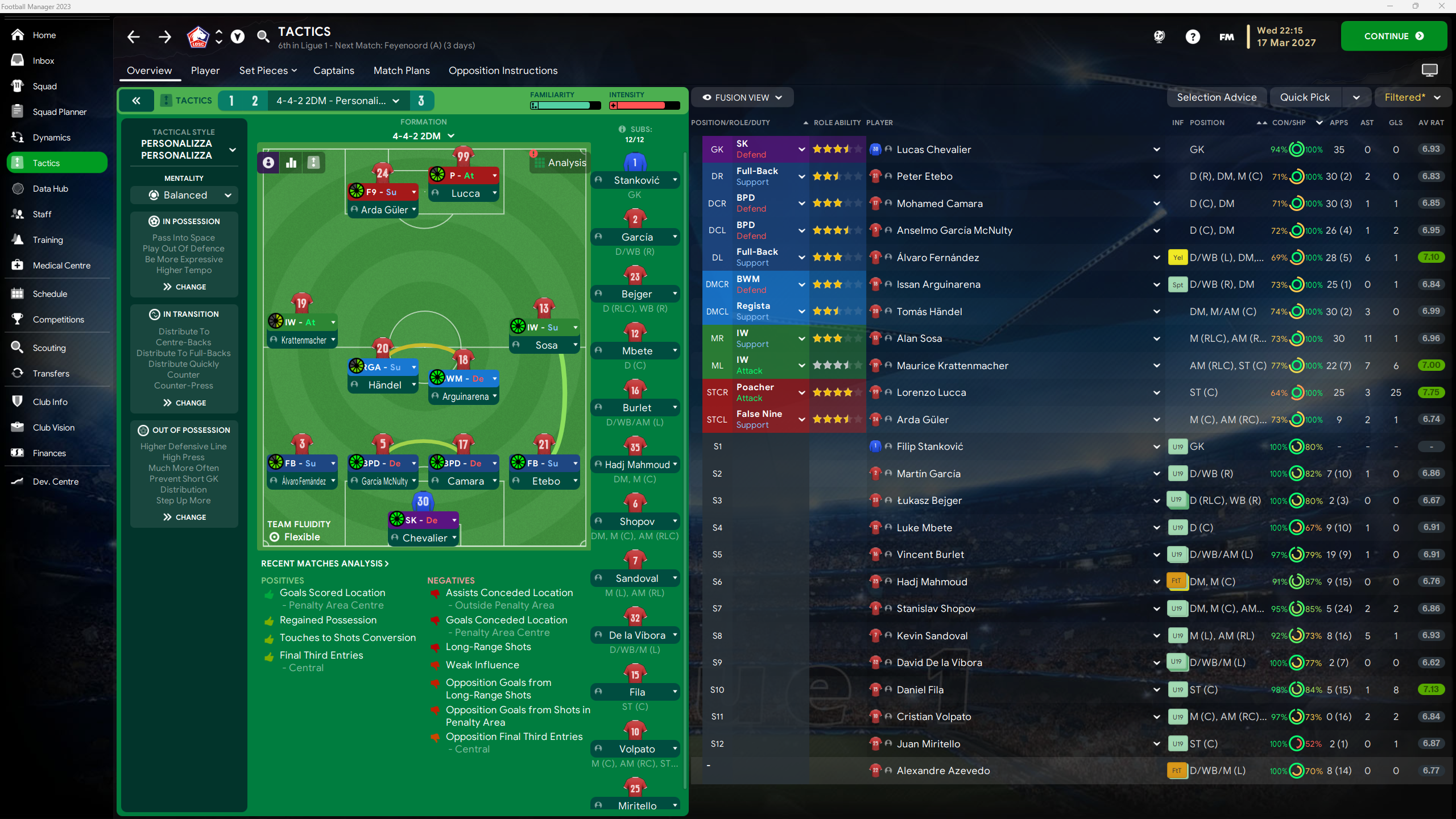
4-4-2 DM
The tactic emphasizes ball retention, allowing for gradual build-up and reducing opposition counter-attacks.
Loading tactical analysis...
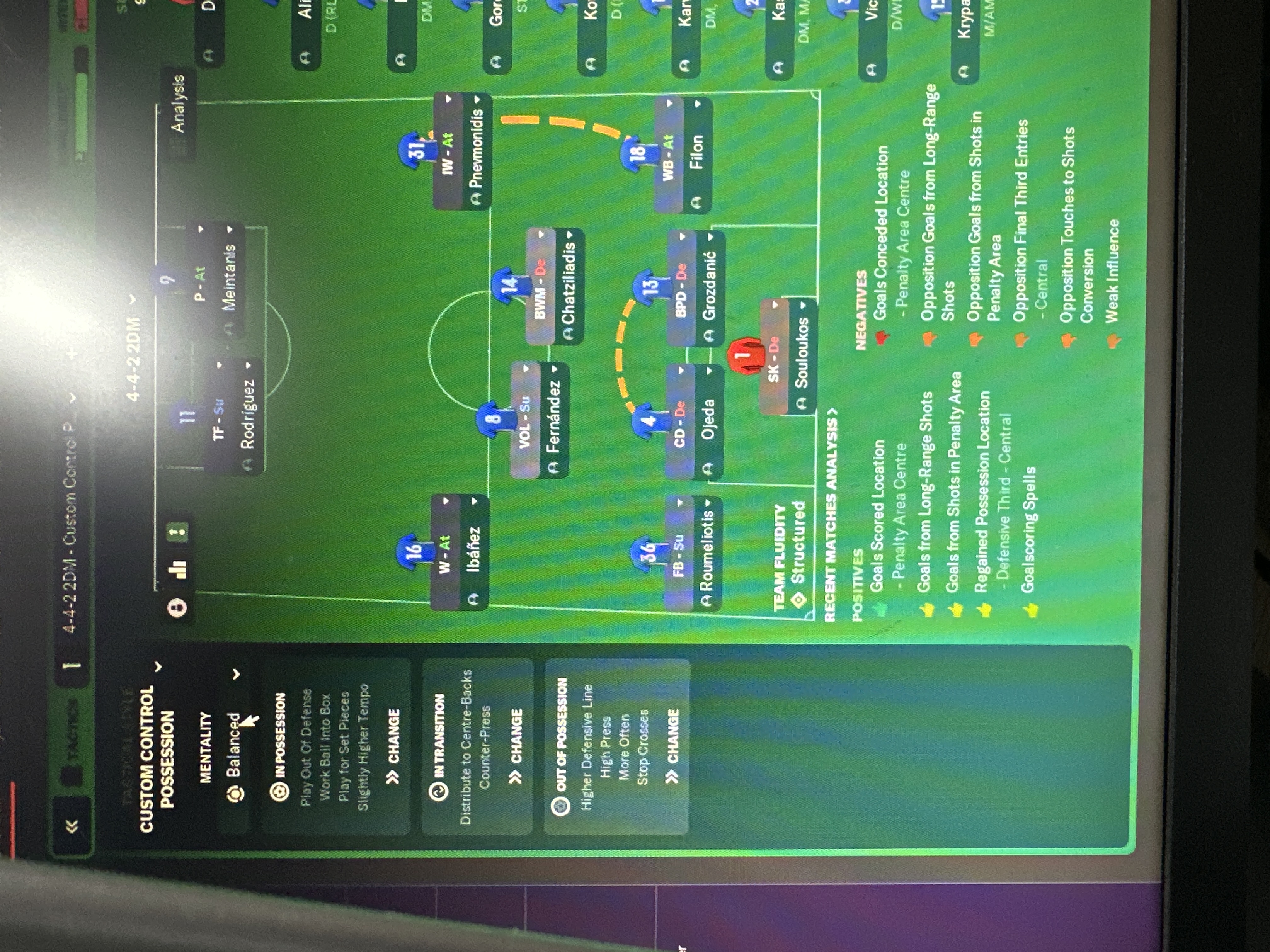
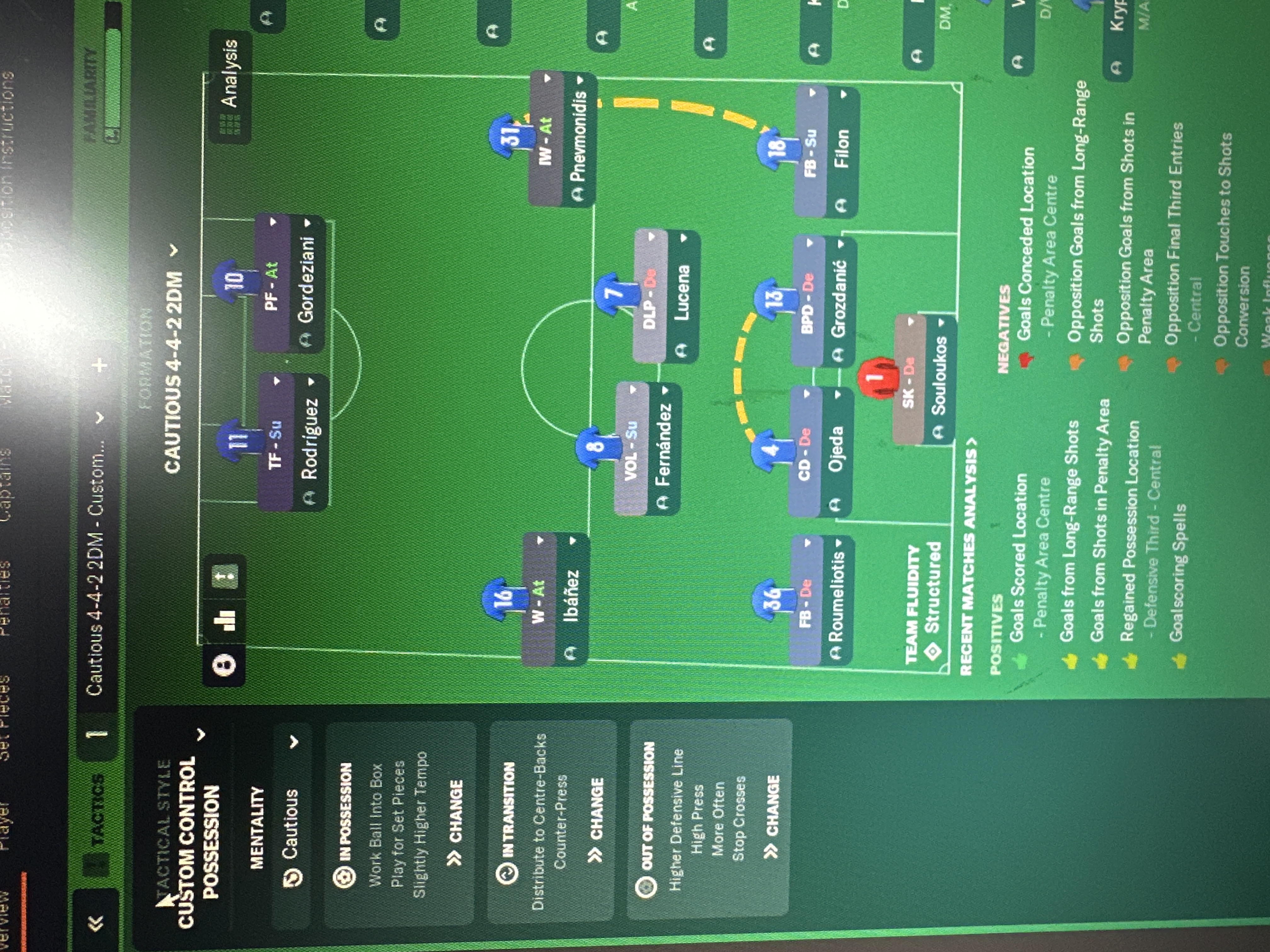
Control Possession
Cautious
4-4-2 DM
Structured
Work Ball Into Box
Play for Set Pieces
Slightly Higher Tempo
Distribute to Centre-Backs
Counter-Press
Higher Defensive Line
High Press
More Often
Stop Crosses
ST
Trequartista
Support
ST
Pressing Forward
Attack
RM
Winger
Attack
CM
Deep-Lying Playmaker
Defend
CM
Box-to-Box Midfielder
Support
LB
Full-Back
Defend
CB
Central Defender
Defend
CB
Ball-Playing Defender
Defend
RB
Full-Back
Support
GK
Sweeper-Keeper
Defend
The tactic emphasizes ball retention, allowing for gradual build-up and reducing opposition counter-attacks.
With the structured team fluidity and cautious mentality, the formation is resilient defensively, minimizing space for opponents.
A high press can be contradictory to a cautious approach, potentially leaving gaps in defense if players are not disciplined.
While the team is structured, quick transitions might be hindered if players are too rigid in their positions.
How effectively can the team transition from defense to offense?
Are the full-backs providing sufficient support in attack?
Is the current pressing strategy yielding the desired turnover rate?
How well are the midfield players contributing both defensively and offensively?
Are players executing their roles effectively within the tactical framework?
How can the team ensure stability while adopting a more aggressive stance when needed?
The tactical theory behind the 4-4-2 DM: roles, instructions, and the trade-offs that decide whether the system holds up.
Long-ball football done well in FM. When direct, vertical play is the right choice, and what the Direct Passing TI actually changes.
Sit deep, win the ball, and break in three passes. The roles, instructions, and squad profile that make it work.
The pairing rule for Defensive Line and Line of Engagement, all 9 combinations, and the gap that costs goals.