Uploaded Tactic
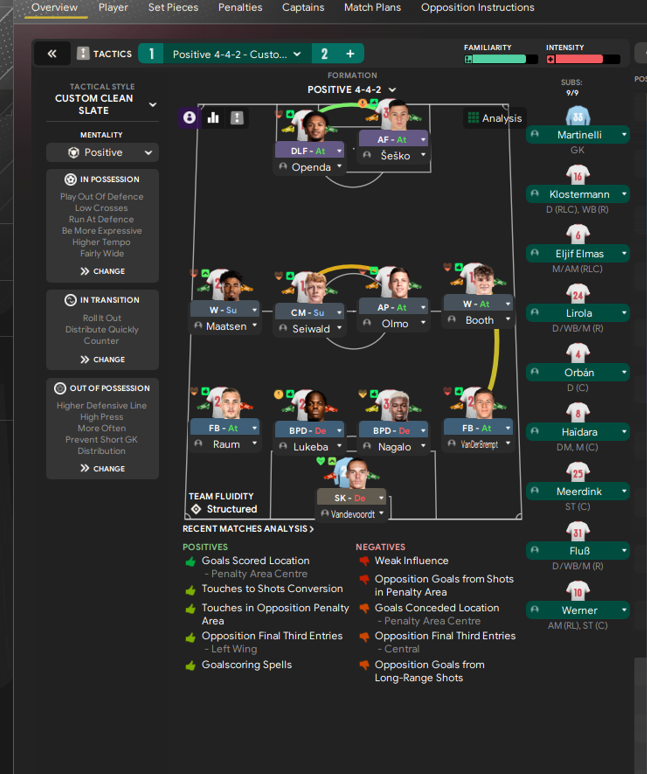
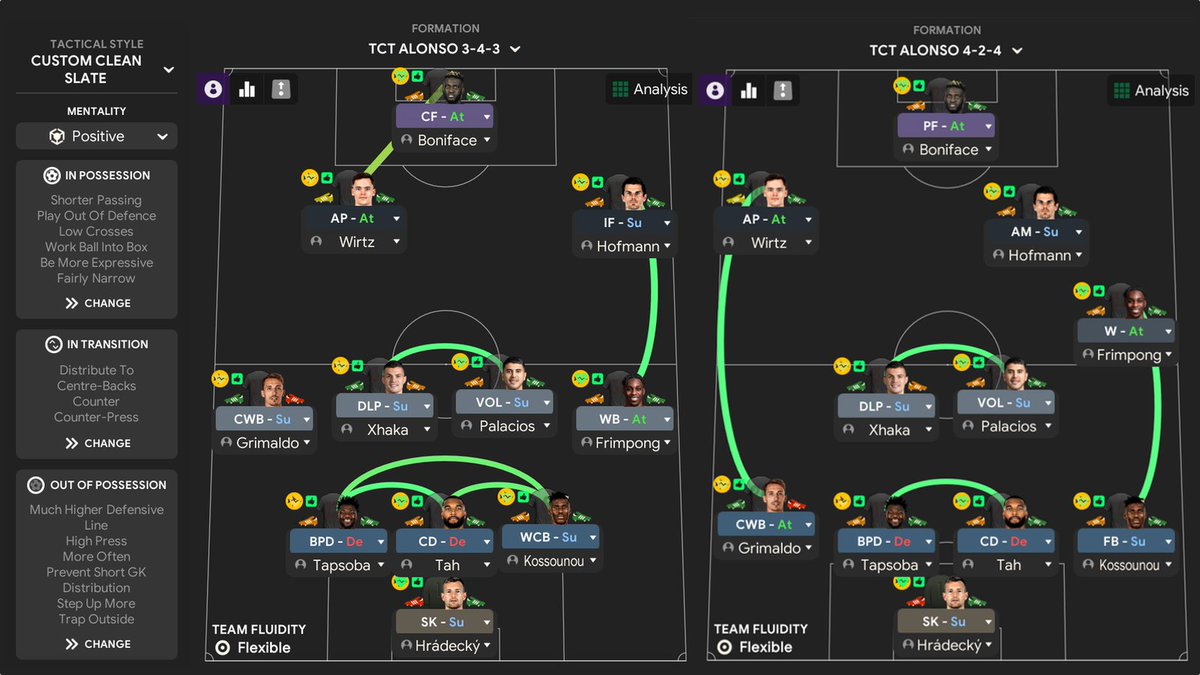
Formation & Style
Tactical Style:Custom Clean Slate
Mentality:Positive
Formation:4-4-2
Team Fluidity:Structured
In Possession
Play Out Of Defence
Low Crosses
Run At Defence
Be More Expressive
Higher Tempo
Fairly Wide
In Transition
Roll It Out
Distribute Quickly Counter
Out of Possession
Higher Defensive Line
High Press
More Often Prevent Short GK Distribution
Team Shape Without Ball
Shape:Compact 4-4-2
Description:Defensive block remains compact and organized, pressing high to limit the opponent's time on the ball.
Evidence:High Defensive Line + High Press with BPD-D at [2,3] and [2,4]
Team Shape With Ball
Shape:Expansive 4-4-2
Description:Utilizing wingers to create width, allowing central players to exploit gaps in opposition.
Evidence:W at [5,2] & [5,4] providing width and a AP-A at [4,3] for central creativity.
Phase Description
Attacking Play
Focus on wide play with wingers to stretch the opposition, while the central midfielders dictate the tempo and create chances.
Defensive Transition
Quickly revert to a structured defensive shape with a high press to regain possession.
Main Focus
Utilizing width and quick transitions to capitalize on defensive lapses.
Key Strengths
Goal Scoring Ability
Effective in creating and converting chances, evidenced by good penalty area positioning.
Midfield Control
The combination of a CM-S and AP-A provides a balance of support and creativity.
Full-Back Contribution
Full-backs provide width and attacking options while contributing defensively.
Conflicting Directions
Defensive Pressure
Emphasis on high pressing may leave gaps if not executed efficiently.
Counter-Press Effectiveness
Counter-pressing may falter if attackers do not track back.
Winger Dependence
Heavy reliance on wingers can lead to stagnation if they are marked out of the game.
Tactical Suggestions
Consider Tactical Flexibility
Introducing a more fluid formation could enhance adaptability during matches.
Enhance Defensive Organization
Encouraging midfielders to hold their positions can maintain shape during transitions.
Utilize Substitutes Effectively
Bringing on fresh legs can help sustain intensity in the latter stages.
Ask Questions About Your Lineup
Related Tactics
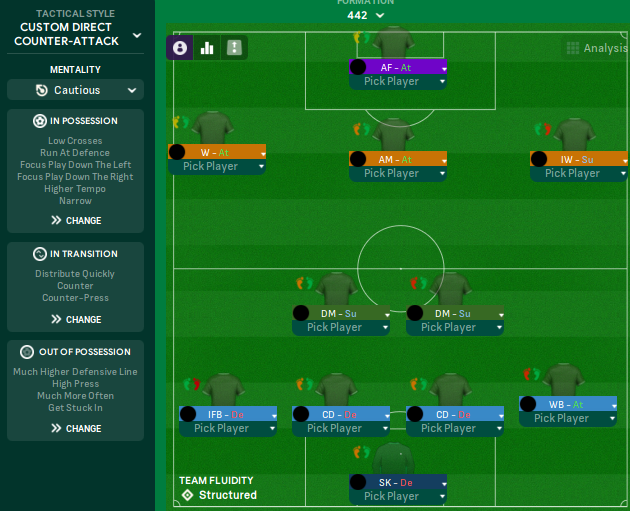
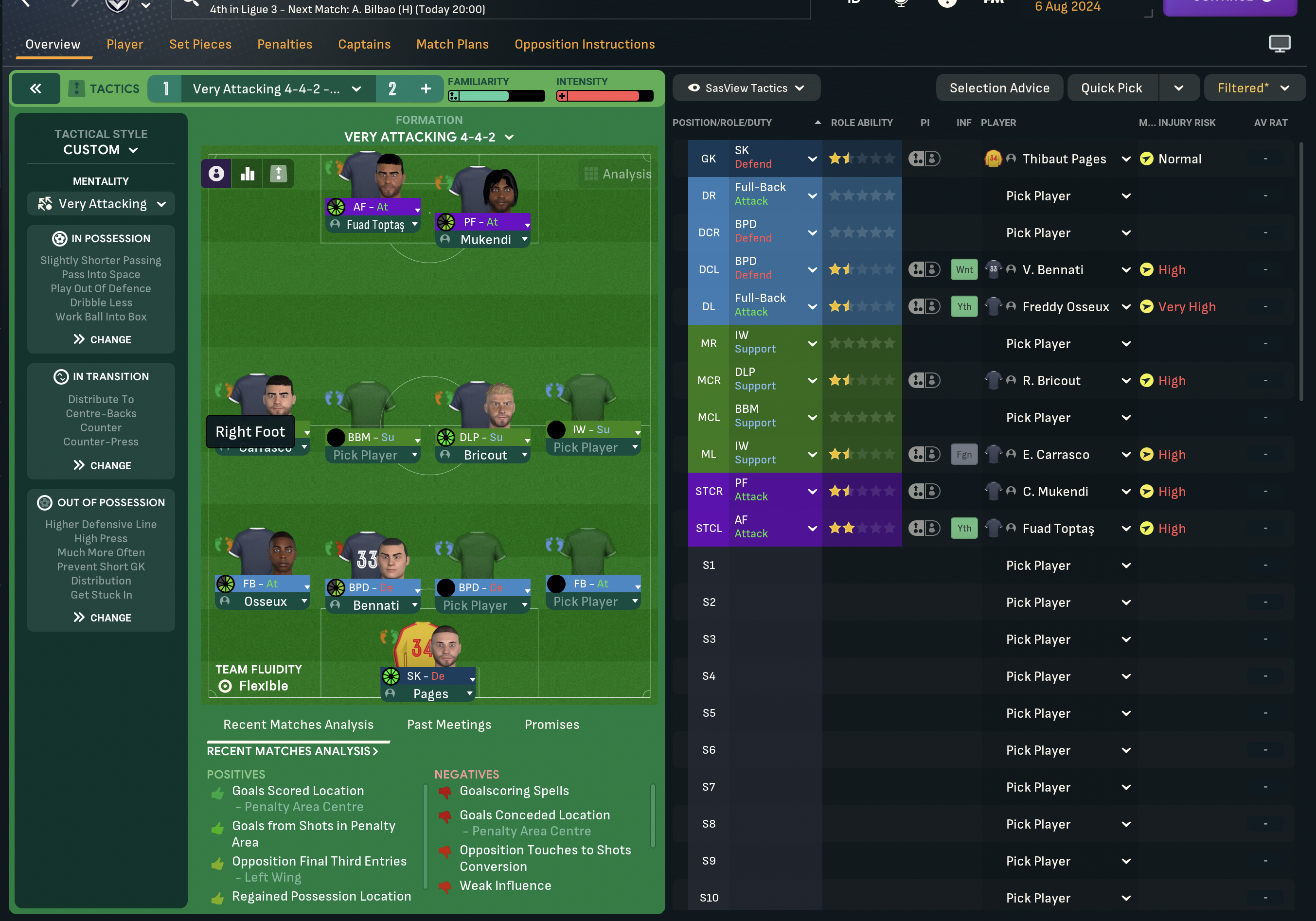
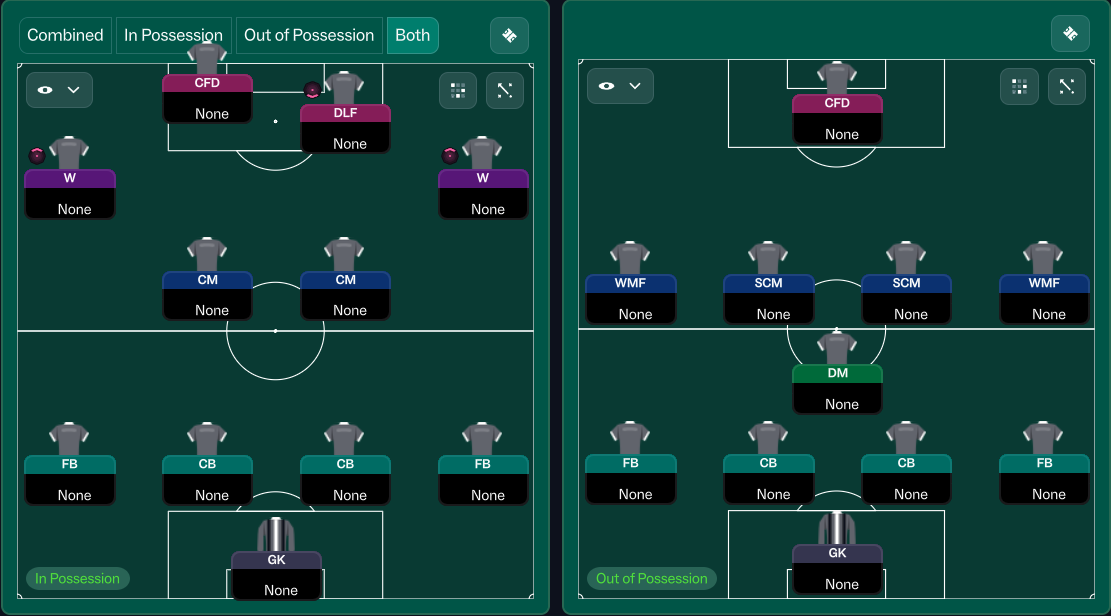
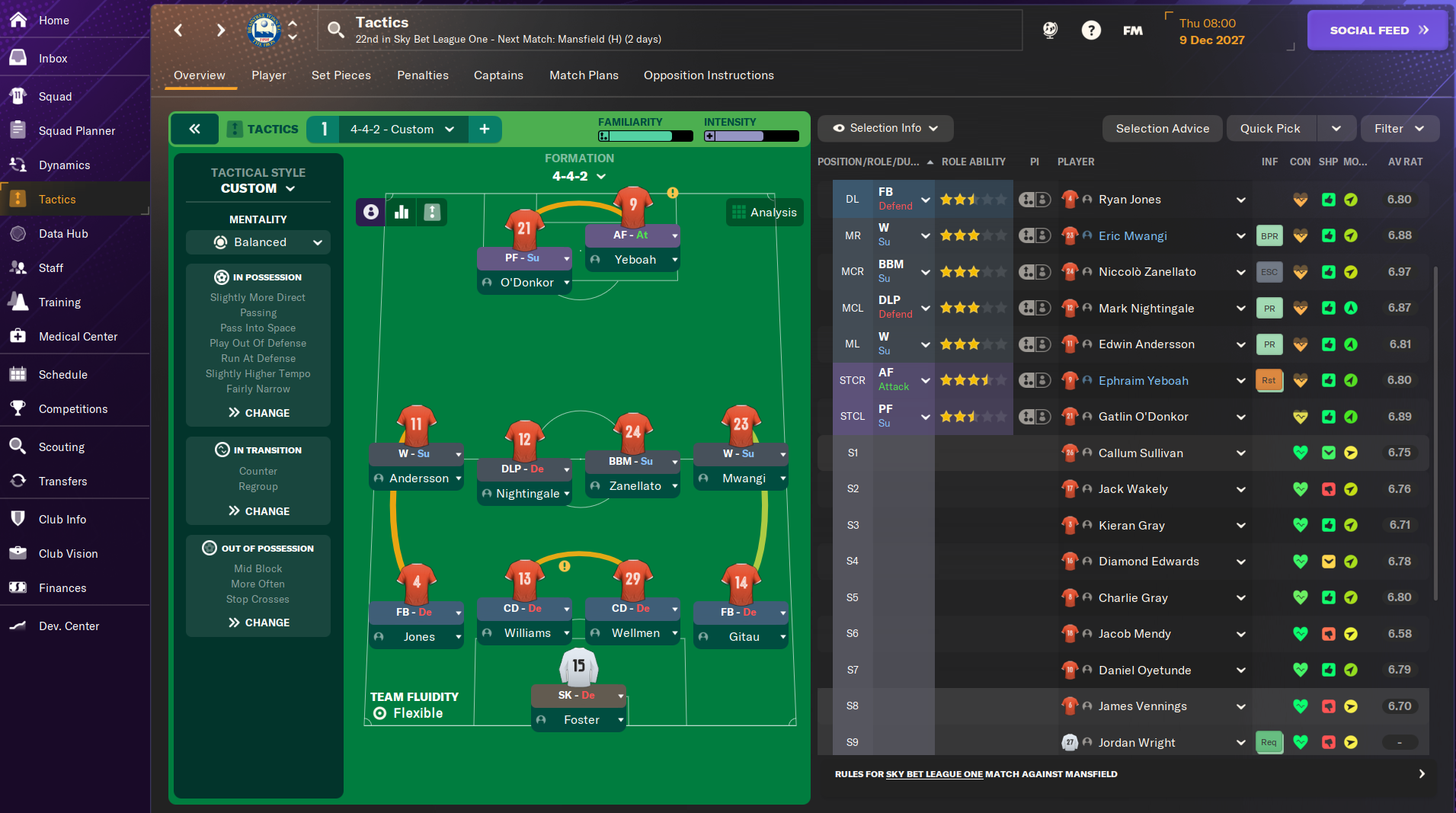
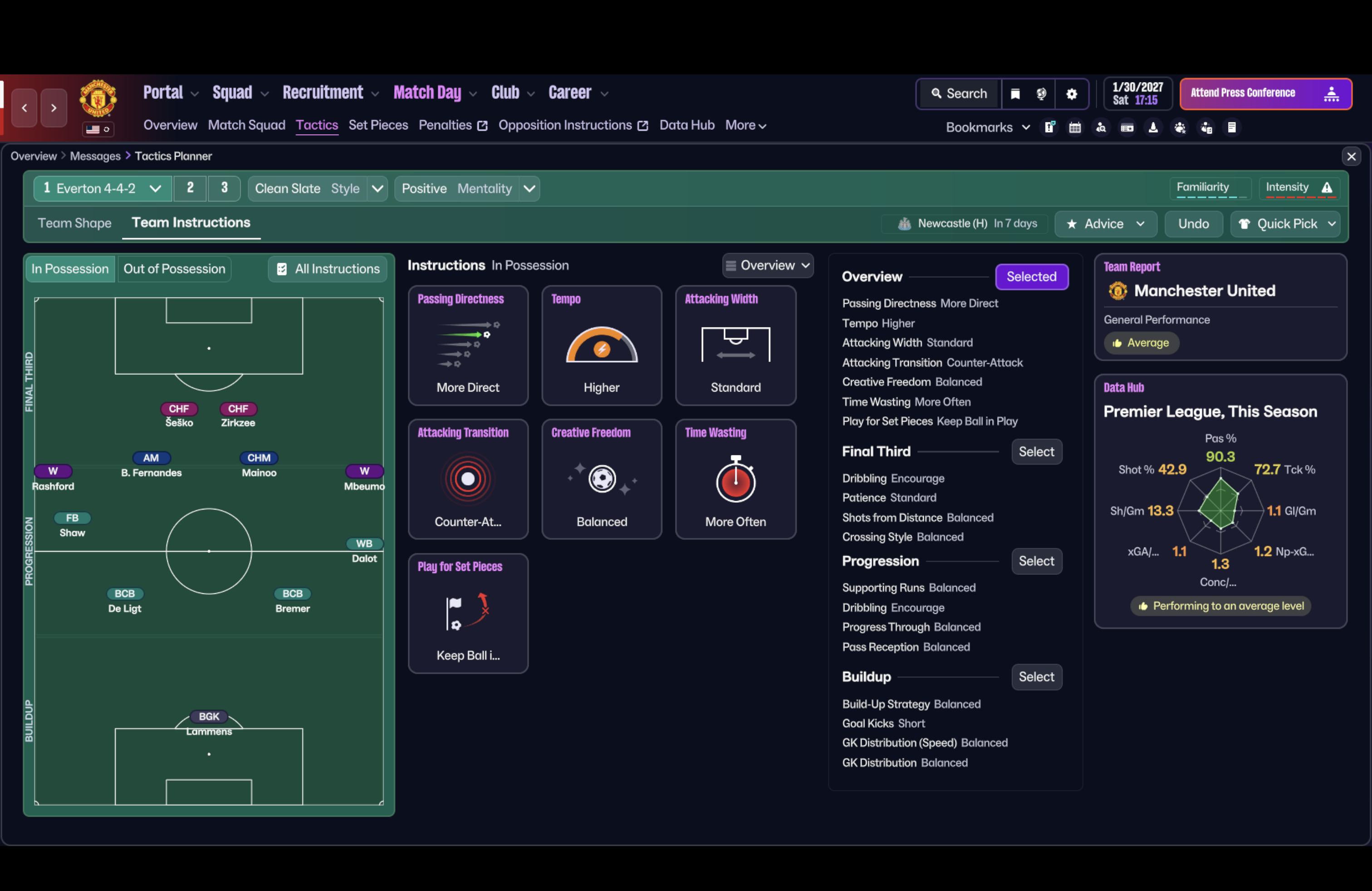
More Custom Clean Slate tactics
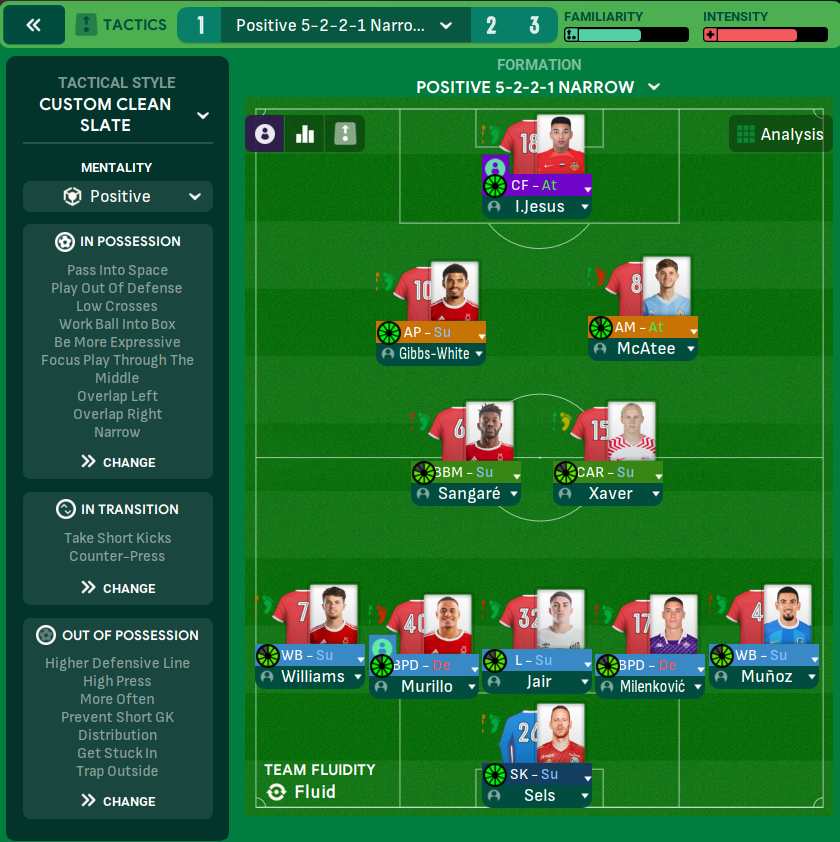
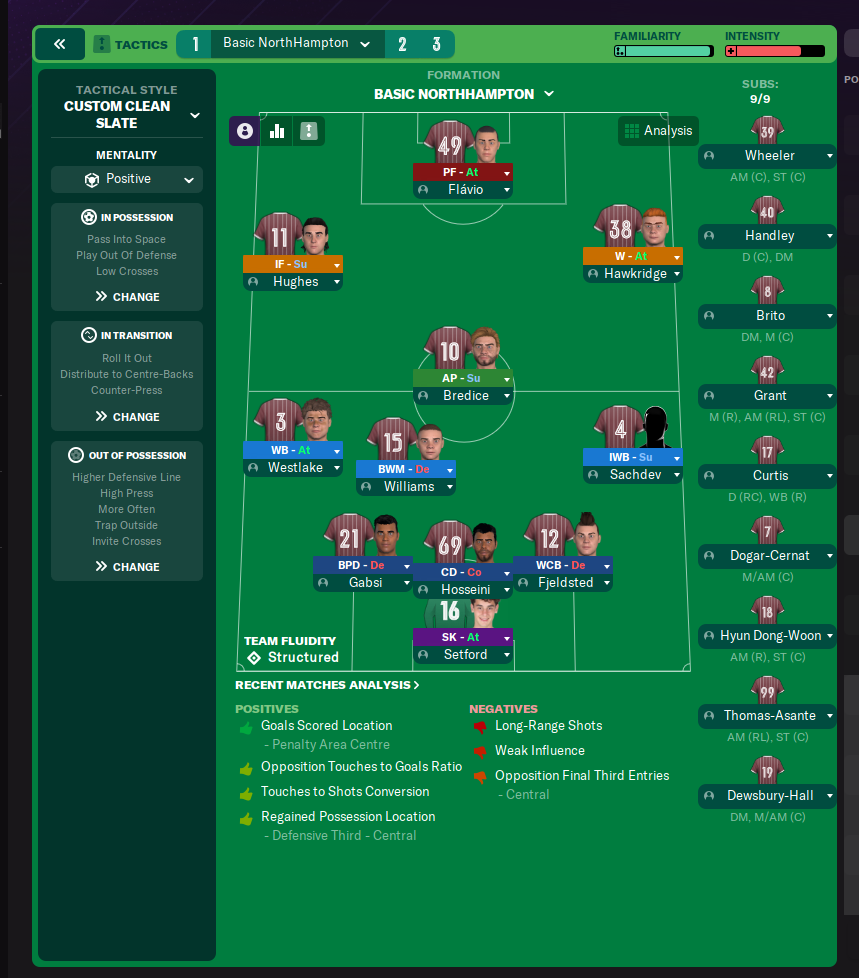
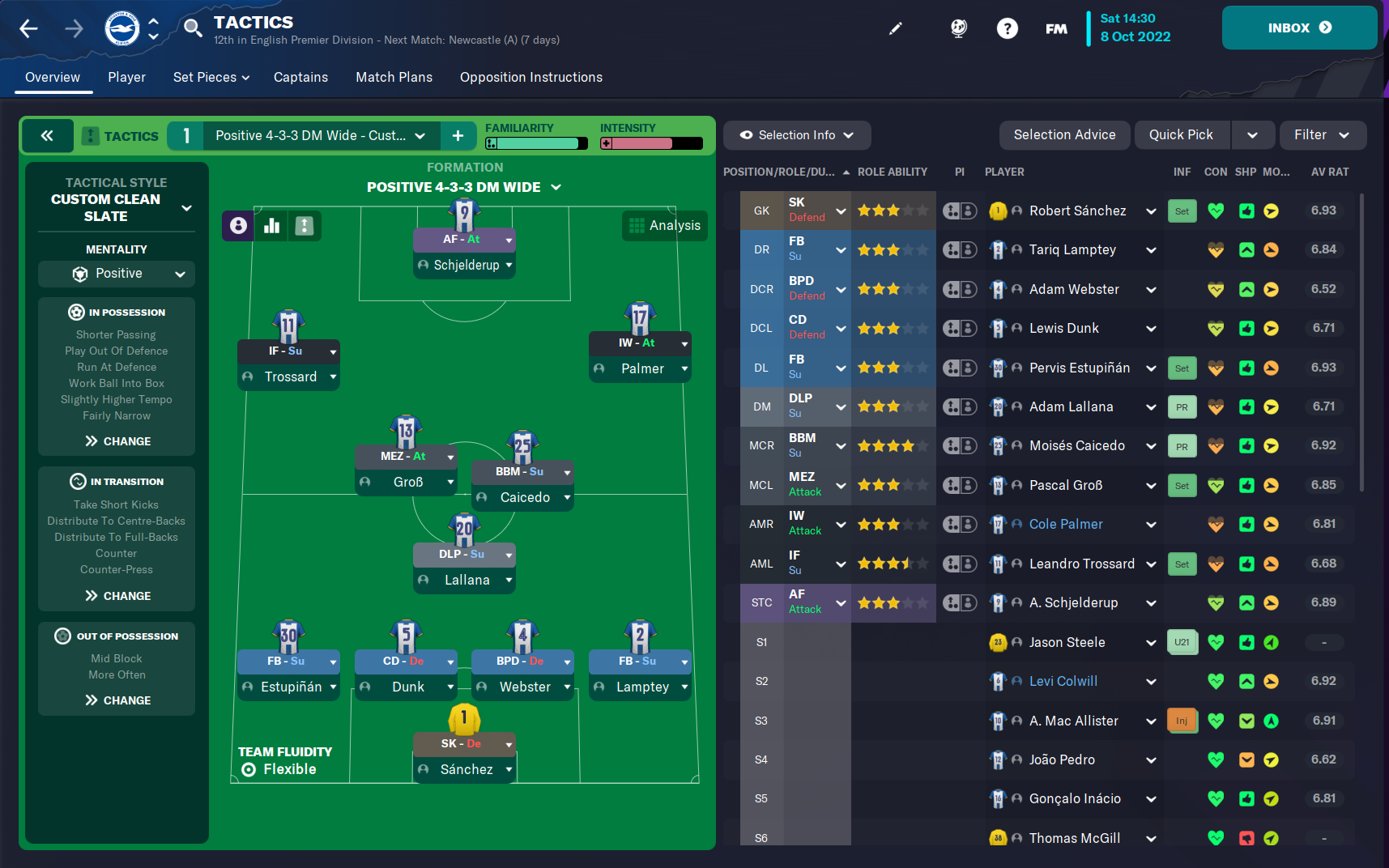
Guides for this formation
The tactical theory behind the 4-4-2: roles, instructions, and the trade-offs that decide whether the system holds up.
Player pairings
Midfield Pairs in 4-2-3-1 and 4-4-2
Double pivots and flat pairs in 4-2-3-1 and 4-4-2: when each pairing works, when it collapses, and the AMC unicorn that rescues both.
Read guide
Playing styles
Direct, Vertical Football
Long-ball football done well in FM. When direct, vertical play is the right choice, and what the Direct Passing TI actually changes.
Read guide
Playing styles
Counter-Attacking Excellence
Sit deep, win the ball, and break in three passes. The roles, instructions, and squad profile that make it work.
Read guide