Uploaded Tactic
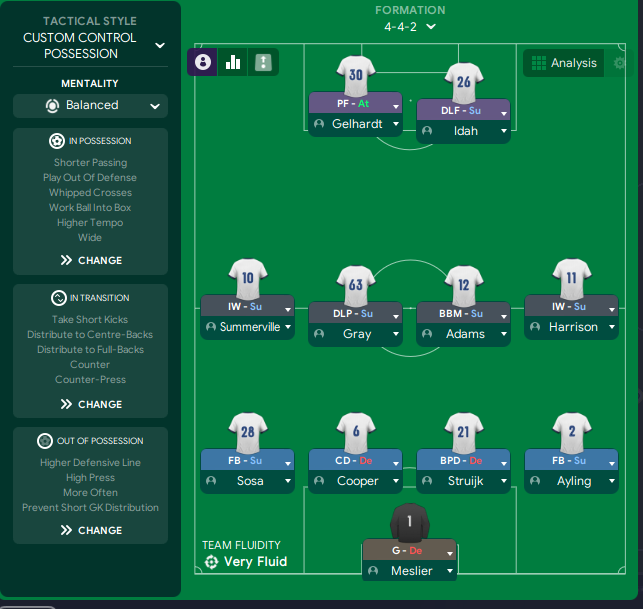
Formation & Style
Tactical Style:Custom Control Possession
Mentality:Balanced
Formation:4-4-2
Team Fluidity:Very Fluid
In Possession
Shorter Passing
Play Out Of Defense
Whipped Crosses
Work Ball Into Box
Higher Tempo
Wide
In Transition
Take Short Kicks
Distribute to Centre-Backs
Distribute to Full-Backs
Counter
Out of Possession
Higher Defensive Line
High Press
More Often Prevent Short GK Distribution
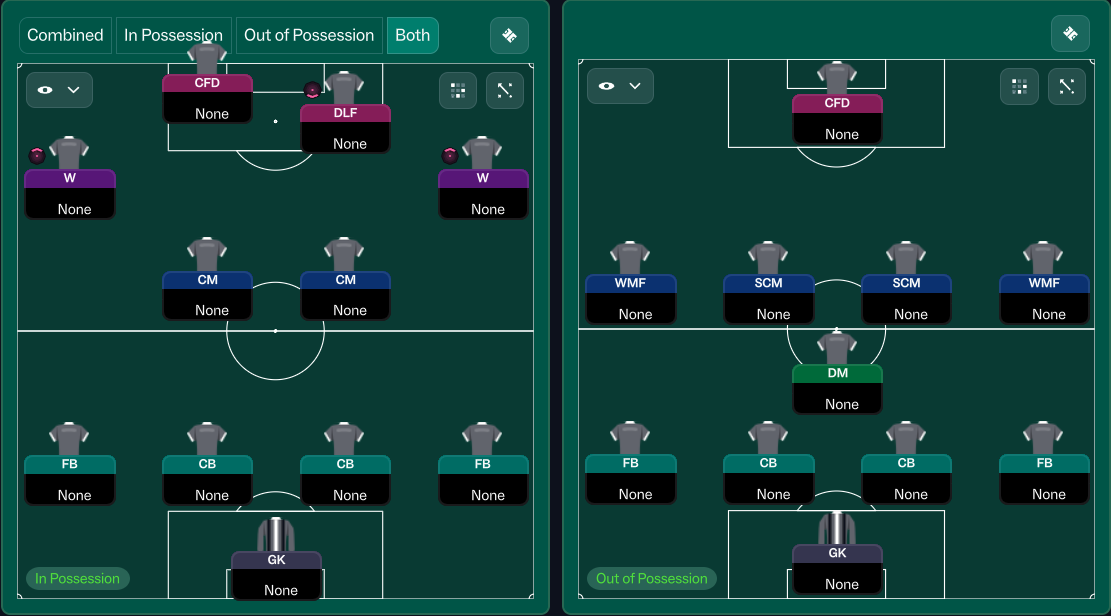
Team Shape Without Ball
Shape:4-4-2
Description:Compact shape, maintaining a higher defensive line and pressing aggressively.
Evidence:Higher Defensive Line + High Press with FB-Su at [2,1],[2,5] providing width.
Team Shape With Ball
Shape:4-4-2
Description:Width provided by wingers and full-backs, with quick build-up through the midfield.
Evidence:DLP-S at [3,3] and BBM-S at [4,3] with IW-S at [5,1],[5,5] providing support.
Phase Description
Attacking Play
The team emphasizes short passing and playing out from the back, utilizing width through inside wingers and overlapping full-backs.
Defensive Transition
Focuses on immediately pressing the opposition when possession is lost, coupled with a high defensive line.
Main Focus
Creating goal-scoring opportunities through controlled possession and angled runs from wingers.
Key Strengths
Creative Midfield Partnership
Combination of DLP and BBM in midfield allows for both creativity and dynamism.
Fluid Winger Play
Inside wingers can cut inside, while full-backs provide width, creating space and options.
Dual Forward Threat
Combination of a Poacher and a Deep-Lying Forward creates varied attacking threats.
Conflicting Directions
Risk of Over-commitment
Higher defensive line alongside high pressing can lead to vulnerabilities on the counter.
Limited Midfield Cover
With two attacking wingers, there's a risk of being outmanned in central midfield areas.
Dependence on Link Play
The attacking strategy relies heavily on Gelhardt as a link between midfield and attack.
Tactical Suggestions
Consider Deeper Defensive Line
Lowering the defensive line can mitigate counter-attacking threats.
Add Central Midfielder
Utilizing an additional central midfielder could balance the midfield better.
Tailor Attacking Instructions
Adjusting the instructions for wingers could optimize their contributions in attack.
Ask Questions About Your Lineup
Related Tactics
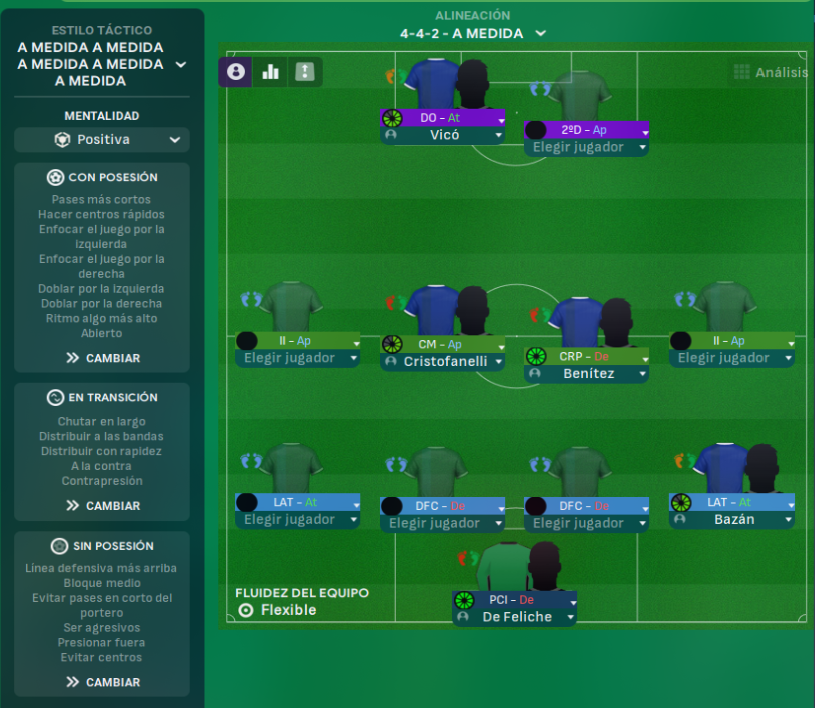
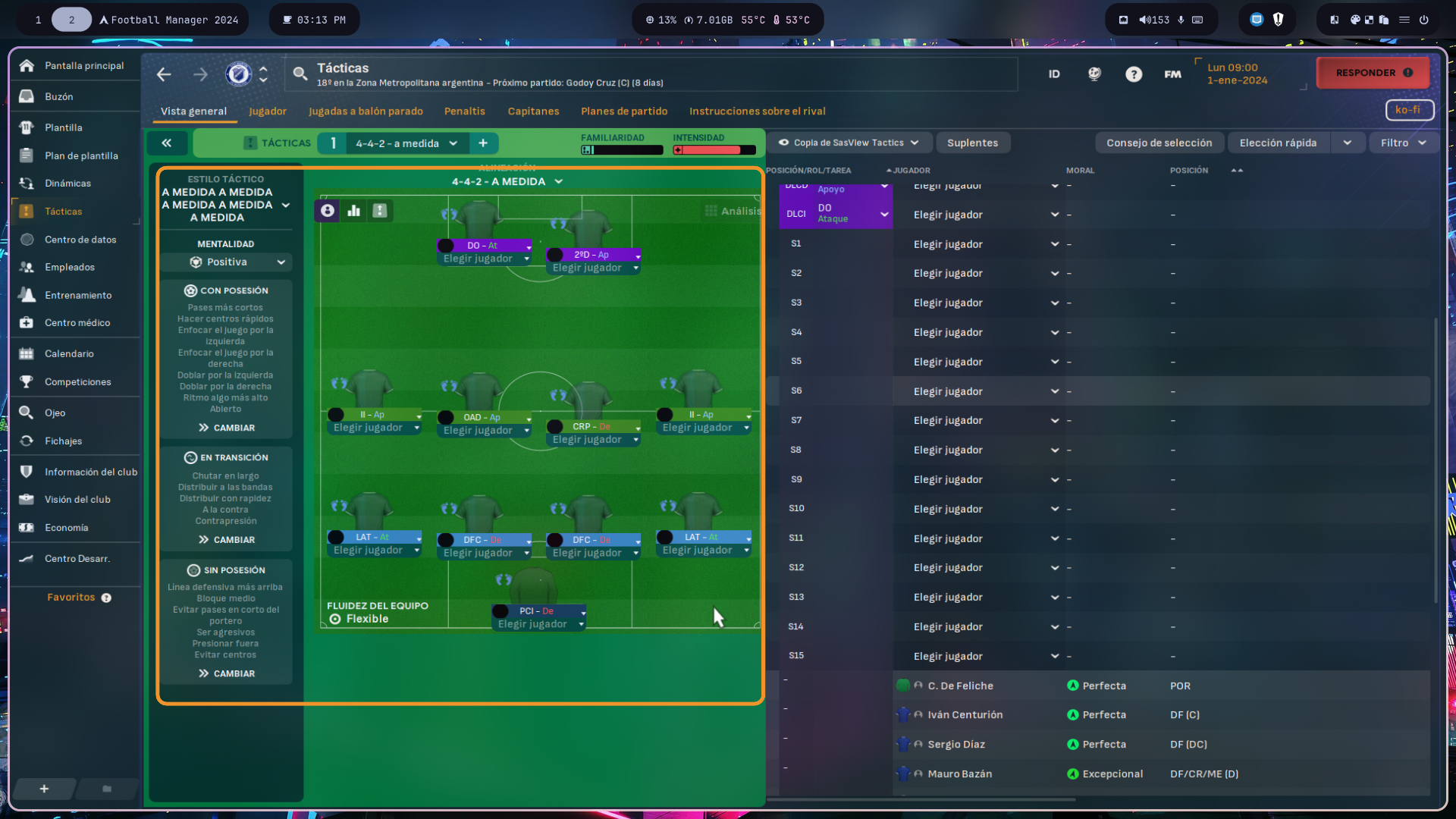
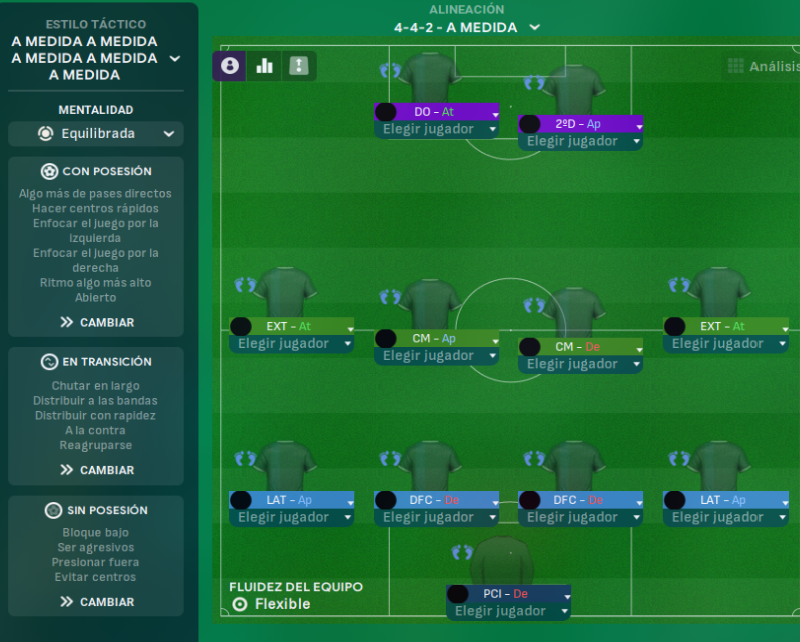
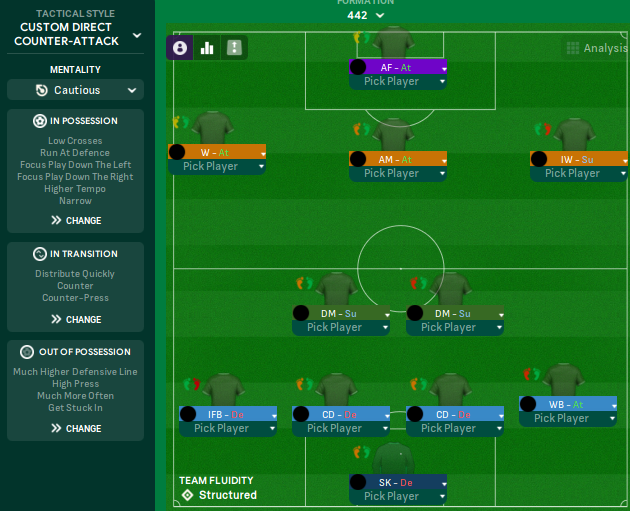
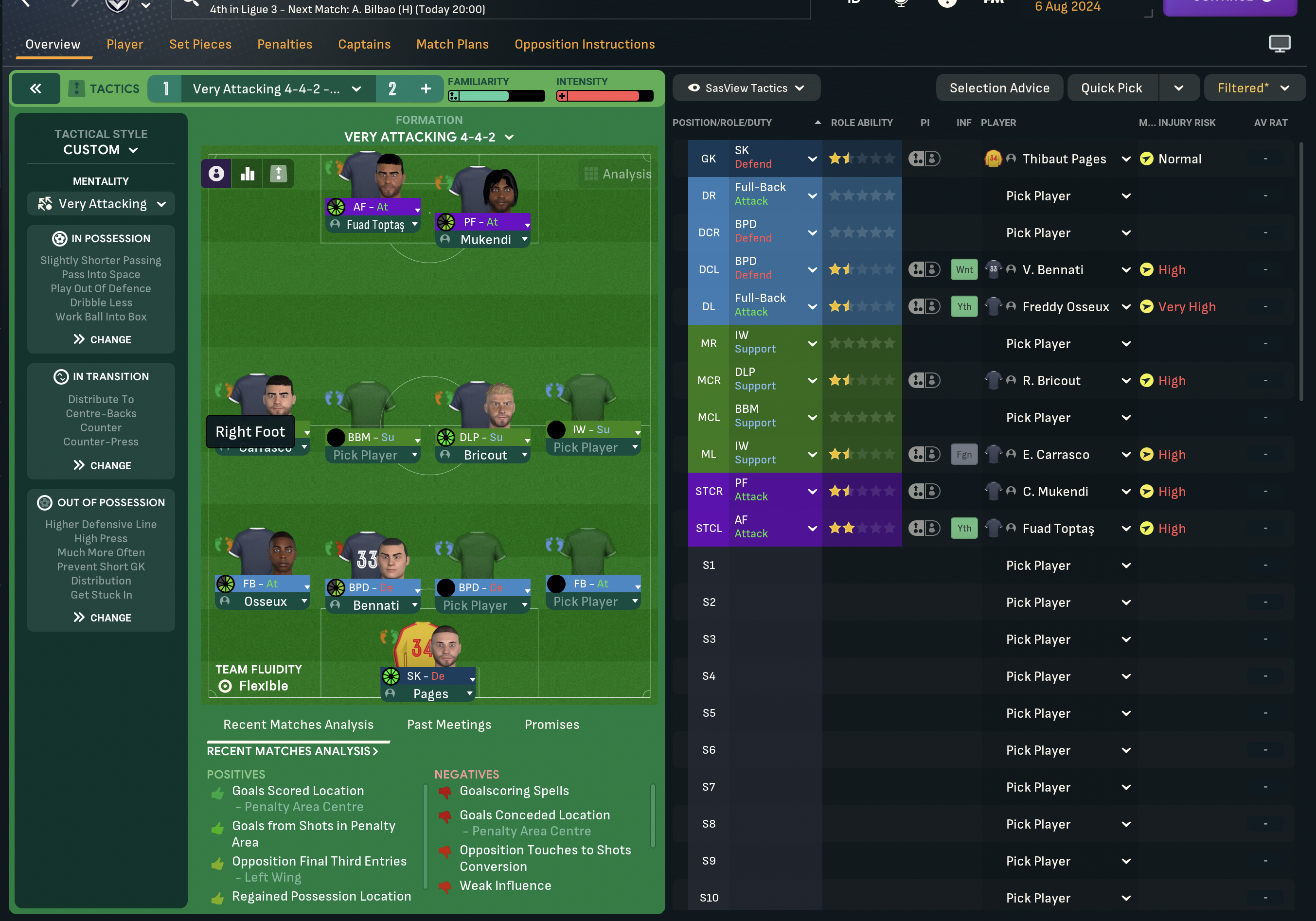
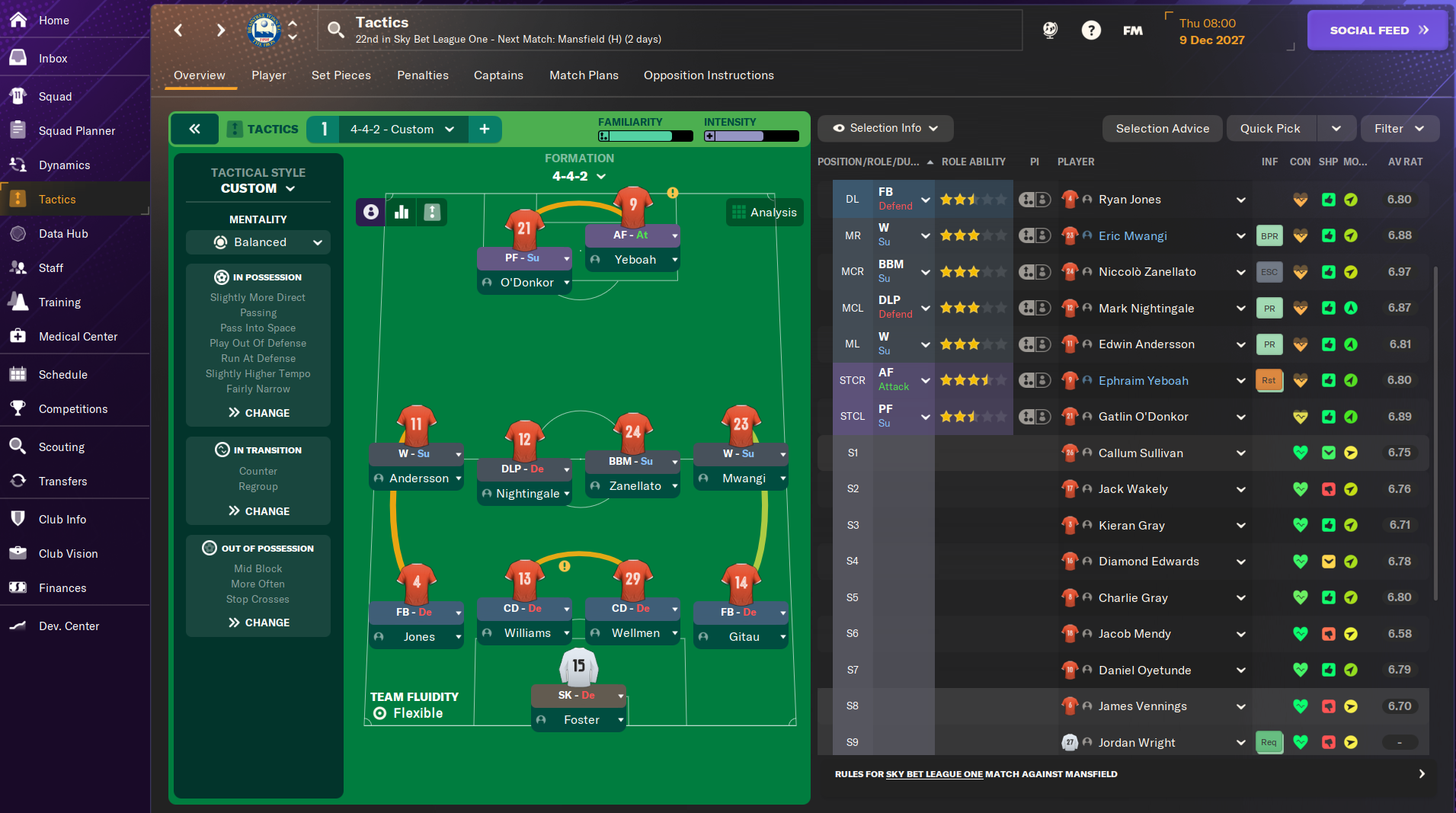
More Custom Control Possession tactics
Guides for this formation
The tactical theory behind the 4-4-2: roles, instructions, and the trade-offs that decide whether the system holds up.
Player pairings
Midfield Pairs in 4-2-3-1 and 4-4-2
Double pivots and flat pairs in 4-2-3-1 and 4-4-2: when each pairing works, when it collapses, and the AMC unicorn that rescues both.
Read guide
Playing styles
Direct, Vertical Football
Long-ball football done well in FM. When direct, vertical play is the right choice, and what the Direct Passing TI actually changes.
Read guide
Playing styles
Counter-Attacking Excellence
Sit deep, win the ball, and break in three passes. The roles, instructions, and squad profile that make it work.
Read guide