Uploaded Tactic
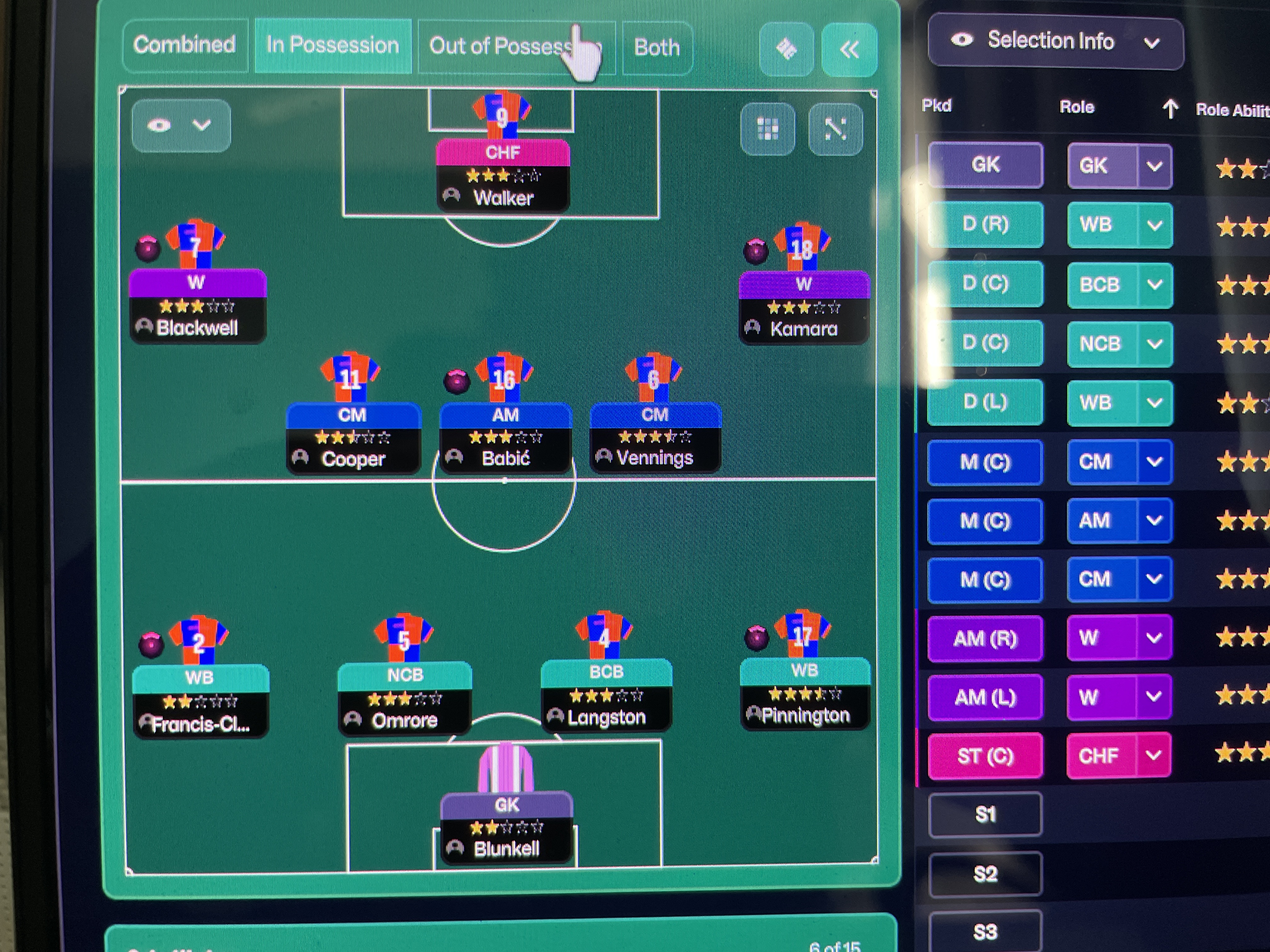
Formation & Style
Tactical Style:Attacking
Mentality:Positive
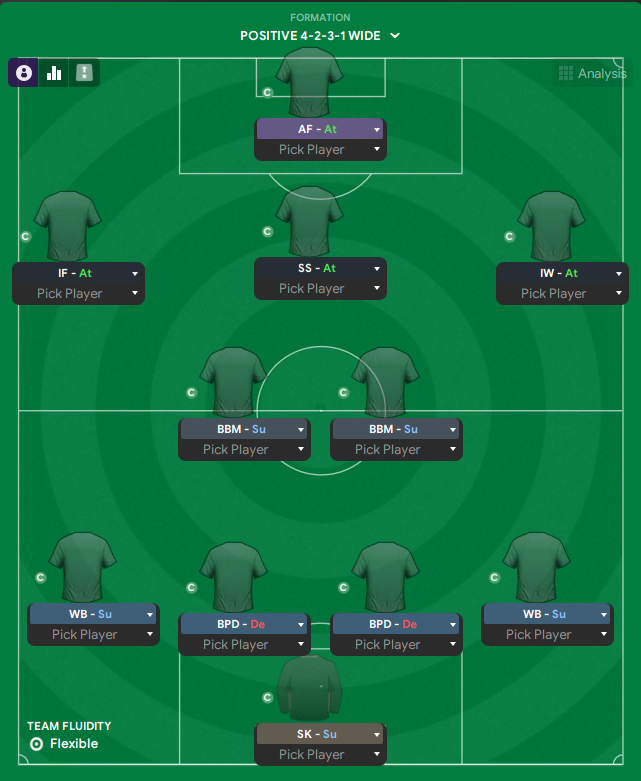
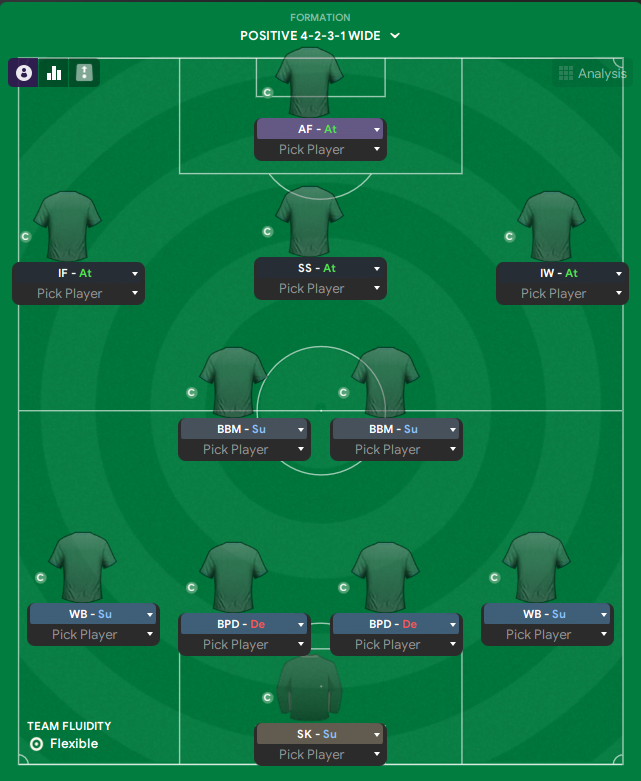
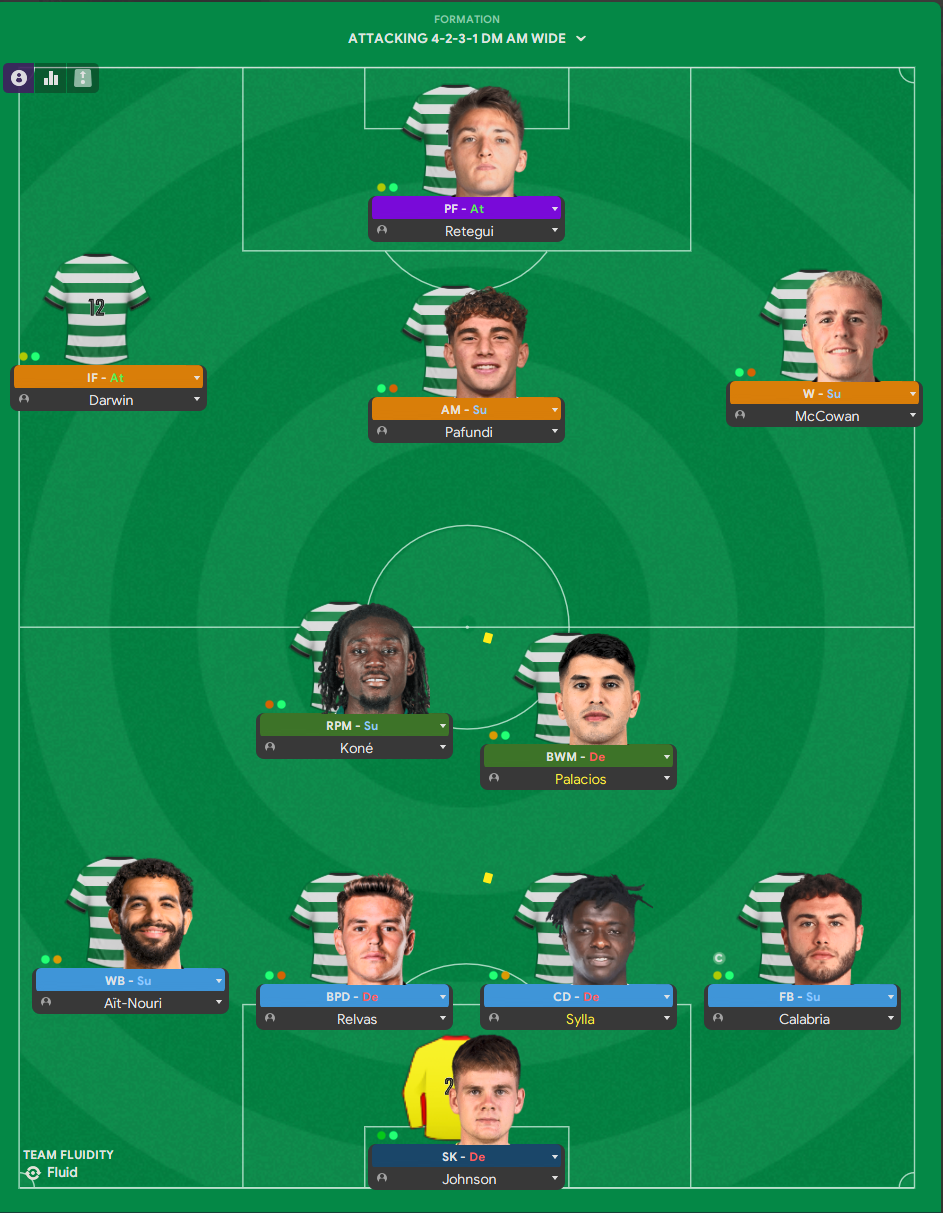
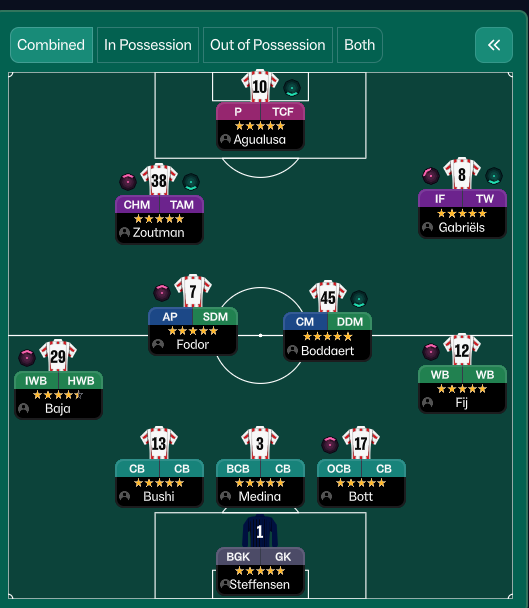
Formation:4-2-3-1 Wide
Team Fluidity:Fluid
In Possession
Work Ball Into Box
Play Out of Defence
Pass Into Space
Overlapping Play
In Transition
Counter-Press
Counter
Out of Possession
Higher Defensive Line
Higher Line of Engagement
Prevent Short GK Distribution
Team Shape Without Ball
Shape:4-2-3-1
Description:Four defenders, two central midfielders supporting transition to defense, wingers tracking back.
Evidence:NCB at [2,2] and BCB at [2,3] ensure a solid and organized backline.
Team Shape With Ball
Shape:4-3-3 with a false 9
Description:Utilization of wide players to create space and options for the central attacking midfielder and forward.
Evidence:Wingers at [6,1] and [6,5] combining with the AM at [5,3] creating multiple attacking avenues.
Phase Description
Attacking Play
Focus on wide play with overlapping wing-backs and quick transitions, enhancing width and depth in attack.
Defensive Transition
Quick recovery to a compact shape while pressing aggressively before falling back into a structured defense.
Main Focus
Utilizing the wingers to stretch the opposition and create pockets for the attacking midfielder.
Key Strengths
Wide Play Threat
The presence of wingers allows for stretching the opposition, creating space.
Fluid Midfield Support
Two CM's provide both defensive and attacking support.
Dynamic Attacking Options
Combination of wingers, attacking midfielder, and striker provides varied attacking options.
Conflicting Directions
Inconsistent Defensive Cohesion
High pressing without clear pressing directions may leave gaps at the back if transition is slow.
Overreliance on Width
Excessive focus on wing play might limit central penetration.
Defensive Vulnerability from the Flanks
Wing-backs pushing high can leave space in behind.
Tactical Suggestions
Adjust Pressing Intensity
Consider moderating the pressing intensity to maintain defensive stability.
Incorporate Central Playmaking
Encourage some of the CM's to drift forward into the final third.
Increase Defensive Cover
Ensure that at least one CM stays back during attacks to prevent counter-attacks.
Ask Questions About Your Lineup
Related Tactics
More Attacking tactics
Guides for this formation
The tactical theory behind the 4-2-3-1 Wide: roles, instructions, and the trade-offs that decide whether the system holds up.
Player pairings
Midfield Pairs in 4-2-3-1 and 4-4-2
Double pivots and flat pairs in 4-2-3-1 and 4-4-2: when each pairing works, when it collapses, and the AMC unicorn that rescues both.
Read guide
Playing styles
Gegenpressing: A Full Guide
Klopp-style gegenpressing in FM, including squad profile, line-and-press pairing, sustainable workload, and the antipatterns to avoid.
Read guide