Uploaded Tactic
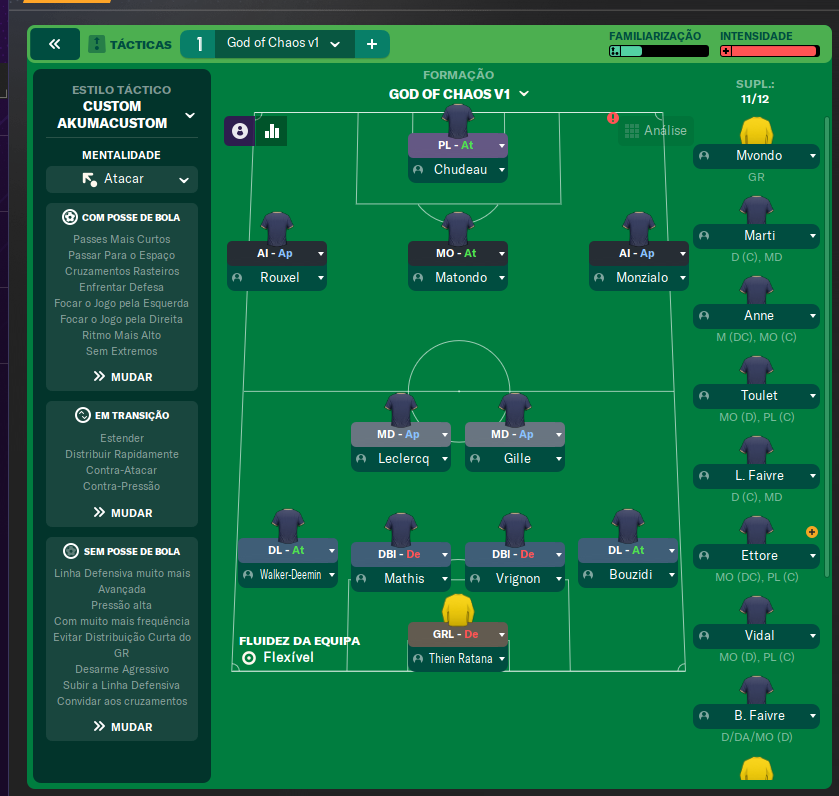
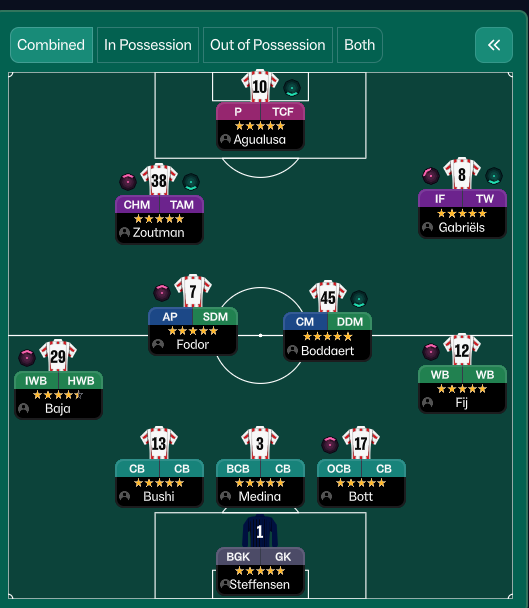
Formation & Style
Tactical Style:Attacking
Mentality:Attacking
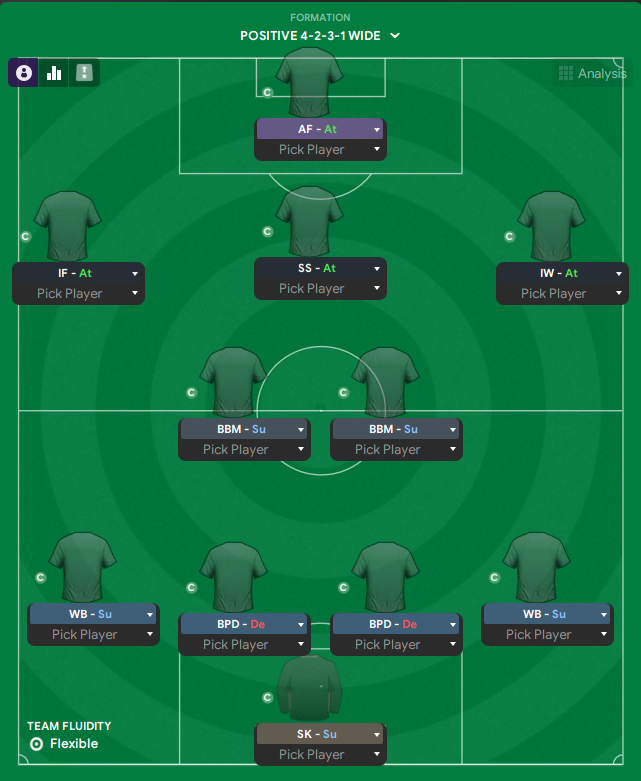
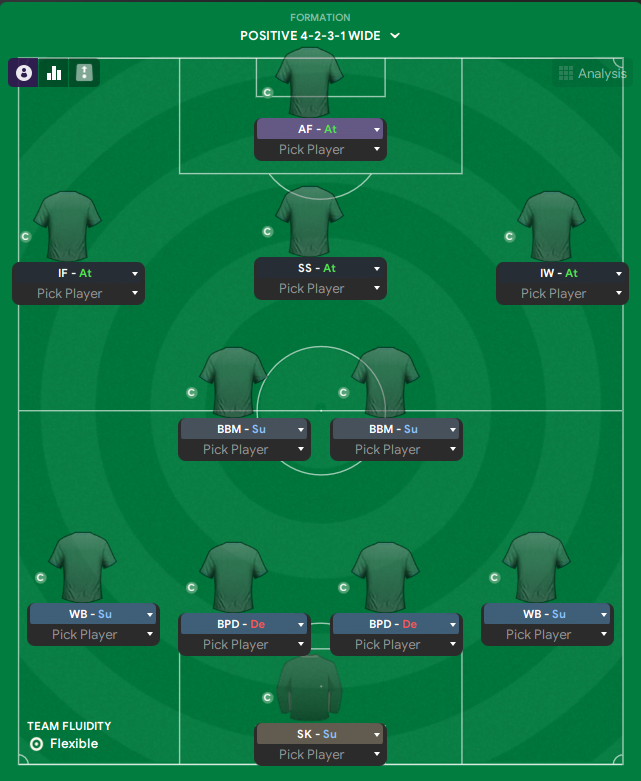
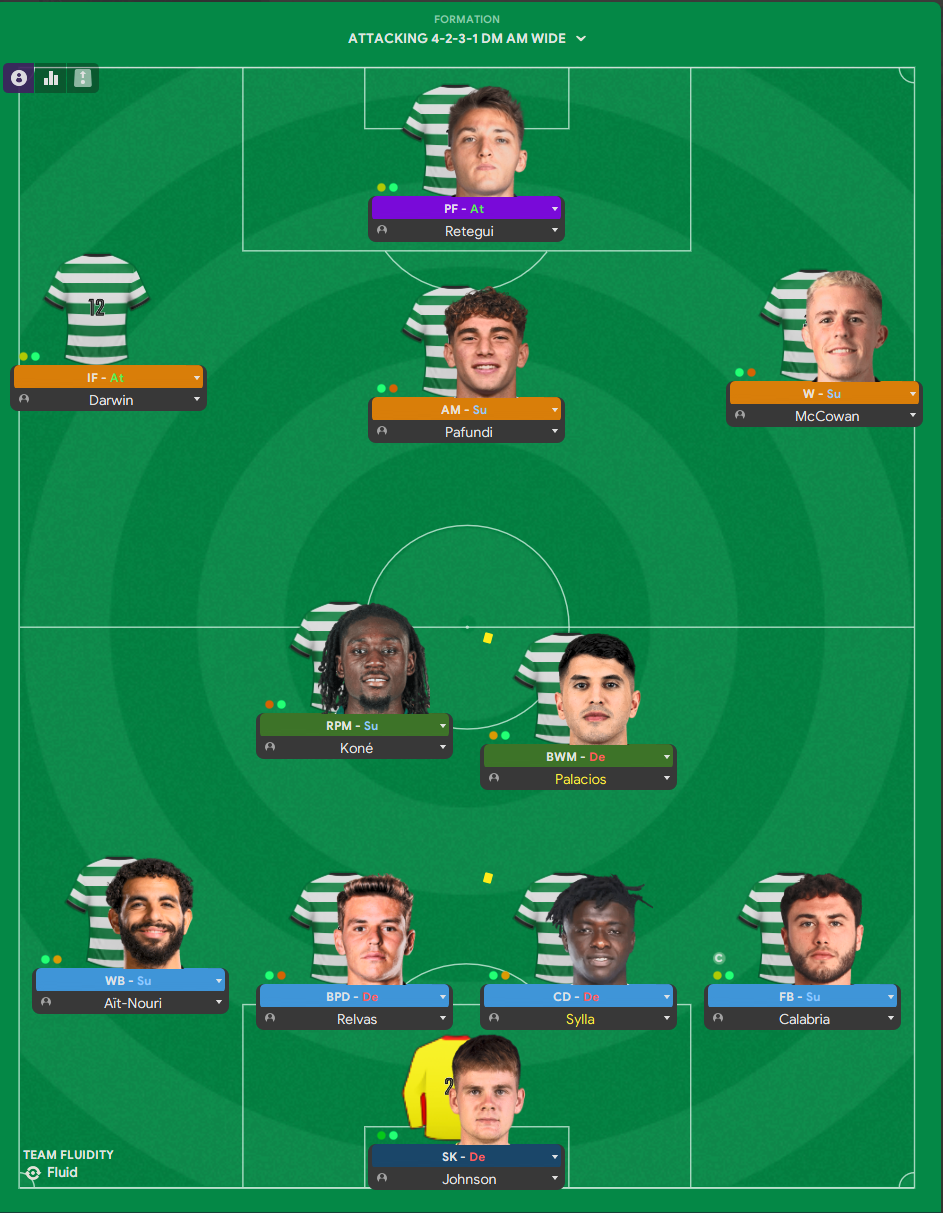
Formation:4-2-3-1 Wide
Team Fluidity:Flexible
In Possession
Pass Shorter
Work Ball Into Box
Focus Play Down Left
Higher Tempo
In Transition
Counter-Press
Counter
Out of Possession
Higher Defensive Line
Higher Line of Engagement
Prevent Short GK Distribution
Urgent Pressing
Team Shape Without Ball
Shape:High Pressing Block
Description:Utilizes a high defensive line and urgent pressing to apply pressure on the opponent early.
Evidence:Higher Defensive Line and Higher Line of Engagement settings, along with Urgent Pressing instructions.
Team Shape With Ball
Shape:Fluid Attacking Shape
Description:Numerical advantages in the attacking third, allowing for quick combination play and shots on goal.
Evidence:Multiple attacking roles including two advanced playmakers and an inside forward.
Phase Description
Attacking Play
Quick transitions aimed at penetrating the defense with incisive passing, utilizing full-backs for width.
Defensive Transition
Immediate pressing to regain possession, focusing on disrupting the opponent's buildup play.
Main Focus
Exploit width and create overloads in the final third.
Key Strengths
Dynamic Midfield Control
Two advanced playmakers provide creativity and fluidity in the middle, supported by attacking movements.
Width in Attack
Full-backs provide width, allowing inside forwards to cut in and create goal-scoring opportunities.
High-Press Strategy
Immediate pressure on opponents leads to opportunities for turnovers in advanced areas.
Conflicting Directions
Vulnerability to Counter-Attacks
High defensive line can be exposed if opponents bypass the press.
Overcommitment in Attack
With many players committed forward, it can lead to defensive vulnerabilities.
Lack of Defensive Midfield Cover
Only two midfielders are pushing forward, potentially leaving gaps.
Tactical Suggestions
Add a Defensive Midfielder
Incorporate a defensive midfielder to provide additional support in transitions.
Adjust Defensive Line
Consider lowering the defensive line to mitigate counter-attack risks.
Incorporate More Versatile Full-Backs
Use full-backs who can both defend and support to adapt mid-game.
Ask Questions About Your Lineup
Related Tactics
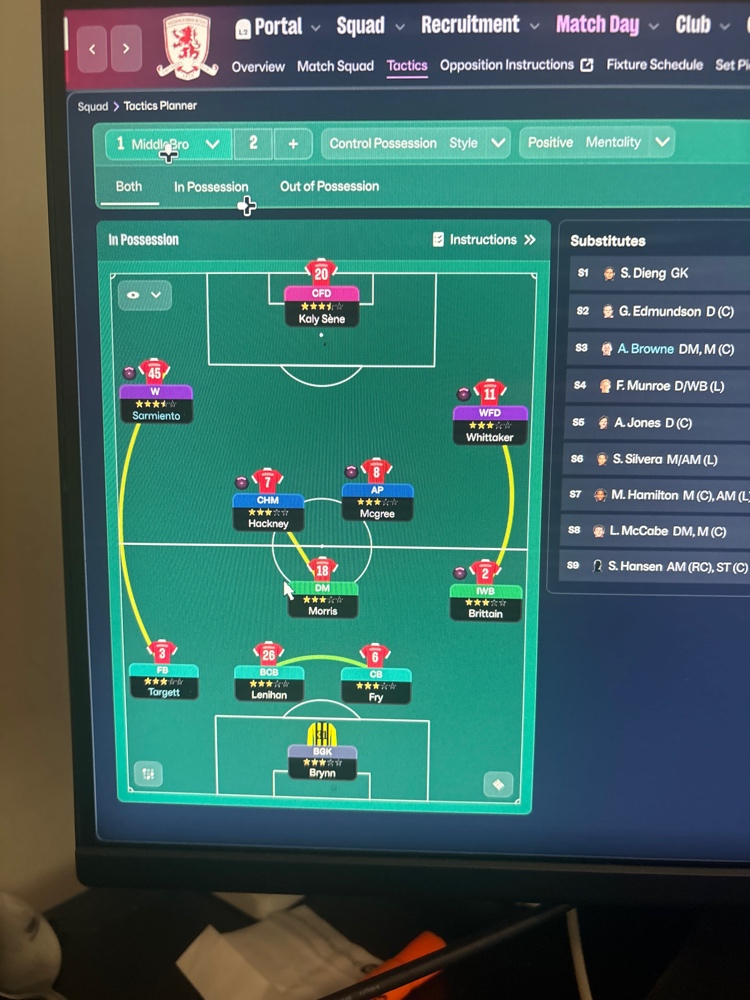
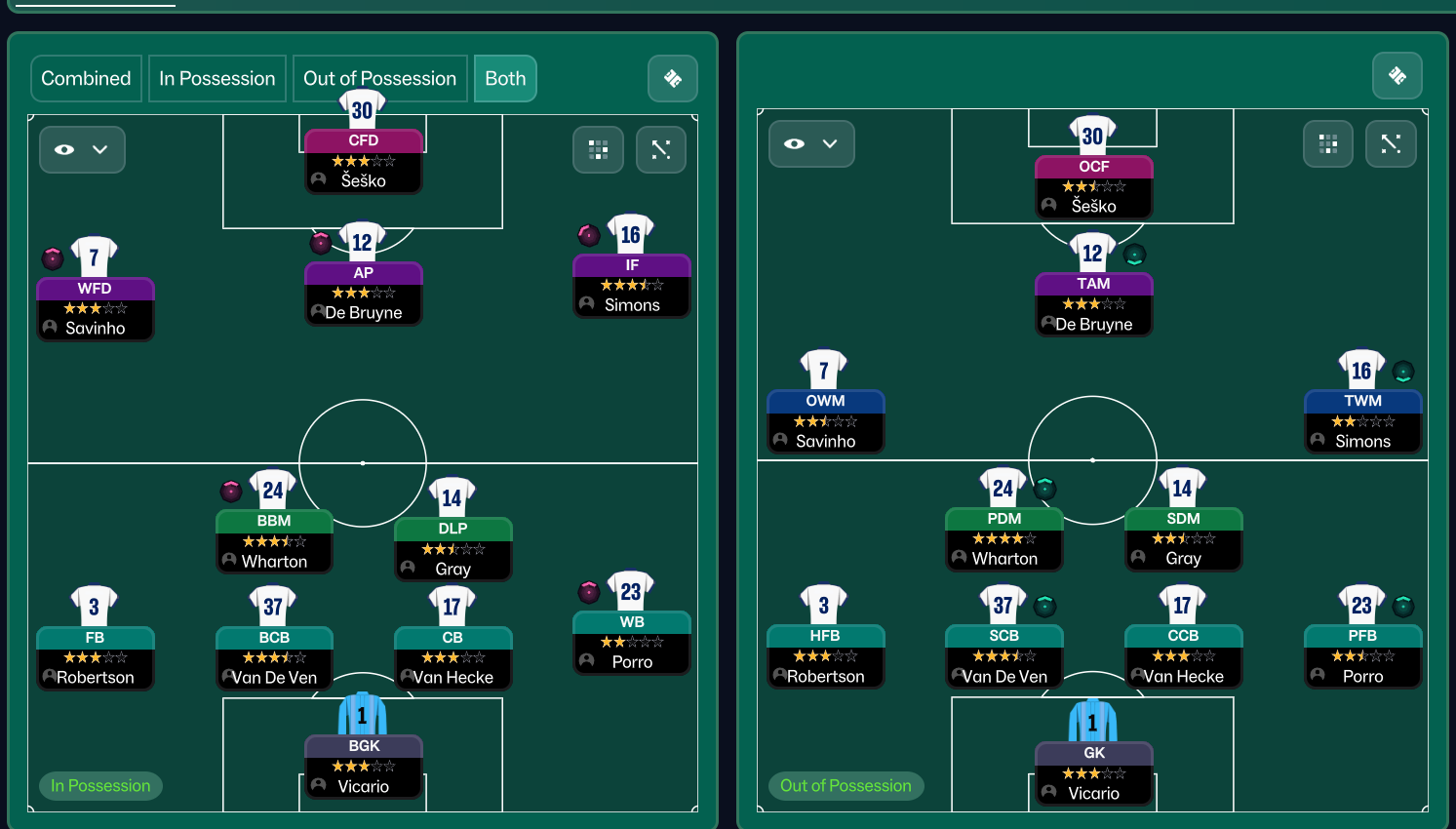
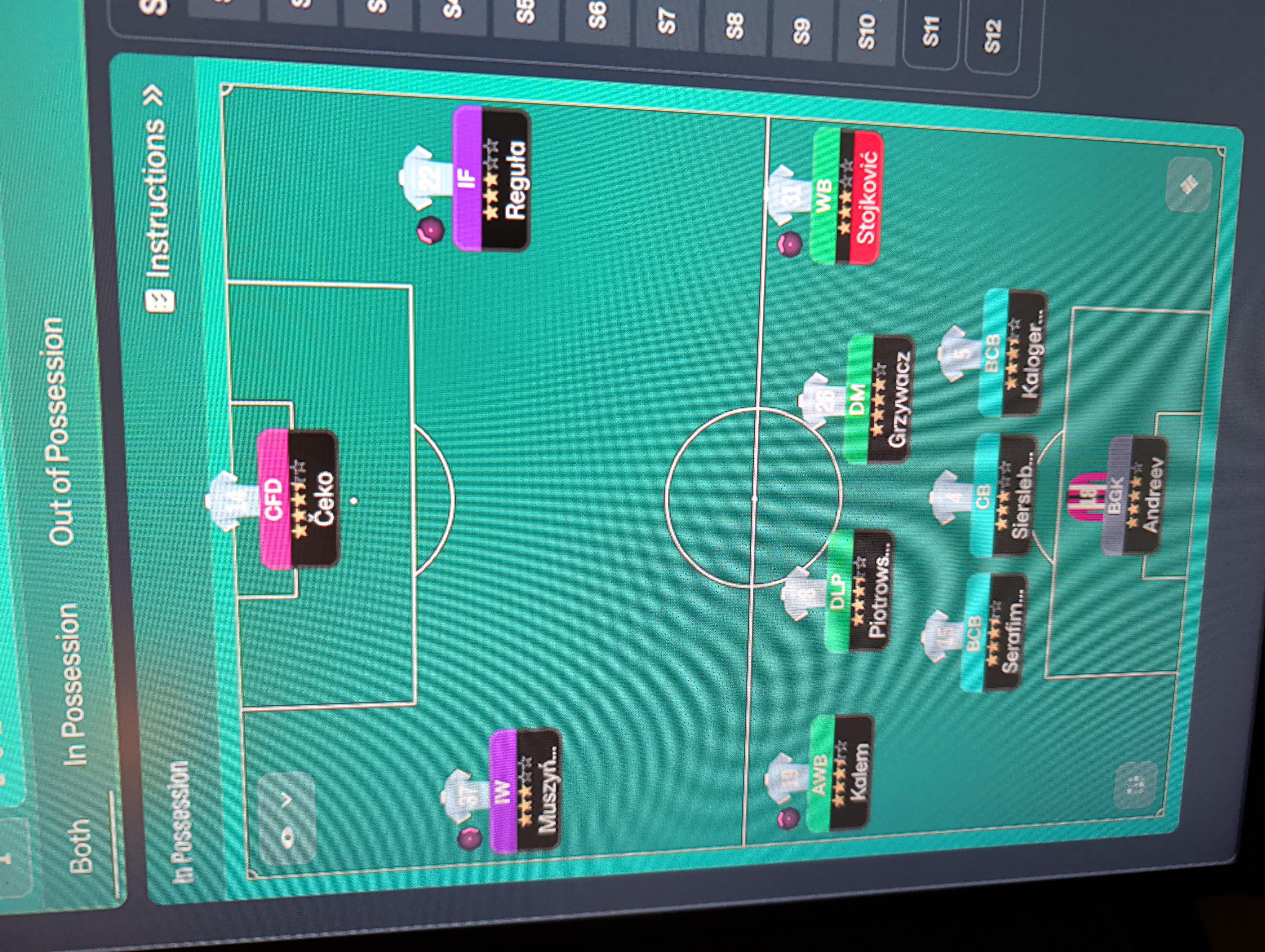
More Attacking tactics
Guides for this formation
The tactical theory behind the 4-2-3-1 Wide: roles, instructions, and the trade-offs that decide whether the system holds up.
Player pairings
Midfield Pairs in 4-2-3-1 and 4-4-2
Double pivots and flat pairs in 4-2-3-1 and 4-4-2: when each pairing works, when it collapses, and the AMC unicorn that rescues both.
Read guide
Playing styles
Gegenpressing: A Full Guide
Klopp-style gegenpressing in FM, including squad profile, line-and-press pairing, sustainable workload, and the antipatterns to avoid.
Read guide