Uploaded Tactic
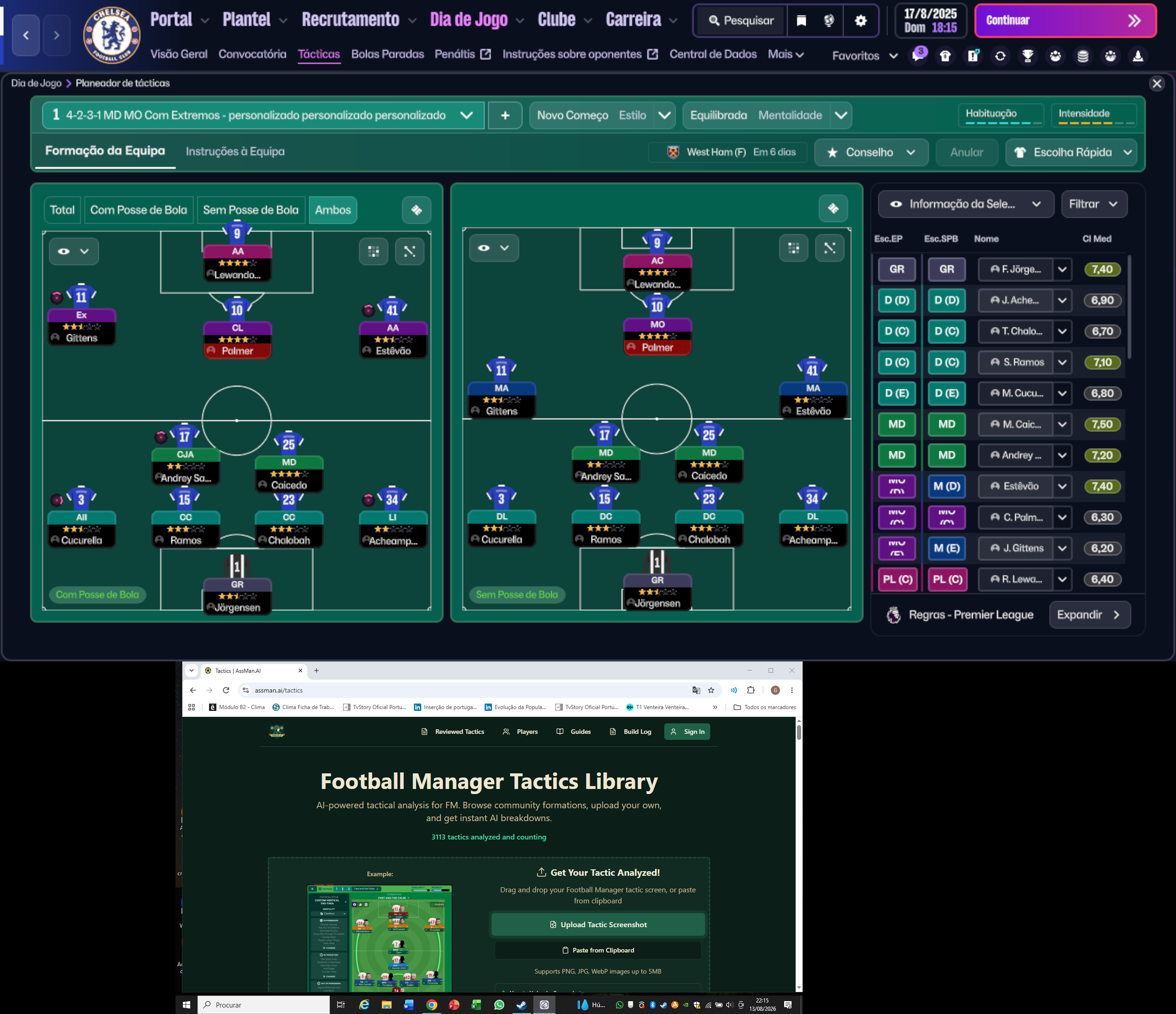
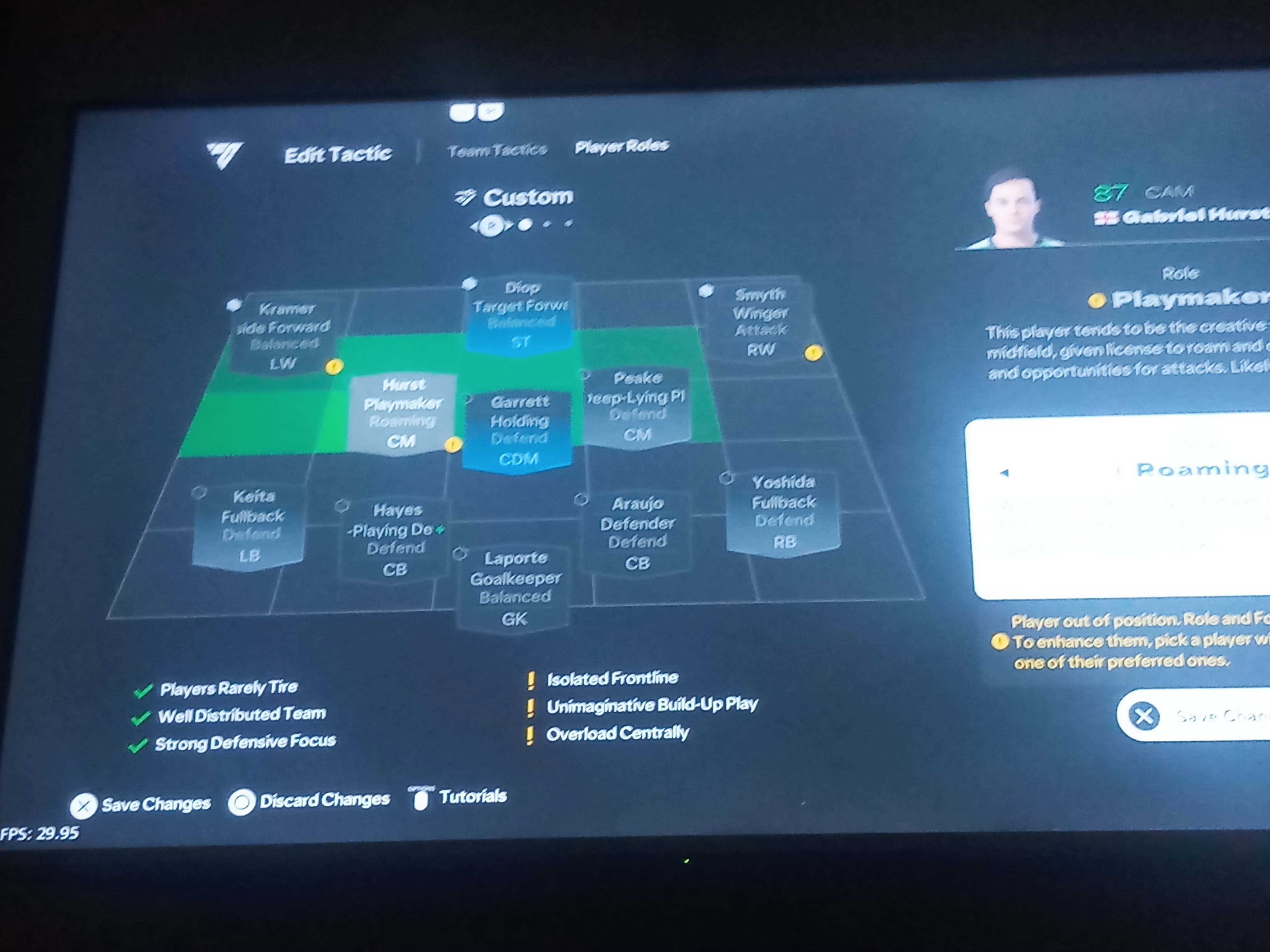
Formation & Style
Tactical Style:Balanced
Mentality:Positive
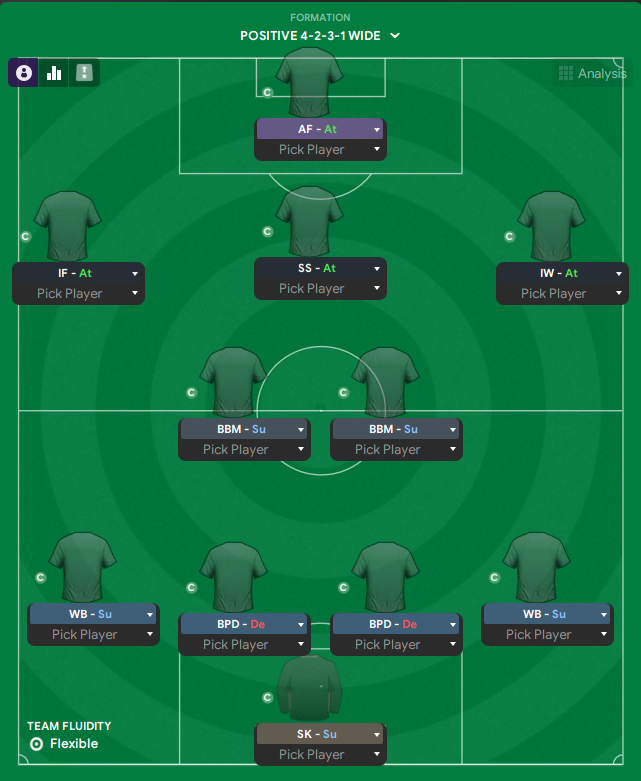
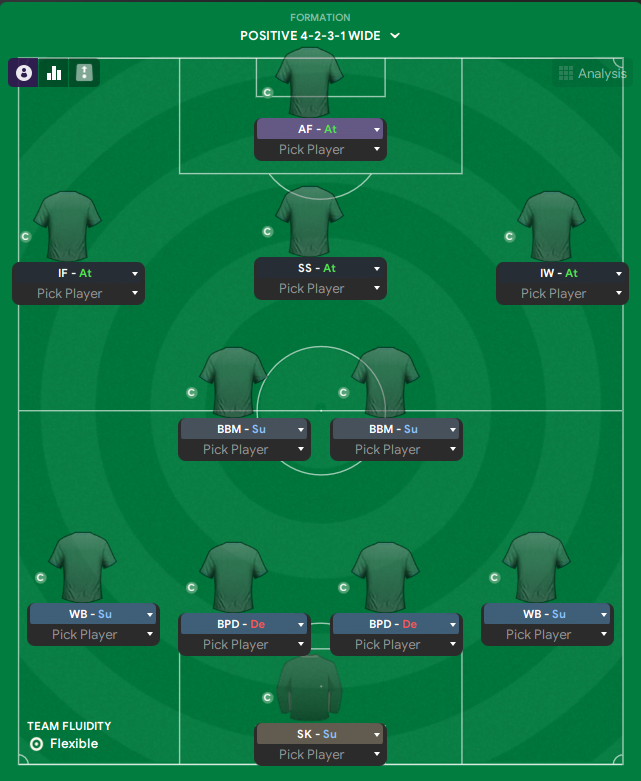
Formation:4-2-3-1 Wide
Team Fluidity:Fluid
In Possession
Play Out of Defence
Dribble More
Pass Into Space
In Transition
Counter
Distribute to Centre-Backs
Out of Possession
Higher Defensive Line
Trigger Press More Often
Team Shape Without Ball
Shape:Compact
Description:The team maintains a compact shape with a focus on closing gaps and cutting off passing lanes.
Evidence:Higher Defensive Line with a No-Nonsense Centre-Back and a Ball-Playing Defender.
Team Shape With Ball
Shape:Fluid
Description:Players interchange positions, creating a dynamic attacking front that keeps defenders guessing.
Evidence:Use of advanced midfield roles and attacking wingers leveraging space.
Phase Description
Attacking Play
Focus on width and overlap from wing-backs while utilizing midfielders for central penetration.
Defensive Transition
Quickly restructure into a solid shape to counter opposition breaks.
Main Focus
Maximize attacking width and utilize pace from wings to create chances.
Key Strengths
Attacking Width
Utilizing the width effectively creates space and stretches the opponent's defense.
Central Control
A strong midfield presence allows control and quick transitions.
Fluid Forward Line
Interchangeable attacking roles enhance unpredictability in attack.
Conflicting Directions
Inconsistent Pressing
While pressing is effective, it may not always align with a deeper defensive line when countered.
Overreliance on Wing Play
Heavy focus on wing play may lead to reduced central presence when possessions are lost.
Vulnerability on Counter
Pushing too many players forwards can lead to quick counterattacks.
Tactical Suggestions
Balance Wing Play with Central Options
Incorporate more central runs or a third central midfielder to support attacks.
Adjust Defensive Line Depending on Opponent
Modify the defensive line height based on the opponent's speed and ability to counter quickly.
Encourage More Forward Runs from Midfield
Allow your midfielders to make runs beyond the strikers to increase goal-scoring opportunities.
Ask Questions About Your Lineup
Related Tactics
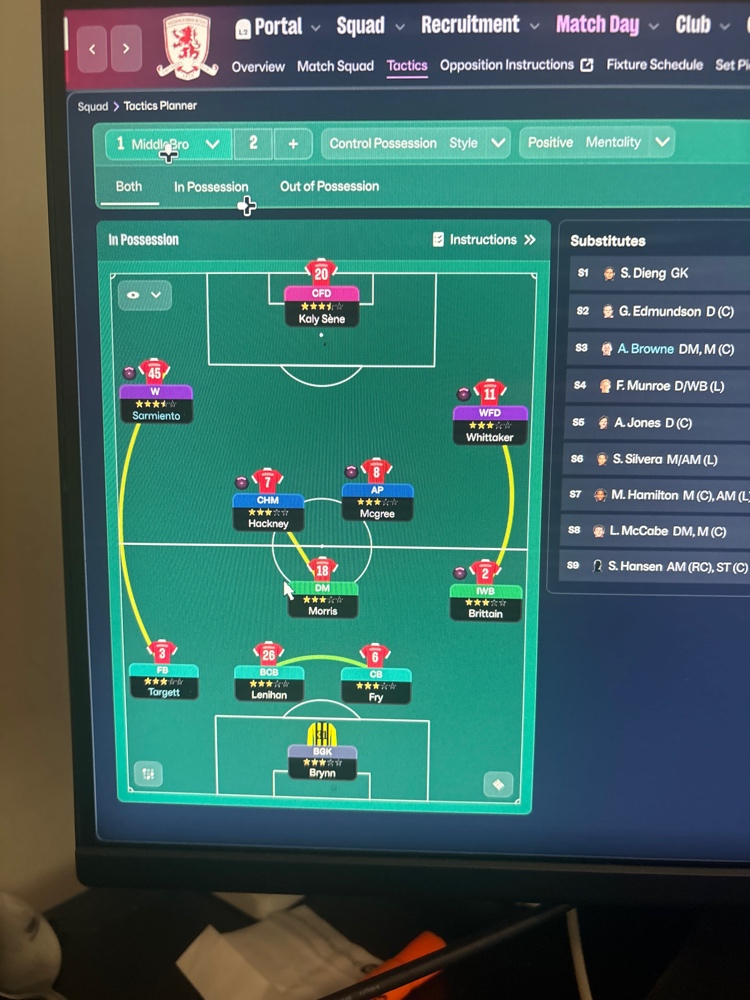
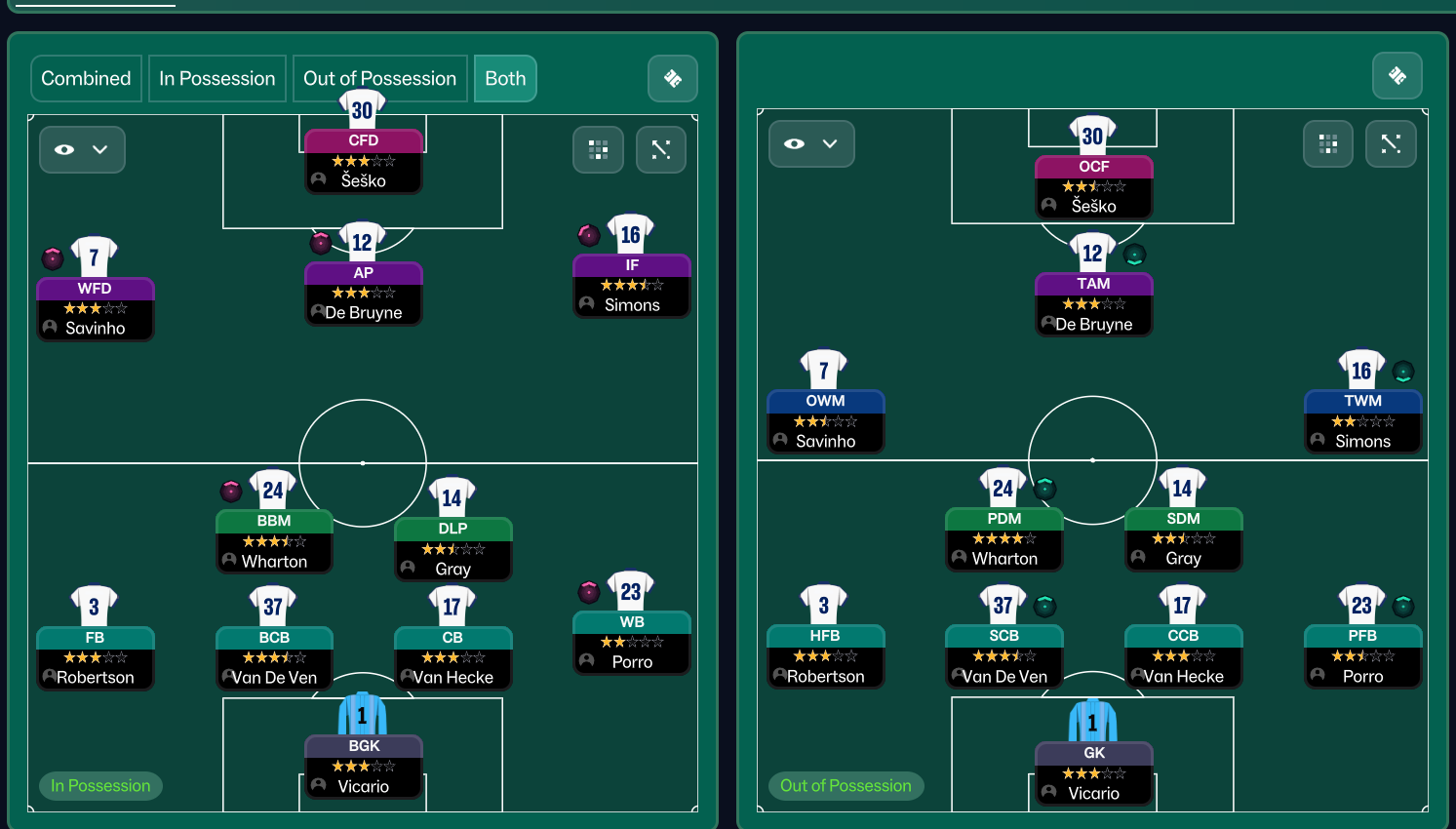
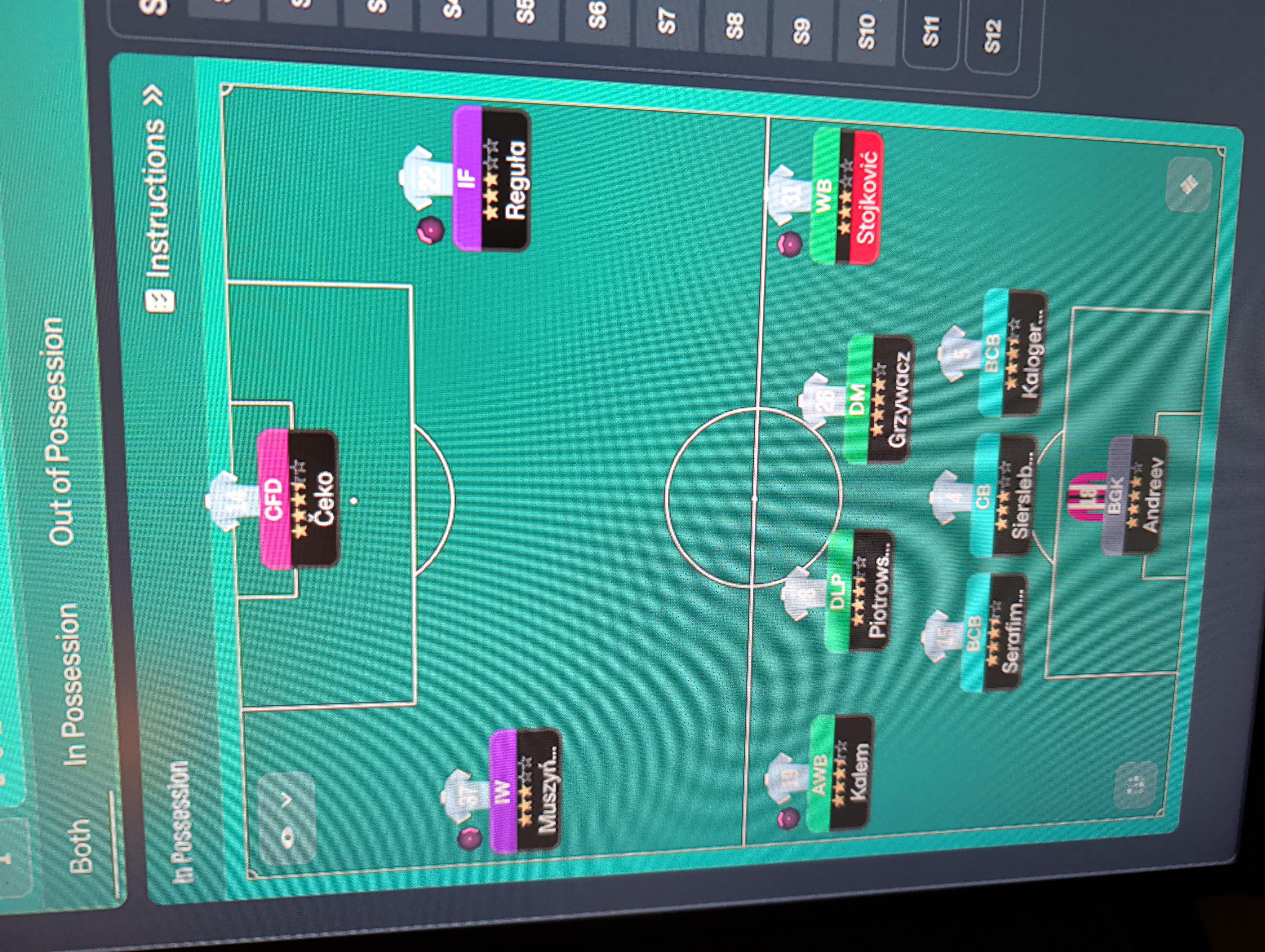
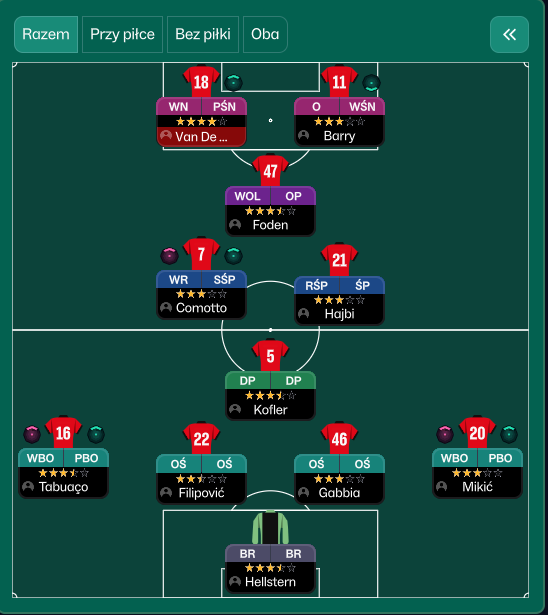
More Balanced tactics
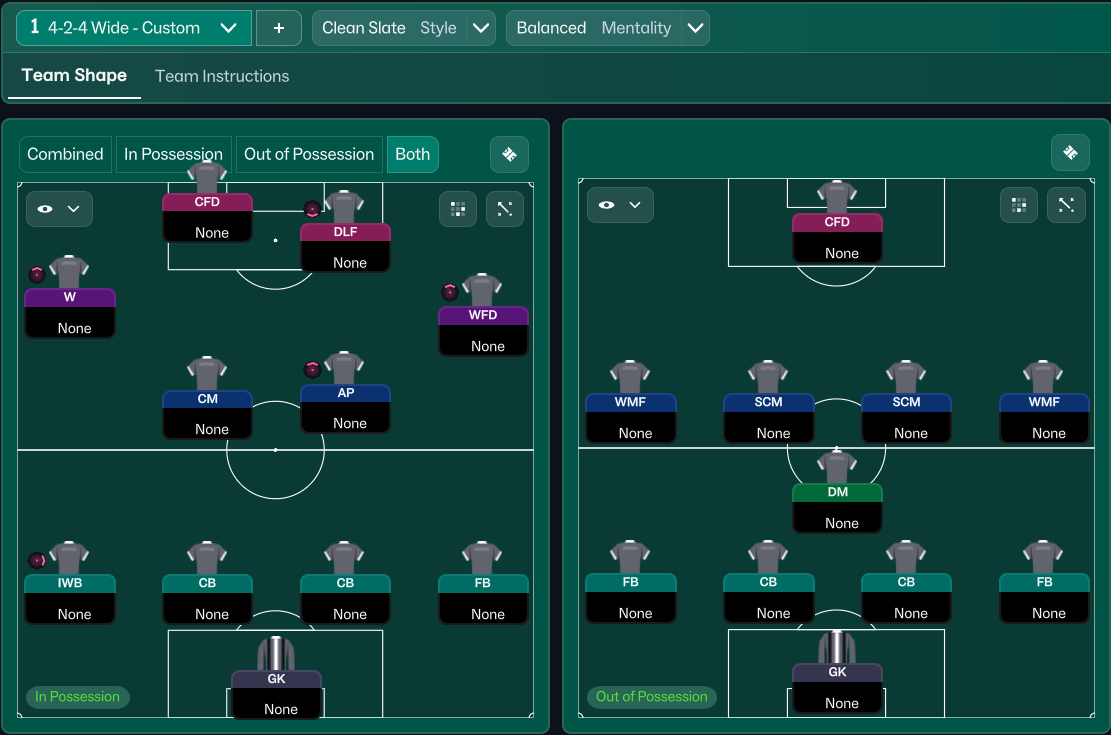
Guides for this formation
The tactical theory behind the 4-2-3-1 Wide: roles, instructions, and the trade-offs that decide whether the system holds up.
Player pairings
Midfield Pairs in 4-2-3-1 and 4-4-2
Double pivots and flat pairs in 4-2-3-1 and 4-4-2: when each pairing works, when it collapses, and the AMC unicorn that rescues both.
Read guide
Playing styles
Gegenpressing: A Full Guide
Klopp-style gegenpressing in FM, including squad profile, line-and-press pairing, sustainable workload, and the antipatterns to avoid.
Read guide