Uploaded Tactic
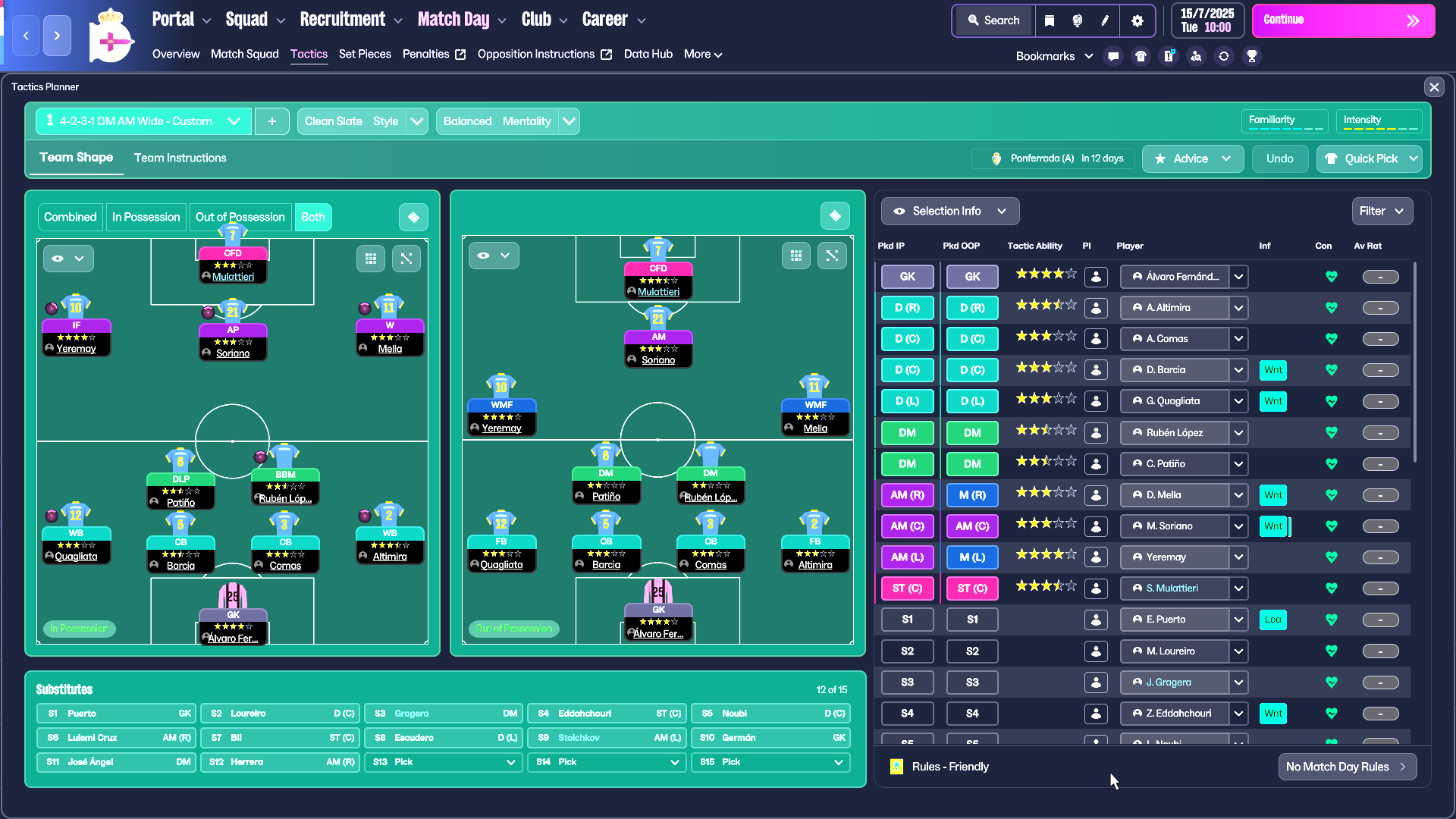
Formation & Style
Tactical Style:Balanced
Mentality:Positive
Formation:4-2-3-1 Wide
Team Fluidity:Structured
In Possession
Play Out of Defence
Work Ball Into Box
Run At Defence
Overlap Left
Overlap Right
In Transition
Counter
Counter-Press
Hold Shape
Out of Possession
Higher Defensive Line
Higher Line of Engagement
Prevent Short GK Distribution
Trigger Press More Often
Team Shape Without Ball
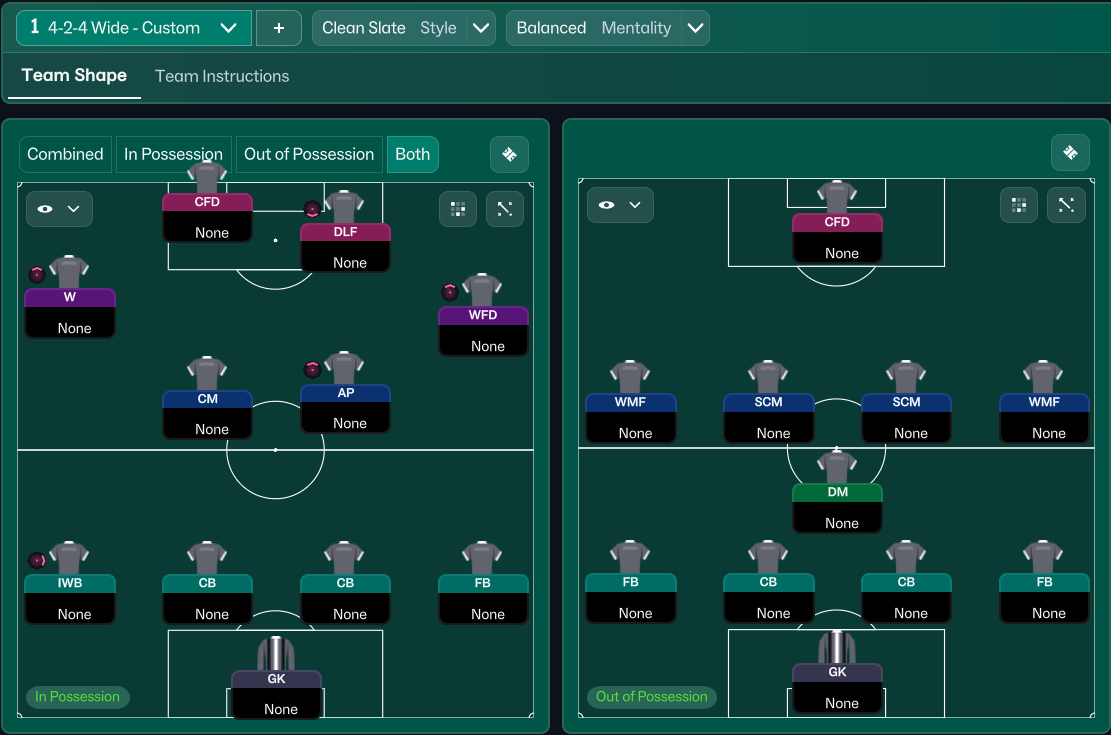
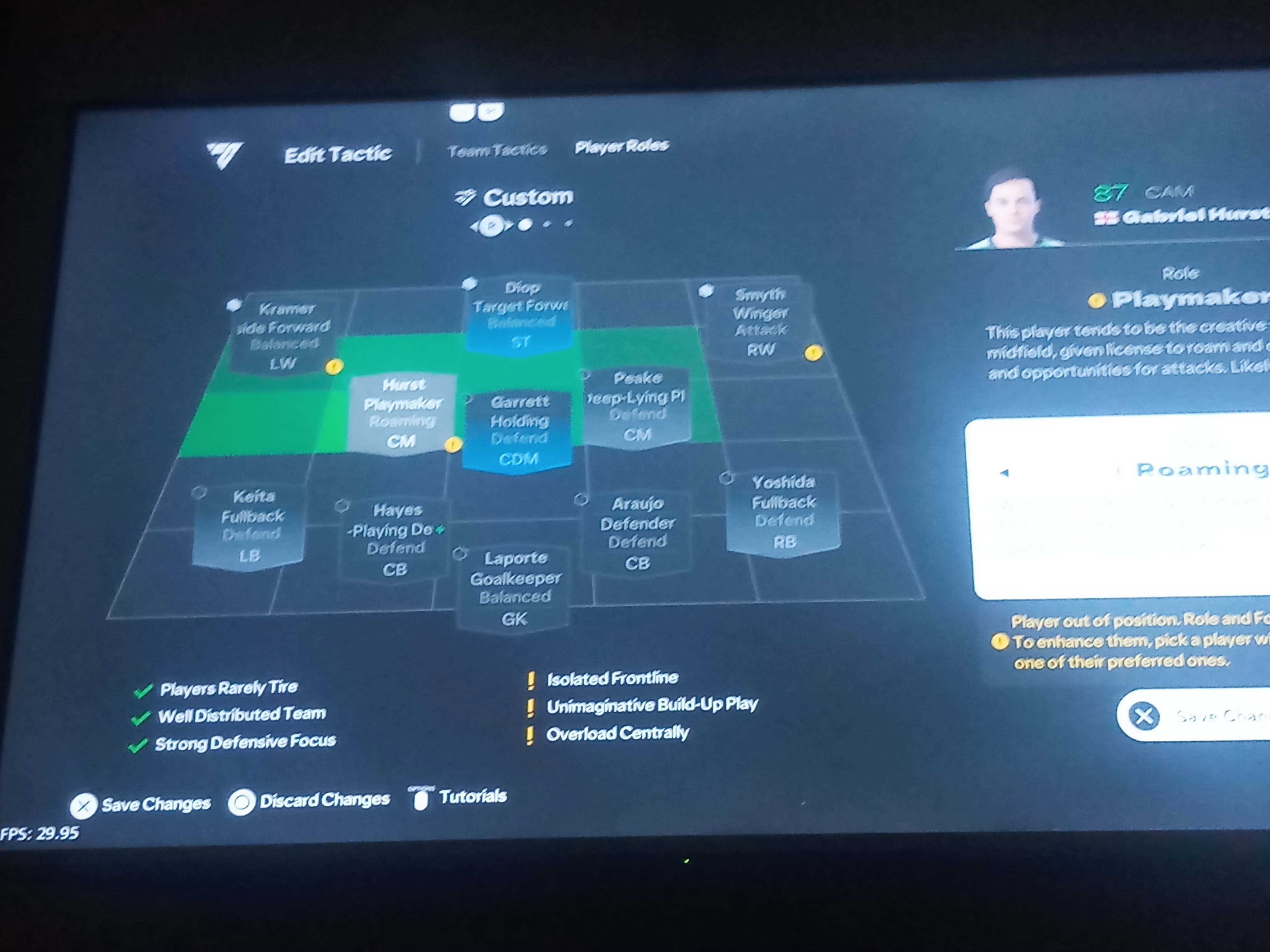
Shape:4-2-3-1
Description:A compact and organized structure aimed at closing down spaces and minimizing gaps for the opposition to exploit.
Evidence:The use of two midfielders in a deep position (DLP-Su and BWM-Su) at [3,3] and [3,4] allows for covering space effectively.
Team Shape With Ball
Shape:4-2-3-1 Wide
Description:The forward structure is designed to stretch the opposition's defence while maintaining multiple attacking options.
Evidence:Deployment of WMF (At) on both wings provides width, while the AP (Su) occupies more central areas for creativity.
Phase Description
Attacking Play
The formation emphasizes ball retention and gradual penetrative passes while relying on width from the wide midfielders.
Defensive Transition
Upon losing the ball, the team quickly transitions to a pressing system, utilising a counter-press to regain possession.
Main Focus
To control the central areas while utilizing the width provided by the wide midfielders.
Key Strengths
Width in Attack
Deployment of wide midfielders offers options for stretching the opponent's defence.
Balanced Midfield
The composition of DLP and BWM allows for steadiness in possession and effective pressing.
Strong Defensive Core
Having two solid CBs allows for strong central defensive presence and ability to deal with aerial threats.
Conflicting Directions
Countering High Press
The current configuration may struggle against teams that implement a high press consistently.
Vulnerability to Central Overload
With two DM roles, the middle may become congested if not positioned correctly.
Dependence on Width
Over-reliance on wide play could be a liability if the opposition neutralizes wide channels.
Tactical Suggestions
Increase Central Support
Consider adding a more attacking central player or transitioning one wide midfielder to a more central role.
Adjust Defensive Line
Depending on the opposition's speed, consider lowering the defensive line to minimize counters.
Implement Rotational Movement
Incorporating occasional rotations between the two wide midfielders and the AM could exploit spaces.
Ask Questions About Your Lineup
Related Tactics
More Balanced tactics
Guides for this formation
The tactical theory behind the 4-2-3-1 Wide: roles, instructions, and the trade-offs that decide whether the system holds up.
Player pairings
Midfield Pairs in 4-2-3-1 and 4-4-2
Double pivots and flat pairs in 4-2-3-1 and 4-4-2: when each pairing works, when it collapses, and the AMC unicorn that rescues both.
Read guide
Playing styles
Gegenpressing: A Full Guide
Klopp-style gegenpressing in FM, including squad profile, line-and-press pairing, sustainable workload, and the antipatterns to avoid.
Read guide