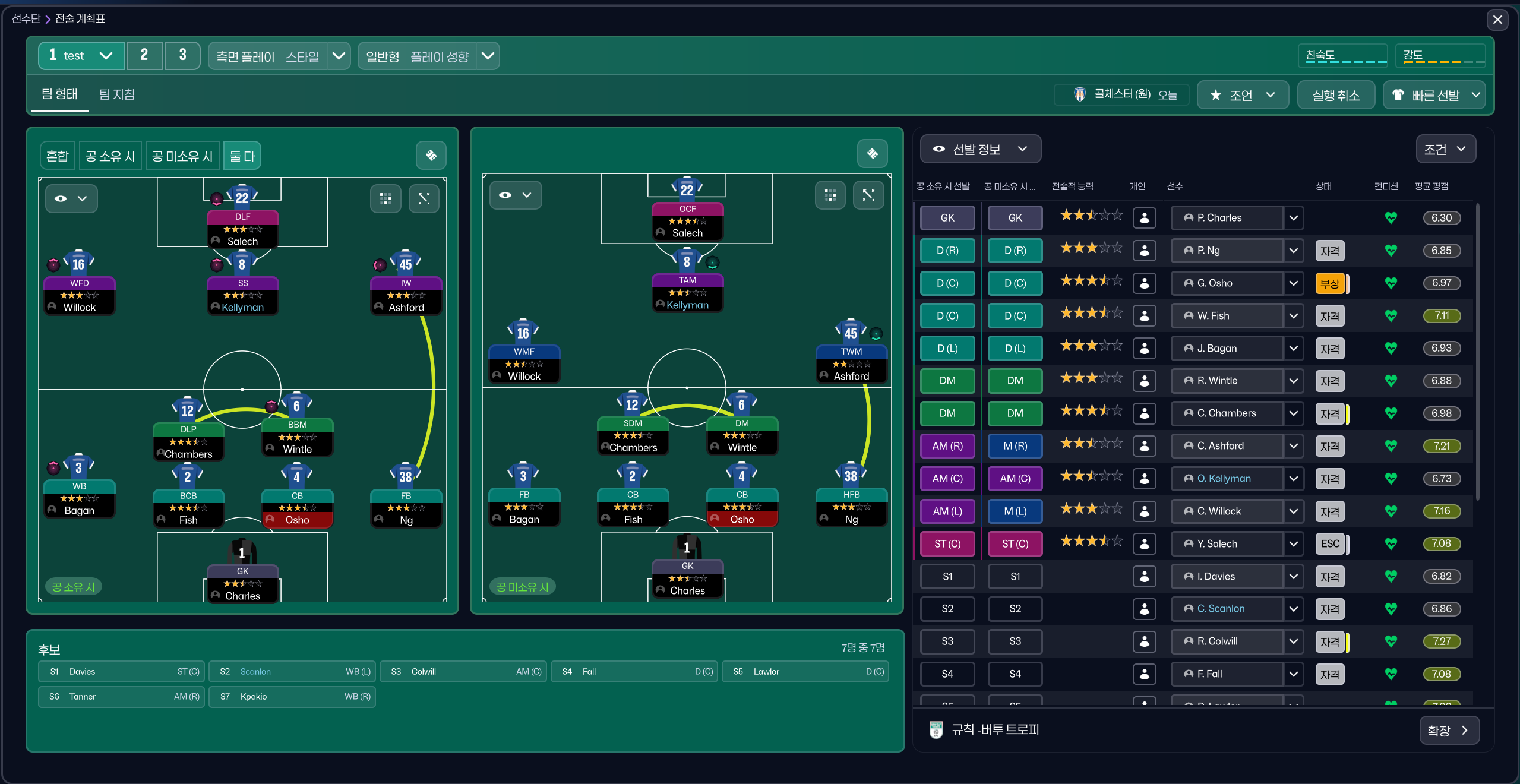
Uploaded Tactic
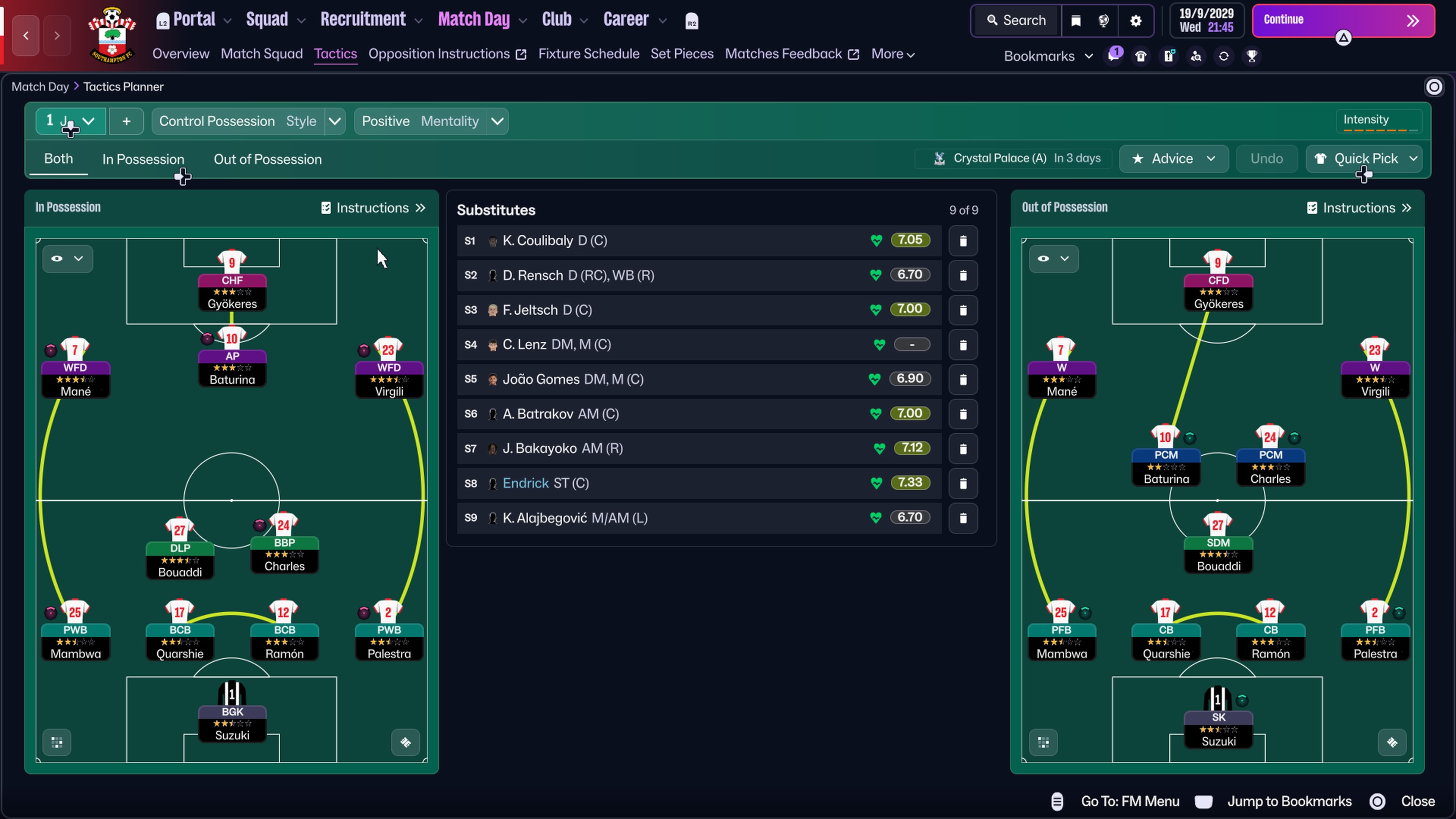
Formation & Style
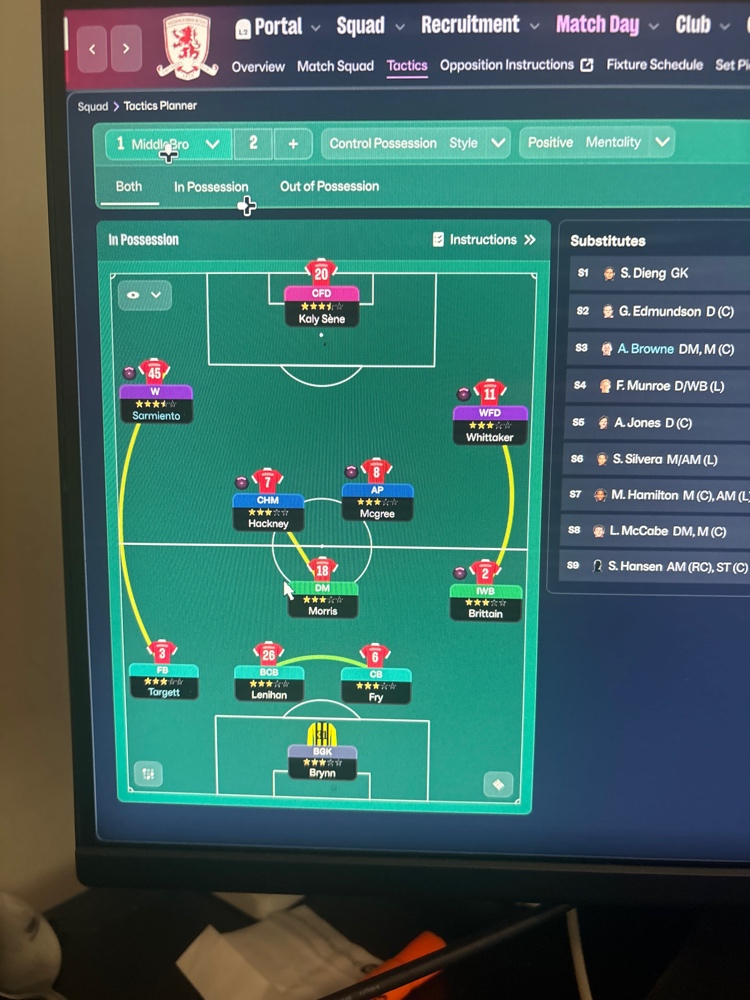
Tactical Style:Control Possession
Mentality:Positive
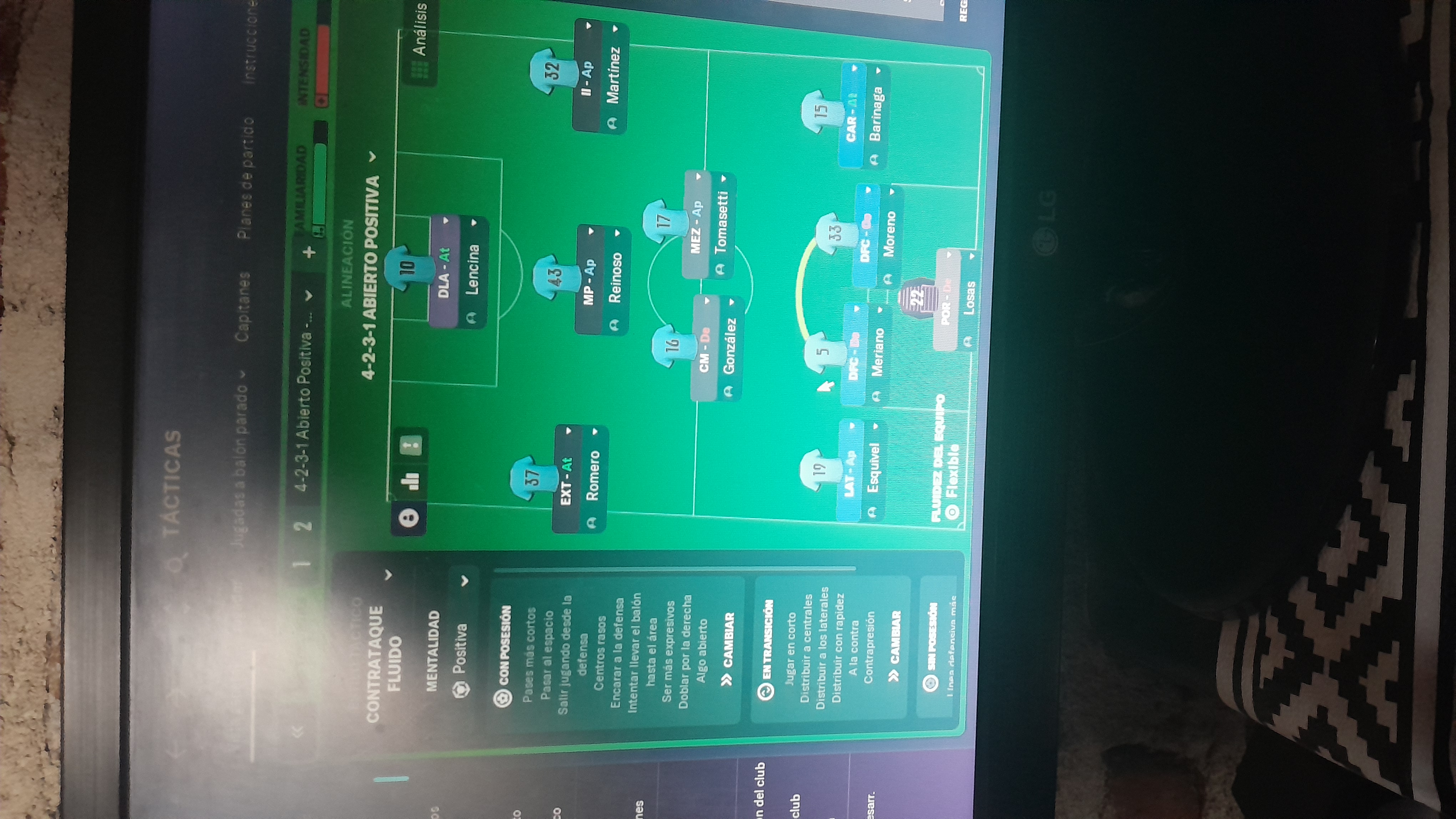
Formation:4-2-3-1
Team Fluidity:Structured
In Possession
Play Out of Defence
Focus Play Down Both Flanks
Shorter Passing
Higher Tempo
In Transition
Counter-Press
Counter
Out of Possession
Higher Defensive Line
Higher Line of Engagement
Use Offside Trap
Team Shape Without Ball
Shape:Compact
Description:Defenders push up to maintain a higher line, providing support against through balls.
Evidence:Higher Defensive Line with 'Use Offside Trap' instruction.
Team Shape With Ball
Shape:Fluid
Description:The attack rotates fluidly with wingers cutting inside to create space for overlapping wing backs.
Evidence:Wing Back (At) at [2,1] and [2,5] creating width.
Phase Description
Attacking Play
Utilizes width effectively with wing backs overlapping and quick interplay through midfield.
Defensive Transition
Focuses on immediate counter-press to regain possession quickly.
Main Focus
Controlling possession and dictating the pace through midfield.
Key Strengths
Strong Midfield Control
The combination of Deep-Lying Playmaker and Box-to-Box Midfielder allows for both defensive solidity and transitional play.
Overlapping Wing Backs
Wing backs provide width and overload on the flanks, facilitating crosses and attacking opportunities.
Dynamic Forward Line
Pairing wingers and a complete forward increases goal threat with varied attacking runs.
Conflicting Directions
Higher Defensive Line vs. Fast Opponents
Against teams with fast attackers, a higher defensive line could lead to vulnerabilities at the back.
Counter-Press vs. Fatigue
Aggressive counter-pressing can lead to player fatigue and gaps if not managed.
Fluid Attacking Play vs. Defensive Teams
Against well-organized defences, breaking down the block may be challenging.
Tactical Suggestions
Consider Player Role Adjustments
Experiment with a more attacking role for a midfielder to penetrate tightly packed defences.
Adapt Defensive Structure
In high-pressure matches, consider lowering the defensive line to reduce vulnerability.
Maintain Energy Levels
Adjust pressing intensity to manage player stamina over the course of the match.
Ask Questions About Your Lineup
Related Tactics
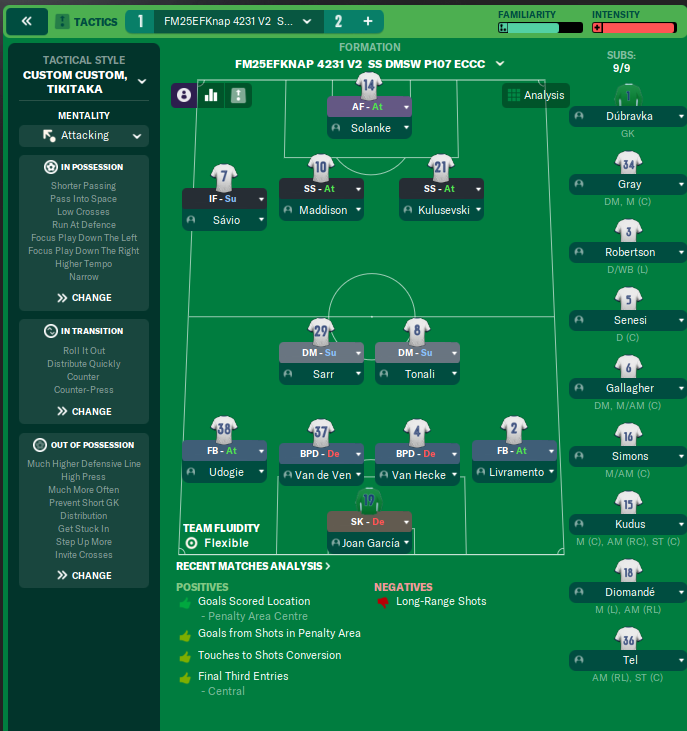
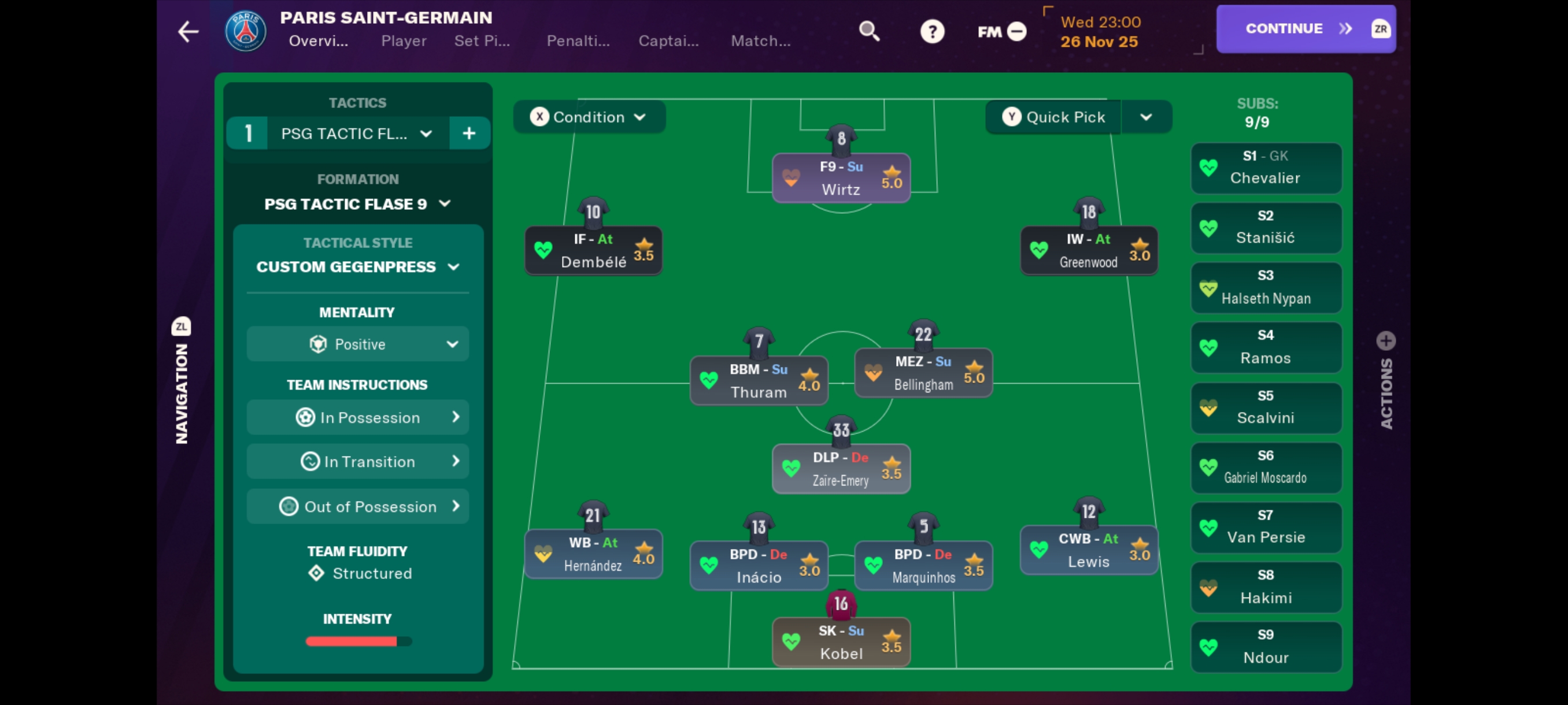
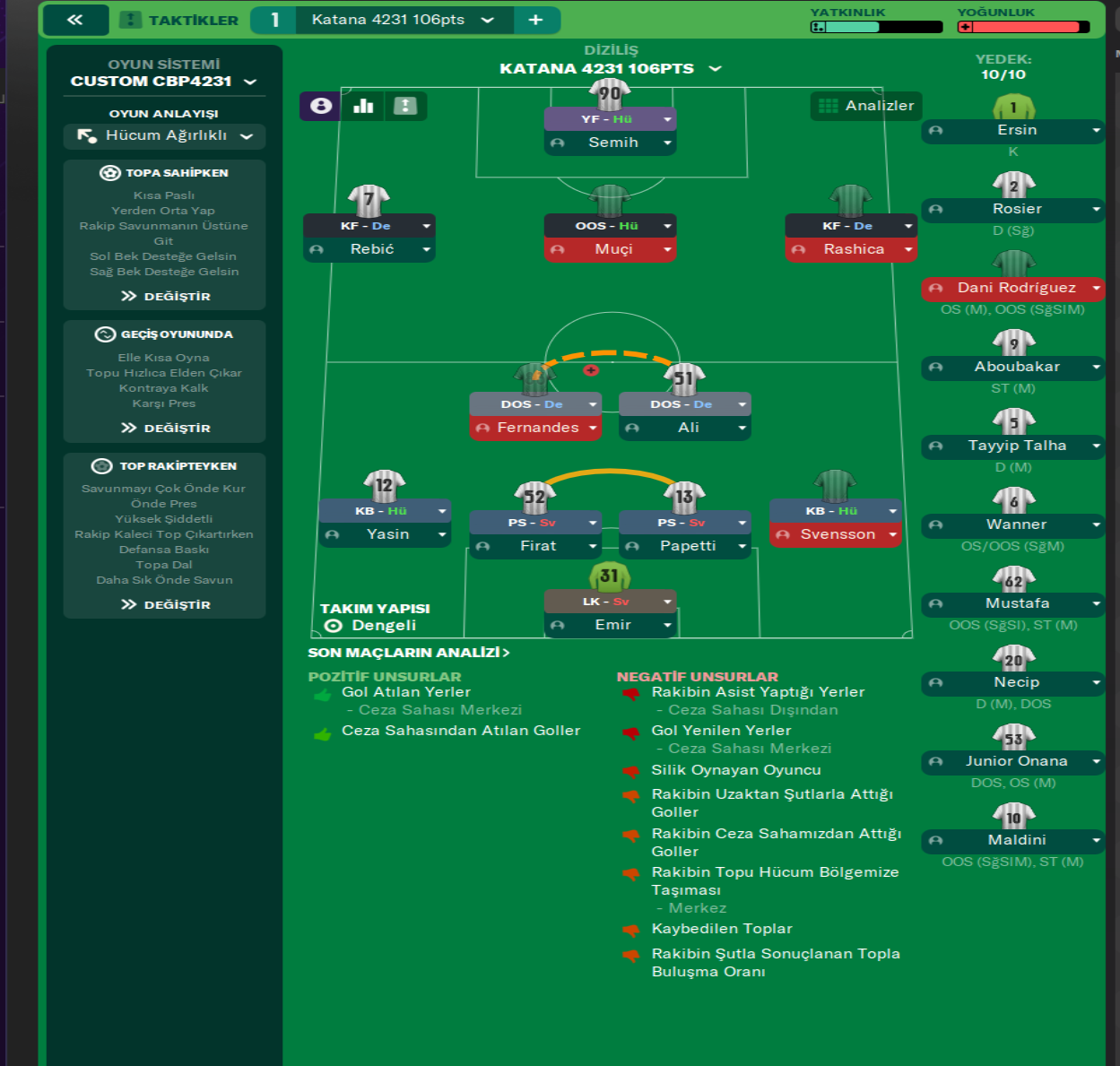
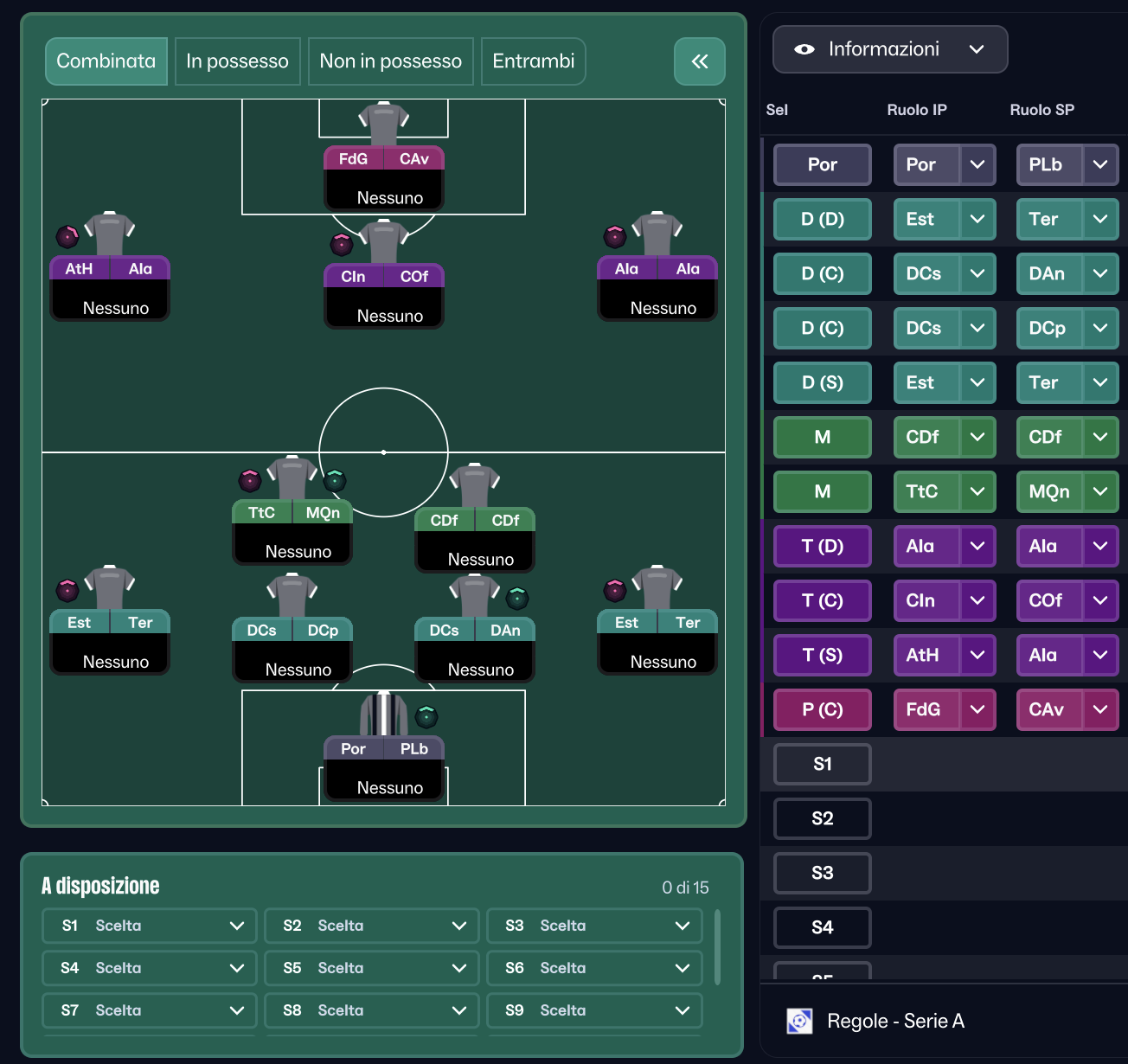
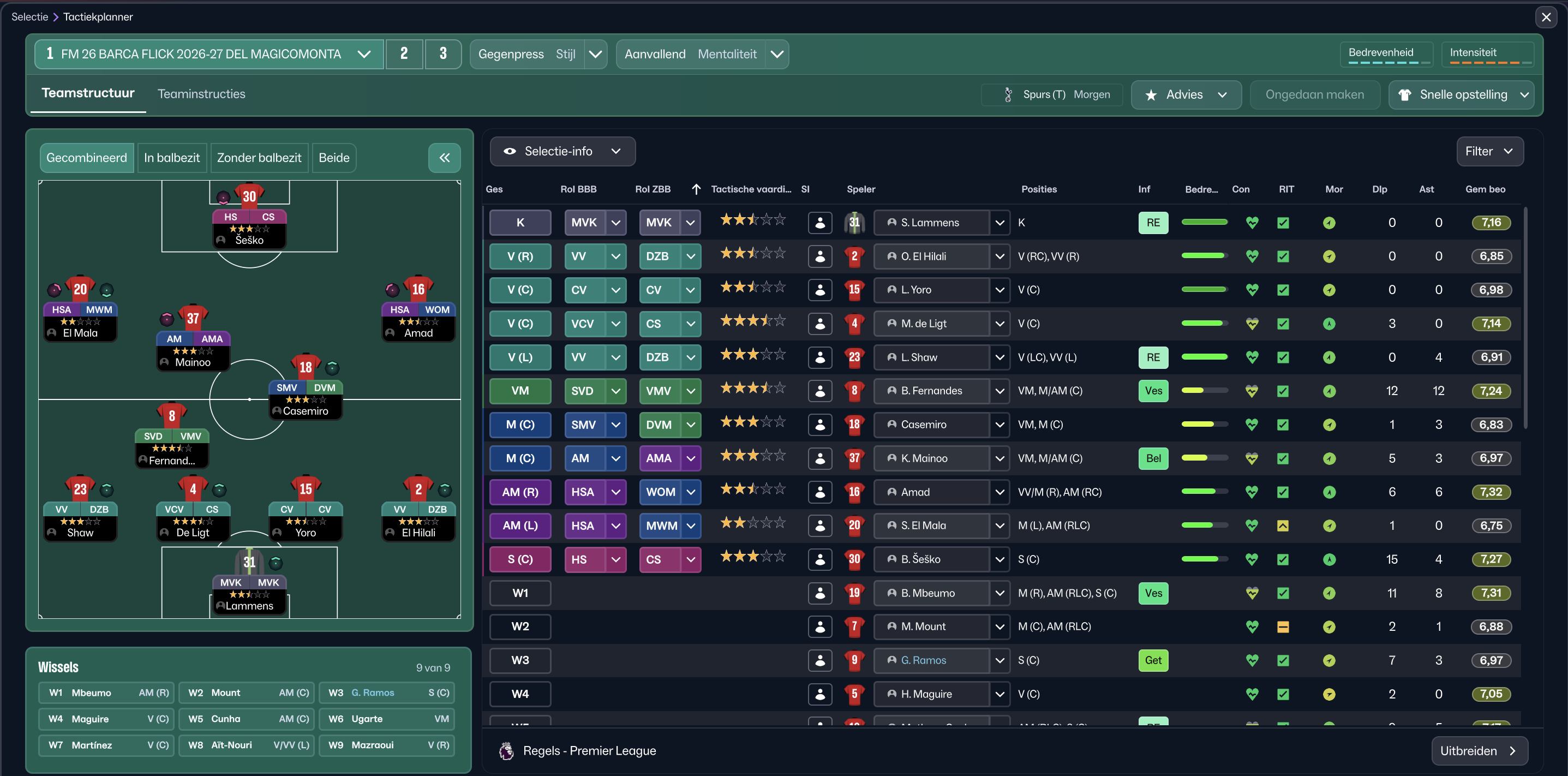
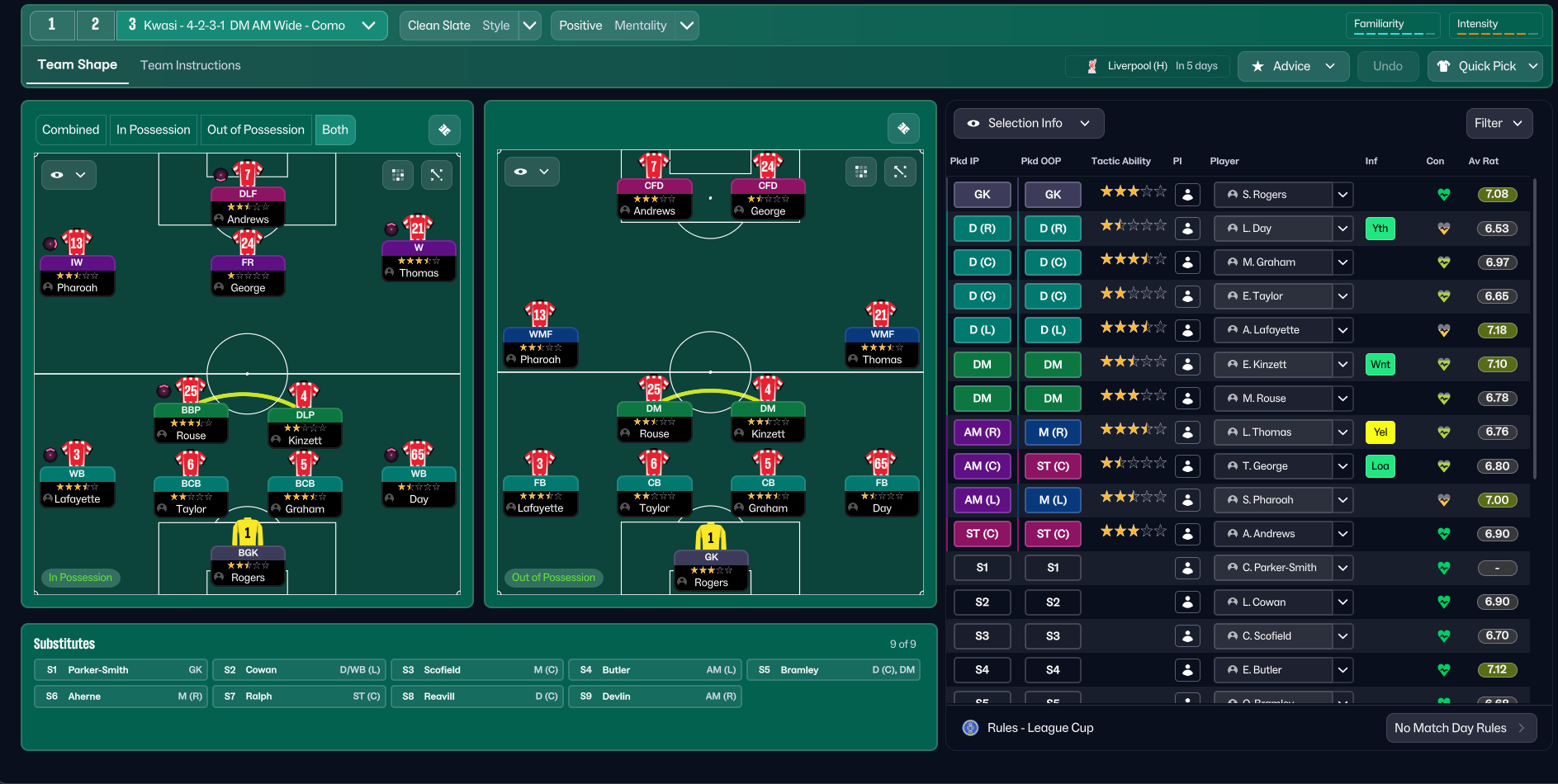
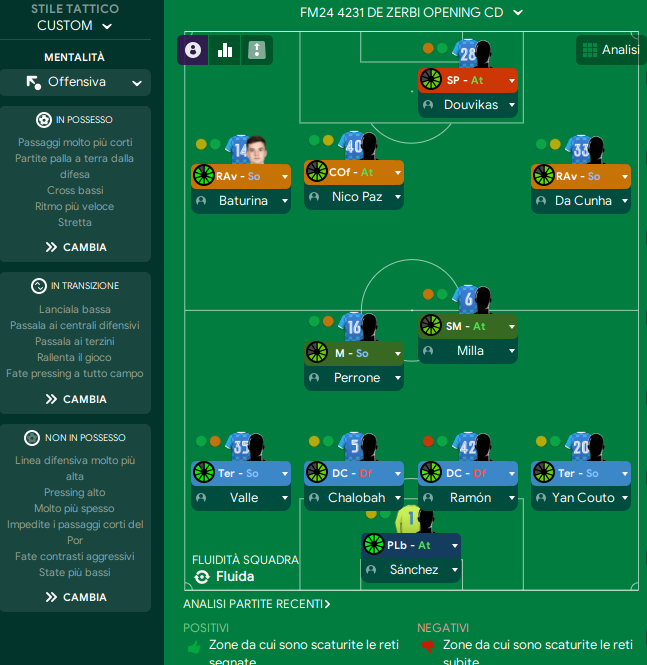
More Control Possession tactics
Guides for this formation
The tactical theory behind the 4-2-3-1: roles, instructions, and the trade-offs that decide whether the system holds up.
Player pairings
Midfield Pairs in 4-2-3-1 and 4-4-2
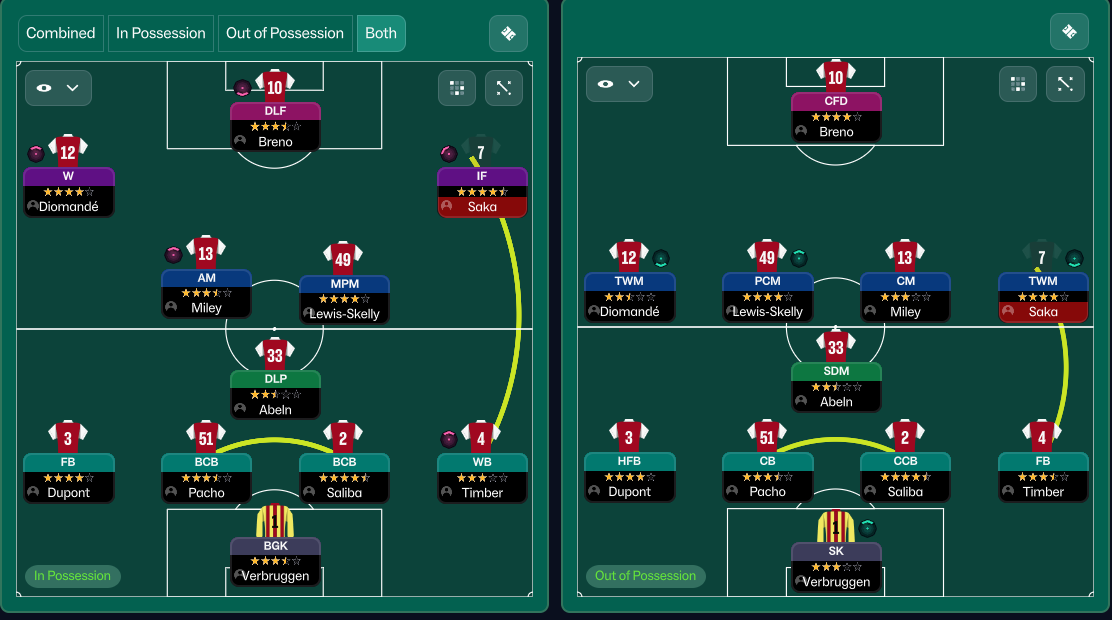
Double pivots and flat pairs in 4-2-3-1 and 4-4-2: when each pairing works, when it collapses, and the AMC unicorn that rescues both.
Read guide
Playing styles
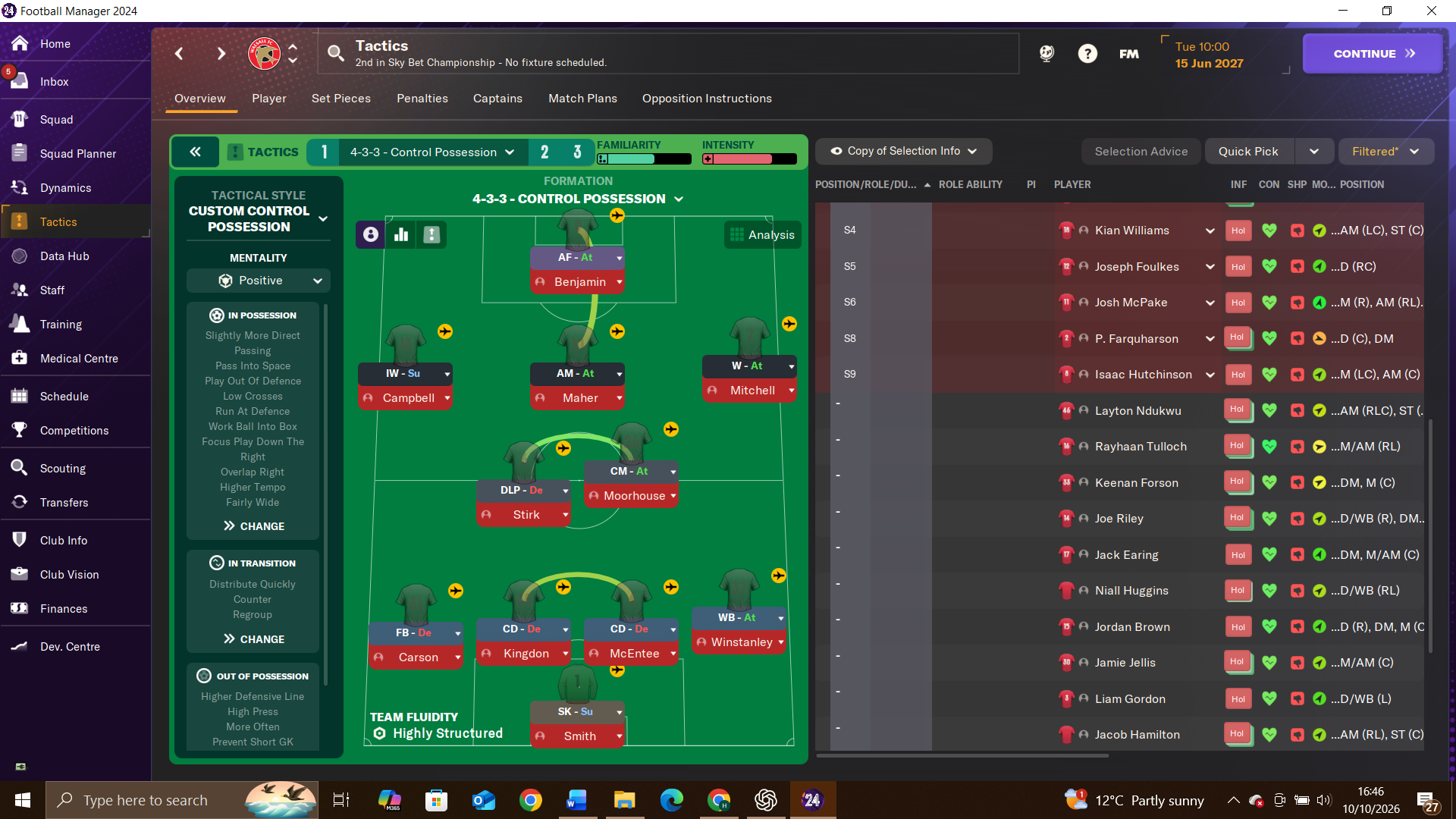
Gegenpressing: A Full Guide
Klopp-style gegenpressing in FM, including squad profile, line-and-press pairing, sustainable workload, and the antipatterns to avoid.
Read guide