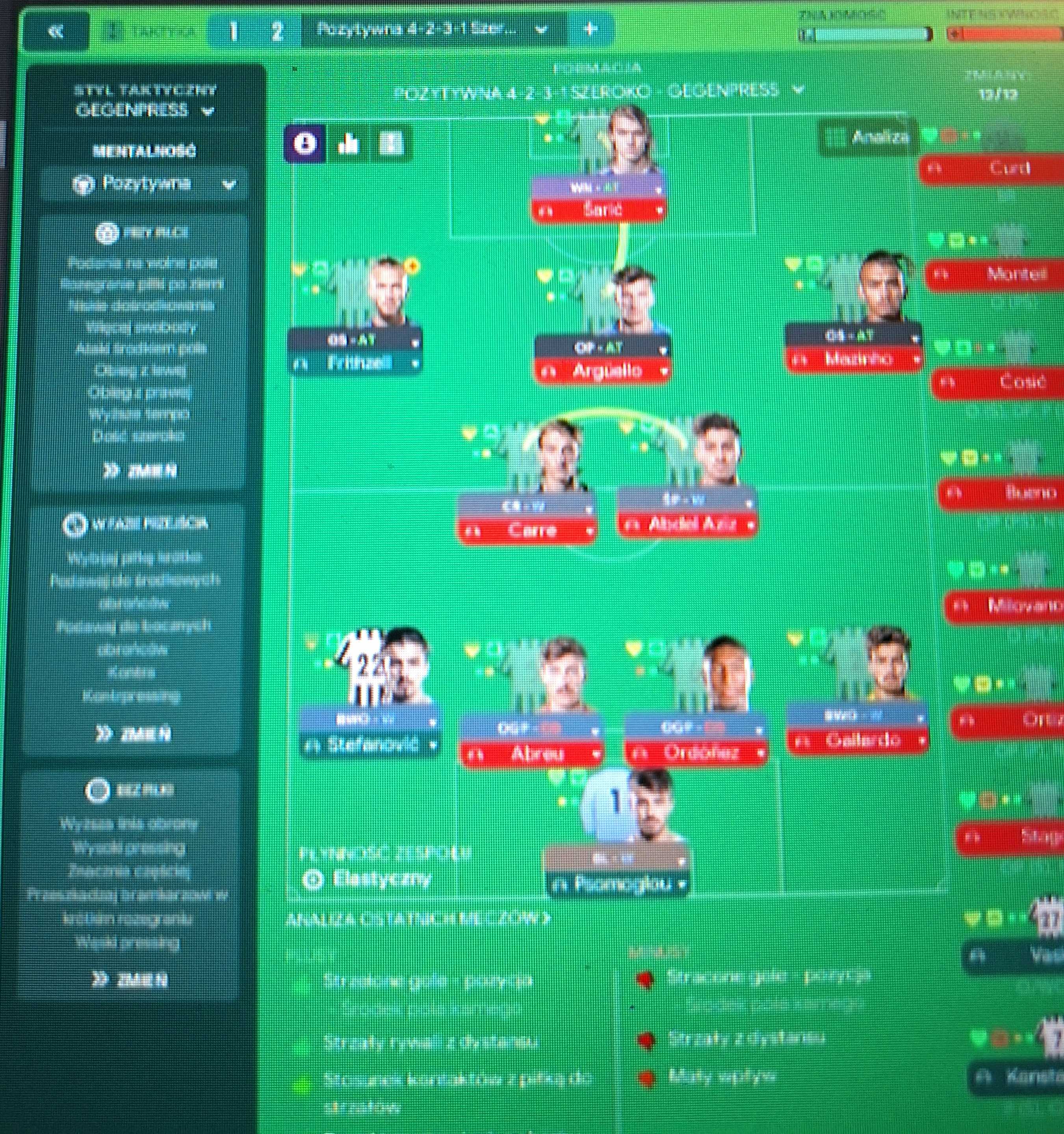
Gegenpress 4-2-3-1 AM Wide (Balanced) Tactic
4-2-3-1 AM Wide
Utilizing the width provided by inside forwards and wide forwards to stretch the opponent's defence. The use of wide forwards provides effective width,…
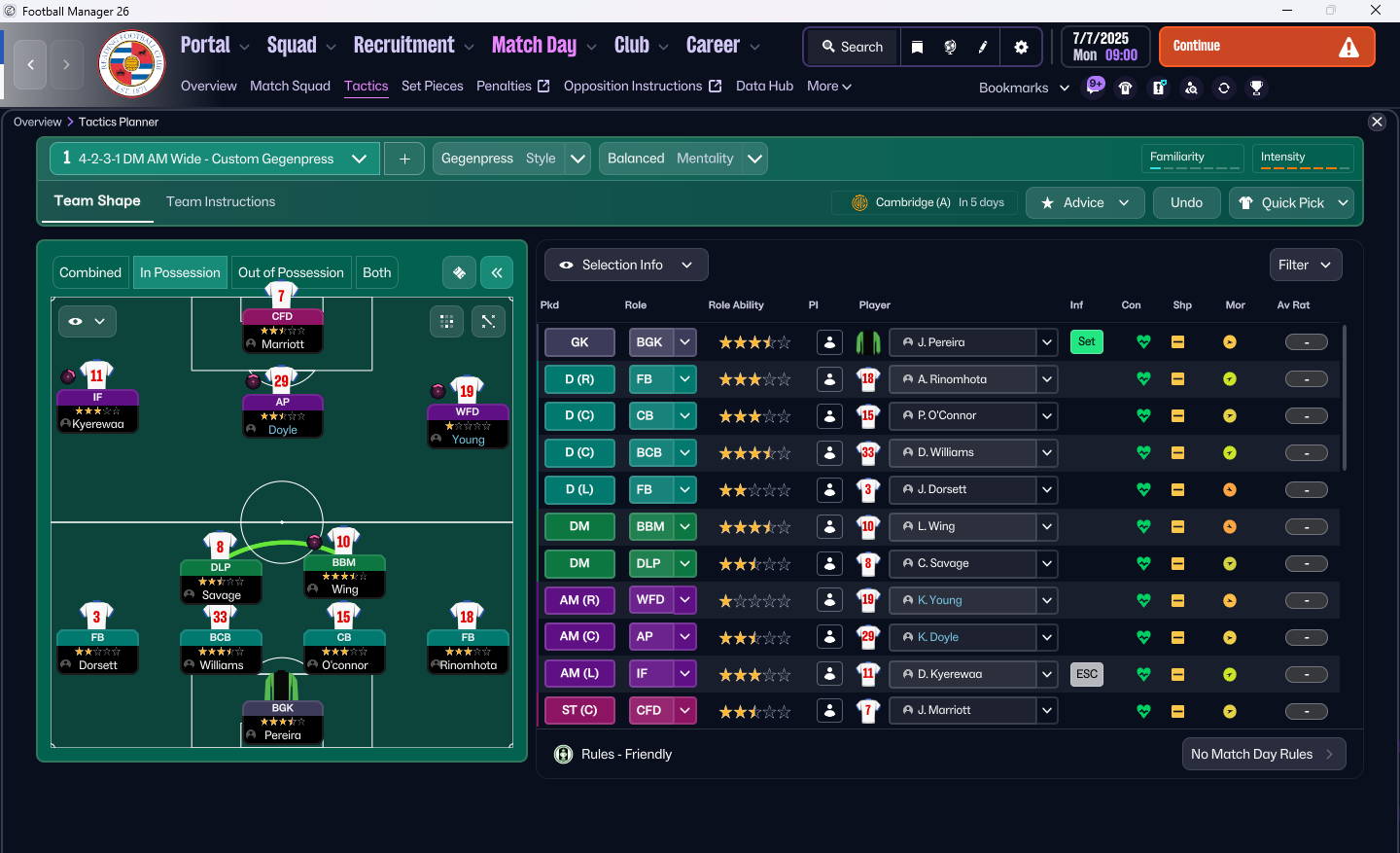
Loading tactical analysis...
Formation and style
Gegenpress
Balanced
4-2-3-1 AM Wide
Fluid
In possession
Play Out of Defence
Pass Into Space
Focus Play Down the Left
In transition
Counter-Press
Counter
Distribute Quickly
Out of possession
Higher Defensive Line
Higher Line of Engagement
Prevent Short GK Distribution
Player roles
GK
Goalkeeper
Defend
DL
Full-Back
Support
DC
Ball-Playing Defender
Defend
DC
Centre-Back
Defend
DR
Full-Back
Support
DM
Deep-Lying Playmaker
Support
DM
Box-to-Box Midfielder
Support
AMR
Wide Forward
Attack
AMC
Advanced Playmaker
Support
AML
Inside Forward
Attack
ST
Complete Forward
Attack
Phase description
In possession, the team looks to maintain a fluid attacking structure with overlaps from full-backs and creative runs from midfield.
Upon losing possession, the team quickly engages in a counter-press to regain control.
Utilizing the width provided by inside forwards and wide forwards to stretch the opponent's defence.
Team shape defence
Compact
The defensive line is set higher to compress space and tighten defensive shape.
Higher Defensive Line combined with two DM roles at [3,2] and [3,3].
Team shape attack
Fluid and Wide
Attack encourages fluid movement and overlaps, with wingers cutting inside and strikers applying pressure.
Focus Play Down the Left and roles such as Inside Forward and Wide Forward.
Key strengths
Effective Wing Play
The use of wide forwards provides effective width, allowing for stretching the opposition's defence.
IF-A at [6,1] and WFD at [6,5] create offensive options wide.
Midfield Control
The presence of a deep-lying playmaker ensures control in the central areas.
DLP-S at [3,2] and BBM-S at [3,3] facilitate ball recovery and transition.
Conflicting tactics
Wide Attacking Play vs Central Congestion
Heavy reliance on wingers may leave central areas vulnerable against compact defences.
WFD and IF roles may struggle against teams with strong central midfielders.
Higher Defensive Line Risks
Setting a higher defensive line may expose the team to long balls and quick counter-attacks.
Higher Defensive Line may lead to gaps that exploit fast-strikers.
Risk exposures
Risk Exposures
Items
Defensive Vulnerability
The high defensive line could allow quick transitions by opponents.
High line without adequate covering midfielders may lead to goal-scoring opportunities.
Transition Setup
Quick transitions can lead to disorganization if players are caught too far forward.
At times, AM roles may drift wide, creating gaps in central areas.
Role synergies
Role Synergies
Items
DLP-S and BBM-S
The combination provides a balance of creativity and defensive cover in midfield.
DLP-S at [3,2] allows BBM-S at [3,3] to exploit forward positions effectively.
IF and WFD
Creates dynamic movements that can confuse defenders and create spaces for each other.
IF-A at [5,1] and WFD at [5,5] can cut inside and facilitate scoring.
Suggested questions
How can the team optimize the balance between pressing intensity and player fatigue?
What adjustments can be made to better exploit space against compact defences?
Are there alternative formations that can enhance the midfield dominance?
Related Tactics
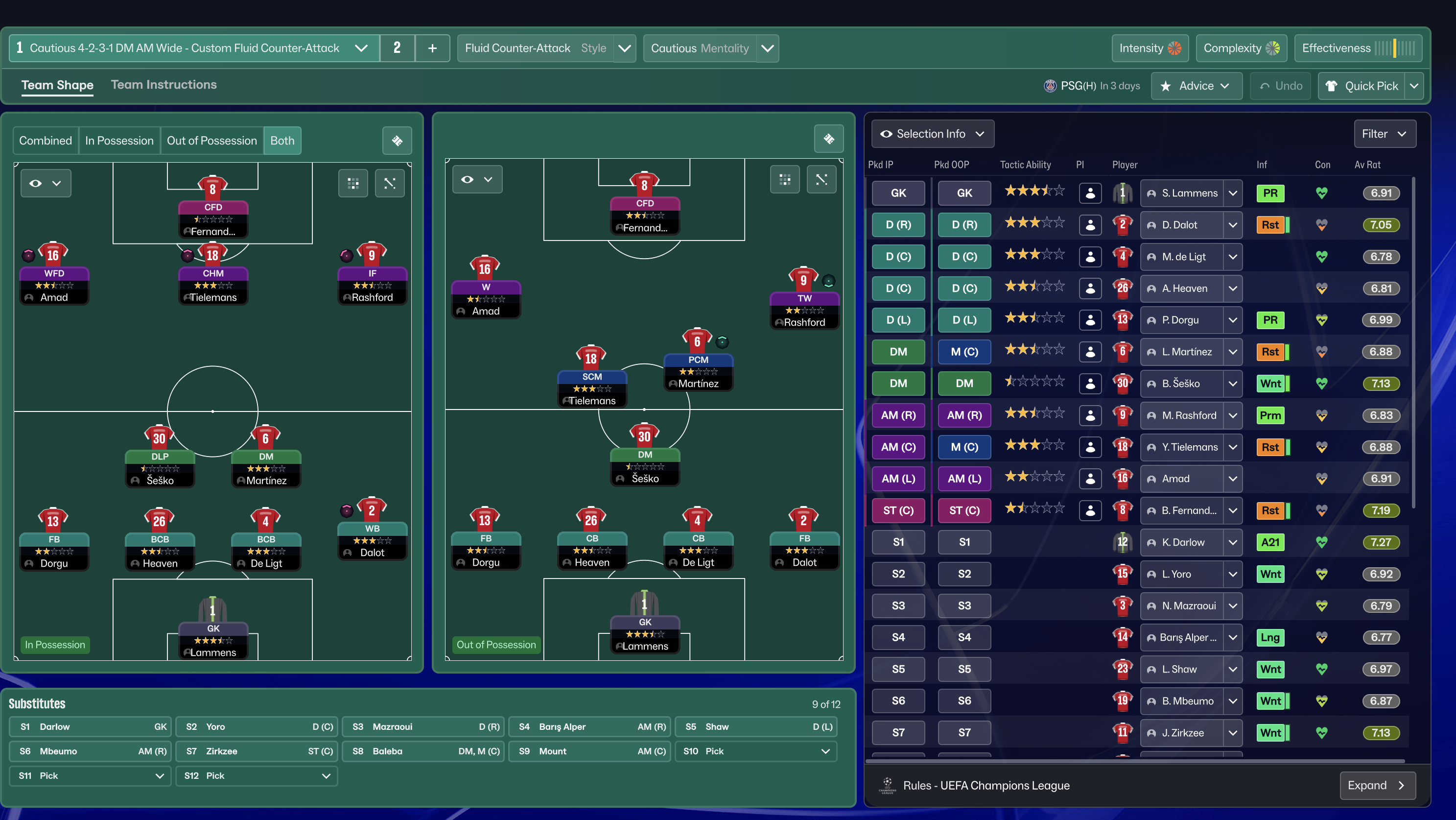
Fluid Counter-Attack 4-2-3-1 AM Wide
Fluid Counter-Attack
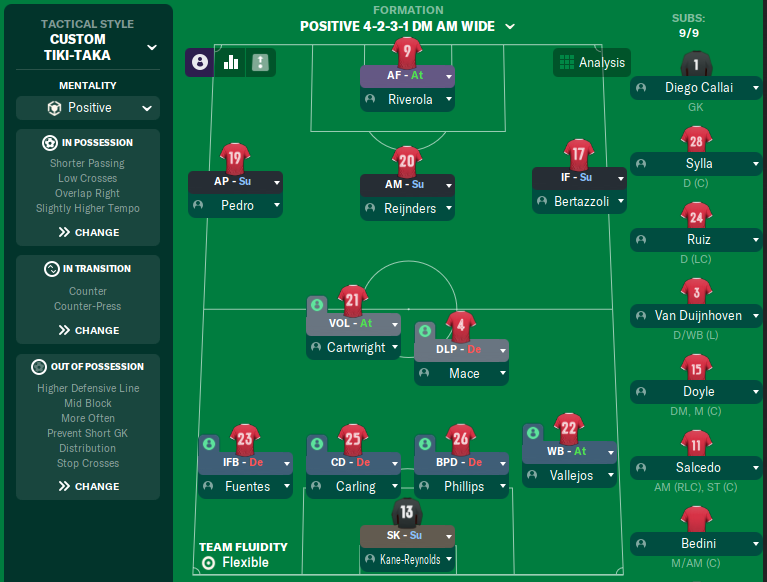
Tiki-Taka 4-2-3-1 AM Wide
Tiki-Taka
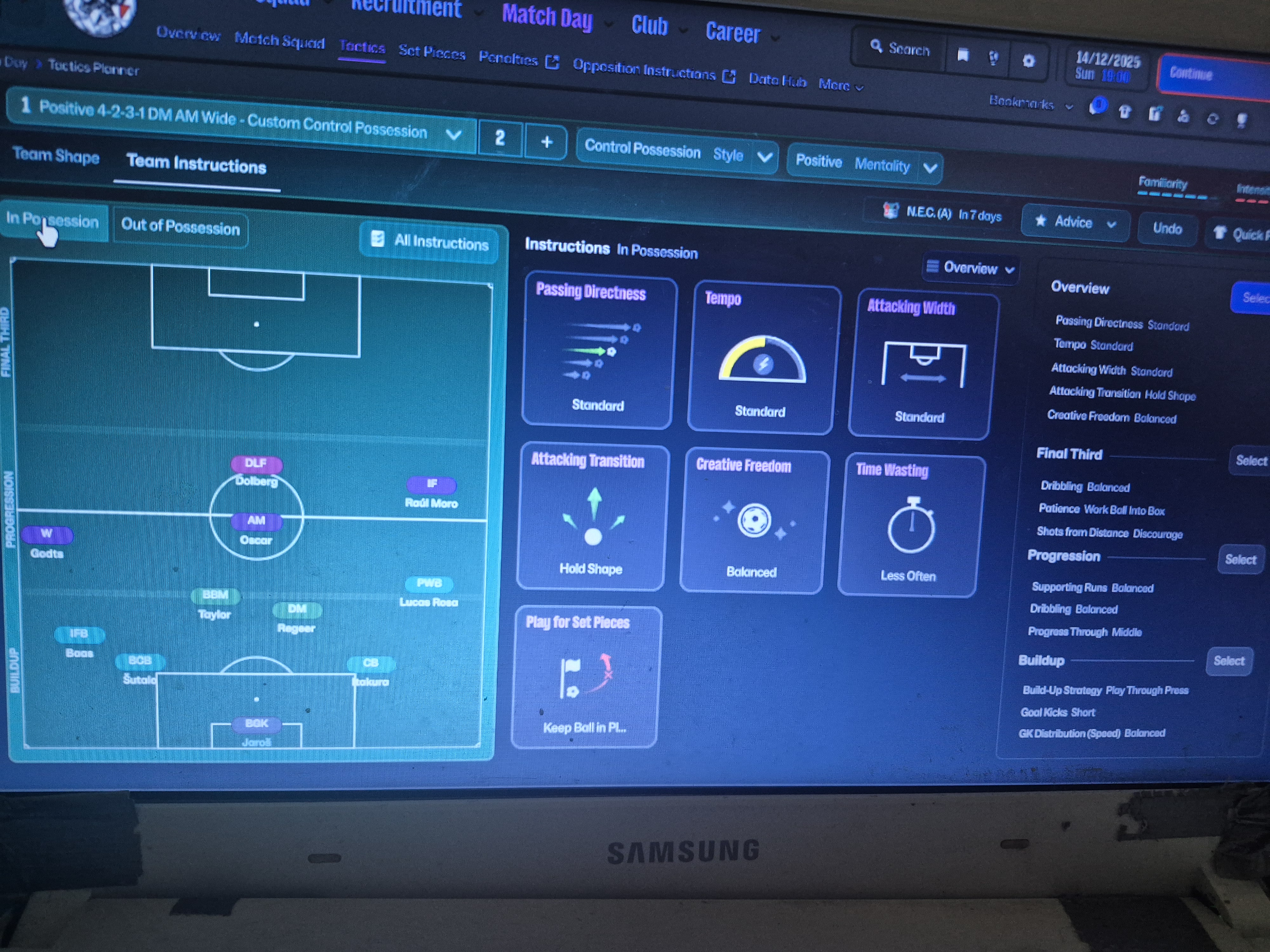
Control Possession 4-2-3-1 AM Wide
Control Possession
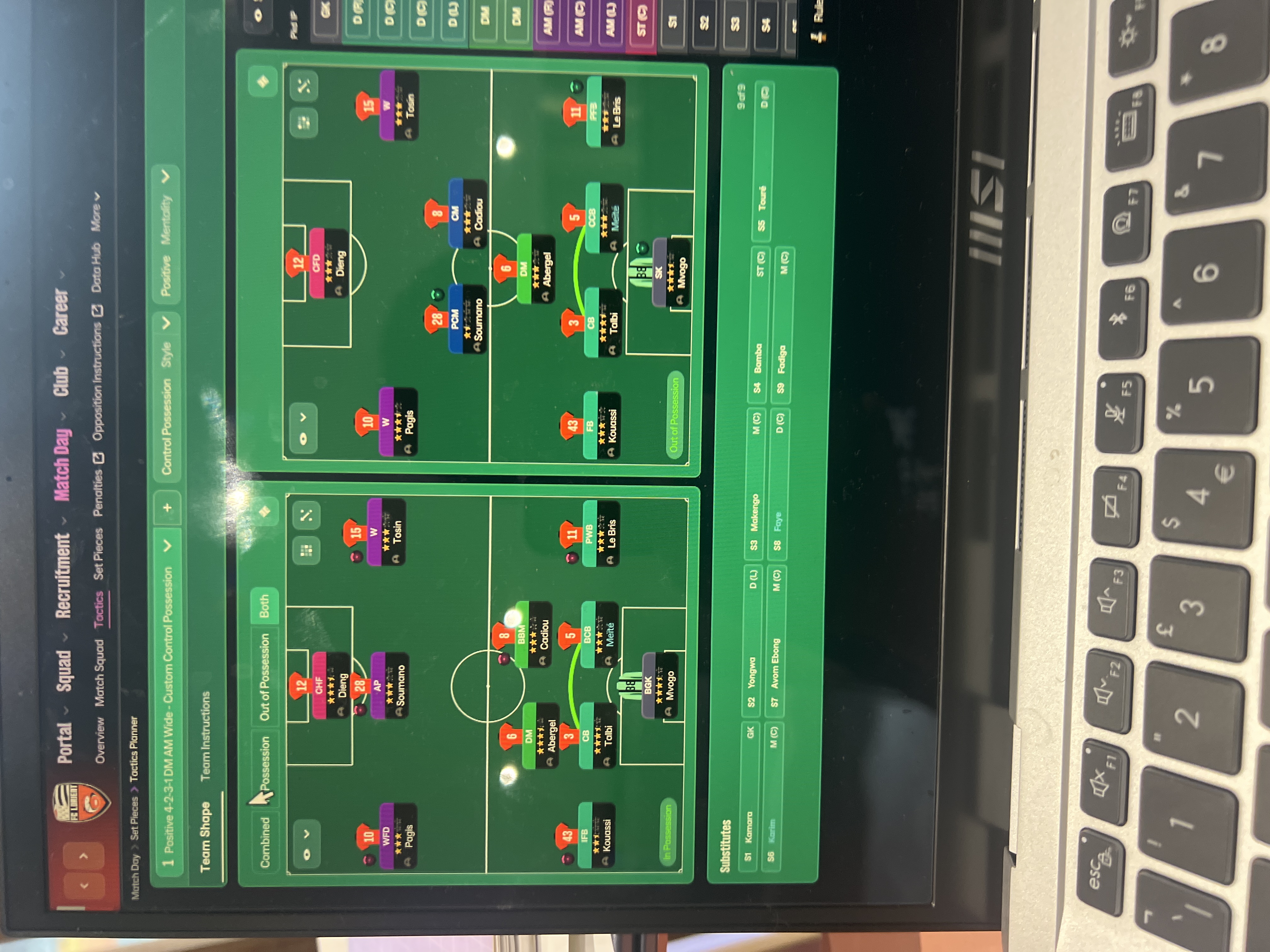
Control Possession 4-2-3-1 AM Wide
Control Possession
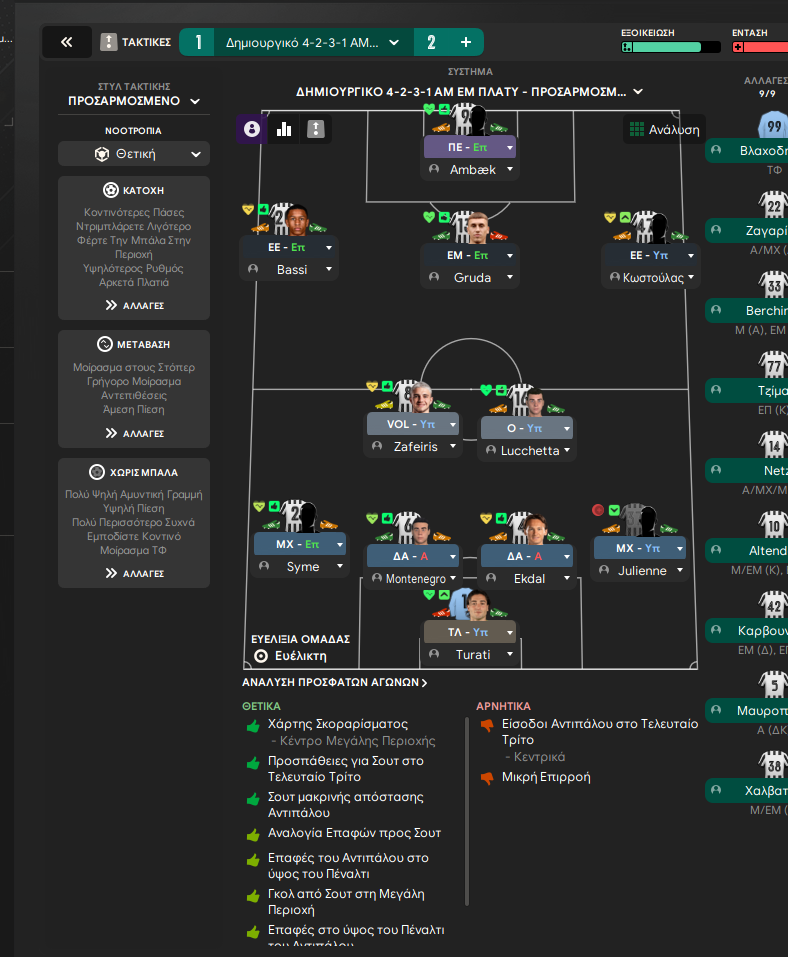
4-2-3-1 AM Wide Formation
Positional
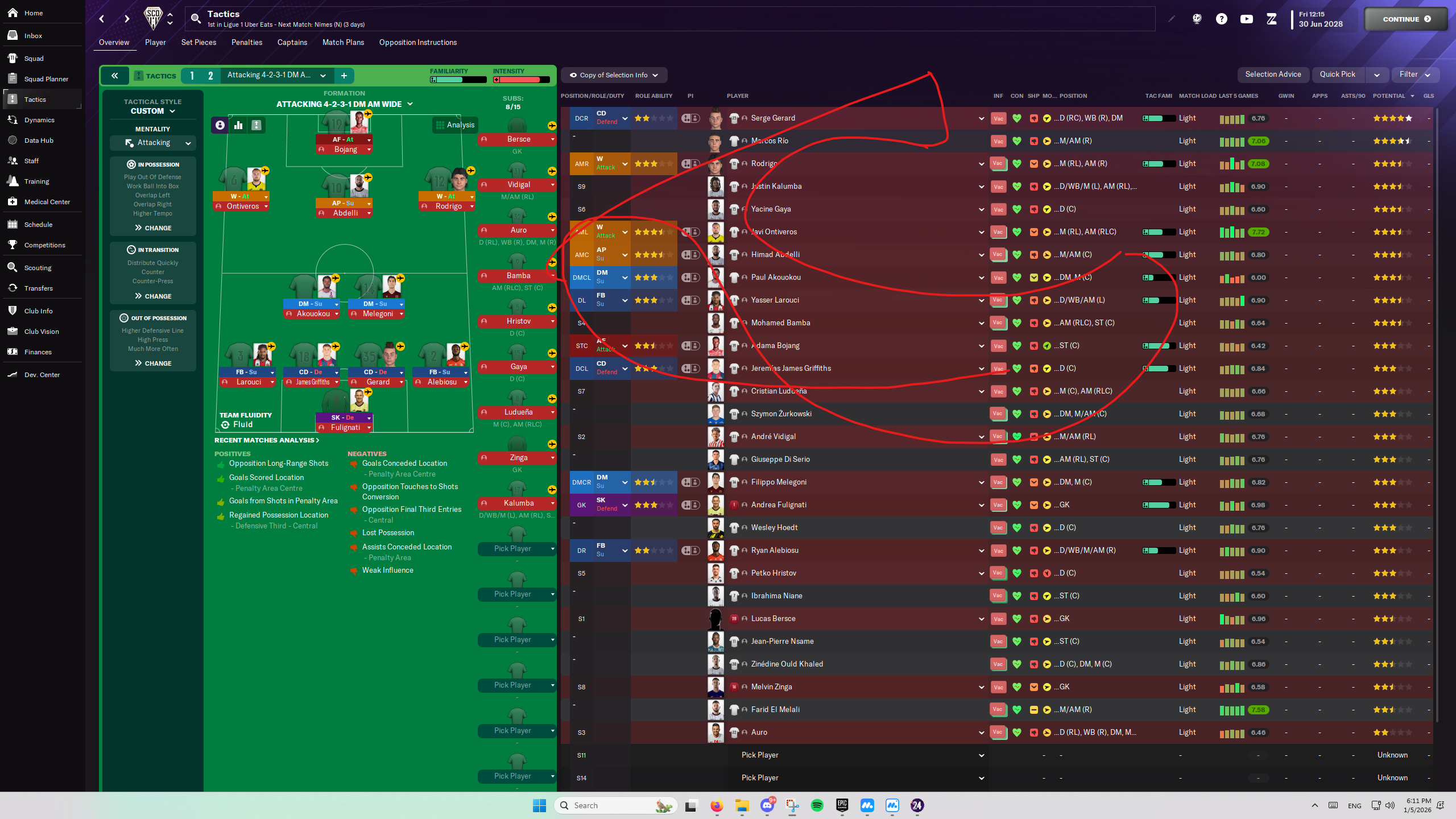
4-2-3-1 AM Wide Formation
Custom
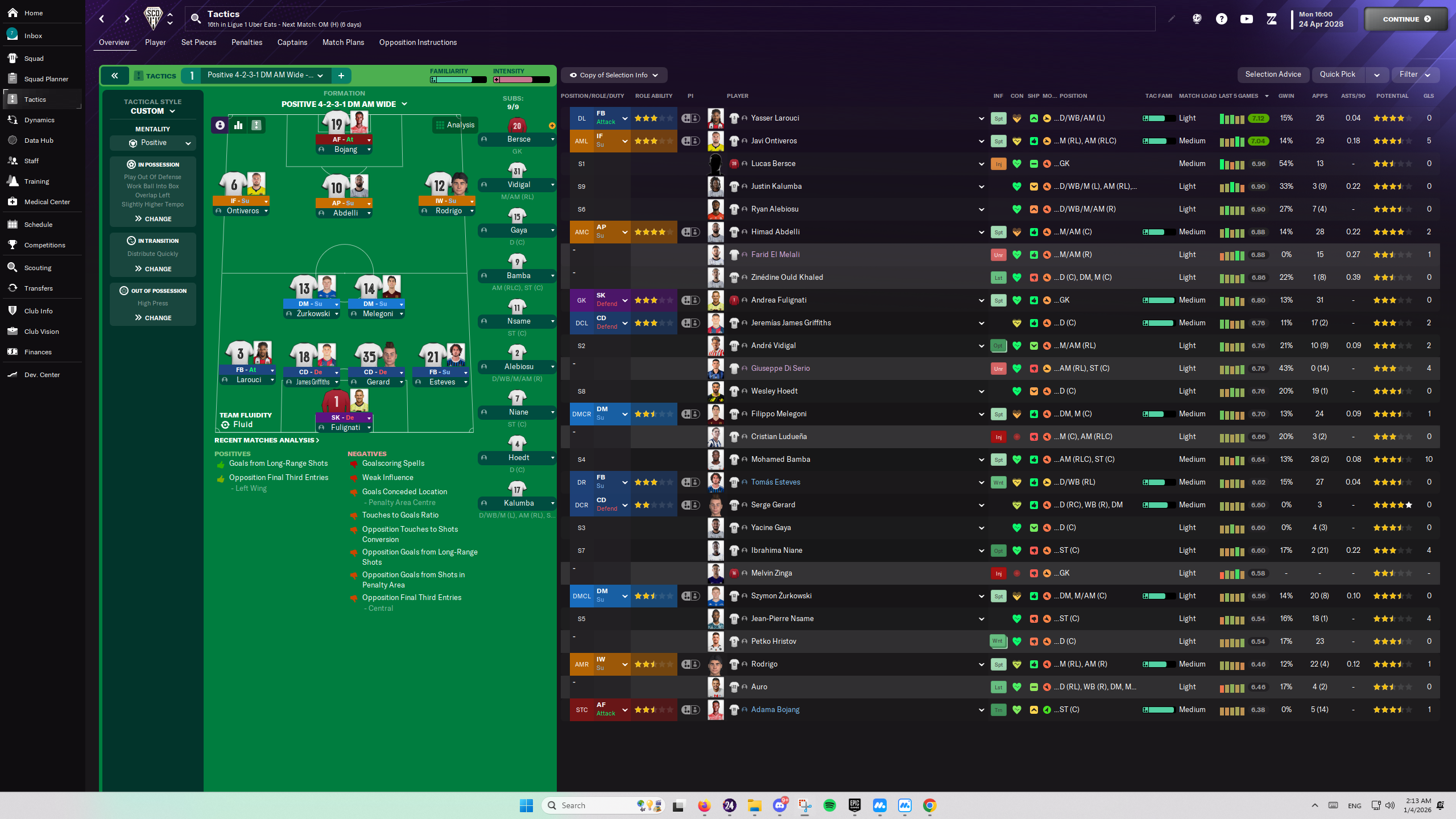
Positive 4-2-3-1 AM Wide
Positive
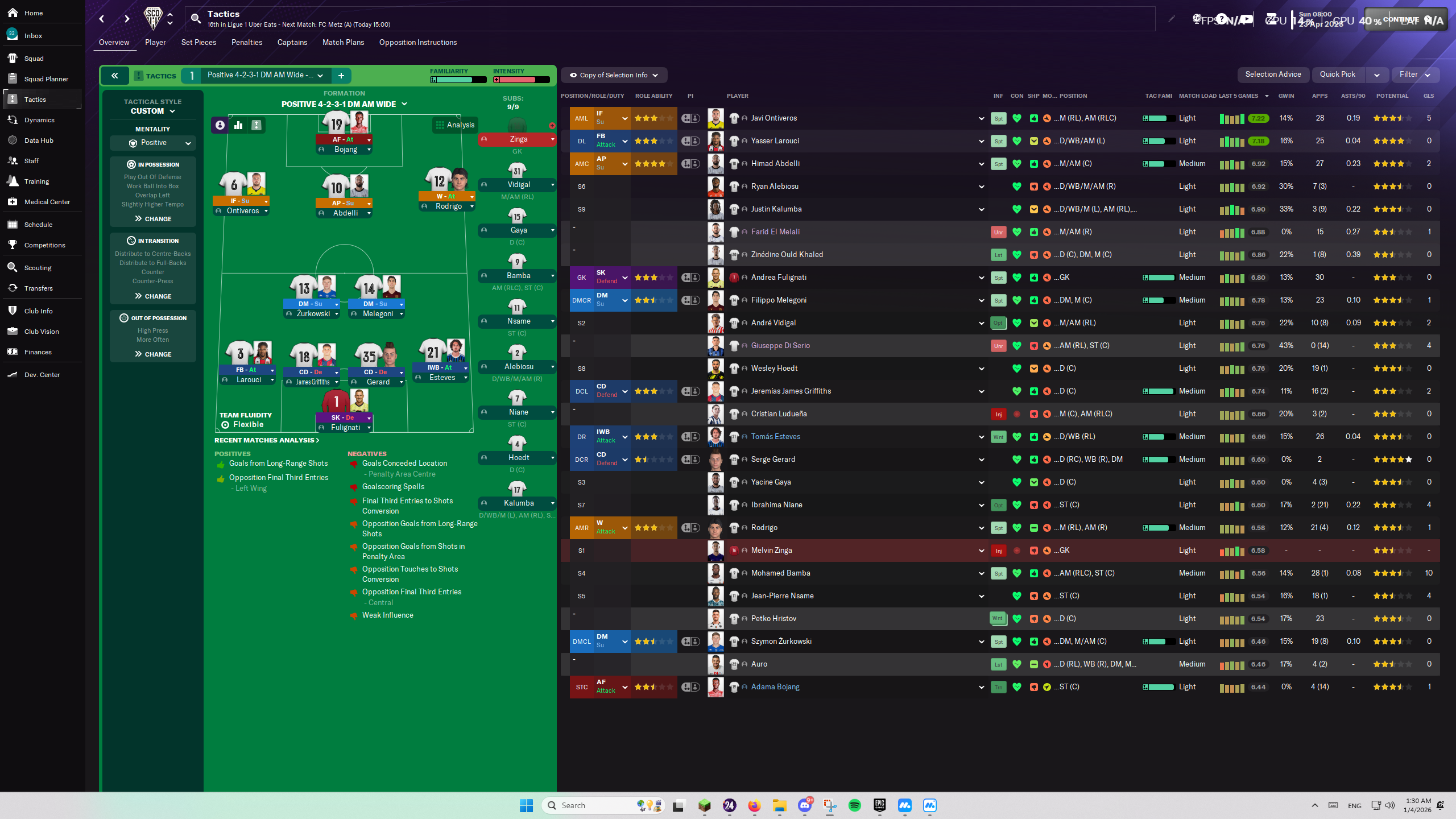
Positive 4-2-3-1 AM Wide
Positive
More Gegenpress tactics
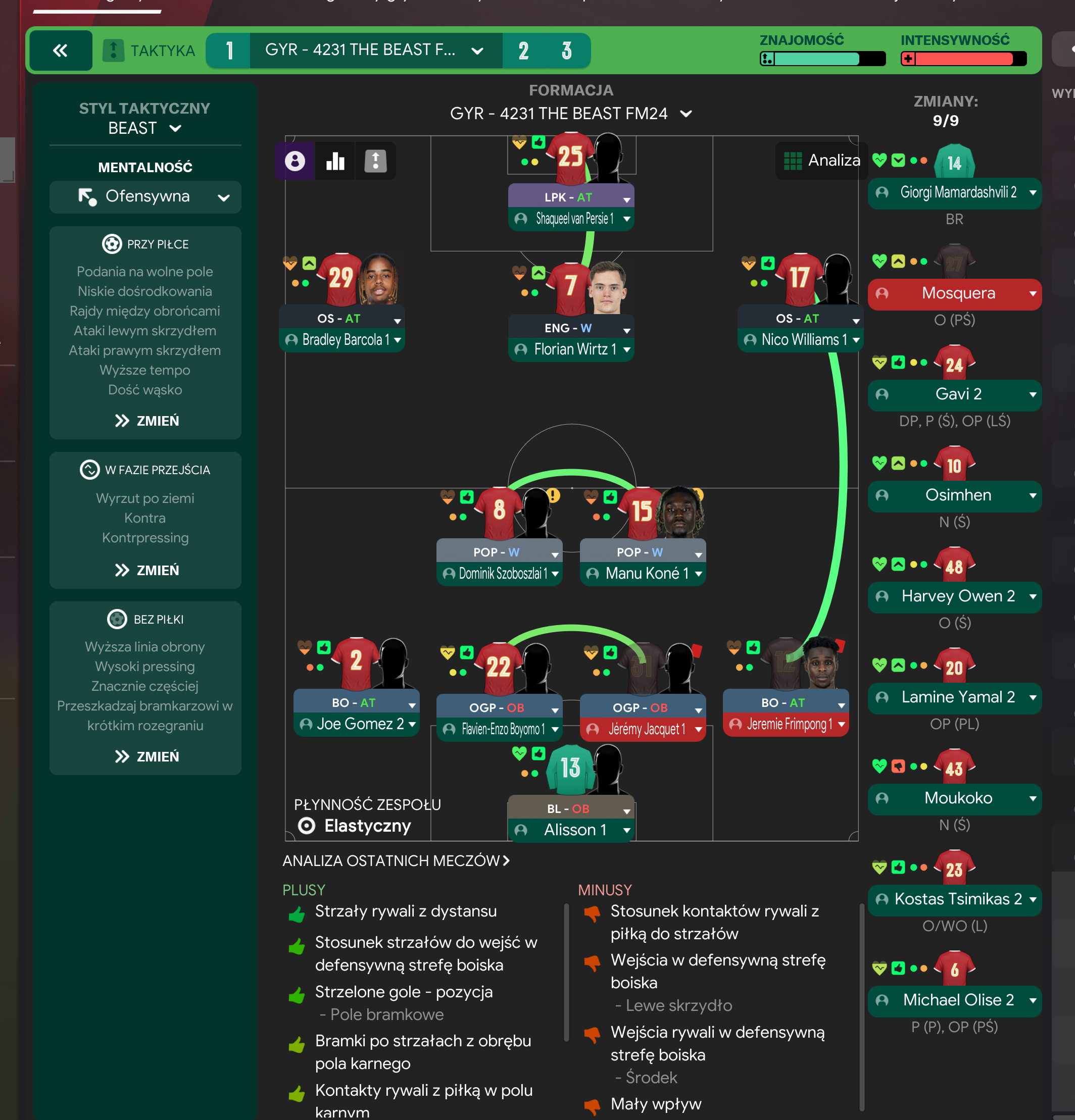
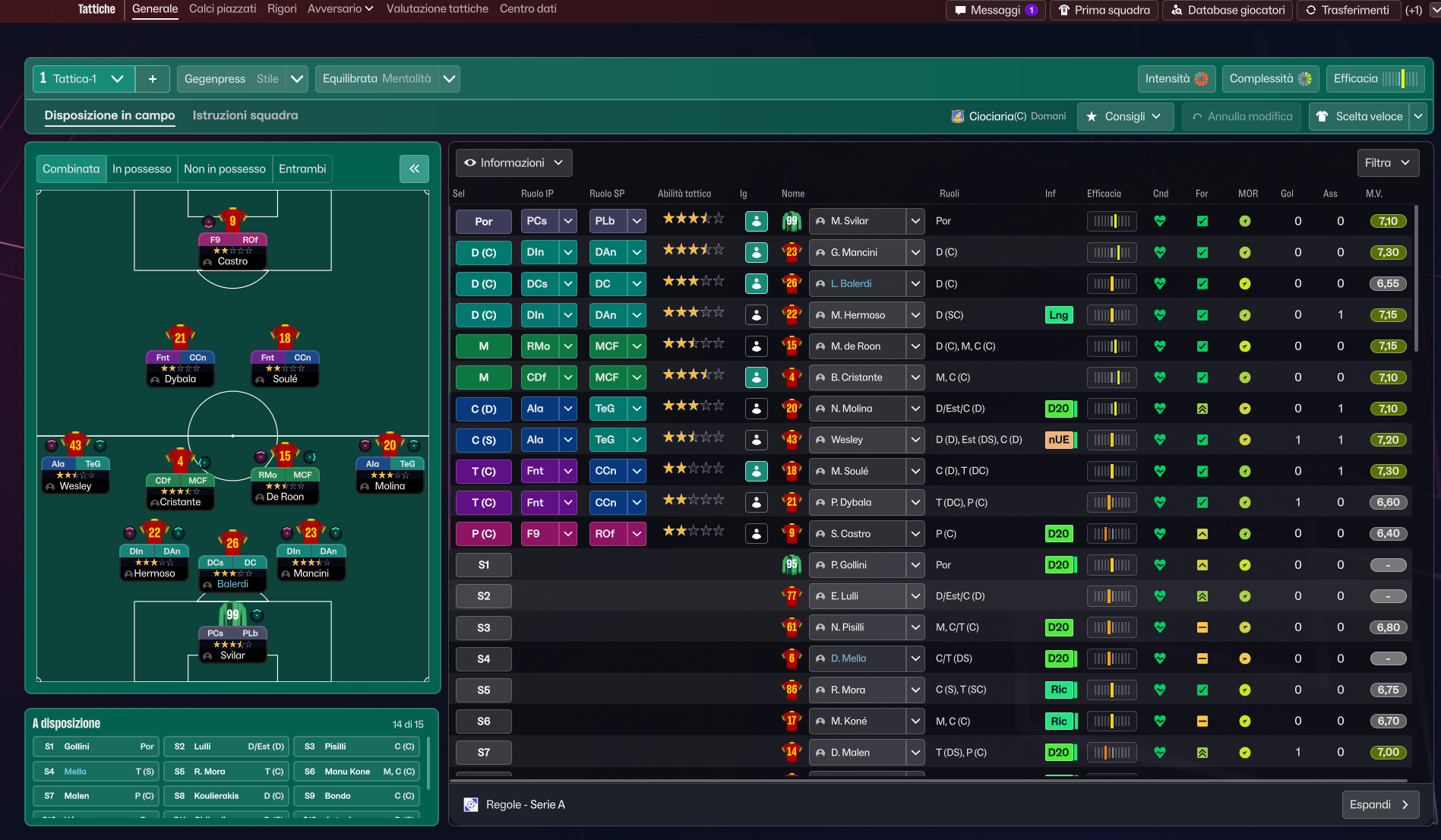
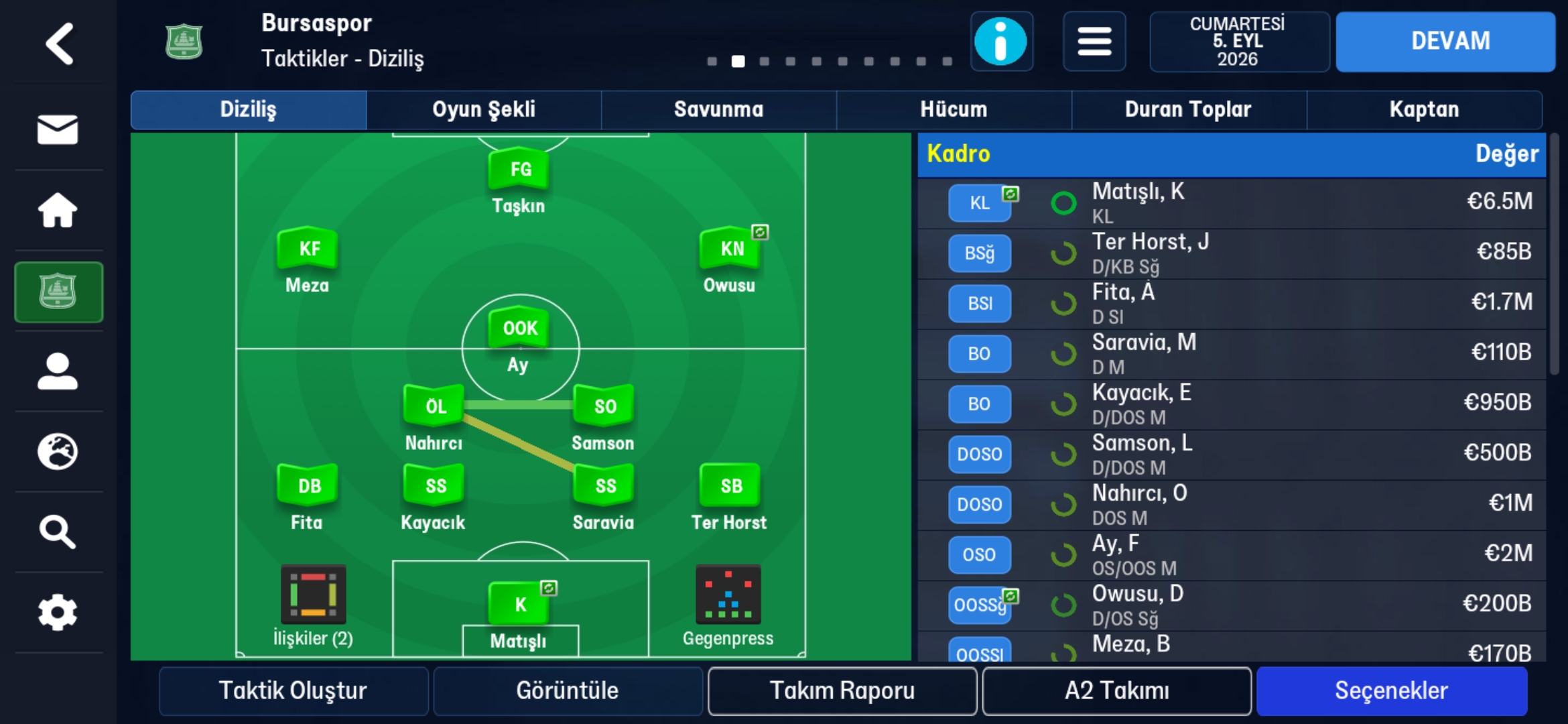
Guides for this tactic
The tactical theory behind the 4-2-3-1 AM Wide: roles, instructions, and the trade-offs that decide whether the system holds up.
Player pairings
Midfield Pairs in 4-2-3-1 and 4-4-2
Double pivots and flat pairs in 4-2-3-1 and 4-4-2: when each pairing works, when it collapses, and the AMC unicorn that rescues both.
Read guide
Playing styles
Gegenpressing: A Full Guide
Klopp-style gegenpressing in FM, including squad profile, line-and-press pairing, sustainable workload, and the antipatterns to avoid.
Read guide
Match preparation
Game-State Tactics
Protect a 1-0, chase a 1-0, hold a draw away. How to manage game state in FM through duties and roles, not by lurching to Defensive.
Read guide