Uploaded Tactic
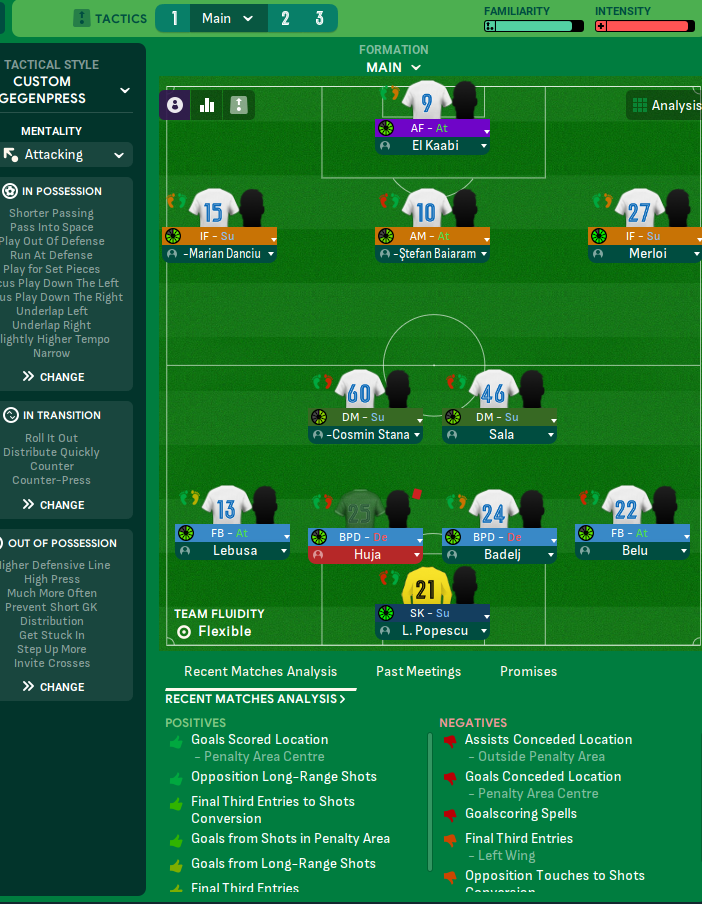
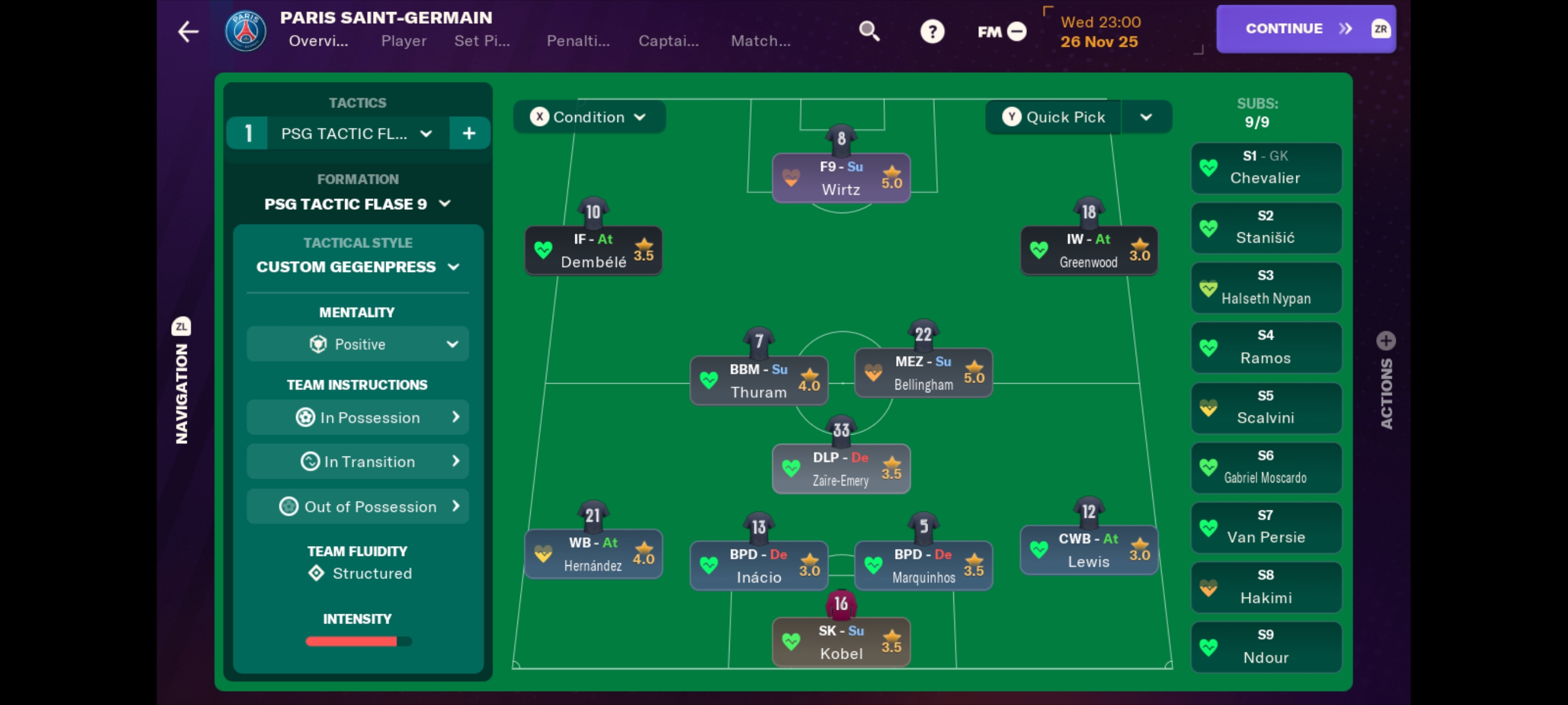
Formation & Style
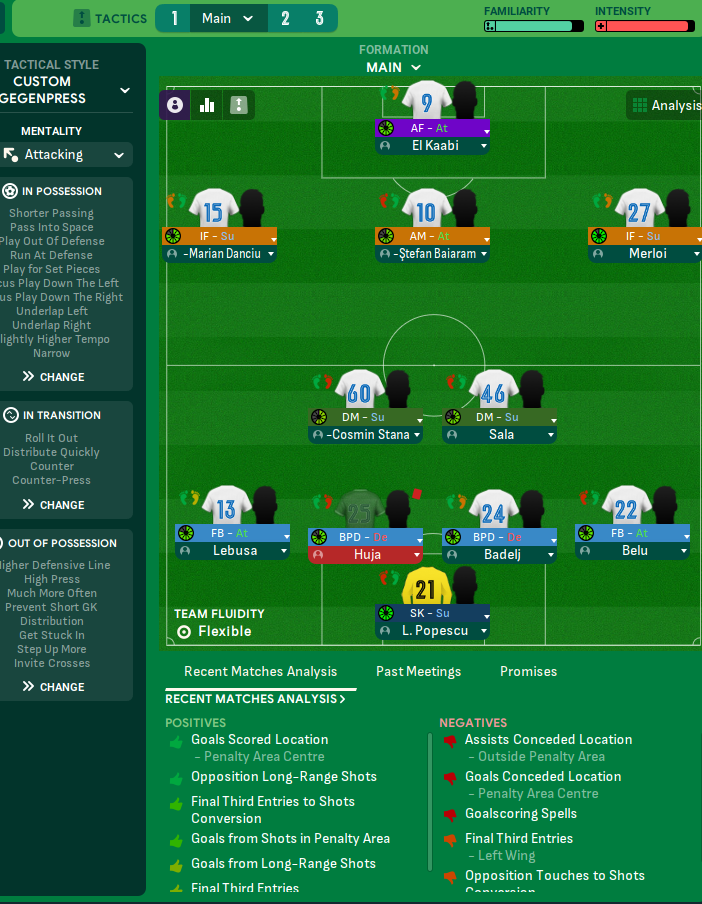
Tactical Style:Custom Gegenpress
Mentality:Attacking
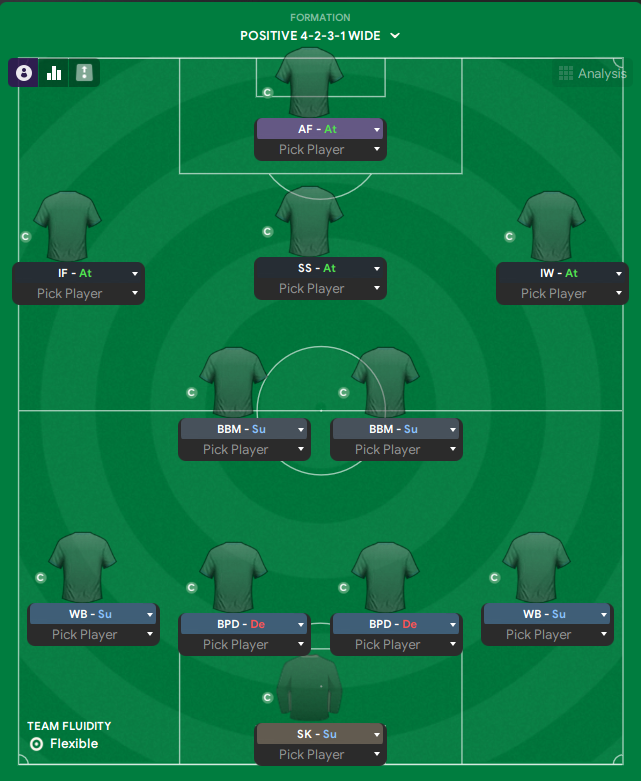
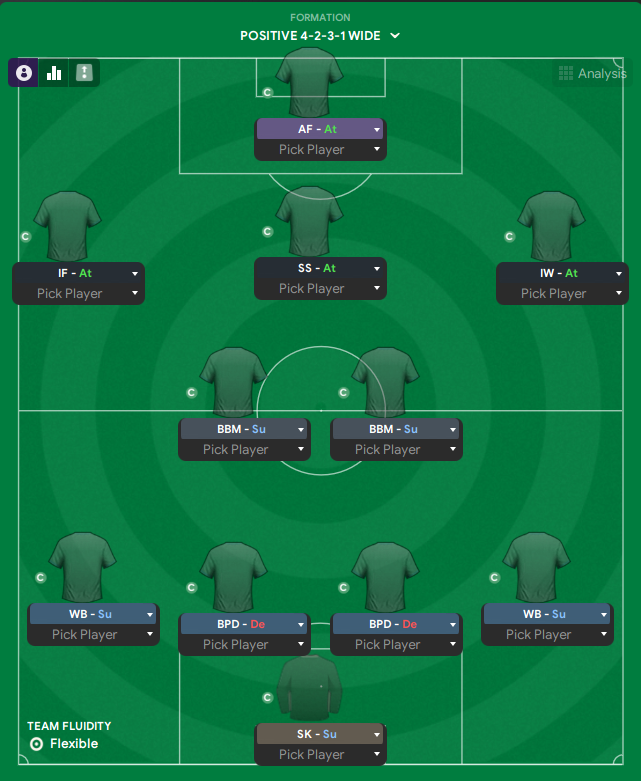
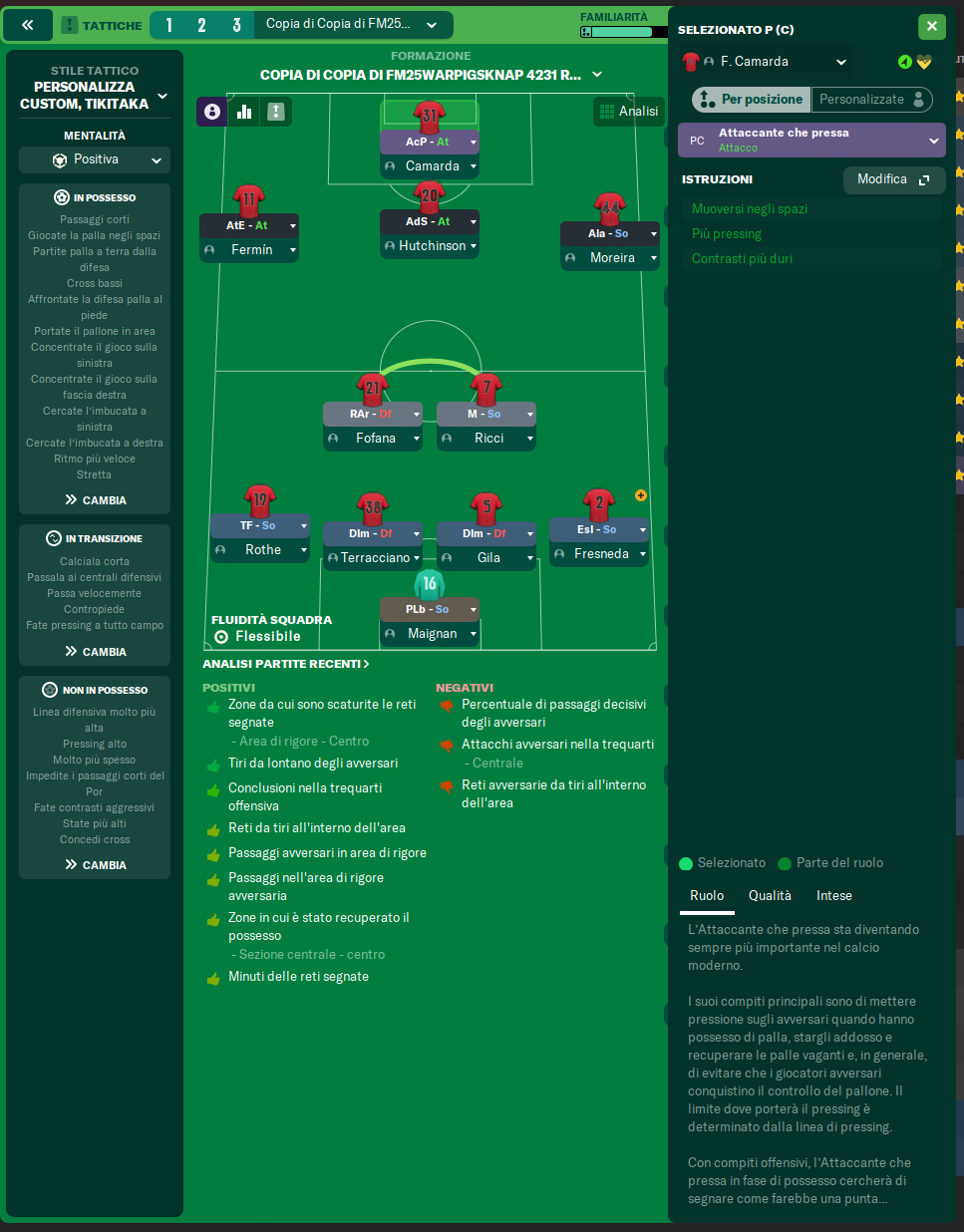
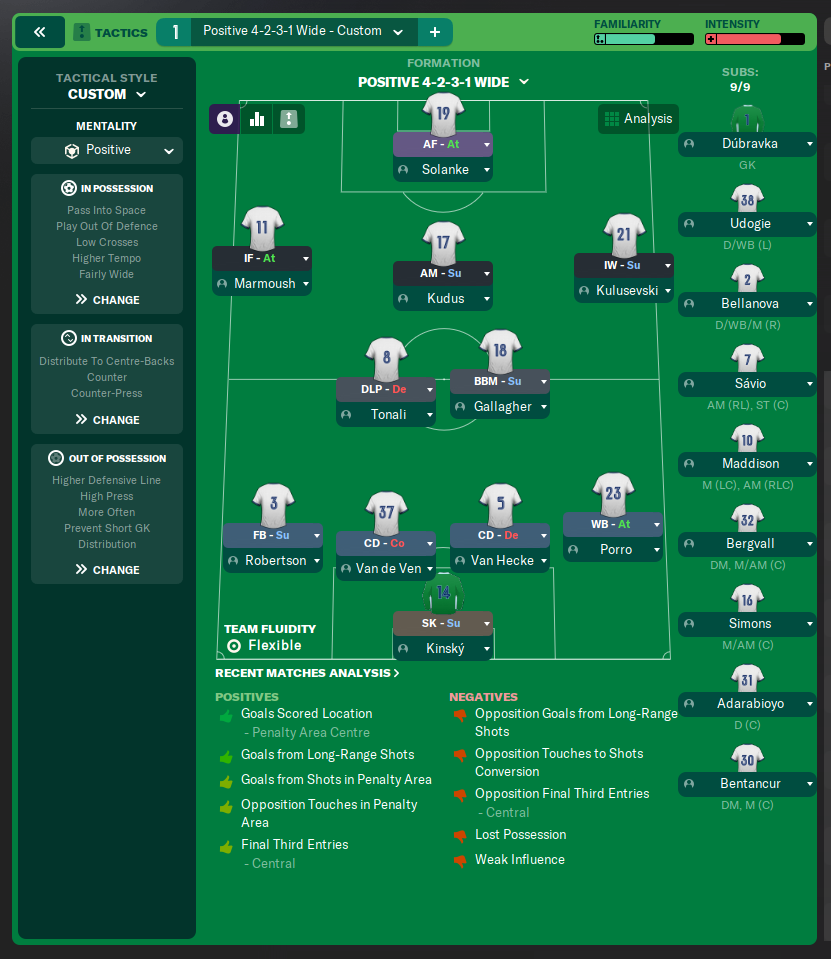
Formation:4-2-3-1 Wide
Team Fluidity:Flexible
In Possession
Shorter Passing
Pass Into Space
Play Out of Defense
Play for Set Pieces
Play Down the Left
Play Down the Right
Underlap Right
High Tempo
Narrow
In Transition
Roll It Out
Distribute Quickly
Counter
Counter-Press
Out of Possession
Higher Defensive Line
High Press
Much More Often
Prevent Short GK Distribution
Team Shape Without Ball
Shape:4-2
Description:A compact shape with two lines of four when out of possession, ensuring coverage across the pitch.
Evidence:FB-A at [2,1] and [2,5], BPD-D at [2,2] and [2,4] support a solid base.
Team Shape With Ball
Shape:4-2-3-1
Description:Effective width from full-backs and inside forwards, with a central attacking midfielder linking play.
Evidence:AF-A at [6,3], AM-A at [5,3], IF-S at [5,2] and [5,4] leverage space effectively.
Phase Description
Attacking Play
Quick transitions with emphasis on pressing and exploitation of spaces, making full use of inside forwards cutting in.
Defensive Transition
Immediate counter-pressing in opposition territory to regain possession quickly.
Main Focus
Utilizing width with overlapping full-backs to stretch defenses while maintaining a high tempo.
Key Strengths
Dynamic Attacking Play
Utilizes both width and penetration to create goal-scoring opportunities.
Counter-Pressing Effectiveness
Immediately recovers possession when losing the ball, maintaining pressure on the opposition.
Ball-Playing Philosophy
Encourages building from the back through skilled defenders facilitating transitions.
Conflicting Directions
Vulnerability to Pace
High defensive line can expose back four to fast counter-attacking teams.
Overlapping Full-Backs Risk
Full-backs pushing high may leave defensive gaps, especially when possession is lost.
Dependency on Pressing
Success hinged on maintaining press intensity; otherwise, team shape can collapse.
Tactical Suggestions
Consider a More Balanced Midfield
Introduce a playmaking role in the midfield to enhance creative output.
Varying Approach in Attacking Play
Incorporate occasional direct balls or through balls to exploit space behind defenses.
Adjust Defensive Line if Facing Pace
Consider lowering the defensive line against fast opposition to reduce vulnerabilities.
Ask Questions About Your Lineup
Related Tactics
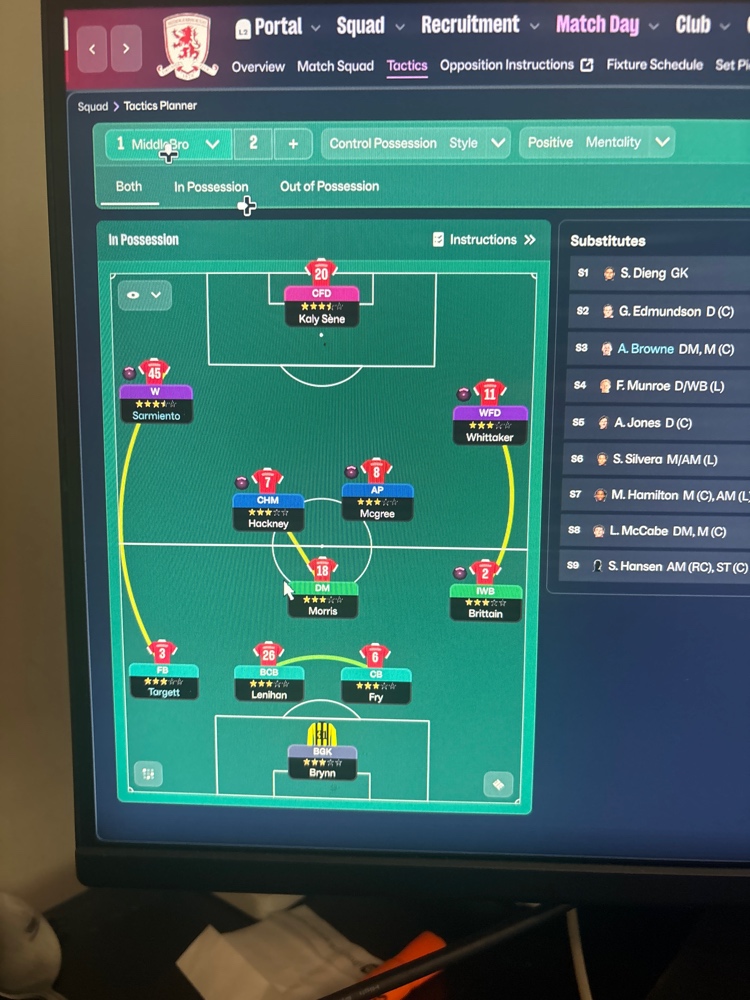
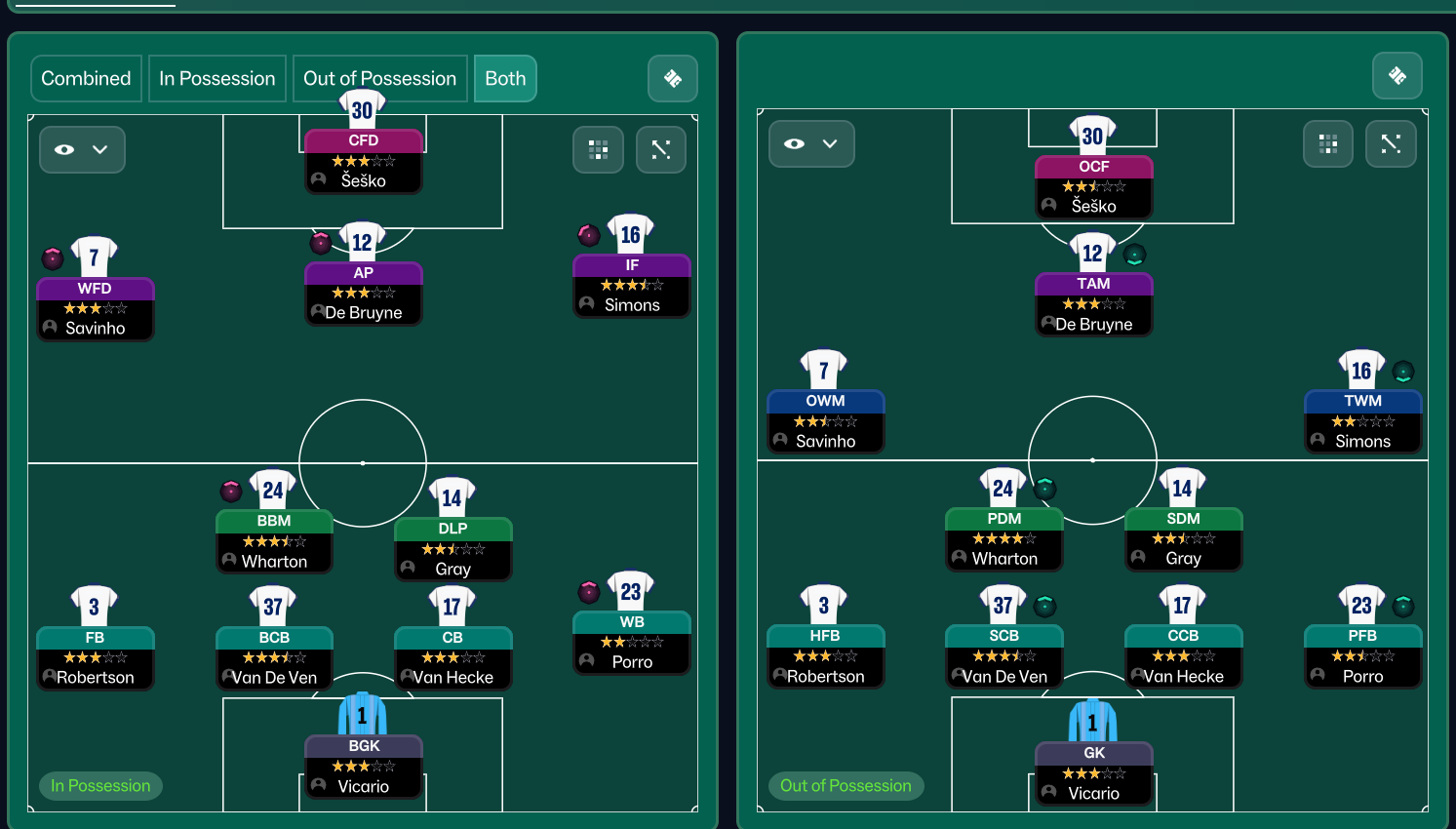
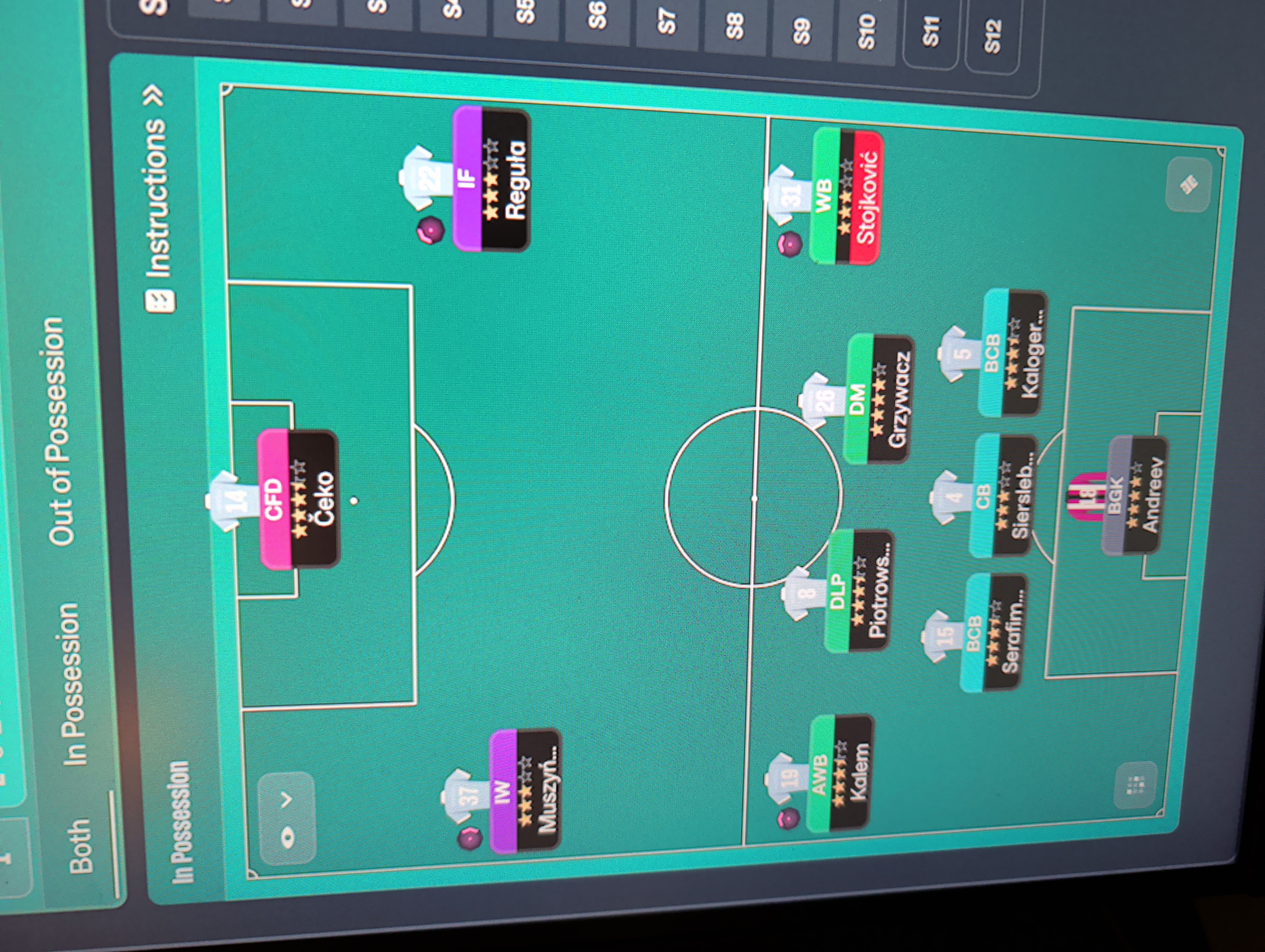
More Custom Gegenpress tactics
Guides for this formation
The tactical theory behind the 4-2-3-1 Wide: roles, instructions, and the trade-offs that decide whether the system holds up.
Player pairings
Midfield Pairs in 4-2-3-1 and 4-4-2
Double pivots and flat pairs in 4-2-3-1 and 4-4-2: when each pairing works, when it collapses, and the AMC unicorn that rescues both.
Read guide
Playing styles
Gegenpressing: A Full Guide
Klopp-style gegenpressing in FM, including squad profile, line-and-press pairing, sustainable workload, and the antipatterns to avoid.
Read guide