Uploaded Tactic
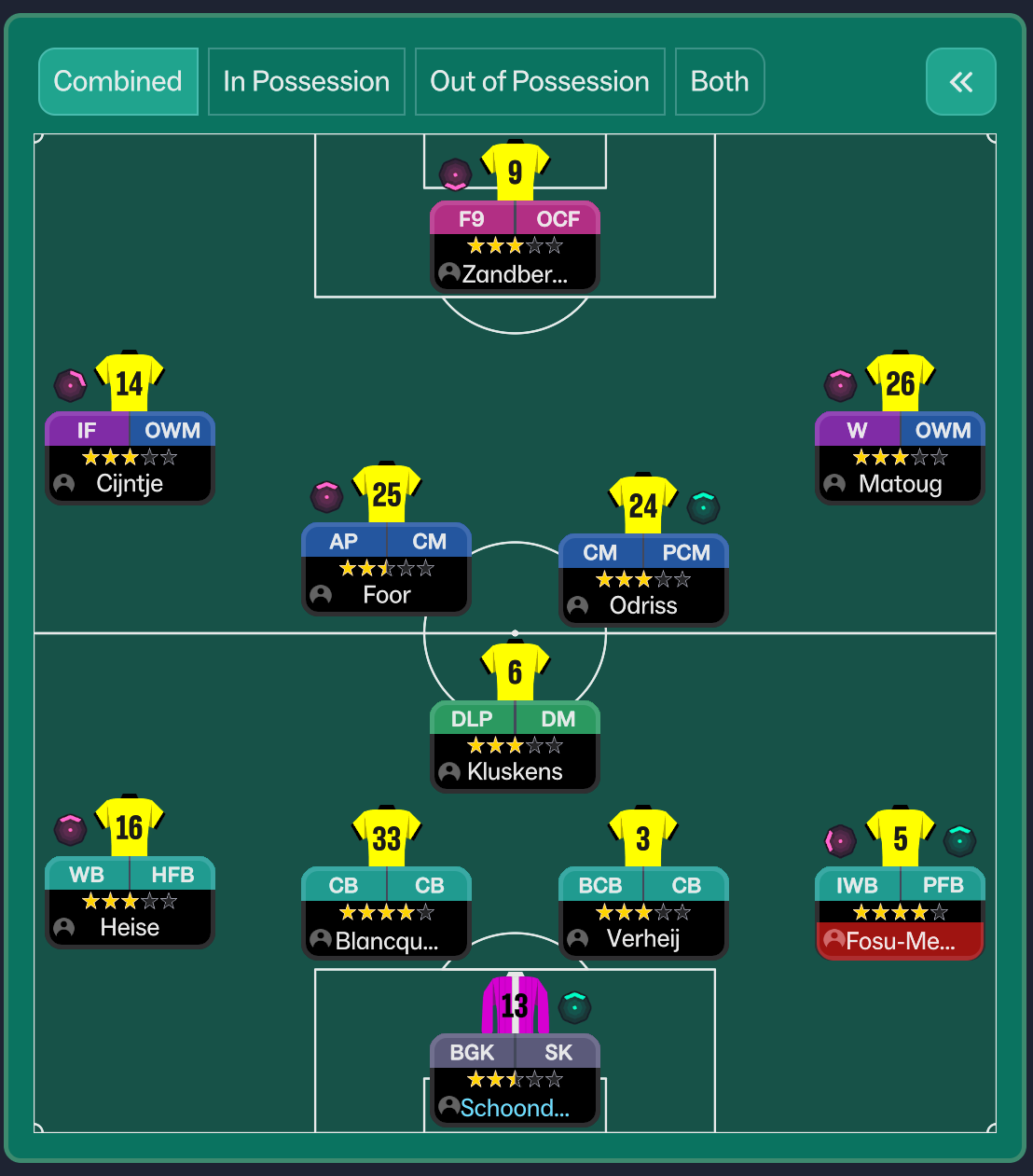
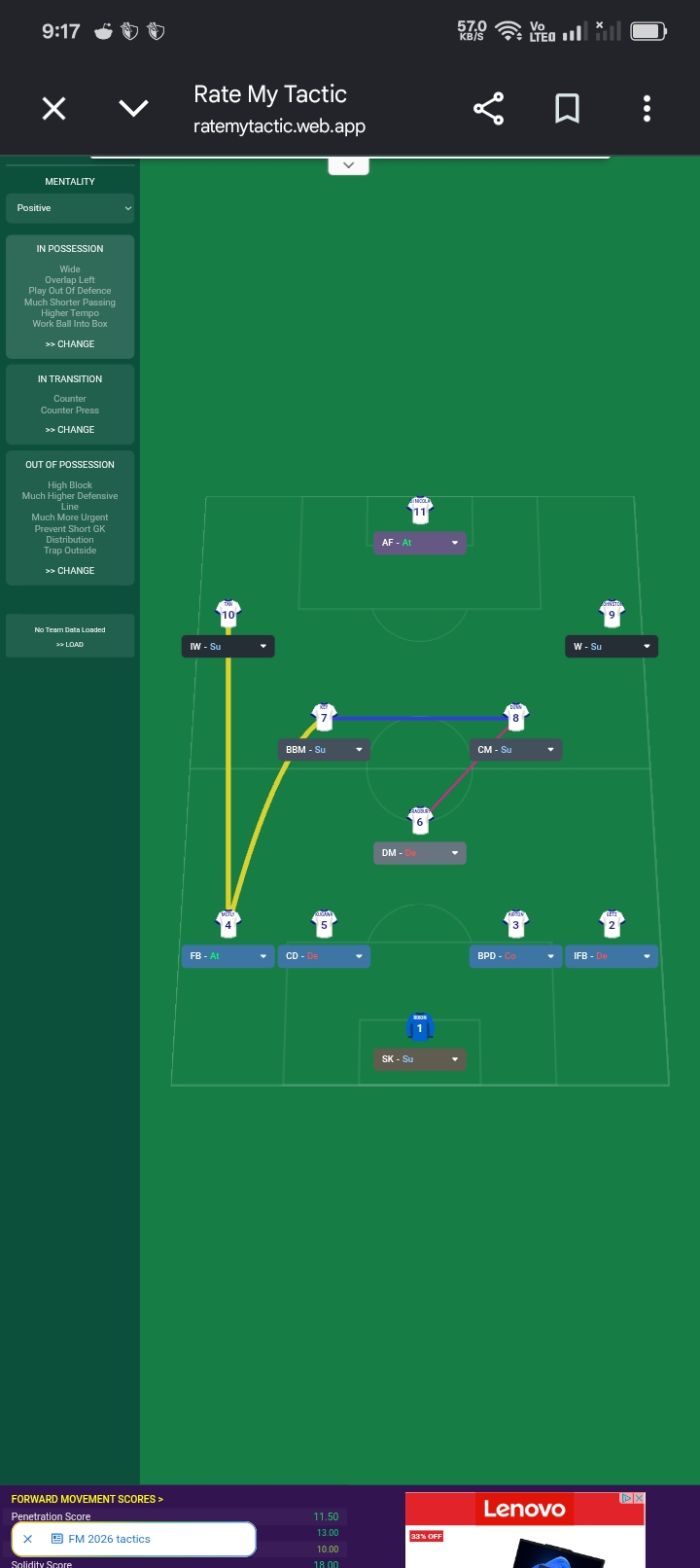
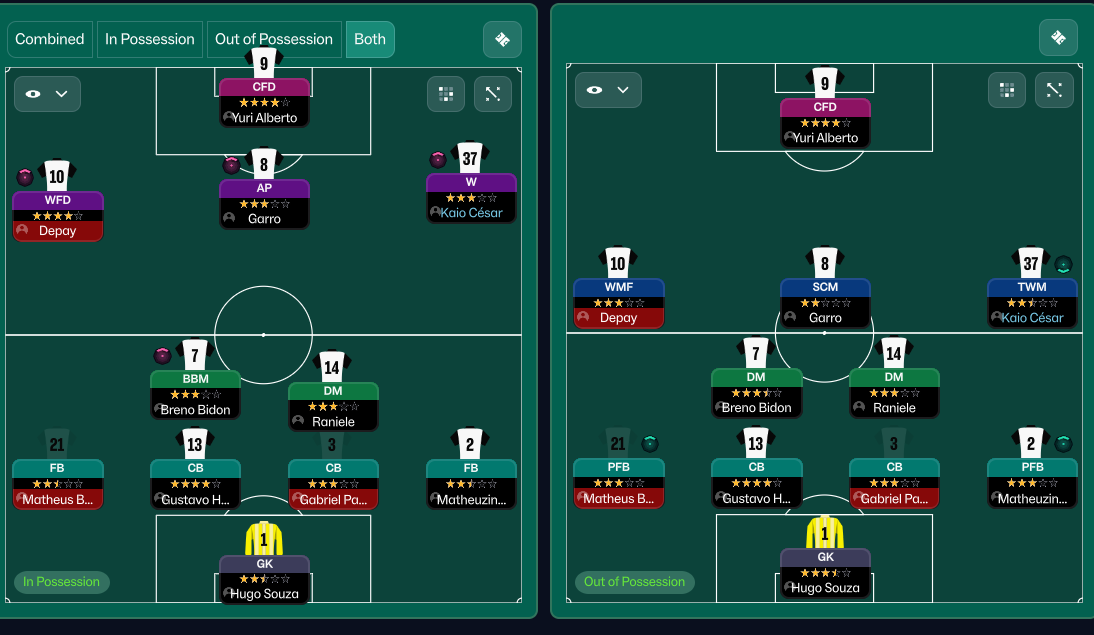
Formation & Style
Tactical Style:Possession
Mentality:Positive
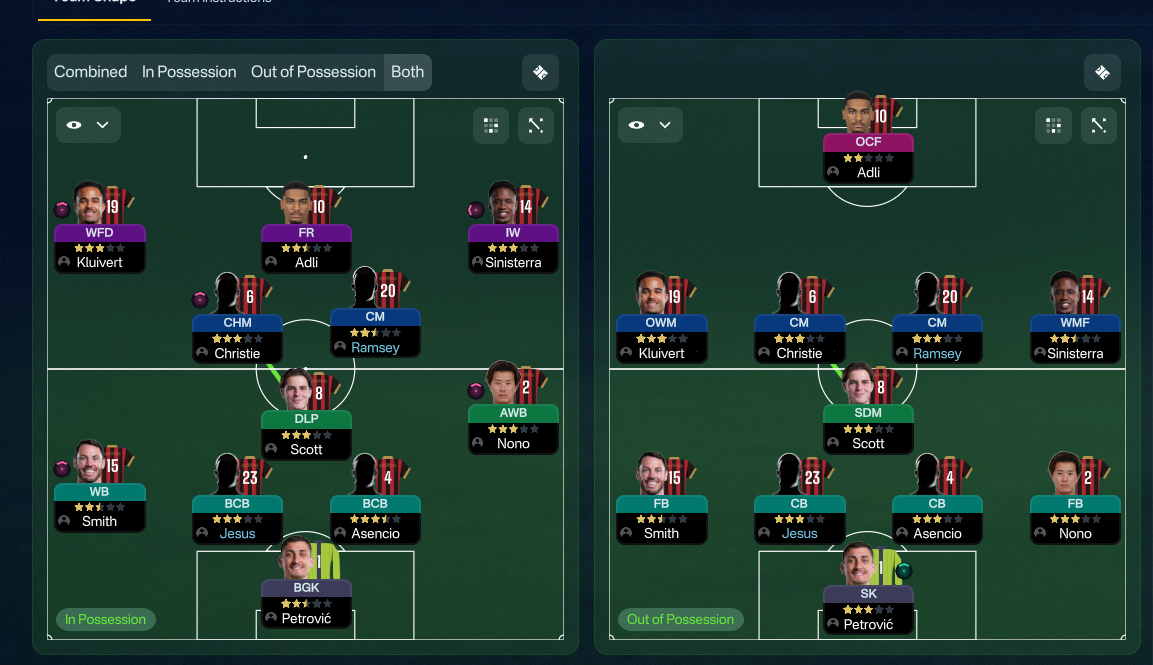
Formation:4-3-3
Team Fluidity:Fluid
In Possession
Play Out of Defence
Pass Into Space
Work Ball Into Box
In Transition
Counter
Counter Press
Out of Possession
Higher Defensive Line
Higher Line of Engagement
Prevent Short GK Distribution
Team Shape Without Ball
Shape:Compact
Description:Defenders maintain a compact shape, preventing direct progression from the opposition.
Evidence:Higher Defensive Line and Prevent Short GK Distribution suggests an aggressive stance on defending.
Team Shape With Ball
Shape:Width with Central Penetration
Description:Exploiting wide areas through wingers while the false nine drops into midfield creates overloads.
Evidence:Inverted Wing-Backs and wide players suggest a strategy focused on opening up the pitch.
Phase Description
Attacking Play
Utilizes width and dynamic movement, focusing on possession through short passes and making incremental advances into the opposition's third.
Defensive Transition
Quick recovery with an emphasis on counter-pressing to regain possession immediately.
Main Focus
Building play from the back with combinations in midfield and exploiting the flanks
Key Strengths
Creative Midfield Dynamics
With an Advanced Playmaker and Central Midfielder working in tandem, creativity is maximized.
Wing Play Utilization
The use of wingers and wing-backs create multiple attacking options on the flanks.
Flexible Striker Role
The False Nine can draw defenders out of position, allowing midfielders to exploit space.
Conflicting Directions
Vulnerability to Counter-Attacks
High defensive line may be exploited by teams with pace on the break.
Dependence on Midfield Control
If the opponent gains midfield control, it mitigates the effectiveness of the attacking players.
Single Point of Failure
The reliance on the false nine to create space could lead to issues if marked out of the game.
Tactical Suggestions
Introduce a Second Striker
Adding a partner to the false nine could increase goal-scoring opportunities.
Adjust Defensive Line
Consider lowering the defensive line if facing rapid counter-attacks.
Utilize Focused Attack
Directing play towards one flank could create overloads against the opposition.
Ask Questions About Your Lineup
Related Tactics
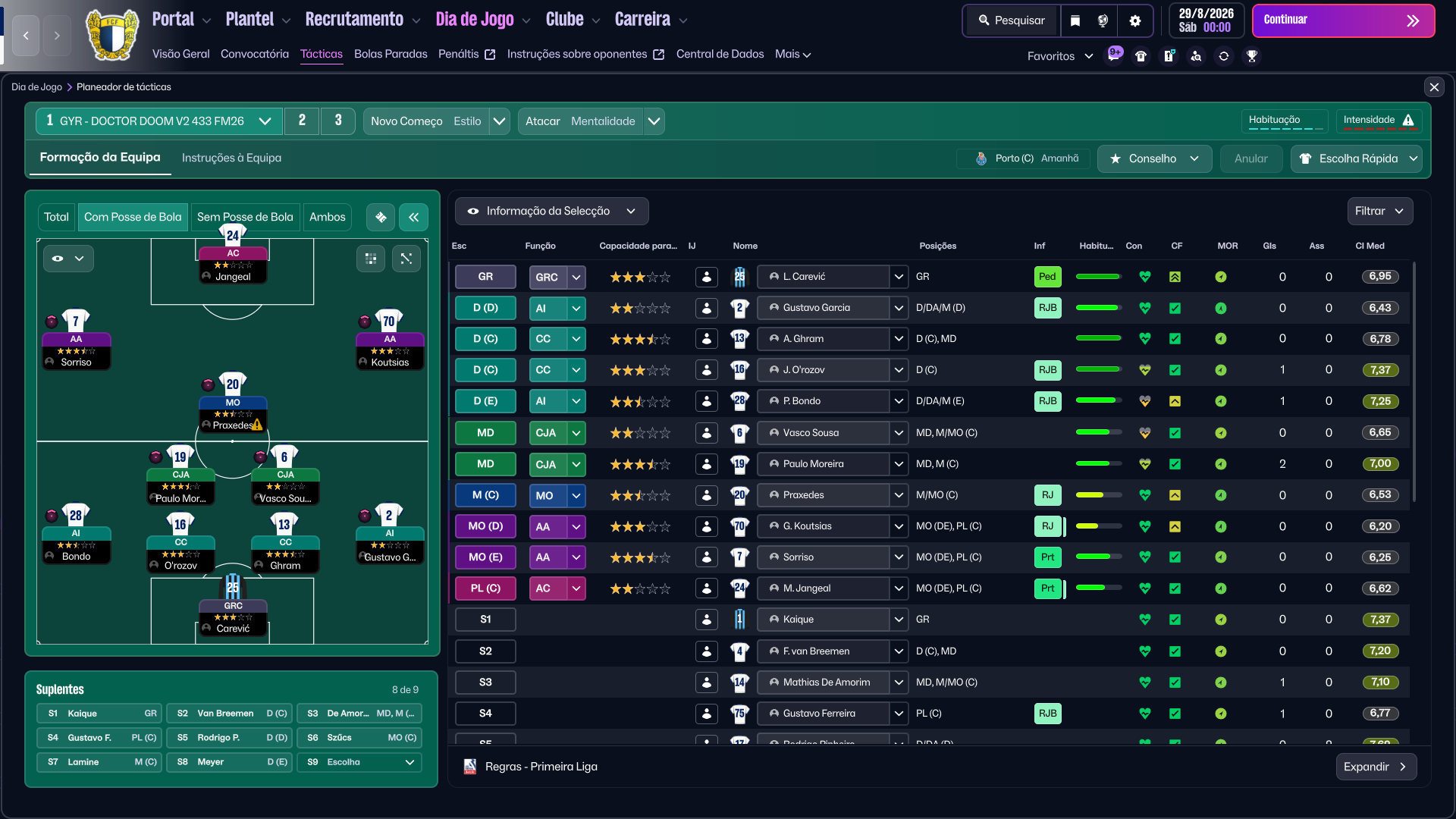
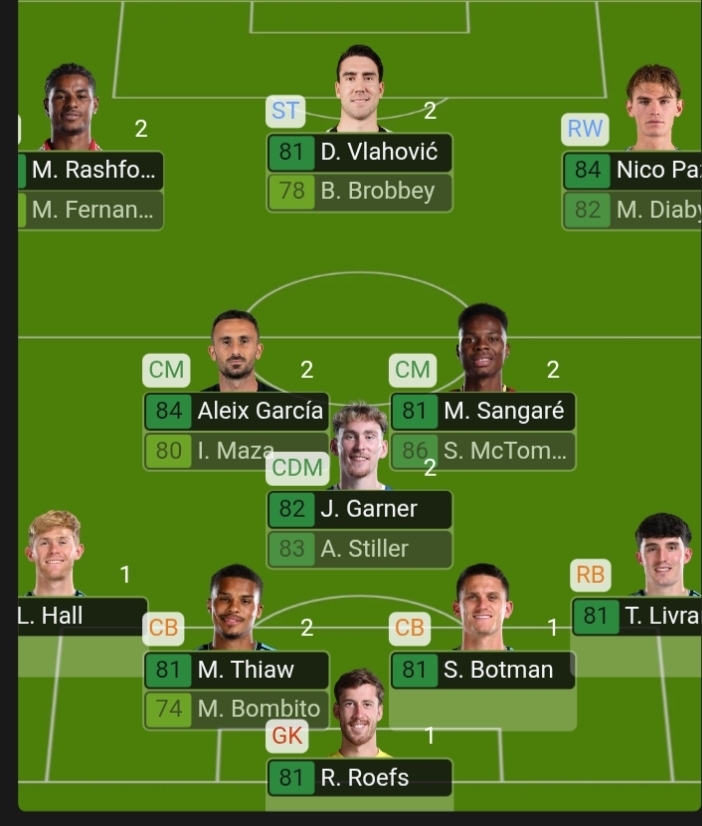
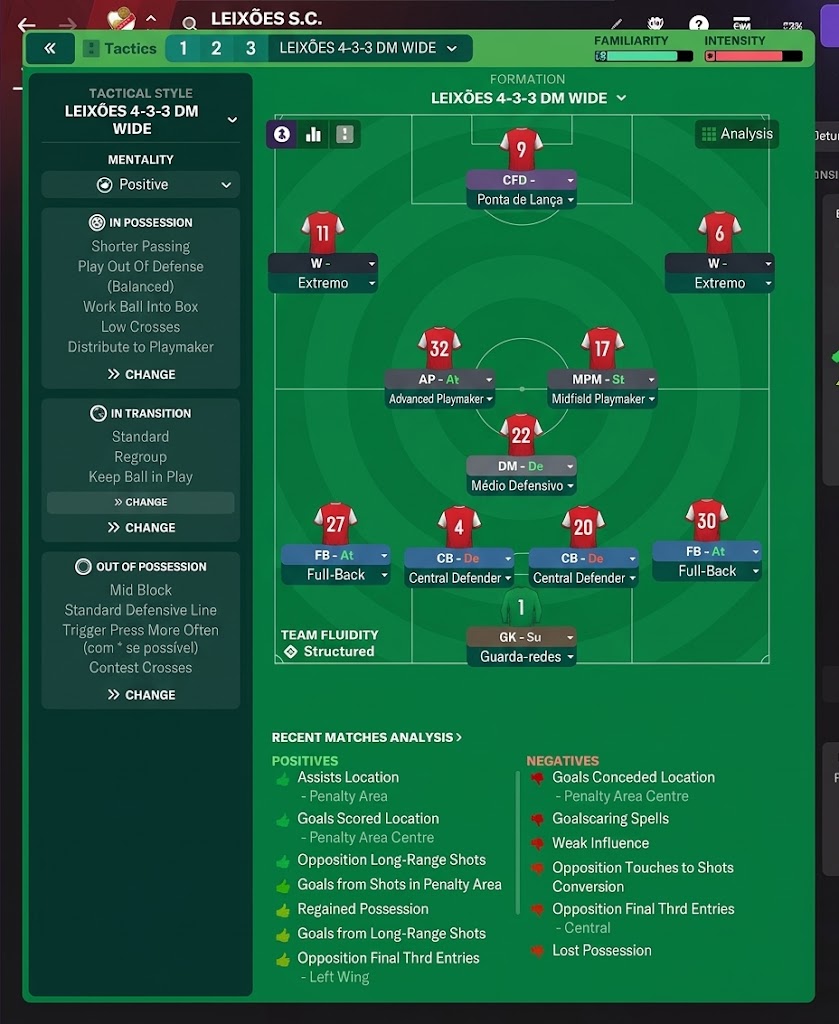
More Possession tactics
Guides for this formation
The tactical theory behind the 4-3-3: roles, instructions, and the trade-offs that decide whether the system holds up.
Foundations
Understanding the 4-3-3 Formation
Master the classic 4-3-3: player roles, tactical variations, and the trade-offs that decide whether it sings or stalls.
Read guide
Player pairings
Midfield Trios
Holder, runner, creator: the role distribution rule for three-man midfields, the AMC variants, and the antipatterns that break them.
Read guide
Playing styles
Gegenpressing: A Full Guide
Klopp-style gegenpressing in FM, including squad profile, line-and-press pairing, sustainable workload, and the antipatterns to avoid.
Read guide