Uploaded Tactic
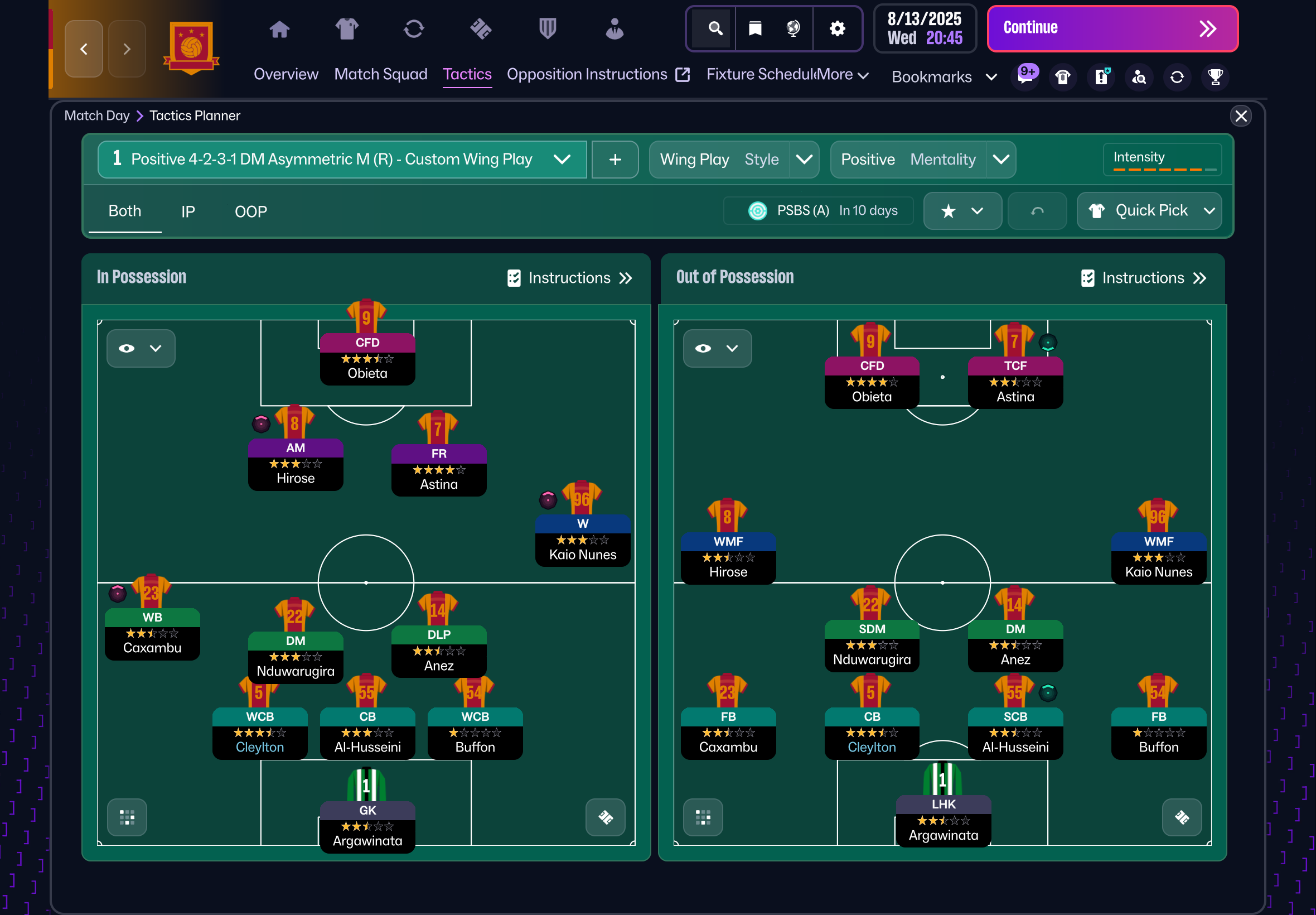
Formation & Style
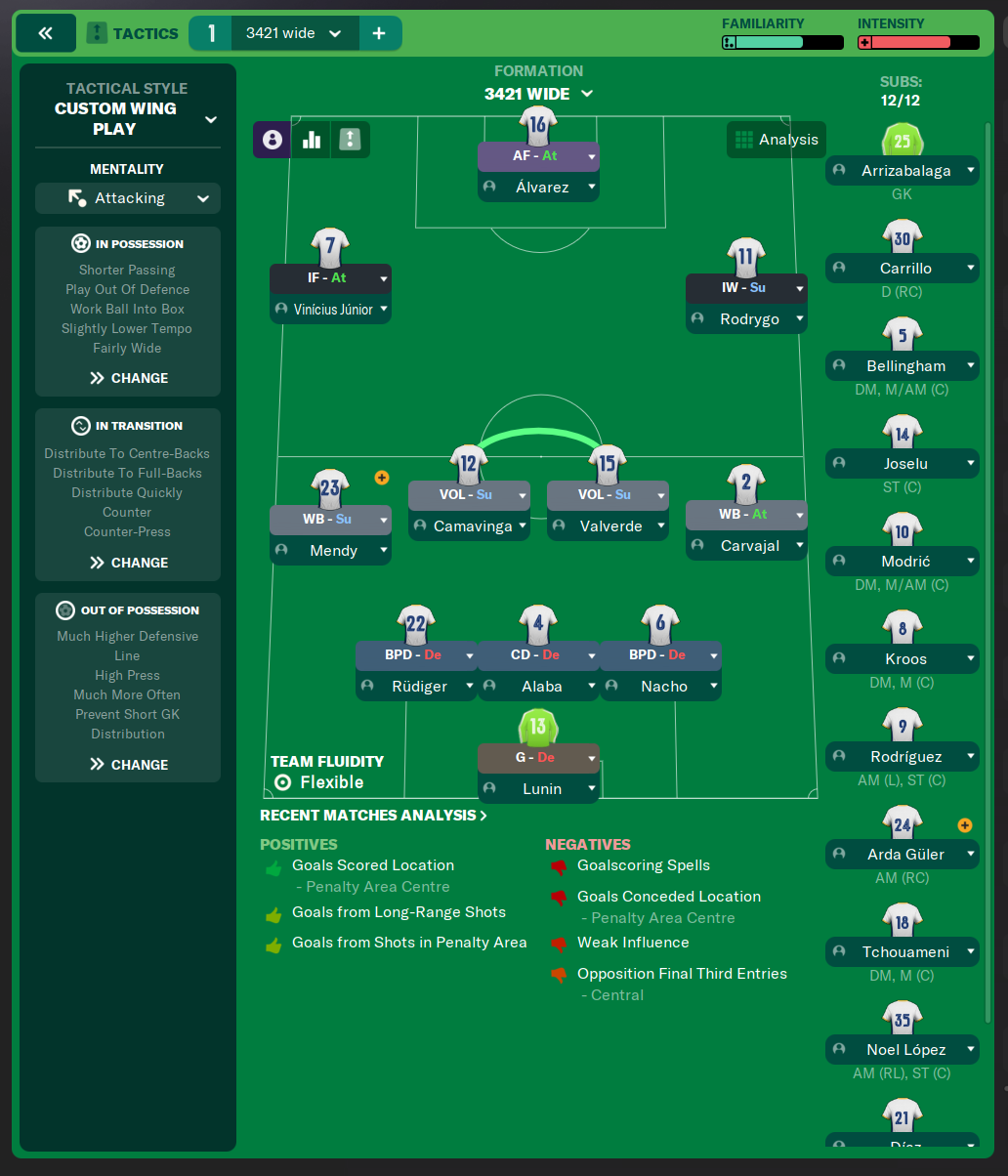
Tactical Style:Custom Wing Play
Mentality:Positive
Formation:4-2-3-1 DM Asymmetric
Team Fluidity:Structured
In Possession
Utilise Width
Play Out of Defence
Pass Into Space
In Transition
Counter
Counter-Press
Out of Possession
Higher Defensive Line
Higher Line of Engagement
Prevent Short GK Distribution
Team Shape Without Ball
Shape:3-1-4-2
Description:Compact defensive shape with three center-backs and a defensive midfielder providing cover.
Evidence:DM at [3,3] and three center-backs at [2,2], [2,3], and [2,4].
Team Shape With Ball
Shape:4-2-3-1
Description:Wingers stretching the play wide and an advanced midfielder linking with the front.
Evidence:AM at [5,3], FR at [6,2], and W at [5,1].
Phase Description
Attacking Play
The team focuses on utilizing width through wing play to create goal-scoring opportunities, with quick transitions and movement.
Defensive Transition
Focusing on regaining possession quickly after losing the ball and transitioning to counter-attacks.
Main Focus
Channeling play through the wings while maintaining solid defensive coverage.
Key Strengths
Width in Attack
Using wingers effectively stretches the opponents' defense.
Defensive Structure
A strong defensive shape helps in maintaining solidity during opposition attacks.
Dynamic Midfield
Utilizing a deep-lying playmaker allows for improved ball distribution.
Conflicting Directions
Exposure to Counter-Attacks
High defensive line may leave spaces for quick counters.
Over-Reliance on Wing Play
If the opposition neutralizes wings, central creativity may suffer.
Vulnerability on Transition
Fast transitions could catch the team off guard if the wing-backs are caught high.
Tactical Suggestions
Adjust Defensive Line
Lowering the defensive line can help reduce susceptibility to pacey counter-attacks.
Introduce More Central Play
Integrating play through the middle can balance the tactical approach.
Balance Wing Roles
Ensuring wing-backs are not caught too high can reinforce stability.
Ask Questions About Your Lineup
Related Tactics
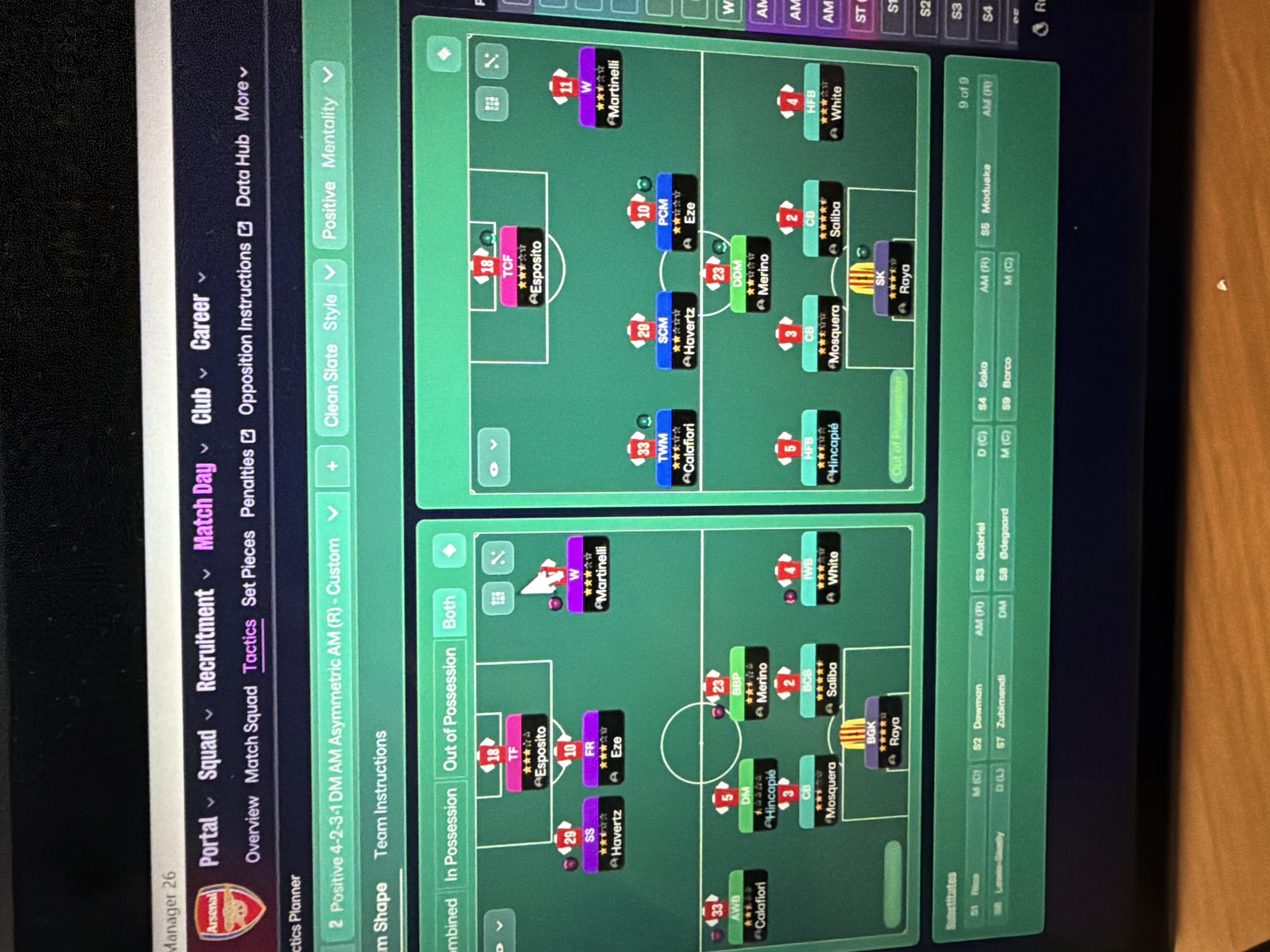
More Custom Wing Play tactics
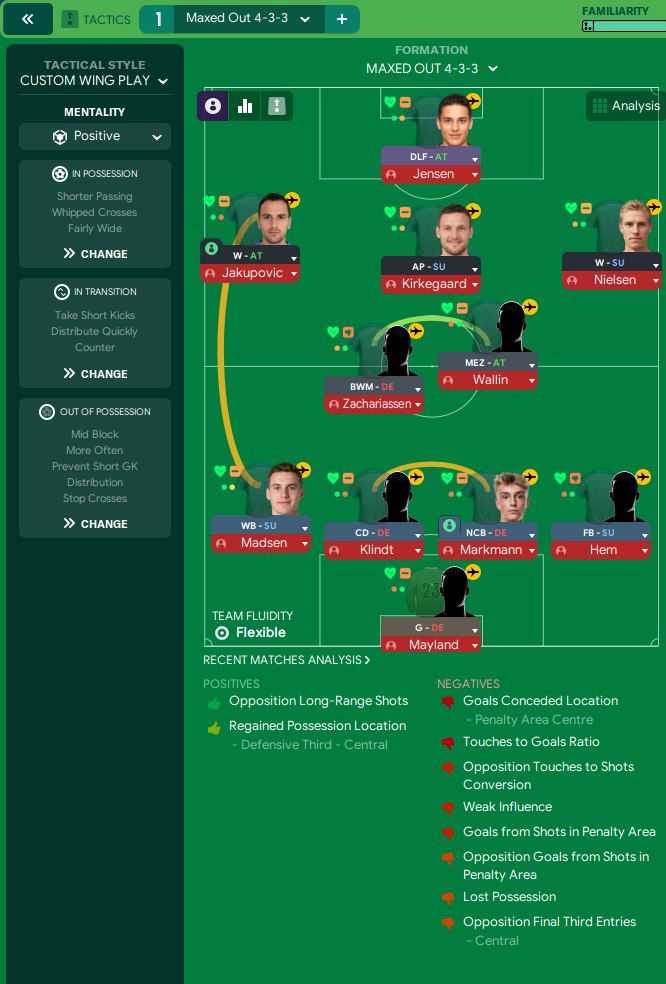
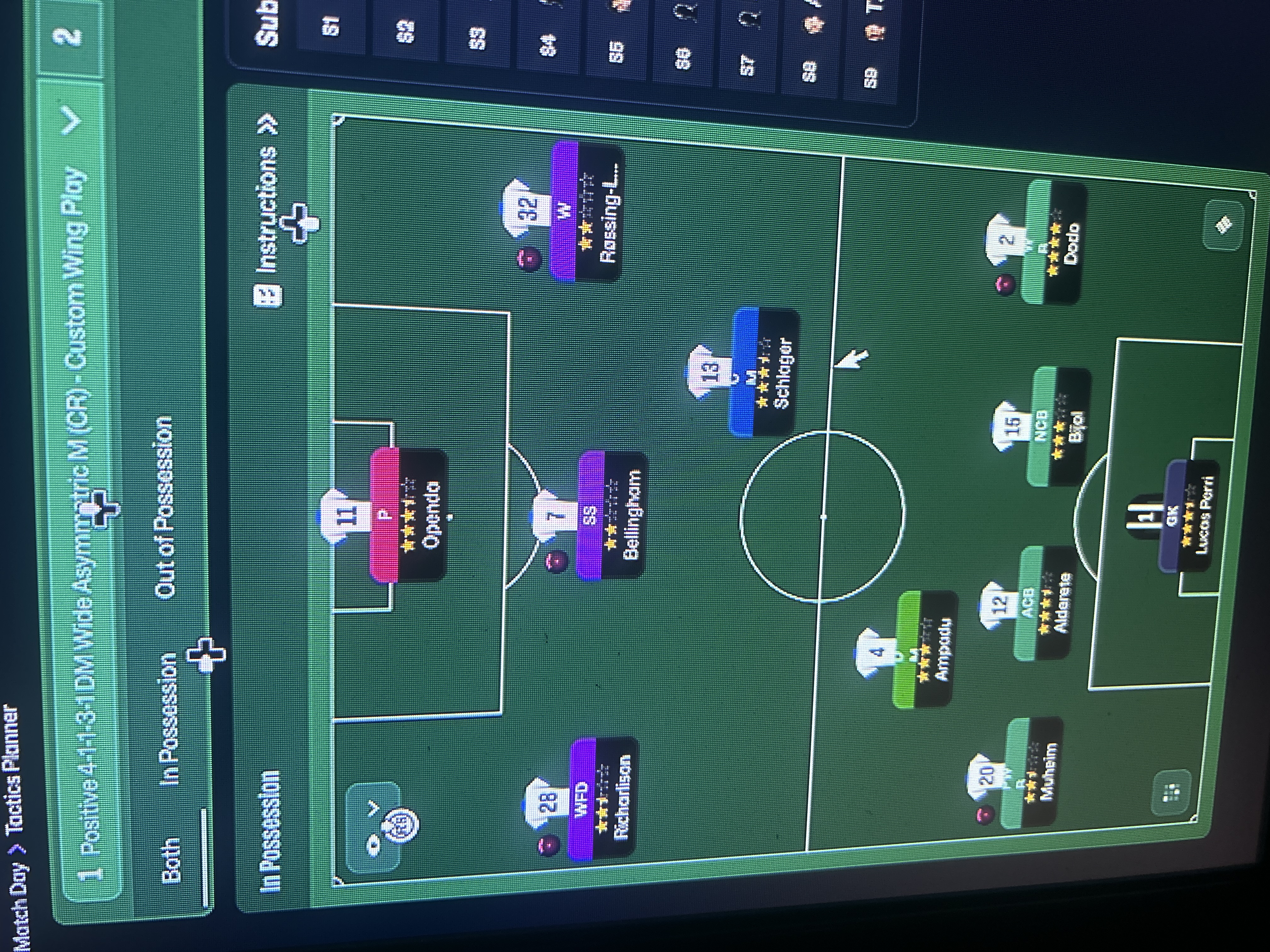
Guides for this formation
The tactical theory behind the 4-2-3-1 DM Asymmetric: roles, instructions, and the trade-offs that decide whether the system holds up.
Player pairings
Midfield Pairs in 4-2-3-1 and 4-4-2
Double pivots and flat pairs in 4-2-3-1 and 4-4-2: when each pairing works, when it collapses, and the AMC unicorn that rescues both.
Read guide
Playing styles
Gegenpressing: A Full Guide
Klopp-style gegenpressing in FM, including squad profile, line-and-press pairing, sustainable workload, and the antipatterns to avoid.
Read guide