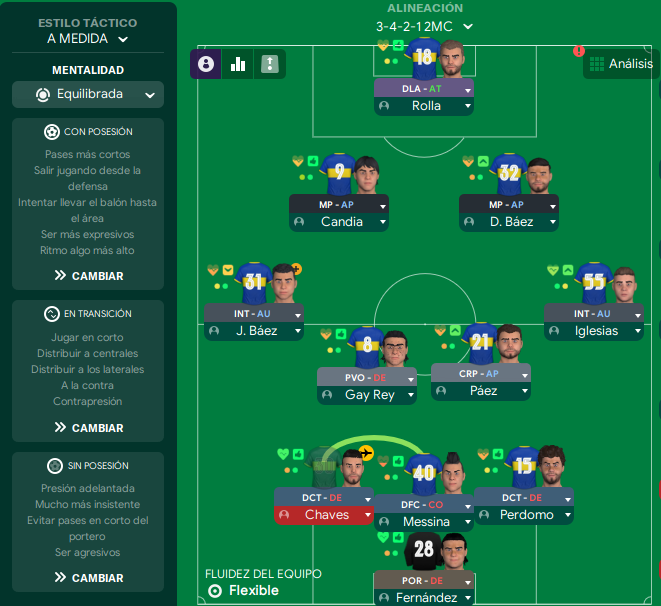
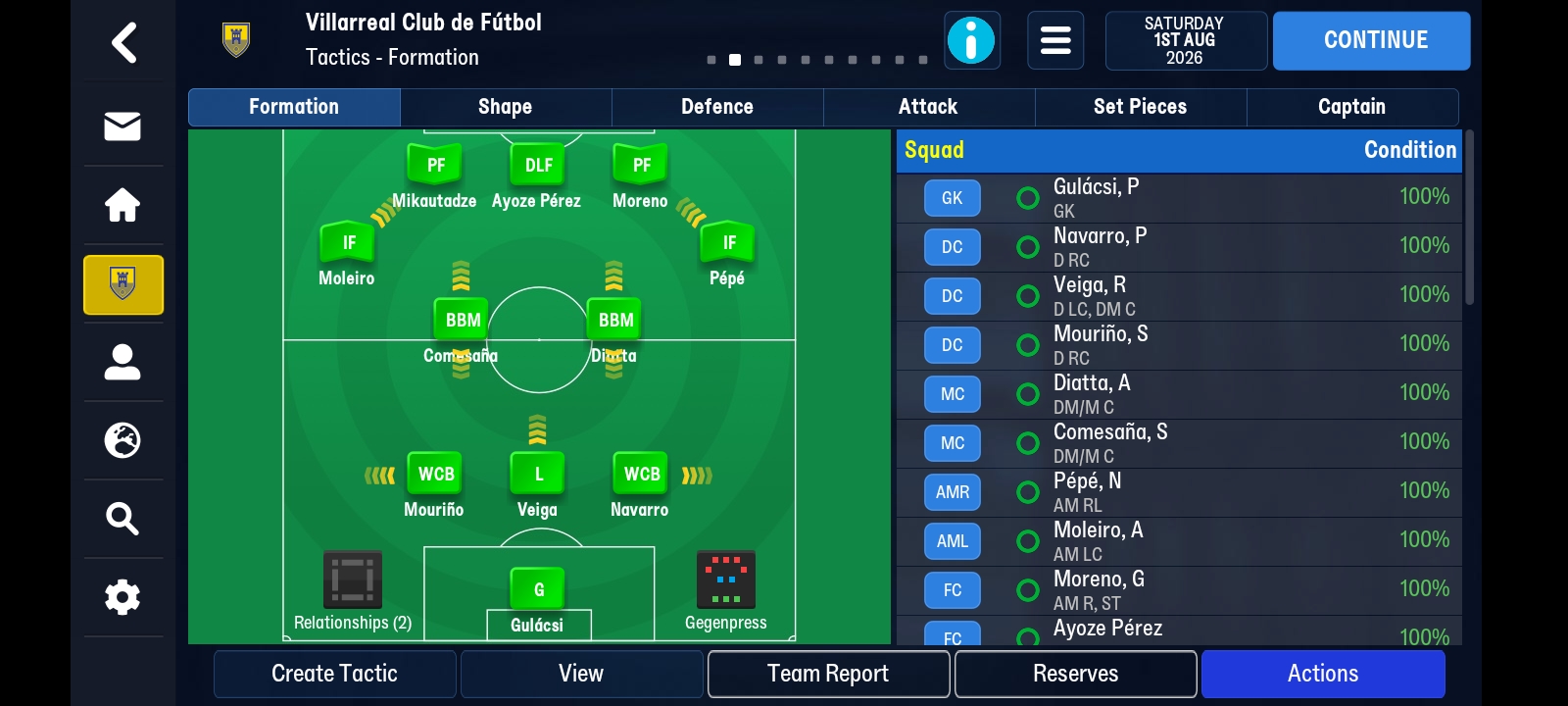
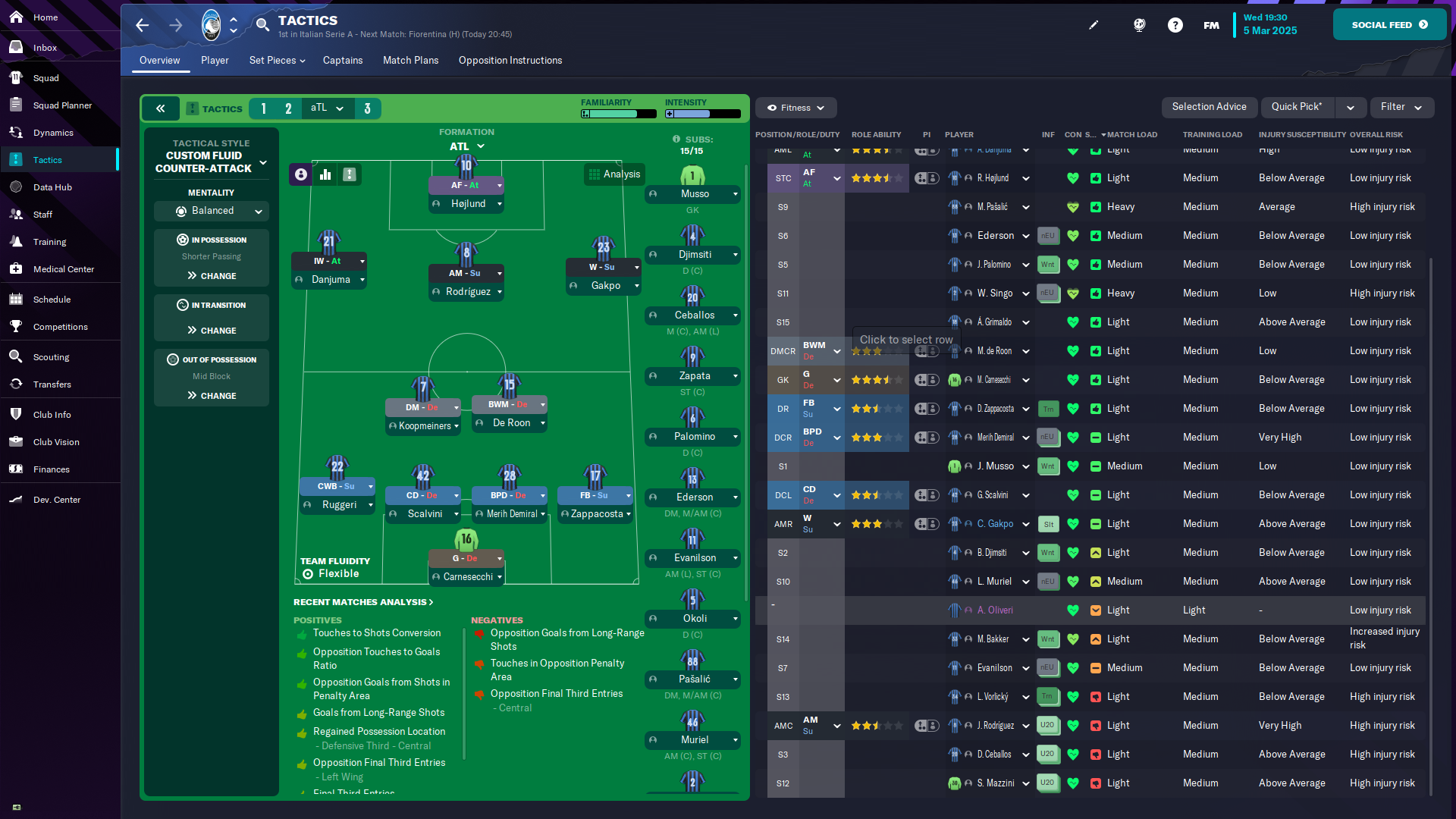
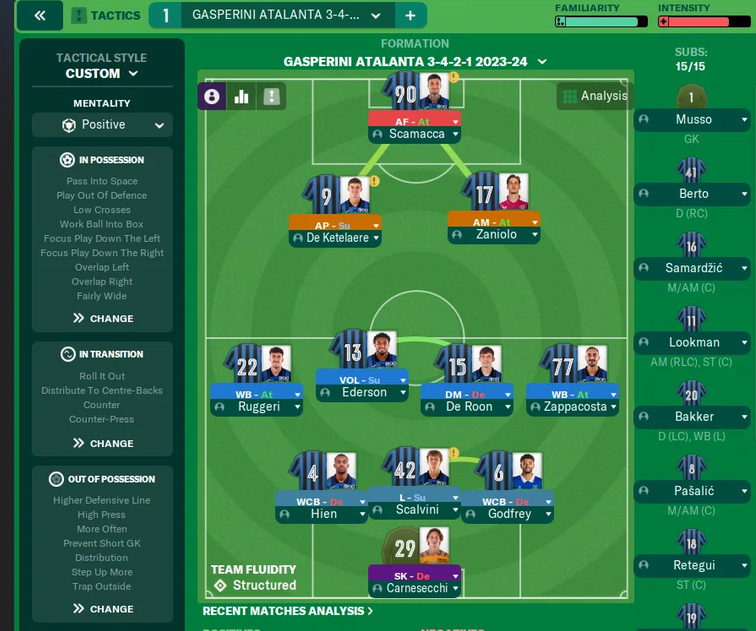
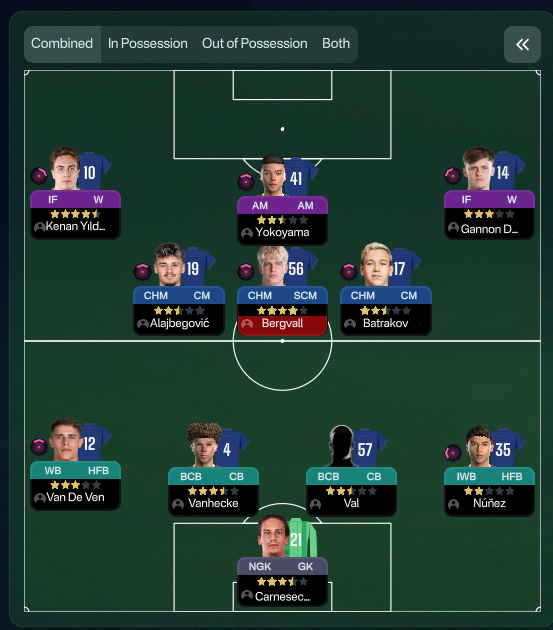
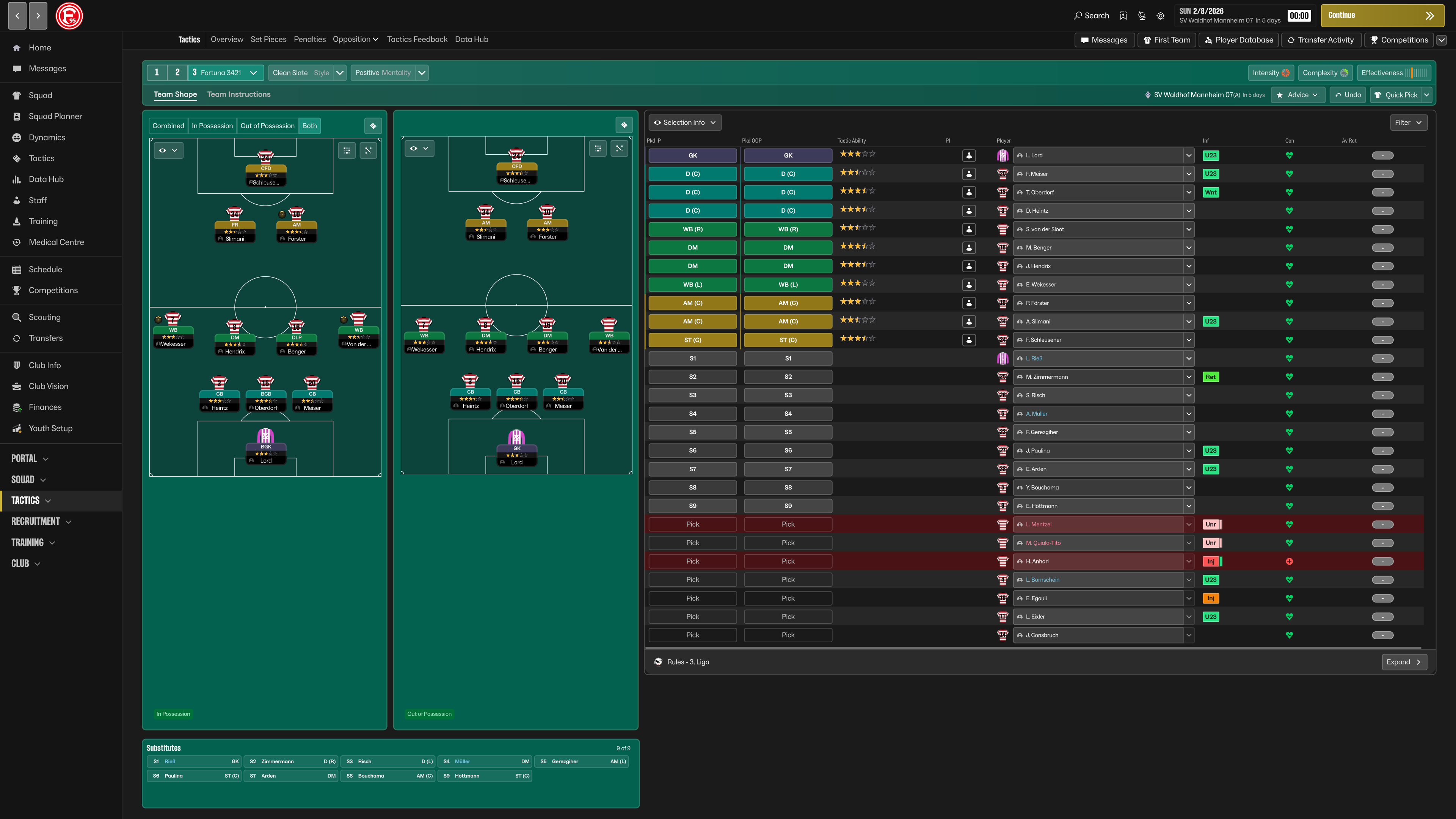
3-4-2-1
Maximizing width through wing play while maintaining structural integrity in midfield. Three central defenders ensure a strong defensive structure while…
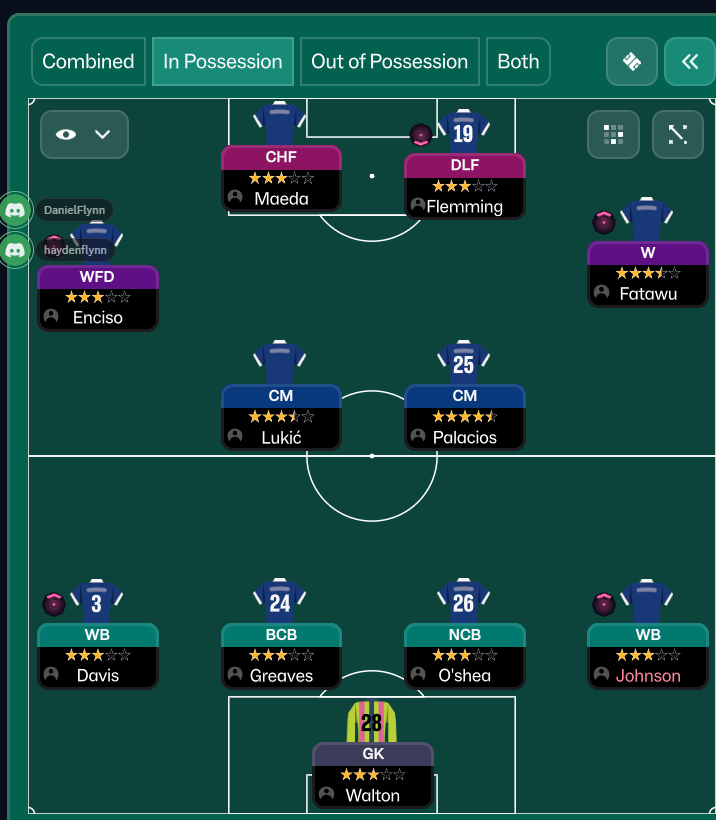
Loading tactical analysis...
3-4-2-1
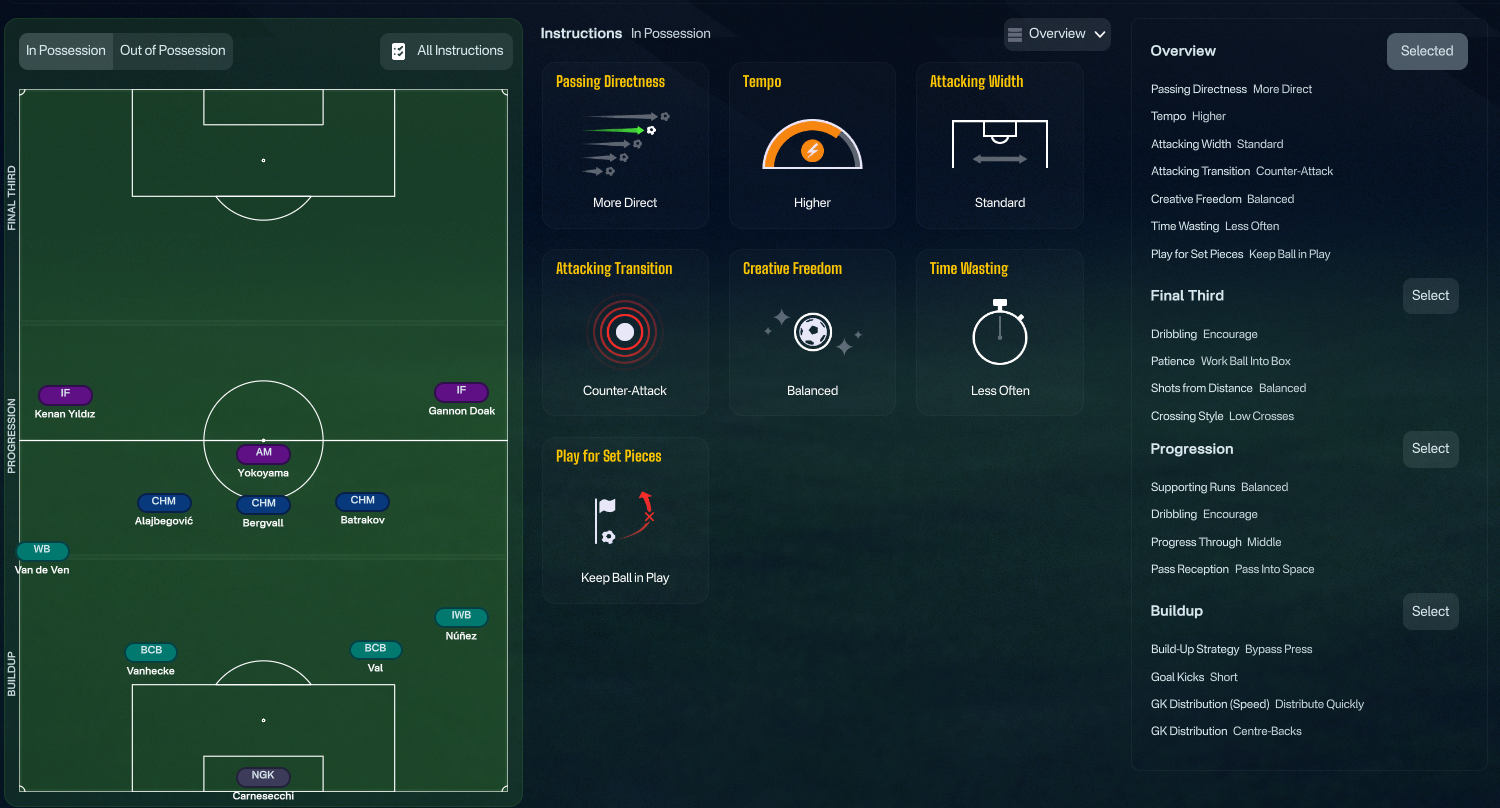
Play Out of Defence
Pass Into Space
Work Ball Into Box
Counter-Press
Counter
Higher Defensive Line
Higher Line of Engagement
Prevent Short GK Distribution
GK
G
DC
NCB
De
DC
BCB
De
DC
WB
Su
CM
CM
Su
CM
CM
Su
W
W
At
AM
CHF
At
AM
DLF
Su
ST
WFD
At
Focus on quick transitions and utilizing width to stretch the opposition defense, aiming to create space for attackers.
Aim to regain possession quickly through counter-pressing tactics to disrupt opposition flow.
Maximizing width through wing play while maintaining structural integrity in midfield.
Compact and structured
The three defenders keep the shape tight whilst the two wing-backs provide width and cover.
NCB at [2,2] and BCB at [2,3] form a solid base with the WB at [2,4] providing the lateral coverage.
Fluid attacking triangle
The front three interchange positions, creating confusion in opposition defensive lines.
CHF at [6,3] and DLF at [6,4] facilitate movement and space creation for the W at [6,2].
Three central defenders ensure a strong defensive structure while allowing wing-backs to push forward.
NCB at [2,2] and BCB at [2,3] provide defensive coverage while WB at [2,4] adds width.
A flexible attacking setup allows for varied attacks and player movement.
CHF at [6,3] and DLF at [6,4] create opportunities for W at [6,2] to exploit space.
A high defensive line may expose defenders to pacey opposition forwards.
Higher Defensive Line and Higher Line of Engagement may create risks against quick counterattacks.
Heavy reliance on wing-backs may lead to vulnerabilities if they are caught out of position.
WB at [2,4] and [2,5] are crucial for width, but if they advance too high, central areas may become exposed.
Defensive Vulnerability
Leaving space behind wing-backs may expose the team to counterattacks.
WB at [2,4] and [2,5] could become targets if caught high up the pitch.
Lack of Depth in Midfield
A congested central area might lead to loss of possession against pressing opponents.
The two CM roles at [3,2] and [3,3] can become isolated under pressure.
DLF and CHF
These roles complement each other, combining goal-scoring with playmaking capabilities.
DFL at [6,4] draws defenders away from CHF at [6,3], creating space.
Wing-Back and Central Midfielders
Wing-backs extending play allows central midfielders to drop deeper for support.
WBs at [2,4] and [2,5] cross positions with CMs at [3,2] and [3,3] for increased passing options.
How effectively is the midfield supporting both defensive duties and attacking transitions?
Are the wing-backs adequately providing width without compromising defensive solidity?
How can substitutions be used to adapt to different match situations and maintain performance levels?
The tactical theory behind the 3-4-2-1: roles, instructions, and the trade-offs that decide whether the system holds up.
Build through the wide areas or through the middle? A working framework for picking the right one for your squad.
The five seconds after losing the ball decide most matches. Counter-press, drop-and-recover, and how to know which one you should be doing.
Routines, takers, and target picks. How to turn corners and free-kicks into a reliable third of your goal output.