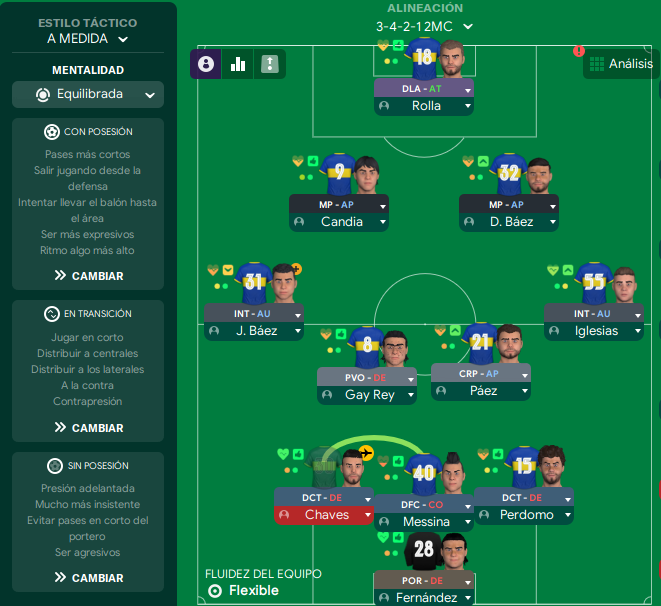
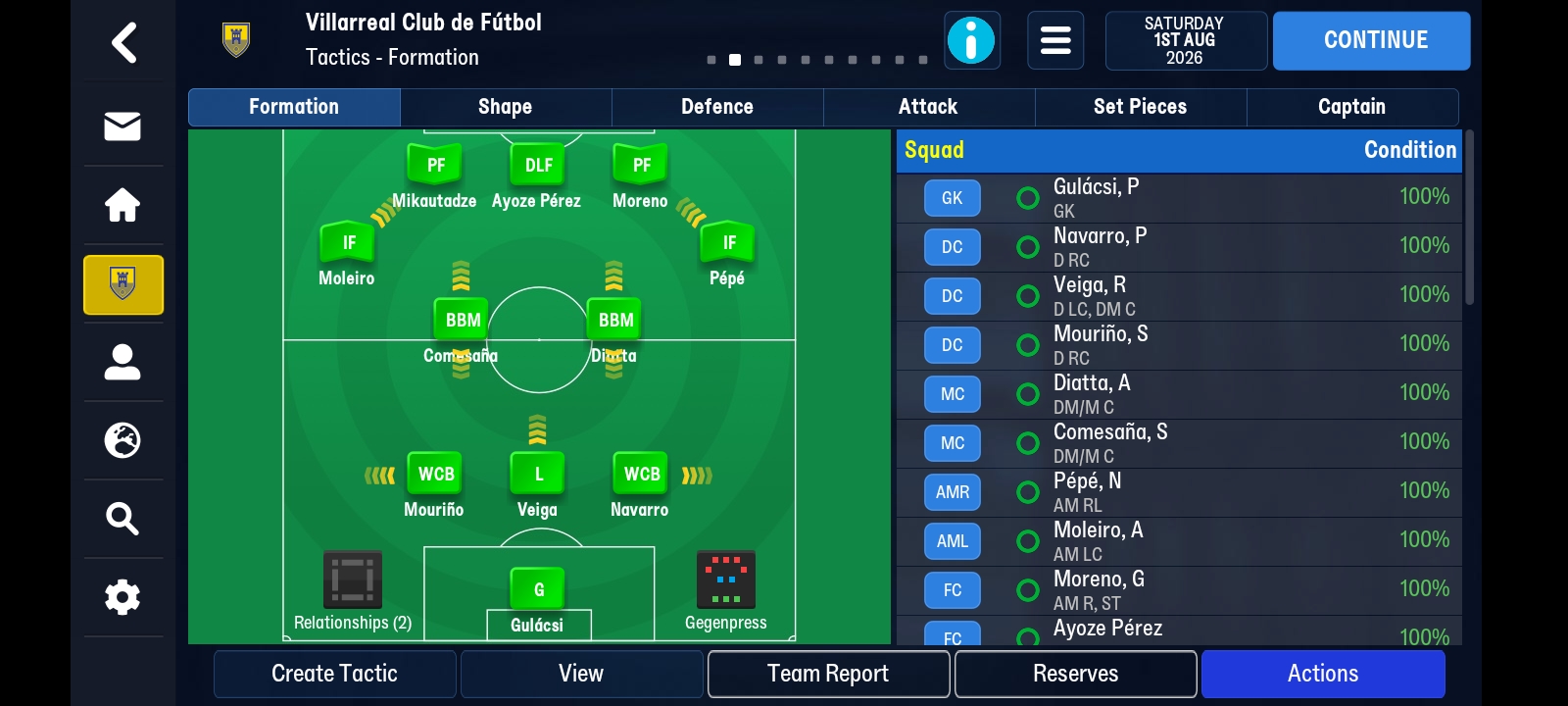
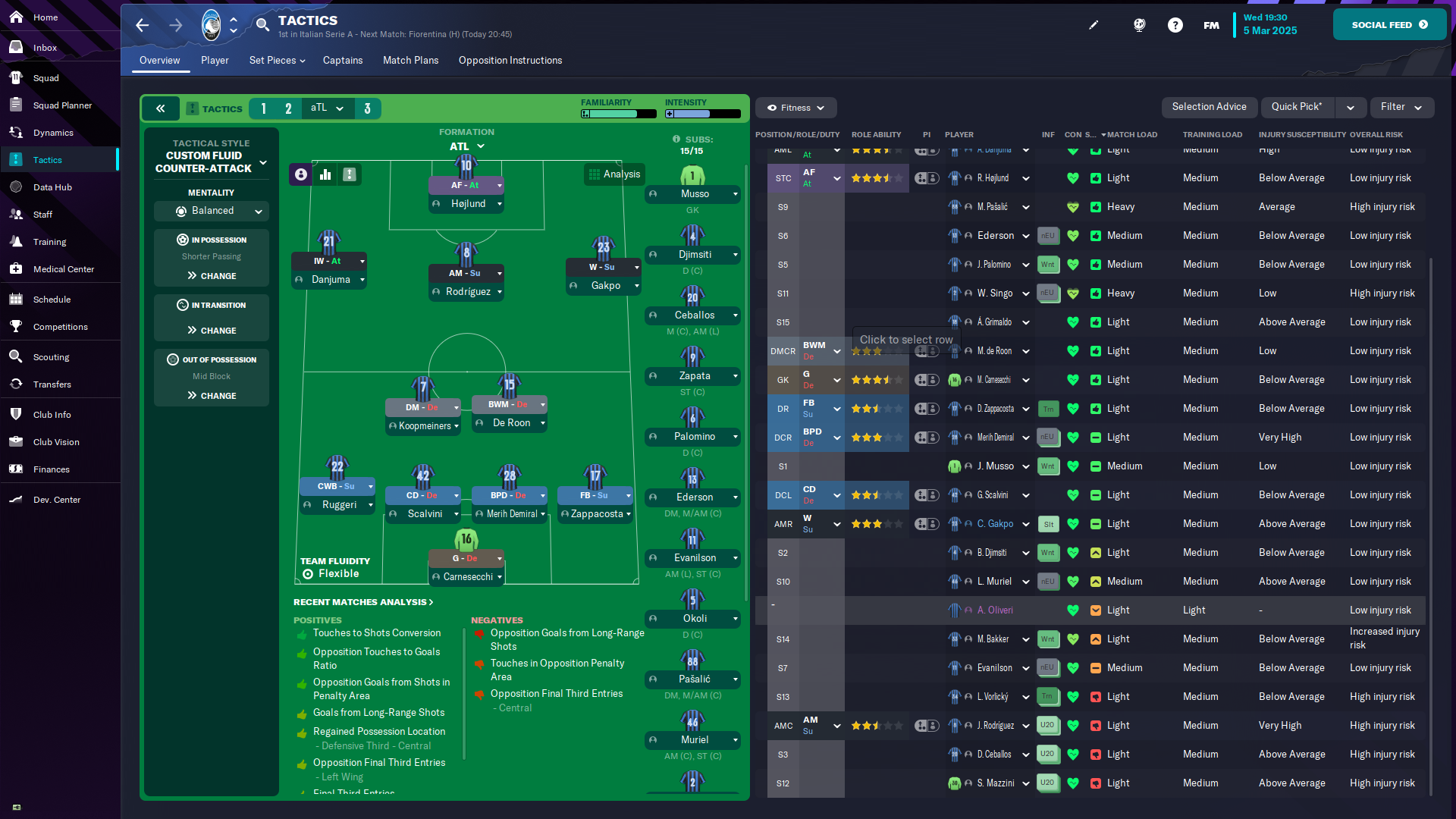
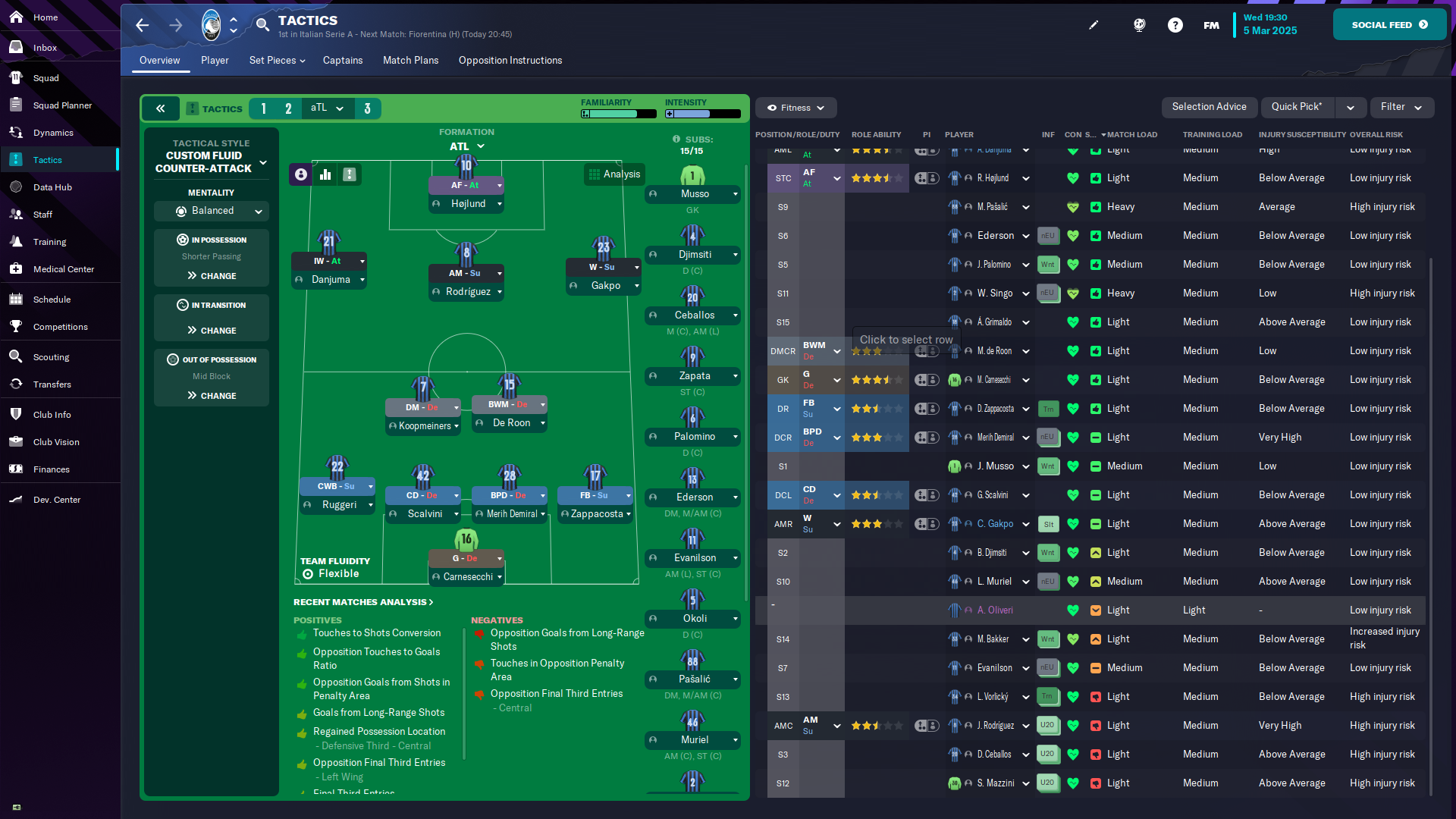
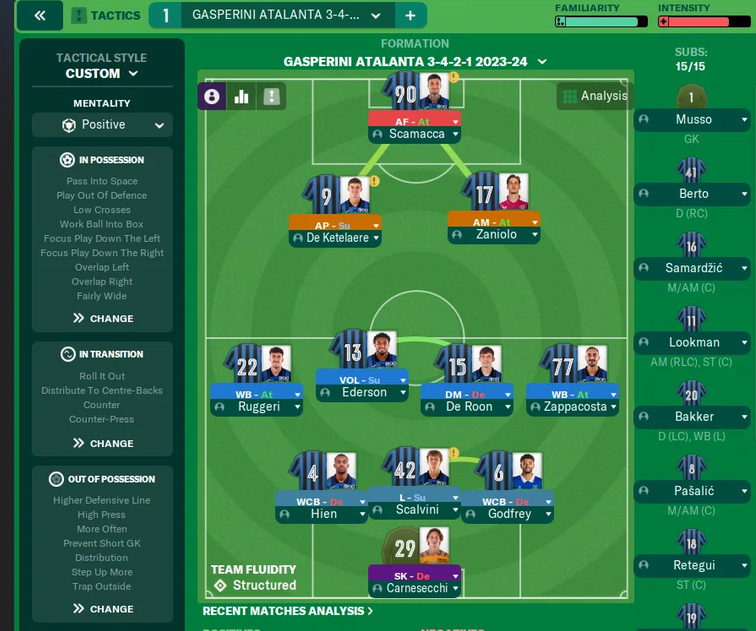
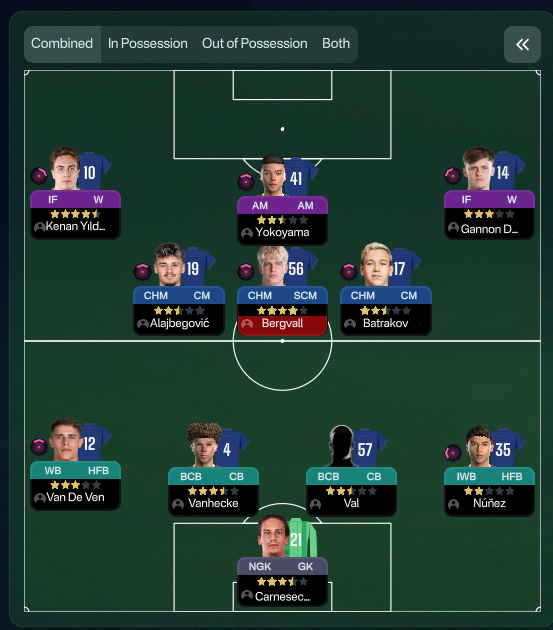
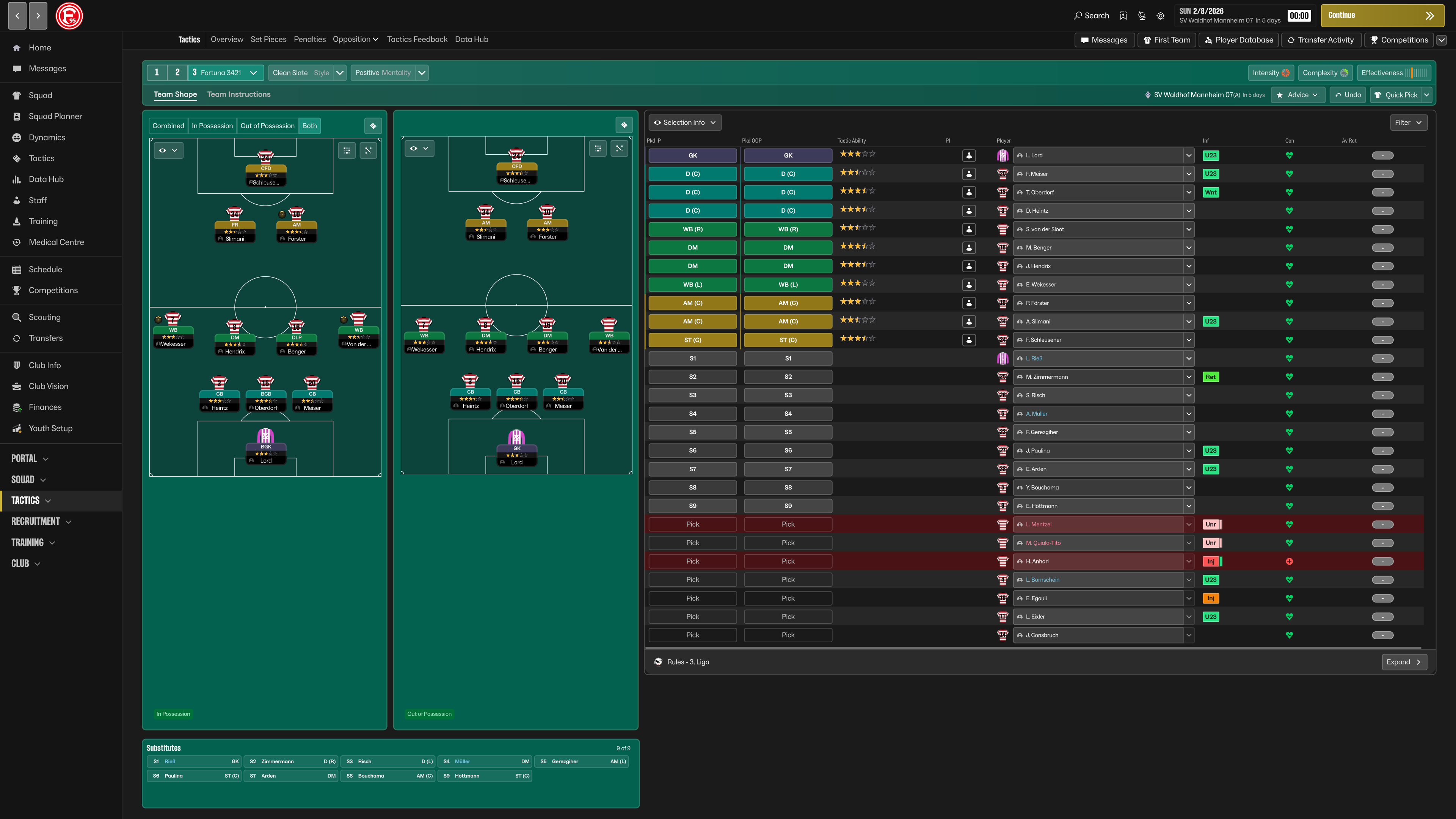
3-4-2-1
Utilizing the wing players effectively with an Inside Forward and overlapping Full-Backs creates width and stretches defenses.
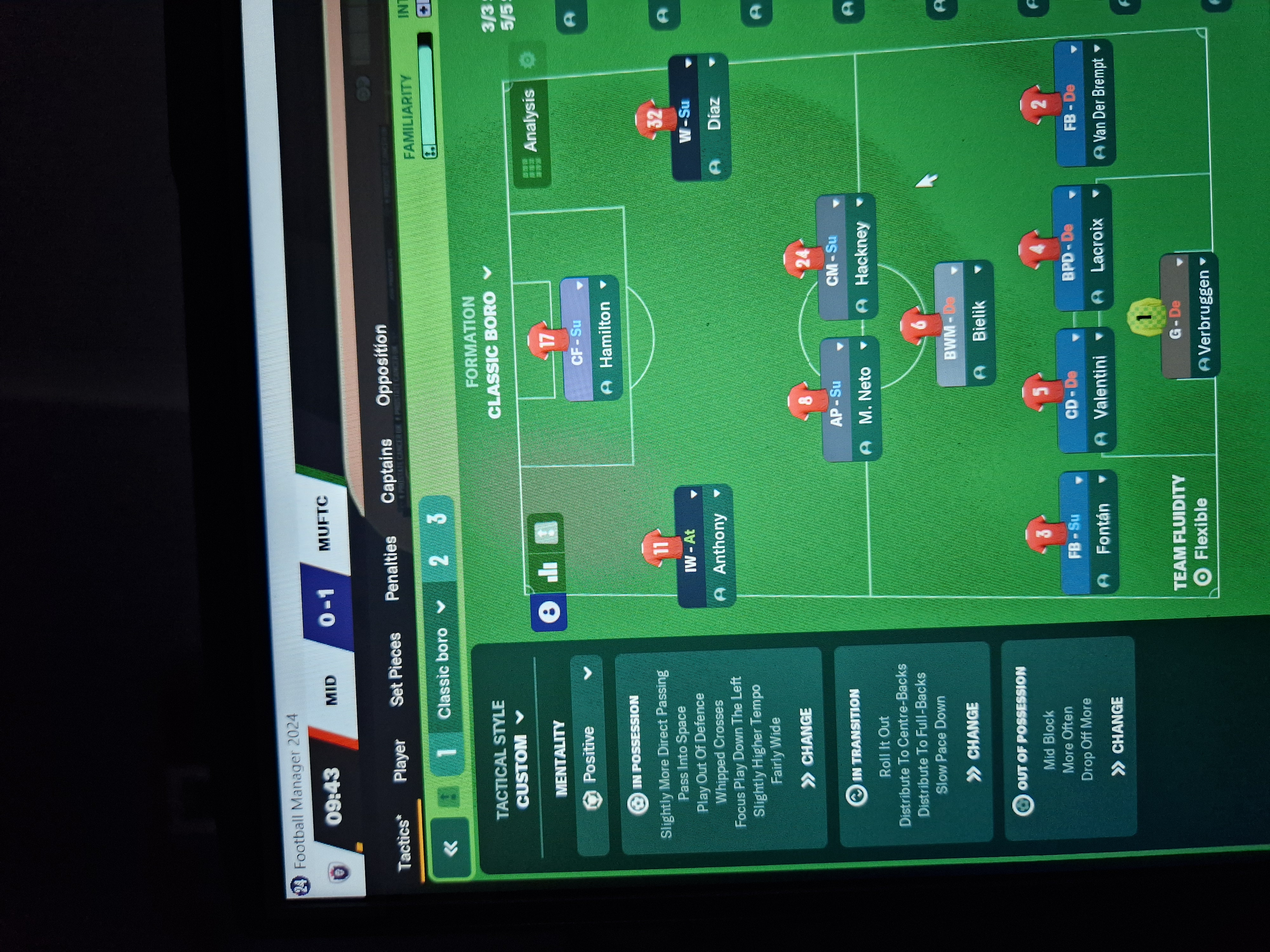
Loading tactical analysis...
Custom
Positive
3-4-2-1
Flexible
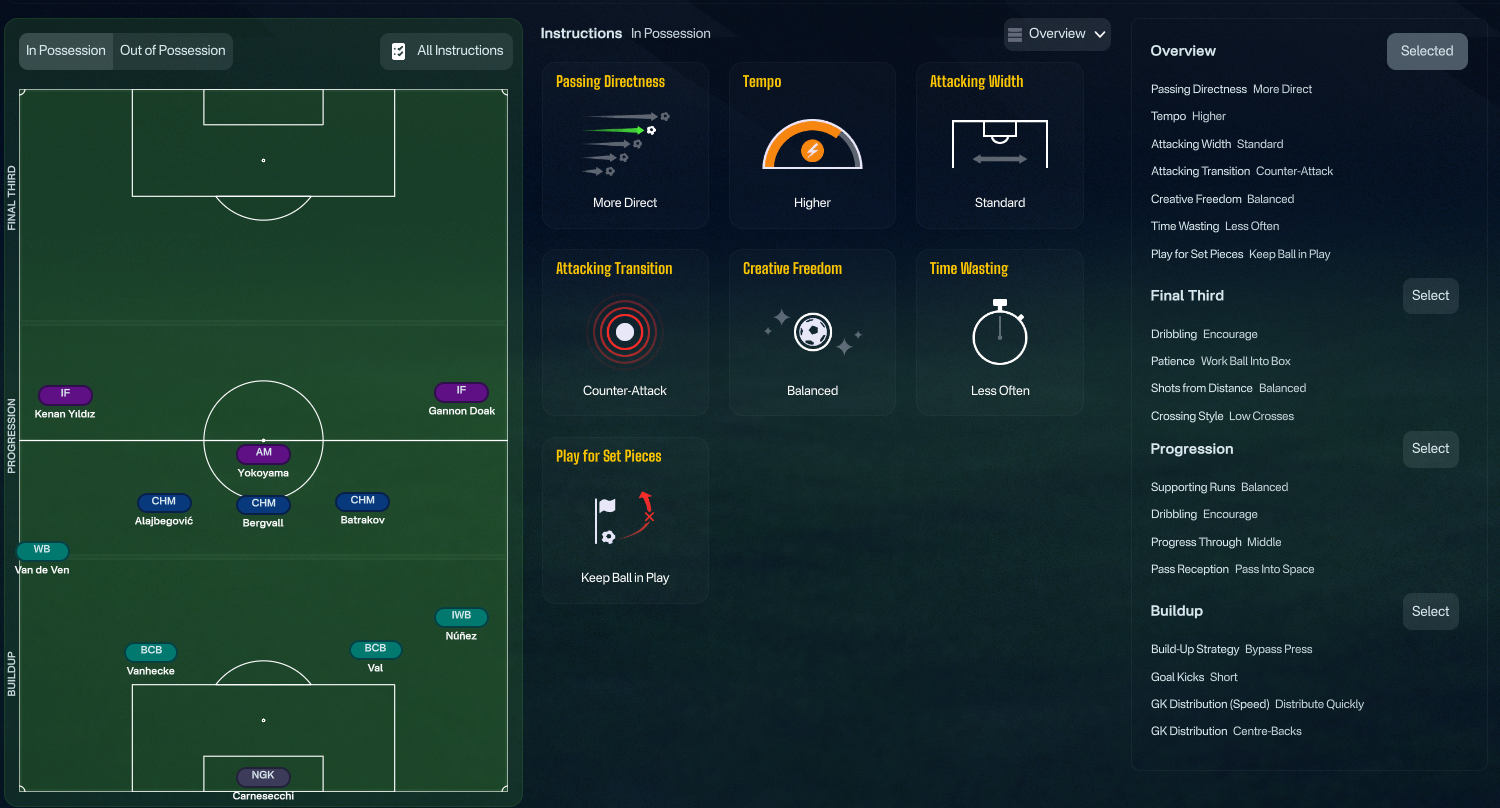
Slightly More Direct Passing
Pass Into Space
Whipped Crosses
Focus Play Down The Left
Slightly Higher Tempo
Fairly Wide
Roll It Out
Distribute To Centre-Backs
Distribute To Full-Backs
Slow Pace Down
Mid Block
Drop Off More
CF
Support
Support
IW
Attack
Attack
AP
Support
Support
BWM
Defend
Defend
CM
Support
Support
FB
Support
Support
CD
Defend
Defend
BPD
Defend
Defend
G
Defend
Defend
Utilizing the wing players effectively with an Inside Forward and overlapping Full-Backs creates width and stretches defenses.
The slightly more direct passing style can quickly exploit opposition weaknesses and create goal-scoring chances.
A mid block might be less effective if players are set to transition quickly to a pressing game.
The high tempo in possession may conflict with the instruction to slow down play in transition, potentially affecting momentum.
Is the current pressing intensity sufficient to capitalize on the opponent's mistakes?
How effectively are the wing players utilizing the space created by overlaps?
Are the midfielders contributing enough to both attack and defense?
How can we improve link-up play in the final third?
Should we consider a more fluid formation for better attacking variety?
Are we successfully utilizing the high tempo during key transitional moments?
The tactical theory behind the 3-4-2-1: roles, instructions, and the trade-offs that decide whether the system holds up.
The pairing rule for Defensive Line and Line of Engagement, all 9 combinations, and the gap that costs goals.
What Higher Tempo, Wider, and Narrower actually do in FM, plus the dial contradictions and antipatterns players run into most often.
Build through the wide areas or through the middle? A working framework for picking the right one for your squad.