Uploaded Tactic
Formation & Style
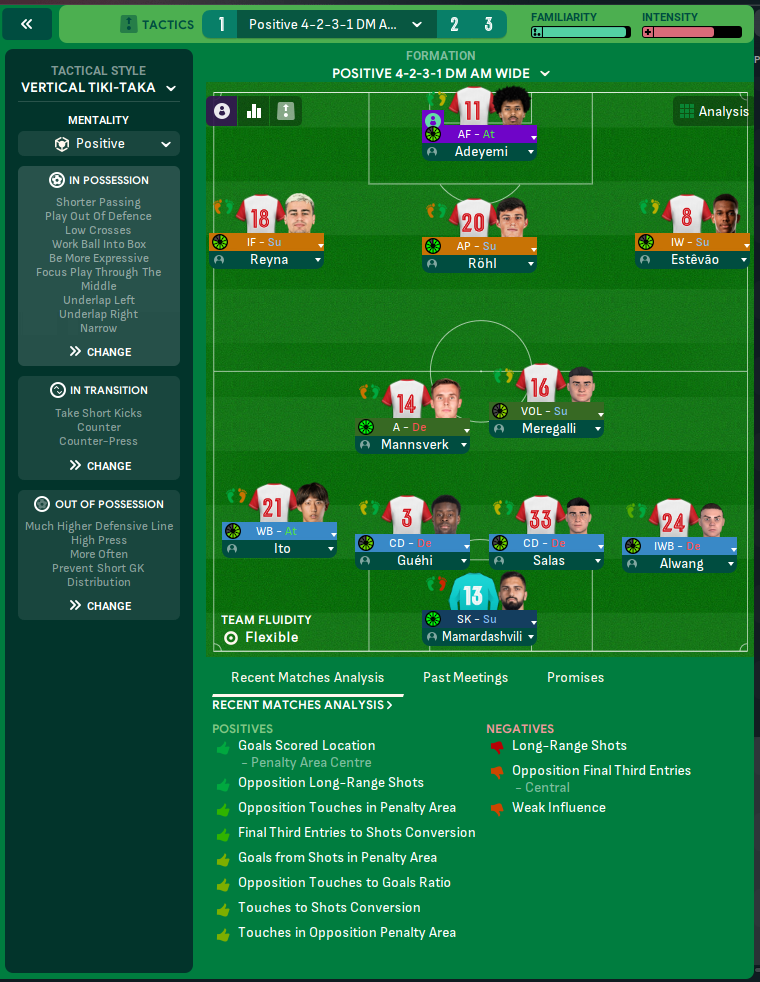
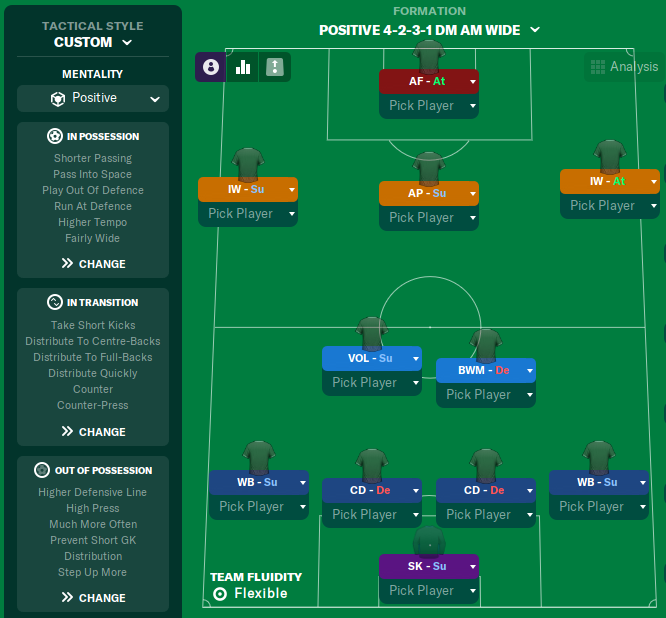
Tactical Style:Vertical Tiki-Taka
Mentality:Positive
Formation:4-2-3-1 DM Wide
Team Fluidity:Flexible
In Possession
Shorter Passing
Work Ball Into Box
Be More Expressive
Focus Play Through the Middle
Underlap Left
Underlap Right
Narrow
In Transition
Counter-Press
Counter
Out of Possession
Much Higher Defensive Line
High Press
More Often
Prevent Short GK Distribution
Team Shape Without Ball
Shape:4-2
Description:A compact defensive shape with higher defensive engagement tackles and pressure points, utilizing inverted and wide positions effectively.
Evidence:Much Higher Defensive Line at 'Prevent Short GK Distribution' with a High Press.
Team Shape With Ball
Shape:4-3
Description:Attacking primarily through the central channels with versatility offered by wide players, aiming for through balls and overlaps while maintaining width.
Evidence:Vertical Tiki-Taka style emphasizes short passing and working the ball into the box.
Phase Description
Attacking Play
The team focuses on building from the back while utilizing short, intricate passes to create goal-scoring opportunities primarily through the middle but also employing wings for width.
Defensive Transition
Upon losing possession, the team activates a high press to quickly recover the ball, leveraging their positive mentality to minimize transition time.
Main Focus
Utilizing advanced players in midfield and attack to maximize goal-scoring opportunities while maintaining structured defensive duties.
Key Strengths
Offensive Fluidity
The combination of dynamic wing play and centralized playmaking allows for fluid attacking transitions.
High Press Effectiveness
Utilizing a high press strategy disrupts the opposition's build-up and creates high turnover opportunities.
Width and Depth in Attack
Utilizing wing-backs and inside forwards provides width, while central players exploit the gaps, contributing to overall pressure on opposition defenders.
Conflicting Directions
Inconsistent Defensive Coverage
High press and a higher defensive line may leave gaps which can be exploited by rapid counter-attacks.
Focus on Central Playmaking
While vertically focused, reliance on the central AD and AP roles might lead to predictability against well-organized defenses.
Risk of Overlapping
Overlapping wing-backs may leave the defense exposed, especially against teams with strong wingers.
Tactical Suggestions
Reinforce the Defensive Midfield
Consider adjusting the Volante's duty to a more defensive role to enhance stability.
Enhance Wide Play
Encouraging wing-backs to incorporate more direct runs into attacking nad enhance width can break down tight defenses.
Utilize Impact Substitutions
Consider making substitutions to inject pace and energy in later stages, particularly in attacking positions.
Ask Questions About Your Lineup
Related Tactics
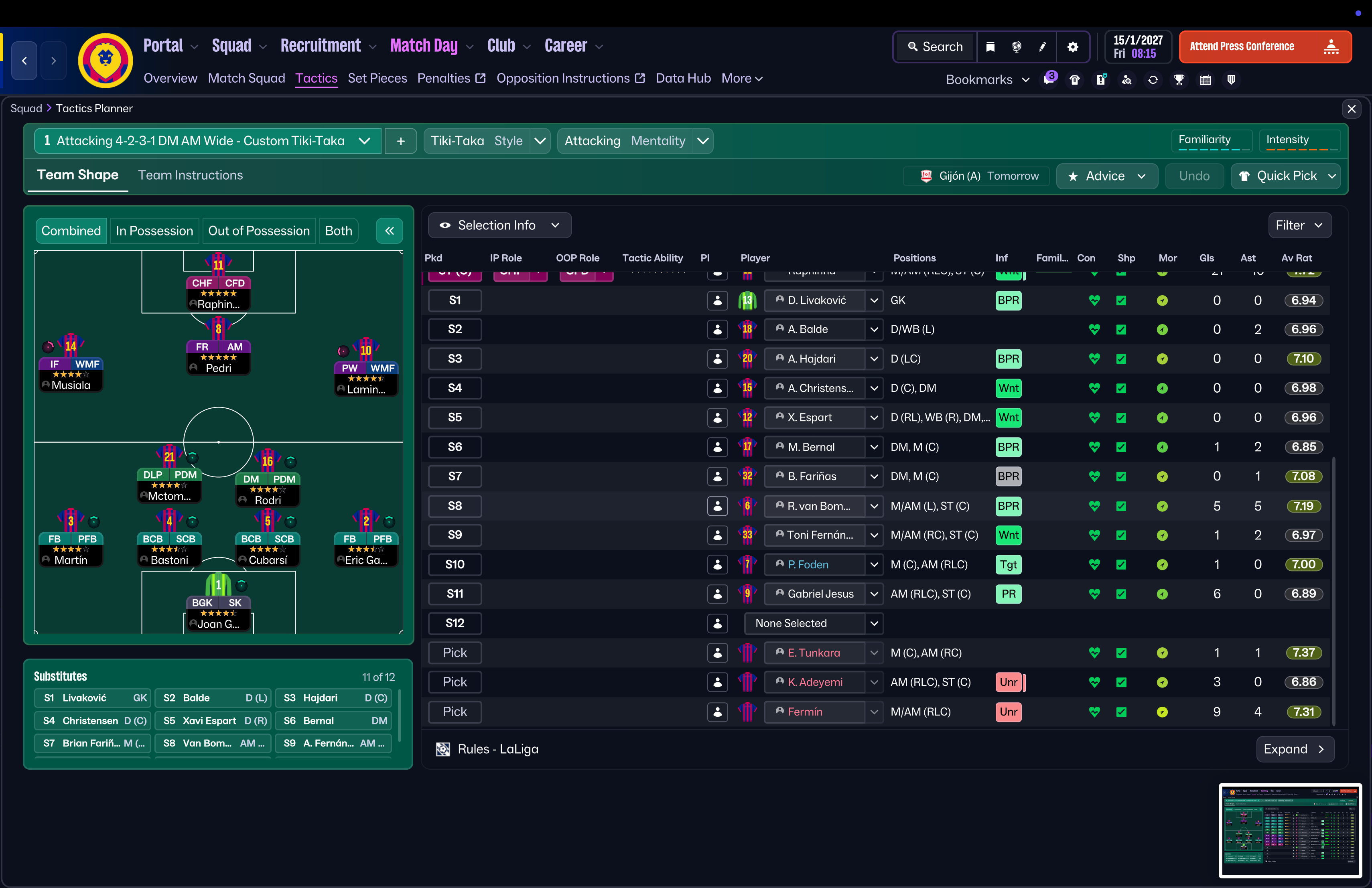
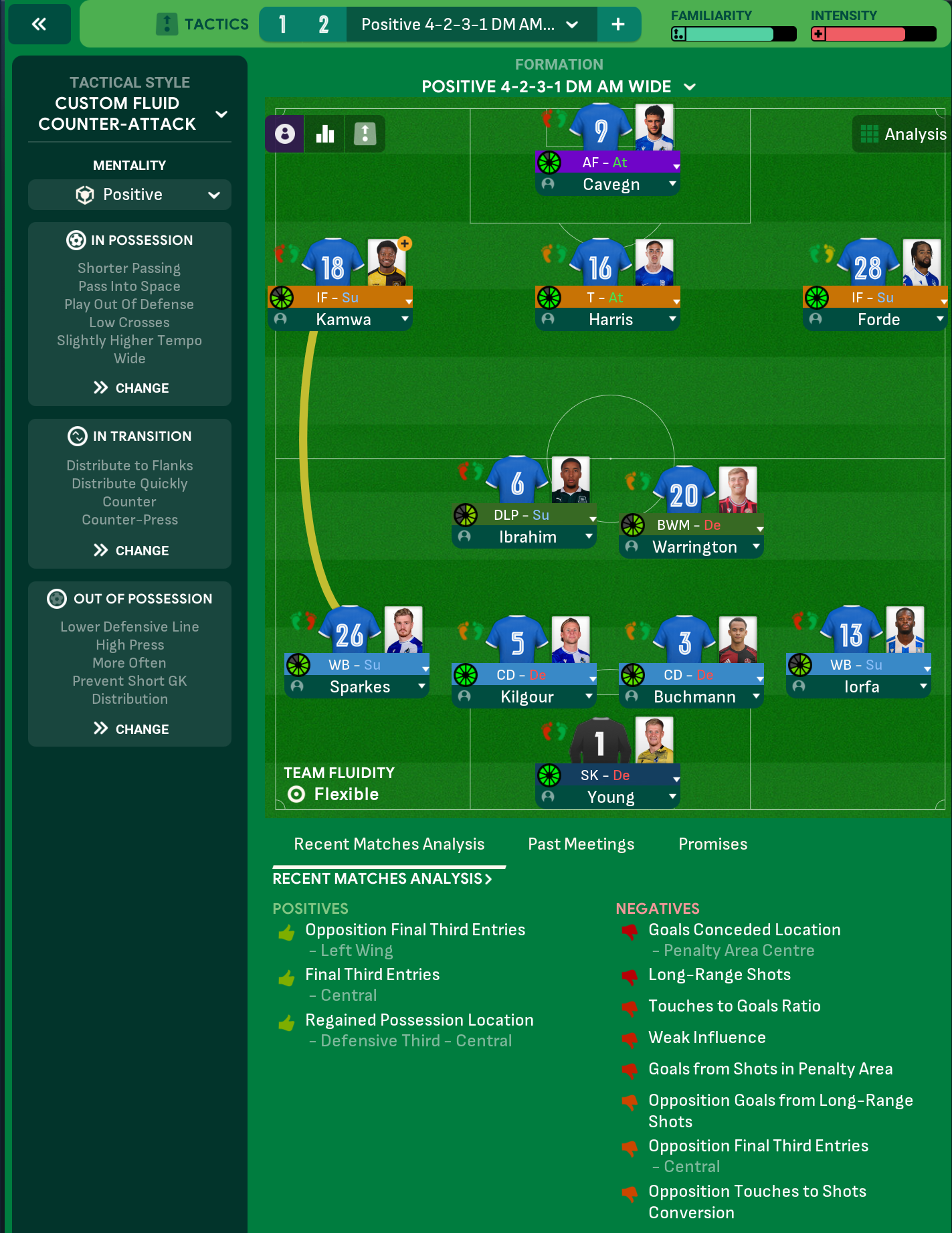

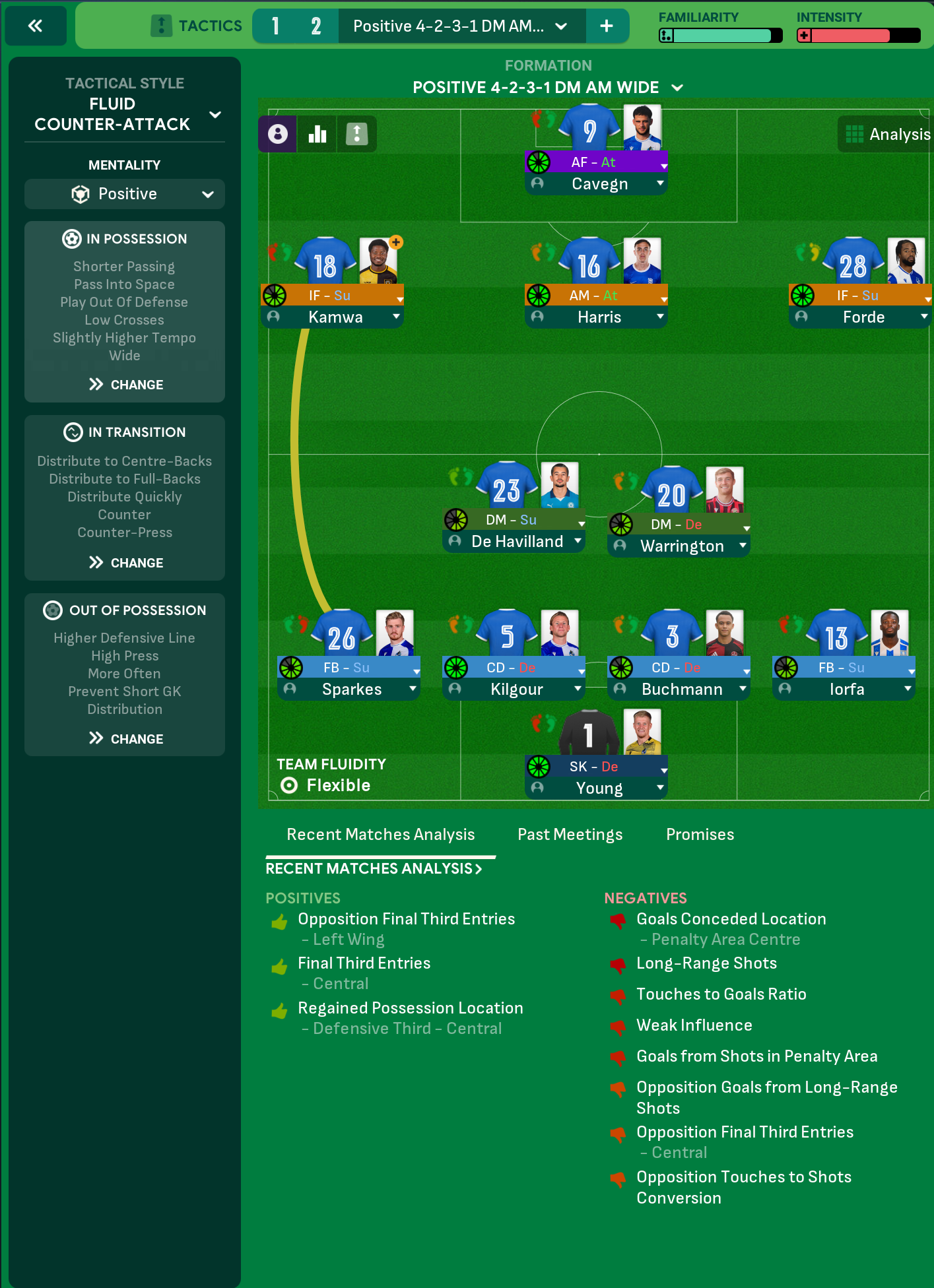
More Vertical Tiki-Taka tactics
Guides for this formation
The tactical theory behind the 4-2-3-1 DM Wide: roles, instructions, and the trade-offs that decide whether the system holds up.
Player pairings
Midfield Pairs in 4-2-3-1 and 4-4-2
Double pivots and flat pairs in 4-2-3-1 and 4-4-2: when each pairing works, when it collapses, and the AMC unicorn that rescues both.
Read guide
Playing styles
Gegenpressing: A Full Guide
Klopp-style gegenpressing in FM, including squad profile, line-and-press pairing, sustainable workload, and the antipatterns to avoid.
Read guide