
4-2-3-1 DM Wide
High-intensity pressing and central overloads with ball-playing defenders. High press, much higher line, much more frequent triggers and counter-press all…
Loading tactical analysis...
4-2-3-1 DM Wide
4-2-2-2 DM Wide
4-2-3-1 DM AM Wide
Positive
Clean Slate
1
3
Ball-Playing Goalkeeper
Sweeper Keeper
2
3
Ball-Playing Center-Back
Centre-Back
2
4
Centre-Back
Centre-Back
2
2
Inside Full-Back
Full Back
3
3
Defensive Midfielder
Defensive Midfielder
3
4
Playmaking Wing-Back
Full Back
5
1
Wide Forward
Wide Midfielder
4
2
Box-To-Box Playmaker
Pressing Defensive Midfielder
4
4
Free Role
Center Forward
5
5
Winger
Wide Midfielder
6
3
Channel Forward
Central Outlet Centre Forward
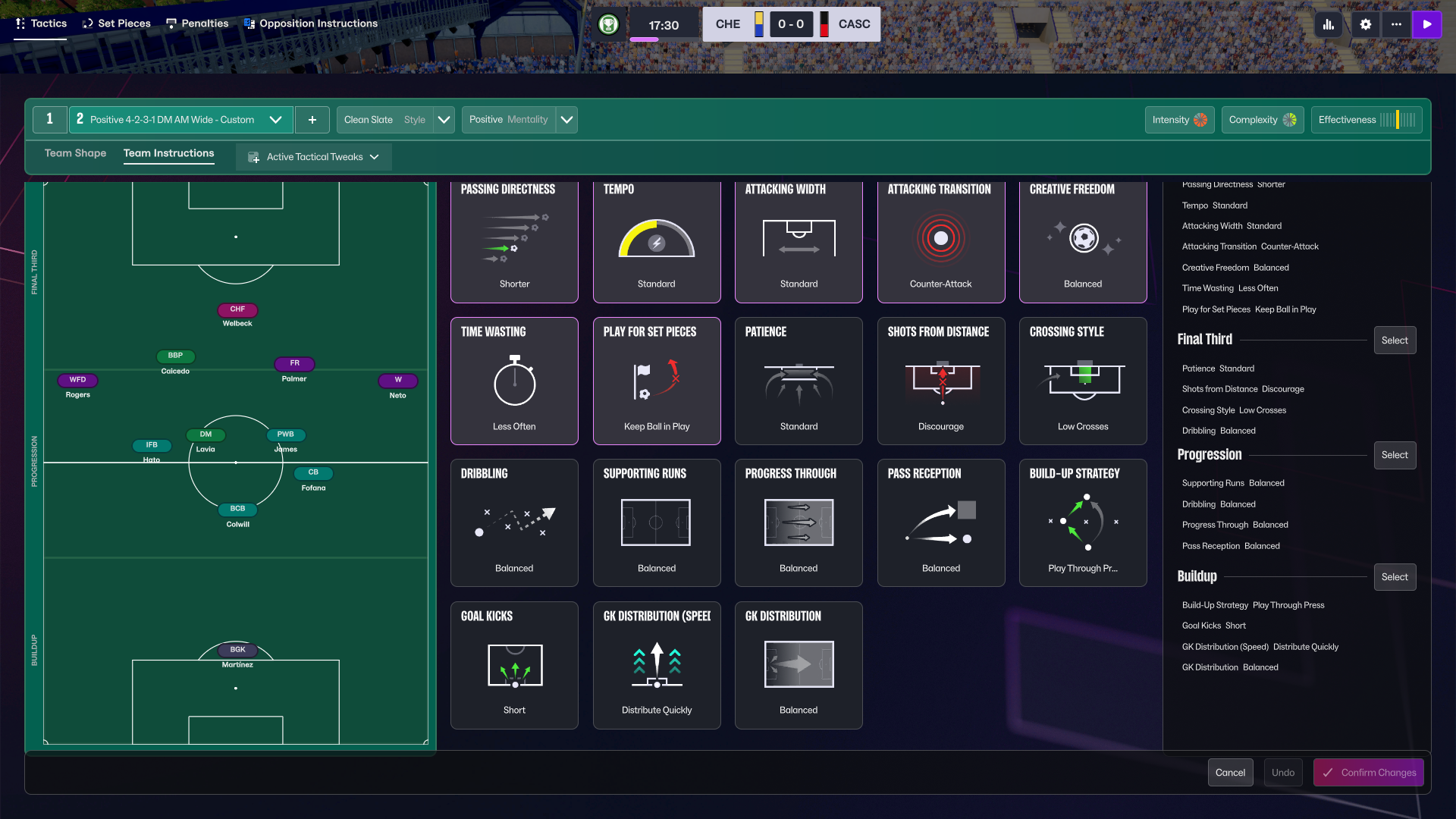
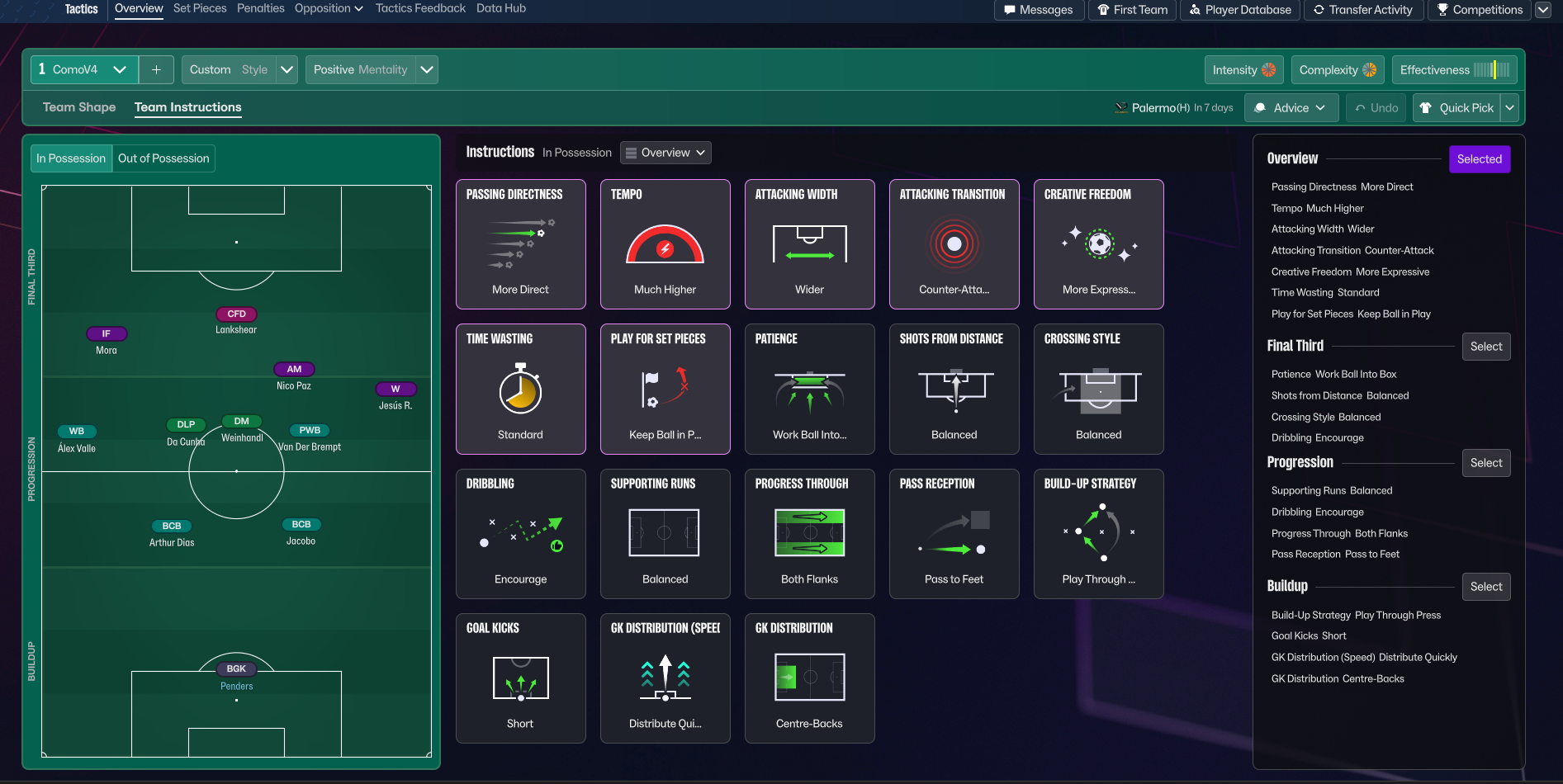
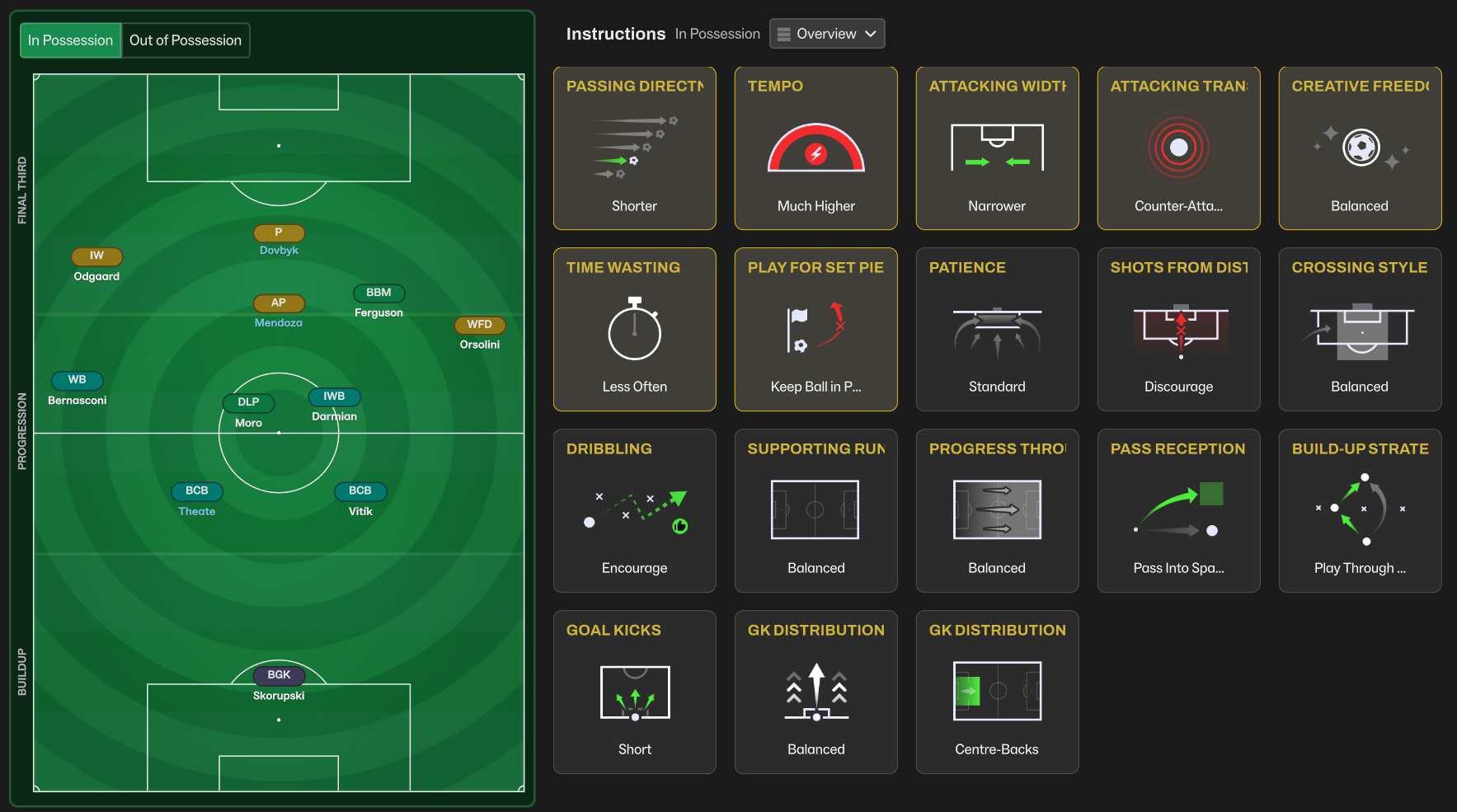
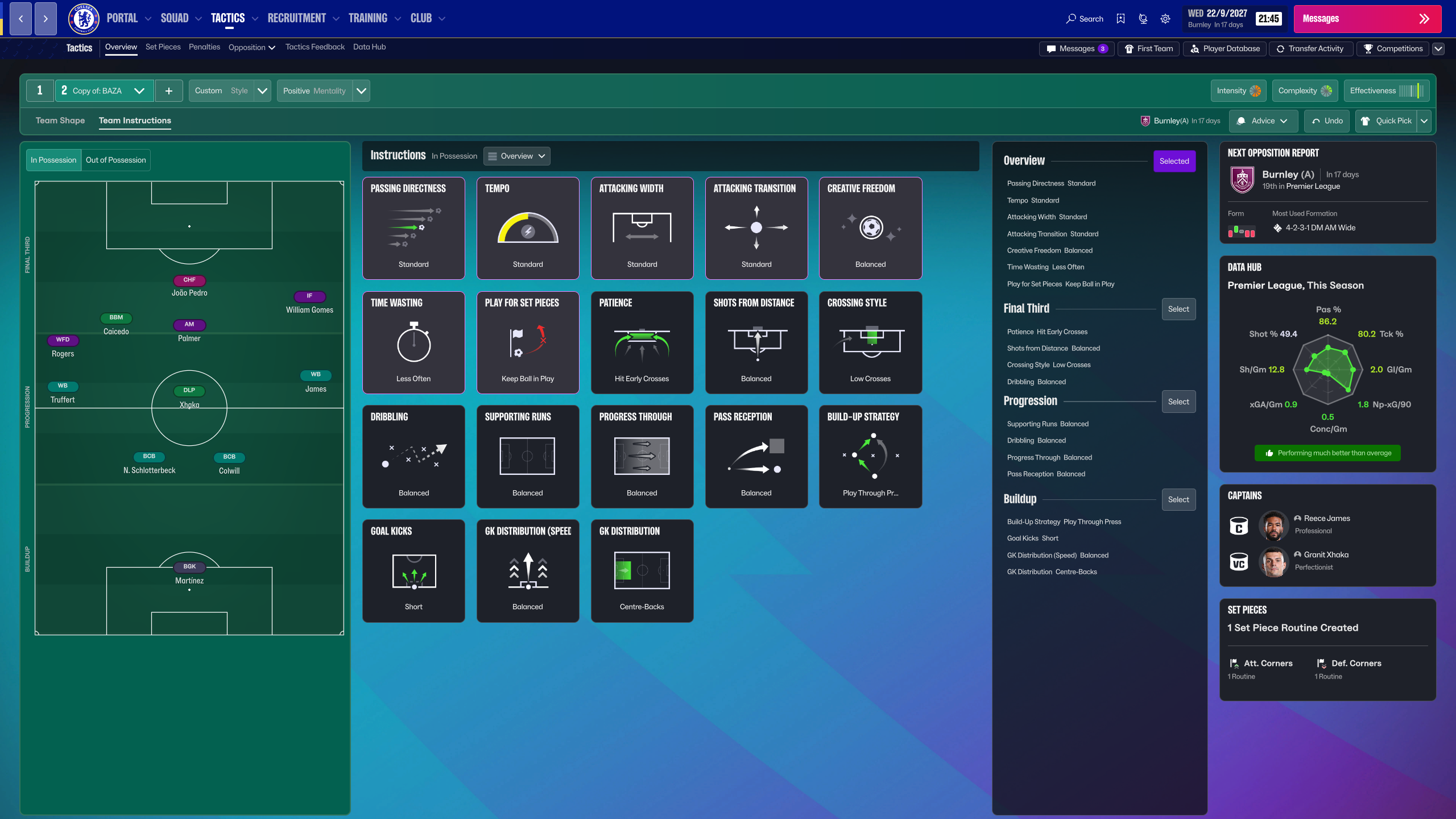
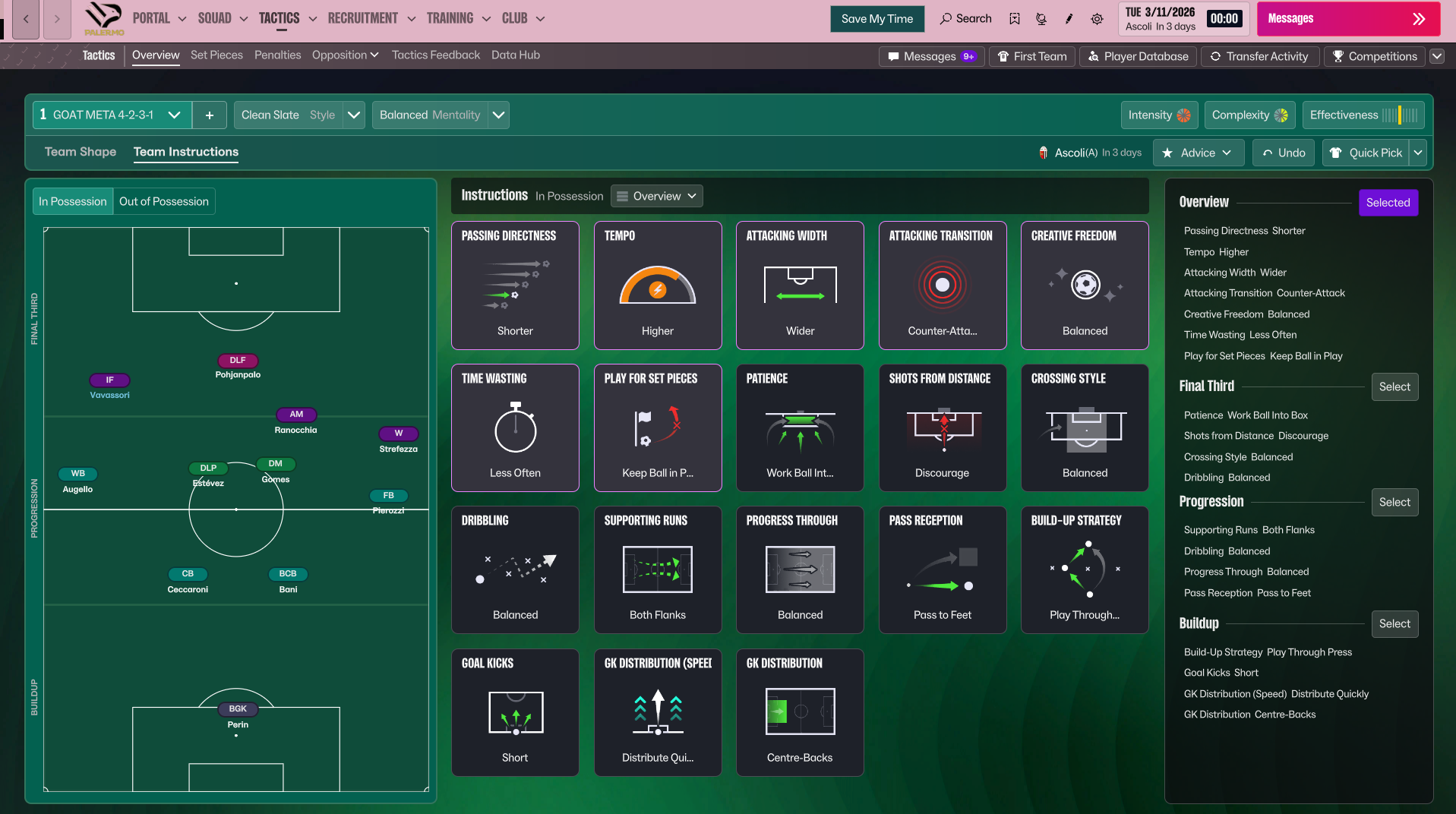
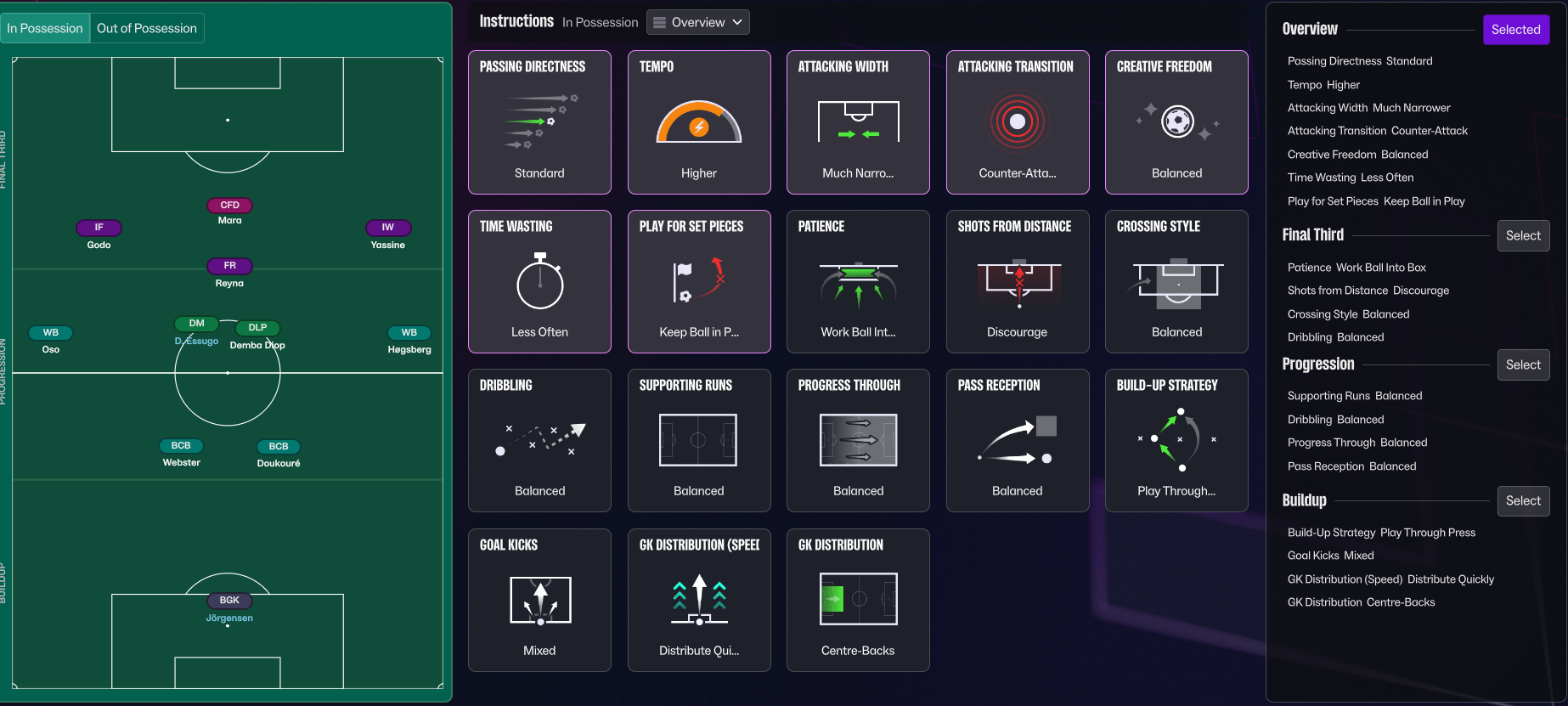
Shorter
Standard
Standard
Counter-Attack
Balanced
Less Often
Keep Ball in Play
Standard
Discourage
Low Crosses
Balanced
Balanced
Balanced
Balanced
Play Through Press
Short
Distribute Quickly
Balanced
Overlap Balanced
Underlap Balanced
High Press
Much Higher
Balanced
Much More Often
Counter-Press
Standard
Yes
Balanced
Balanced
Balanced
High press, much higher line, much more frequent triggers and counter-press all pull in the same direction, so the team wins the ball high and close to goal.
Pressing Defensive Midfielder at [4,2] and Central Outlet Centre Forward at [6,3] lead the press.
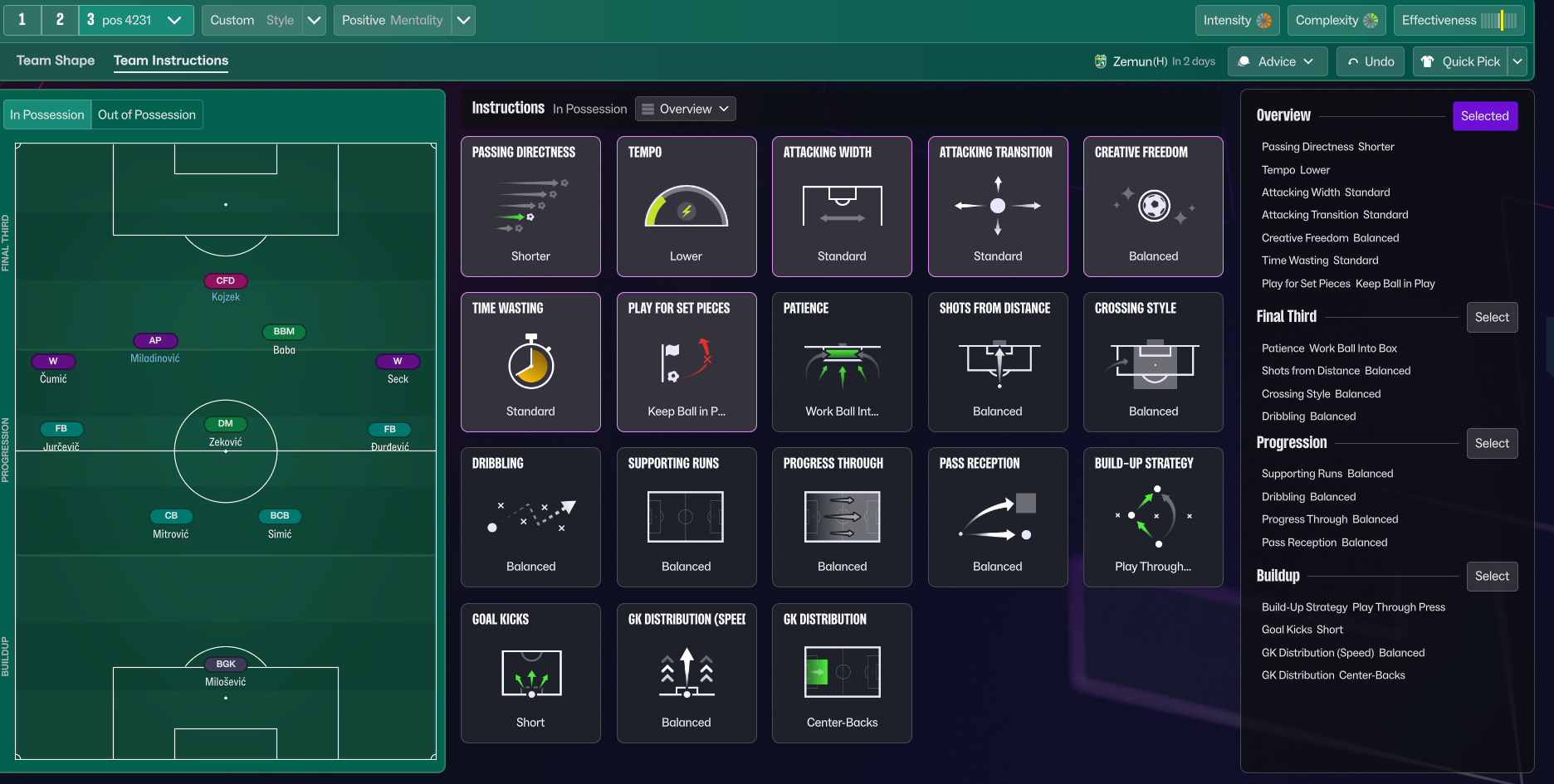
Shorter passing, play through the press and short goal kicks suit a goalkeeper and centre-back who are comfortable on the ball.
Ball-Playing Goalkeeper and Ball-Playing Center-Back at [2,3] give a technical base for building from the back.
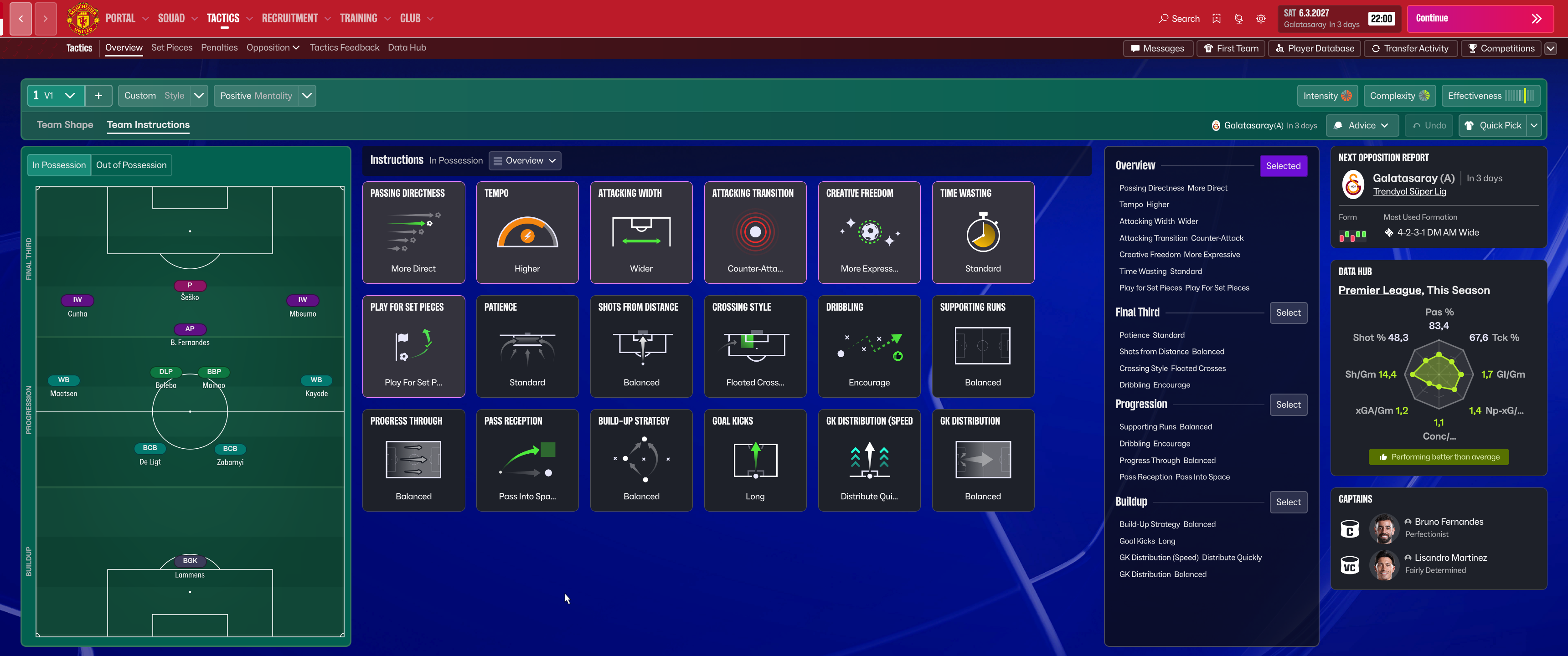
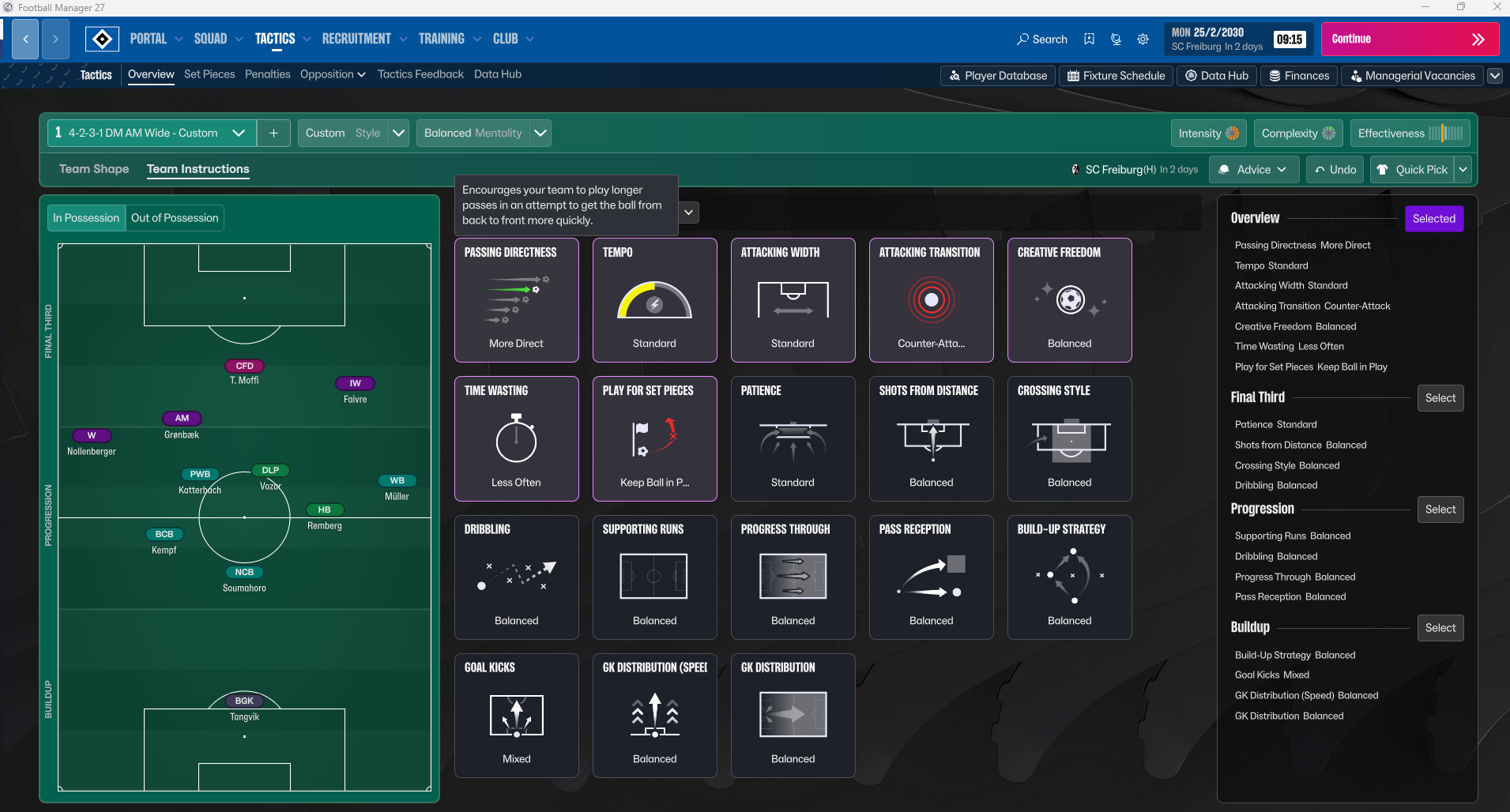
Counter-Attack asks for fast, vertical play after turnovers, but shorter passing and play through the press ask for patient retention. The team's identity is unclear.
Channel Forward at [6,3] and Wide Forward at [5,1] want to run in behind, while Box-To-Box Playmaker at [4,2] wants to recycle.
Quick distribution undermines the patient short build-up and gives teammates less time to get into position.
Ball-Playing Goalkeeper at [1,3] is told to play short yet release fast.
Space behind a much higher line
A much higher line with only two centre-backs and a sweeper-keeper is exposed to direct balls over the top when the press is bypassed.
Centre-Back at [2,4] and Ball-Playing Center-Back at [2,3] defend a huge gap.
high
Stamina and press fragmentation
Much more frequent triggers plus counter-press for 90 minutes will tire the team and leave gaps once the press is passed.
Wide Midfielder at [5,1] and [5,5] and Pressing Defensive Midfielder at [4,2] cover lots of ground.
high
Defensive Midfielder with Box-To-Box Playmaker
A holding anchor behind a mobile playmaker gives both security and progression through the middle.
Defensive Midfielder [3,3] and Box-To-Box Playmaker [4,2].
Free Role with Channel Forward
The free role drops and links while the channel forward runs in behind the defence.
Free Role [4,4] and Channel Forward [6,3].
Do you want to play on the counter or keep possession?
Does your goalkeeper and back line have the pace to cover a much higher line?
Do your players have the stamina for a much-more-often press every match?
This is a bold, aggressive pressing tactic with a technical build-up, but it mixes counter-attacking and possession ideas and defends with an extreme line. Lowering the line and the press trigger a notch, and relaxing the counter-attack transition, would give it a clearer identity and less risk of conceding goals.
Short build-up from the back through the press, with inverted full-backs and a free role creating central overloads, then a quick switch to counter-attacks after turnovers.
Immediate counter-press and a very high press with a much higher line, trying to win the ball back near the opposition goal.
High-intensity pressing and central overloads with ball-playing defenders.
clean slate
clean slate
control possession
clean slate
gegenpress
clean slate
clean slate
clean slate
The tactical theory behind the 4-2-3-1 DM Wide: roles, instructions, and the trade-offs that decide whether the system holds up.
Klopp-style gegenpressing in FM, including squad profile, line-and-press pairing, sustainable workload, and the antipatterns to avoid.
Double pivots and flat pairs in 4-2-3-1 and 4-4-2: when each pairing works, when it collapses, and the AMC unicorn that rescues both.
Mentality, duty, role, instruction, sub. The change hierarchy from lightest to heaviest intervention, and 60th-minute patterns by game state.