Uploaded Tactic
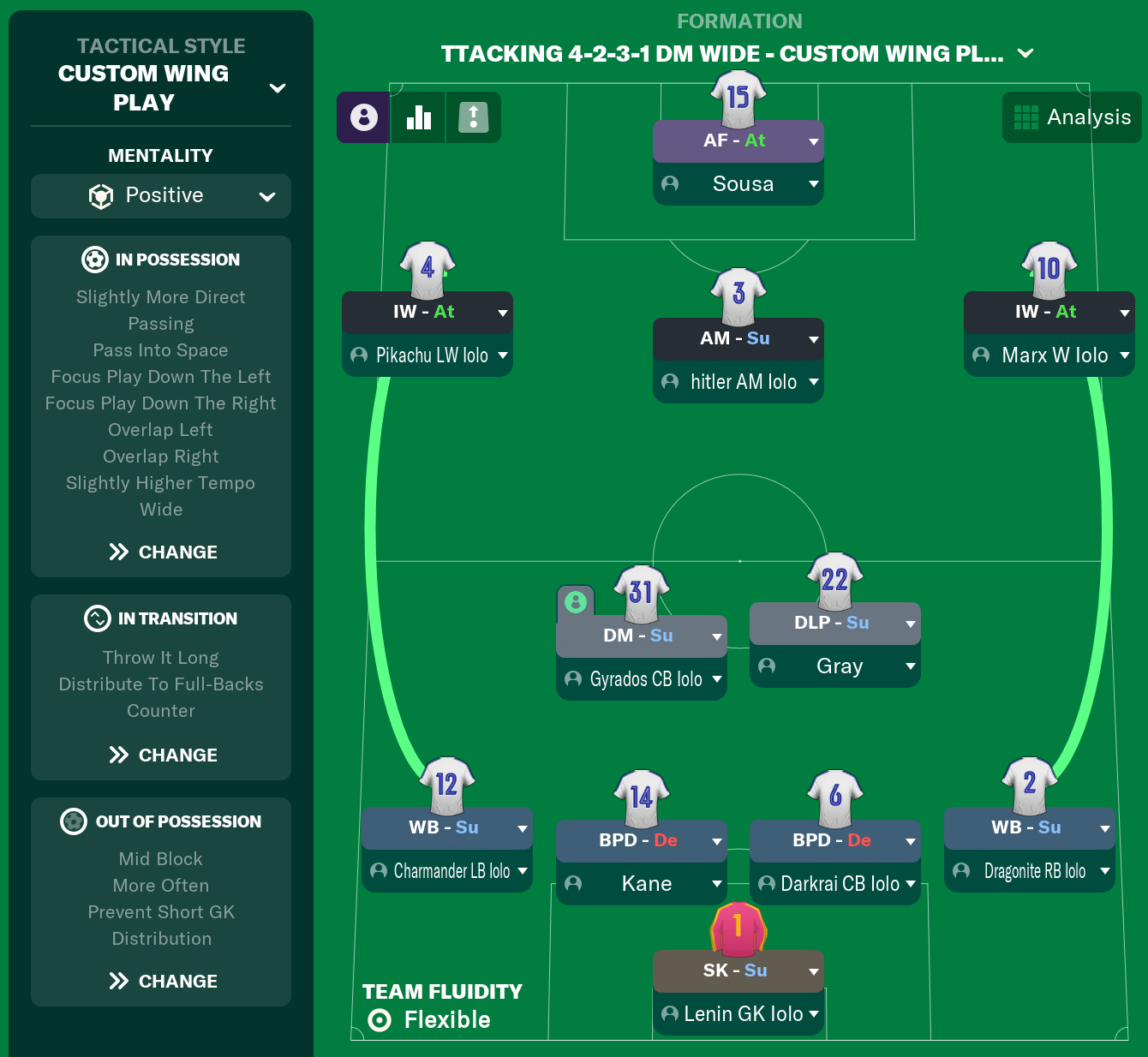
Formation & Style
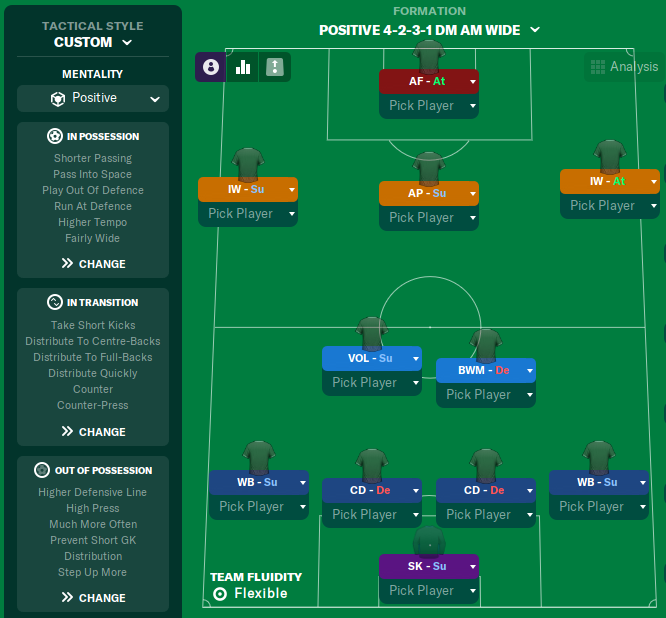
Tactical Style:Custom Wing Play
Mentality:Positive
Formation:4-2-3-1 DM Wide
Team Fluidity:Flexible
In Possession
Slightly More Direct Passing
Pass Into Space
Focus Play Down The Left
Focus Play Down The Right
Overlap Left
Overlap Right
Slightly Higher Tempo
Wide
In Transition
Throw It Long
Distribute To Full-Backs
Counter
Out of Possession
Mid Block
More Often Prevent Short GK Distribution
Team Shape Without Ball
Shape:Mid Block
Description:The team compresses space within the midfield zone, applying pressure on ball carriers.
Evidence:Mid Block strategy and instructions to prevent short GK distribution.
Team Shape With Ball
Shape:Wide and Fluid
Description:Attacking shape allows for multiple options down the flanks while retaining central presence.
Evidence:Overlap instructions combined with inside wingers suggest an emphasis on wide play.
Phase Description
Attacking Play
Utilizing width and overlaps, aiming for quick transitions into wide areas for crosses.
Defensive Transition
Reacting quickly with a focus on regrouping to maintain a mid-block.
Main Focus
Exploiting spaces behind the opposition via inside wingers and an advanced forward.
Key Strengths
Wide Play
Effective in utilizing the flanks with overlapping full-backs and inside wingers.
Ball Retention
Two BPDs and a DLP allow for controlled build-up and distribution.
Offensive Movement
Fluid attacking structure with support from AM and IW offers multiple attacking lanes.
Conflicting Directions
Limited Pressing
While the setup suggests a mid-block, it may lack intensity in high pressing scenarios.
Countering Vulnerability
Focusing on countering could leave the team exposed during transition moments if not defended well.
Overlapping Risks
Full-backs overlapping may leave central areas susceptible to counter-attacks.
Tactical Suggestions
Adjust Defensive Depth
Consider a slightly deeper defensive line to mitigate counter-attacks against speedy opposition.
Increased Pressing
Implement a more aggressive pressing style to win the ball higher up the pitch.
Central Playmaker
Inject a more attacking role into the midfield to link up play and support strikers.
Ask Questions About Your Lineup
Related Tactics
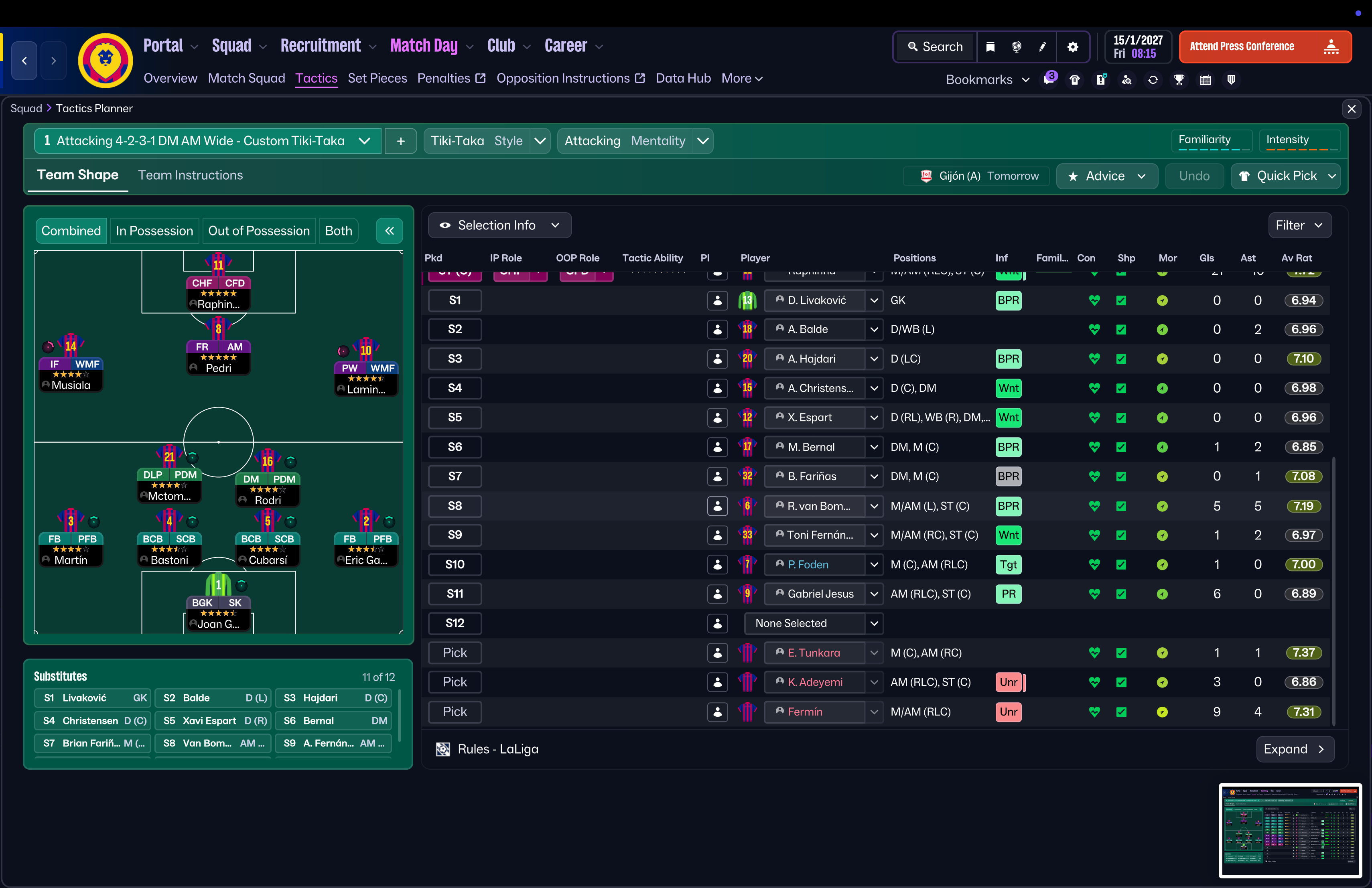
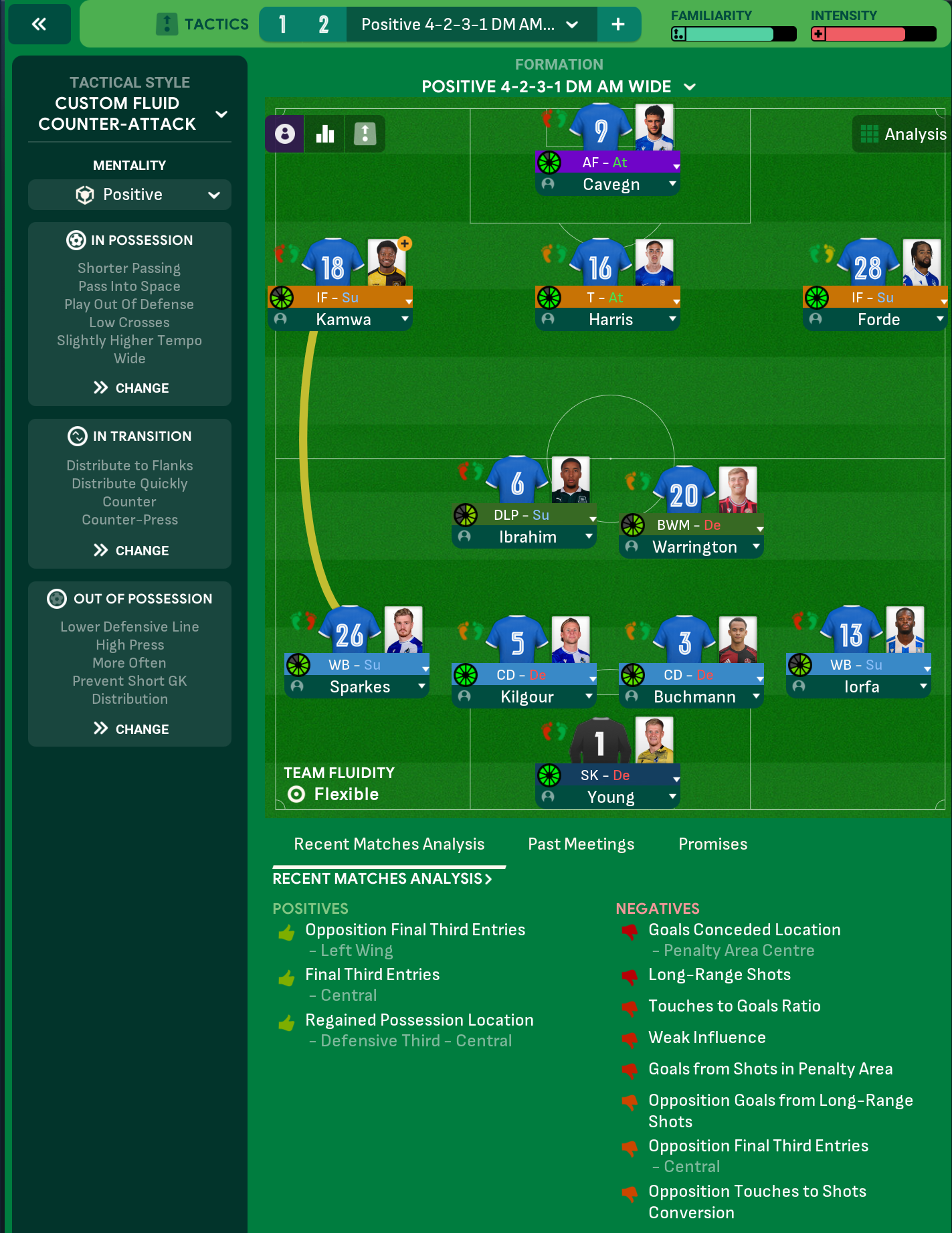
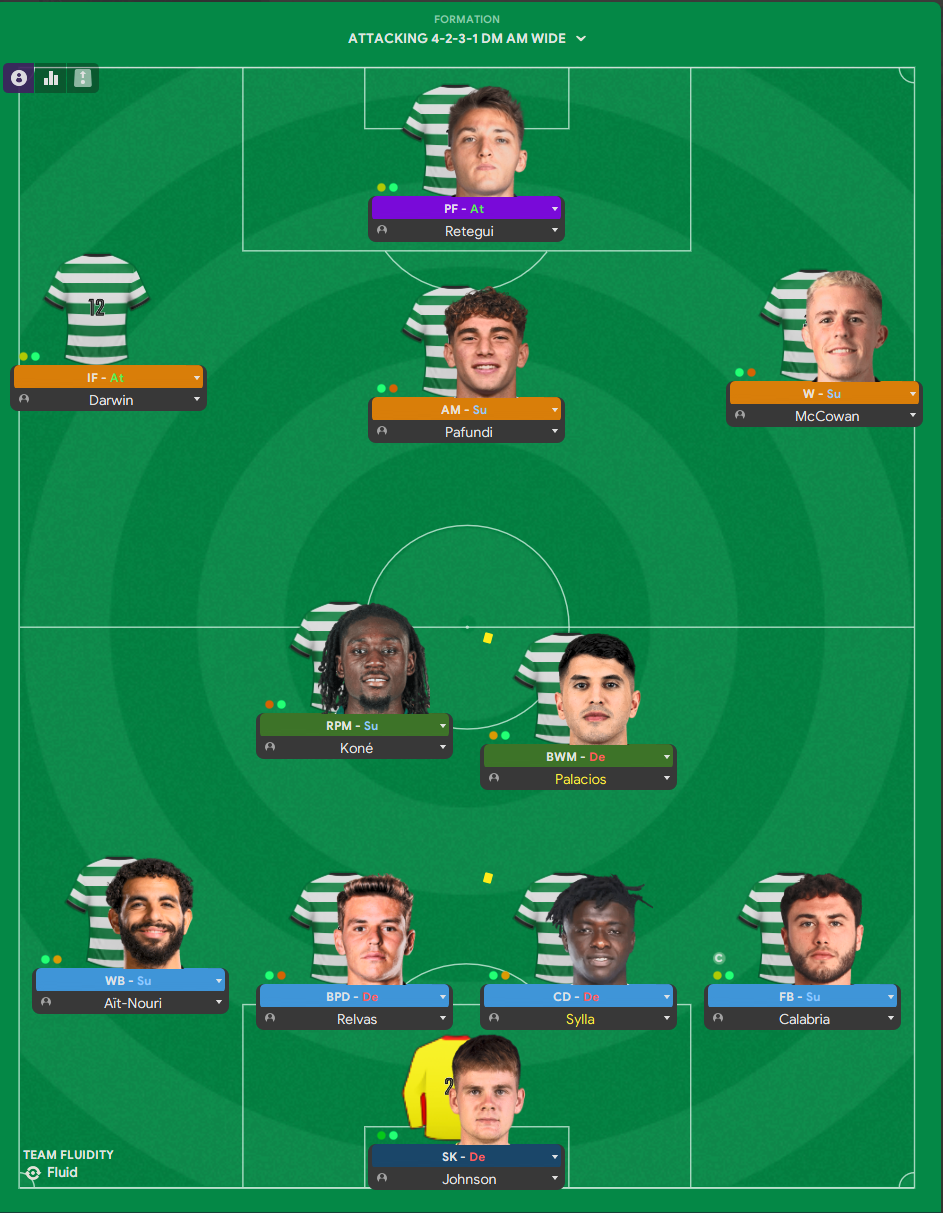
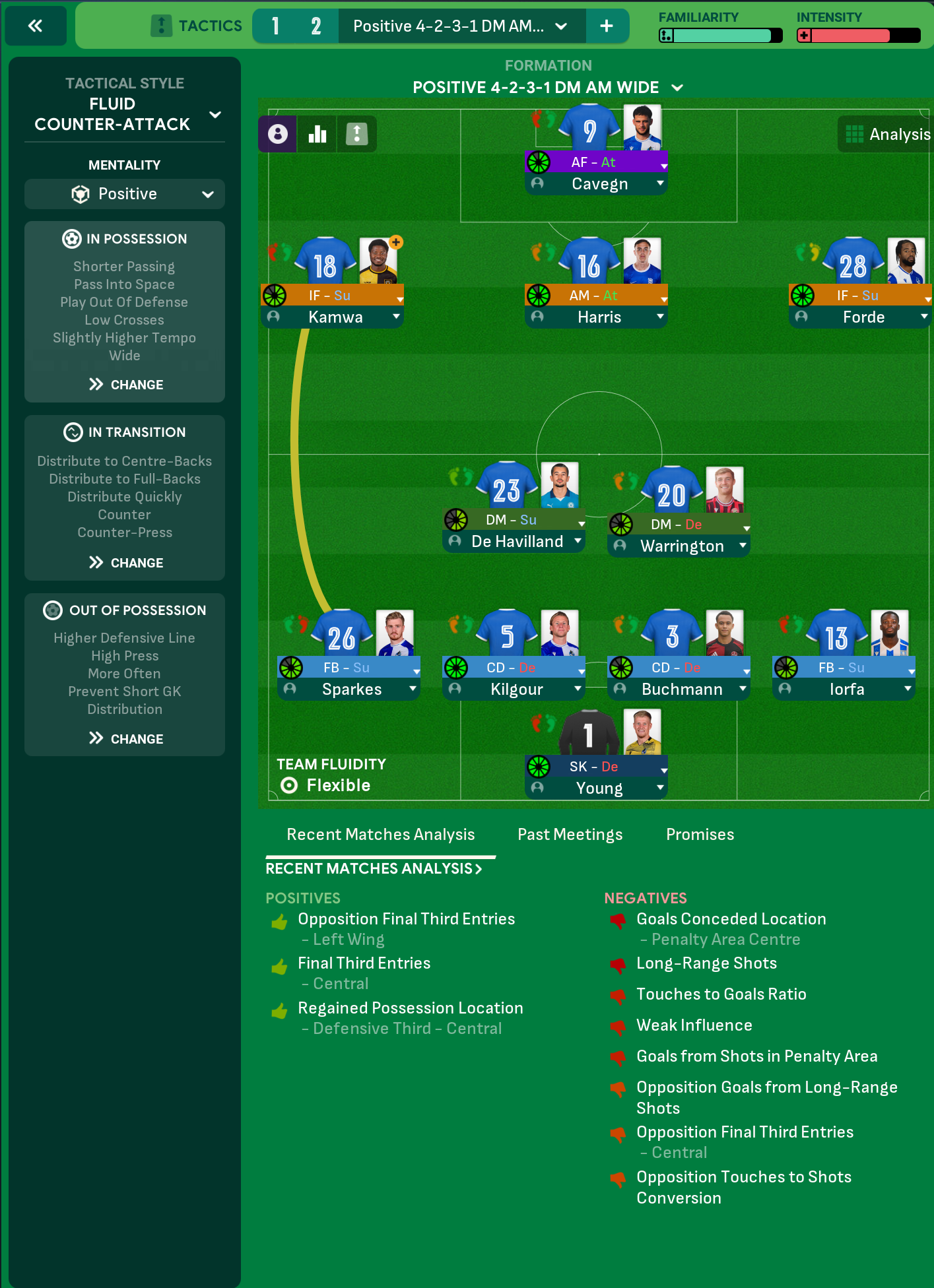
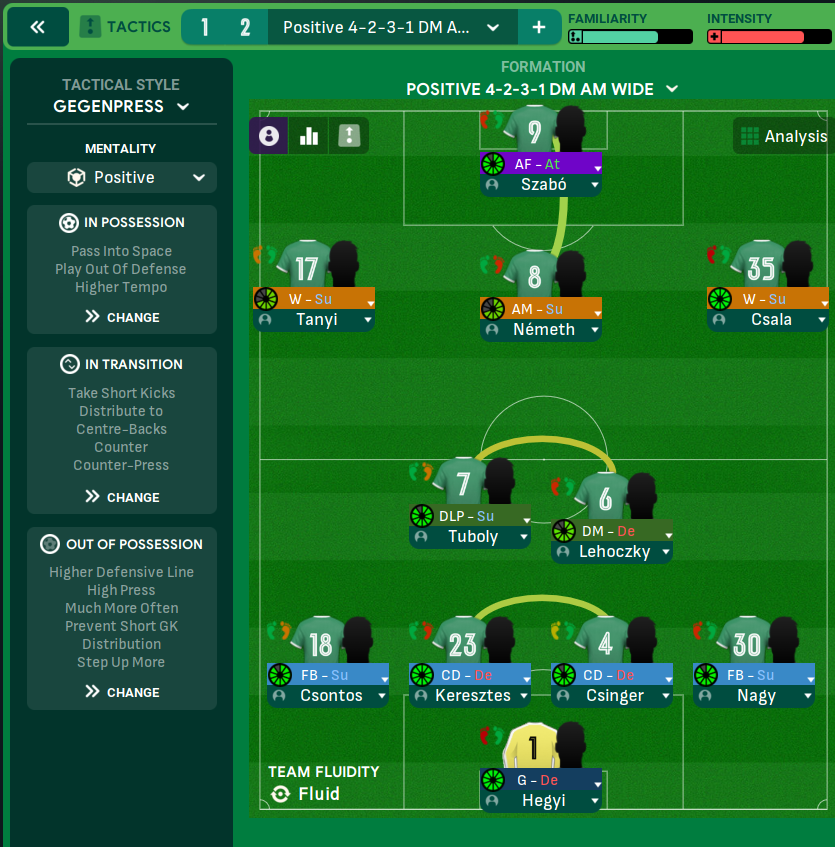
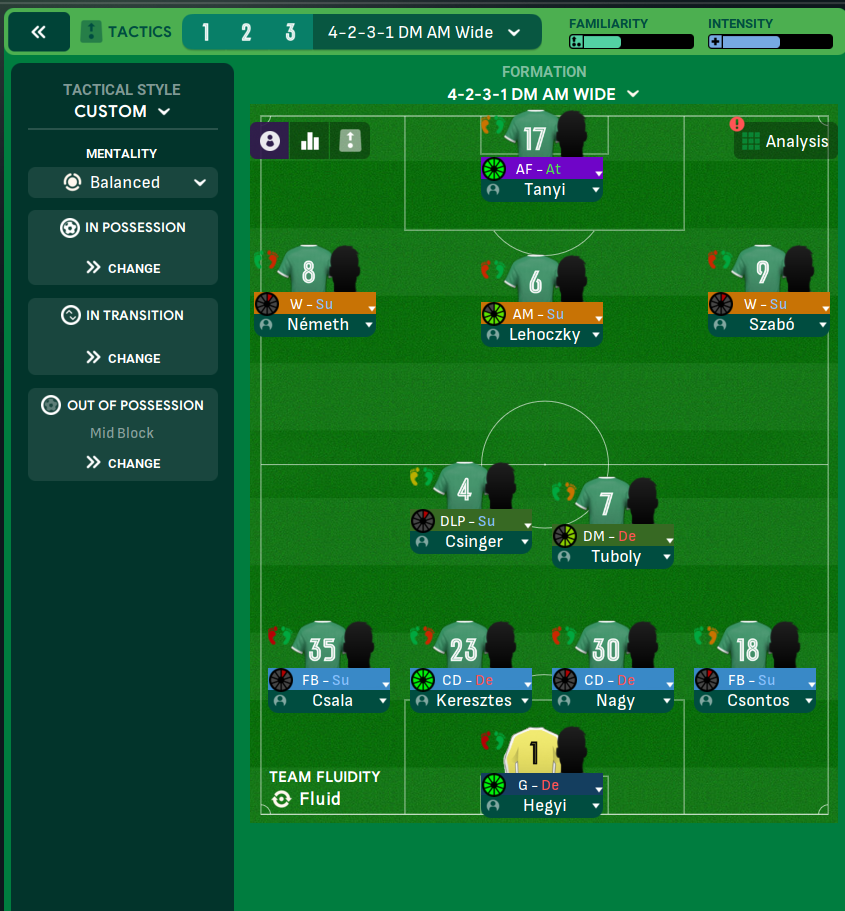
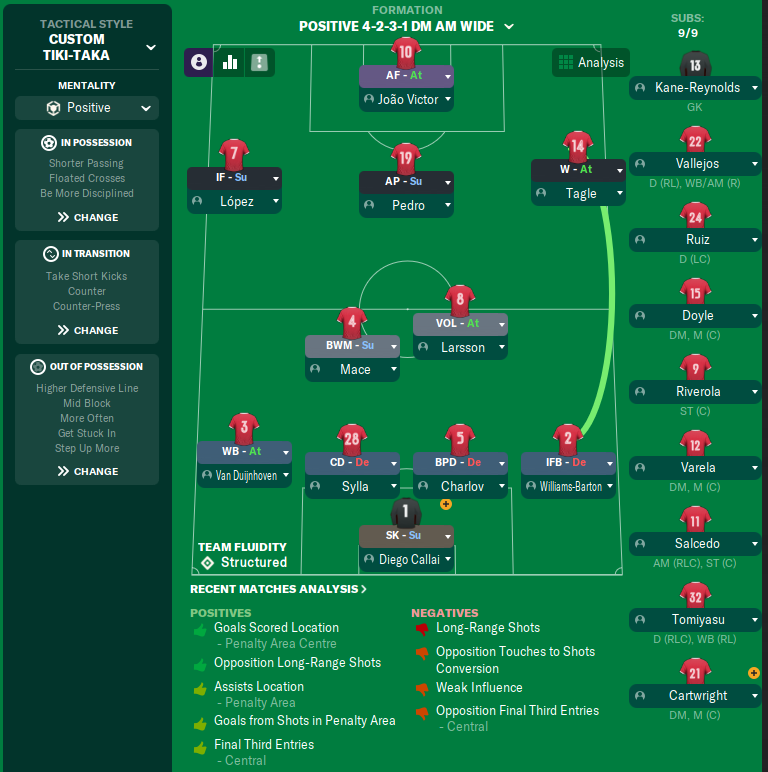
More Custom Wing Play tactics
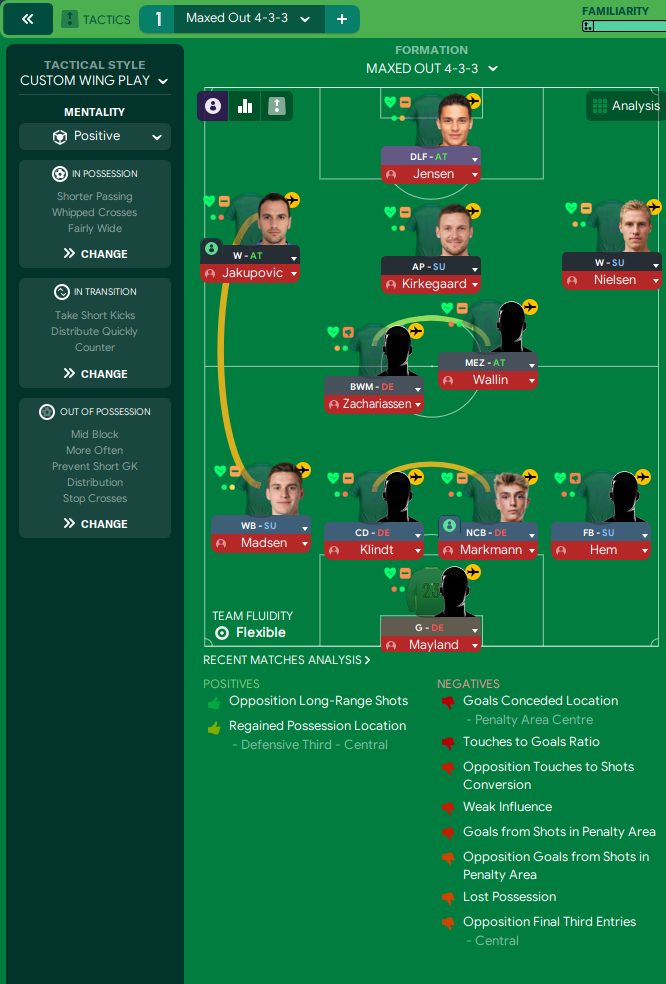
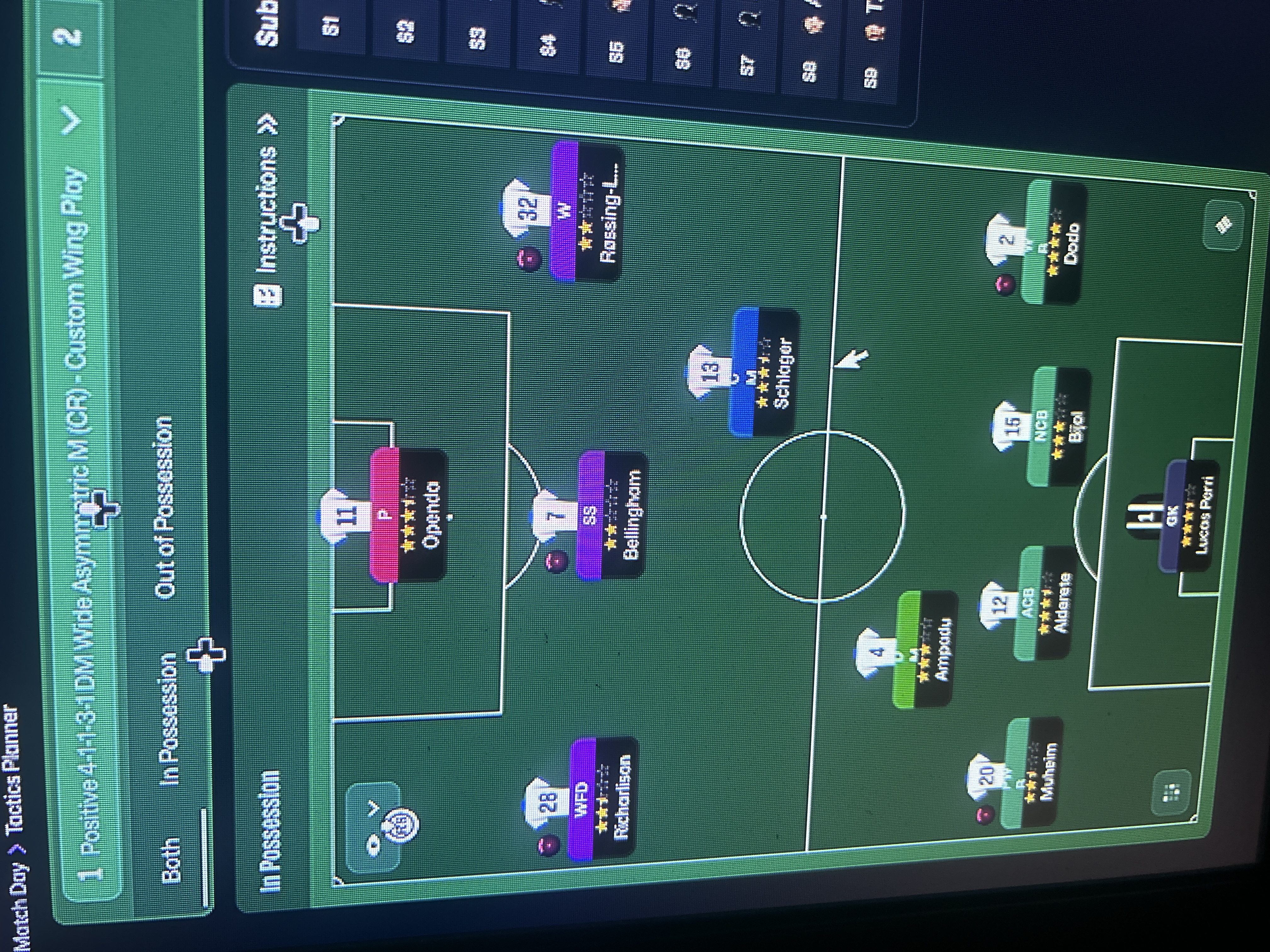
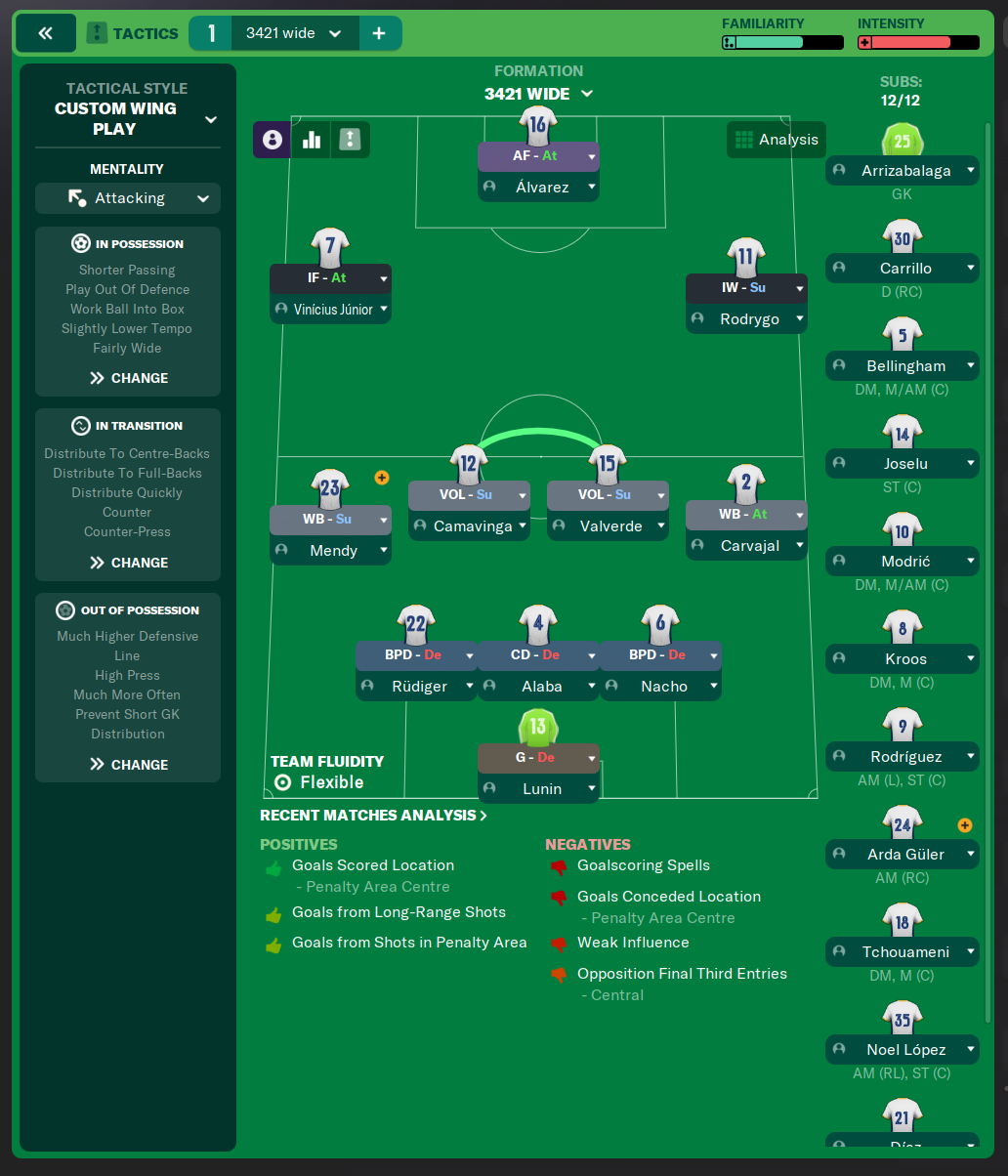
Guides for this formation
The tactical theory behind the 4-2-3-1 DM Wide: roles, instructions, and the trade-offs that decide whether the system holds up.
Player pairings
Midfield Pairs in 4-2-3-1 and 4-4-2
Double pivots and flat pairs in 4-2-3-1 and 4-4-2: when each pairing works, when it collapses, and the AMC unicorn that rescues both.
Read guide
Playing styles
Gegenpressing: A Full Guide
Klopp-style gegenpressing in FM, including squad profile, line-and-press pairing, sustainable workload, and the antipatterns to avoid.
Read guide