Uploaded Tactic
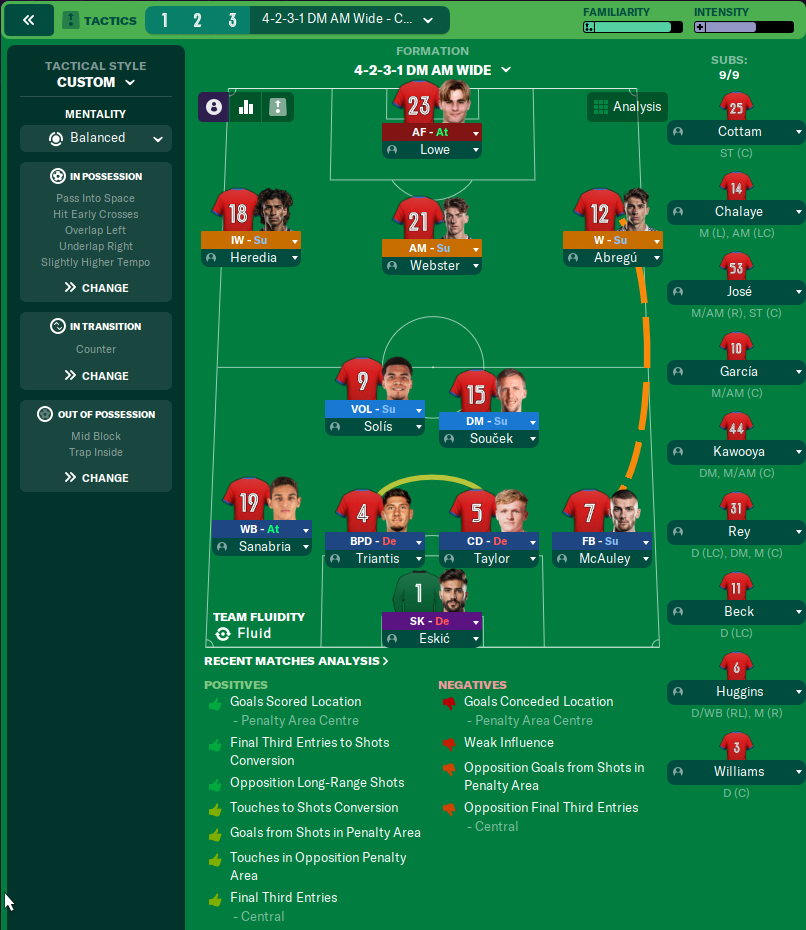
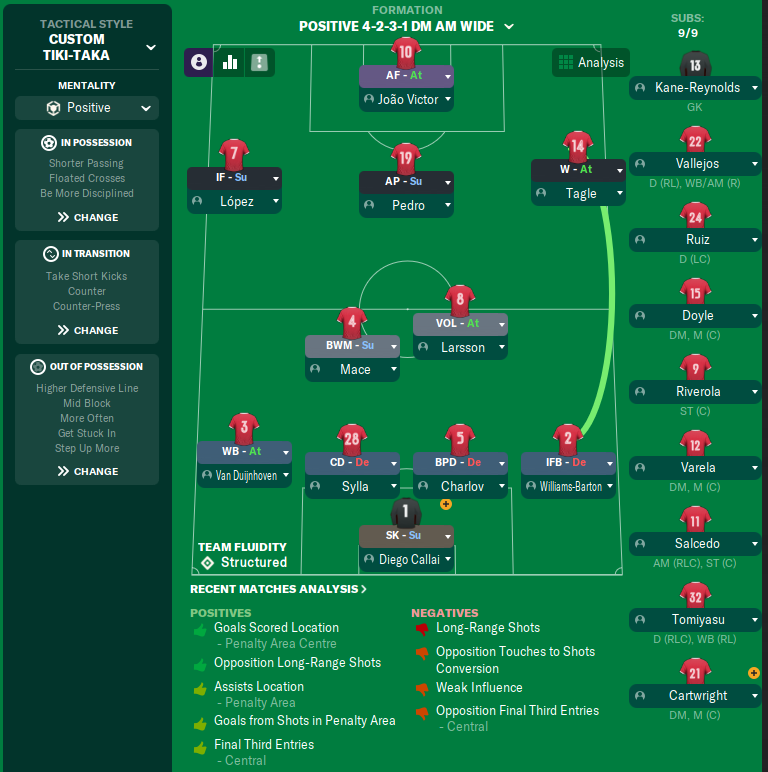
Formation & Style
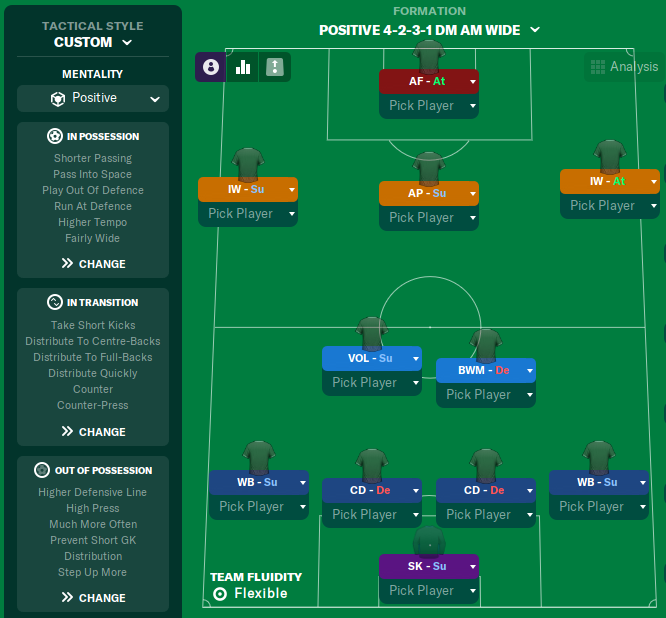
Tactical Style:Custom
Mentality:Balanced
Formation:4-2-3-1 DM Wide
Team Fluidity:Fluid
In Possession
Pass Into Space
Hit Early Crosses
Overlap Left
Underlap Right
Slightly Higher Tempo
In Transition
Counter
Out of Possession
Mid Block
Trap Inside
Team Shape Without Ball
Shape:Mid Block (4-2-3-1)
Description:Defensive setup aims to compact spaces in the middle and funnel play wide.
Evidence:DM-S at [3,3] provides support, along with two solid back lines.
Team Shape With Ball
Shape:Fluid Attack (4-2-3-1)
Description:Wide play via wing-backs supported by advanced players; focuses on quick transitions.
Evidence:FB-A at [2,5] and AM-A at [5,3] support attacking wide play.
Phase Description
Attacking Play
Utilizes width via wing-backs and attacking players; aims for quick transitions with early crosses.
Defensive Transition
Focuses on structured retreat into a mid block, allowing space inside.
Main Focus
Create goal-scoring opportunities from flank overloads and through central attacking movements.
Key Strengths
Attacking Width
With wing-backs and wingers, the formation offers significant width, creating space for central attackers.
Counter-Attacking Proficiency
Utilizes pace on the break through the advanced forward and wingers.
Ball Retention
With a Volante in midfield, the team can maintain possession effectively.
Conflicting Directions
Risk of being Overrun in Midfield
The two-man defensive midfield can be vulnerable against three-man setups.
Defensive Fragility on Counters
While counter-attacking is a strength, the formation can leave gaps when possession is lost.
Dependency on Wing-Play
Heavy reliance on wing play can become predictable, especially if wingers are contained.
Tactical Suggestions
Consider a Third Midfielder
To gain numerical superiority in midfield, introducing another CM could stabilize control.
Adjust Defensive Midfielder Role
Switching the DM-S to a BWM-S could enhance defensive stability.
Utilize Forward Runs
Encouraging more overlapping runs from the FBs can exploit defensive weaknesses.
Ask Questions About Your Lineup
Related Tactics
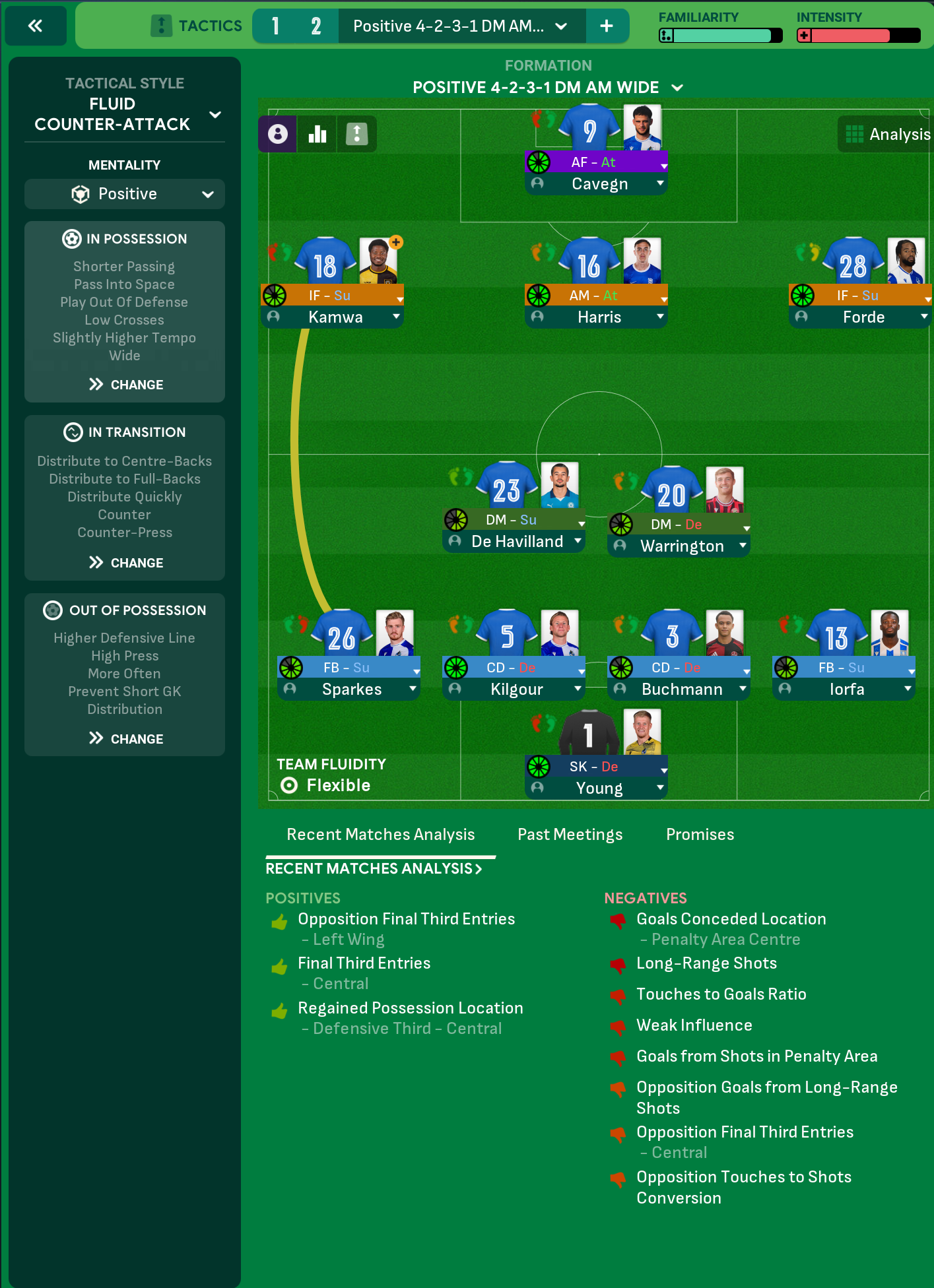
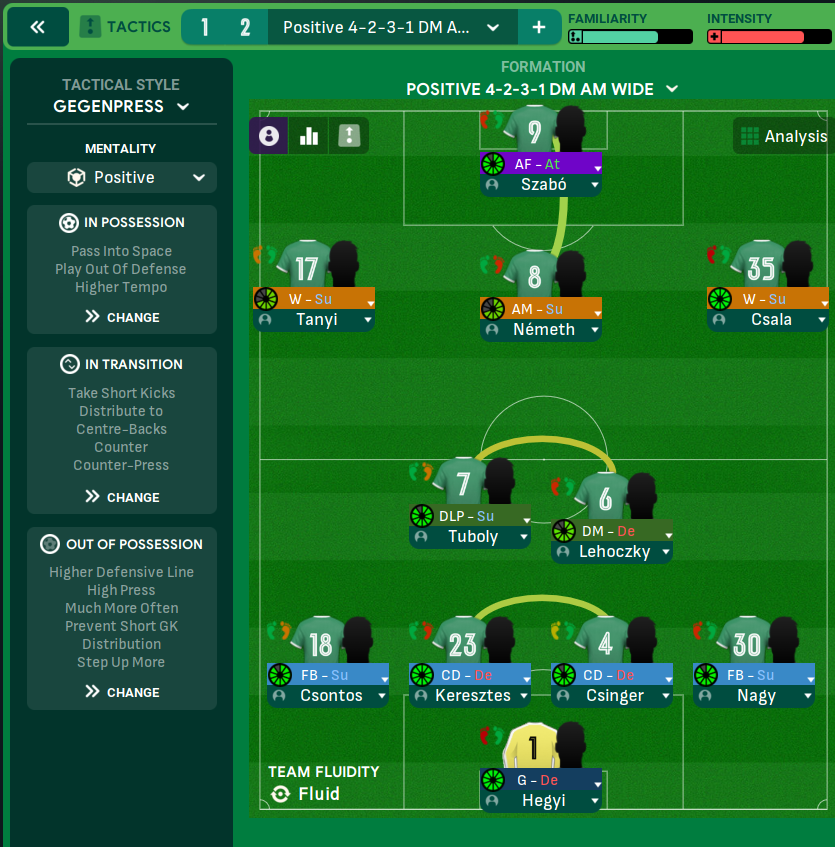
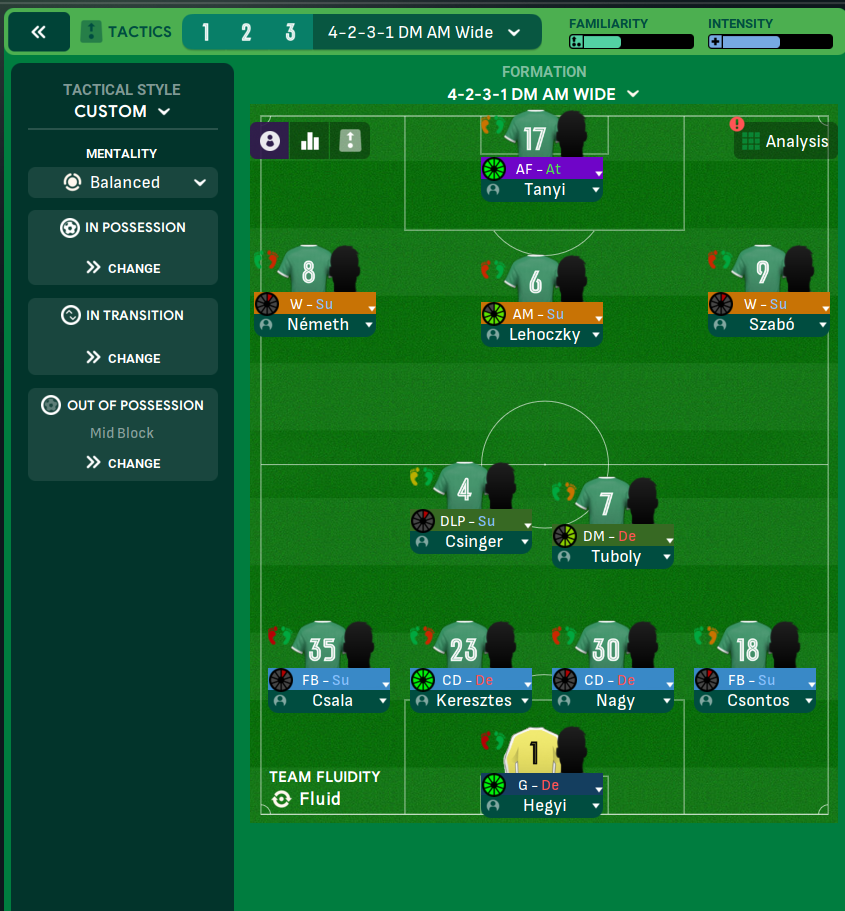
Guides for this formation
The tactical theory behind the 4-2-3-1 DM Wide: roles, instructions, and the trade-offs that decide whether the system holds up.
Player pairings
Midfield Pairs in 4-2-3-1 and 4-4-2
Double pivots and flat pairs in 4-2-3-1 and 4-4-2: when each pairing works, when it collapses, and the AMC unicorn that rescues both.
Read guide
Playing styles
Gegenpressing: A Full Guide
Klopp-style gegenpressing in FM, including squad profile, line-and-press pairing, sustainable workload, and the antipatterns to avoid.
Read guide