Uploaded Tactic
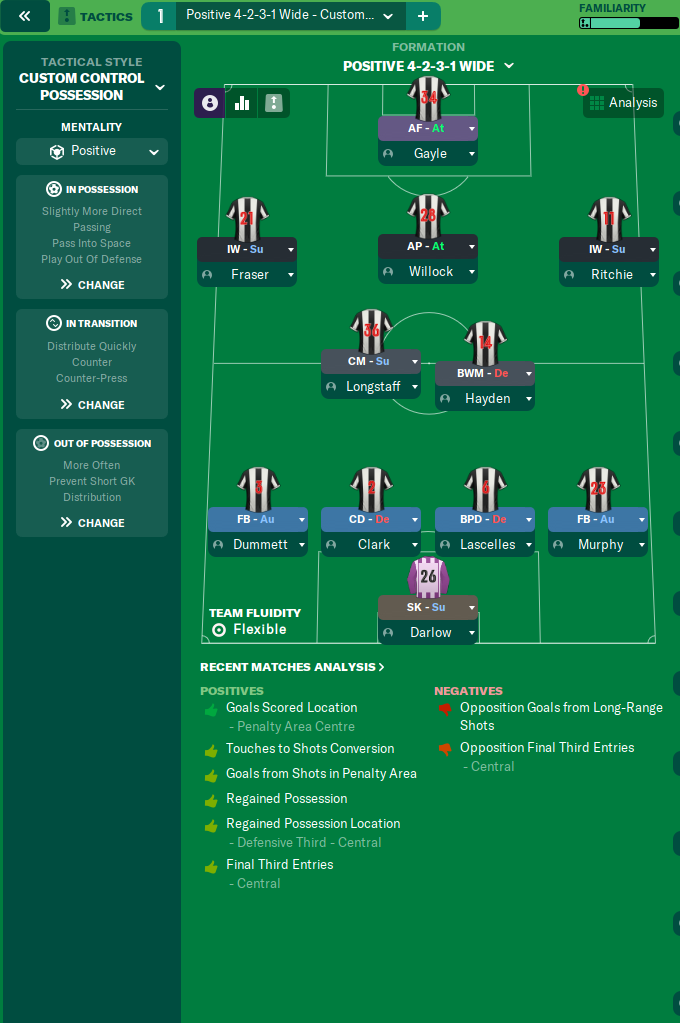
Formation & Style
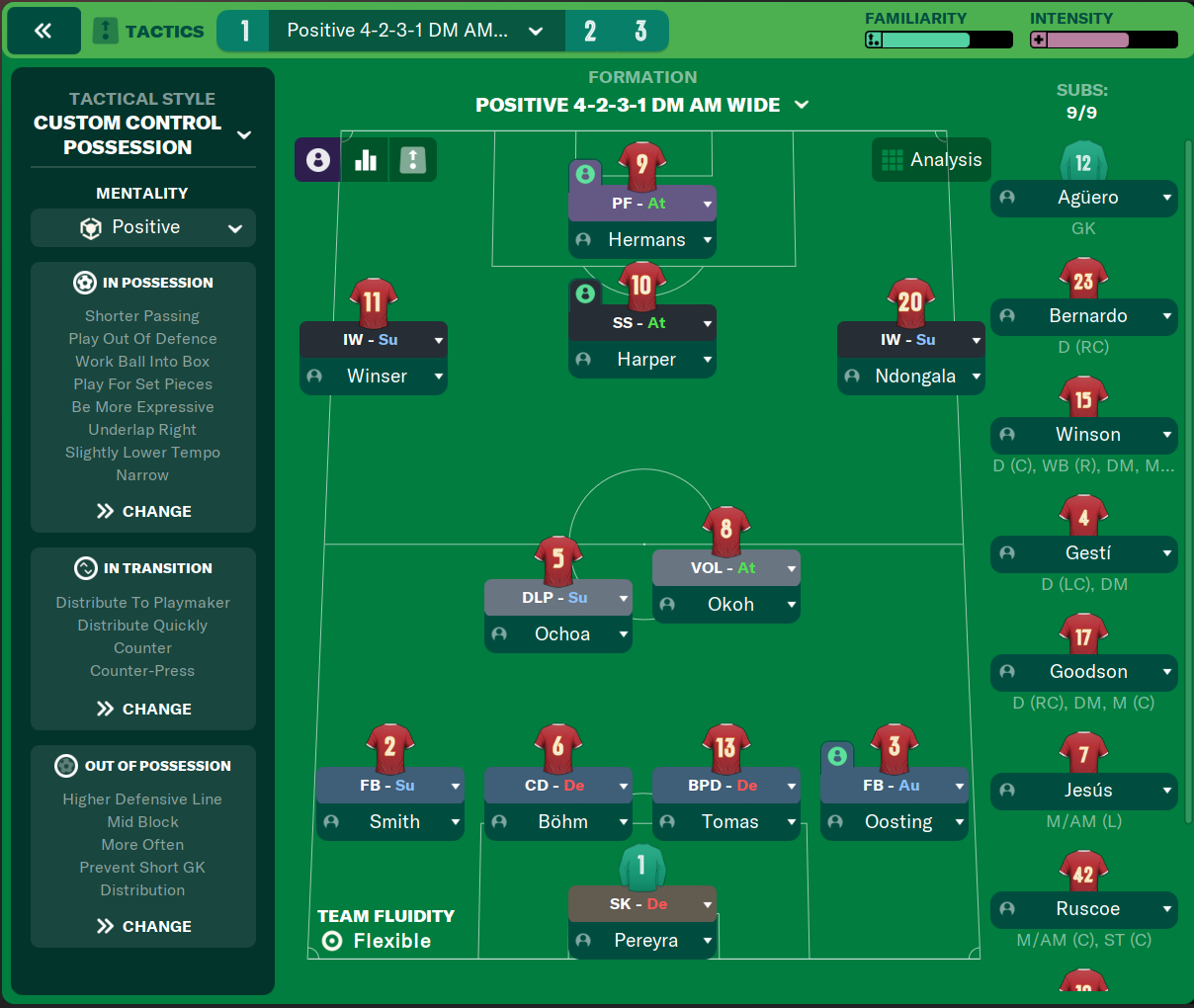
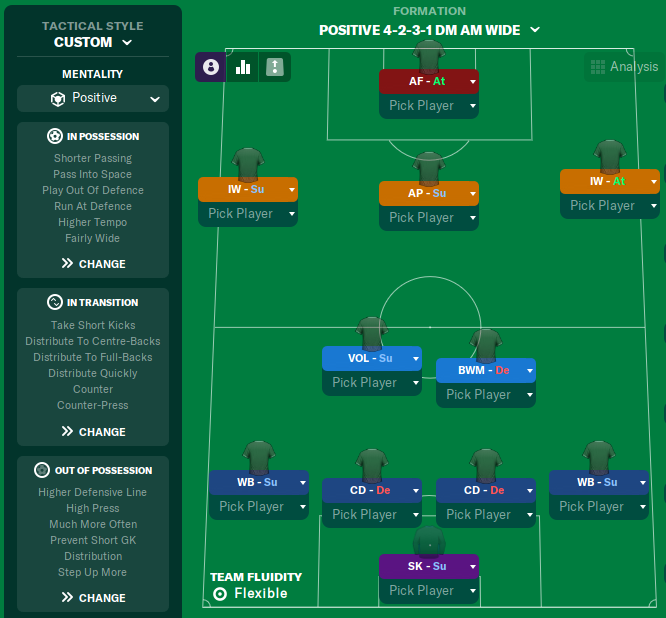
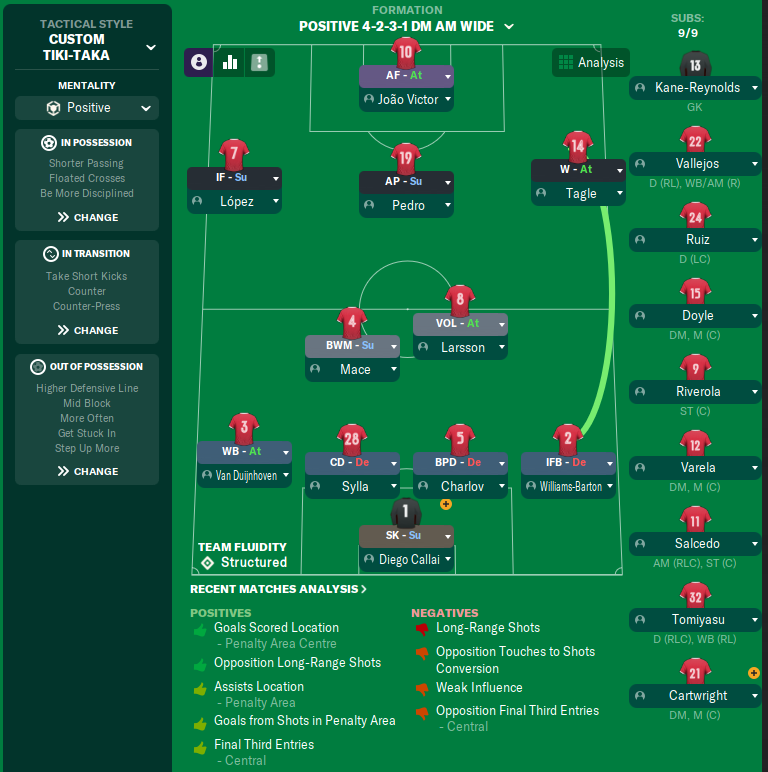
Tactical Style:Custom Control Possession
Mentality:Positive
Formation:4-2-3-1 DM Wide
Team Fluidity:Flexible
In Possession
Shorter Passing
Work Ball Into Box
Play For Set Pieces
Be More Expressive
Underlap Right
Slightly Lower Tempo
Narrow
In Transition
Distribute To Playmaker
Distribute Quickly
Counter
Counter-Press
Out of Possession
Higher Defensive Line
Mid Block
More Often
Prevent Short GK Distribution
Team Shape Without Ball
Shape:4-2
Description:A compact mid-block that looks to restrict space and block passing lanes while maintaining a higher defensive line.
Evidence:FB-Su at [2,1] and [2,5] supporting the central defensive line [2,2] and [2,3].
Team Shape With Ball
Shape:4-3
Description:Wide shape that utilizes inside wingers to stretch play and create spaces for the shadow striker and pressing forward.
Evidence:IW-Su at [5,1] and [5,5] with PF-At at [6,3] and SS-At at [5,3].
Phase Description
Attacking Play
Focus on maintaining possession with intricate passing and exploiting spaces through width and underlapping runs.
Defensive Transition
Quick transitions into a mid-block formation, aiming to pressure opponents as they progress the ball.
Main Focus
Control of midfield and creating scoring opportunities through structured build-up play.
Key Strengths
Possession-Based Play
The focus on shorter passing and working the ball into the box increases ball retention.
Dynamic Attack
The combination of two inside wingers and a shadow striker can create multiple attacking avenues.
Defensive Stability
The structure of having a deep-lying playmaker offers added defensive support.
Conflicting Directions
Vulnerability on the Flanks
Over-reliance on inside wingers may leave gaps in wide areas, especially against high-pressure foes.
Limited Defensive Depth
Midfielders may be drawn out of position, leaving the defensive line exposed.
Counter-Attack Exposure
A higher defensive line increases chances of being caught on a counter-attack.
Tactical Suggestions
Adjust Defensive Line
Consider lowering the defensive line to reduce the risk of counter-attacks.
Utilize Anchored Roles
Incorporate an anchor role to stabilize midfield and protect the back line during transitions.
Exploit Overlapping Full-Backs
Encourage full-backs to overlap the wingers for creating width and confusion in opposition structures.
Ask Questions About Your Lineup
Related Tactics
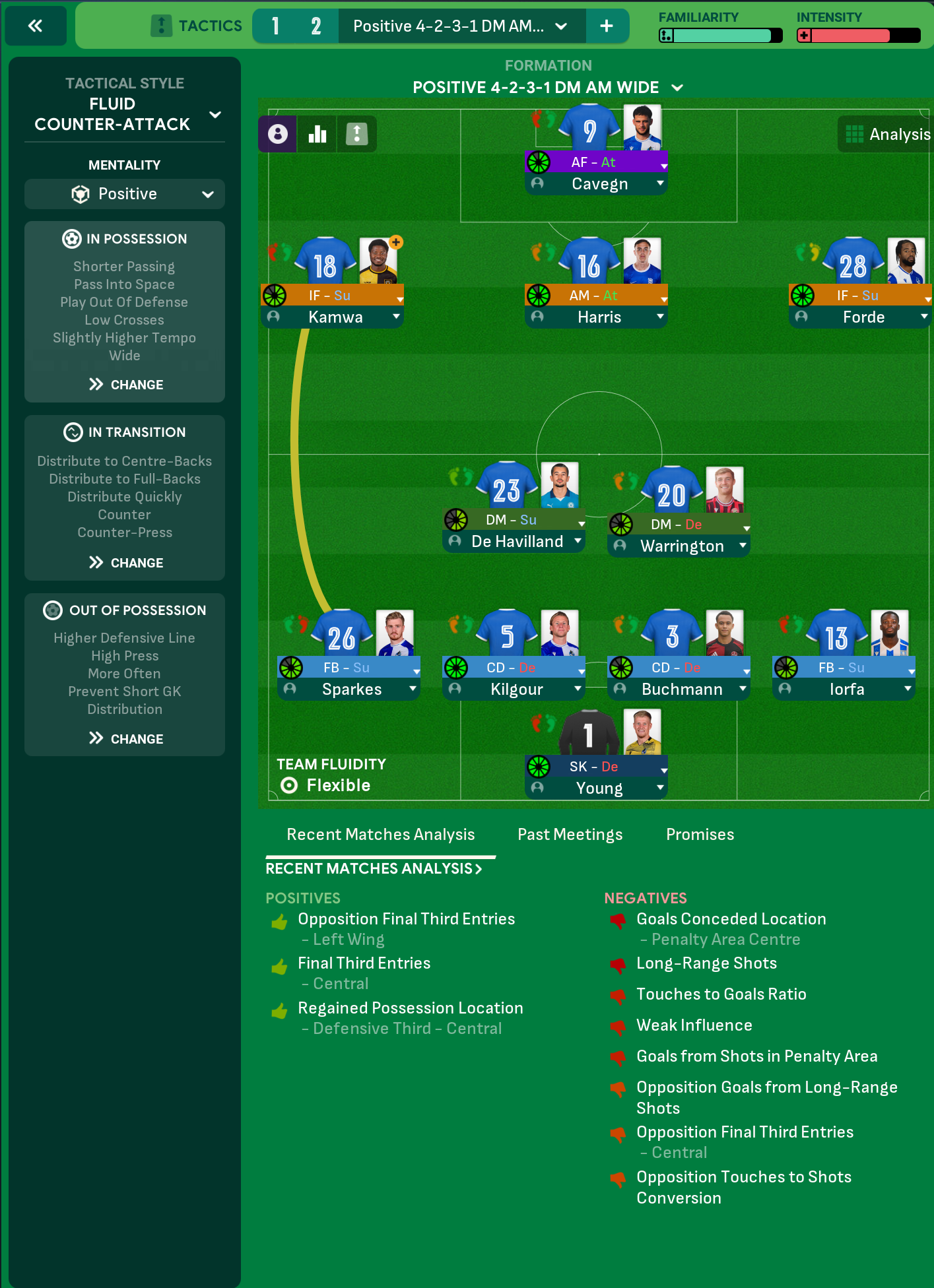
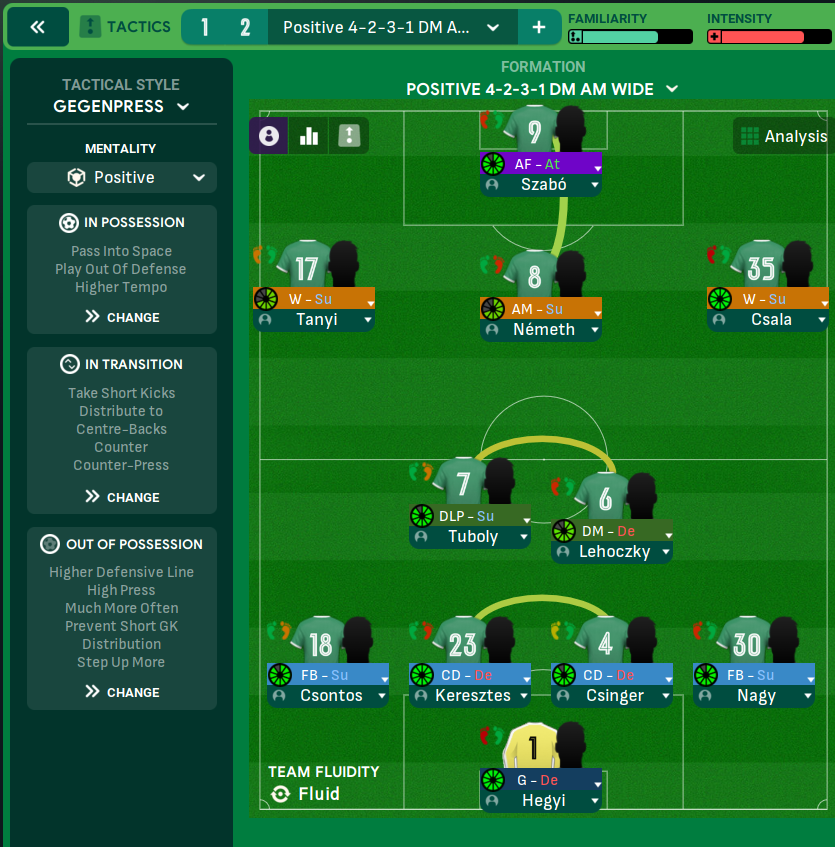
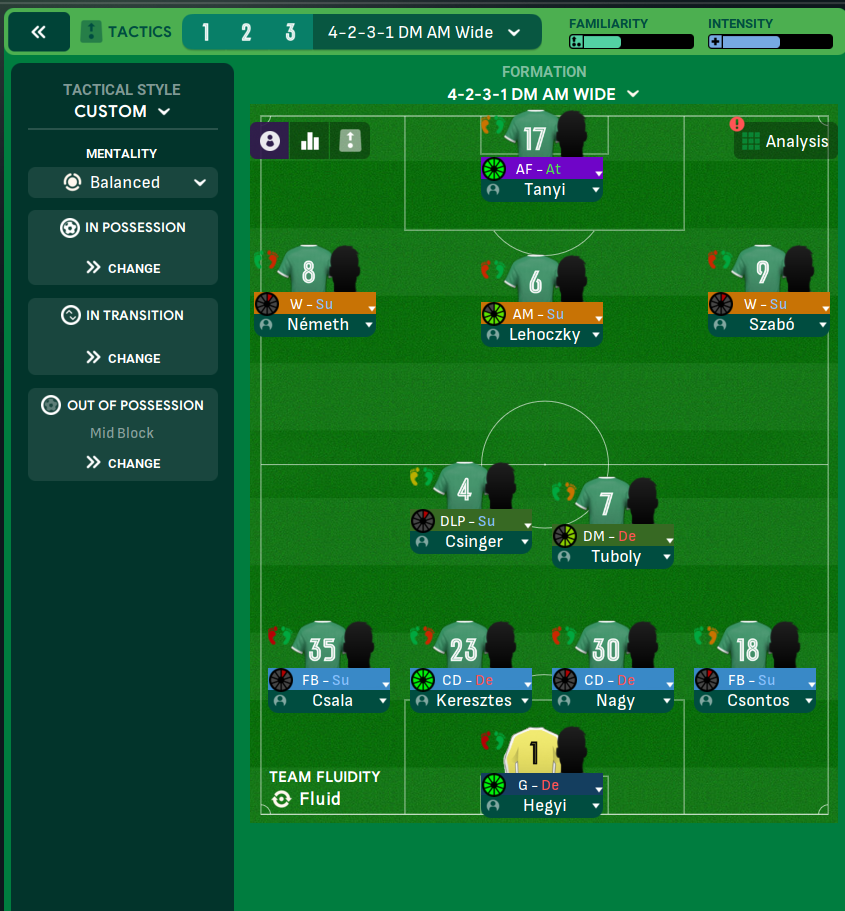
More Custom Control Possession tactics
Guides for this formation
The tactical theory behind the 4-2-3-1 DM Wide: roles, instructions, and the trade-offs that decide whether the system holds up.
Player pairings
Midfield Pairs in 4-2-3-1 and 4-4-2
Double pivots and flat pairs in 4-2-3-1 and 4-4-2: when each pairing works, when it collapses, and the AMC unicorn that rescues both.
Read guide
Playing styles
Gegenpressing: A Full Guide
Klopp-style gegenpressing in FM, including squad profile, line-and-press pairing, sustainable workload, and the antipatterns to avoid.
Read guide