Uploaded Tactic
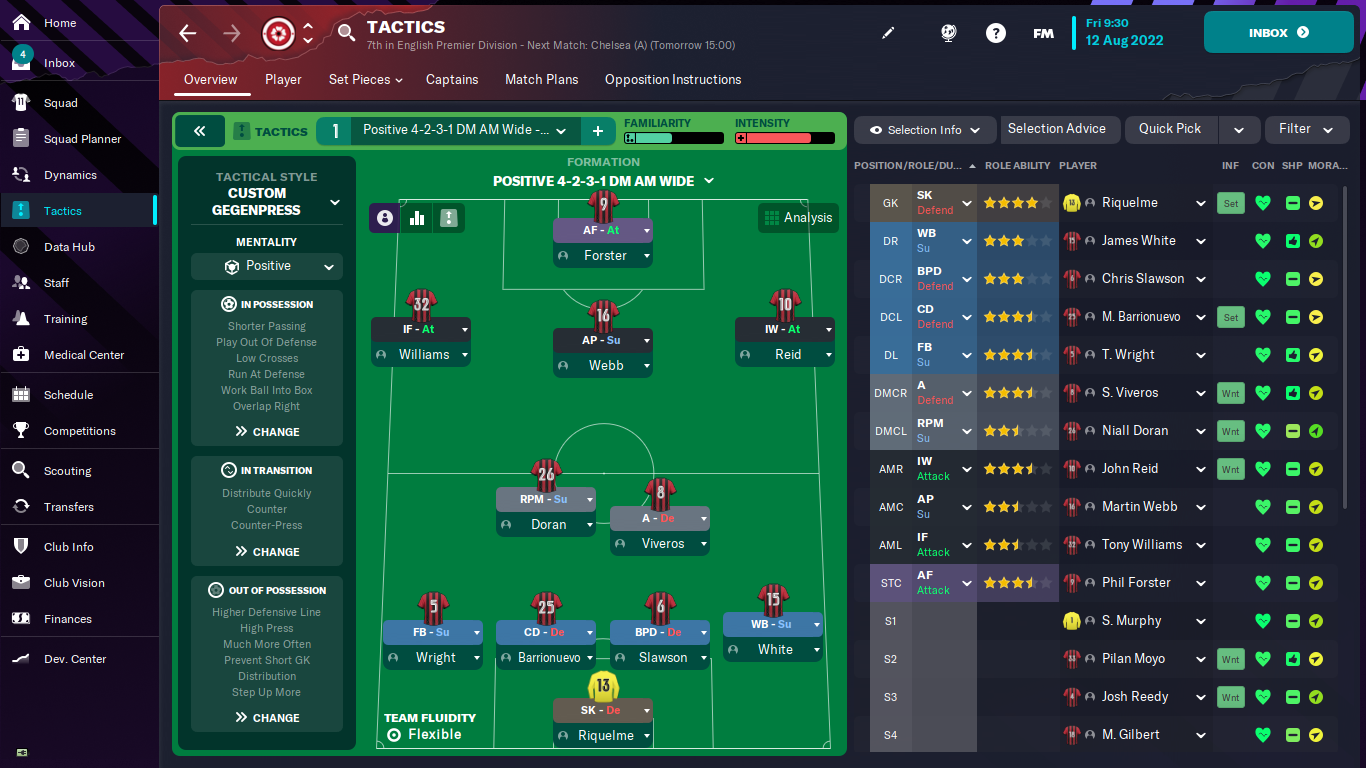
Formation & Style
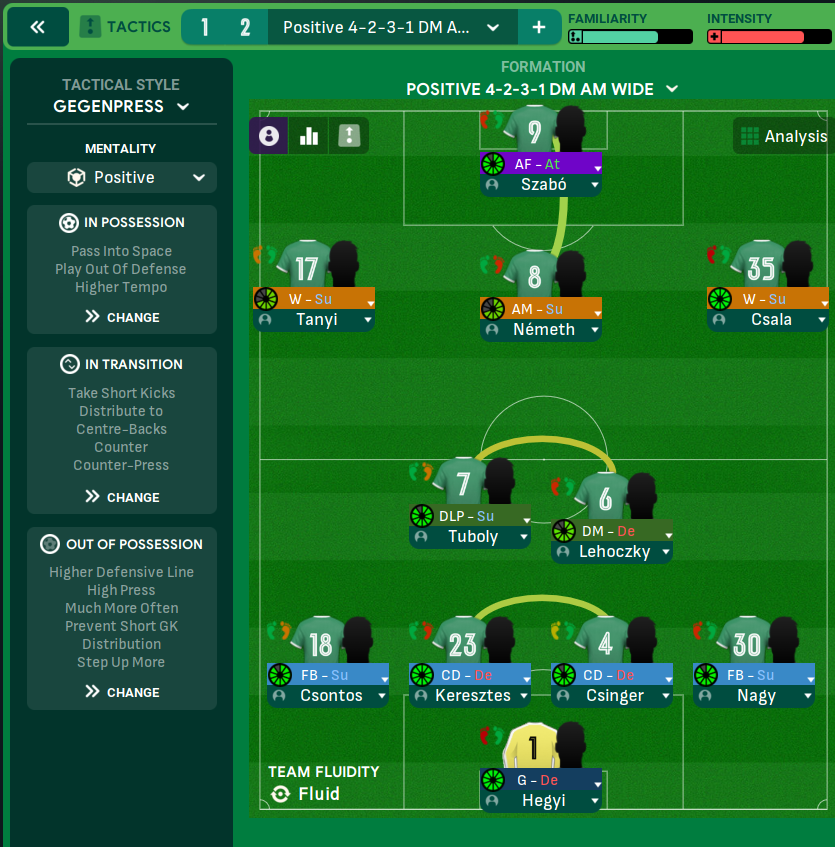
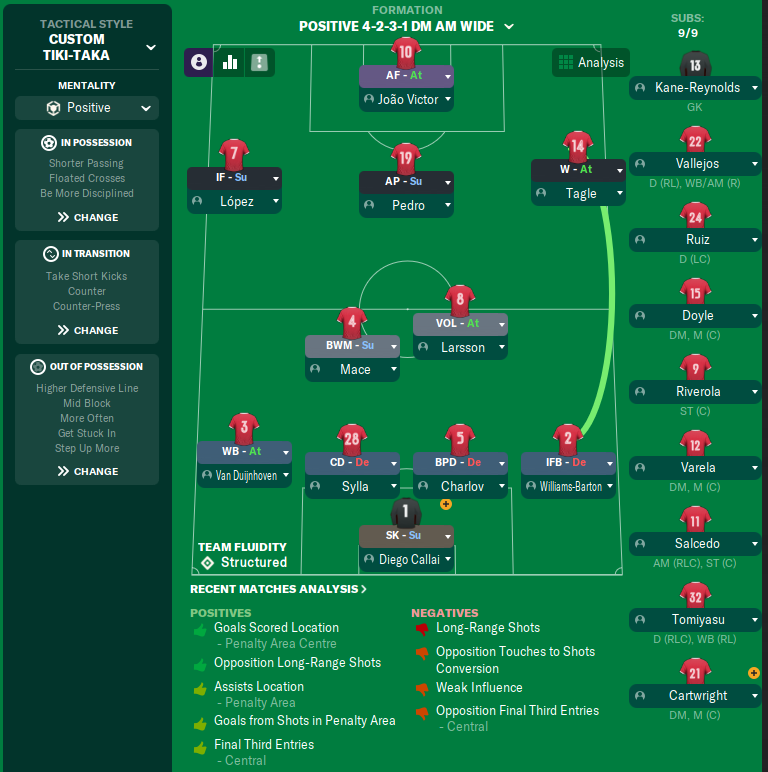
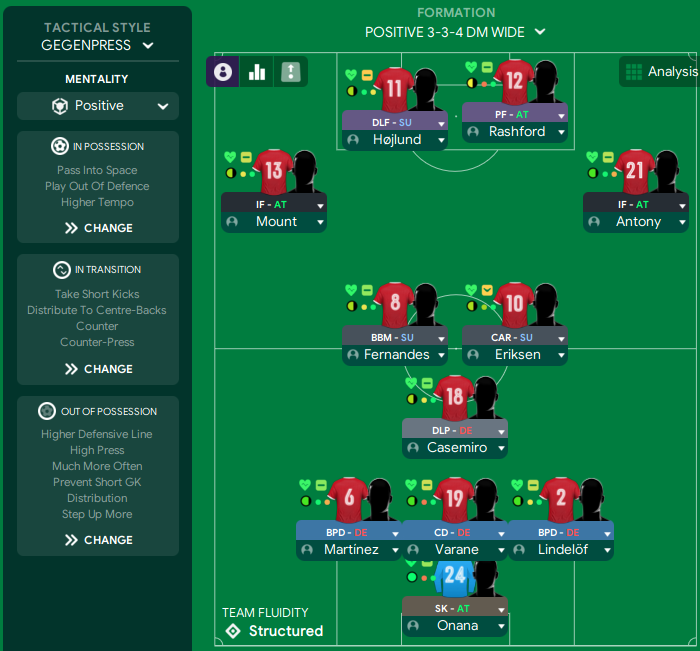
Tactical Style:Gegenpress
Mentality:Positive
Formation:4-2-3-1 DM Wide
Team Fluidity:Flexible
In Possession
Shorter Passing
Play Out Of Defence
Low Crosses
Run At Defence
Work Ball Into Box
Overlap Right
In Transition
Distribute Quickly
Counter-Press
Out of Possession
Higher Defensive Line
Much More Often Prevent Short GK Distribution
Step Up More
Team Shape Without Ball
Shape:4-2
Description:Defensive stability with a four-player backline supported by two midfielders both tracking back.
Evidence:The use of BPD at [2,2] and CD at [2,3] allows for flexibility in building from the back.
Team Shape With Ball
Shape:4-3
Description:Attacking shape places four players in advanced positions to pressurize opponent's defense.
Evidence:With an AF at [6,3], two wide players in AM positions, and a support playmaker in central.
Phase Description
Attacking Play
The team looks to maintain possession, using shorter passing and overlapping runs on the right flank, with the wing-backs and forwards synergizing effectively.
Defensive Transition
Emphasizes quick counter-pressing to regain possession as soon as losing the ball, supported by the higher defensive line.
Main Focus
Utilizing width and quick attacking transitions to destabilize opponents.
Key Strengths
Dynamic Attackers
Three attackers can interchange positions and create confusion for the defense.
Defensive Solidity
A balanced defense anchored by a BPD allows for both defensive stability and distribution.
Effective Pressing
High pressing can disrupt opposition buildup, forcing errors.
Conflicting Directions
Defensive Depth
Higher defensive line may expose gaps if caught on counters, especially against fast attackers.
Overlap Dependency
Heavy reliance on right side for overlaps may make attack predictable.
Player Synergy
If specific players do not gel well, roles may not be effective, leading to a lack of fluidity.
Tactical Suggestions
Adjust Defensive Line
Consider lowering defensive line to enhance coverage against pacey counter-attacks.
Diversify Attacking Play
Encourage left flank attacking to balance the attack and reduce predictability.
Utilize Additional Width
Encourage wing-backs to provide depth while supporting wide forwards.
Ask Questions About Your Lineup
Related Tactics
More Gegenpress tactics
Guides for this formation
The tactical theory behind the 4-2-3-1 DM Wide: roles, instructions, and the trade-offs that decide whether the system holds up.
Player pairings
Midfield Pairs in 4-2-3-1 and 4-4-2
Double pivots and flat pairs in 4-2-3-1 and 4-4-2: when each pairing works, when it collapses, and the AMC unicorn that rescues both.
Read guide
Playing styles
Gegenpressing: A Full Guide
Klopp-style gegenpressing in FM, including squad profile, line-and-press pairing, sustainable workload, and the antipatterns to avoid.
Read guide