Uploaded Tactic
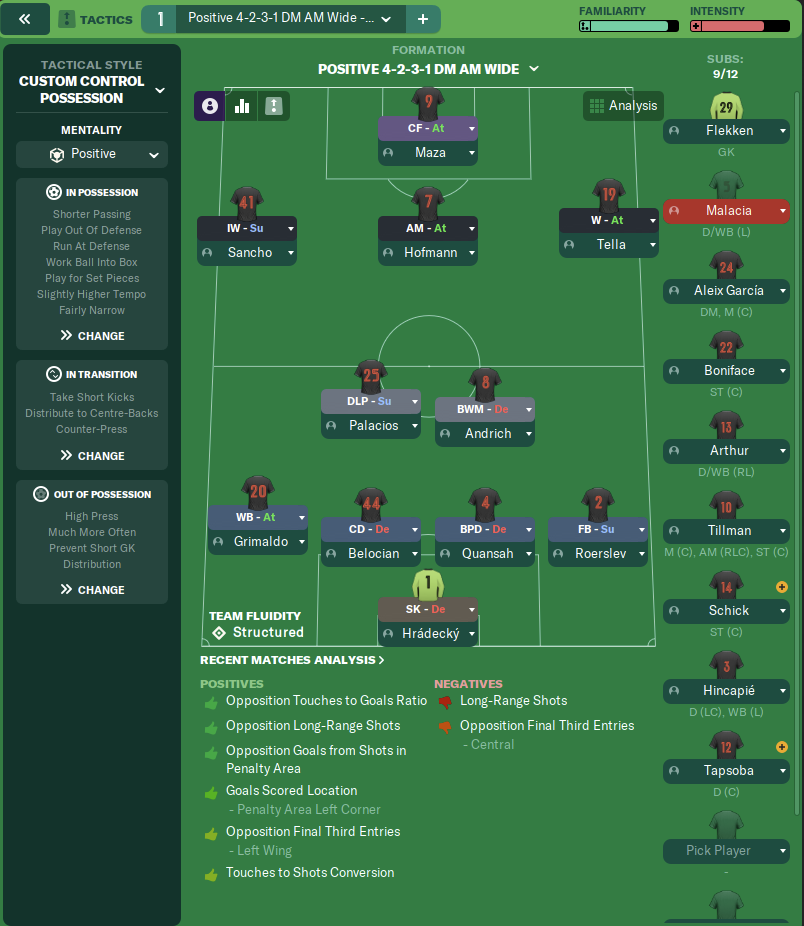
Formation & Style
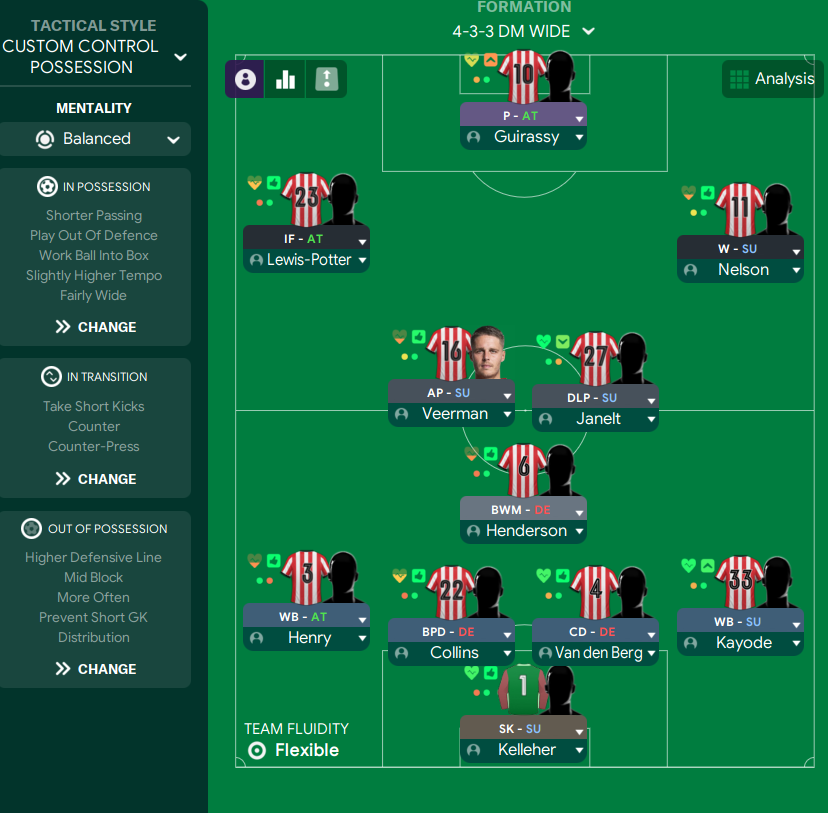
Tactical Style:Custom Control Possession
Mentality:Positive
Formation:4-2-3-1 DM Wide
Team Fluidity:Structured
In Possession
Shorter Passing
Play for Set Pieces
Slightly Higher Tempo
Run at Defense
Work Ball Into Box
In Transition
Take Short Kicks
Distribute to Centre-Backs
Counter-Press
Out of Possession
High Press
Much More Often Prevent Short GK Distribution
Team Shape Without Ball
No team shape without ball data available
Team Shape With Ball
No team shape with ball data available
Key Strengths
Possession Retention
The tactic emphasizes shorter passing and working the ball into the box, promoting high possession rates.
Attacking Versatility
Utilizes both width from wing-backs and inside forwards, creating multiple avenues for attack.
Defensive Structure
Employs a high press and a solid two-man midfield to disrupt opposition play and regain possession quickly.
Set Piece Threat
Includes dedicated instructions for set pieces, making the team a consistent threat during dead-ball situations.
Conflicting Directions
High Press vs. Recovery
The high press may lead to defensive vulnerabilities if the BWM and midfield are not positioned correctly to cover counter-attacks.
Structured Fluidity vs. Tempo
Slightly higher tempo may conflict with the structured fluidity, leading to rushed play at times.
Attack Duty Confusion
The overlapping roles of attacking players might create positional confusion, impacting overall cohesion in the final third.
Wing-Back Usage
Over-relying on wing-backs for width could leave the central areas exposed if they are caught high up the pitch.
Tactical Suggestions
Adjust BWM Role
Consider changing the BWM to a more supportive role to balance the defensive duties and improve possession recovery.
Increase Defensive Depth
Introduce an extra center-back or change structure when defending to reinforce the backline during transitions.
Optimize Width
Evaluate the starting positions of inside forwards to reduce congestion and allow more space for overlapping runs from wing-backs.
Set Piece Variation
Incorporate more varied attacking set pieces beyond corners to keep opposition defenses guessing and improve scoring opportunities.
Ask Questions About Your Lineup
Related Tactics
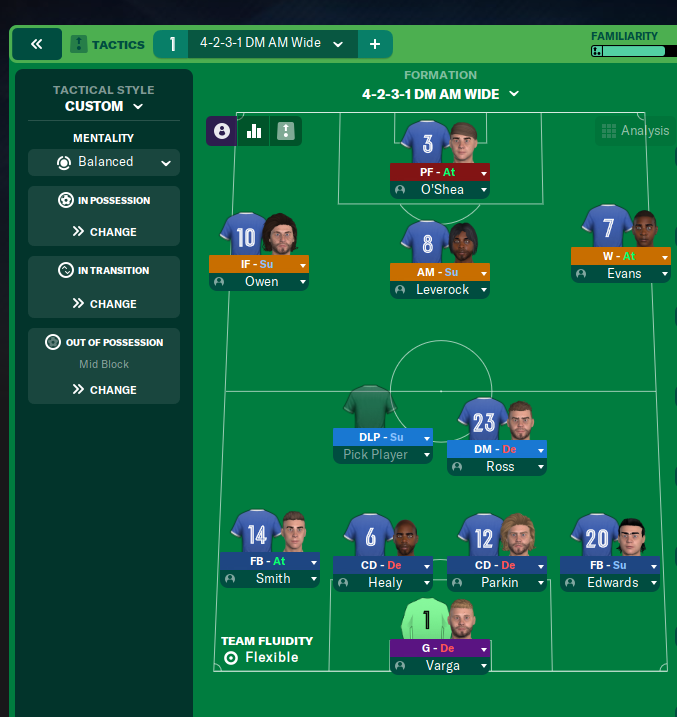
4-2-3-1 DM Wide Formation
Custom
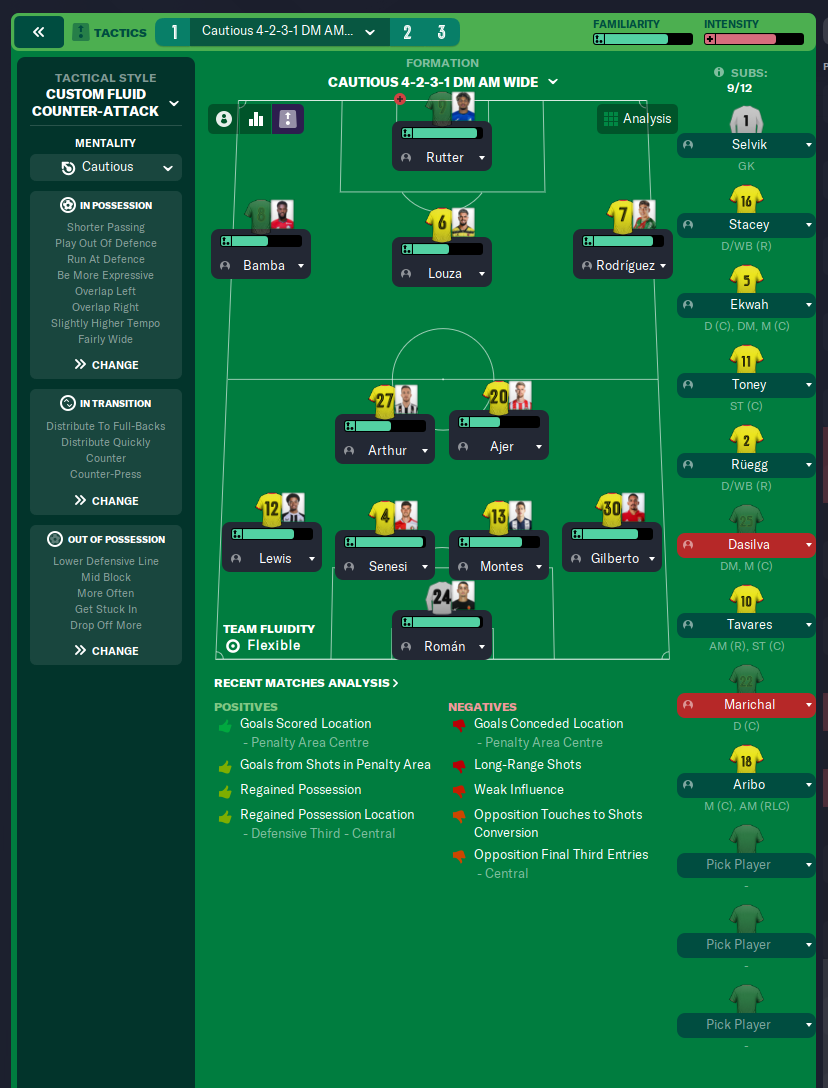
Fluid Counter-Attack 4-2-3-1 DM Wide
Custom Fluid Counter-Attack
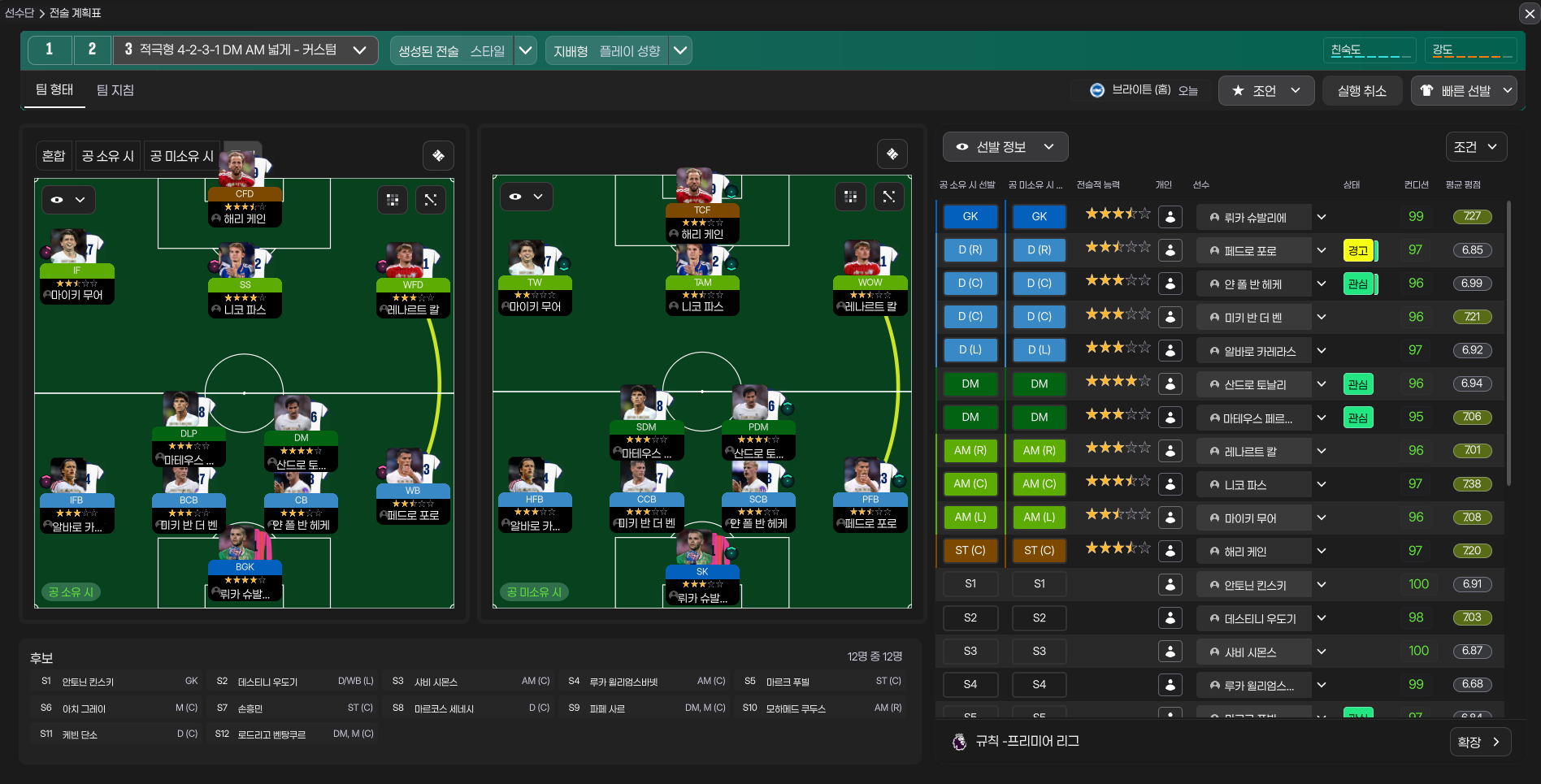
4-2-3-1 DM Wide Formation
Positional
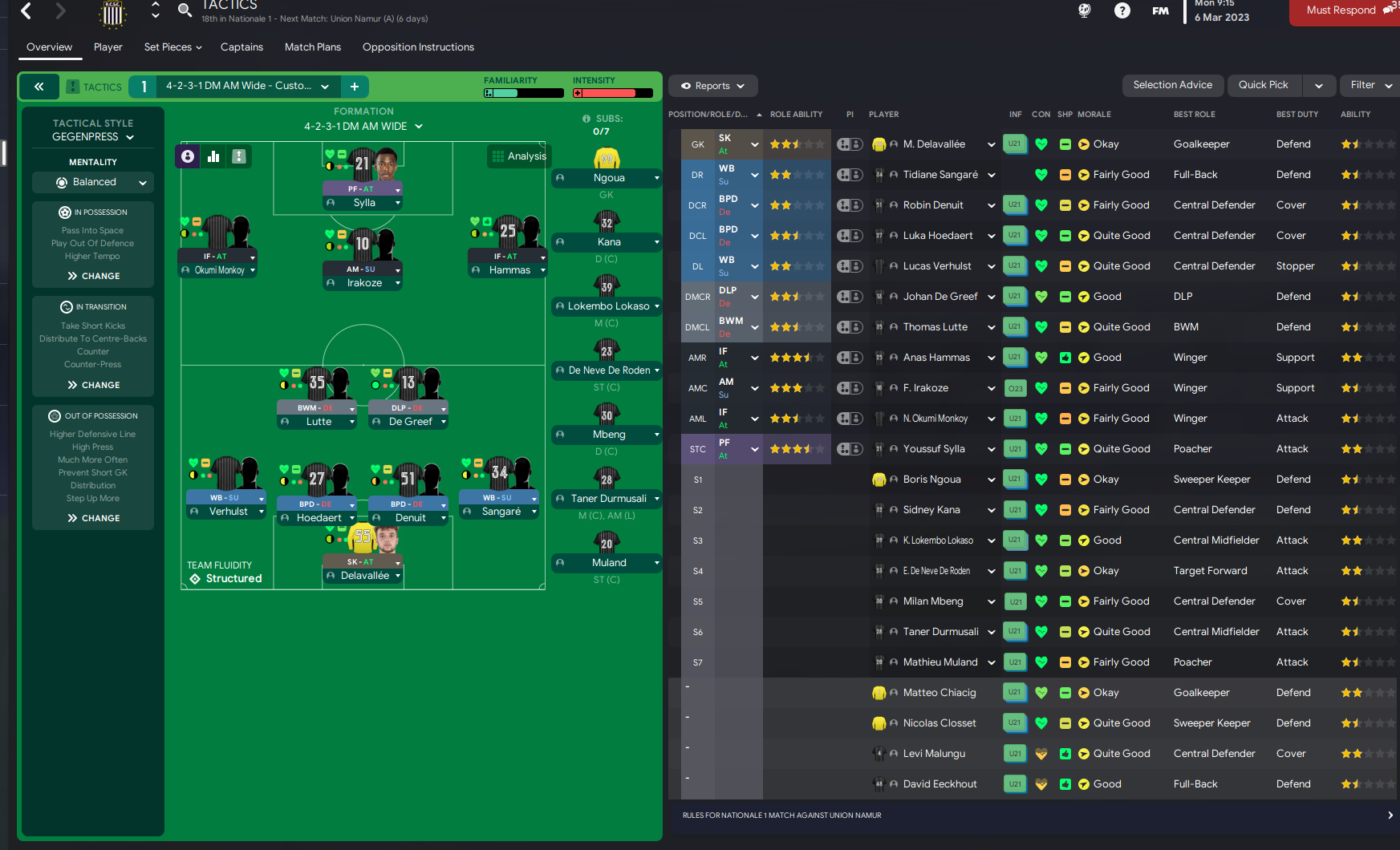
Gegenpress 4-2-3-1 DM Wide
Gegenpress
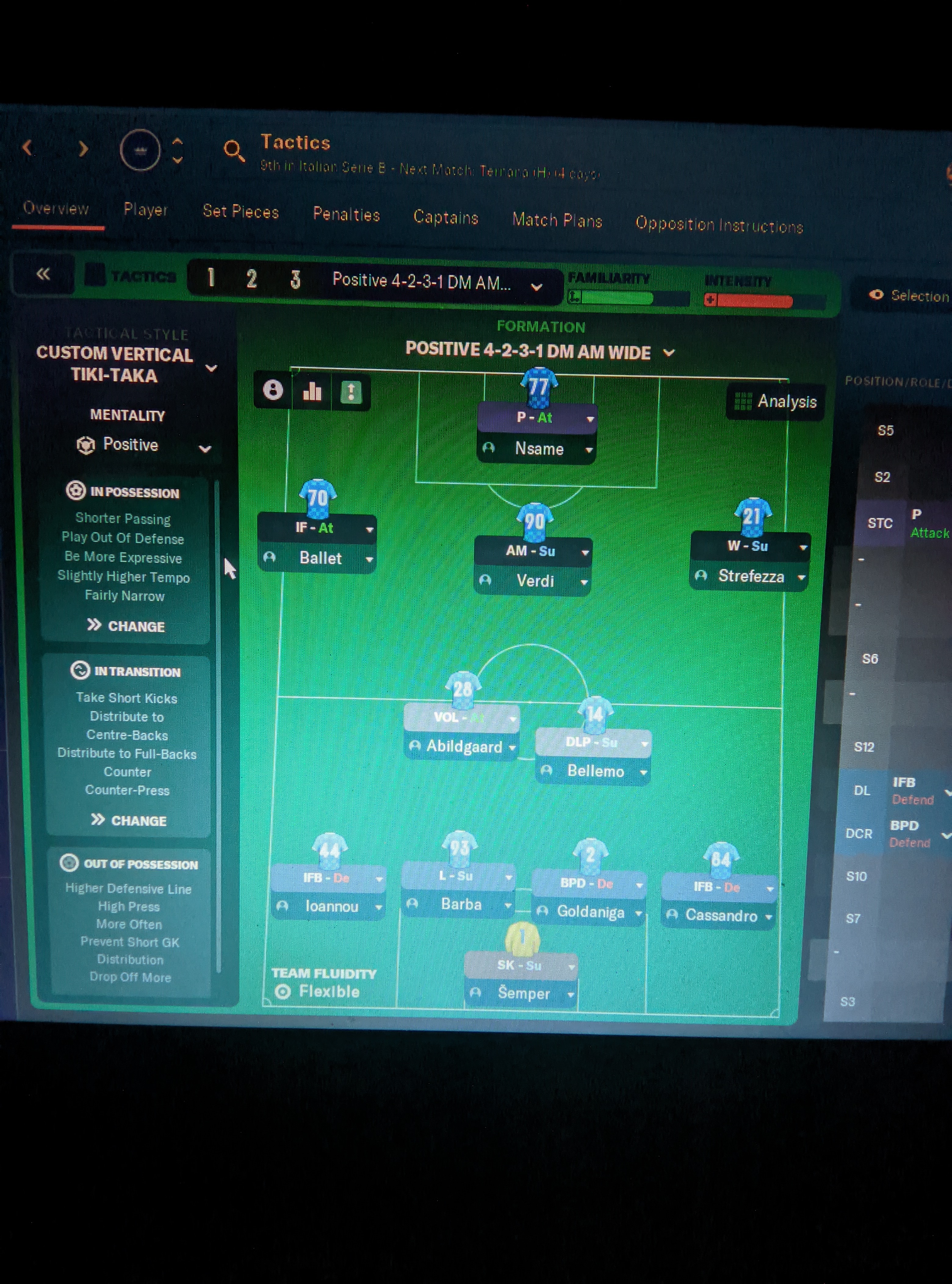
Vertical Tiki-Taka 4-2-3-1 DM Wide
Custom Vertical Tiki-Taka
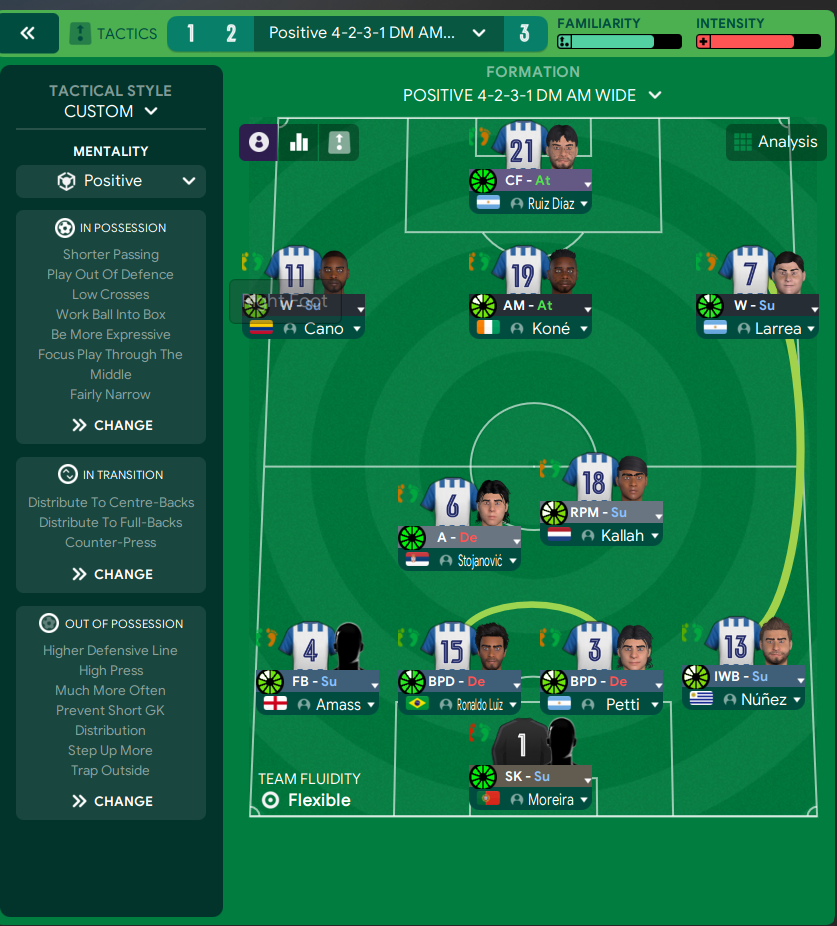
4-2-3-1 DM Wide Formation
Custom
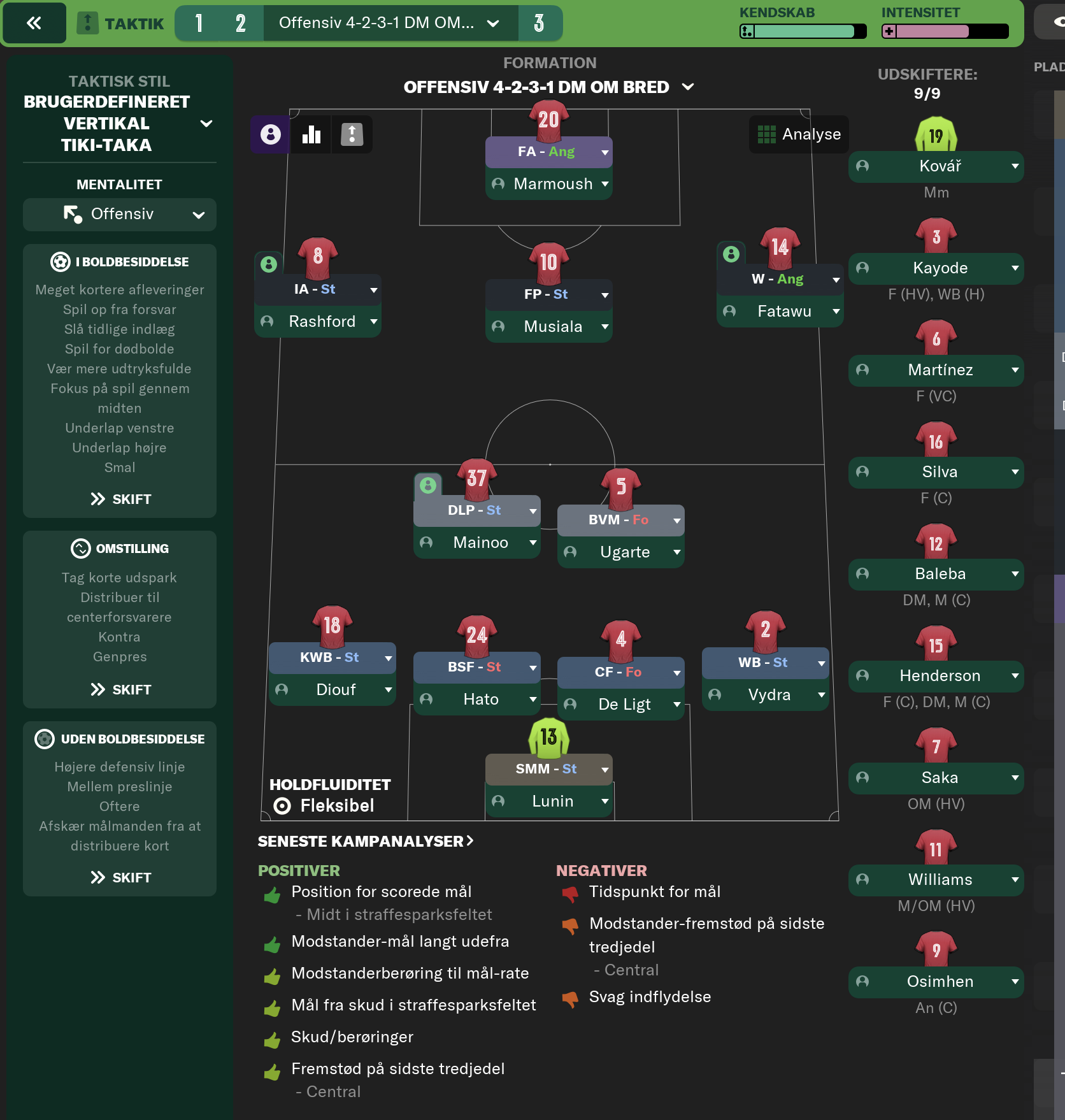
Tiki-Taka 4-2-3-1 DM Wide
Tiki-taka
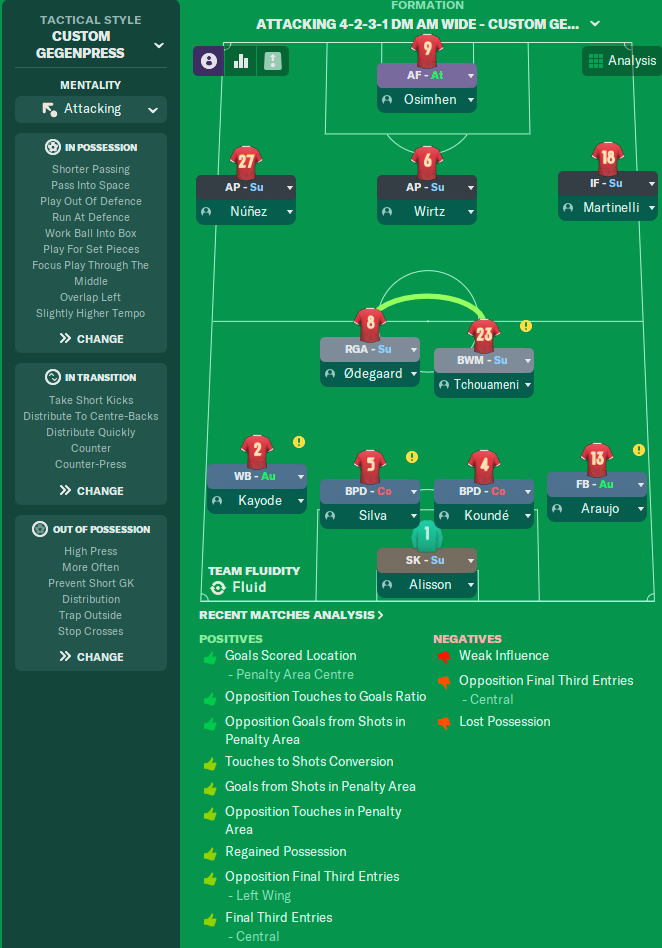
Gegenpress 4-2-3-1 DM Wide
Custom Gegenpress
More Custom Control Possession tactics
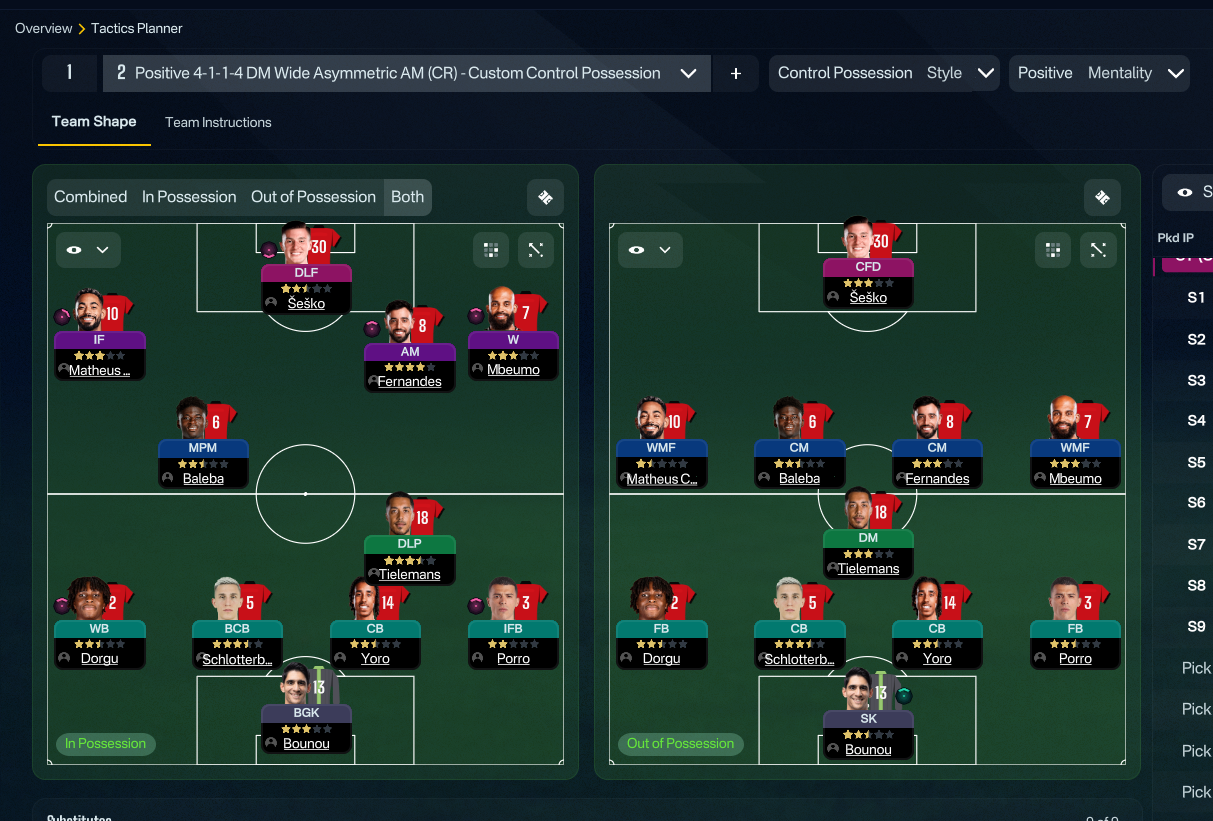
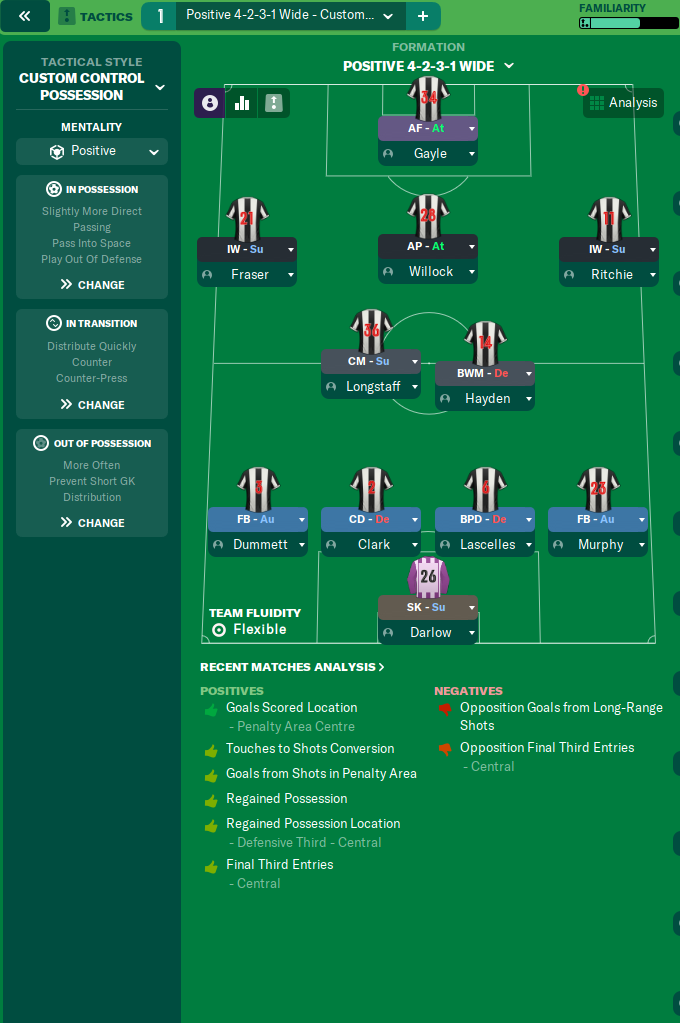
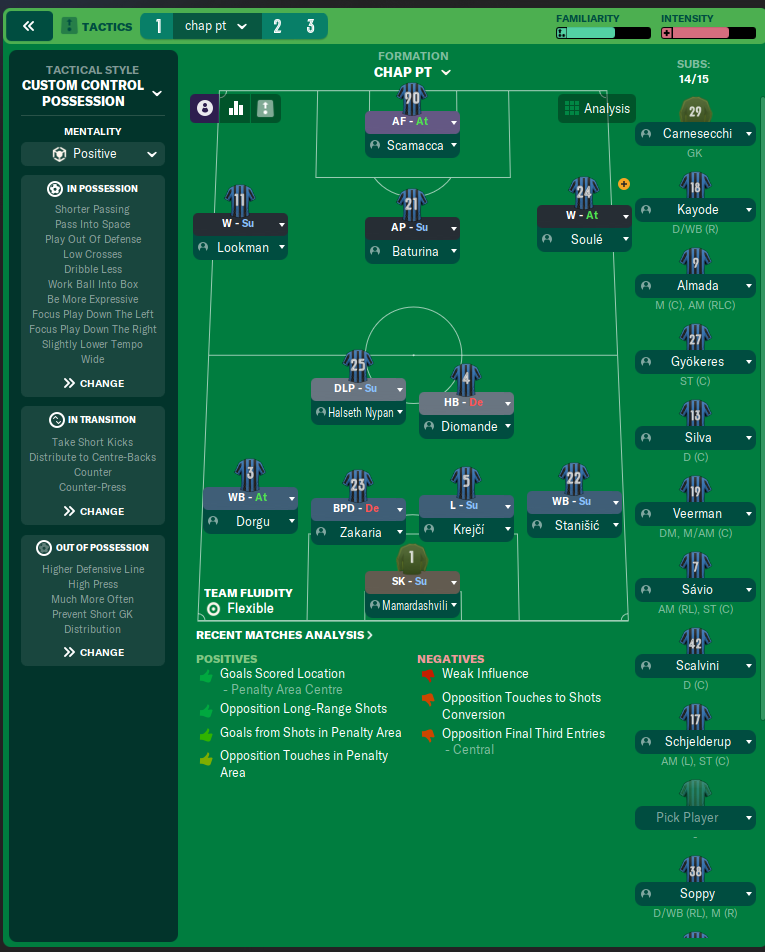
Guides for this formation
The tactical theory behind the 4-2-3-1 DM Wide: roles, instructions, and the trade-offs that decide whether the system holds up.
Player pairings
Midfield Pairs in 4-2-3-1 and 4-4-2
Double pivots and flat pairs in 4-2-3-1 and 4-4-2: when each pairing works, when it collapses, and the AMC unicorn that rescues both.
Read guide
Playing styles
Gegenpressing: A Full Guide
Klopp-style gegenpressing in FM, including squad profile, line-and-press pairing, sustainable workload, and the antipatterns to avoid.
Read guide