Uploaded Tactic
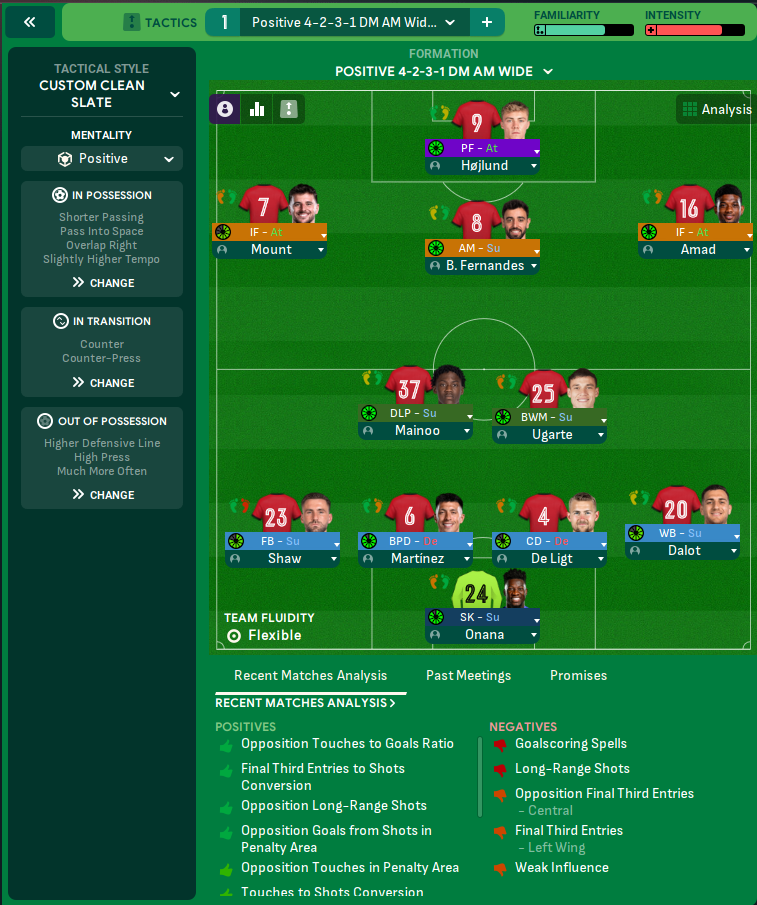
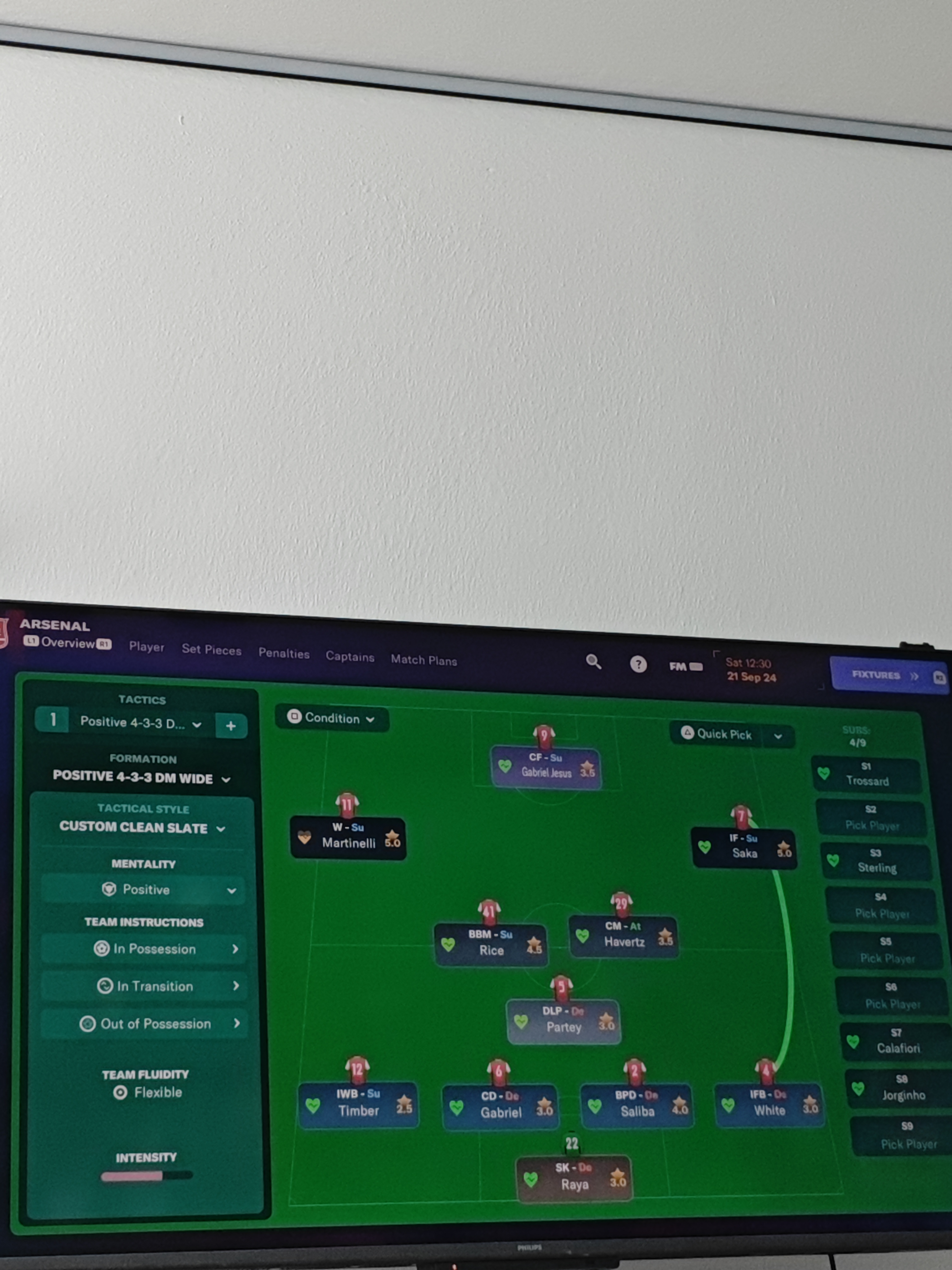
Formation & Style
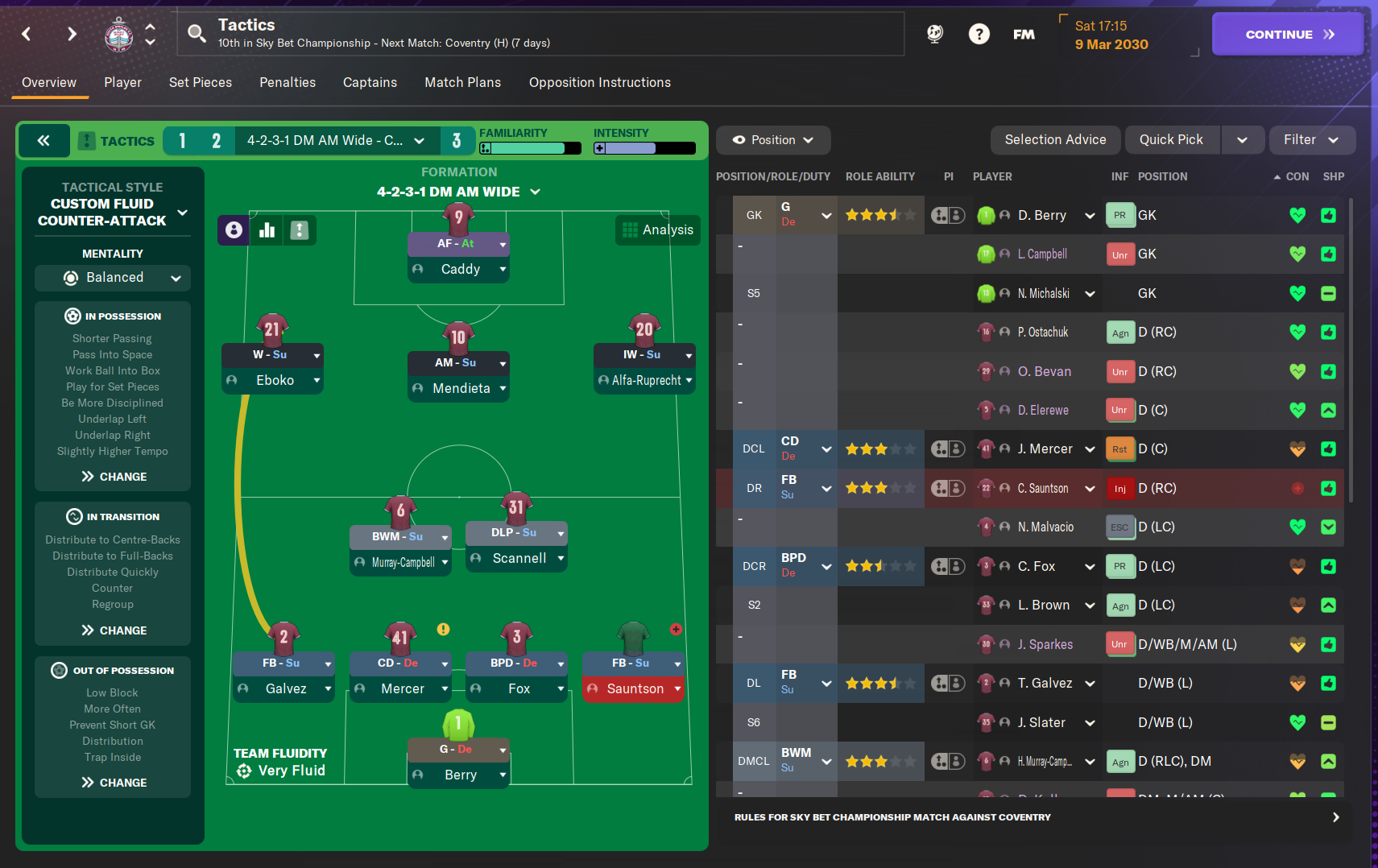
Tactical Style:Custom Clean Slate
Mentality:Positive
Formation:4-2-3-1 DM Wide
Team Fluidity:Flexible
In Possession
Shorter Passing
Pass Into Space
Overlap Right
Slightly Higher Tempo
In Transition
Counter
Counter-Press
Out of Possession
Higher Defensive Line
High Press
Much More Often
Team Shape Without Ball
No team shape without ball data available
Team Shape With Ball
No team shape with ball data available
Key Strengths
Attacking Width
Utilizing wide players in the formation creates space in central areas and allows for more fluid attacking options.
High Pressing System
The high press, coupled with a higher defensive line, can disrupt the opponent's build-up and regain possession quickly.
Versatile Midfield Roles
The combination of a Ball-Winning Midfielder and a Deep-Lying Playmaker provides balance between defensive duties and playmaking.
Dynamic Forward Play
The presence of a Pressing Forward and an Attacking Midfielder increases the attacking threat, facilitating quick transitions.
Conflicting Directions
Defensive Vulnerability
A high defensive line can leave space behind for quick counter-attacks, especially if the midfield fails to press effectively.
Overlap Versus Central Play
Encouraging overlaps on one side may limit the attacking options on the opposite flank, making the play predictable.
Tempo Management
A slightly higher tempo alongside a focus on shorter passing may lead to rushed attacks, risking turnovers.
Player Roles Clarity
Confusion about whether the BWM should contribute to pressing or focus on covering for the defensive line risks compromising midfield stability.
Tactical Suggestions
Adjust Defensive Line
Consider lowering the defensive line slightly to provide better cover against quick counter-attacks.
Encourage Central Attacks
Incorporate some roam roles or change individual instructions to allow midfielders to exploit spaces centrally.
Define Player Duties
Clarifying the BWM's role to be more involved in pressing or defensive duties can help with midfield coordination.
Utilize Wing Play Effectively
Ensure that wingers are encouraged to cross more frequently to exploit aerial threats from forwards.
Ask Questions About Your Lineup
Related Tactics
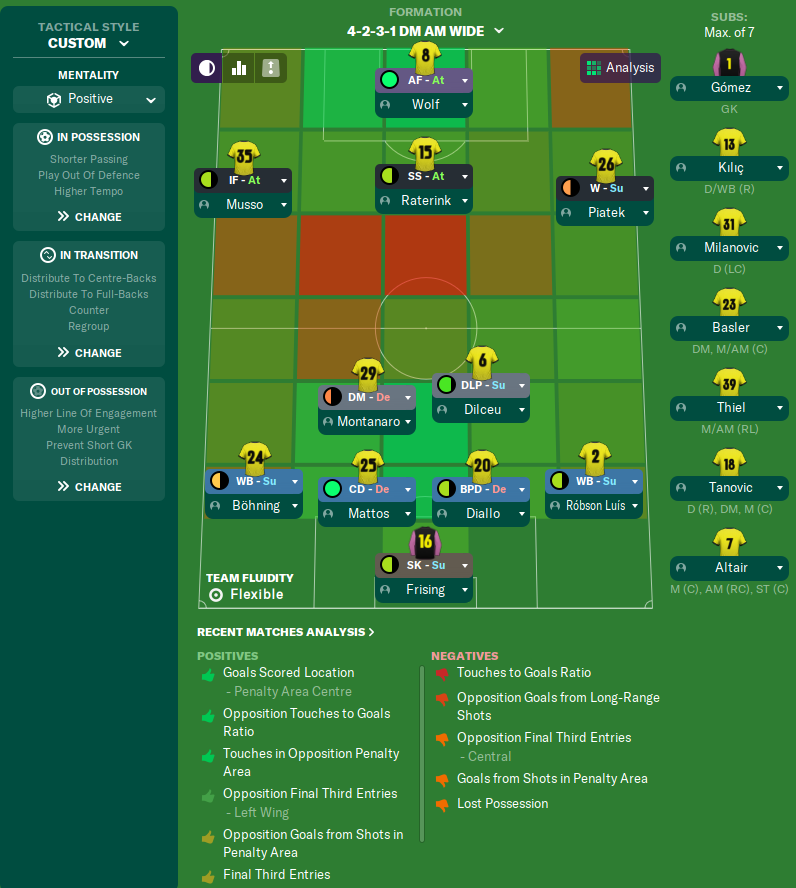
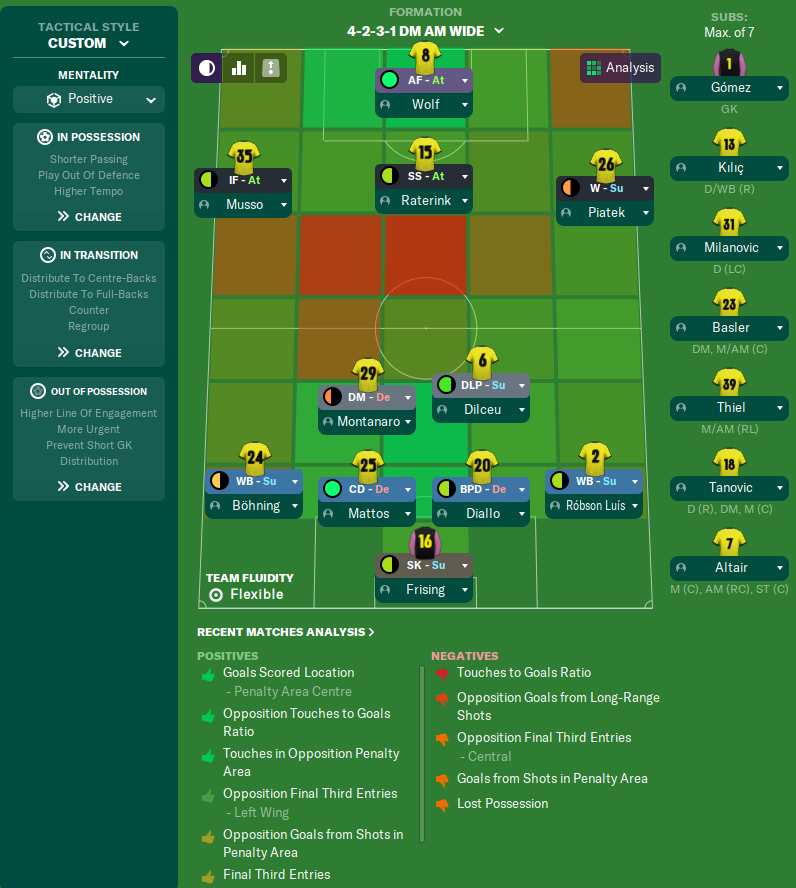
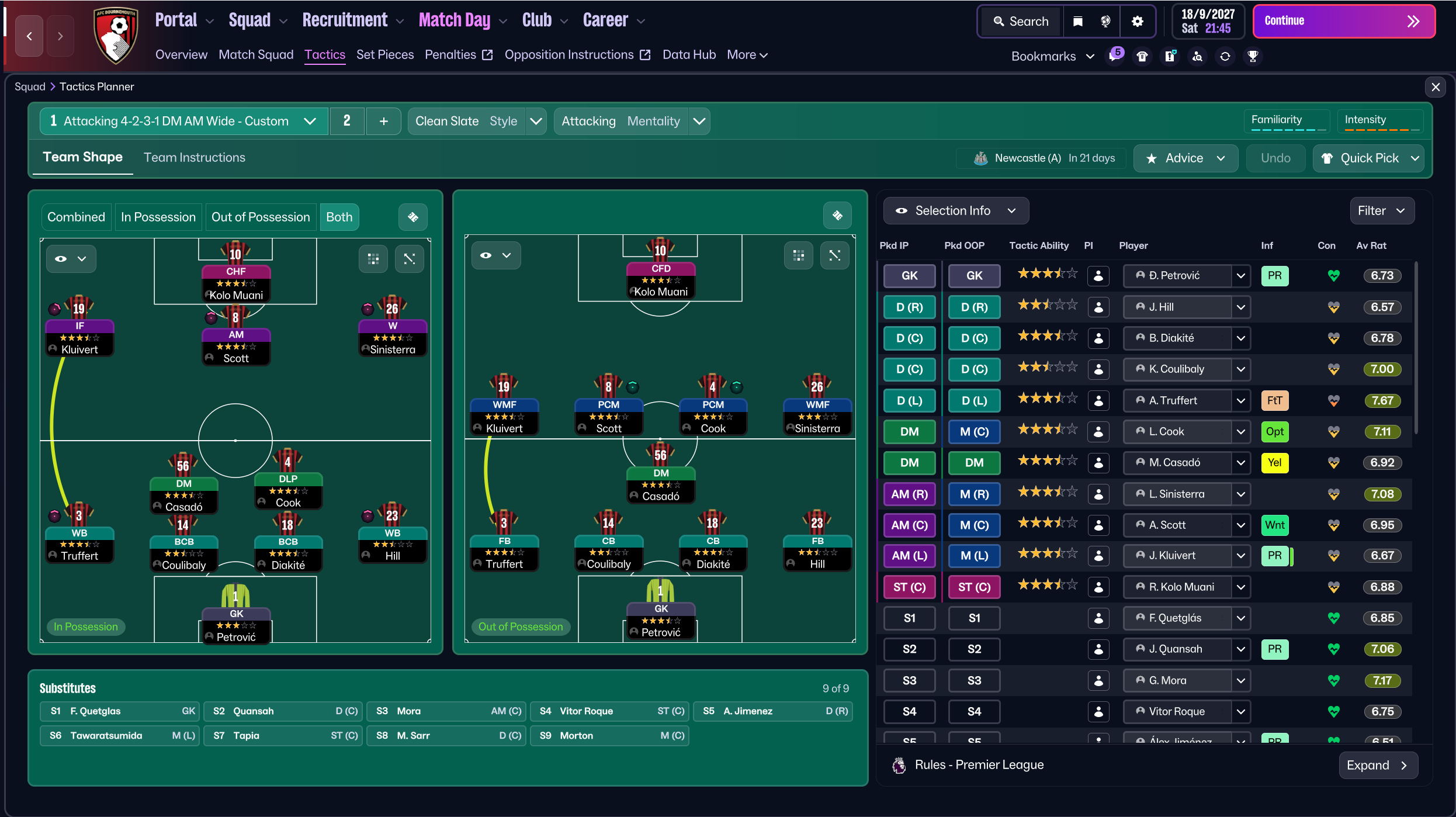
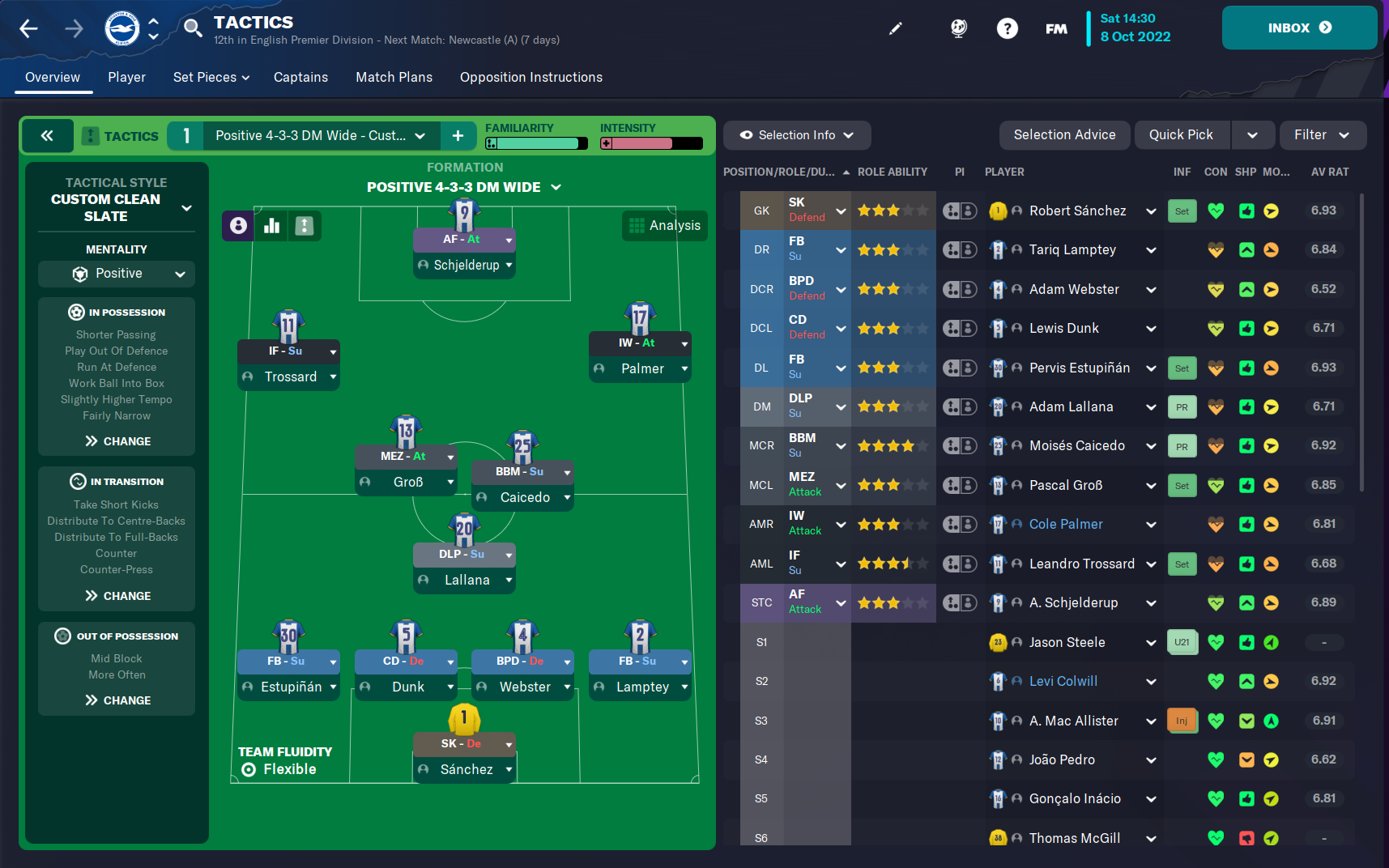
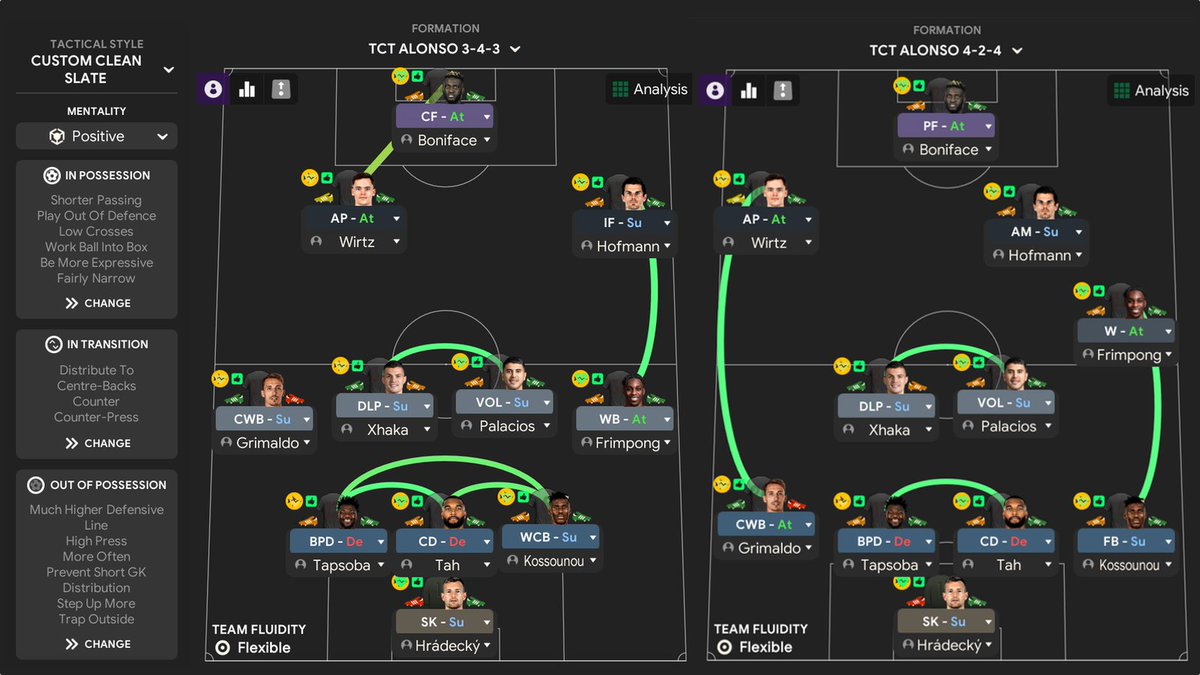
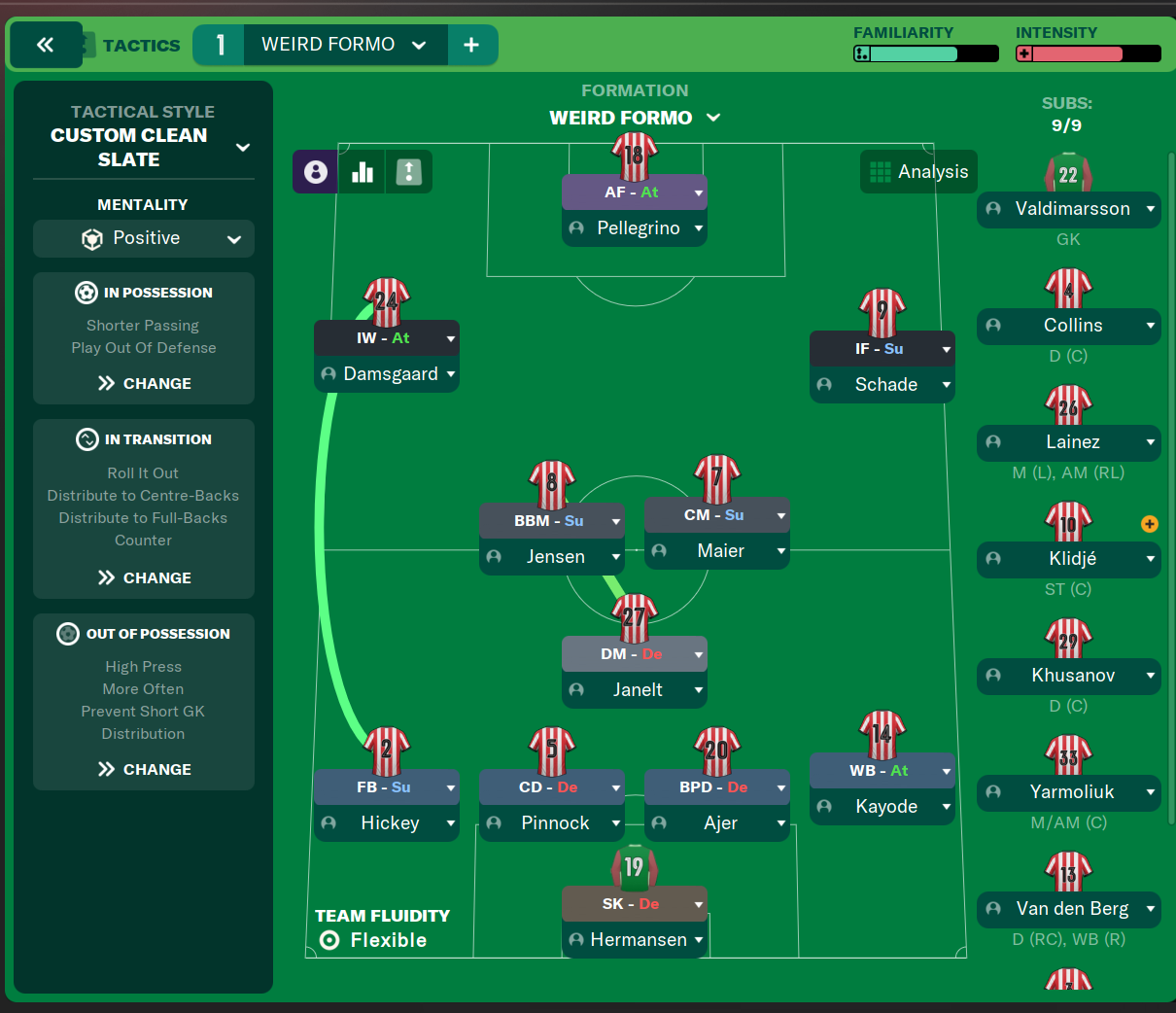
More Custom Clean Slate tactics
Guides for this formation
The tactical theory behind the 4-2-3-1 DM Wide: roles, instructions, and the trade-offs that decide whether the system holds up.
Player pairings
Midfield Pairs in 4-2-3-1 and 4-4-2
Double pivots and flat pairs in 4-2-3-1 and 4-4-2: when each pairing works, when it collapses, and the AMC unicorn that rescues both.
Read guide
Playing styles
Gegenpressing: A Full Guide
Klopp-style gegenpressing in FM, including squad profile, line-and-press pairing, sustainable workload, and the antipatterns to avoid.
Read guide