Uploaded Tactic
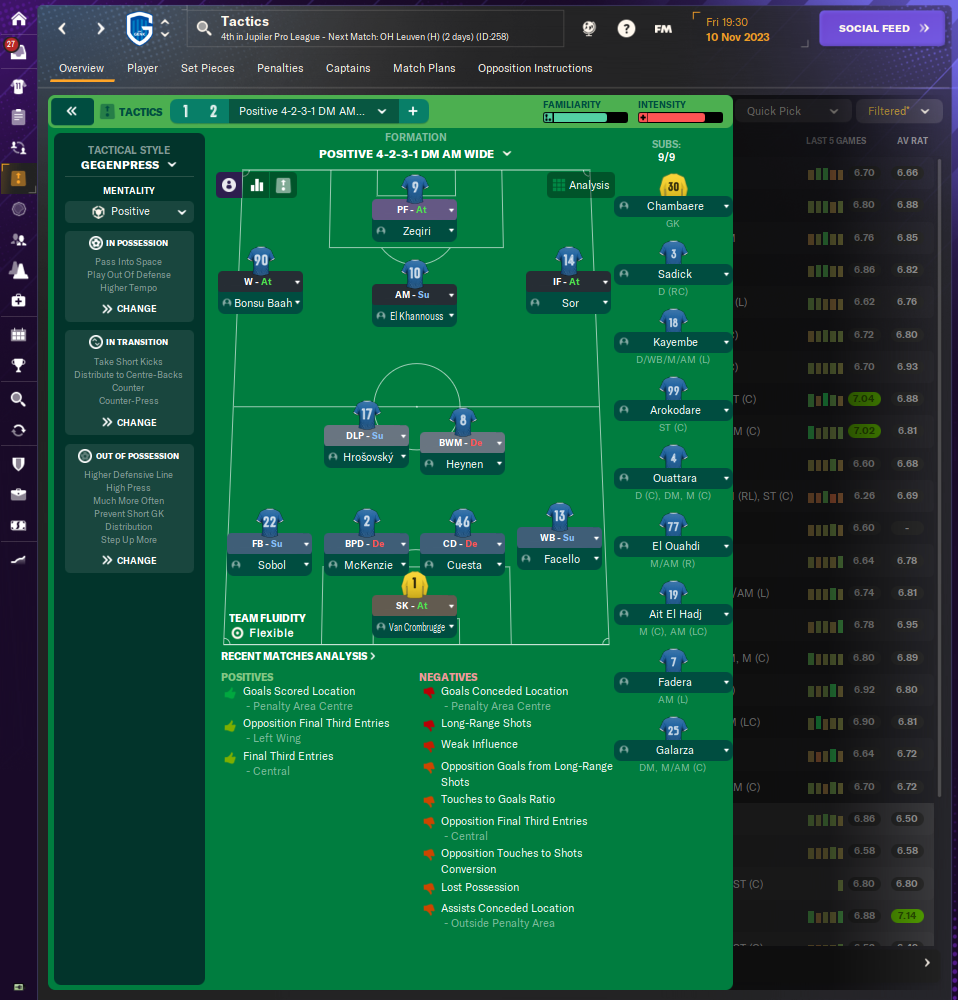
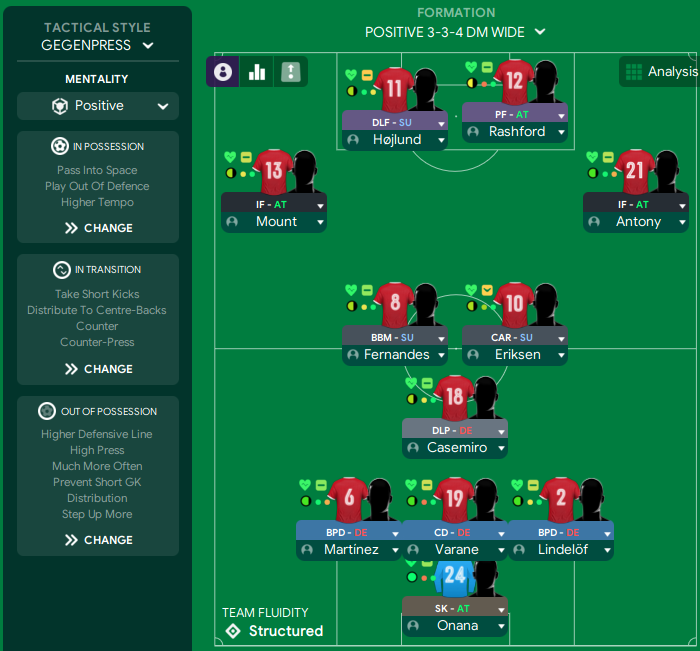
Formation & Style
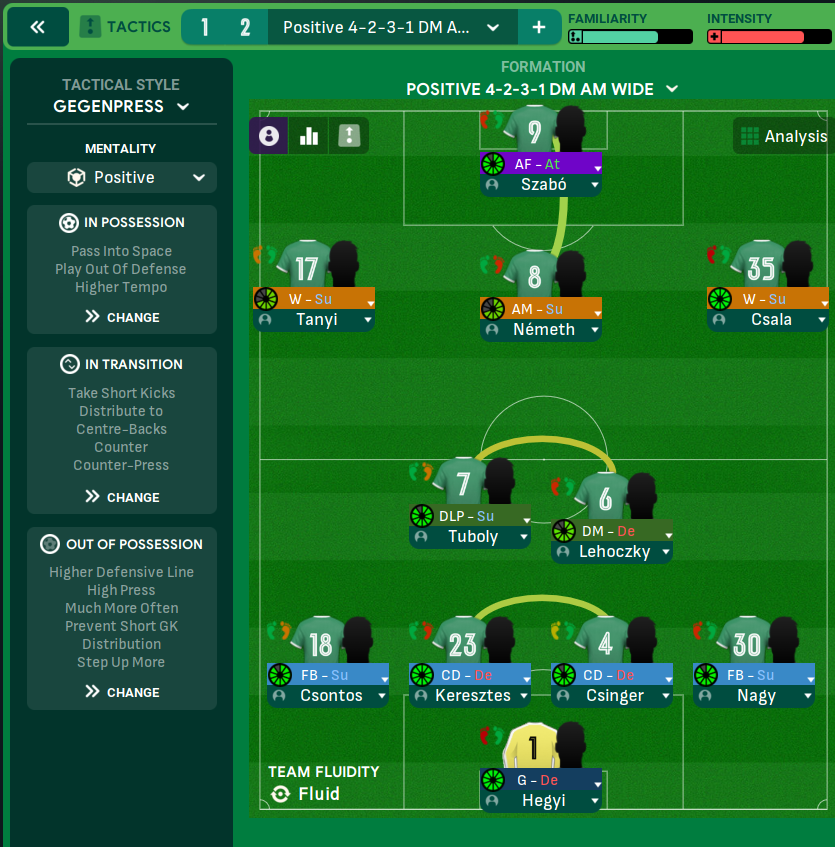
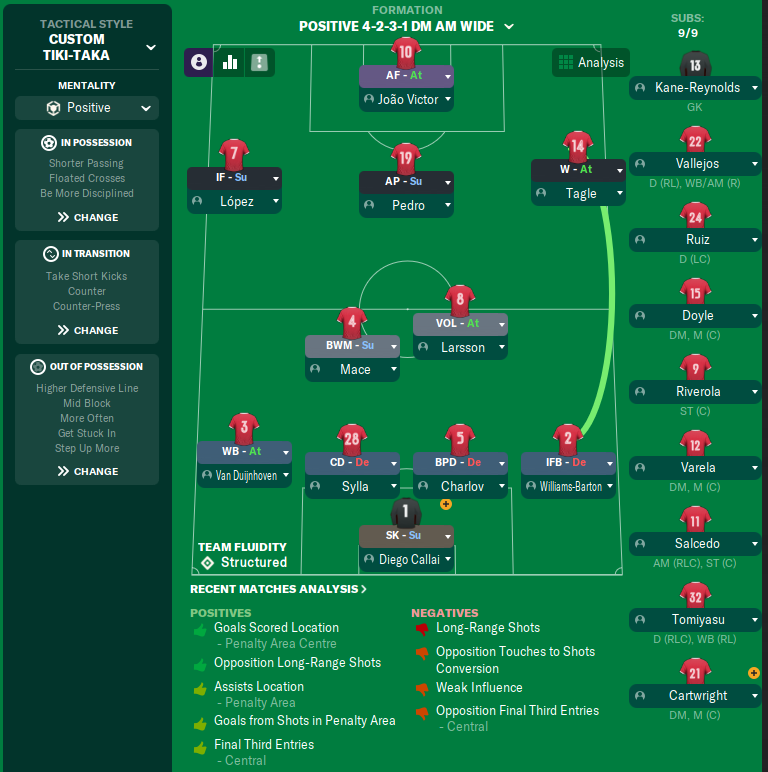
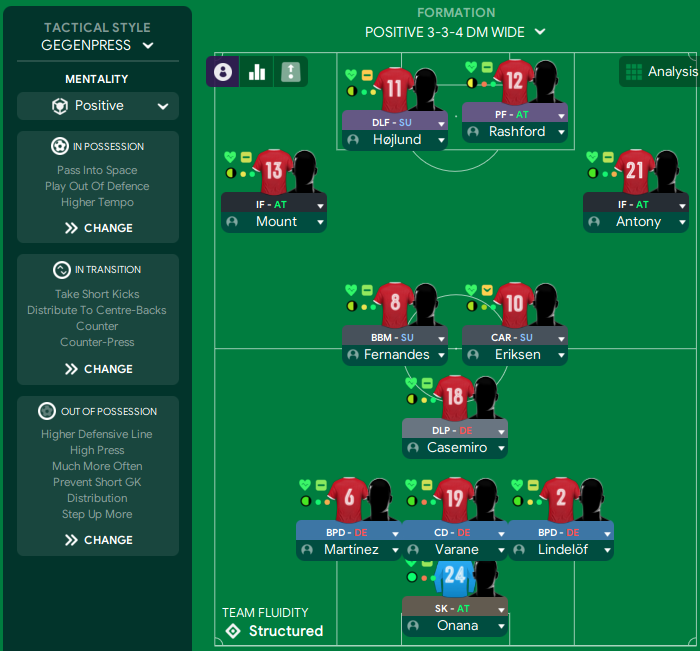
Tactical Style:Gegenpress
Mentality:Positive
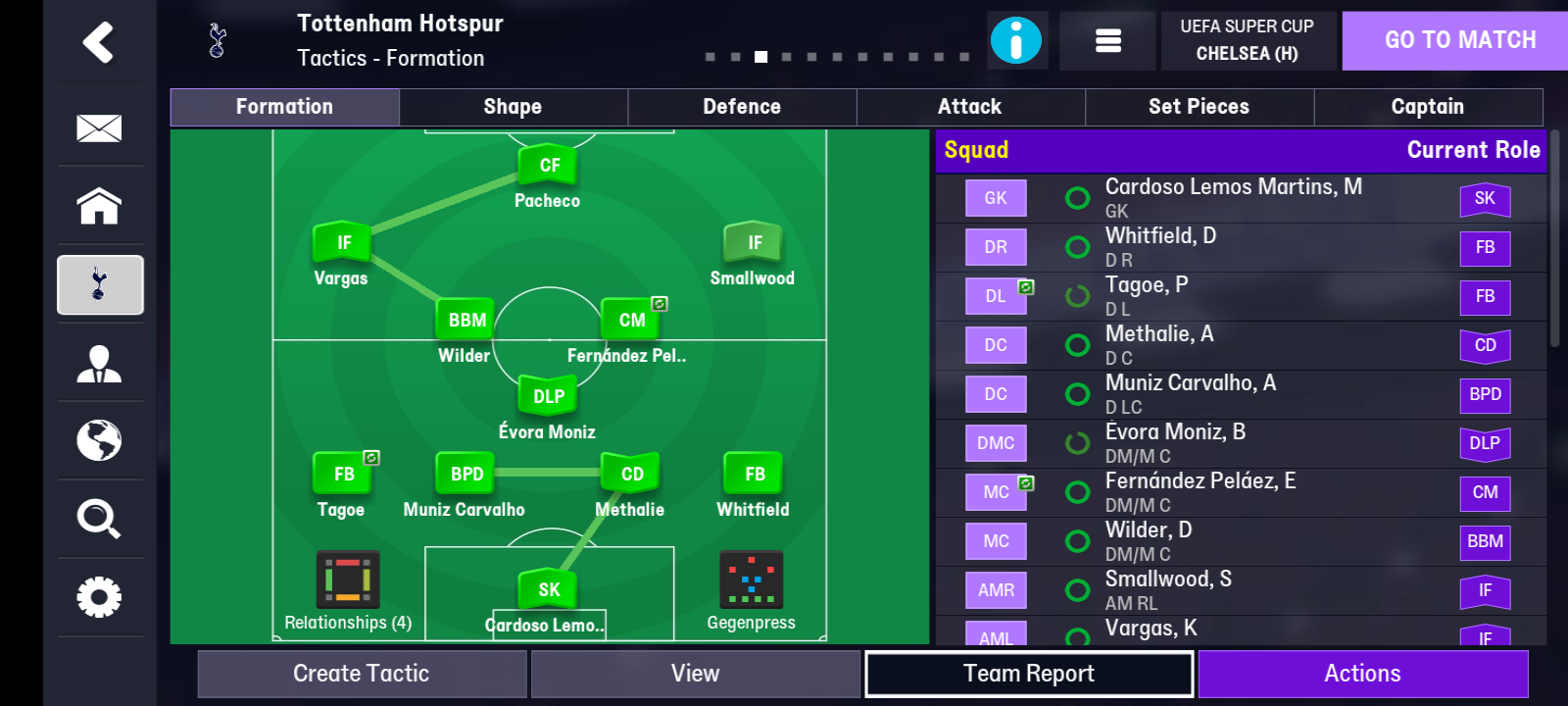
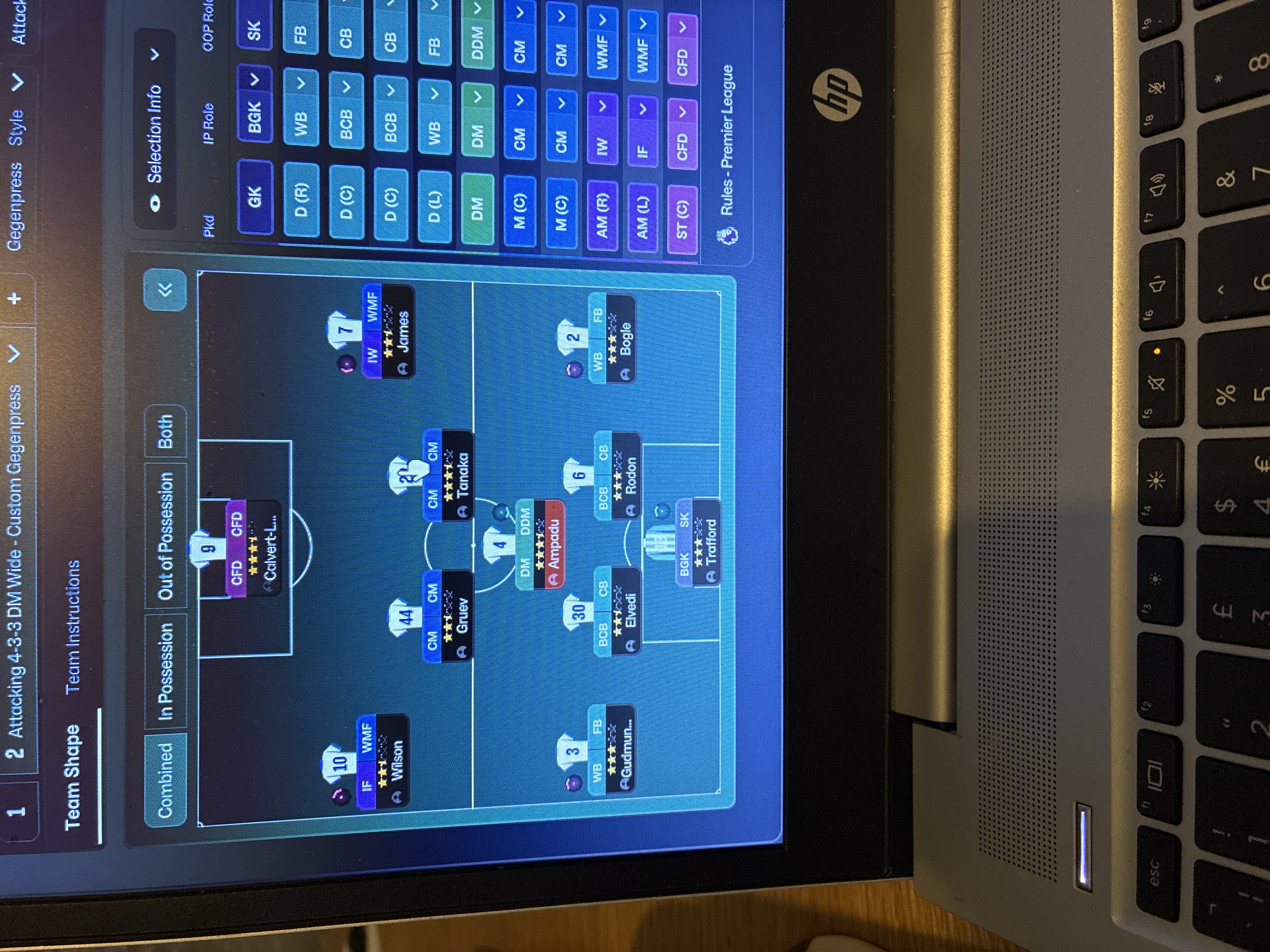
Formation:4-2-3-1 DM Wide
Team Fluidity:Flexible
In Possession
Pass Into Space
Play Out Of Defence
Higher Tempo
In Transition
Distribute to Centre-Backs
Counter
Counter-Press
Out of Possession
Higher Defensive Line
High Press
Much More Often Prevent Short GK Distribution
Step Up More
Team Shape Without Ball
Shape:4-2
Description:A compact formation with the double pivot providing cover and support to the backline and facilitating quick transitions.
Evidence:BWM-D at [3,3] and DLP-S at [3,2] aiding in defensive support.
Team Shape With Ball
Shape:3-2-1
Description:A dynamic front three, allowing for fluid movement and opportunities for the wide players to interchange.
Evidence:PF-A at [6,3], IF-A at [5,2] and AM-S at [5,3] creating space and options.
Phase Description
Attacking Play
Team focuses on building from the back with quick transitions to exploit spaces. The inside forwards look to cut inside allowing the wing-backs to provide width.
Defensive Transition
Upon losing possession, the team engages in high pressing to recover the ball quickly, maintaining a compact structure.
Main Focus
Creating overloads in wide areas while maintaining a balanced central presence for support.
Key Strengths
High Pressing
The high pressing strategy is effective in regaining possession quickly, creating immediate attacking opportunities.
Flexible Midfield Structure
The combination of a deep-lying playmaker and a ball-winning midfielder provides a solid foundation for both defensive solidity and creative buildup.
Wide Play Threat
Utilization of wing-backs and inside forwards creates multiple options in wide areas, allowing for effective ball progression.
Conflicting Directions
Vulnerability to Long Shots
The high defensive line and aggressive pressing may leave gaps that opponents could exploit via long-range shots.
Transition Weakness
While the team is set up for quick transitions, losing possession can leave them exposed at the back against counter-attacks.
Dependence on Full-Backs
Heavy reliance on the wing-backs for width could become a tactical disadvantage if they are marked out of the game.
Tactical Suggestions
Consider Lowering Defensive Line
Adjusting the defensive line deeper can help protect against long balls and counter-attacks.
Increase Width in Attack
With the current setup, encouraging the wide players to maintain wider positions might create more space for central players.
Utilize Substitutions Strategically
Fresh legs in the later stages can maintain high intensity and tactical shifts when leading.
Ask Questions About Your Lineup
Related Tactics
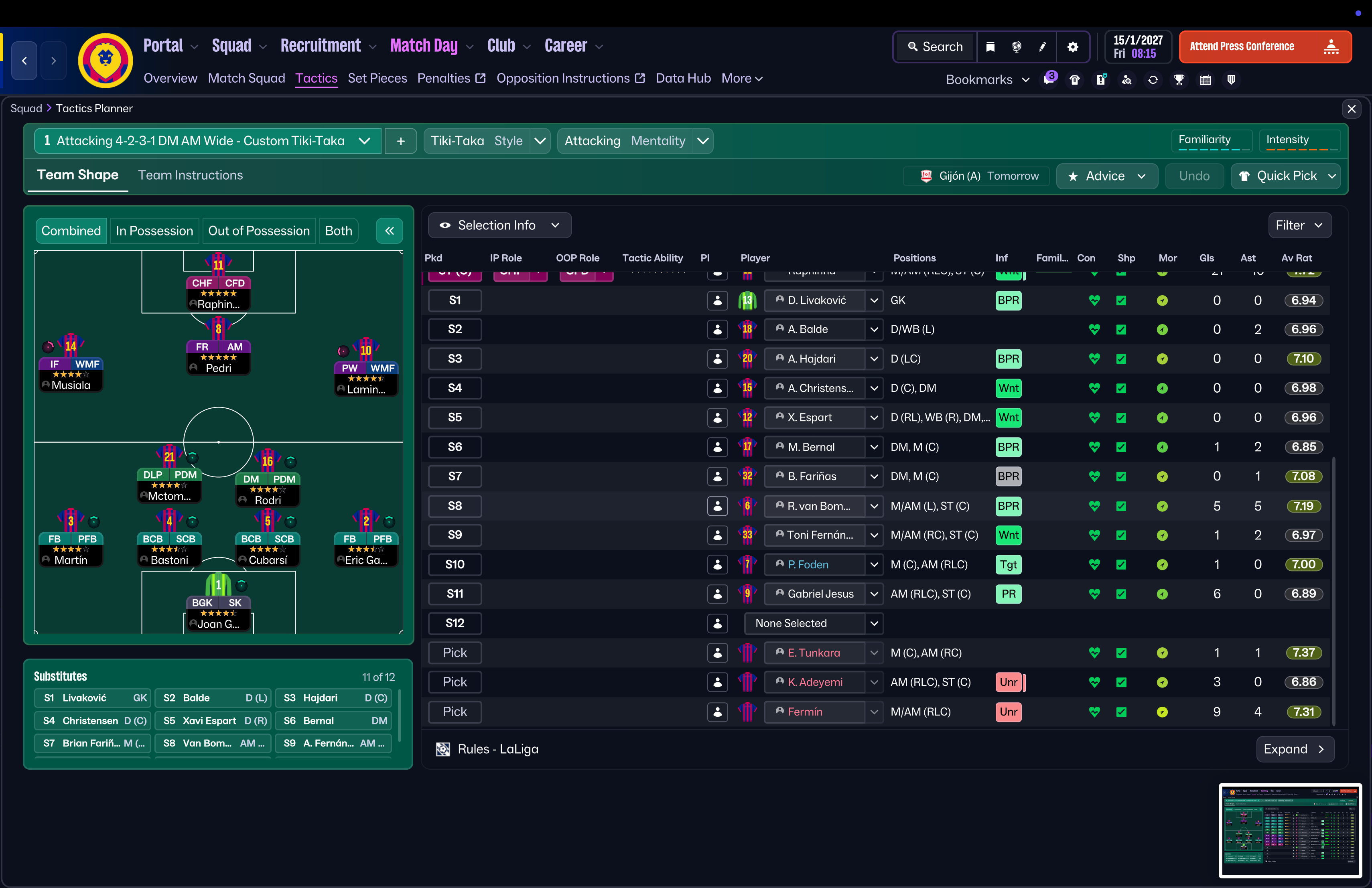
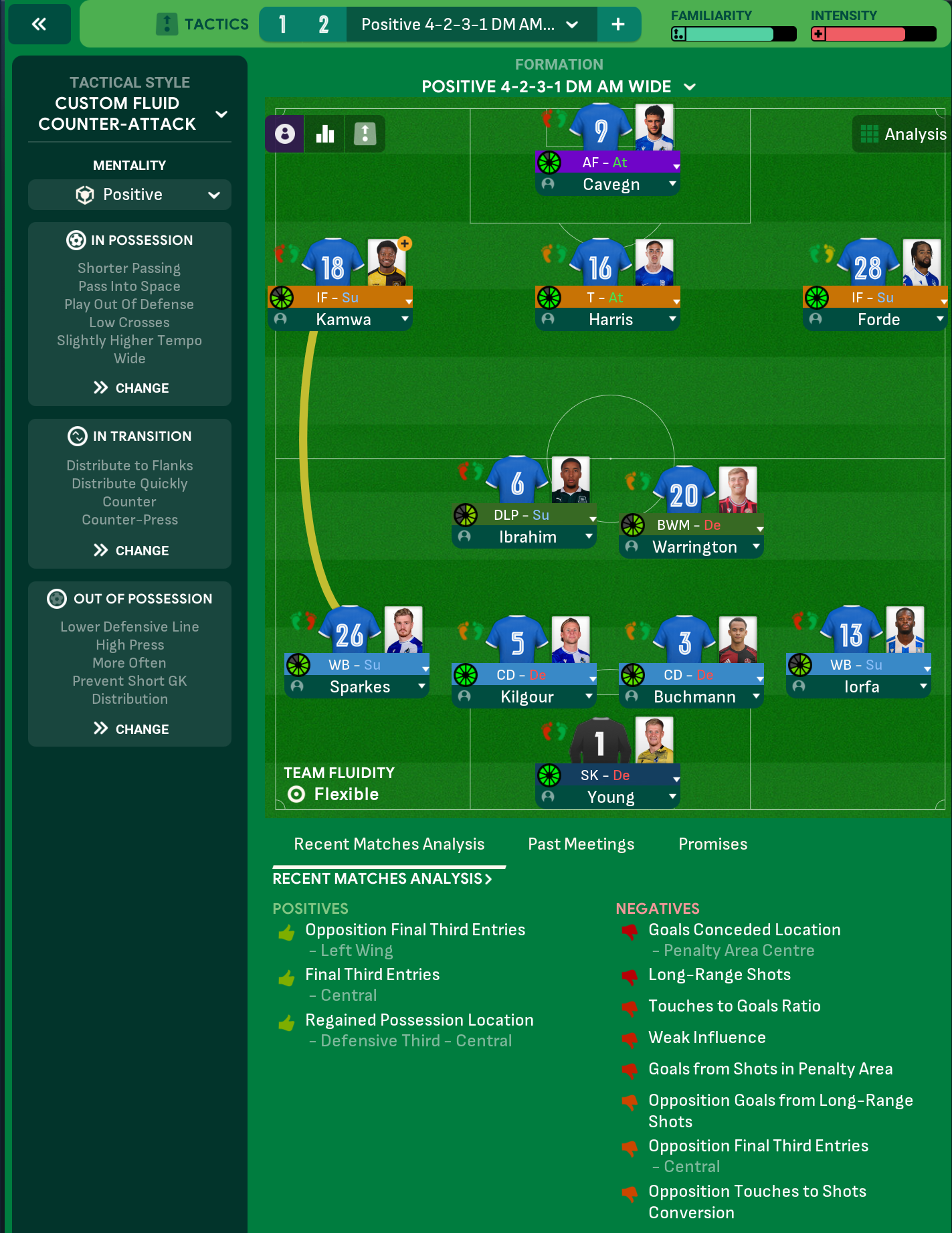
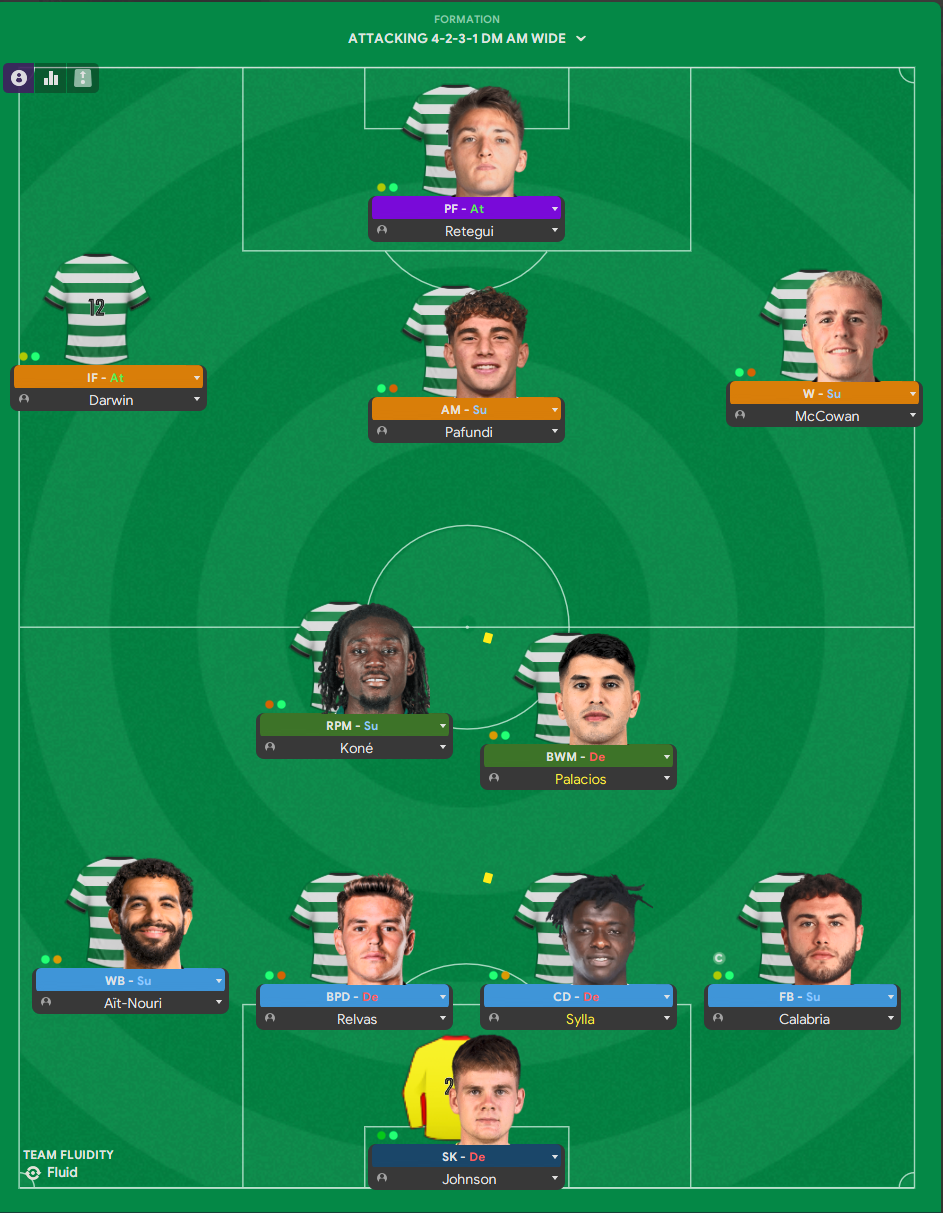
More Gegenpress tactics
Guides for this formation
The tactical theory behind the 4-2-3-1 DM Wide: roles, instructions, and the trade-offs that decide whether the system holds up.
Player pairings
Midfield Pairs in 4-2-3-1 and 4-4-2
Double pivots and flat pairs in 4-2-3-1 and 4-4-2: when each pairing works, when it collapses, and the AMC unicorn that rescues both.
Read guide
Playing styles
Gegenpressing: A Full Guide
Klopp-style gegenpressing in FM, including squad profile, line-and-press pairing, sustainable workload, and the antipatterns to avoid.
Read guide