Uploaded Tactic
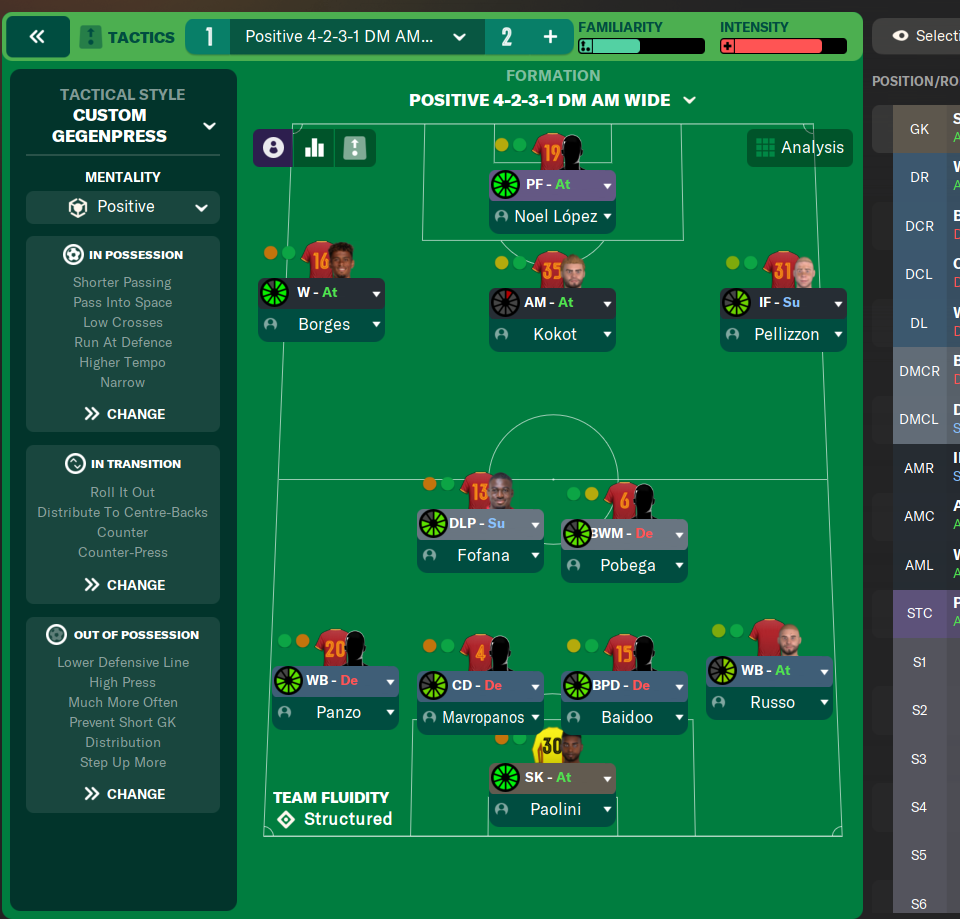
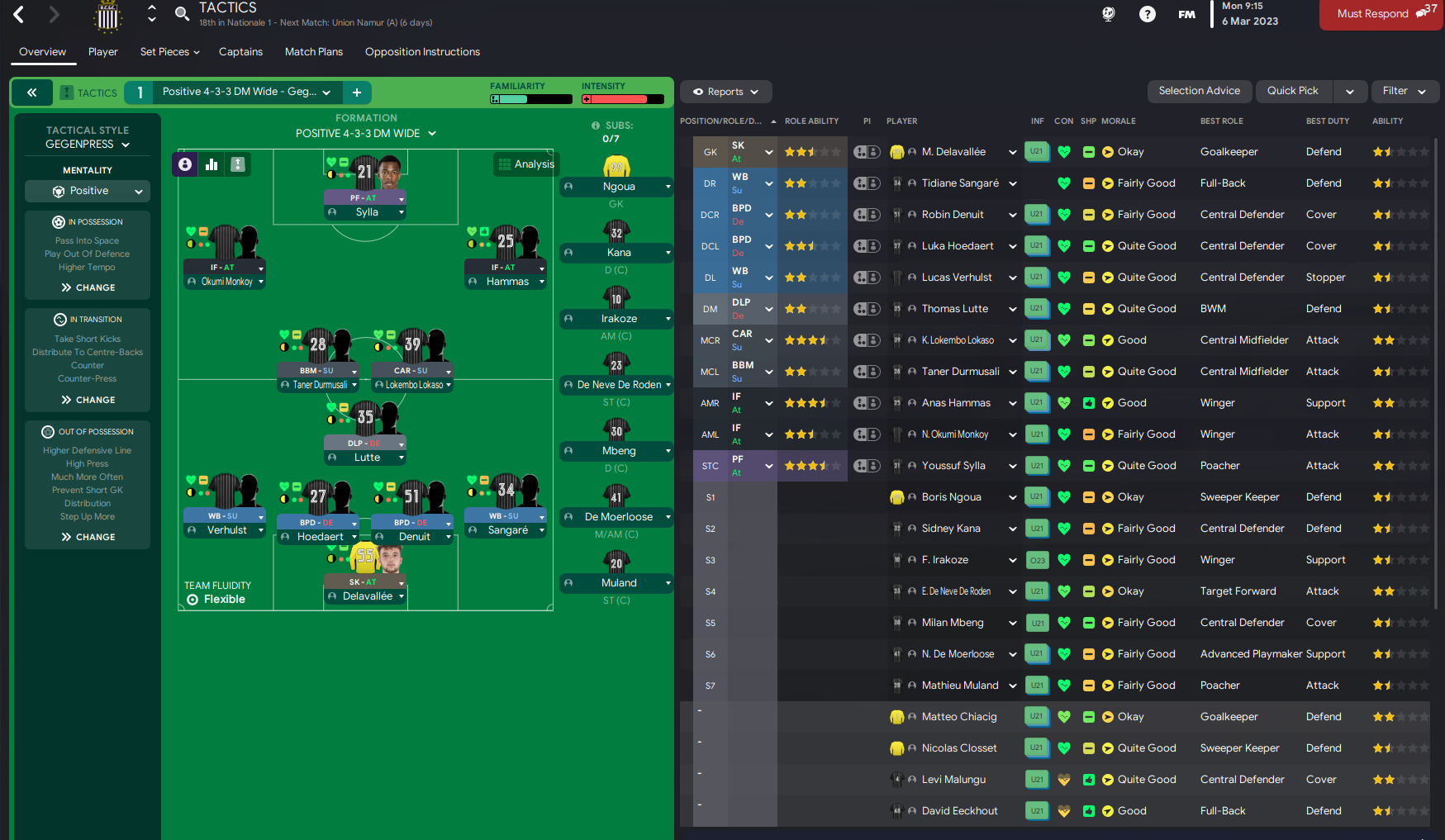
Formation & Style
Tactical Style:Gegenpress
Mentality:Positive
Formation:4-2-3-1 DM Wide
Team Fluidity:Structured
In Possession
Shorter Passing
Pass Into Space
Run At Defence
Higher Tempo
Narrow
In Transition
Roll It Out
Distribute To Centre-Backs
Counter
Counter-Press
Out of Possession
Lower Defensive Line
High Press
Much More Often
Prevent Short GK Distribution
Step Up More
Team Shape Without Ball
No team shape without ball data available
Team Shape With Ball
No team shape with ball data available
Key Strengths
High Pressing
The high pressing approach can disrupt opposition play and regain possession quickly.
Dynamic Midfield
The combination of the Deep-Lying Playmaker and Ball-Winning Midfielder allows for both defensive stability and creative distribution.
Width in Attack
Using an Inside Forward and wide players provides width, stretching the opponent's defense.
Fast Breaks
The counter-pressing strategy supports quick transitions to exploit opposition defensive lapses.
Conflicting Directions
Defensive Line vs. Press
A lower defensive line may conflict with a high pressing strategy, potentially creating gaps for attackers.
Tempo Consistency
Transitioning from high tempo in attack to a structured defensive approach may disrupt fluidity.
Player Roles
The Inside Forward's role may not complement the Advanced Forward effectively, as one seeks to exploit spaces while the other may occupy a similar zone.
Backline Distribution
Distributing to centre-backs contradicts the faster direct play philosophy of Gegenpress, reducing total effectiveness.
Tactical Suggestions
Adjust Defensive Line
Consider raising the defensive line to aid the high pressing strategy and minimize gaps.
Diversify Attacking Roles
Test different roles for the wide players to maximize attacking options and confusion in the opponent's defense.
Increase Fluidity
Switch to a more fluid team mentality to adapt better during transitions between attack and defense.
Alter Player Duties
Reassess player duties, especially for the Inside Forward, to balance offensive contributions from the flanks.
Ask Questions About Your Lineup
Related Tactics
4-2-3-1 DM Wide Formation
Custom
Fluid Counter-Attack 4-2-3-1 DM Wide
Custom Fluid Counter-Attack
4-2-3-1 DM Wide Formation
Positional
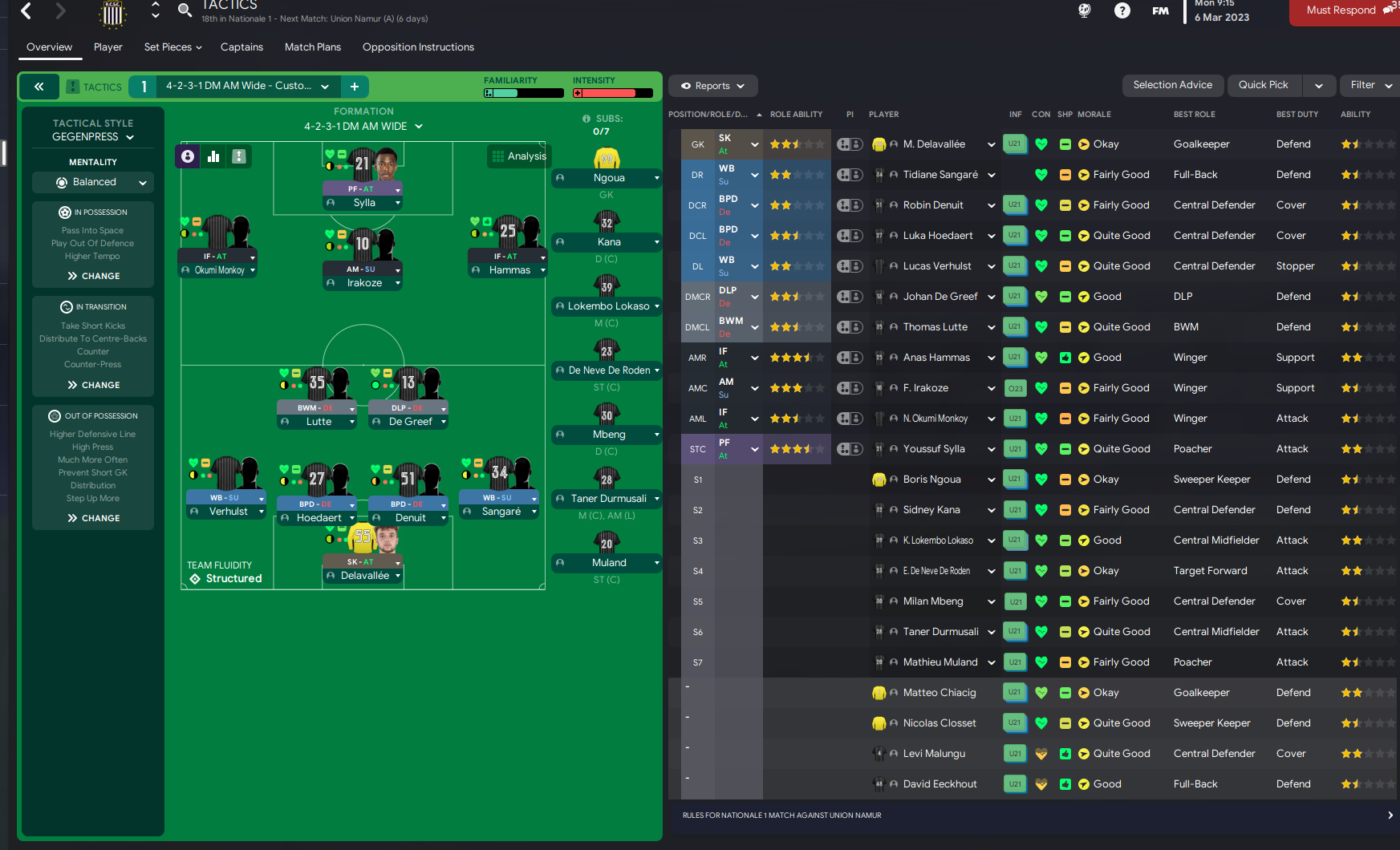
Gegenpress 4-2-3-1 DM Wide
Gegenpress
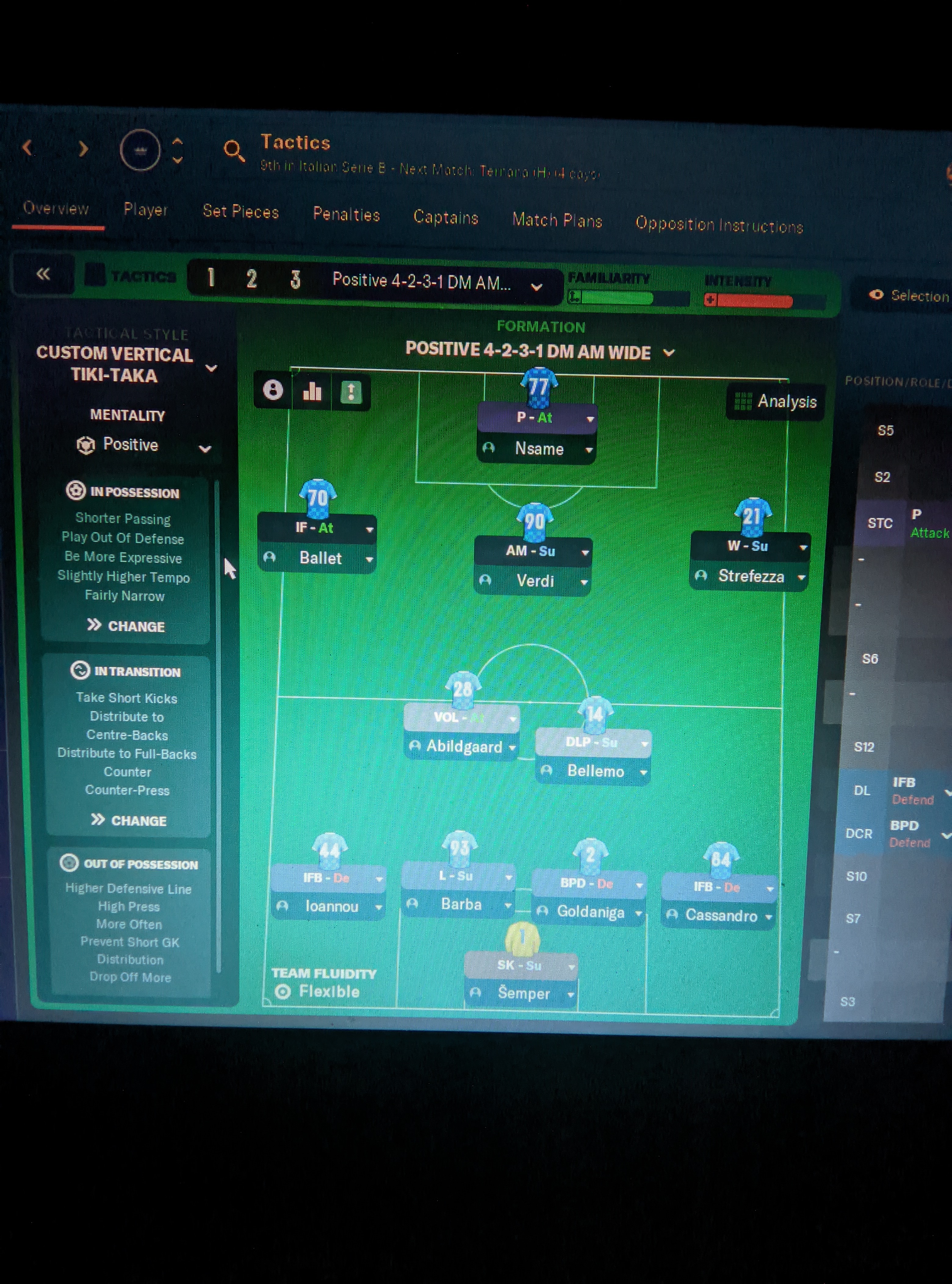
Vertical Tiki-Taka 4-2-3-1 DM Wide
Custom Vertical Tiki-Taka
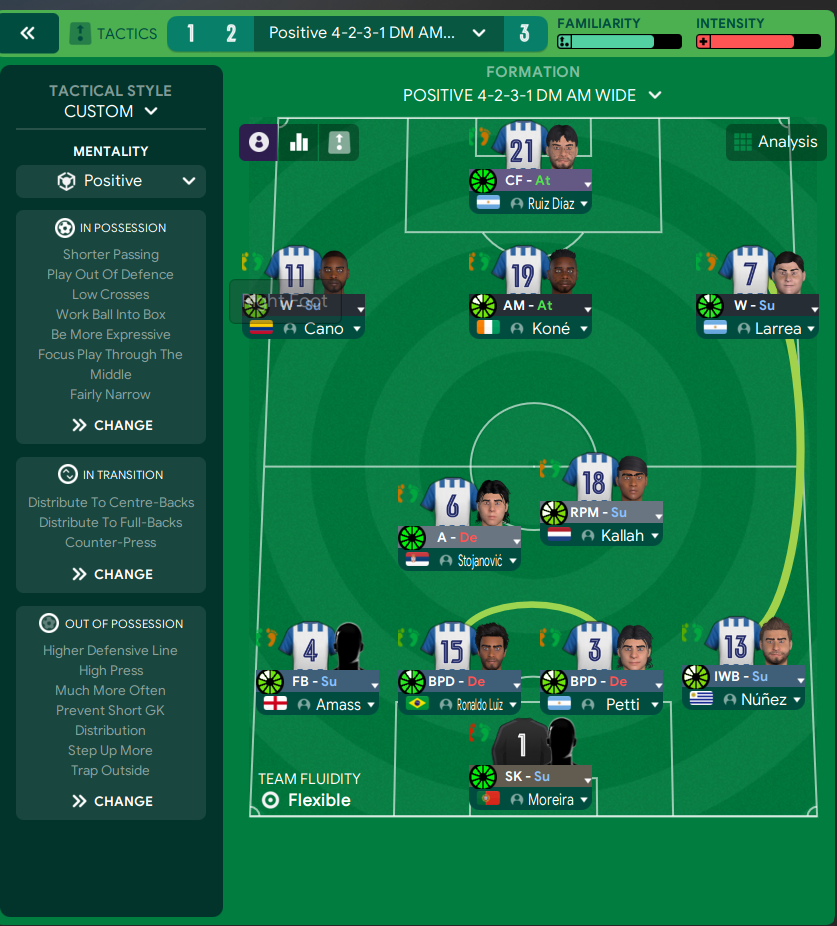
4-2-3-1 DM Wide Formation
Custom
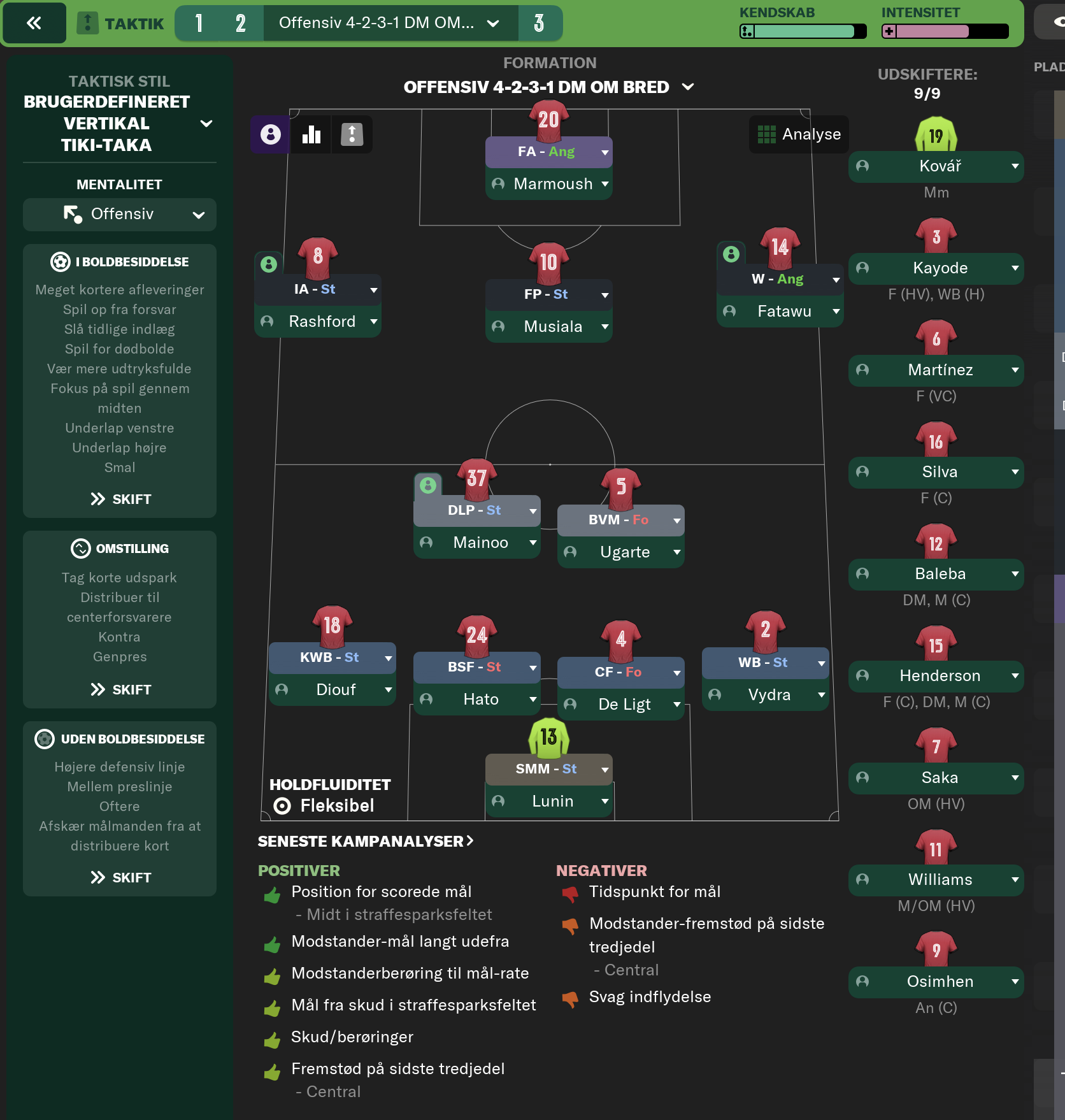
Tiki-Taka 4-2-3-1 DM Wide
Tiki-taka
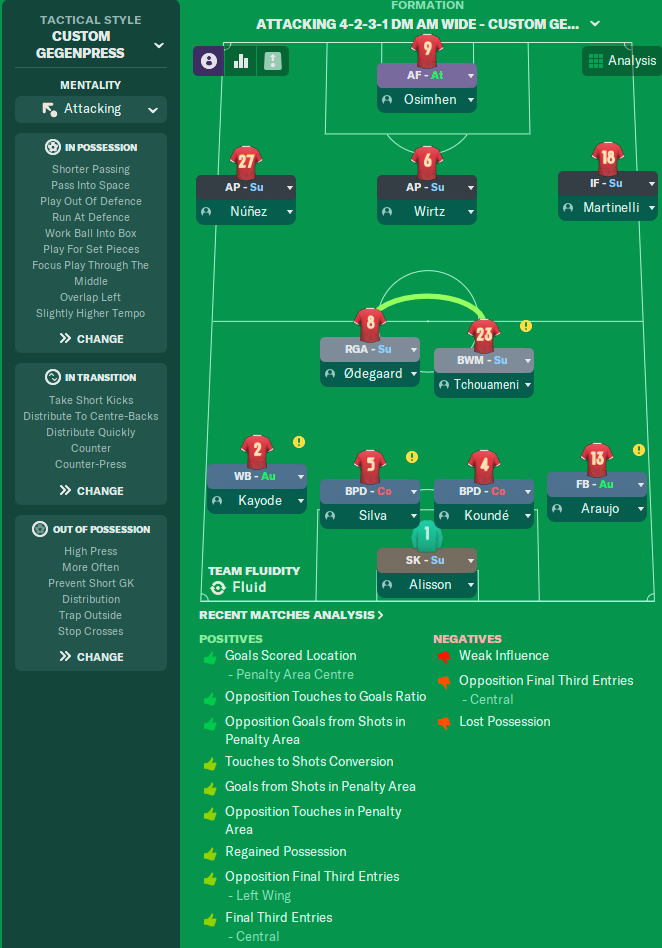
Gegenpress 4-2-3-1 DM Wide
Custom Gegenpress
More Gegenpress tactics
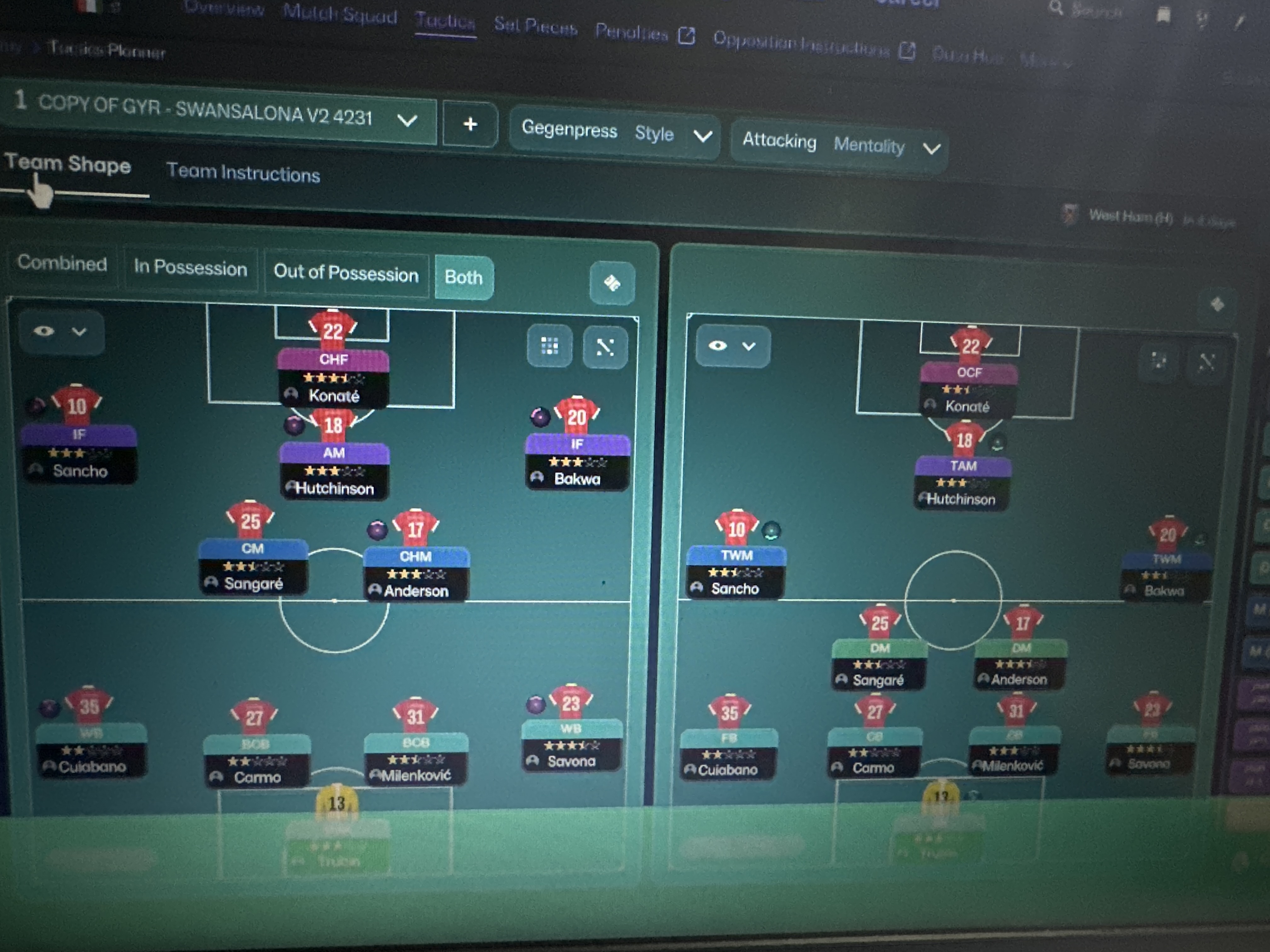
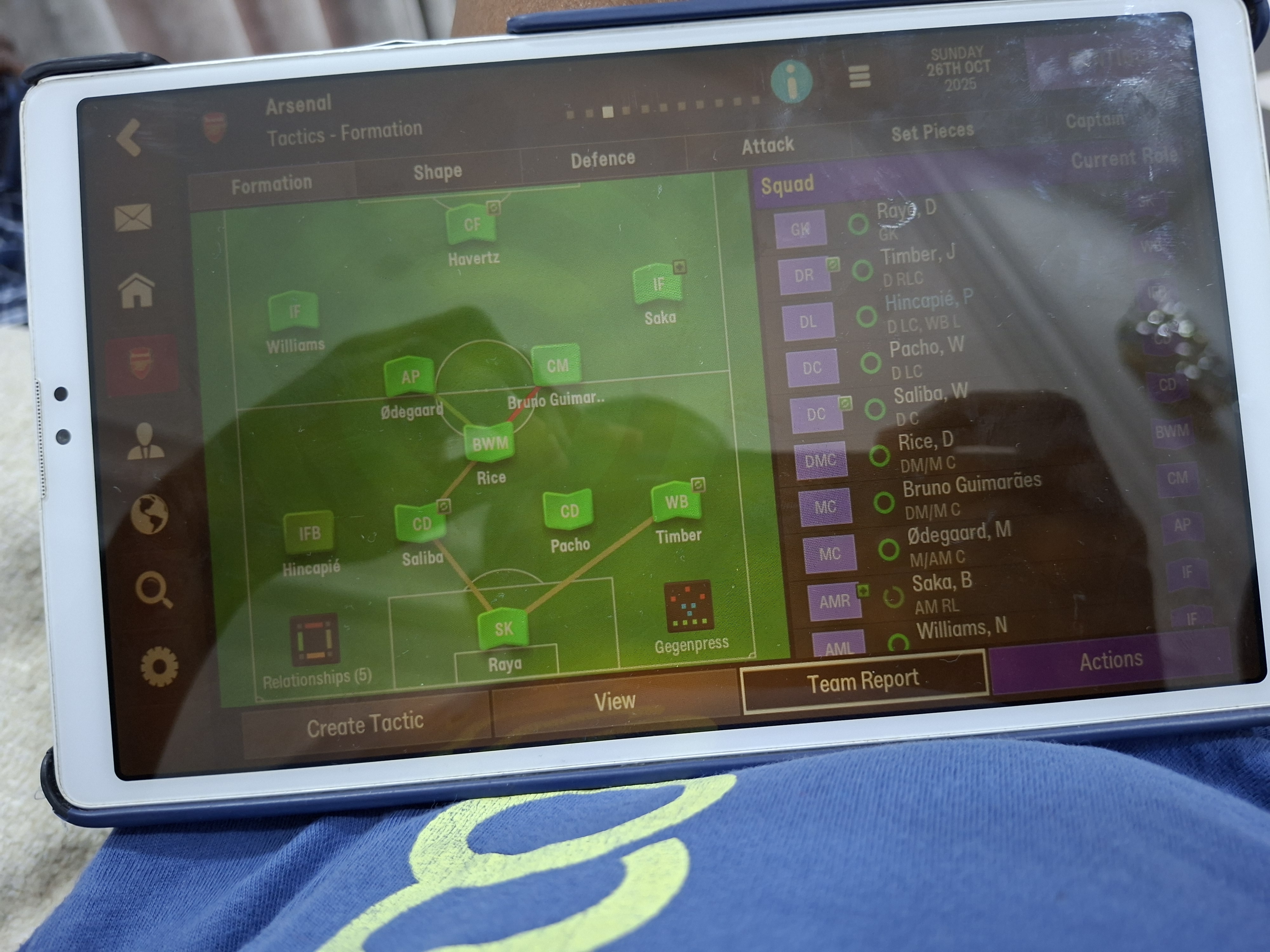
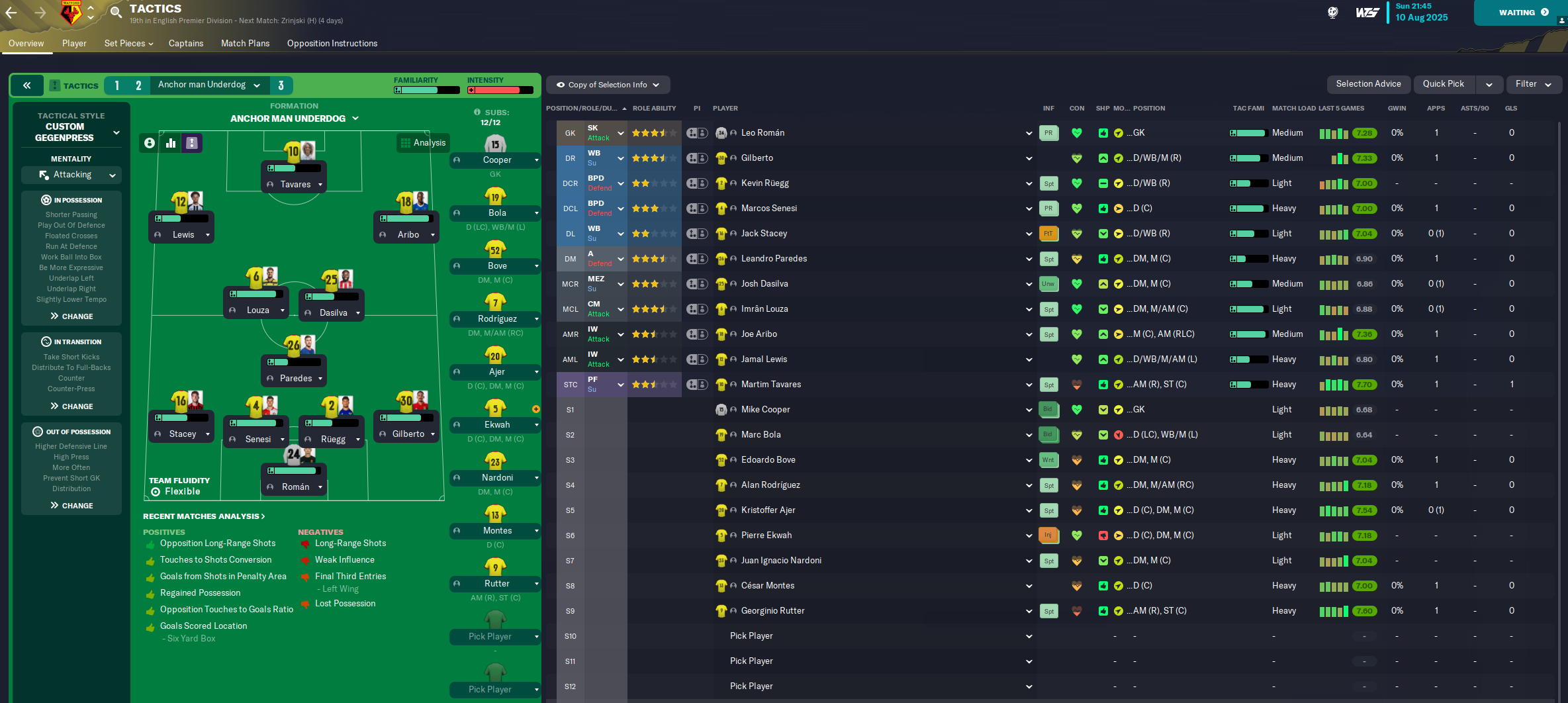
Guides for this formation
The tactical theory behind the 4-2-3-1 DM Wide: roles, instructions, and the trade-offs that decide whether the system holds up.
Player pairings
Midfield Pairs in 4-2-3-1 and 4-4-2
Double pivots and flat pairs in 4-2-3-1 and 4-4-2: when each pairing works, when it collapses, and the AMC unicorn that rescues both.
Read guide
Playing styles
Gegenpressing: A Full Guide
Klopp-style gegenpressing in FM, including squad profile, line-and-press pairing, sustainable workload, and the antipatterns to avoid.
Read guide