Uploaded Tactic
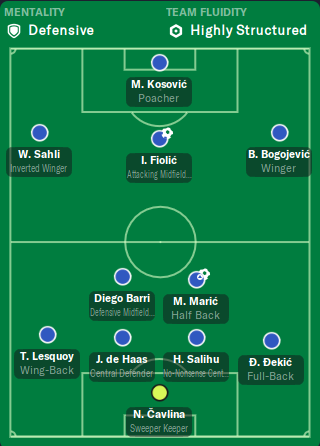
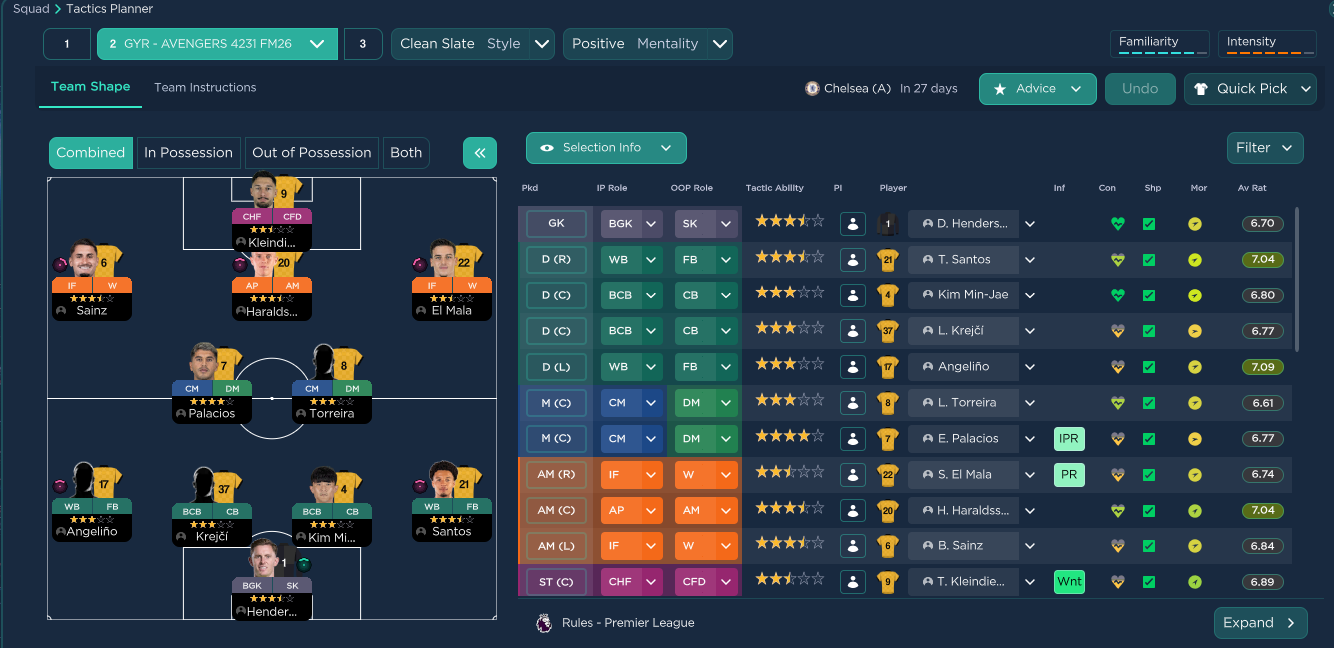
Formation & Style
Tactical Style:Highly Structured
Mentality:Defensive
Formation:4-2-3-1
Team Fluidity:Highly Structured
In Possession
Play Out of Defence
Work Ball Into Box
Lower Tempo
In Transition
Counter
Counter-Press
Out of Possession
Higher Defensive Line
Higher Line of Engagement
Prevent Short GK Distribution
Team Shape Without Ball
Shape:4-2
Description:Compact and organized defensive shape with immediate pressing when the ball is lost.
Evidence:No-Nonsense Centre-Back at [2,2] and Defensive Midfielder at [3,2] provide solid defensive coverage.
Team Shape With Ball
Shape:4-1-3-1
Description:Utilizes width and forward movement via wingers and an attacking midfielder to break down defenses.
Evidence:Winger at [5,5] and Inverted Winger at [5,2] create space for the poacher to operate.
Phase Description
Attacking Play
Focuses on structured build-up play with wingers stretching the pitch and the attacking midfielder linking up.
Defensive Transition
Quickly regrouping to defensive shape, with the defensive midfielder acting as the pivot.
Main Focus
Consolidating defensive organization while looking for counter-attacking opportunities.
Key Strengths
Stability at the Back
A strong defensive line ensures minimal chances for the opposition.
Width in Attack
Wingers and an inverted winger provide dynamic width during attacking phases.
Flexibility of Midfielders
Half Back and Defensive Midfielder provide both defensive cover and transition play.
Conflicting Directions
Over-reliance on Counter-attack
Heavy emphasis on countering may leave the team exposed if possession is frequently lost in midfield.
Limited Build-Up Play Options
The structured approach may restrict fluid movement and creativity in build-up.
Potential Isolation of Forwards
Without adequate support from the midfield, forwards may become isolated.
Tactical Suggestions
Increase Midfield Movement
Encouraging more creative movements from the midfield can enhance attacking options.
Shift focus on Quick Combinations
Utilize quick passing and movement to break down compact defenses.
Adjust Defensive Block Height
Reassess the defensive line setting to adapt to different opponents effectively.
Ask Questions About Your Lineup
Related Tactics
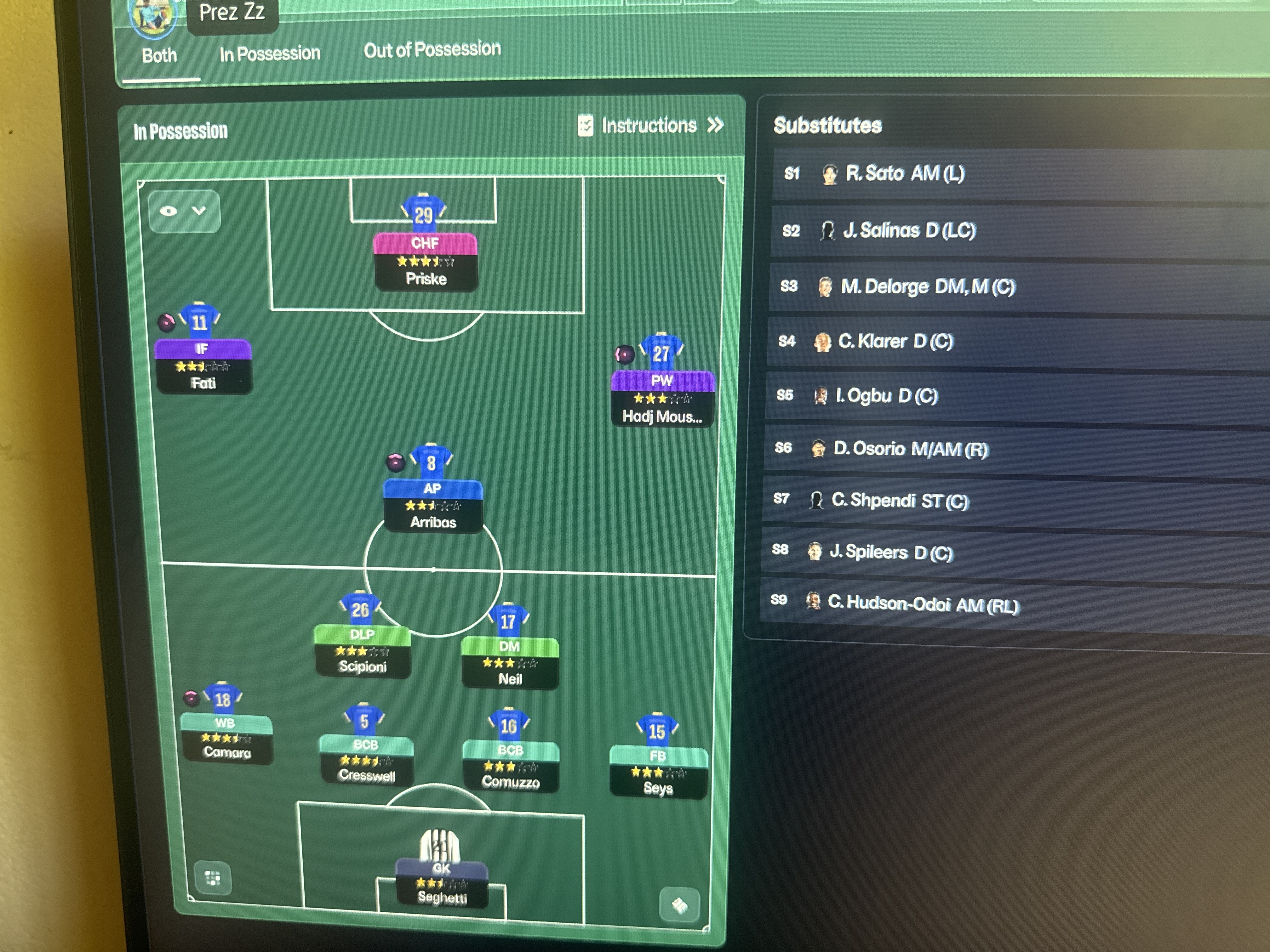
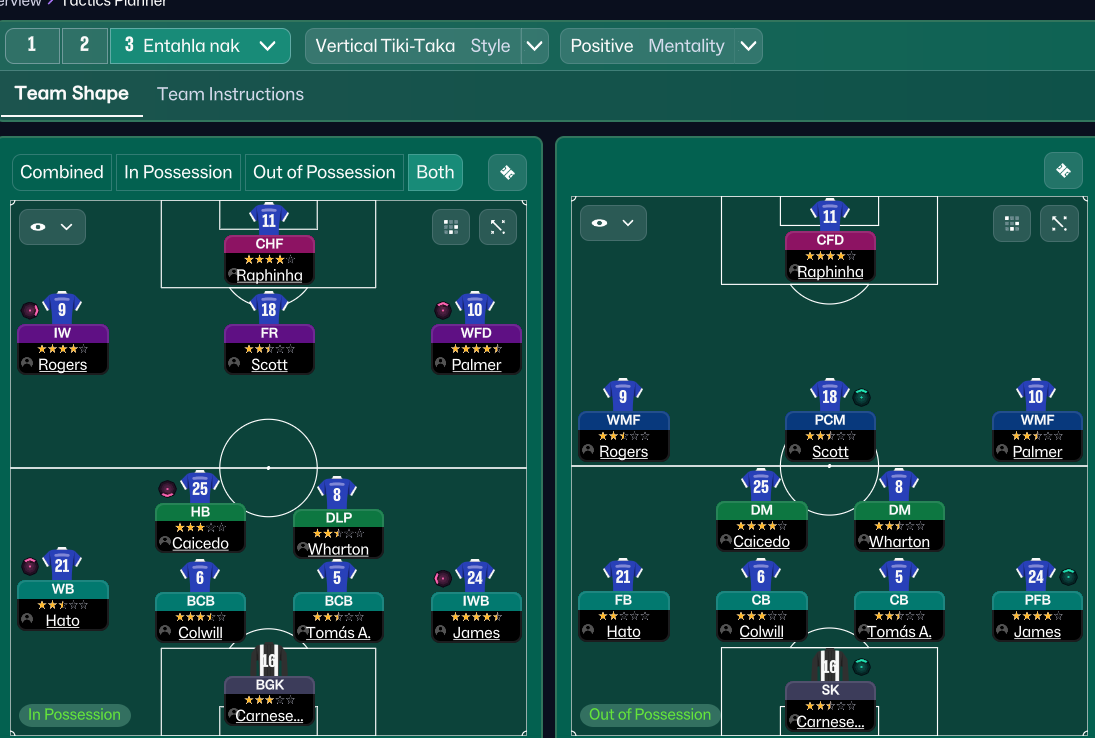
Guides for this formation
The tactical theory behind the 4-2-3-1: roles, instructions, and the trade-offs that decide whether the system holds up.
Player pairings
Midfield Pairs in 4-2-3-1 and 4-4-2
Double pivots and flat pairs in 4-2-3-1 and 4-4-2: when each pairing works, when it collapses, and the AMC unicorn that rescues both.
Read guide
Playing styles
Gegenpressing: A Full Guide
Klopp-style gegenpressing in FM, including squad profile, line-and-press pairing, sustainable workload, and the antipatterns to avoid.
Read guide