Uploaded Tactic
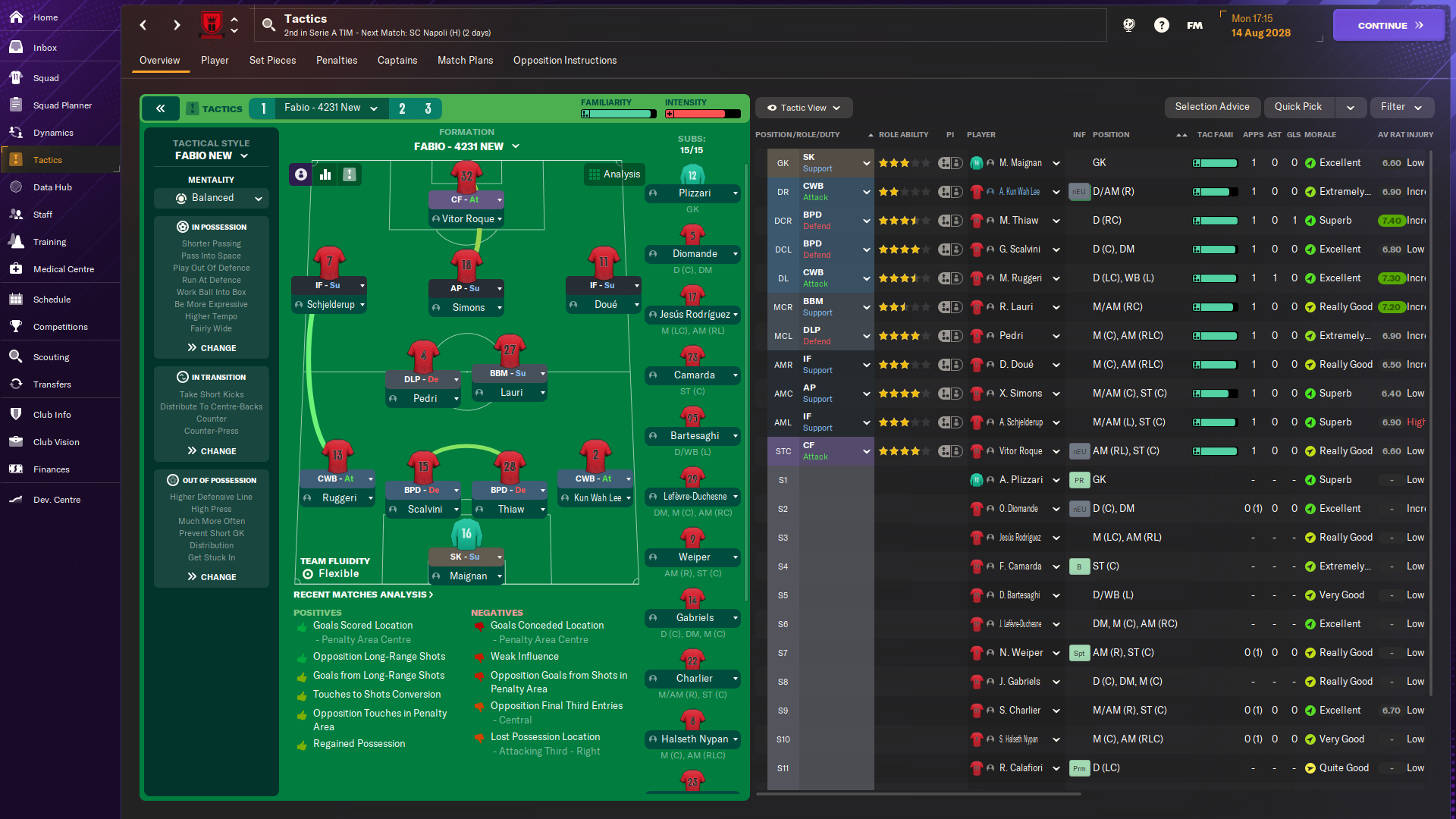
Formation & Style
Tactical Style:Balanced
Mentality:Balanced
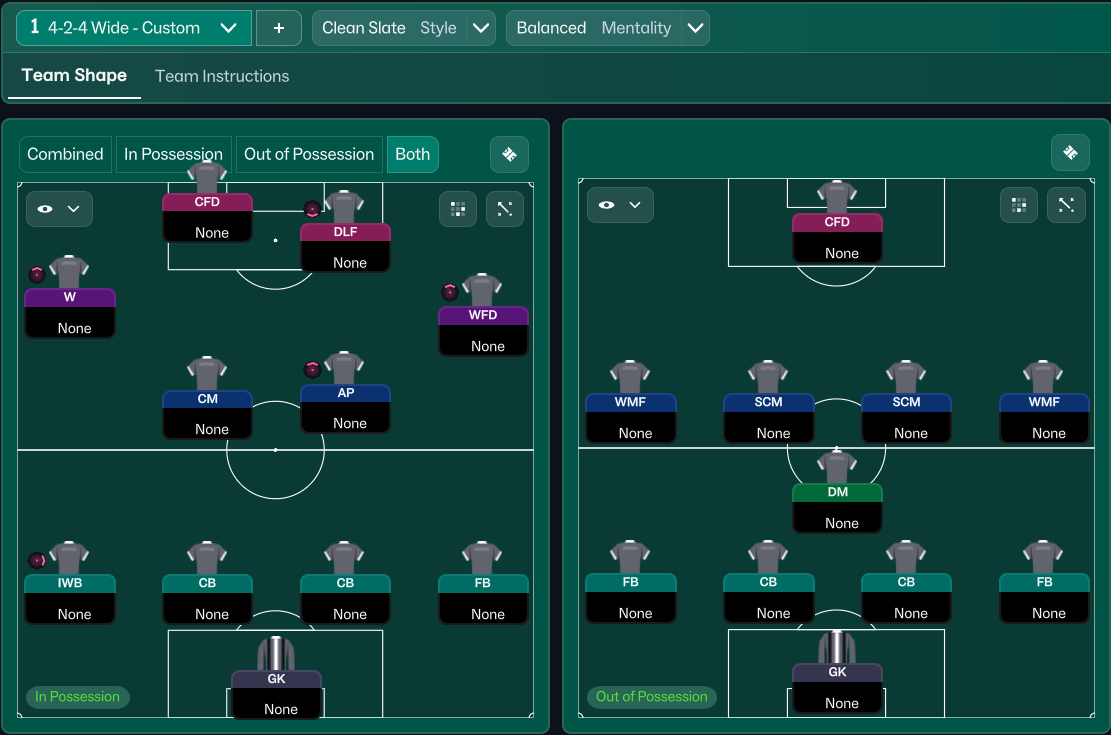
Formation:4-2-3-1
Team Fluidity:Flexible
In Possession
Shorter Passing
Pass Into Space
Work Ball Into Box
Be More Expressive
Higher Tempo
Fairly Wide
In Transition
Take Short Kicks
Distribute To Centre-Backs
Counter
Counter-Press
Out of Possession
Higher Defensive Line
High Press
Much More Often Prevent Short GK Distribution
Get Stuck In
Team Shape Without Ball
Shape:4-2-3-1
Description:Compact formation with emphasis on maintaining a solid shape while pressing the opponent.
Evidence:DLP-D at [3,3] with 'Get Stuck In' for robust defensive structure.
Team Shape With Ball
Shape:4-2-3-1
Description:Utilizes width effectively with wing-backs and inside forwards, creating chances through the middle.
Evidence:CWB-S at [2,1] and [2,5] support wide play while two IFs provide pace.
Phase Description
Attacking Play
Utilizes width through CWBs and IFs, focusing on short passing and penetrating the opponent's box.
Defensive Transition
Engages in immediate counter-pressing to regain possession.
Main Focus
Utilize FLWB and AP to create dynamic overloads in attacking phases.
Key Strengths
Dynamic Offense
The inclusion of Inside Forwards and a Complete Forward allows for a balanced attack capable of exploiting spaces.
Solid Defensive Structure
The use of Ball-Playing Defenders supports the transition between defense and attack.
Midfield Versatility
Box-to-Box Midfielder provides both defensive cover and forward support.
Conflicting Directions
High Defensive Line Risk
While a high defensive line can pressure the opponent, it risks vulnerability to counter-attacks.
Inconsistent Pressing
Over-reliance on high pressing may cause fatigue and leave gaps if players are not properly positioned.
Limited Possession Control
Shorter passing combined with high pressing can lead to possession loss under pressure.
Tactical Suggestions
Adjust Defensive Line Height
Lowering the defensive line could minimize vulnerability to fast counter-attacks.
Consider a Target Man
Introducing a Target Man could aid in holding up the ball and bringing other attackers into play.
Tweak Transition Instructions
Evaluating the pressing instructions could optimize player energy and reduce gaps.
Ask Questions About Your Lineup
Related Tactics
More Balanced tactics
Guides for this formation
The tactical theory behind the 4-2-3-1: roles, instructions, and the trade-offs that decide whether the system holds up.
Player pairings
Midfield Pairs in 4-2-3-1 and 4-4-2
Double pivots and flat pairs in 4-2-3-1 and 4-4-2: when each pairing works, when it collapses, and the AMC unicorn that rescues both.
Read guide
Playing styles
Gegenpressing: A Full Guide
Klopp-style gegenpressing in FM, including squad profile, line-and-press pairing, sustainable workload, and the antipatterns to avoid.
Read guide