Uploaded Tactic
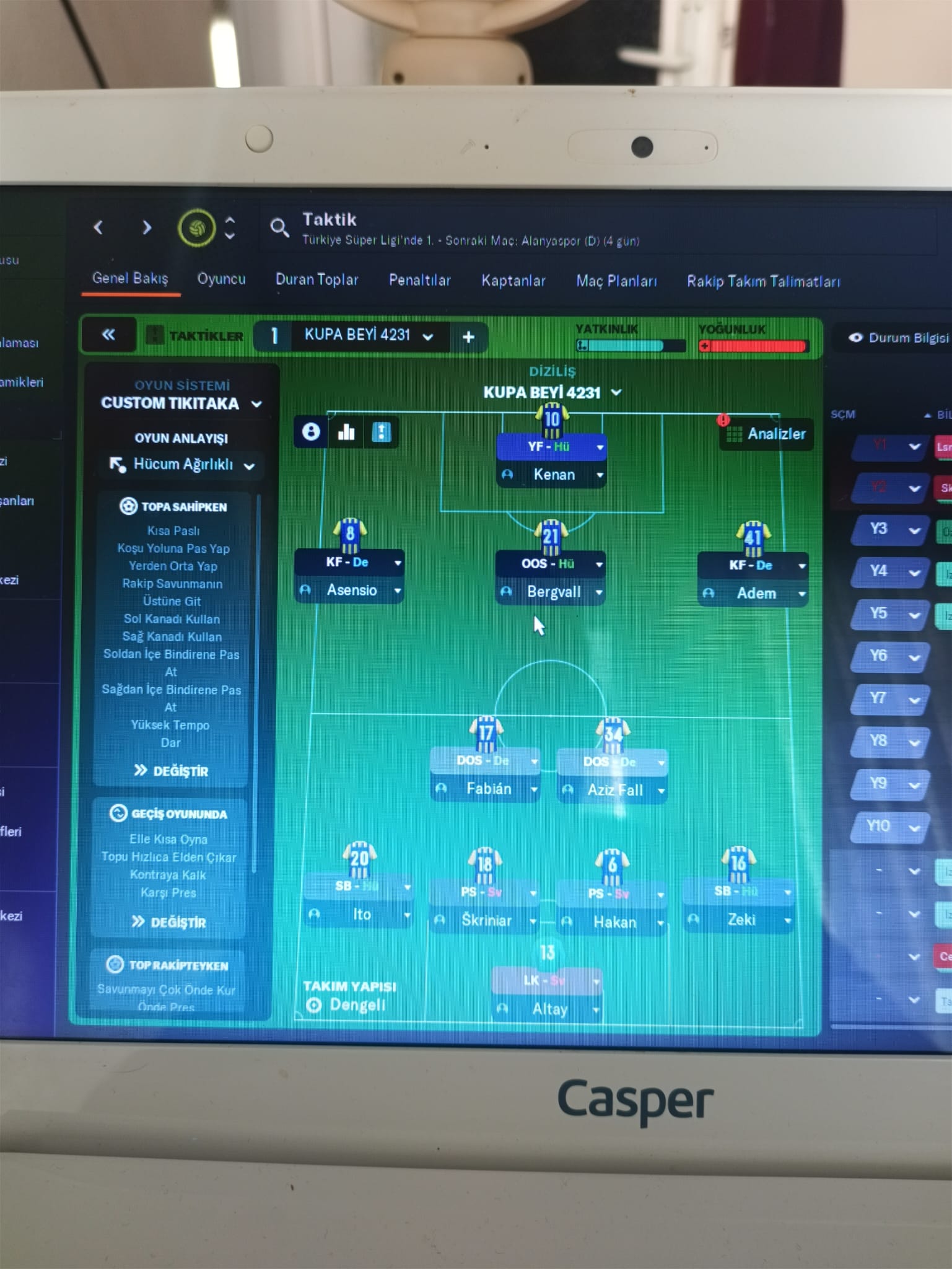
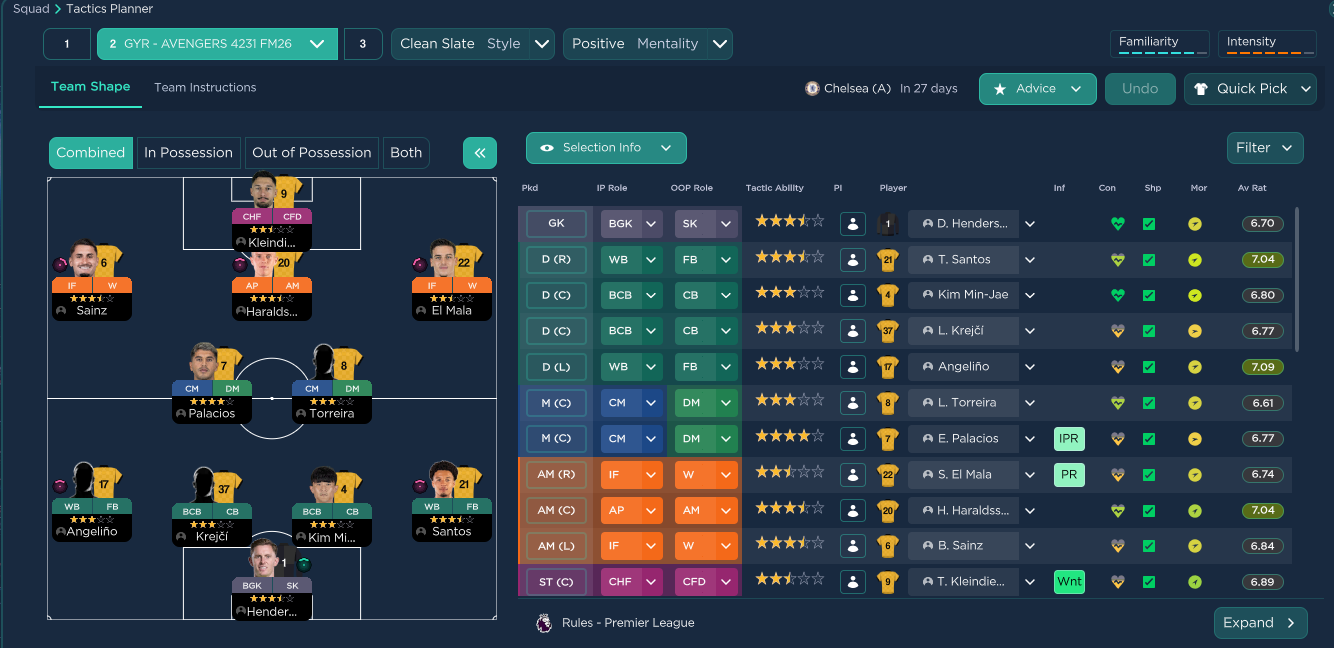
Formation & Style
Tactical Style:Balanced
Mentality:Balanced
Formation:4-2-3-1
Team Fluidity:Dengeli
In Possession
Play Out of Defence
Higher Tempo
Shorter Passing
Work Ball Into Box
In Transition
Counter-Press
Counter
Out of Possession
Higher Defensive Line
Higher Line of Engagement
Prevent Short GK Distribution
Team Shape Without Ball
Shape:4-2-3-1
Description:Solid defensive structure with two defensive midfielders providing cover for the backline.
Evidence:DM at [3,3] and a balanced shape in defense allows for flexibility.
Team Shape With Ball
Shape:4-2-3-1
Description:Dynamic front four ready to exploit space and create goal-scoring opportunities.
Evidence:AM and ST roles are positioned effectively to pressure defences.
Phase Description
Attacking Play
Utilizes a combination of short passing and work to build up plays systematically, focusing on penetrating defenses with through balls.
Defensive Transition
Emphasis on immediate pressure to recover possession and counter-attack quickly, ensuring swift transition from defense to offense.
Main Focus
Maintain possession while creating high-quality chances through patient build-up play.
Key Strengths
Solid Defensive Pairing
The combination of Ball-Playing Defenders and No-Nonsense Centre-Back ensures a balance between playing out from the back and solid defensive presence.
Dynamic Attackers
Roles like Shadow Striker and Inside Forward maximize scoring opportunities while maintaining fluidity in the attack.
Versatile Midfield
Roaming Playmaker can support both attack and defense, creating spaces for forwards.
Conflicting Directions
Spacing Issues in Midfield
Overlapping roles can lead to unoccupied spaces if players do not coordinate.
Counter-Press Vulnerabilities
Can leave gaps if not executed properly, as players commit forward quickly.
Potential Overreliance on Full-Backs
With high attacking duties, could expose flanks to counter-attacks.
Tactical Suggestions
Adjust Full-Back Duties
Consider switching one Complete Wing-Back to a more defensively-minded Full-Back for better balance.
Tweak Transition Instructions
Adjusting the counter-pressing frequency could maintain poise and avoid being exposed.
Incorporate More Width
Utilizing wingers to stretch the opposition may create more effective spaces for central attackers.
Ask Questions About Your Lineup
Related Tactics
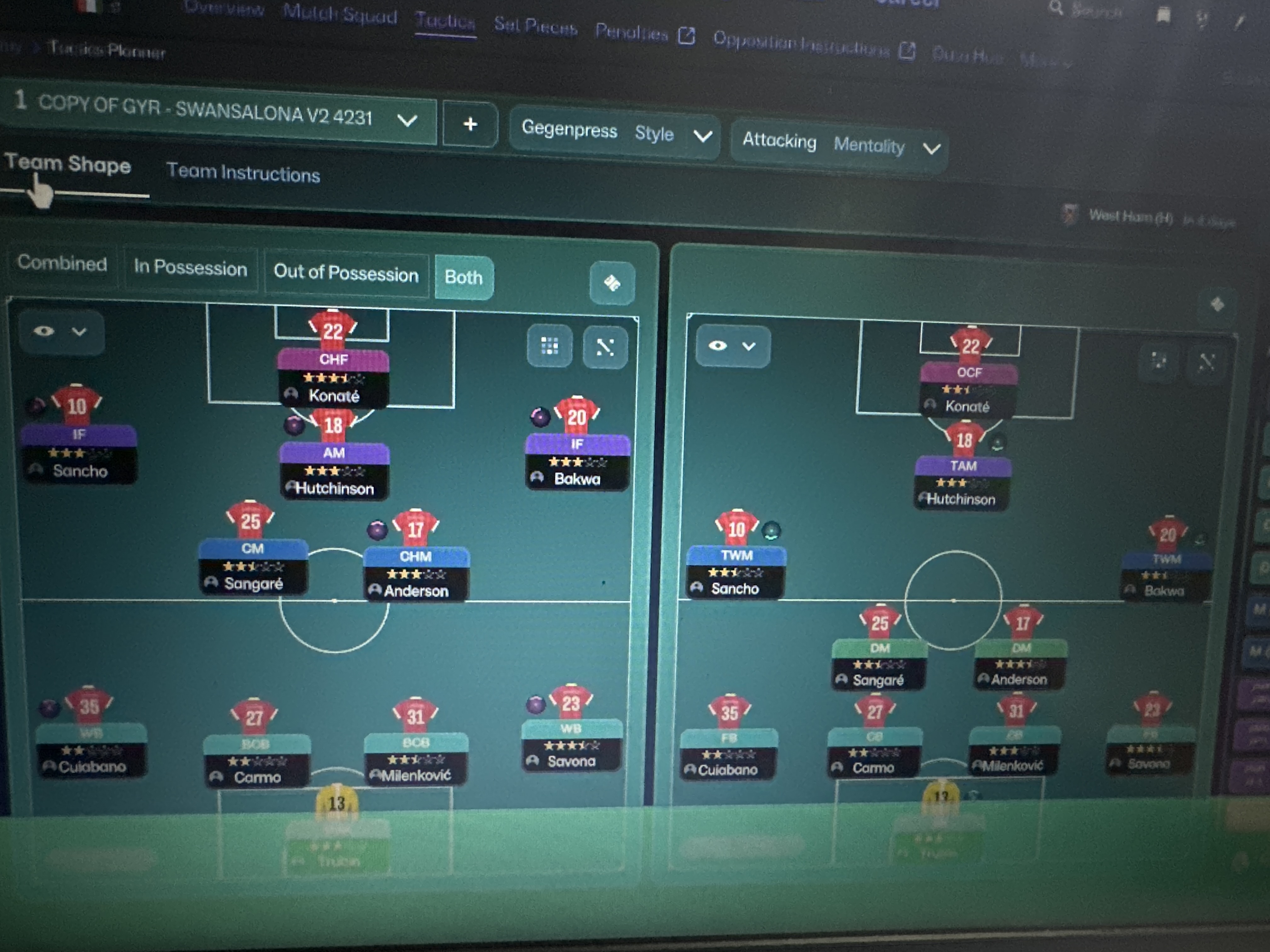
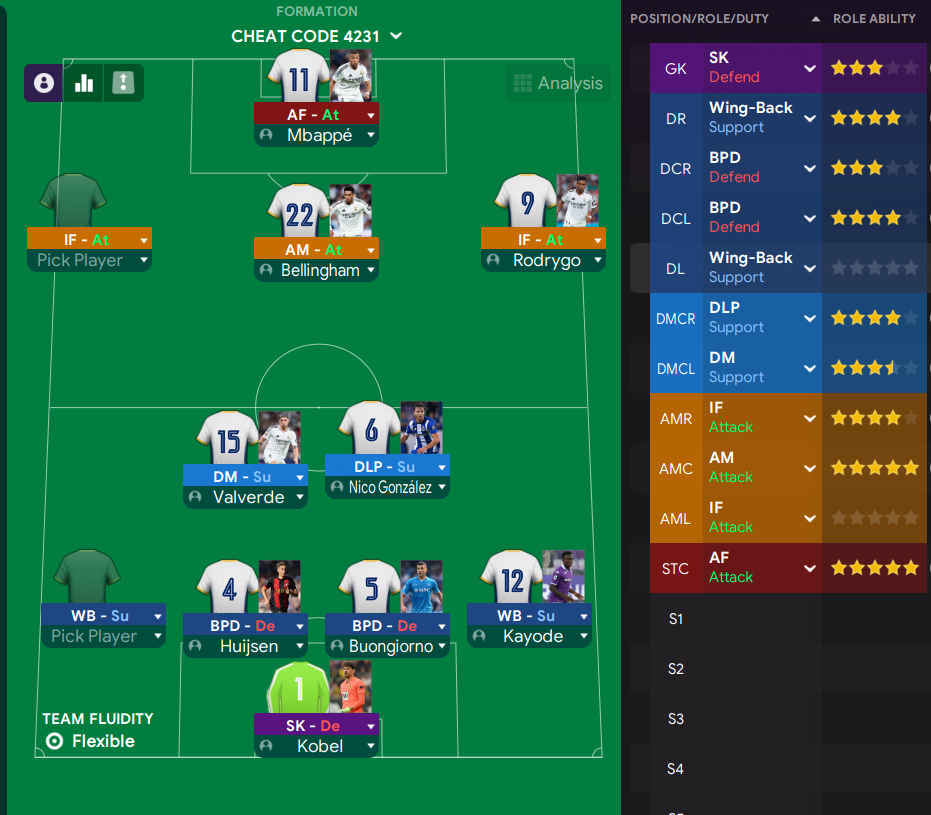
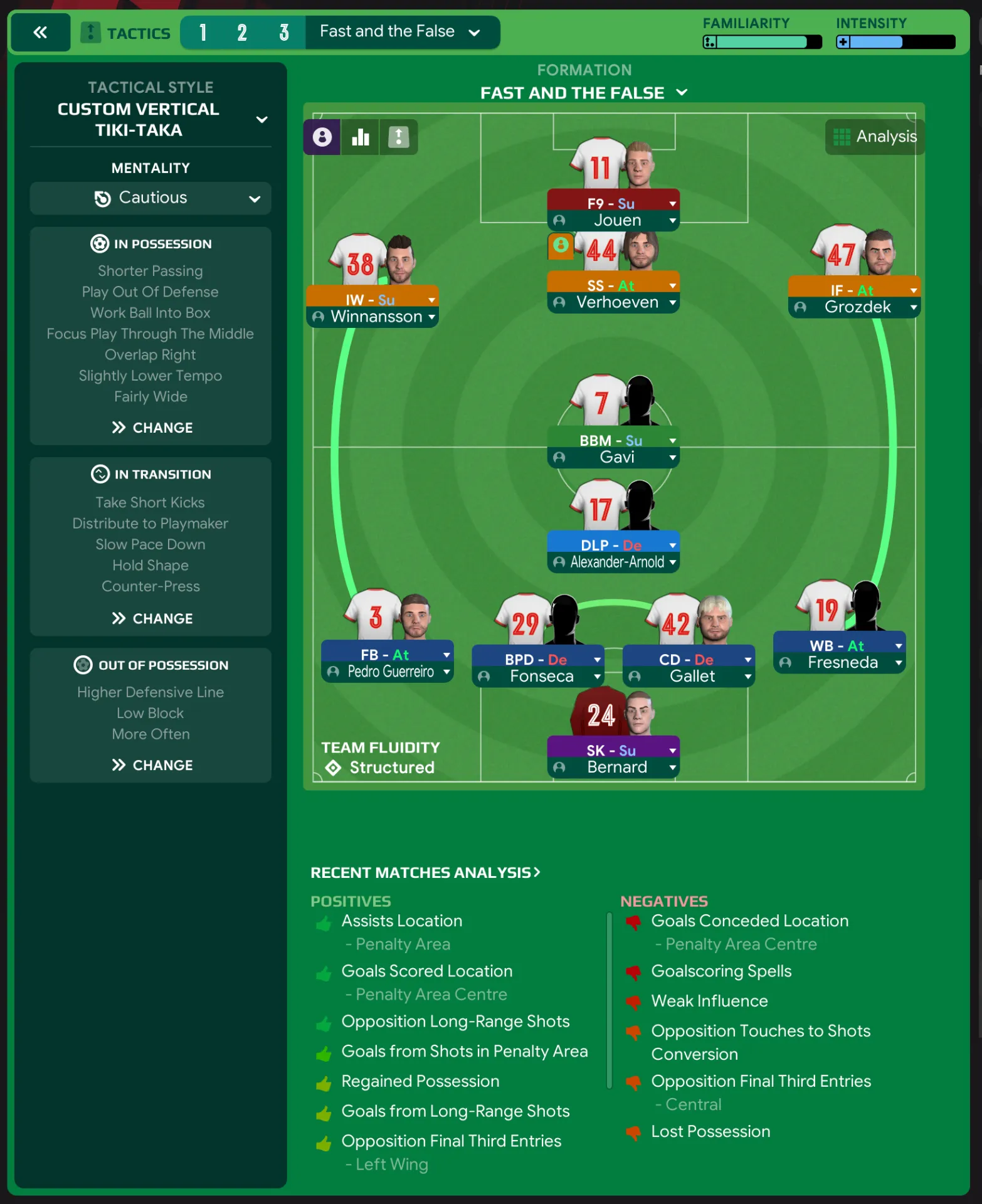
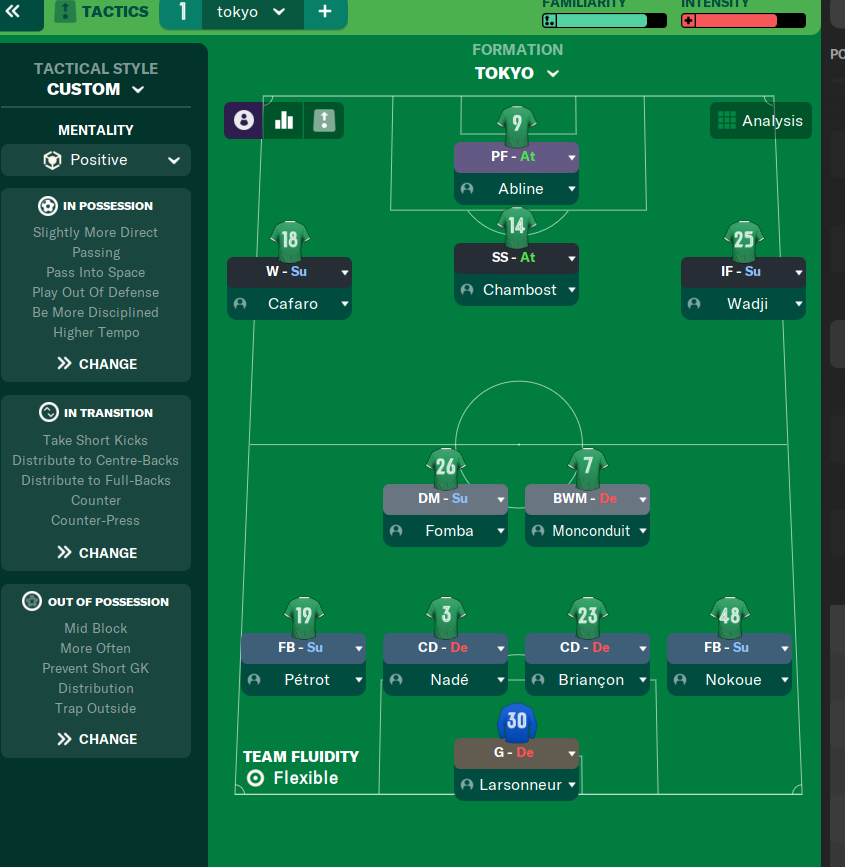
Guides for this formation
The tactical theory behind the 4-2-3-1: roles, instructions, and the trade-offs that decide whether the system holds up.
Player pairings
Midfield Pairs in 4-2-3-1 and 4-4-2
Double pivots and flat pairs in 4-2-3-1 and 4-4-2: when each pairing works, when it collapses, and the AMC unicorn that rescues both.
Read guide
Playing styles
Gegenpressing: A Full Guide
Klopp-style gegenpressing in FM, including squad profile, line-and-press pairing, sustainable workload, and the antipatterns to avoid.
Read guide