Uploaded Tactic
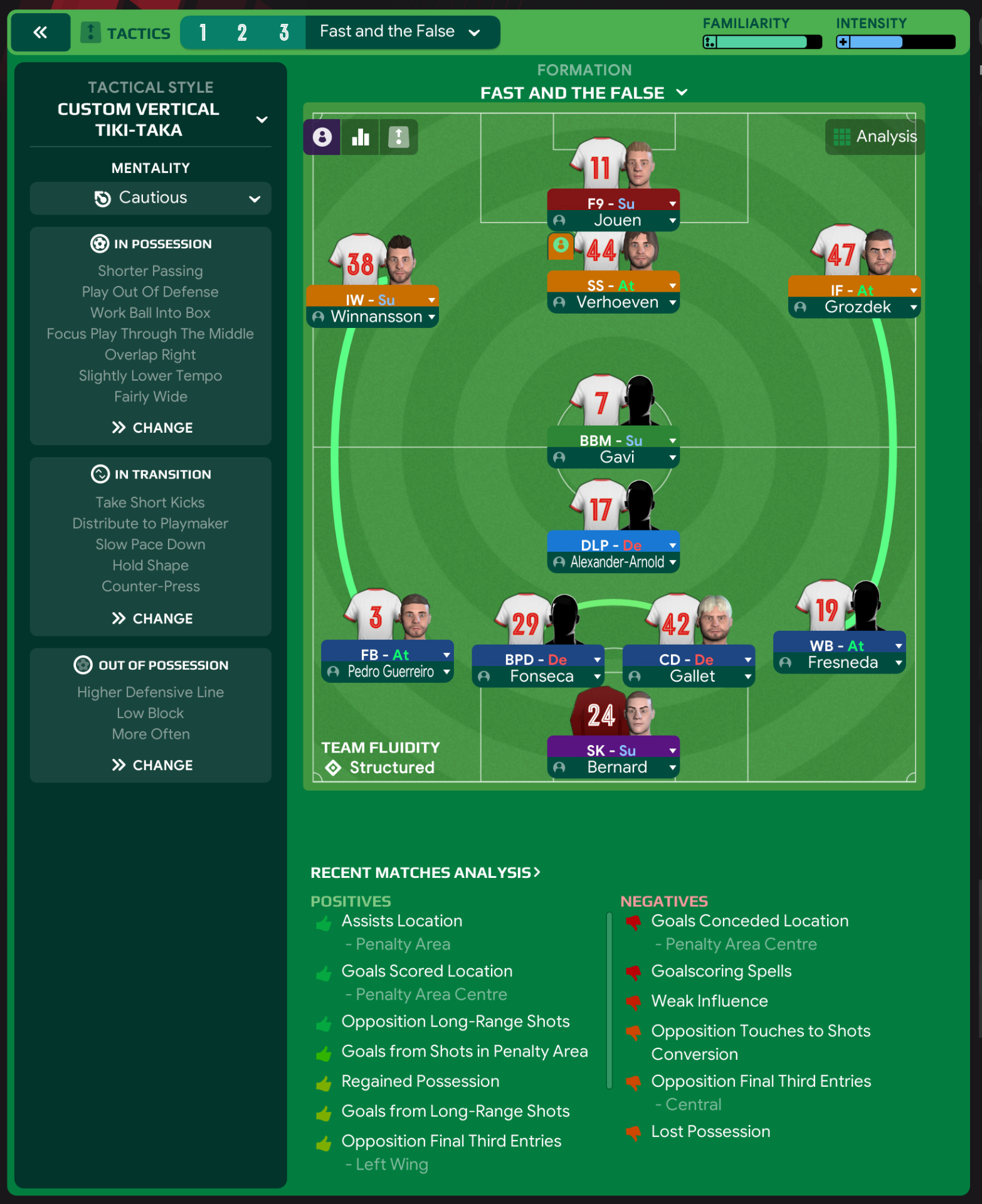
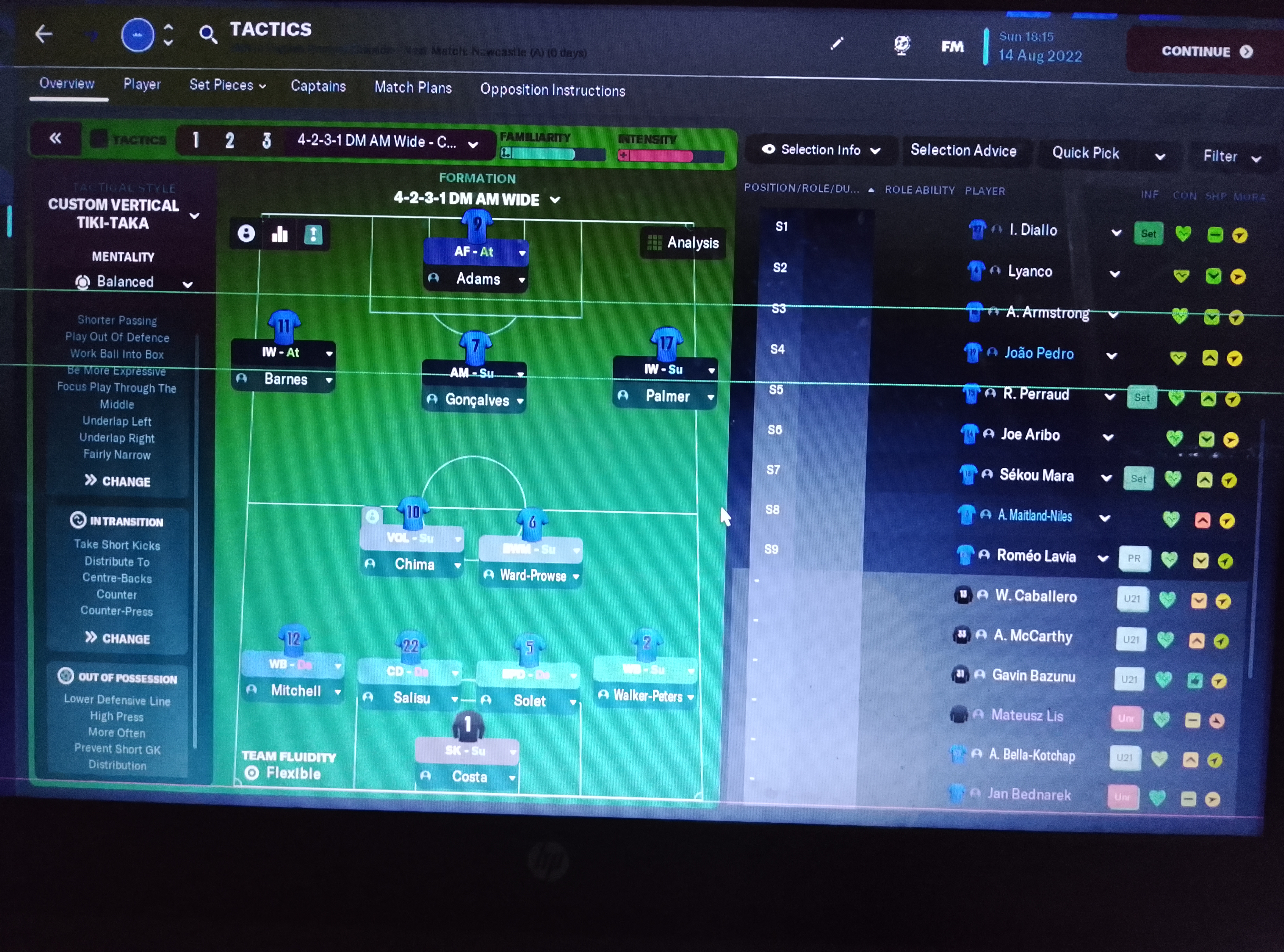
Formation & Style
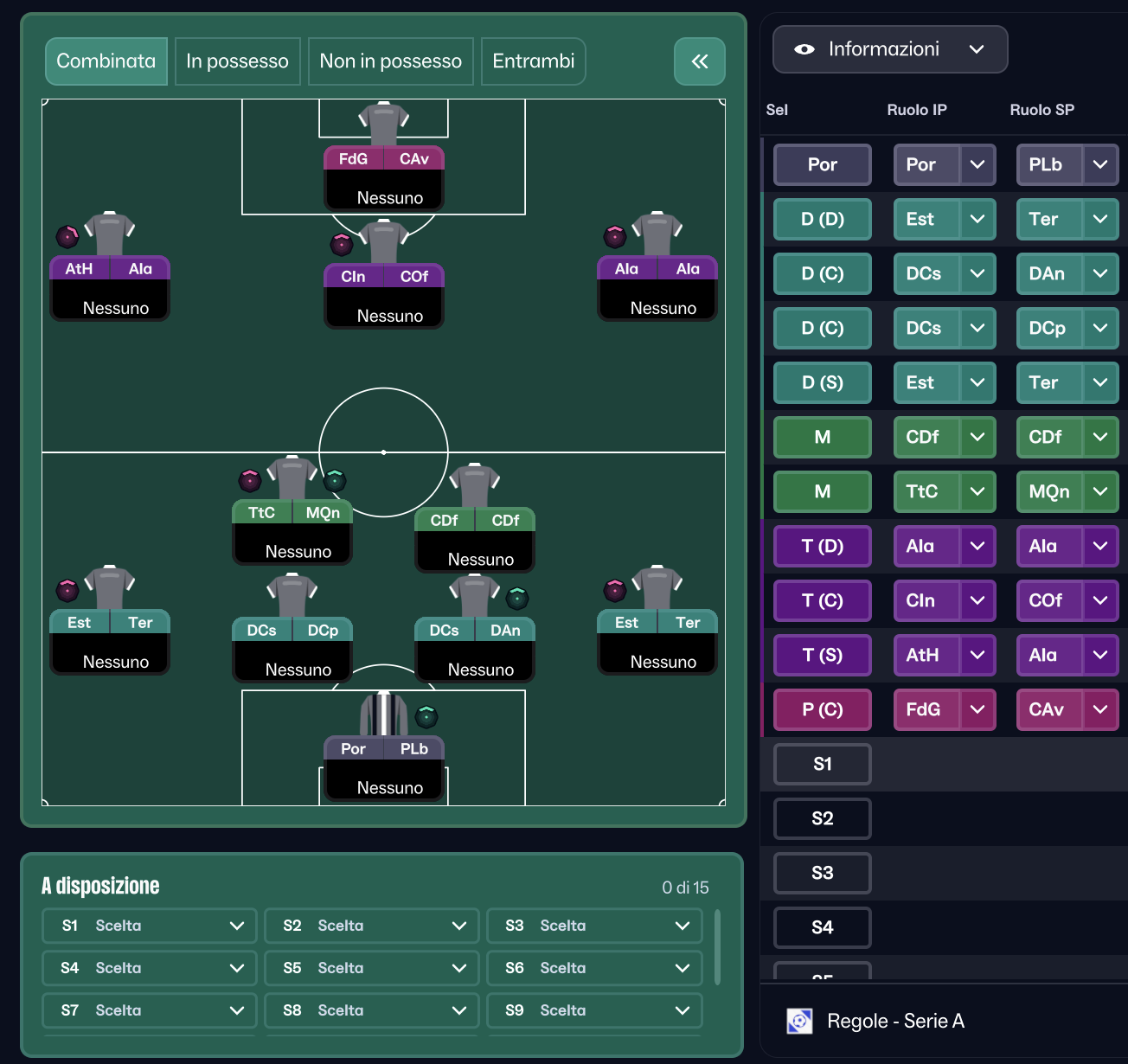
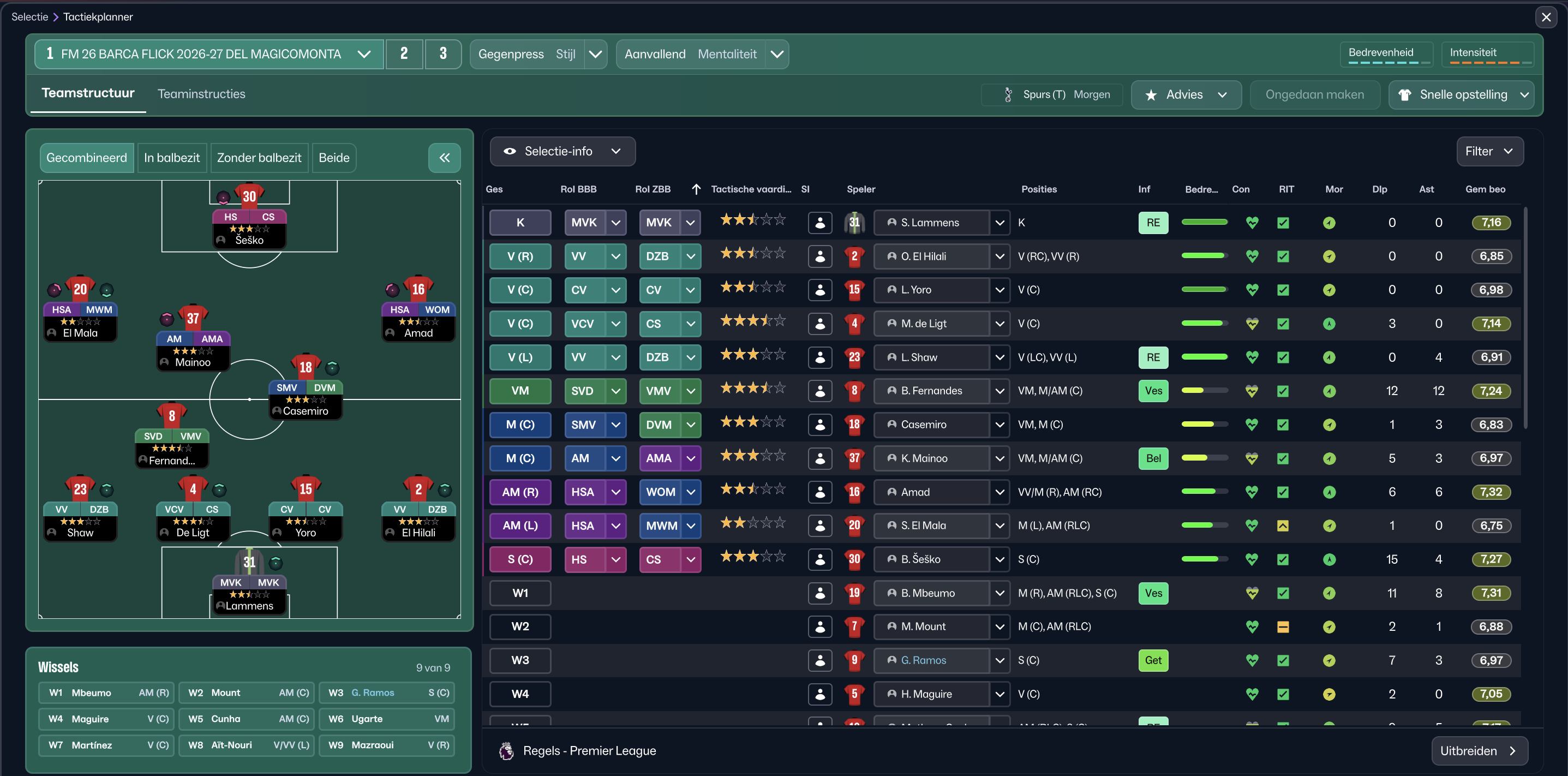
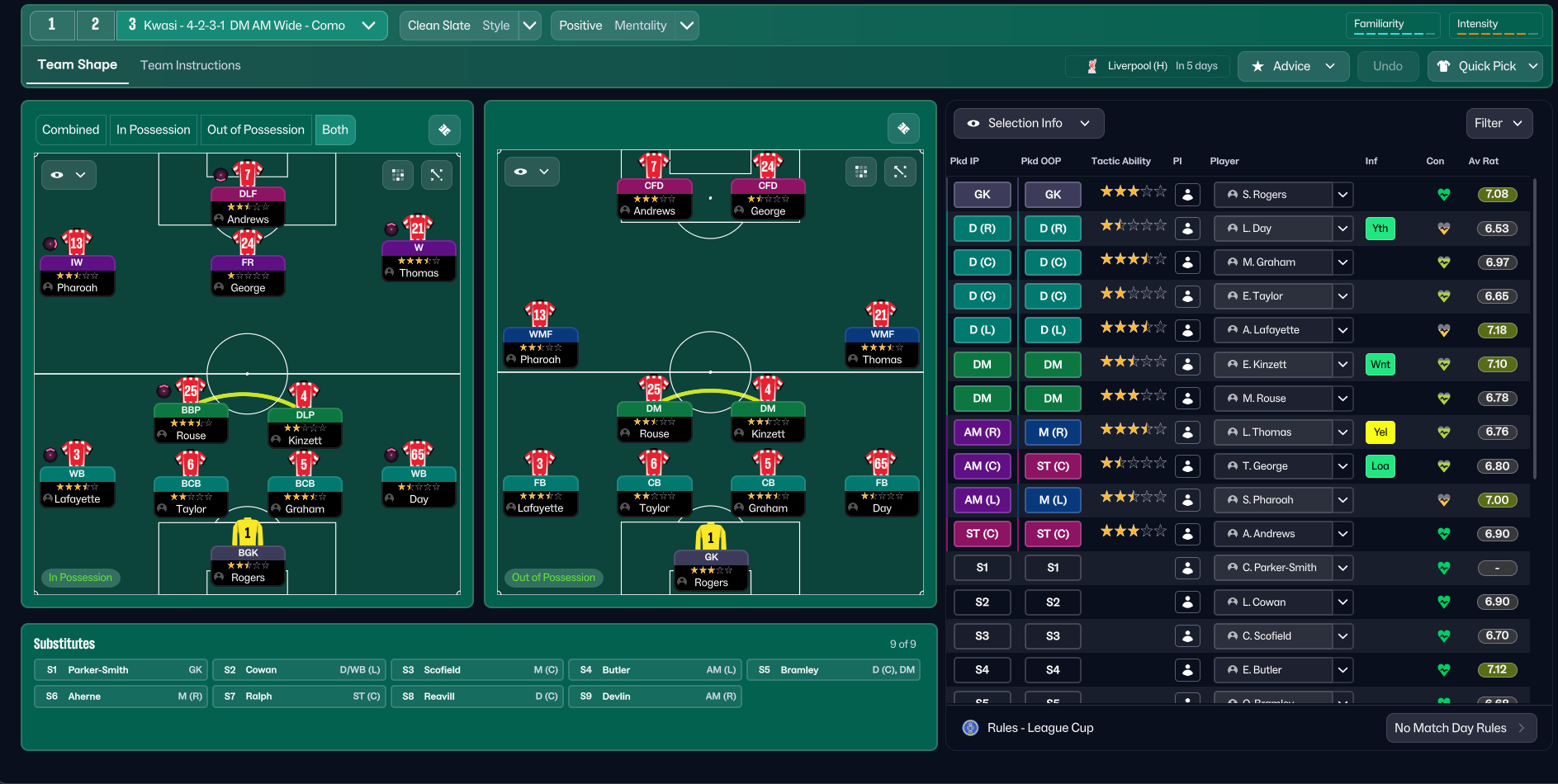
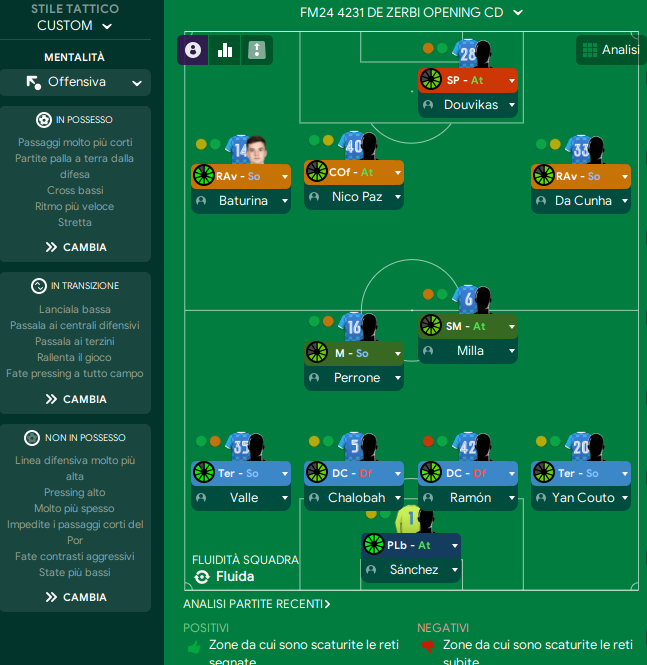
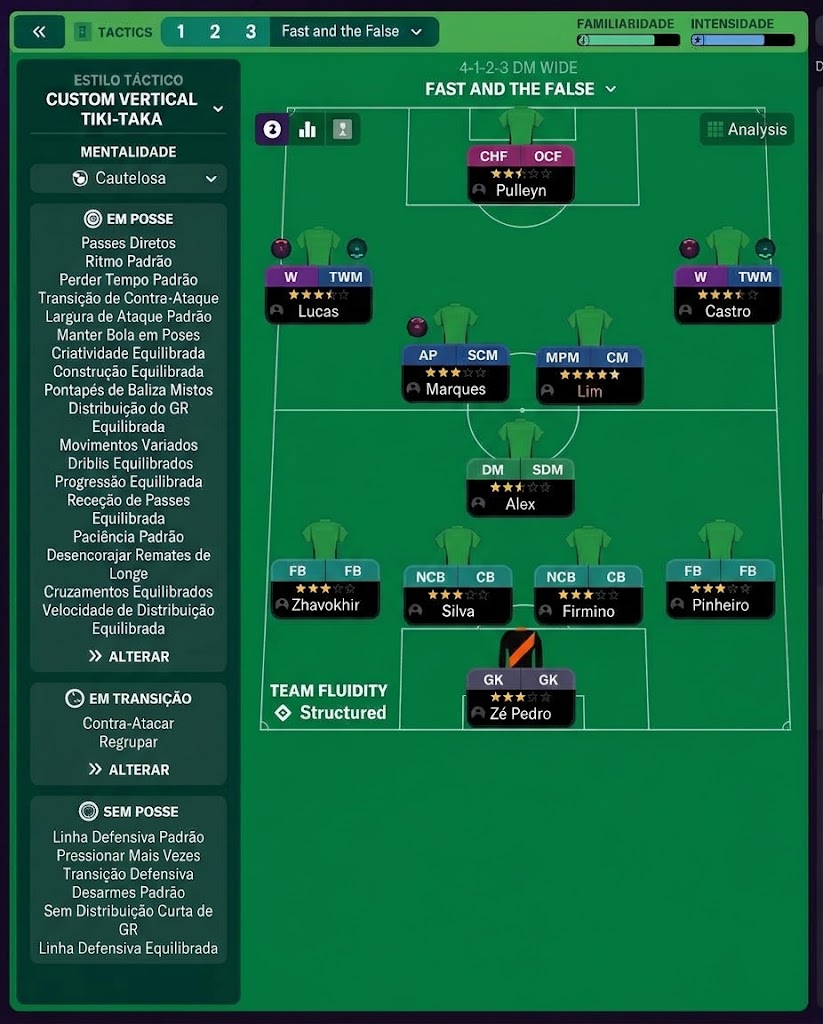
Tactical Style:Custom Vertical Tiki-Taka
Mentality:Cautious
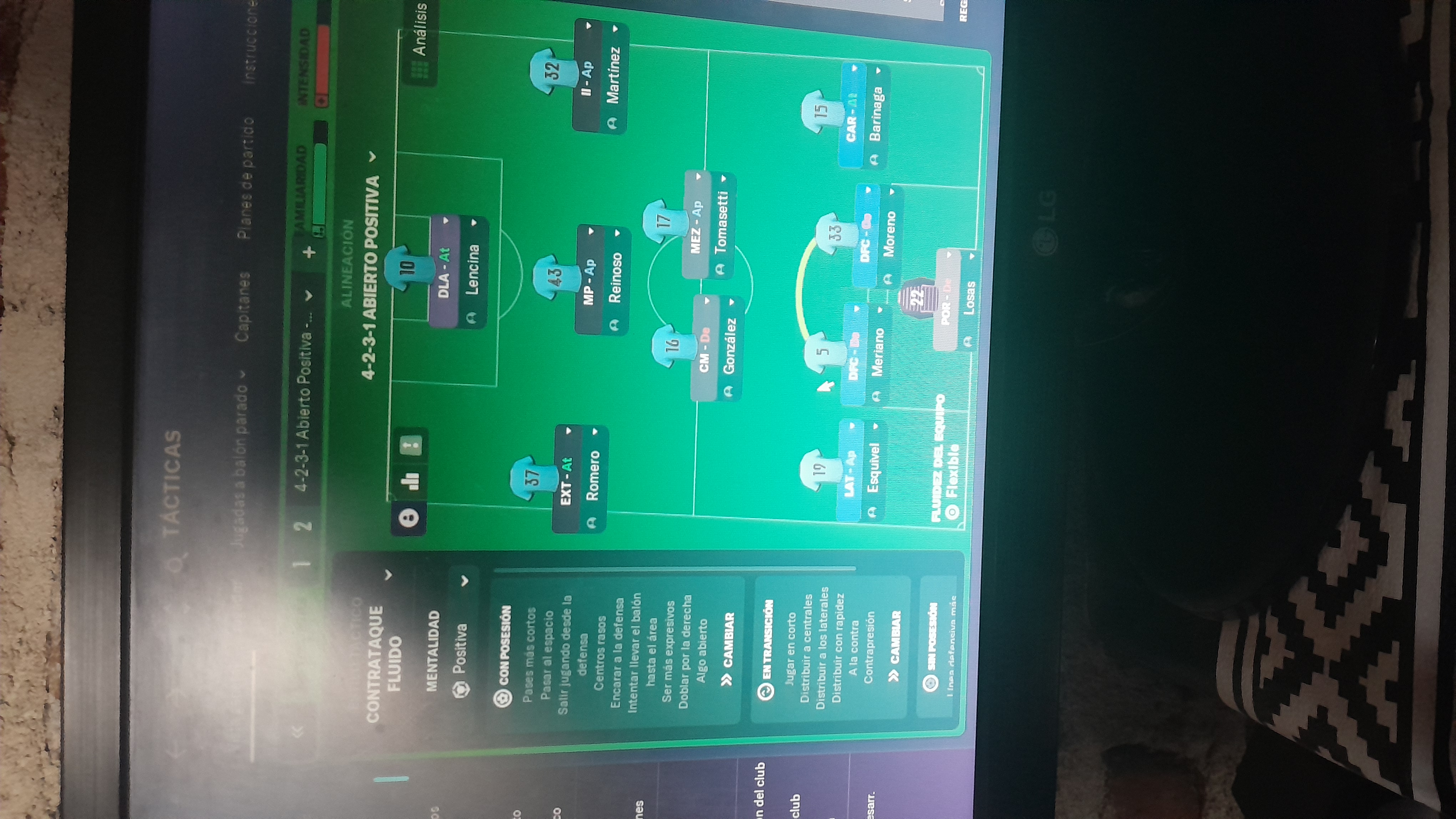
Formation:4-2-3-1
Team Fluidity:Structured
In Possession
Shorter Passing
Play Out Of Defense
Work Ball Into Box
Focus Play Through The Middle
Overlap Right
Slightly Lower Tempo
Fairly Wide
In Transition
Take Short Kicks
Distribute to Playmaker
Slow Pace Down
Hold Shape
Counter-Press
Out of Possession
Higher Defensive Line
Low Block
More Often
Team Shape Without Ball
Shape:Compact 4-2-3-1
Description:Maintaining a compact shape to limit space for opposing attackers, combined with a higher defensive line to apply pressure.
Evidence:Utilization of a higher defensive line combined with a low block strategy to restrict opposition penetration.
Team Shape With Ball
Shape:Fluid Attack
Description:The front four encourages fluid movement and interchanging positions to disorganize defender structures.
Evidence:The integration of a false nine and supporting inside forward creates movement opportunities in and around the box.
Phase Description
Attacking Play
Utilizing a shorter passing approach with a focus on playing through the middle while overlapping on the right flank. The false nine pulls defenders out of position to create space.
Defensive Transition
Quick to press and regain possession through counter-pressing, while aiming to slow the game down when not in immediate danger.
Main Focus
Creating scoring opportunities through intricate passing and positional interchange in the final third.
Key Strengths
Strong Central Possession
The tactic emphasizes playing through the middle, which allows for better control and possession retention.
Effective Overlap
The instructions to overlap, especially on the right flank, create additional width and space in the attacking phase.
Flexible Attacking Options
With varied roles in attack, players can interchange roles to confuse defenders.
Conflicting Directions
Short Passing vs. Counter-Pressing
Short passing may slow down transition play against teams that counter quickly, requiring a balance.
Higher Defensive Line with Low Block
A higher defensive line may become vulnerable to quick counter-attacks when employing a low block.
Cautious Mentality with Fluid Attack
A cautious mentality may limit the aggressive interchanges between attacking players.
Tactical Suggestions
Adjust Mentality for Balance
Consider adjusting to a balanced or attacking mentality to better support fluid movement in attack.
Increase Pressing Intensity
More aggressive pressing may help regain possession quickly and disrupt opposition build-up.
Fluidity Adjustment Based on Opponent
Adjust team fluidity based on the strength of the opponent to enhance adaptability.
Ask Questions About Your Lineup
Related Tactics
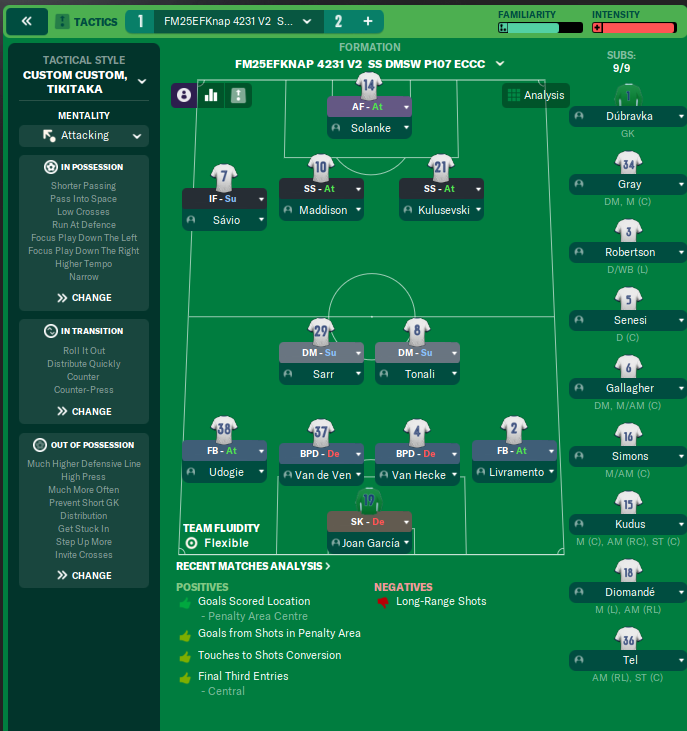
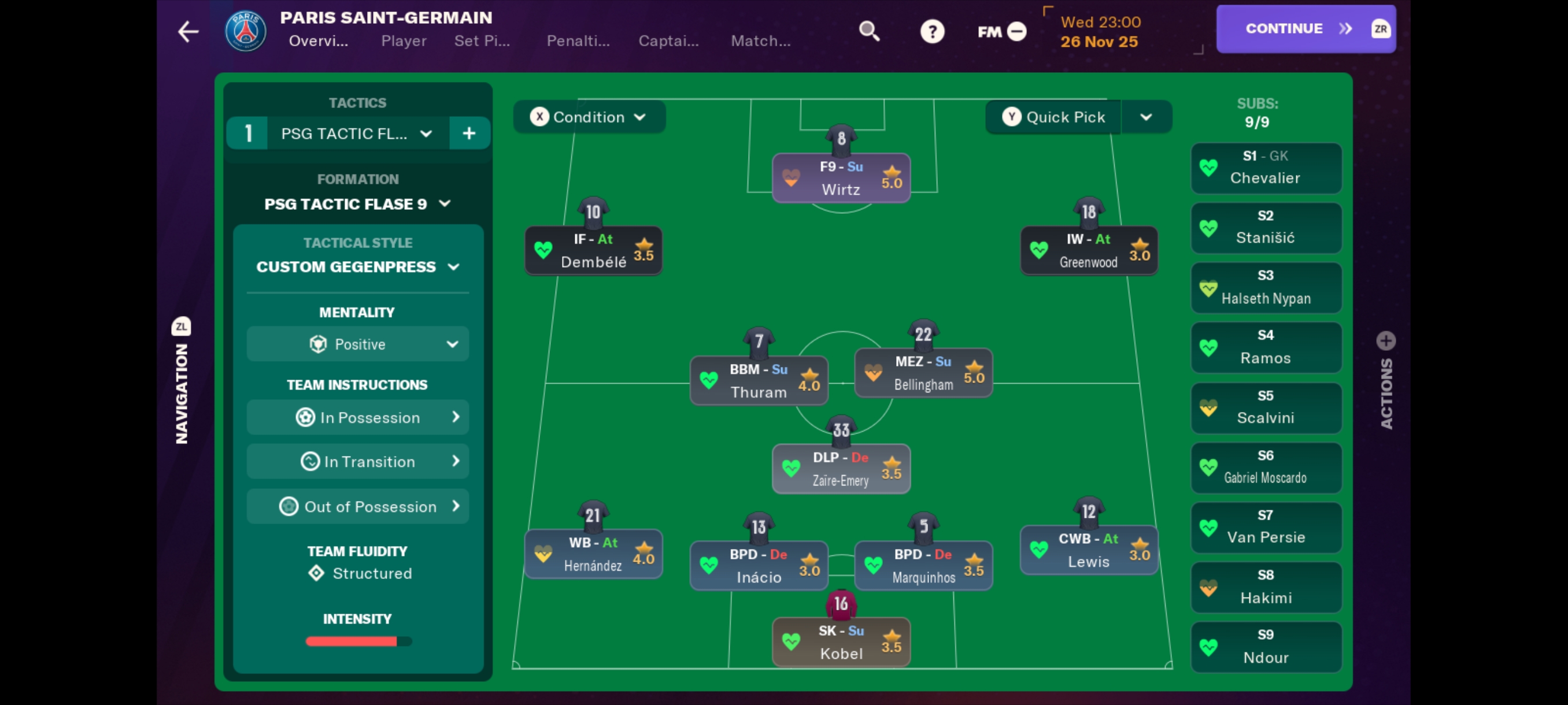
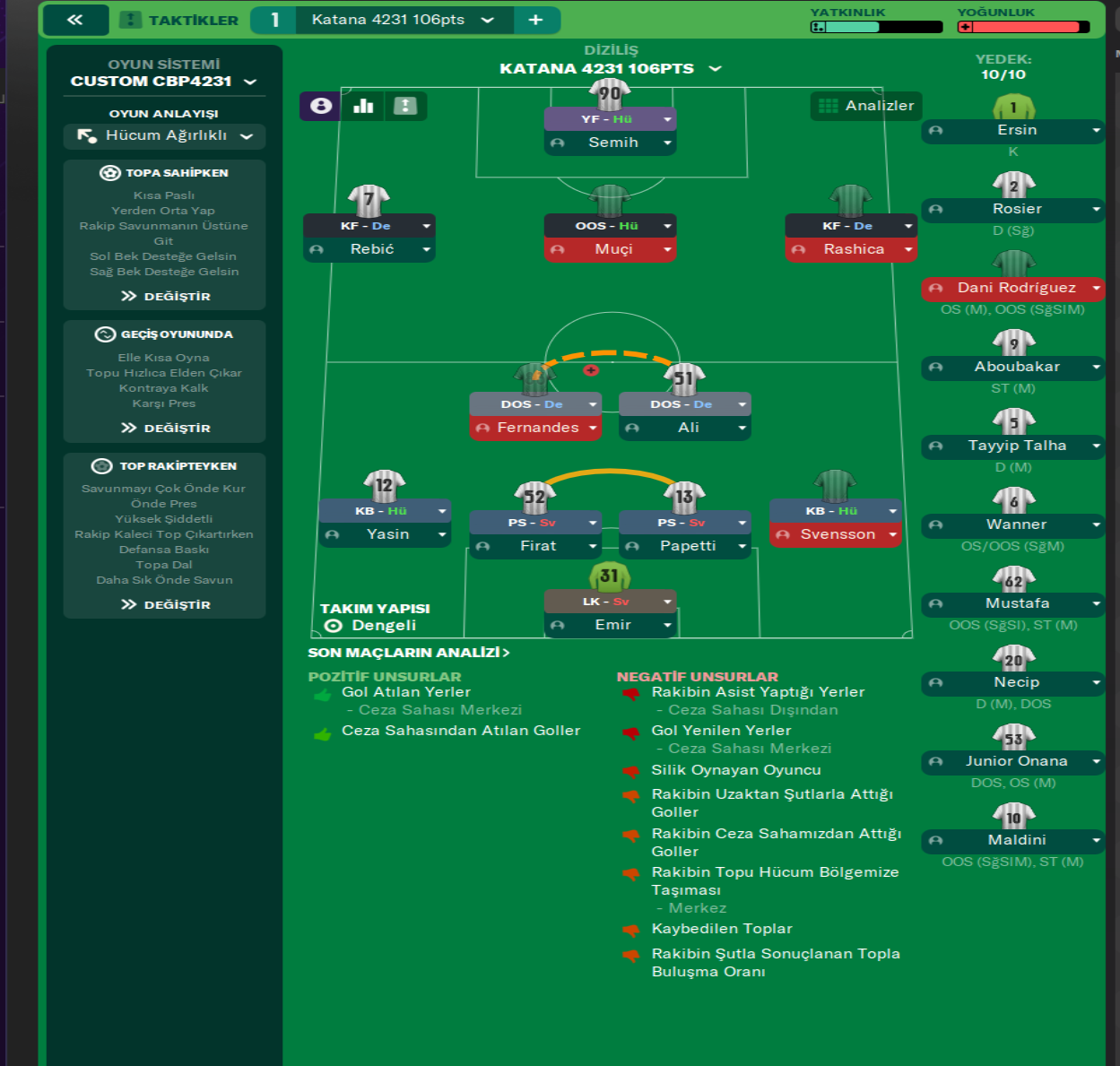
More Custom Vertical Tiki-Taka tactics
Guides for this formation
The tactical theory behind the 4-2-3-1: roles, instructions, and the trade-offs that decide whether the system holds up.
Player pairings
Midfield Pairs in 4-2-3-1 and 4-4-2
Double pivots and flat pairs in 4-2-3-1 and 4-4-2: when each pairing works, when it collapses, and the AMC unicorn that rescues both.
Read guide
Playing styles
Gegenpressing: A Full Guide
Klopp-style gegenpressing in FM, including squad profile, line-and-press pairing, sustainable workload, and the antipatterns to avoid.
Read guide