Uploaded Tactic
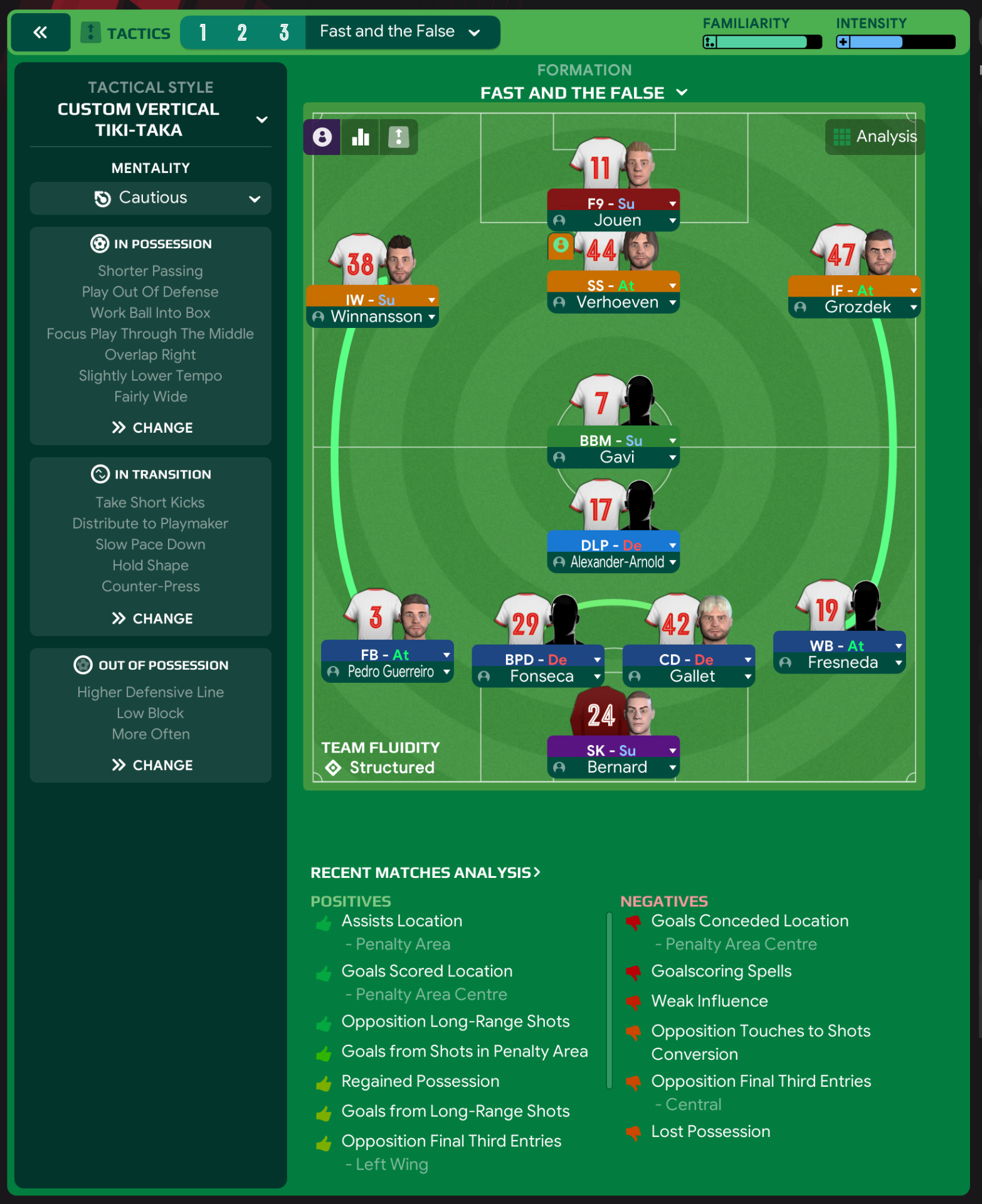
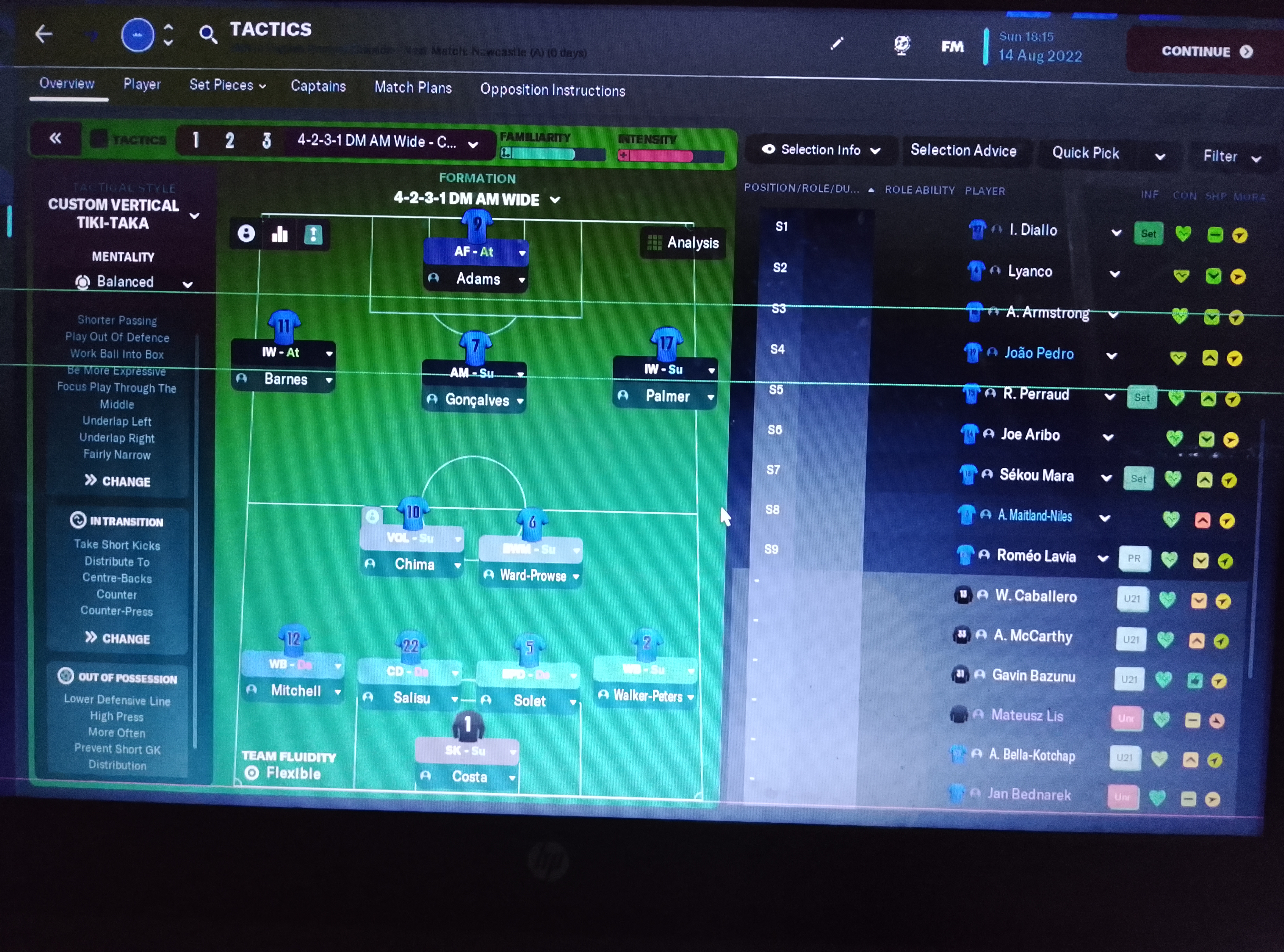
Formation & Style
Tactical Style:Custom Vertical Tiki-Taka
Mentality:Cautious
Formation:4-2-3-1
Team Fluidity:Structured
In Possession
Shorter Passing
Play Out Of Defense
Work Ball Into Box
Focus Play Through The Middle
Overlap Right
Slightly Lower Tempo
Fairly Wide
In Transition
Take Short Kicks
Distribute to Playmaker
Slow Pace Down
Hold Shape
Counter-Press
Out of Possession
Higher Defensive Line
Low Block
More Often
Team Shape Without Ball
Shape:4-2
Description:Solid back four supported by two midfielders, ensuring good coverage in central areas.
Evidence:Defensive solidity via CB-BPD at [2,2] and [2,3] and DM-DLP at [3,3] supporting the backend.
Team Shape With Ball
Shape:3-2-1
Description:Fluid attacking formation with interchanging movements between inside forwards and the false nine.
Evidence:Dynamic role distribution: SS-A at [5,3] and IF-A at [6,4] promotes creativity around F9 performance.
Phase Description
Attacking Play
Focus on intricate passing through the middle while looking to exploit wings through overlaps.
Defensive Transition
Quick shift to a compact shape, slowing down opposition and regaining possession through structured pressing.
Main Focus
Creating goal-scoring opportunities through combination play and positional interchange.
Key Strengths
Creative Midfield Play
The DLP-D at [3,3] and BBM-S at [4,3] allows fluidity in transitions and creativity.
Width and Overlaps
The IW-S at [6,1] provides width and can cut inside while WB-A at [2,5] overlaps for attacking options.
Dynamic Forward Line
Flexible roles in the forward line with an emphasis on creating space for each other.
Conflicting Directions
High Defensive Line Risk
The high defensive line can invite pressure and might be exploited by pacey opponents.
Cautious Mentality Limitations
A cautious mentality can lead to a lack of aggression and might limit attacking prowess.
Slow Counter-Press
Slow pace down during transitions may create gaps, slowing down counter opportunities.
Tactical Suggestions
Adjust Defensive Line Height
Lowering the defensive line may reduce vulnerability and manage opposition pace better.
Increase Tempo in Transition
Higher tempo during transitions can lead to more prompt counter-attacking opportunities.
Enhance Central Attacking Options
Including more attacking support in central areas can maximize offensive pressure.
Ask Questions About Your Lineup
Related Tactics
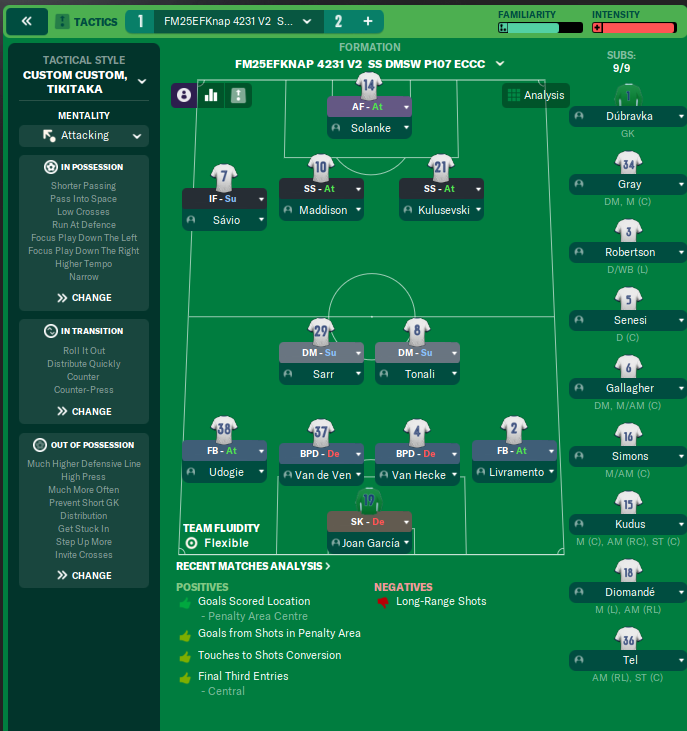
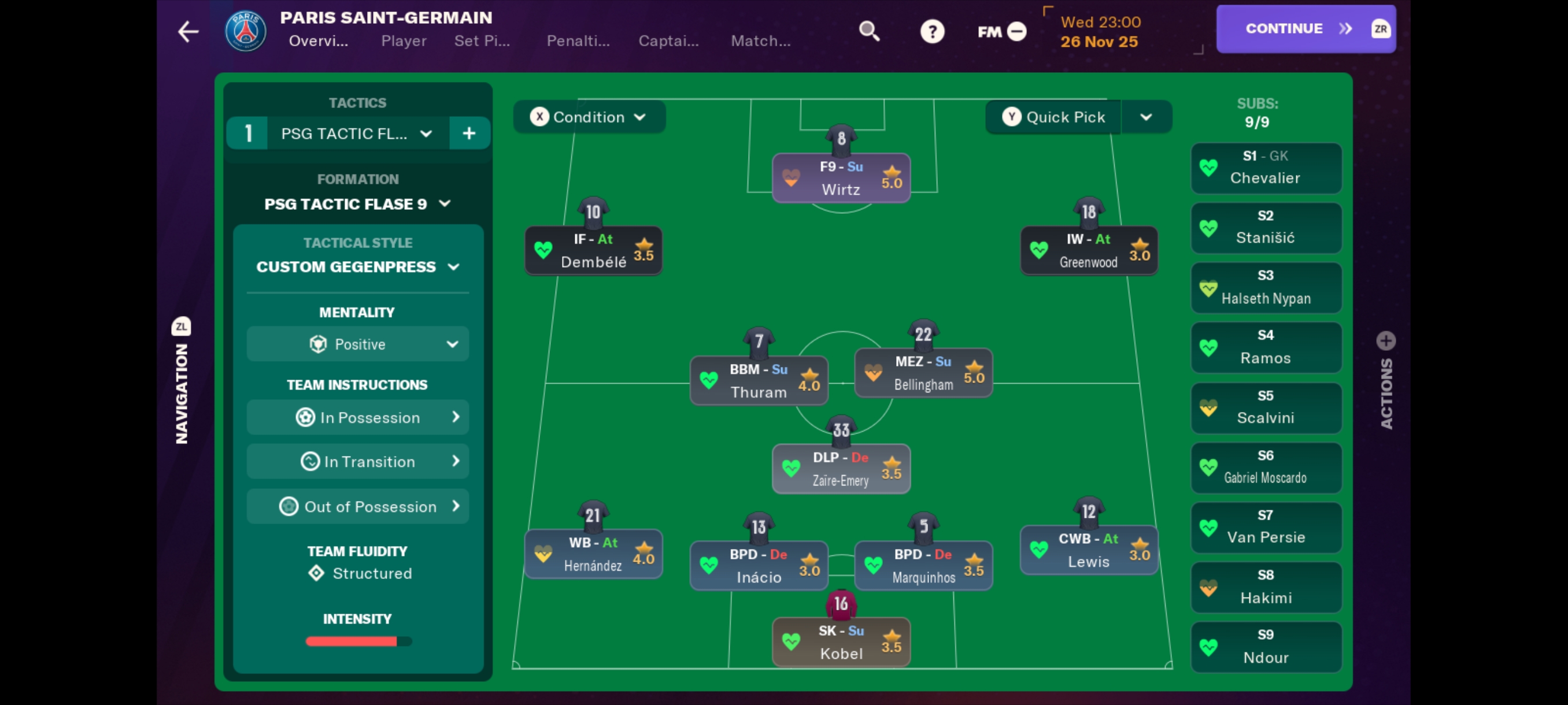
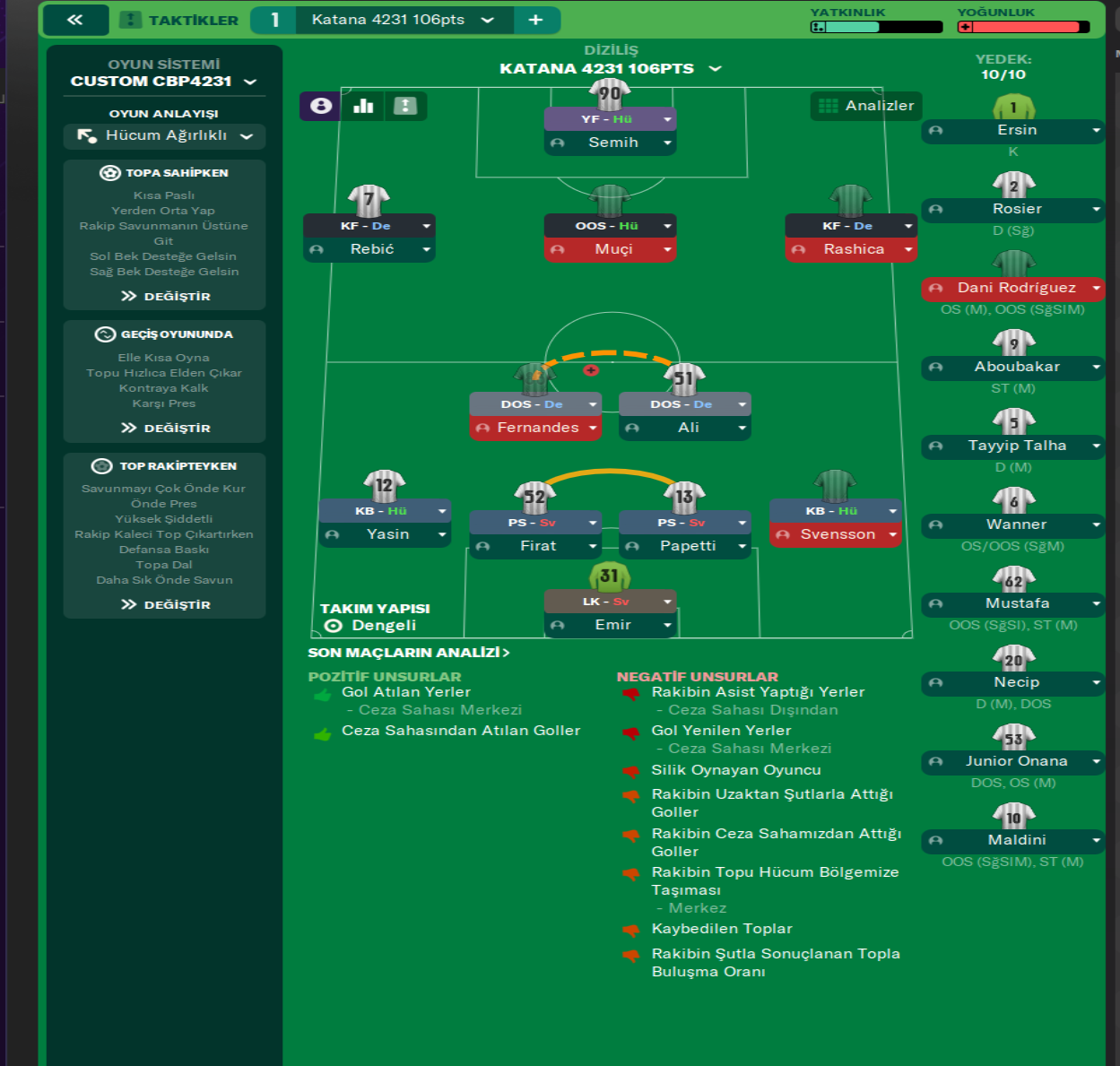
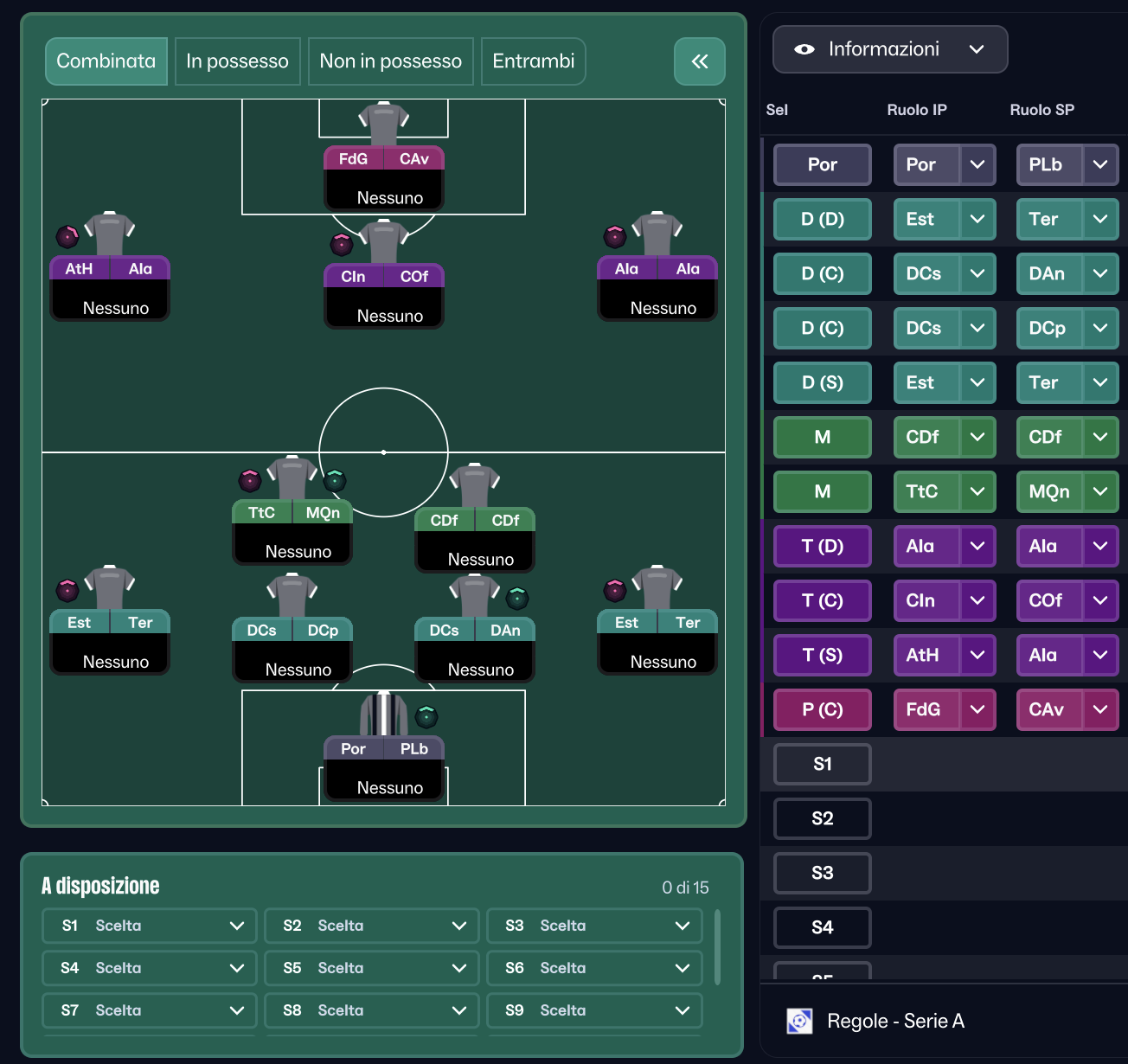
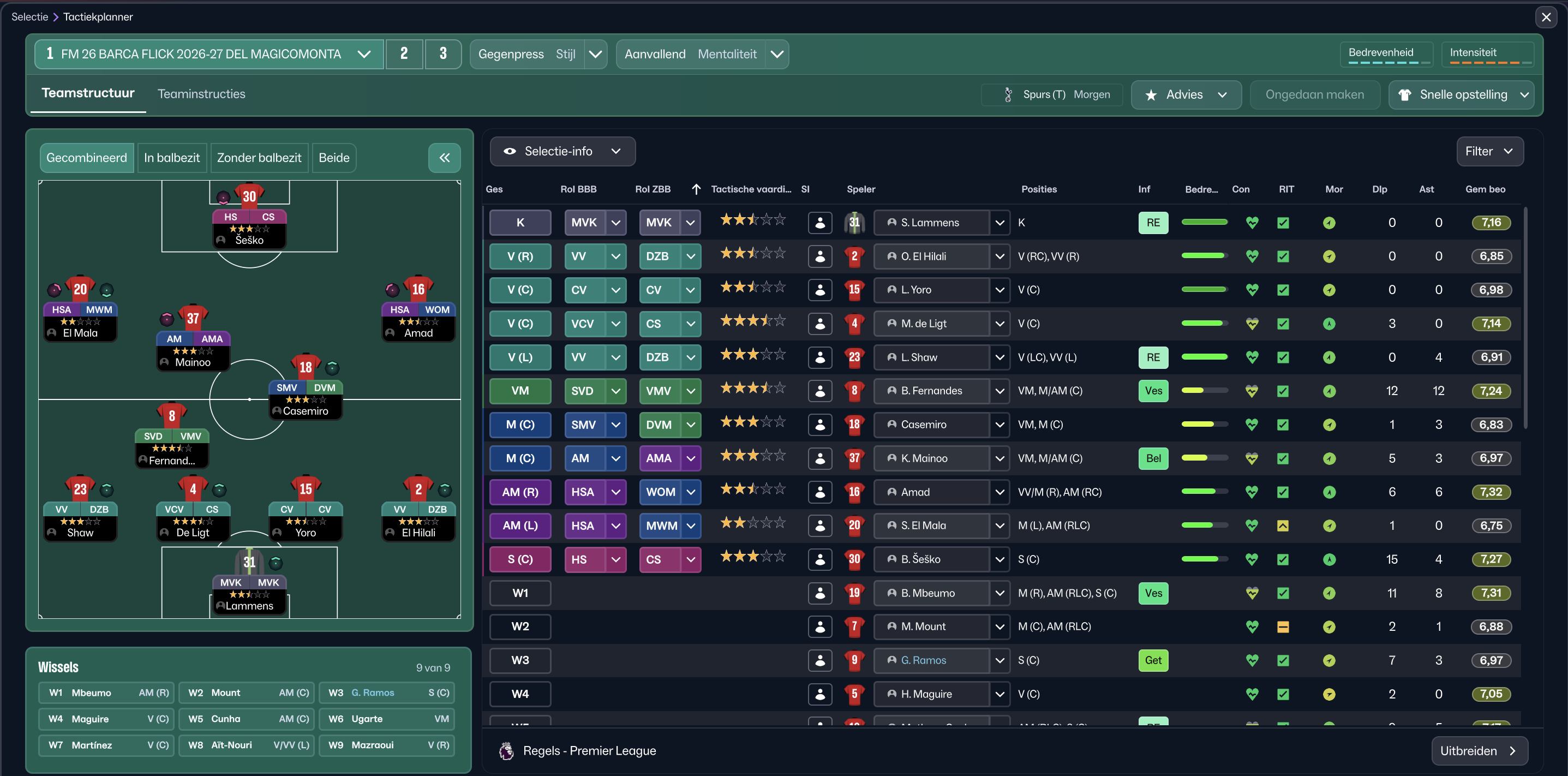
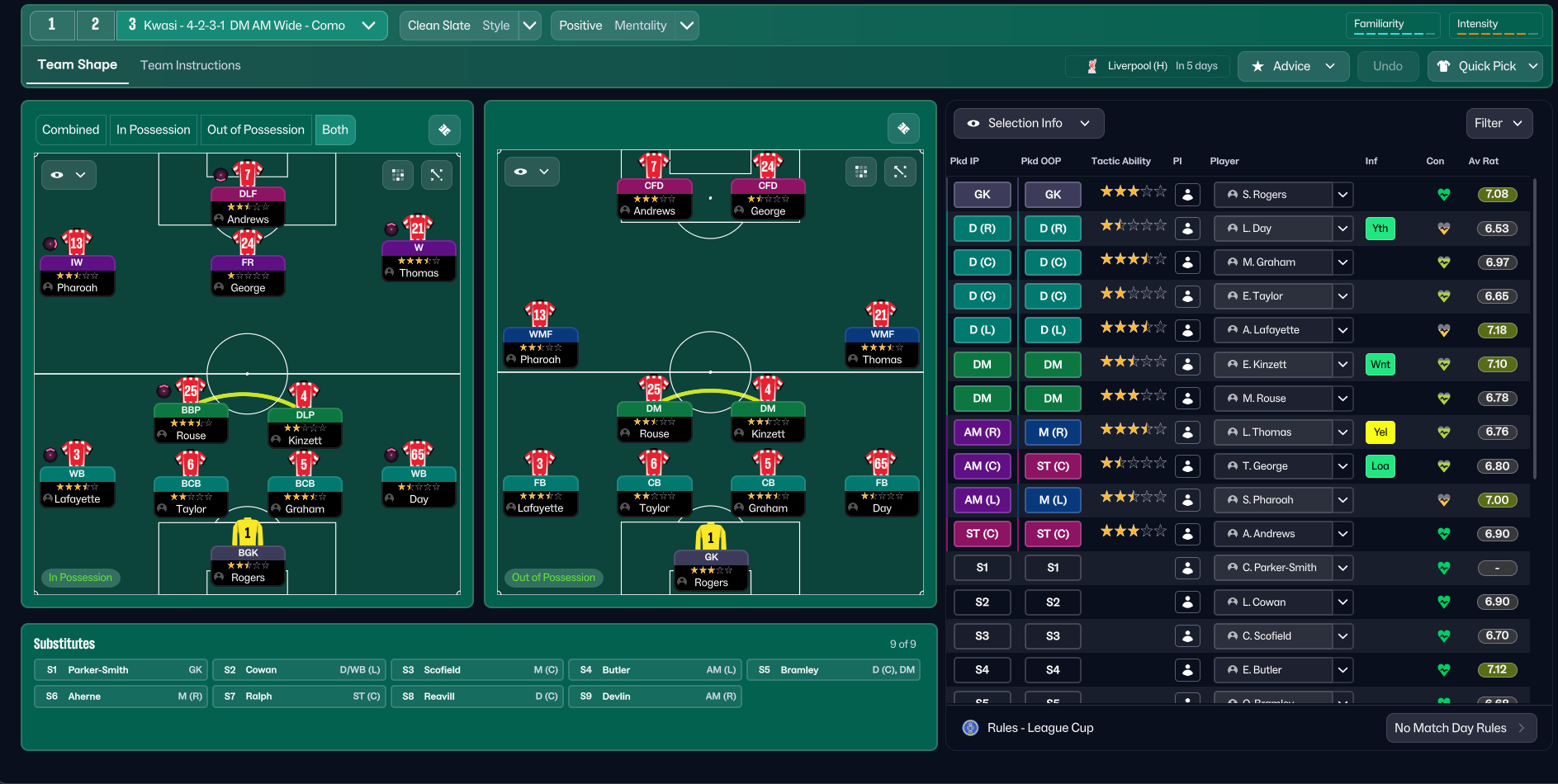
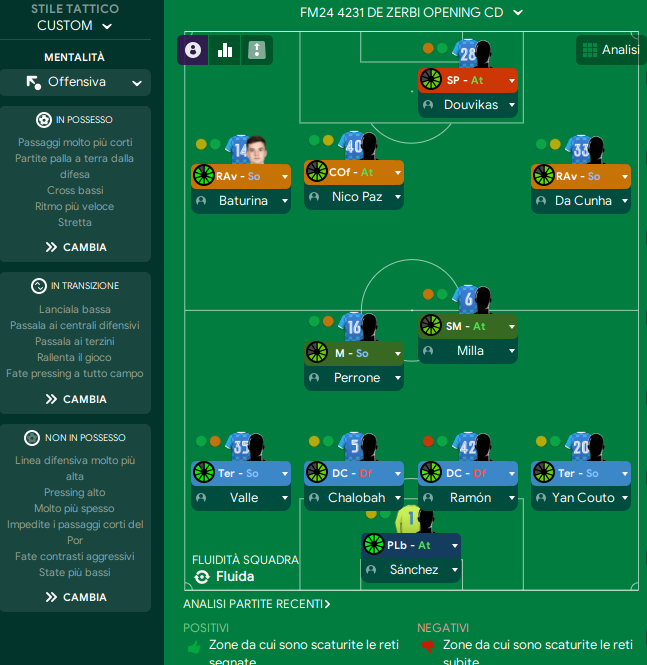
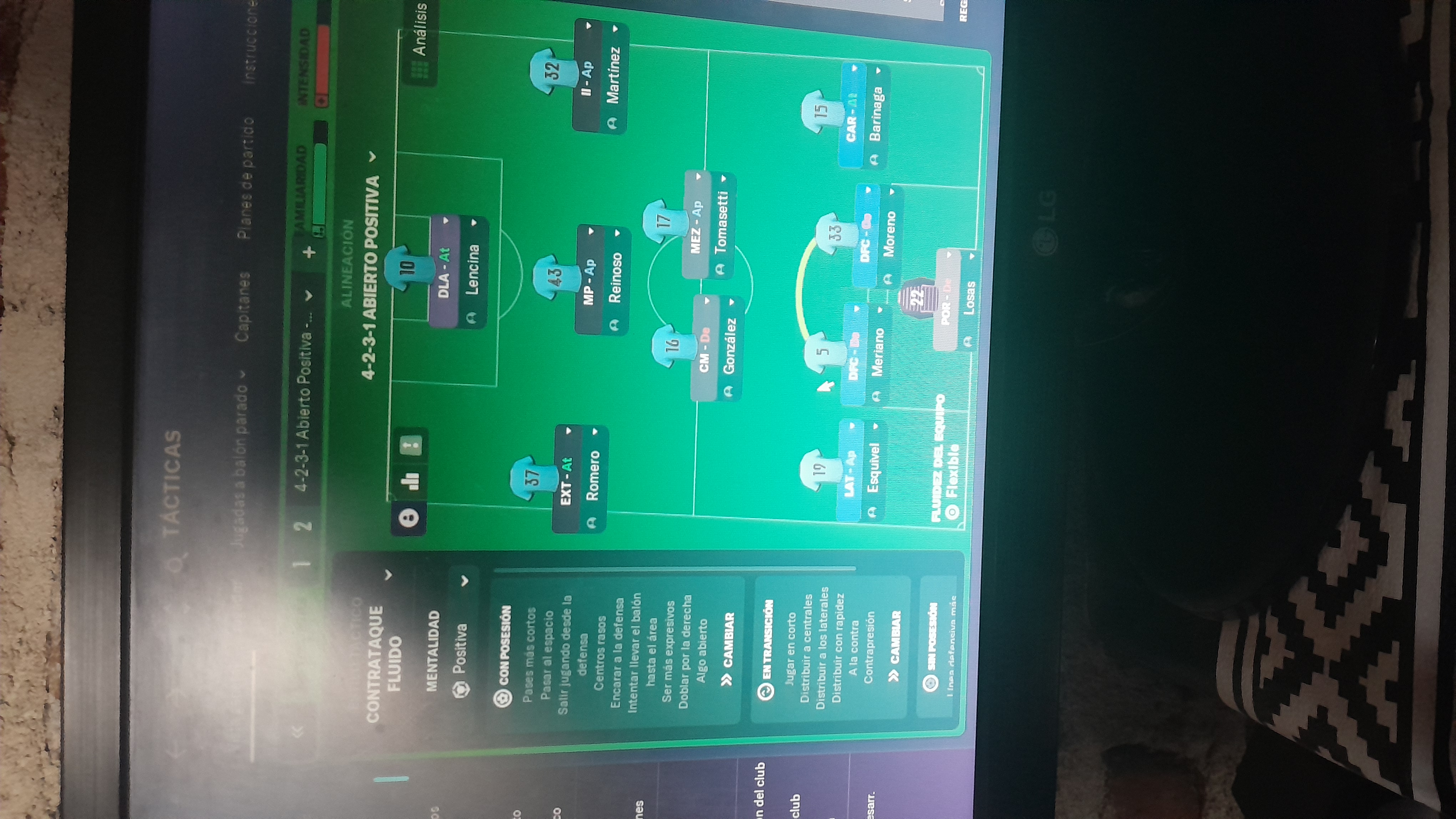
More Custom Vertical Tiki-Taka tactics
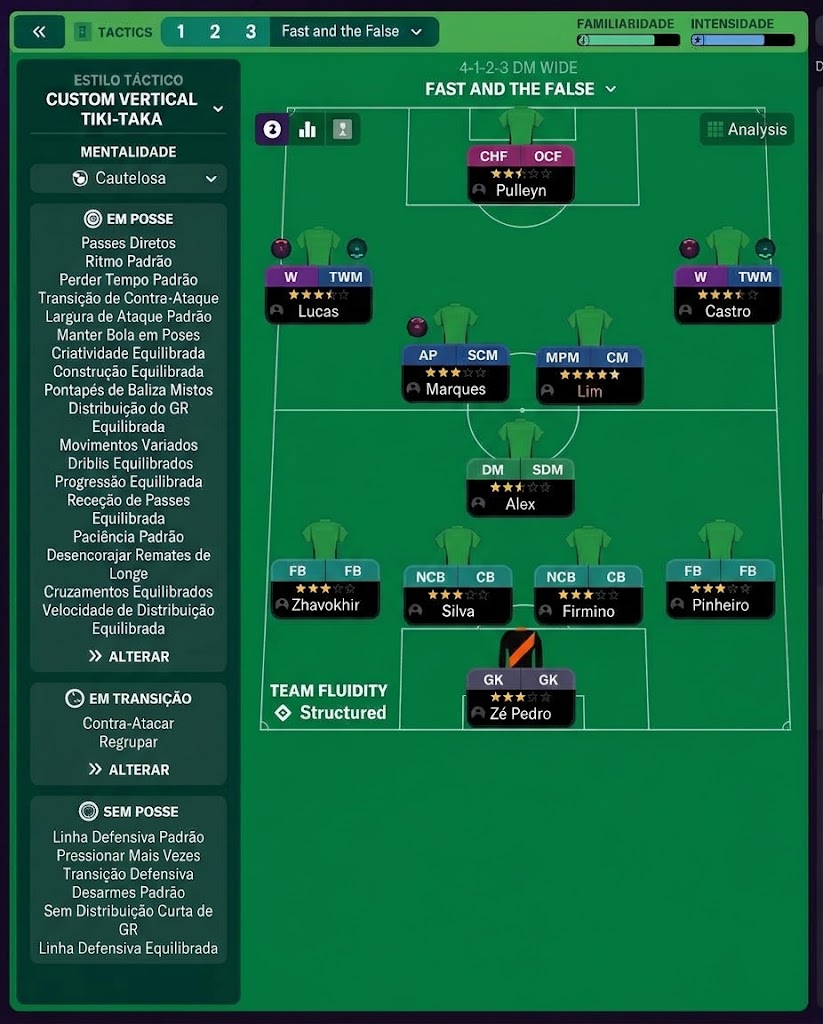
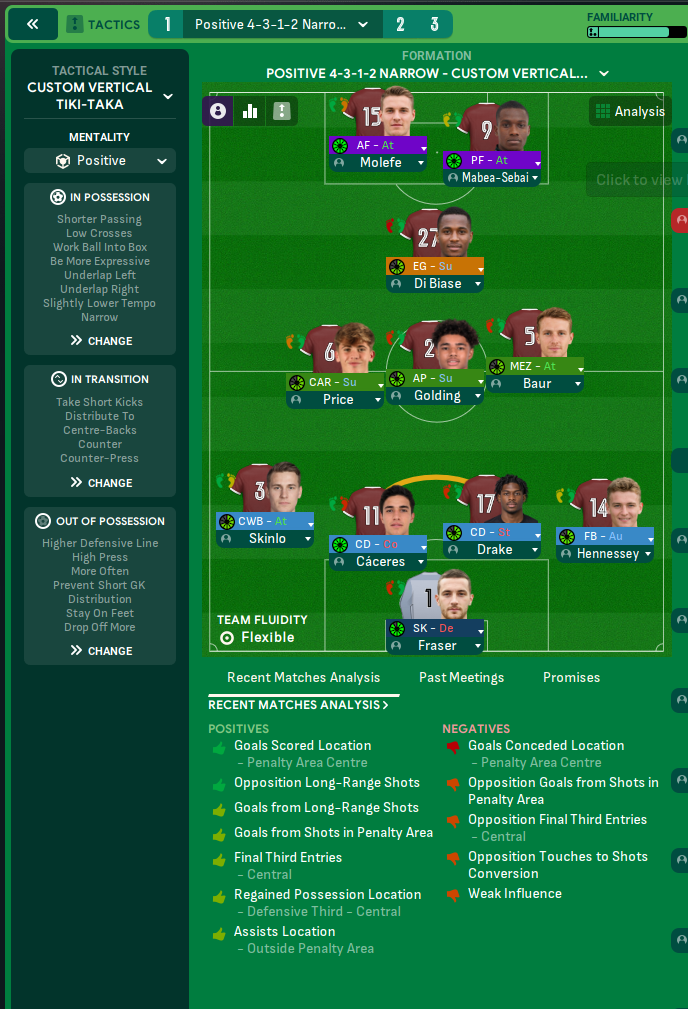
Guides for this formation
The tactical theory behind the 4-2-3-1: roles, instructions, and the trade-offs that decide whether the system holds up.
Player pairings
Midfield Pairs in 4-2-3-1 and 4-4-2
Double pivots and flat pairs in 4-2-3-1 and 4-4-2: when each pairing works, when it collapses, and the AMC unicorn that rescues both.
Read guide
Playing styles
Gegenpressing: A Full Guide
Klopp-style gegenpressing in FM, including squad profile, line-and-press pairing, sustainable workload, and the antipatterns to avoid.
Read guide