Uploaded Tactic
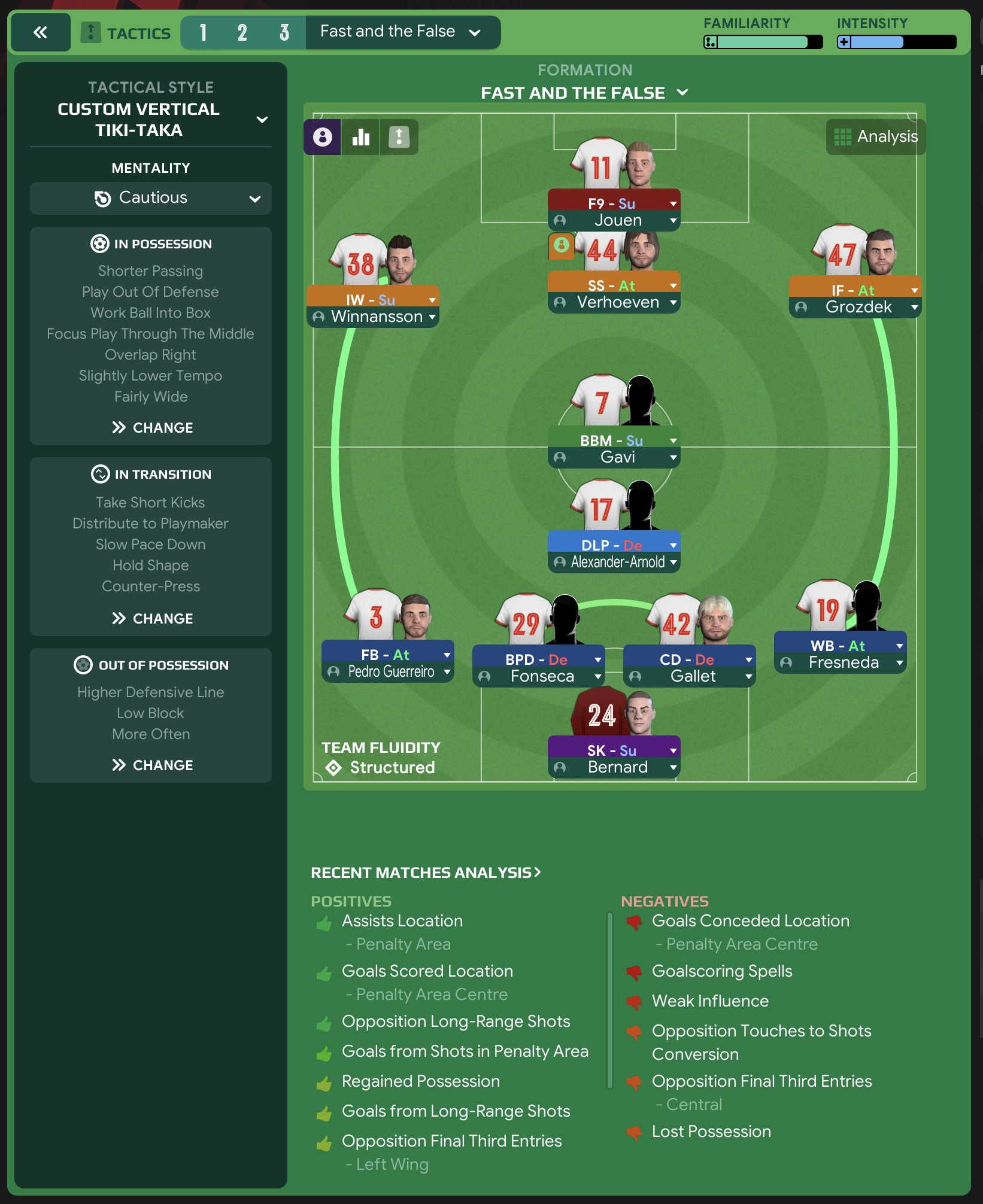
Formation & Style
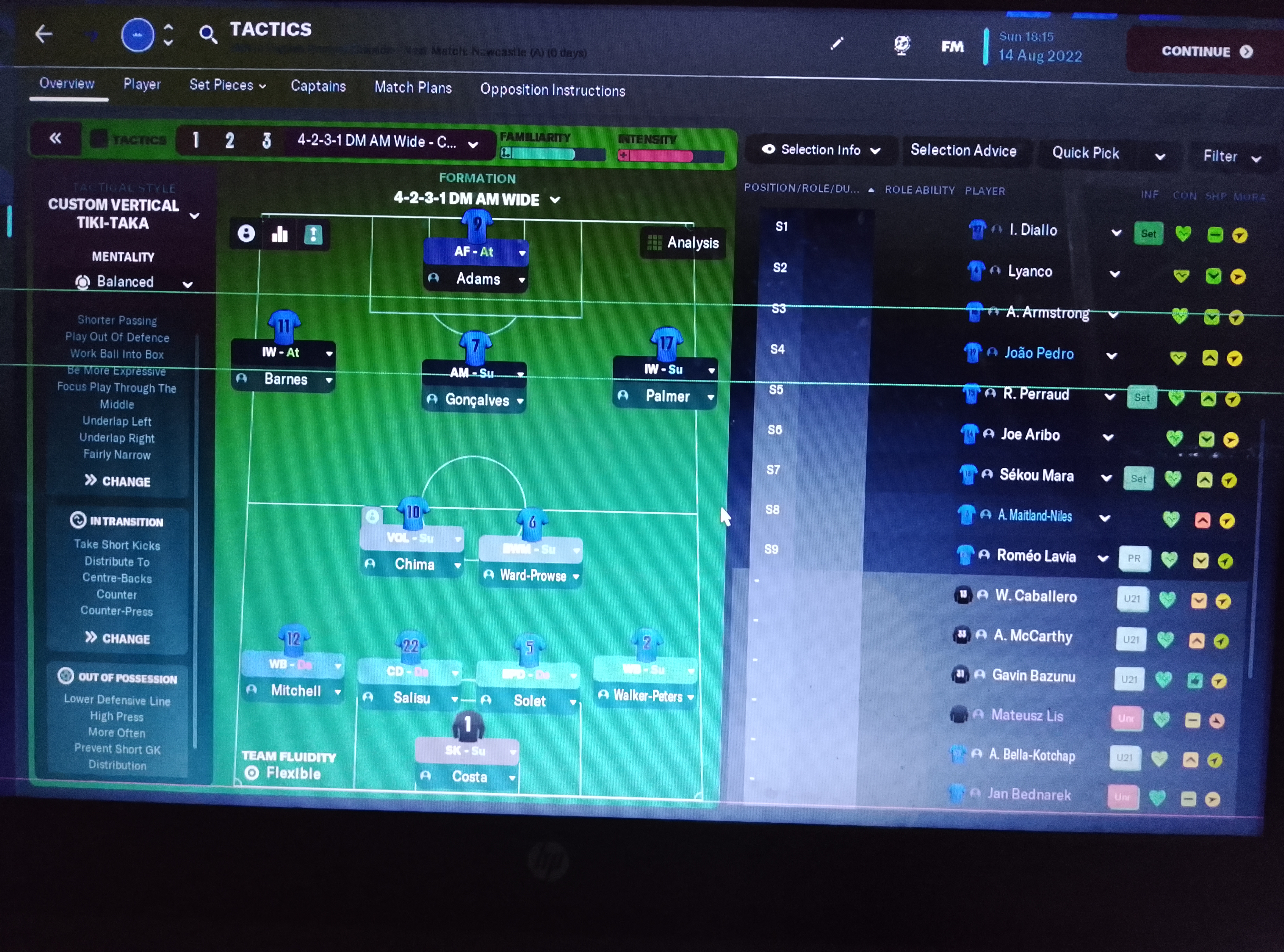
Tactical Style:Custom Vertical Tiki-Taka
Mentality:Cautious
Formation:4-2-3-1
Team Fluidity:Structured
In Possession
Shorter Passing
Play Out Of Defense
Work Ball Into Box
Focus Play Through The Middle
Overlap Right
Slightly Lower Tempo
Fairly Wide
In Transition
Take Short Kicks
Distribute to Playmaker
Slow Pace Down
Hold Shape
Counter-Press
Out of Possession
Higher Defensive Line
Low Block
More Often Prevent Short GK Distribution
Team Shape Without Ball
Shape:4-2
Description:A compact and organized shape that prioritizes preventing central penetration while keeping the defensive line high.
Evidence:Defensive roles include Full-Backs and a Ball-Playing Defender, emphasizing a solid foundation at [2,1], [2,5], and [2,3].
Team Shape With Ball
Shape:4-1-2-3
Description:Fluent attacking movement with wingers cutting inside and a False Nine dropping to create space for the advancing midfielders.
Evidence:Inside Wingers and a Shadow Striker at [6,2], [6,3], and [6,4] allow for fluidity in attack.
Phase Description
Attacking Play
Utilizes shorter passing and vertical movement through the midfield, focusing on creating high-quality goal-scoring opportunities through combination play.
Defensive Transition
Prioritizes regaining possession through a counter-press while maintaining a structured formation.
Main Focus
Dominating possession and breaking through the opponent's defensive lines with patient build-up and tactical adjustments.
Key Strengths
Positional Play
Effective use of spacing and positioning allows the team to exploit defensive weaknesses.
Defensive Solidity
The combination of a high defensive line and deep-lying playmaker ensures balance between attack and defense.
Dynamic Midfield
Box-to-Box Midfielder provides energy and support in both attack and defense.
Conflicting Directions
Risk of Overcommitment
Pushing full-backs high may leave gaps in the defense during transitions.
High Defensive Line Pressure
A higher line might expose the defensive line to quick counter-attacks.
Structured but Inflexible
Rigid structures may not adapt to sudden shifts in opposition tactics.
Tactical Suggestions
Introduce More Fluidity
Add flexibility in tactical roles to respond dynamically to the game.
Adjust Full-Back Duties
Reassess the attacking duties of full-backs to balance risk.
Enhance Central Midfield Dynamics
Utilizing a more attacking role for one of the midfielders could increase offensive threats.
Ask Questions About Your Lineup
Related Tactics
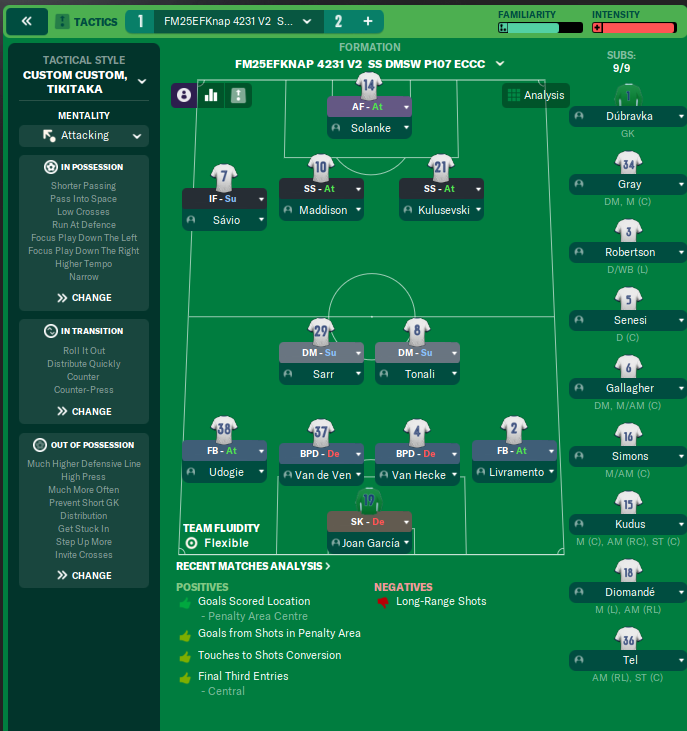
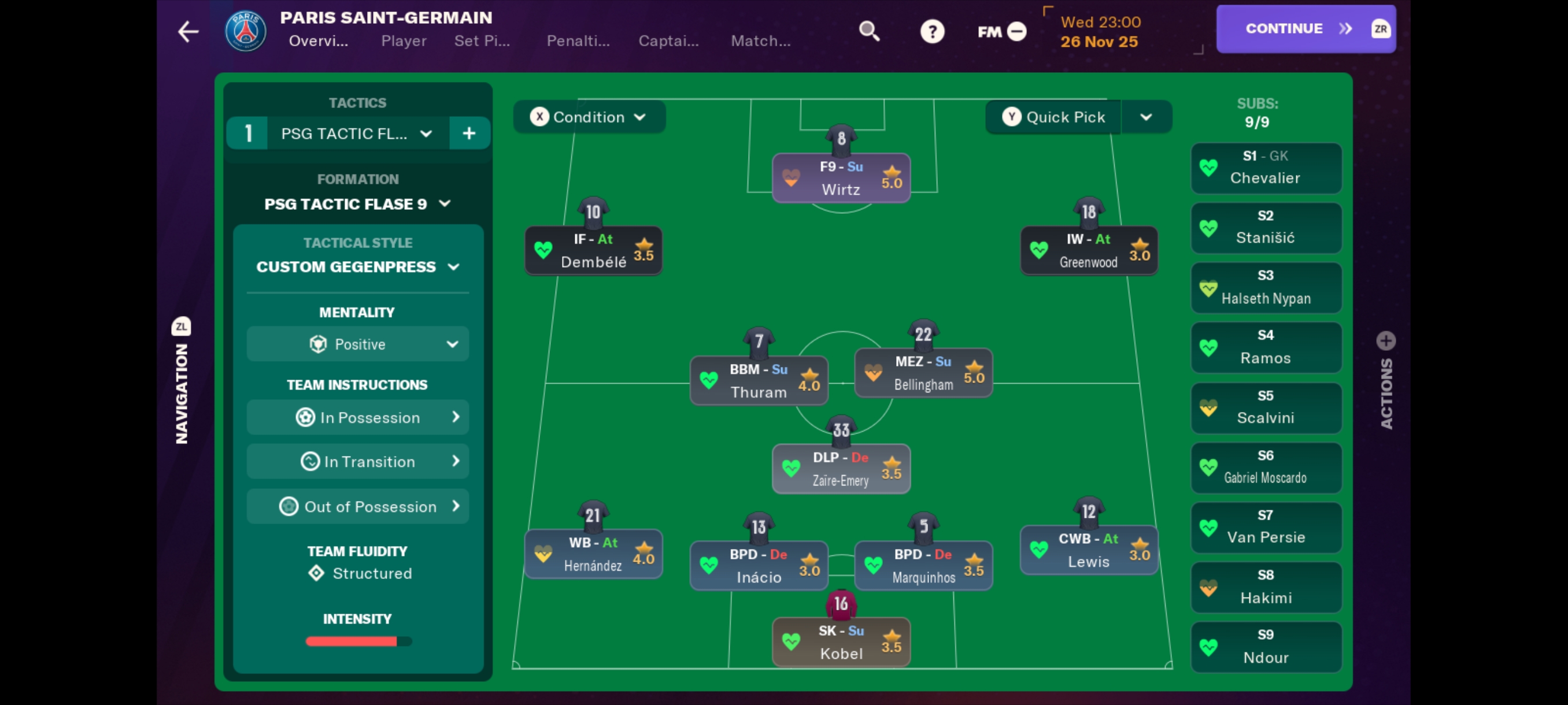
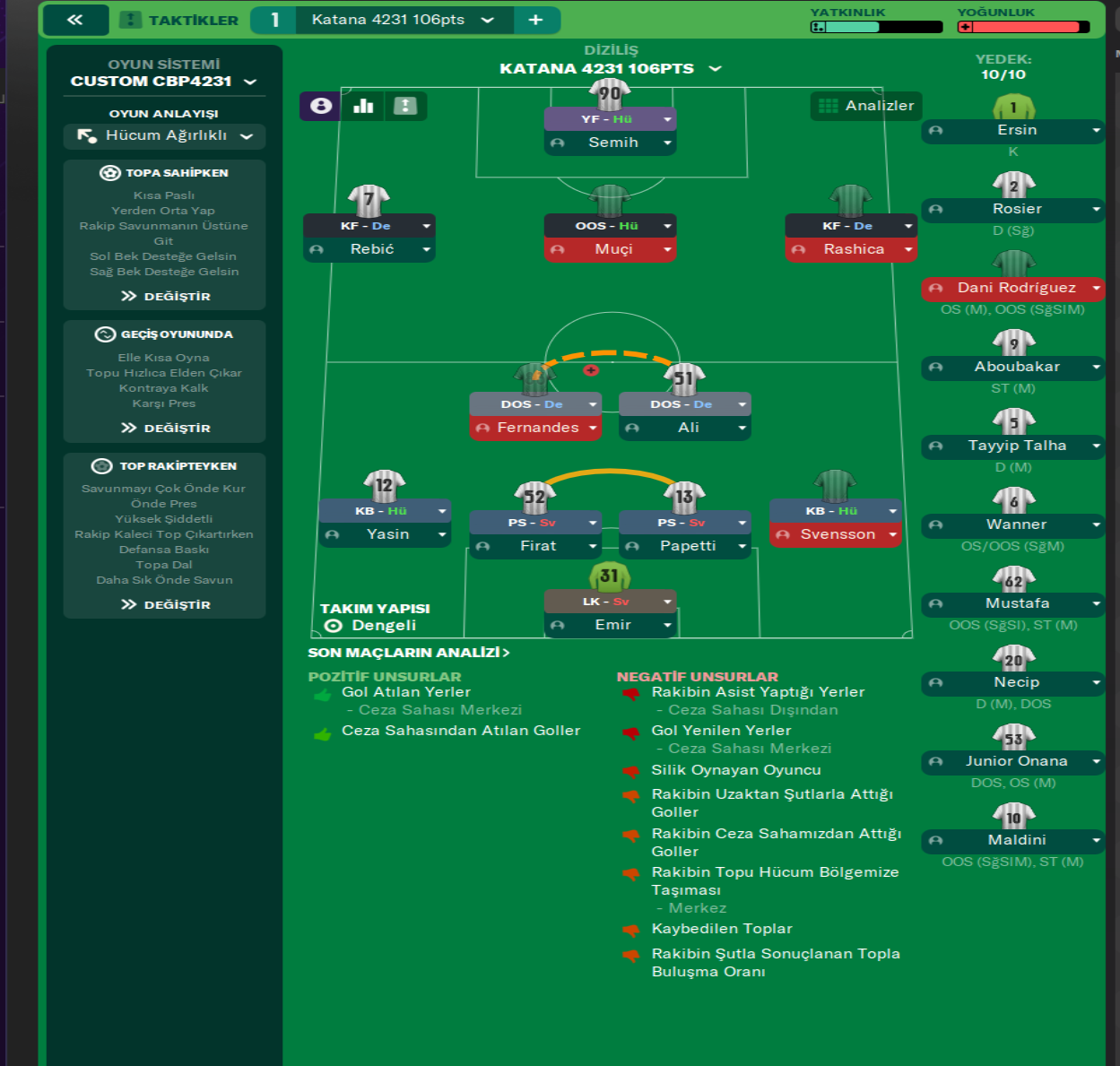
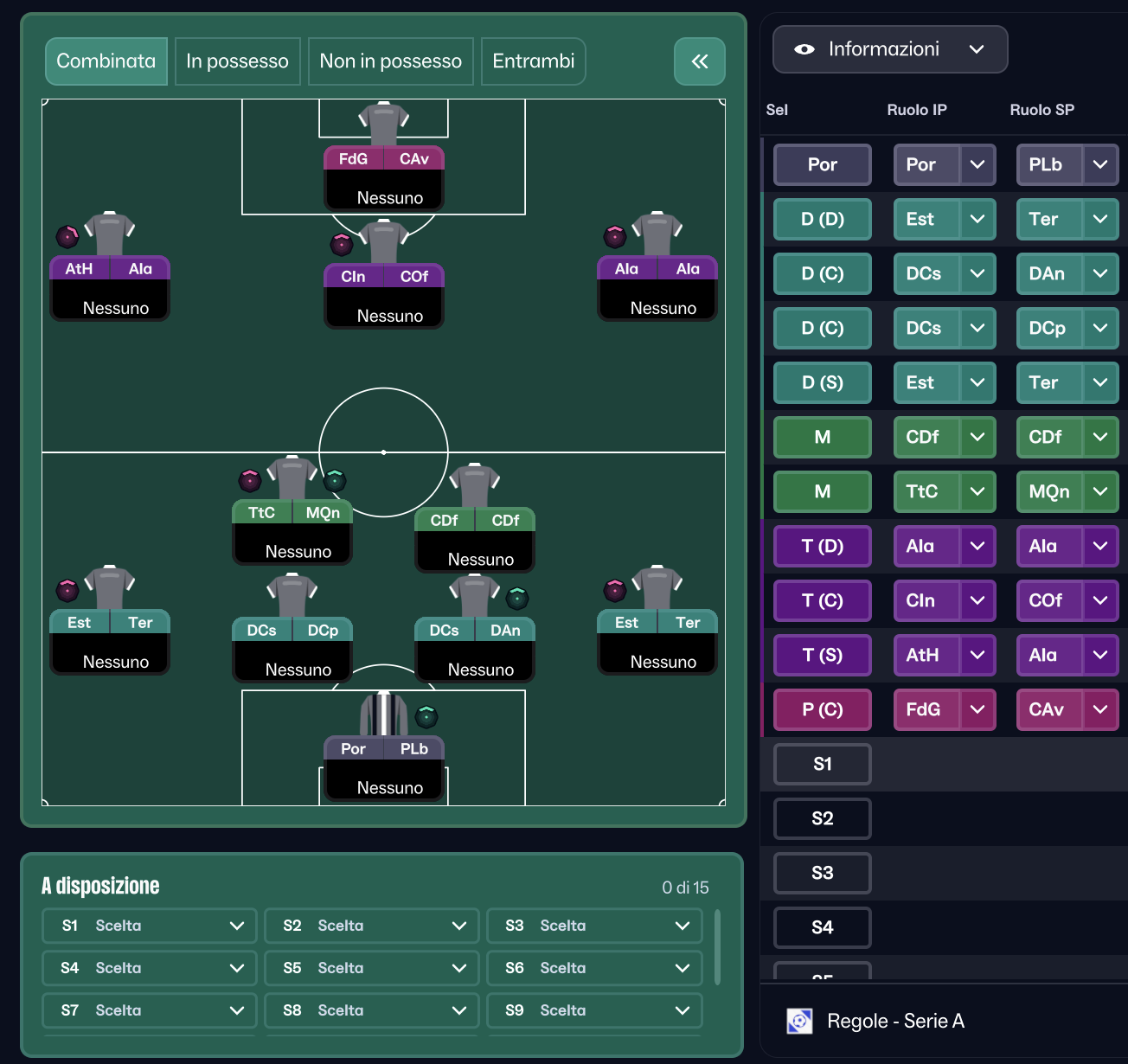
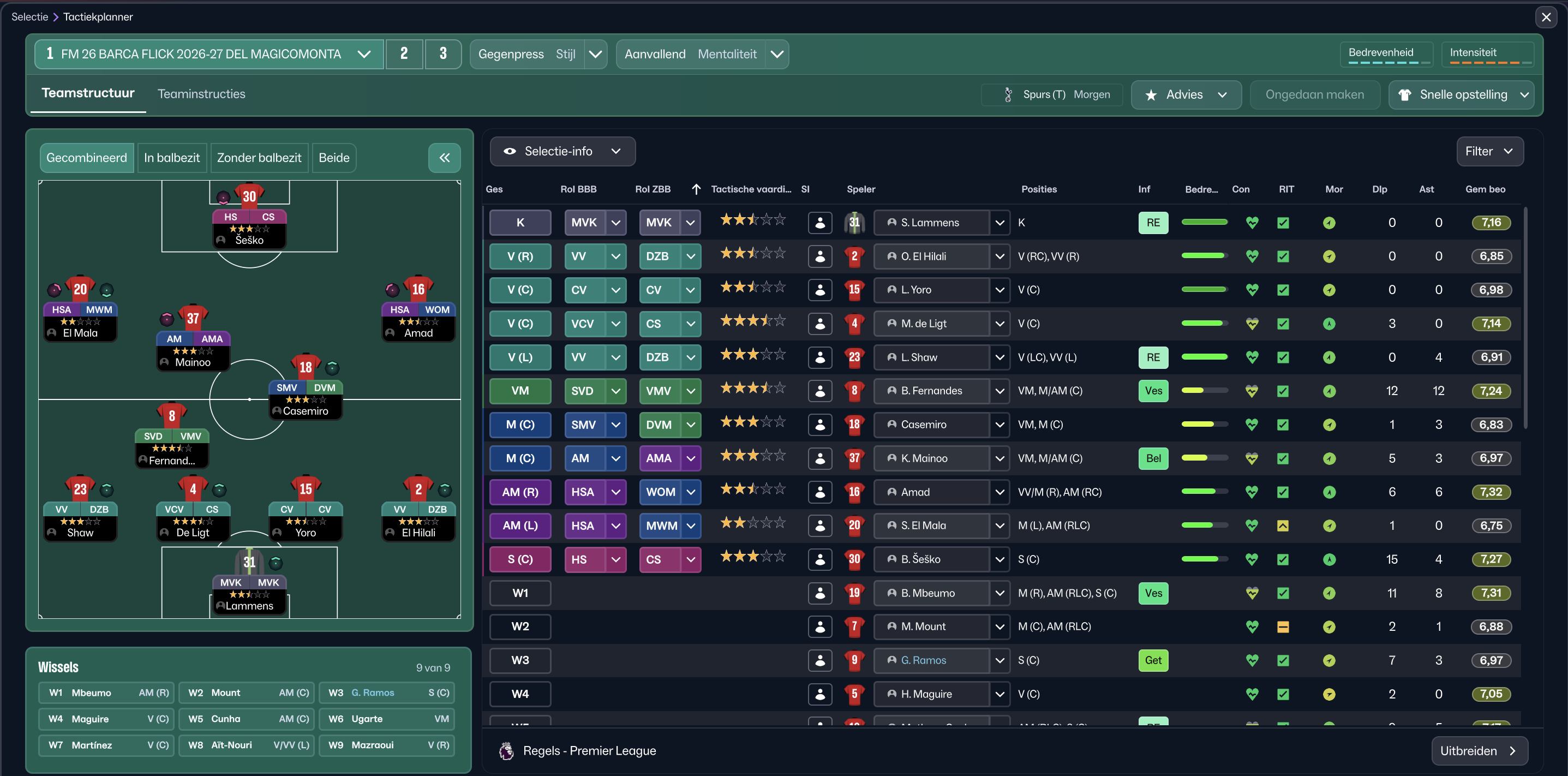
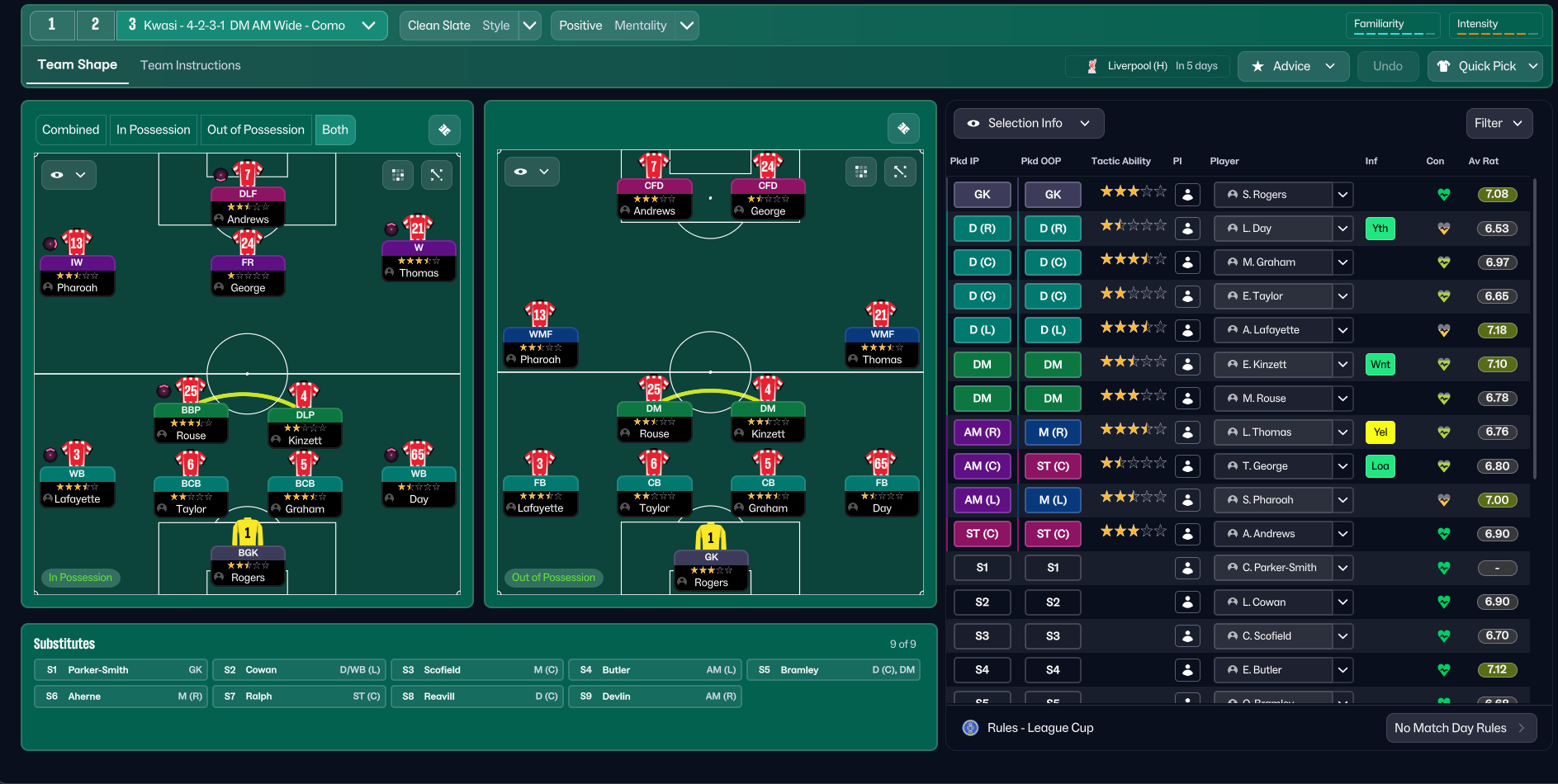
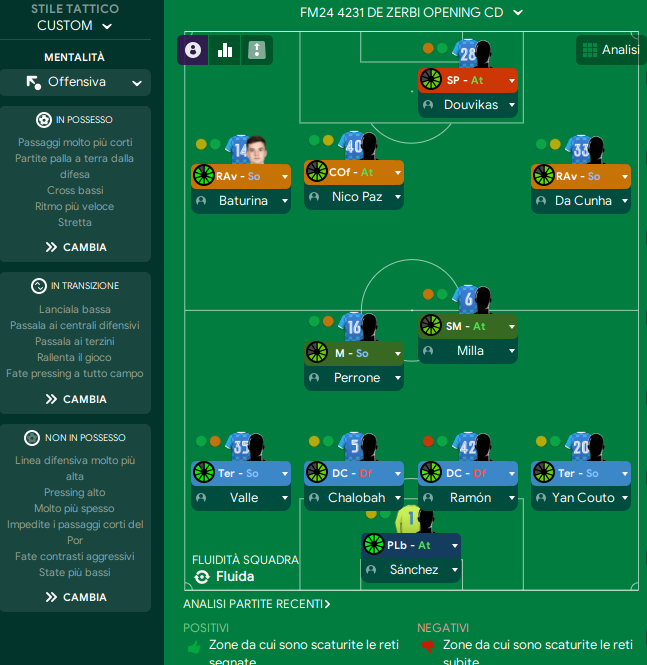
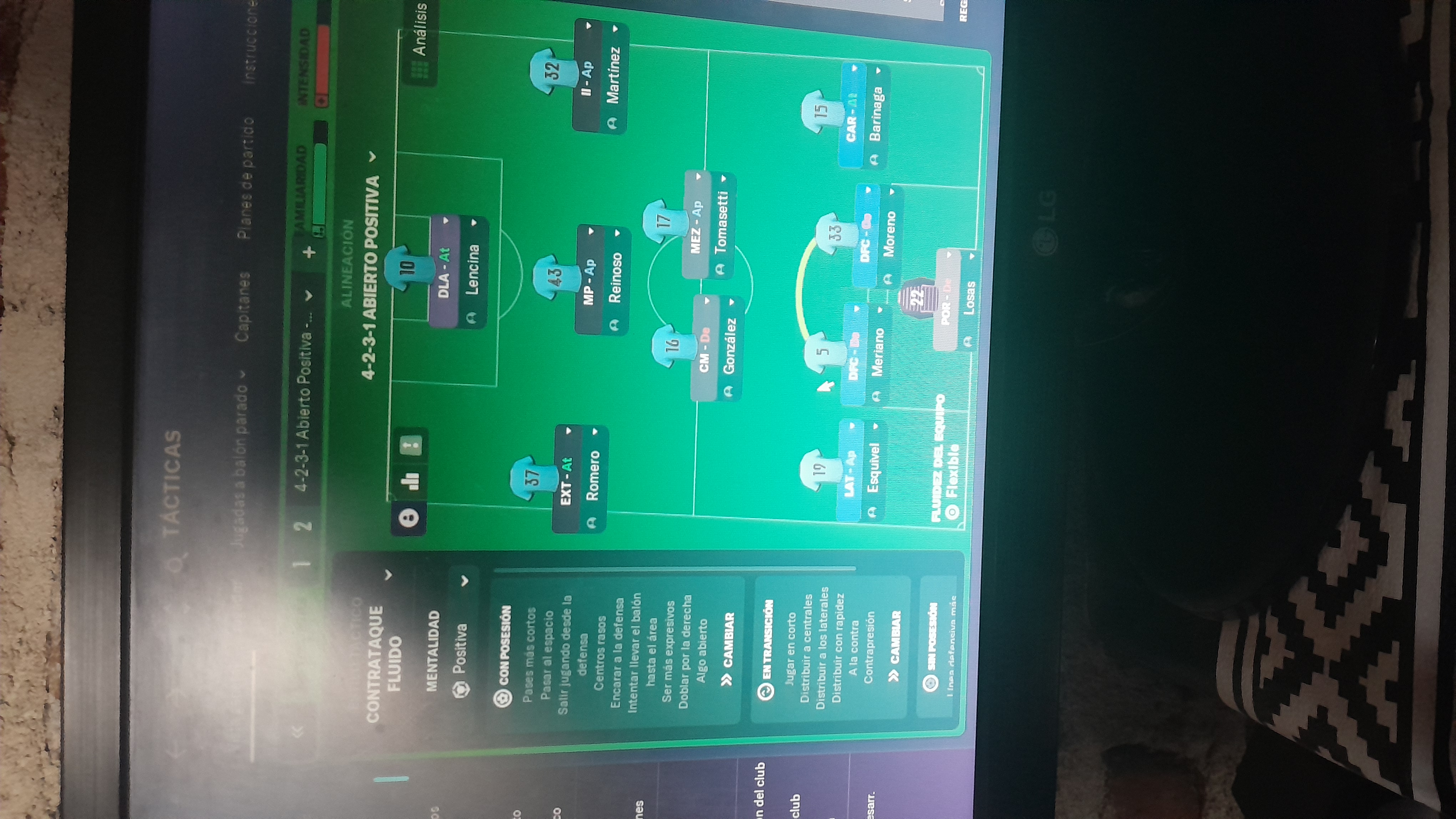
More Custom Vertical Tiki-Taka tactics
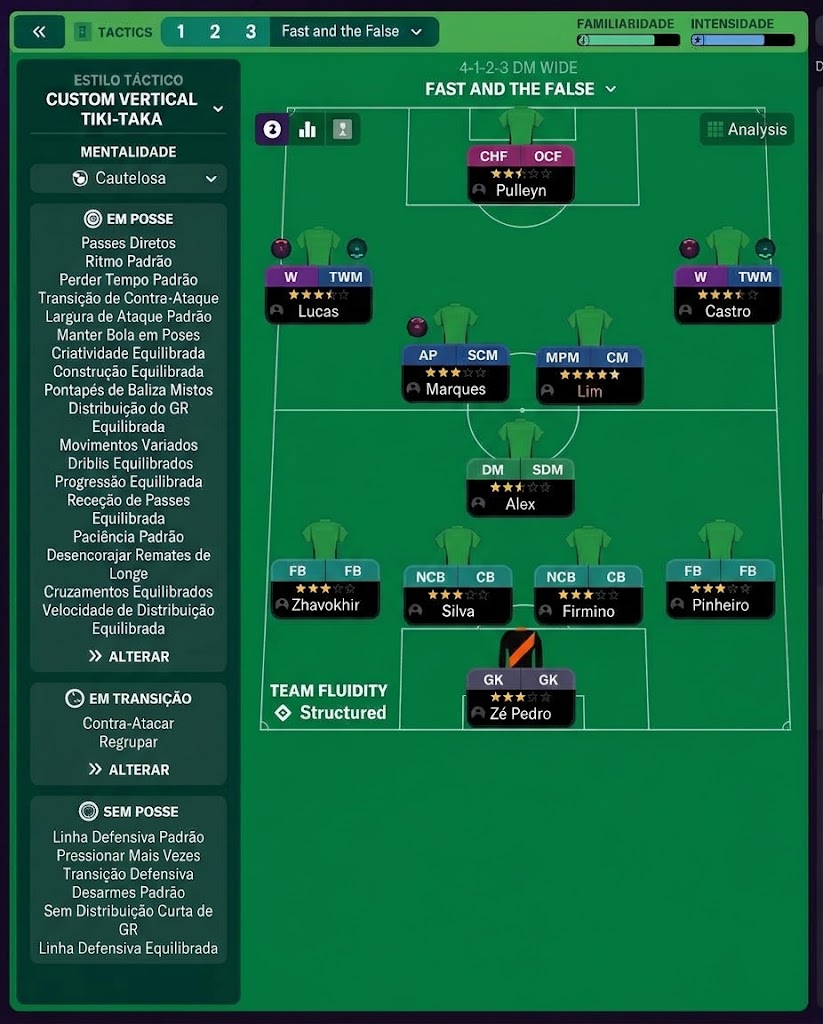
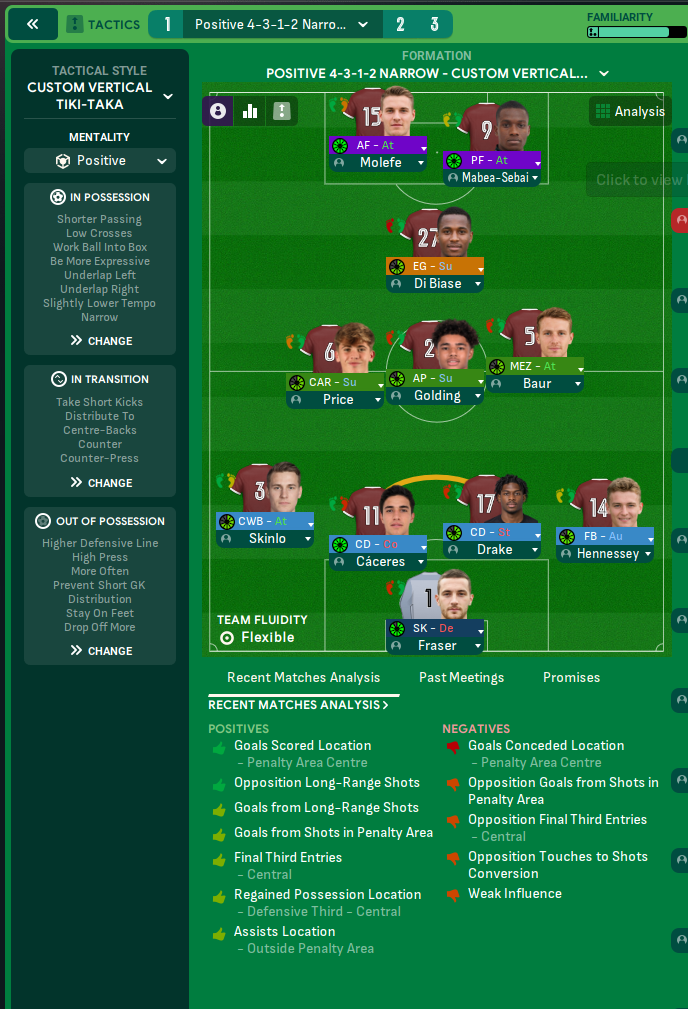
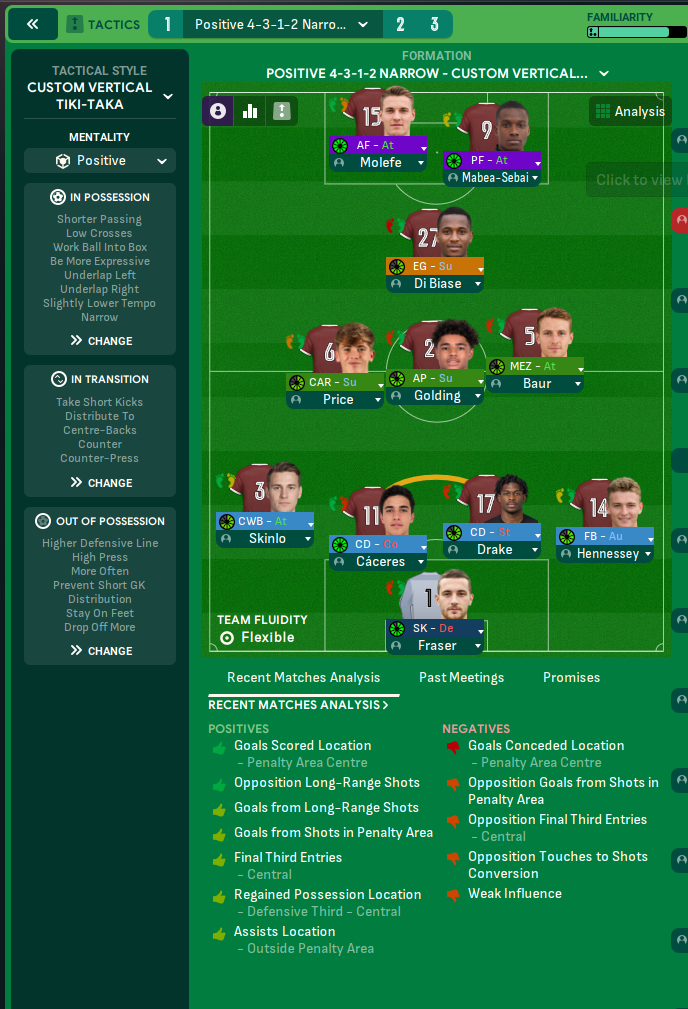
Guides for this formation
The tactical theory behind the 4-2-3-1: roles, instructions, and the trade-offs that decide whether the system holds up.
Player pairings
Midfield Pairs in 4-2-3-1 and 4-4-2
Double pivots and flat pairs in 4-2-3-1 and 4-4-2: when each pairing works, when it collapses, and the AMC unicorn that rescues both.
Read guide
Playing styles
Gegenpressing: A Full Guide
Klopp-style gegenpressing in FM, including squad profile, line-and-press pairing, sustainable workload, and the antipatterns to avoid.
Read guide