Uploaded Tactic
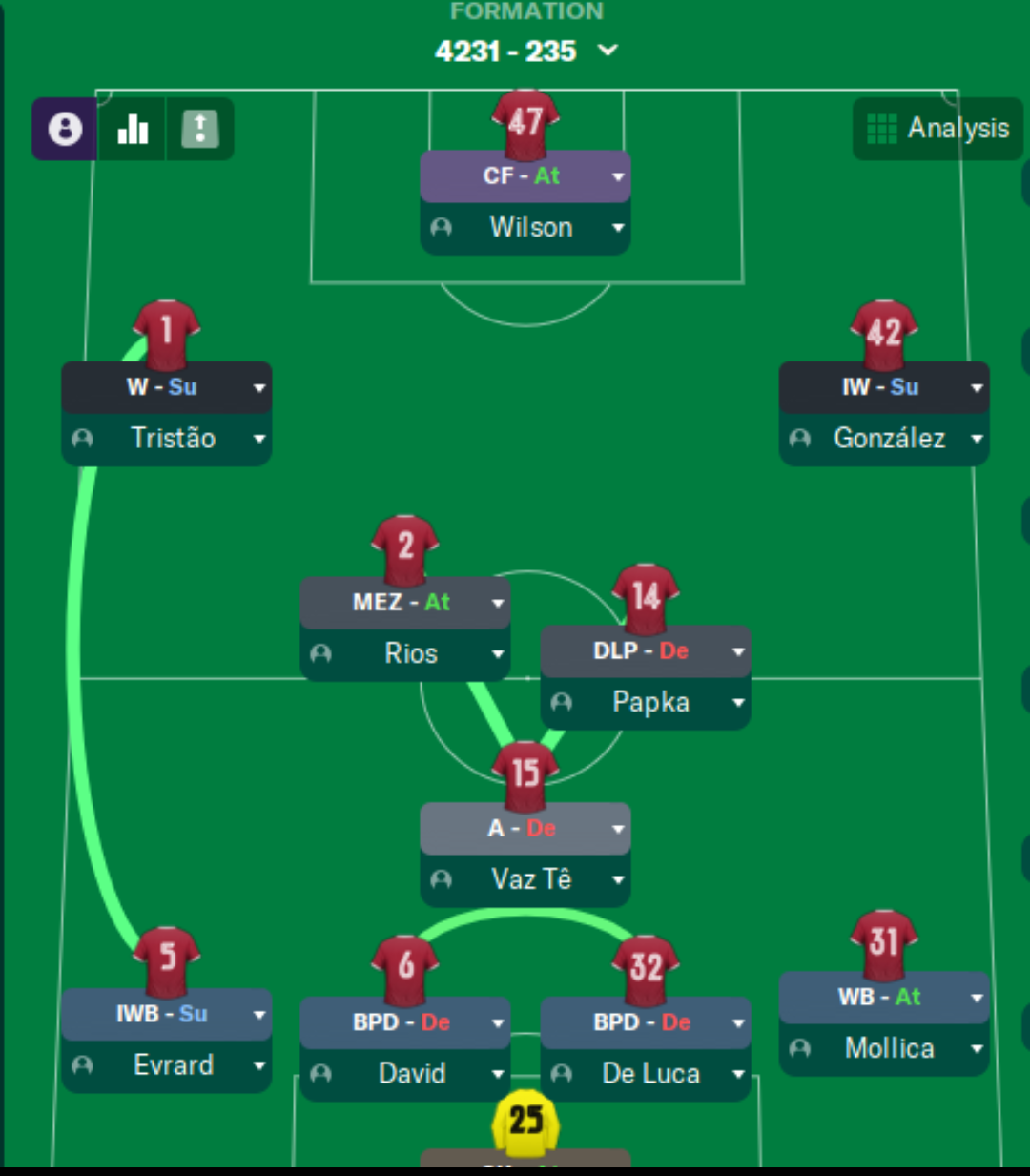
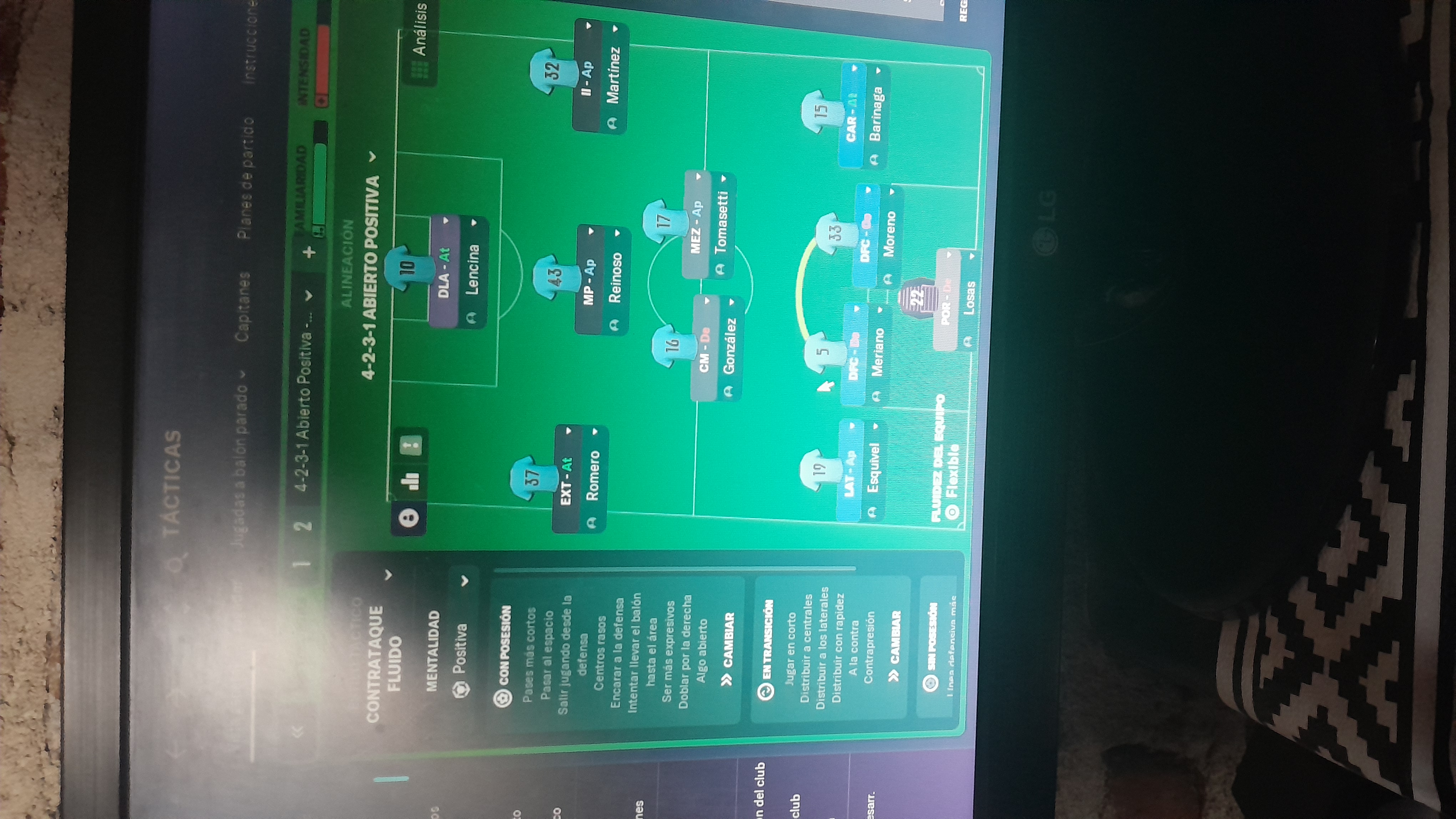
Formation & Style
Tactical Style:Balanced
Mentality:Positive
Formation:4-2-3-1
Team Fluidity:Structured
In Possession
Play Out Of Defence
Focus Play Down Both Flanks
Get Stuck In
In Transition
Counter-Press
Counter
Hold Shape
Out of Possession
Higher Defensive Line
Much More Often Prevent Short GK Distribution
More Tightly Mark
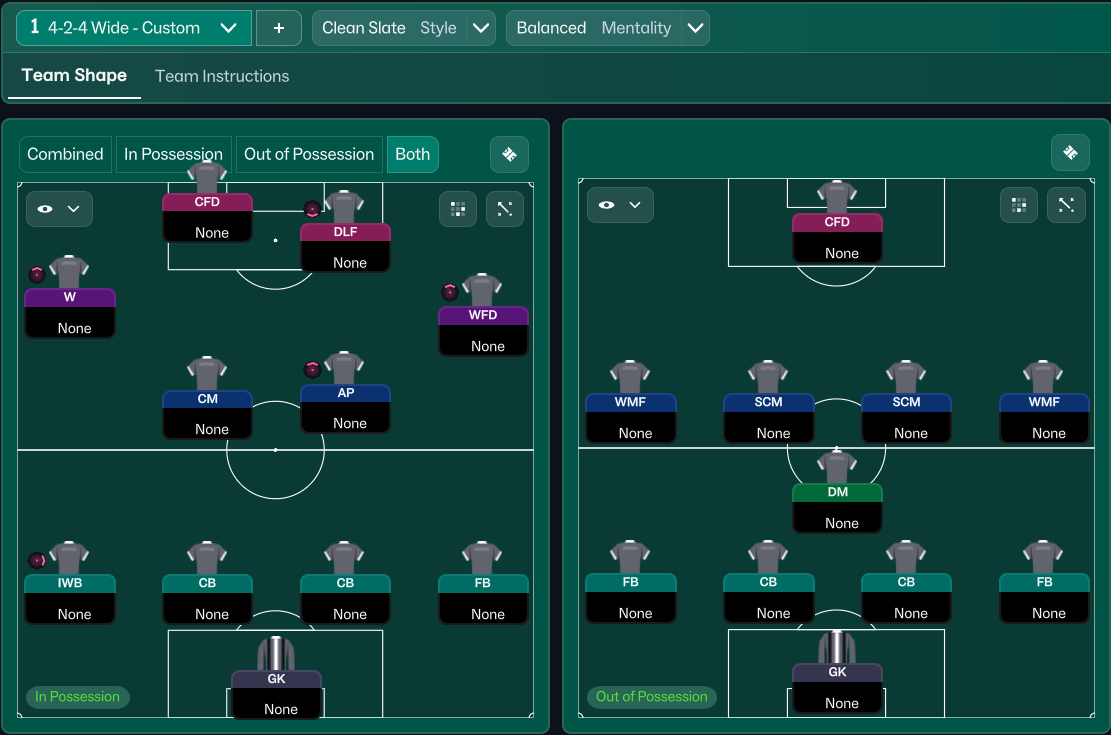
Team Shape Without Ball
Shape:4-2
Description:Defensive line pushed higher up to apply pressure.
Evidence:Higher Defensive Line along with Tighter Marking and Counter-Press.
Team Shape With Ball
Shape:4-3
Description:A fluid attacking formation maintaining width and depth.
Evidence:Focus Play Down Both Flanks with Wing Players.
Phase Description
Attacking Play
Utilizes wing play and overlaps from wing-backs to create crossing opportunities.
Defensive Transition
Prompt counter-pressing to regain possession quickly.
Main Focus
Exploit space on the wings and quick transitions into attack.
Key Strengths
Wing Play
Strong wing play due to the presence of an IWB and WB supporting wide attackers.
Fluidity in Attack
The combination of a MEZ and a CF offers dynamic movement.
Defensive Structure
Two BPDs provide strong ball-playing capabilities while maintaining defensive solidarity.
Conflicting Directions
Mixing Roles
Potential confusion between IWB and WB roles which may cause gaps defensively.
Pressure Distribution
Too much pressing may leave gaps in the defensive line during counter-attacks.
Transition Vulnerability
Quick transitions may leave the defense exposed.
Tactical Suggestions
Adjust Defensive Width
Consider tightening the defensive shape to reduce gaps.
Balanced Pressing
Slightly reduce the intensity of pressing to maintain defensive structure.
Utilize Player Roles Effectively
Ensure the IWB and WB roles do not overlap excessively in their responsibilities.
Ask Questions About Your Lineup
Related Tactics
More Balanced tactics
Guides for this formation
The tactical theory behind the 4-2-3-1: roles, instructions, and the trade-offs that decide whether the system holds up.
Player pairings
Midfield Pairs in 4-2-3-1 and 4-4-2
Double pivots and flat pairs in 4-2-3-1 and 4-4-2: when each pairing works, when it collapses, and the AMC unicorn that rescues both.
Read guide
Playing styles
Gegenpressing: A Full Guide
Klopp-style gegenpressing in FM, including squad profile, line-and-press pairing, sustainable workload, and the antipatterns to avoid.
Read guide