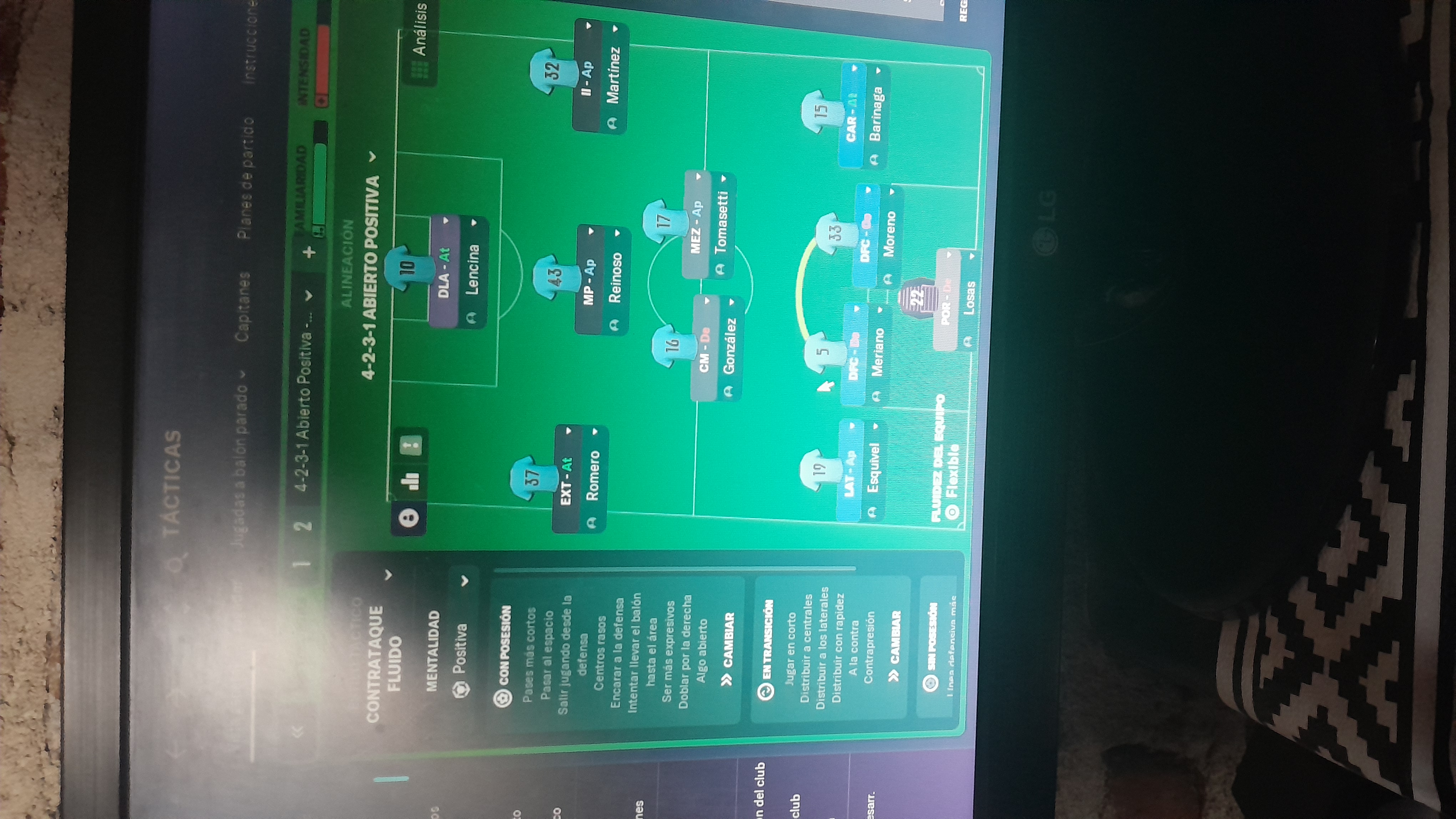
Uploaded Tactic
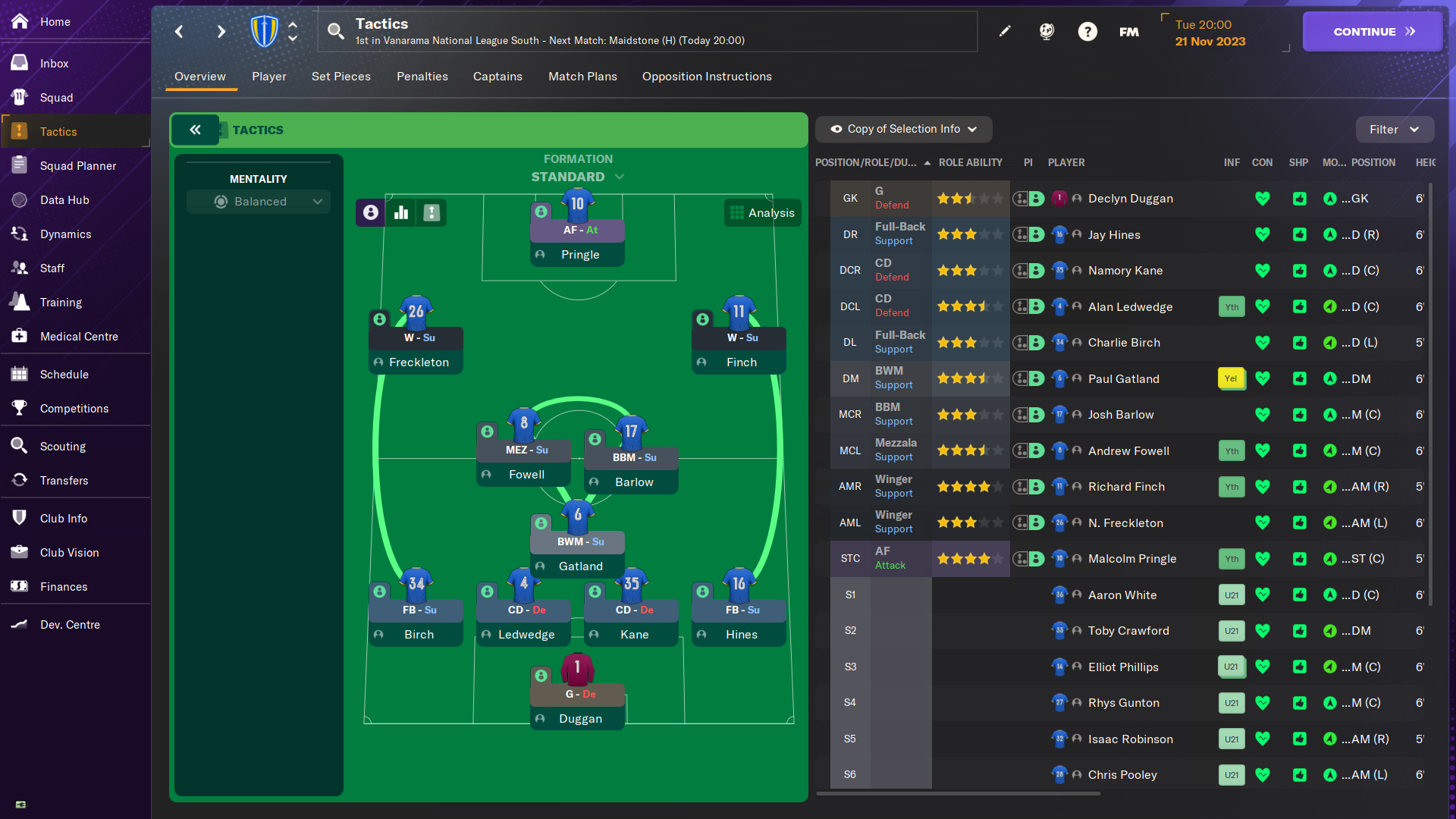
Formation & Style
Tactical Style:Balanced
Mentality:Standard
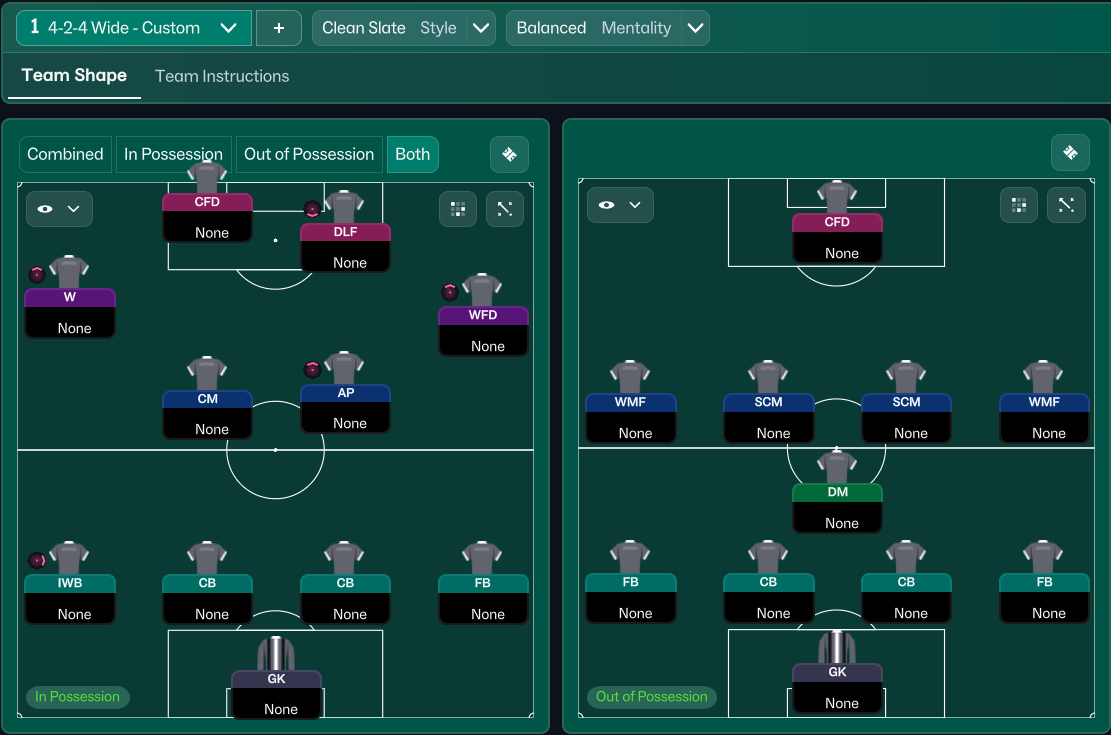
Formation:4-2-3-1
Team Fluidity:Structured
In Possession
Focus play down the wings
Use width to spread defenders
Play short passes
In Transition
Counter-Press
Counter-attack when possession is won
Out of Possession
Standard defensive line
Press more urgently
Team Shape Without Ball
Shape:Compact
Description:Defensive setup allows narrow coverage to limit central penetrations.
Evidence:CD-D at [2,2] and [2,3] support the compact nature of the backline.
Team Shape With Ball
Shape:Spread
Description:Encourages wingers to stretch defence, allowing for inside runs from midfield.
Evidence:W-Su at [6,1] and [6,5] provide width while MEZ-Su at [4,3] supports through the middle.
Phase Description
Attacking Play
Utilizing width effectively with wingers while the advanced forward centralizes attacks.
Defensive Transition
Quick recovery to prevent counter-attacks.
Main Focus
Transition play from broad attacking width to solidifying defensively.
Key Strengths
Width in Attack
Utilizing wingers and full-backs provides multiple attacking channels.
Midfield Workrate
High workrate from central midfield roles enhances ball recovery.
Fluidity in Transitions
Quick transitions from attack to defense improves chances to recover possession.
Conflicting Directions
Wide Play Assuming Control
Depending heavily on wide play may lead to lack of central control.
Midfield Overload
Shifting too many players into the midfield could leave gaps in the defence.
Defensive Valuation
Standard defensive line might be exposed against fast breaks.
Tactical Suggestions
Enhance Central Play
Consider adding a central midfielder with attacking emphasis for greater penetration.
Increase Defensive Stability
Deploy a more defensive-minded player if susceptibility is noted in counter-attacks.
Adjust Full-Back Roles
Consider varying full-back duties based on the opponent’s strengths.
Ask Questions About Your Lineup
Related Tactics
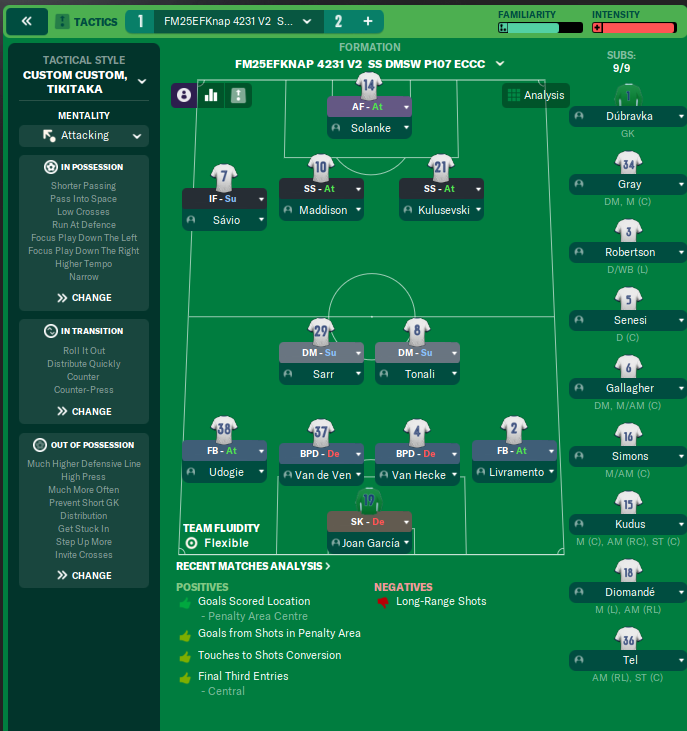
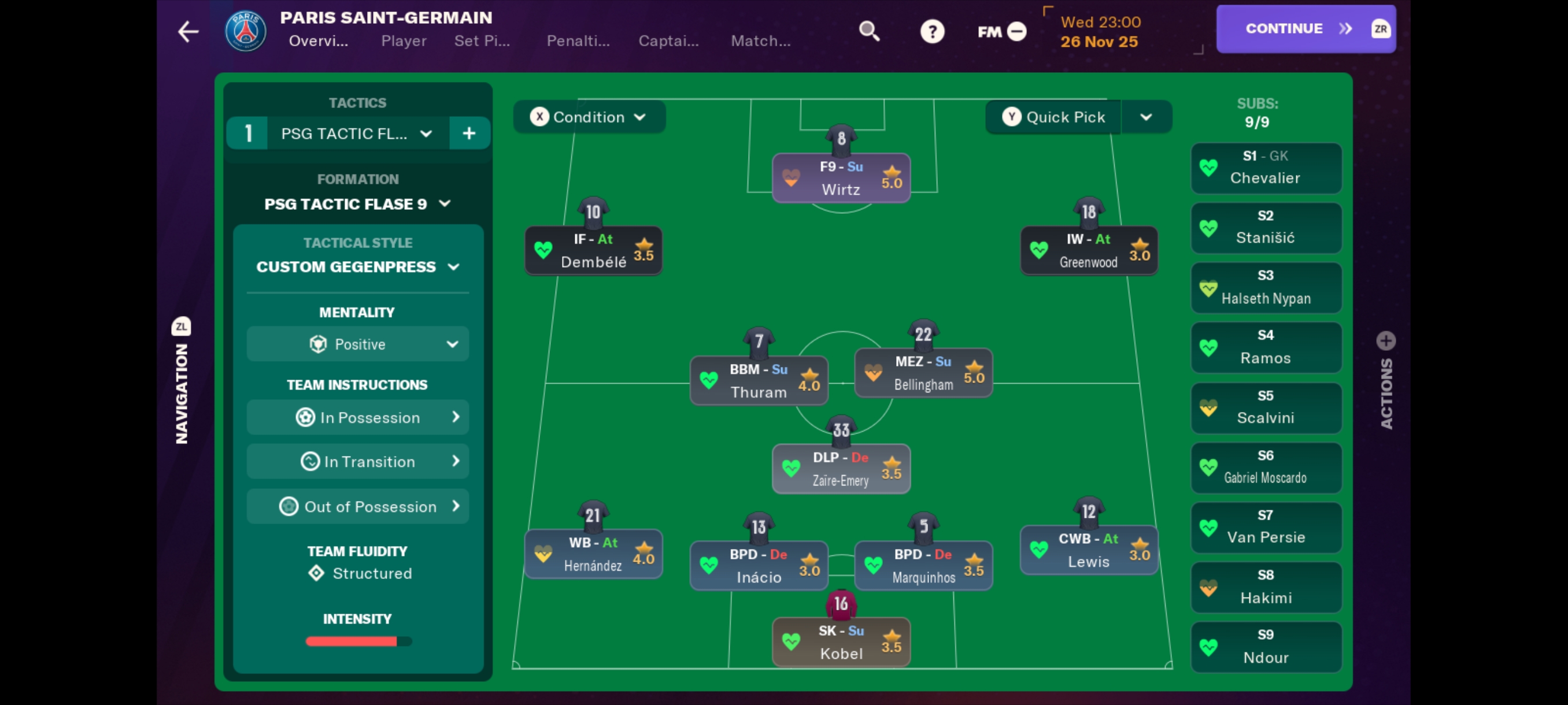
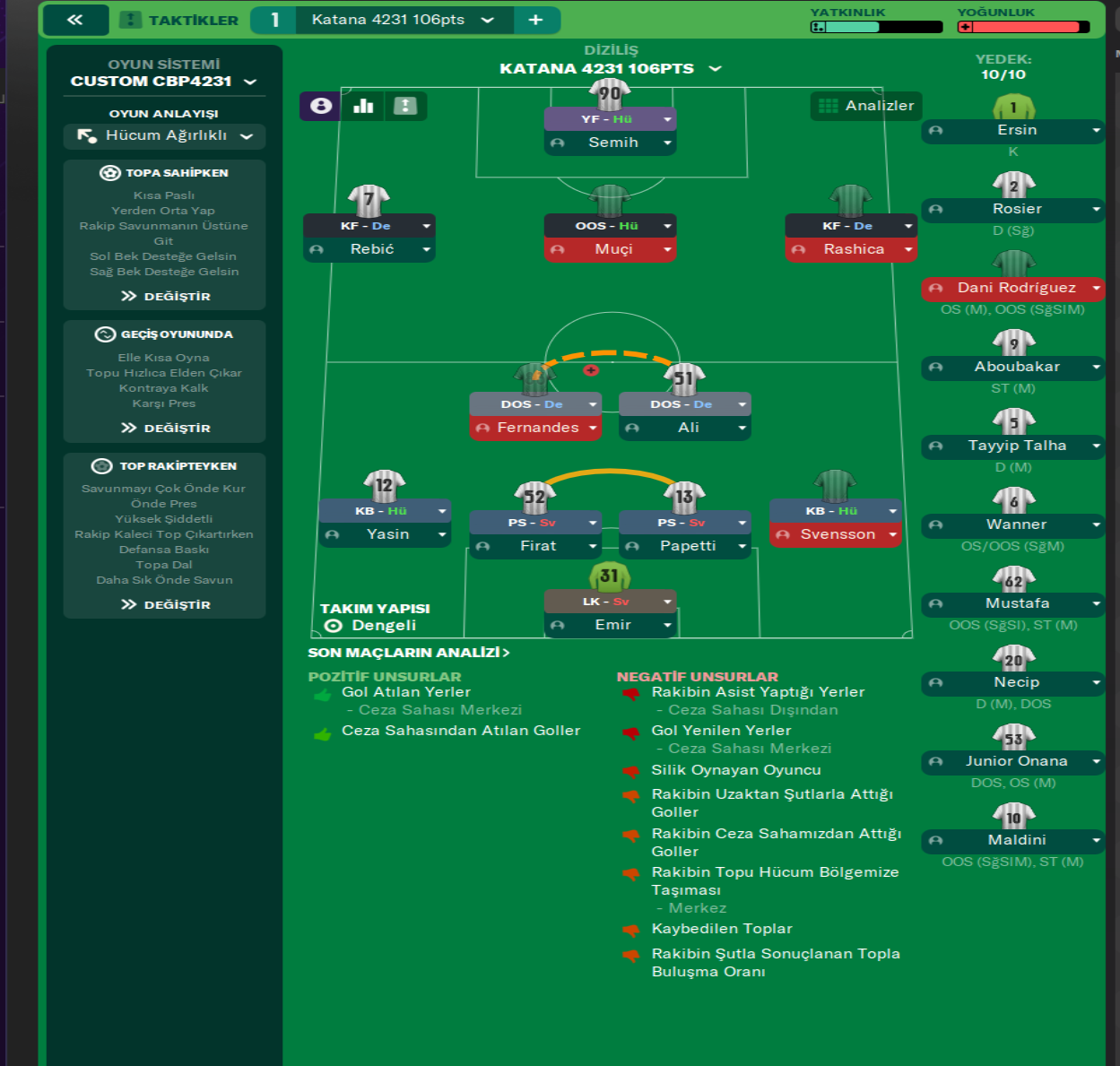
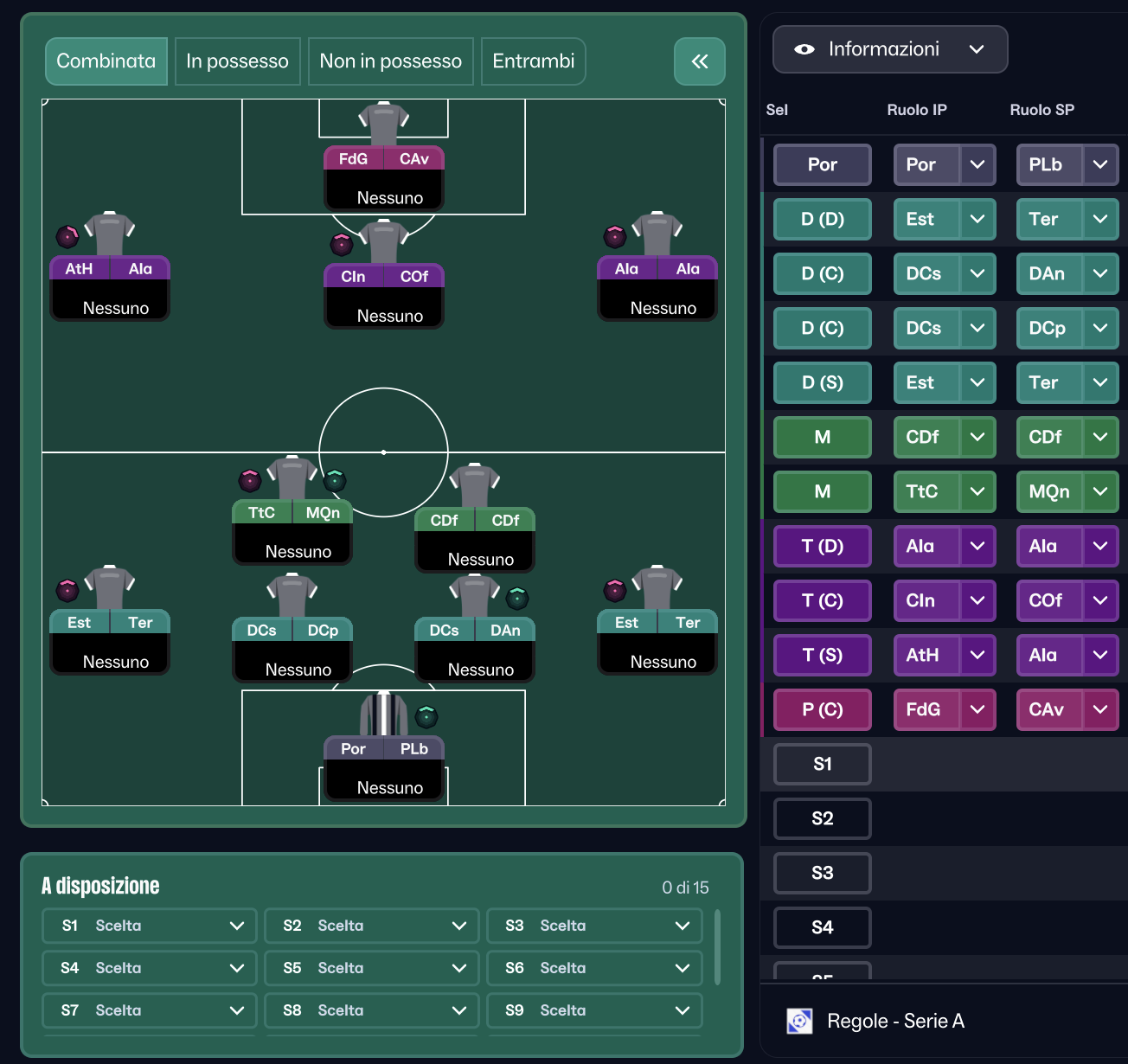
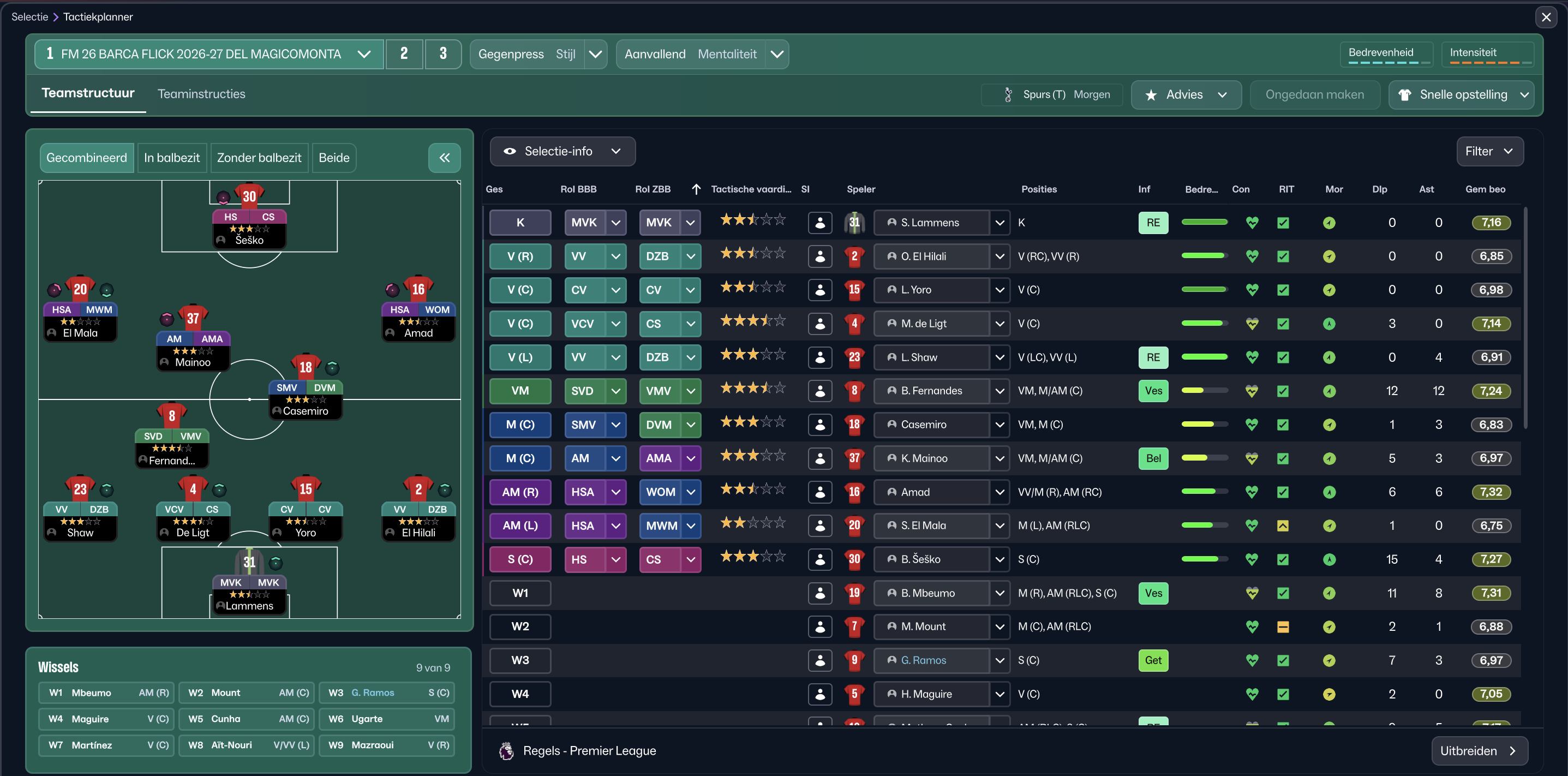
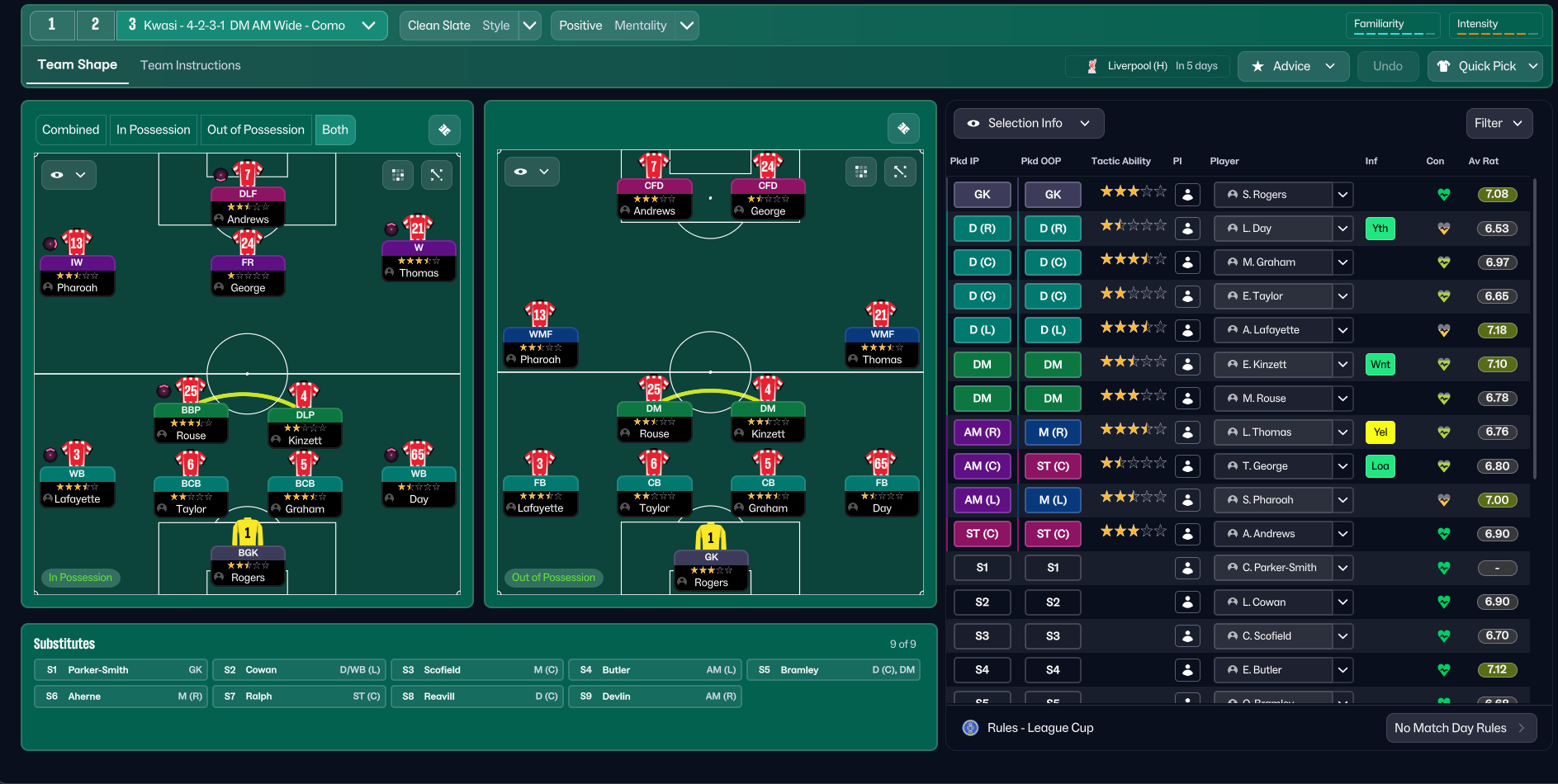
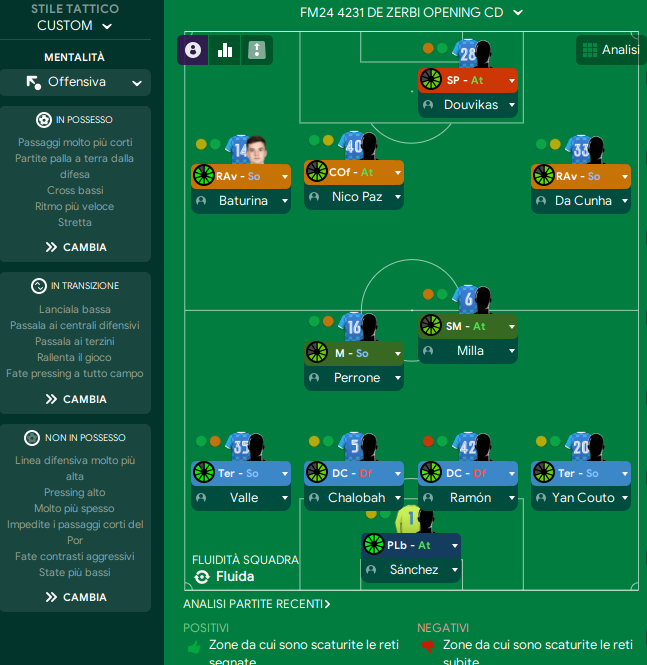
More Balanced tactics
Guides for this formation
The tactical theory behind the 4-2-3-1: roles, instructions, and the trade-offs that decide whether the system holds up.
Player pairings
Midfield Pairs in 4-2-3-1 and 4-4-2
Double pivots and flat pairs in 4-2-3-1 and 4-4-2: when each pairing works, when it collapses, and the AMC unicorn that rescues both.
Read guide
Playing styles
Gegenpressing: A Full Guide
Klopp-style gegenpressing in FM, including squad profile, line-and-press pairing, sustainable workload, and the antipatterns to avoid.
Read guide