Uploaded Tactic
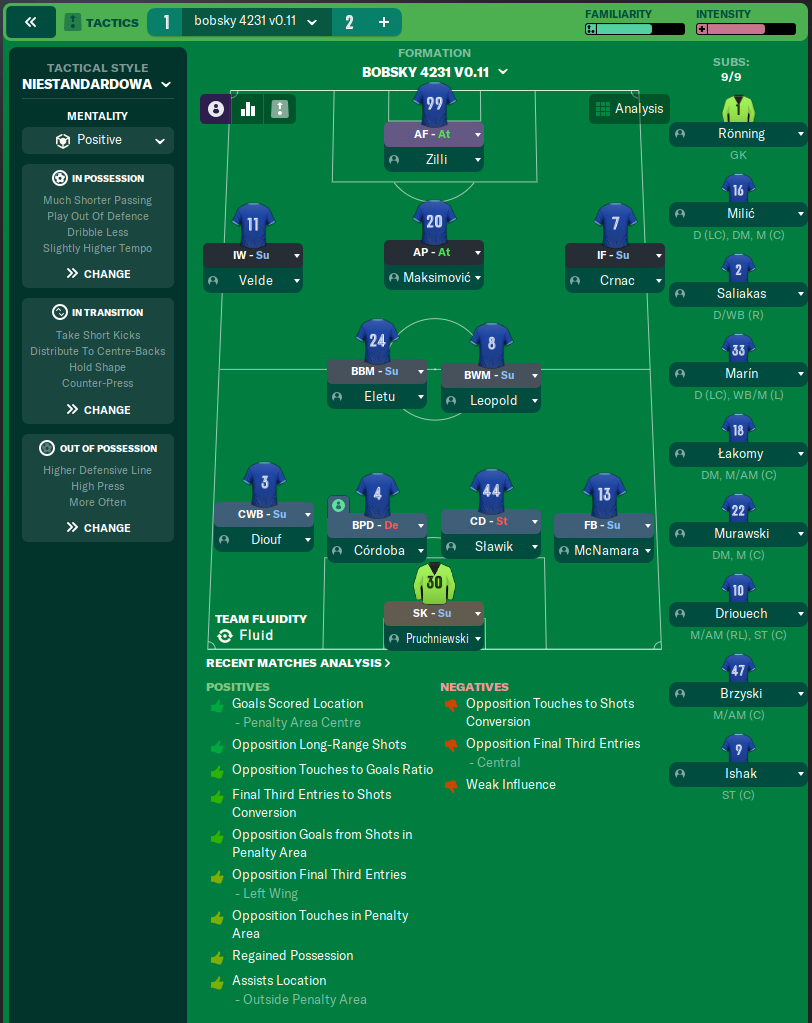
Formation & Style
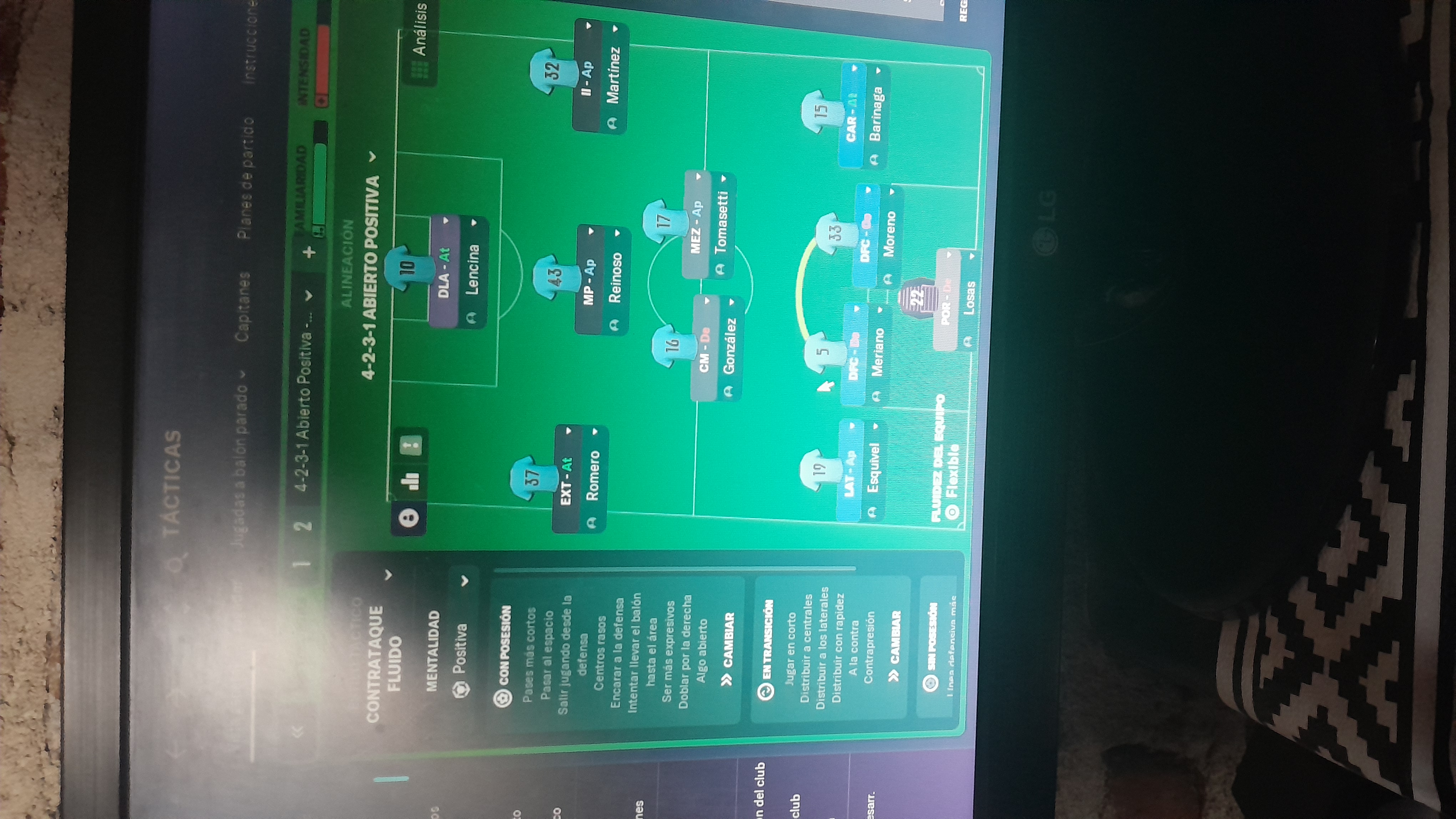
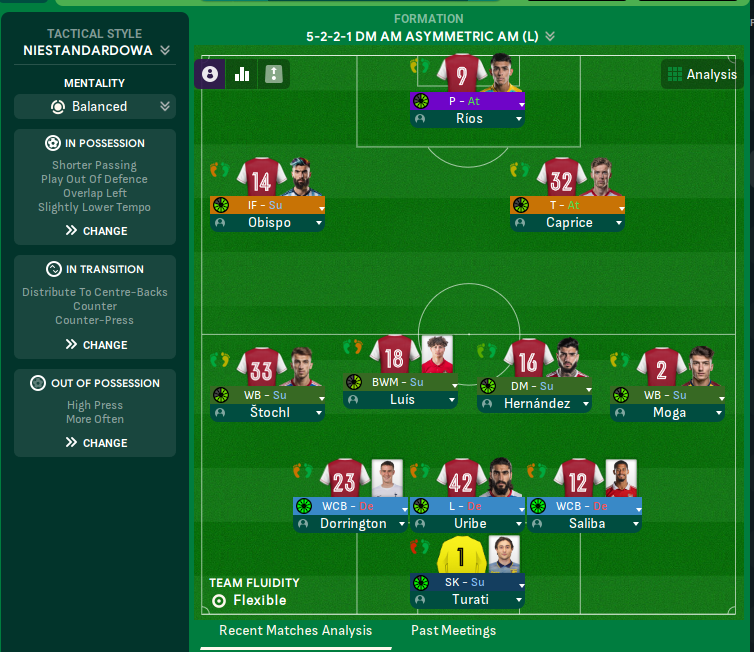
Tactical Style:Niestandardowa
Mentality:Positive
Formation:4-2-3-1
Team Fluidity:Fluid
In Possession
Much Shorter Passing
Play Out Of Defence
Dribble Less
Slightly Higher Tempo
In Transition
Take Short Kicks
Distribute To Centre-Backs
Hold Shape
Counter-Press
Out of Possession
Higher Defensive Line
High Press
More Often
Team Shape Without Ball
Shape:High Pressing
Description:The team maintains a compact shape with high pressing to win back the ball quickly.
Evidence:High line with high press set in out-of-possession instructions.
Team Shape With Ball
Shape:Fluid Width
Description:Utilizes the width created by wing-backs and inverted wingers to stretch the defense, allowing for central penetration.
Evidence:Inverted wingers combined with a box-to-box midfielder add depth to the attack.
Phase Description
Attacking Play
Focus on short passing and quick individual dribbles to break down opposition defenses, transitioning through the midfield fluidly.
Defensive Transition
Emphasize a quick counter-press to regain possession, with the midfielders supporting the defense during turnovers.
Main Focus
Utilizing width from wing-backs to create opportunities for inside forwards and advanced playmaker.
Key Strengths
Positional Play
Strong spatial awareness helps in maintaining attacking positions and creates overloads.
Fluid Midfield Dynamics
Midfielders interplay well, providing options for both defending and attacking phases.
High Press Efficacy
Effective high press leads to turnover opportunities in advantageous positions.
Conflicting Directions
Opposition Touches to Shots Conversion
The opposition is able to convert touches into shots effectively, requiring stronger defensive discipline.
Weak Influence from Key Players
Not all players are being utilized effectively to ensure consistent offensive threat.
Central Penetration Issues
The team might be vulnerable to opposition attacks through central areas, posing a risk.
Tactical Suggestions
Increase Width in Attack
Encourage wing-backs to push further up the pitch to create more space for central players.
Adjust Pressing Intensity
Consider adjusting pressing instructions to conserve energy for later stages of the match.
Strengthen Central Midfield Defense
Introduce a deeper-lying midfielder to strengthen central defense against counter-attacks.
Ask Questions About Your Lineup
Related Tactics
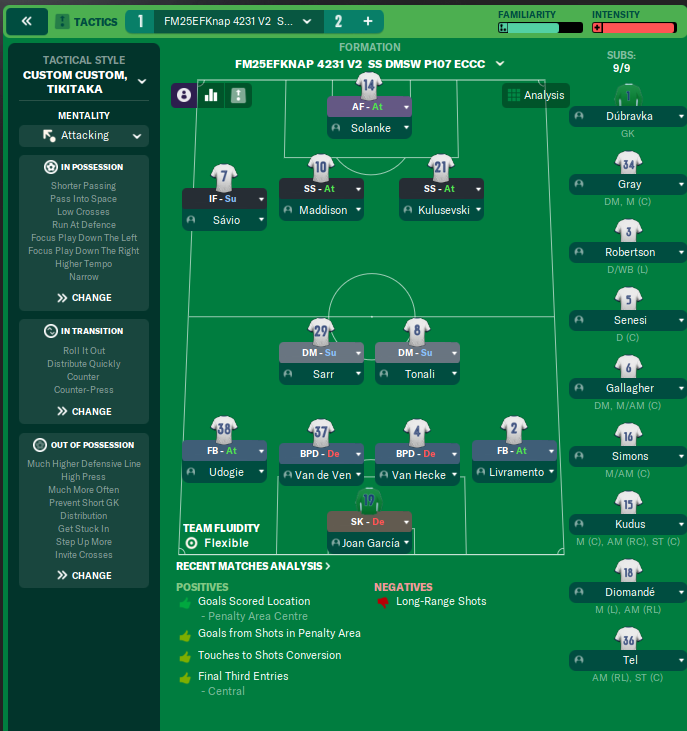
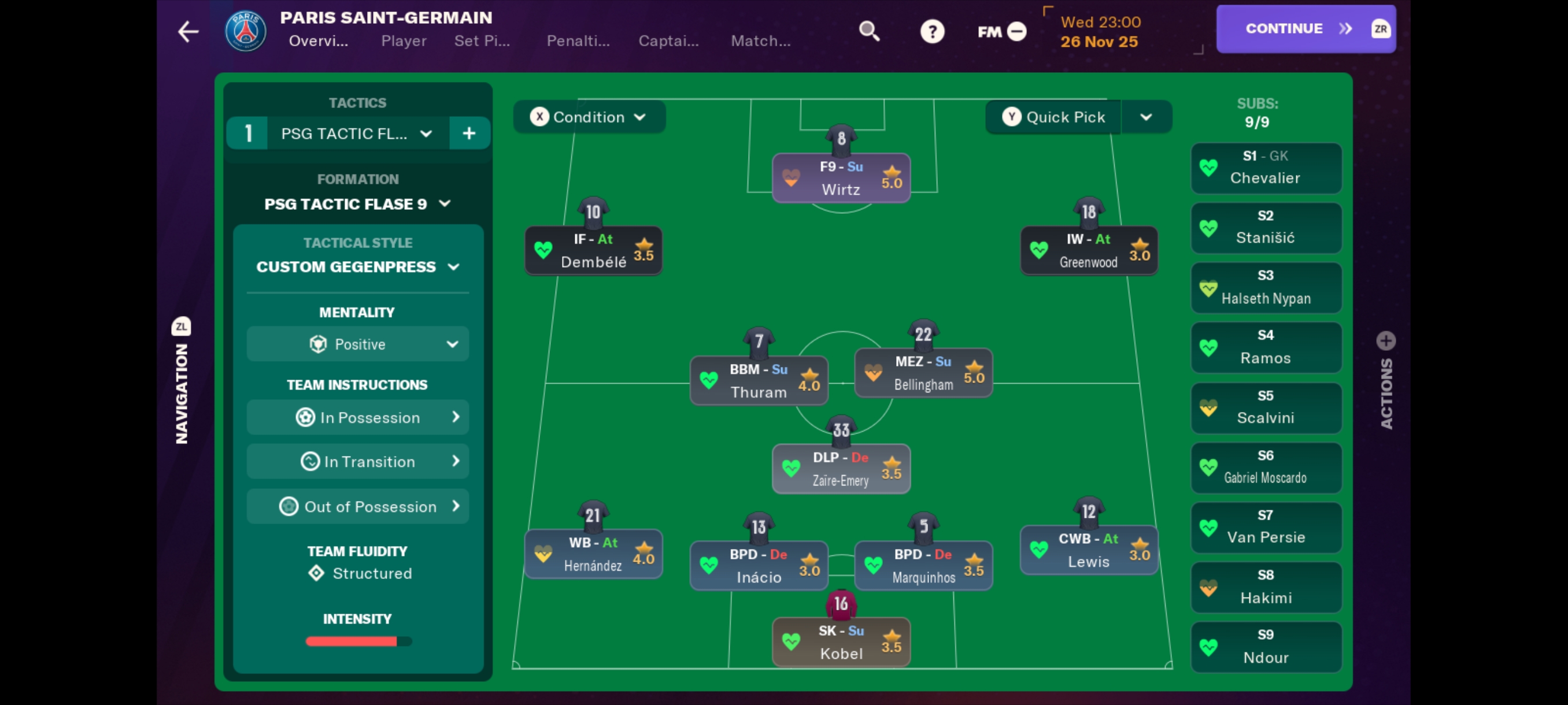
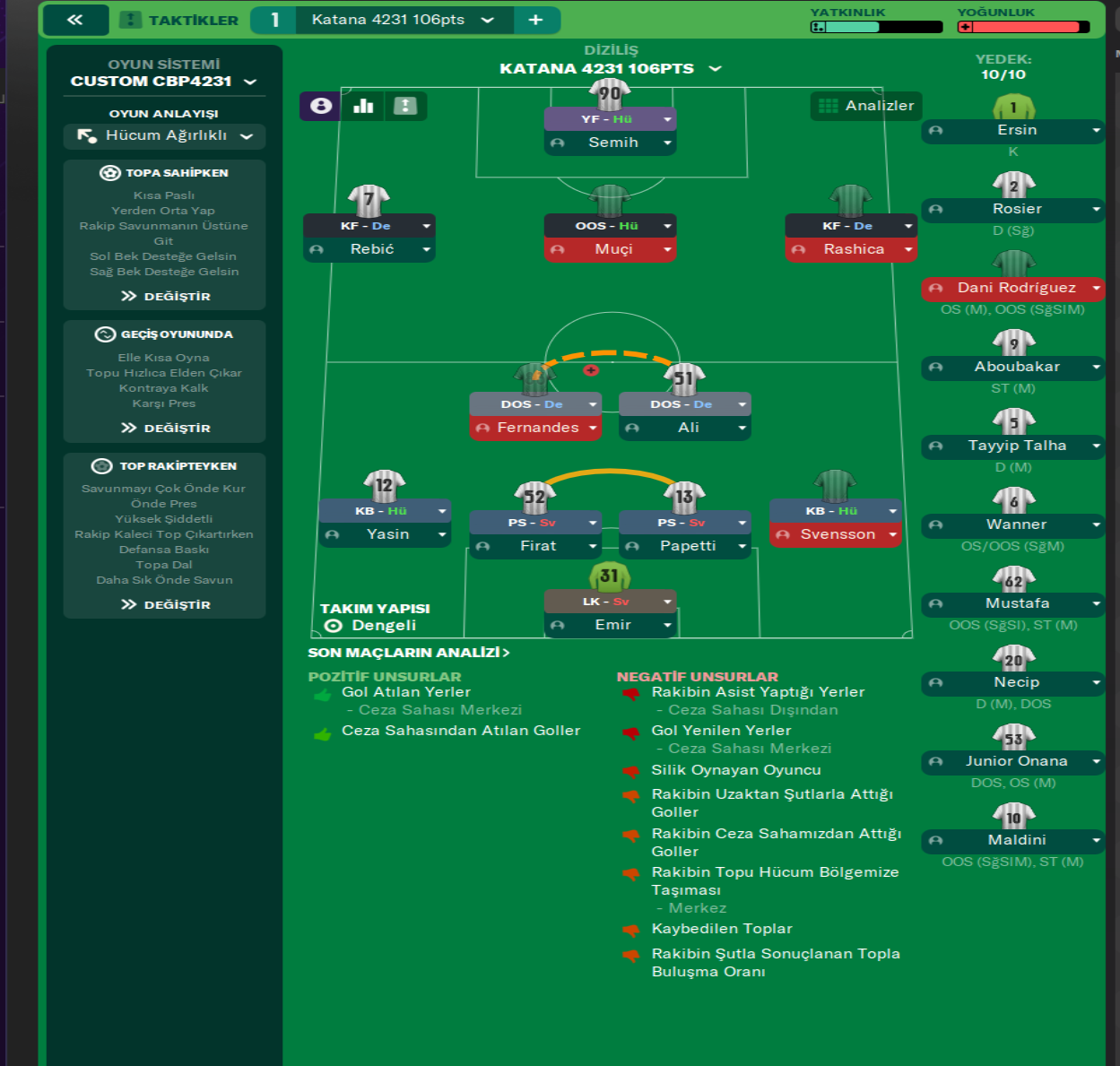
More Niestandardowa tactics
Guides for this formation
The tactical theory behind the 4-2-3-1: roles, instructions, and the trade-offs that decide whether the system holds up.
Player pairings
Midfield Pairs in 4-2-3-1 and 4-4-2
Double pivots and flat pairs in 4-2-3-1 and 4-4-2: when each pairing works, when it collapses, and the AMC unicorn that rescues both.
Read guide
Playing styles
Gegenpressing: A Full Guide
Klopp-style gegenpressing in FM, including squad profile, line-and-press pairing, sustainable workload, and the antipatterns to avoid.
Read guide