Uploaded Tactic
Formation & Style
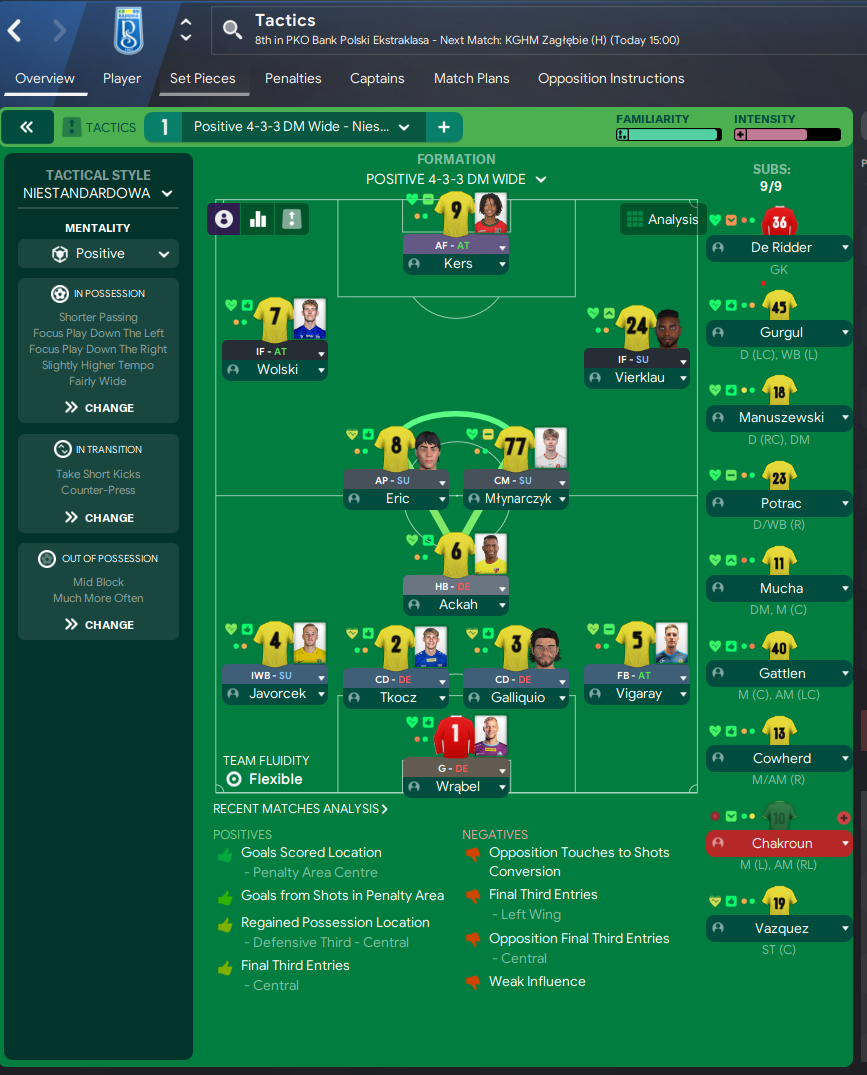
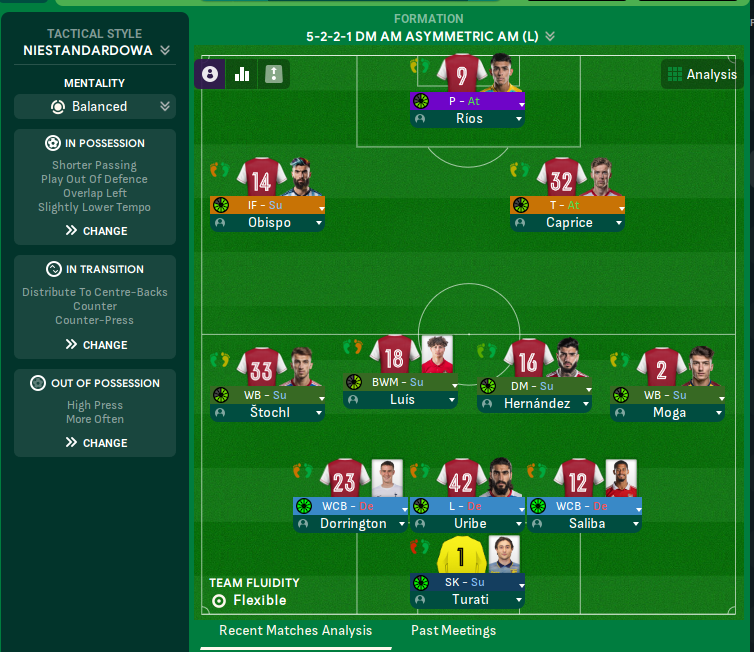
Tactical Style:Niestandardowa
Mentality:Positive
Formation:4-3-3 DM Wide
Team Fluidity:Flexible
In Possession
Shorter Passing
Focus Play Down The Left
Focus Play Down The Right
Slightly Higher Tempo
Fairly Wide
In Transition
Take Short Kicks
Out of Possession
Mid Block
Much More Often Prevent Short GK Distribution
Team Shape Without Ball
Shape:Mid Block
Description:Compact defensive unit preventing easy access to the central areas.
Evidence:Use of HB-D at [3,3] and CD-D at [2,2] and [2,3].
Team Shape With Ball
Shape:Wide 4-3-3
Description:Exploiting the flanks with IWB and FB providing width, while midfielders link up with forwards.
Evidence:IF-A at [6,1] and [6,5] with AF-A at [6,3].
Phase Description
Attacking Play
Focus on utilizing width with overlapping wing-backs and creative midfielders supporting forward runs.
Defensive Transition
Implementing mid block to regain possession and forcing opposition to play through the midfield.
Main Focus
Maximizing width in attack while maintaining solid defensive shape.
Key Strengths
Wide Play and Overlaps
The use of IWB and FB allows for overlapping runs to create space for forwards.
Strong Midfield Presence
A balanced midfield setup supports both defensive and attacking phases.
Increased Tempo
The slightly higher tempo helps in quick transitions from defence to attack.
Conflicting Directions
Vulnerability to Central Play
A mid-block can sometimes allow the opponent easy access through the centre.
Reliance on Wing Play
Over-emphasizing width may leave central areas exposed, especially during transitions.
Defensive Midfielder Limitations
Using a Half Back in this setup may restrict the link between defenders and midfielders in deeper areas.
Tactical Suggestions
Consider Adjusting Defensive Responsibility
Adapting the role of the DM to provide more cover could minimize spaces in midfield.
Increase Support From Full-Backs
Encourage Full-Backs to take on more attacking roles to support wingers.
Capitalize on Central Attacks
Introduce more direct central runs to complement wing play and create more scoring opportunities.
Ask Questions About Your Lineup
Related Tactics
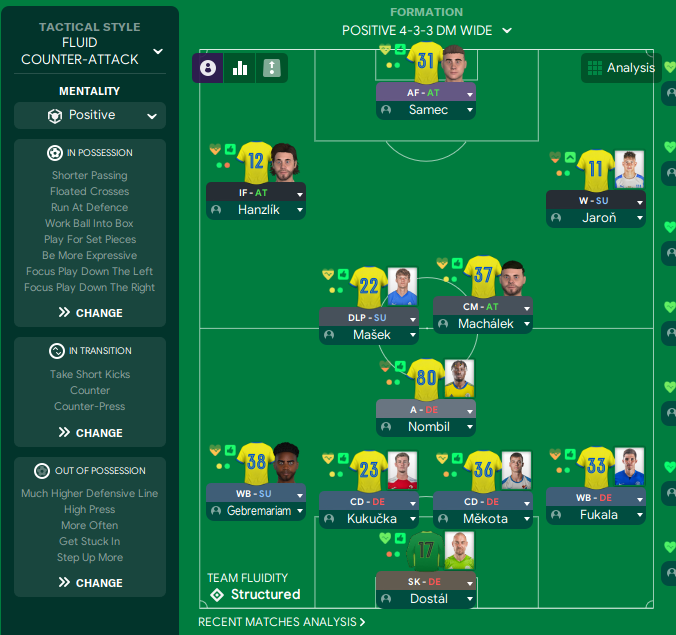
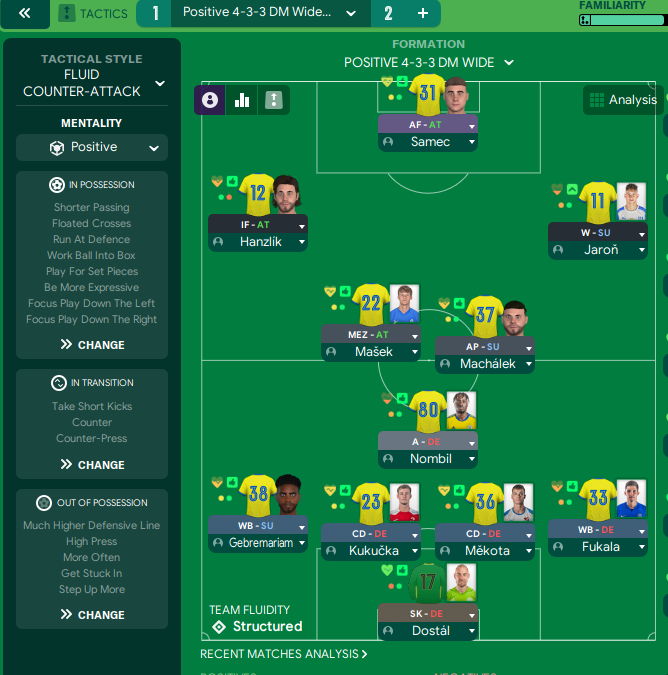
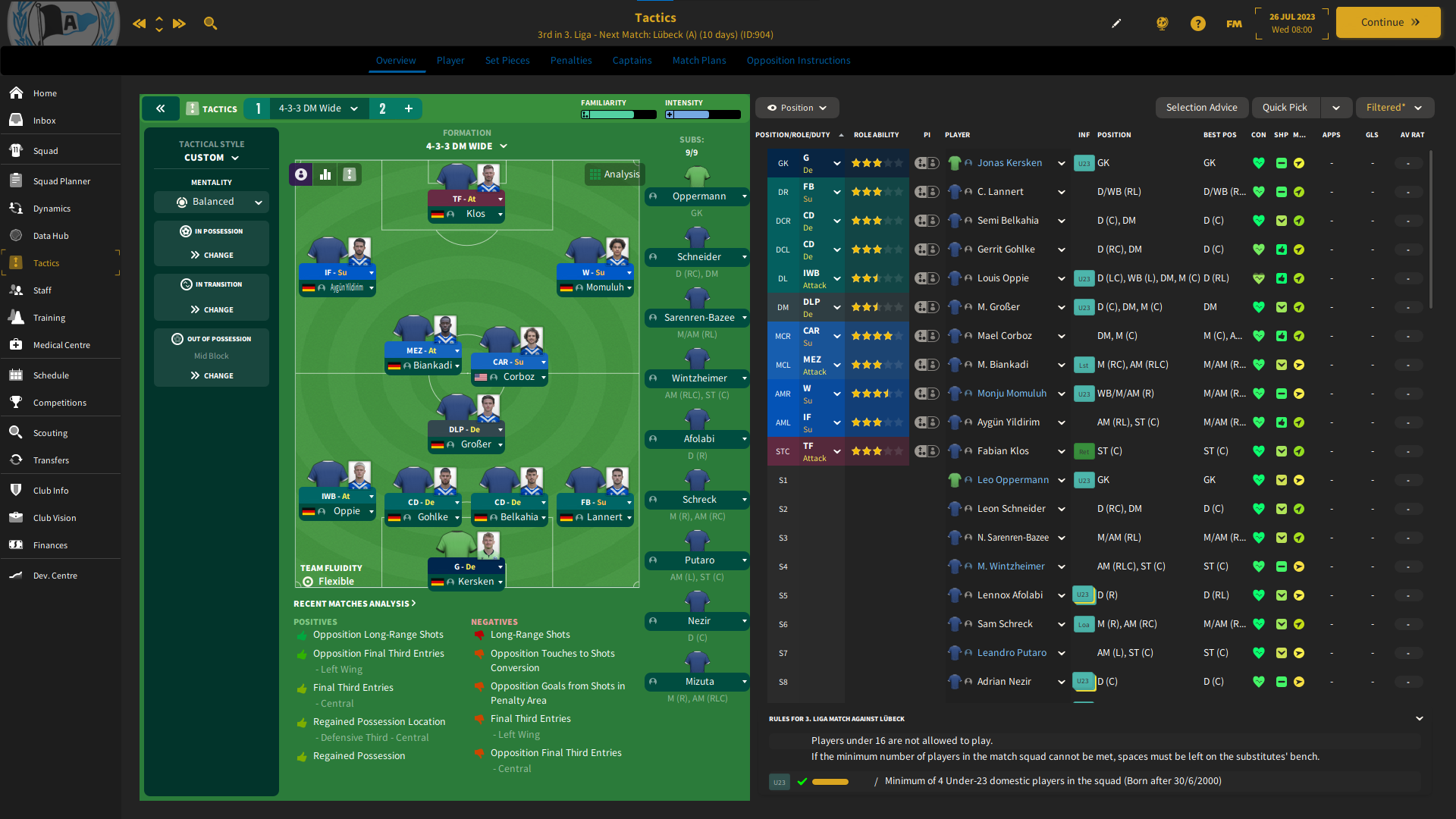
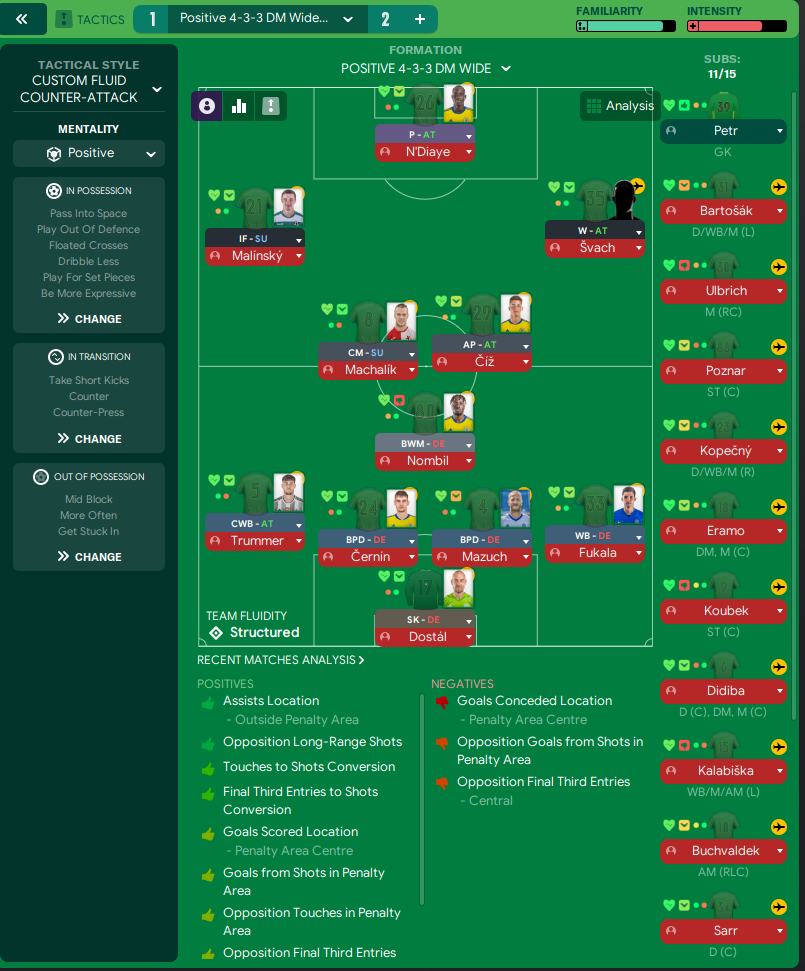
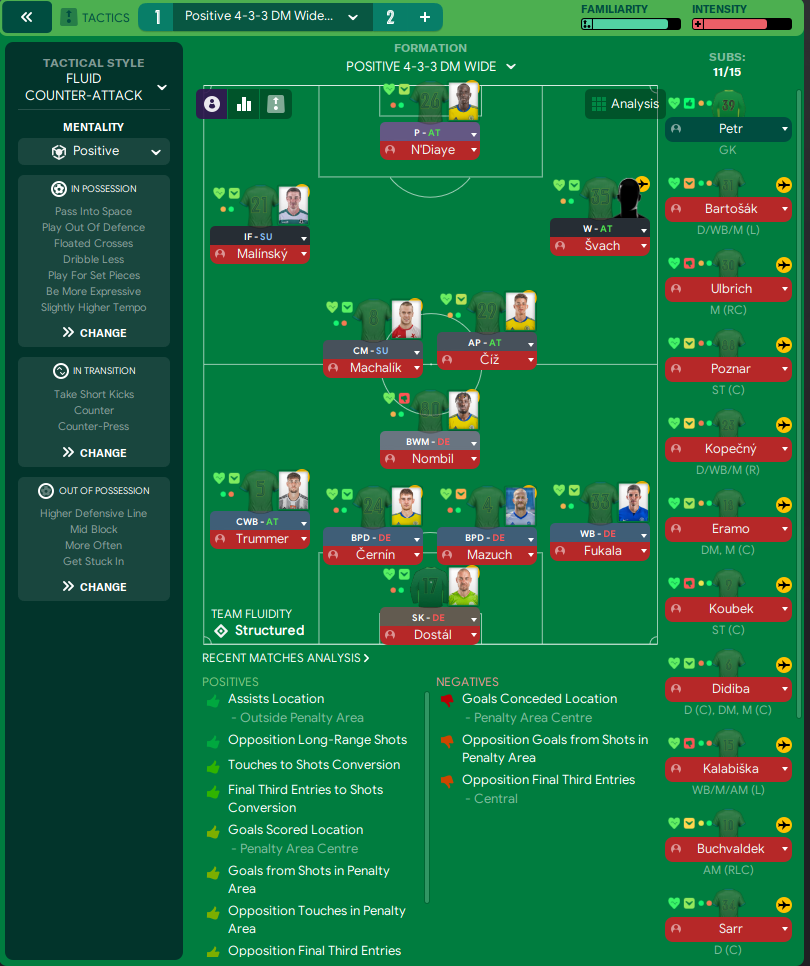
More Niestandardowa tactics
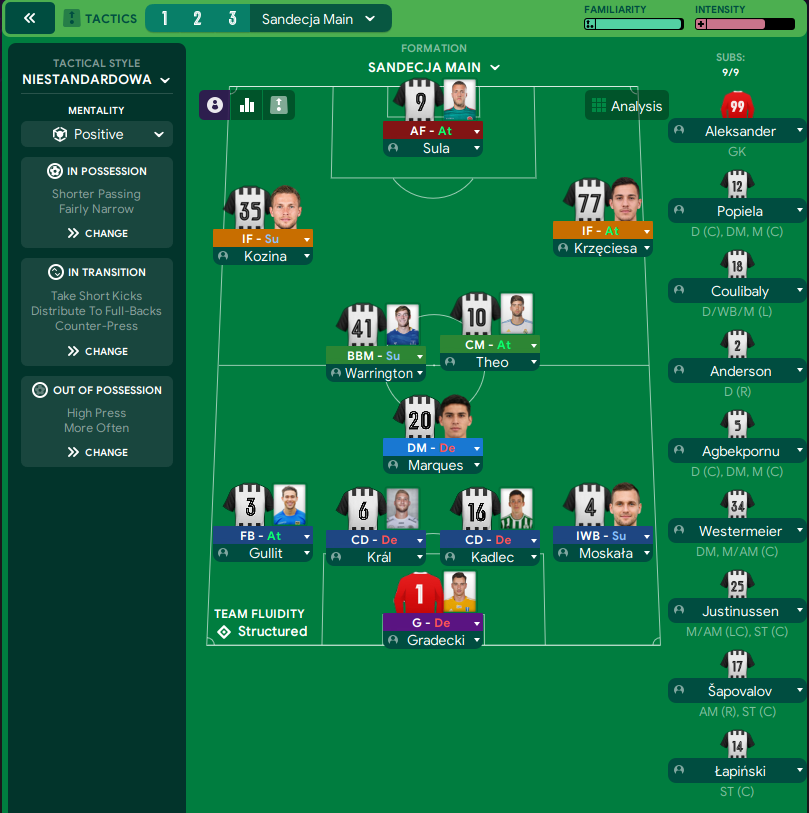
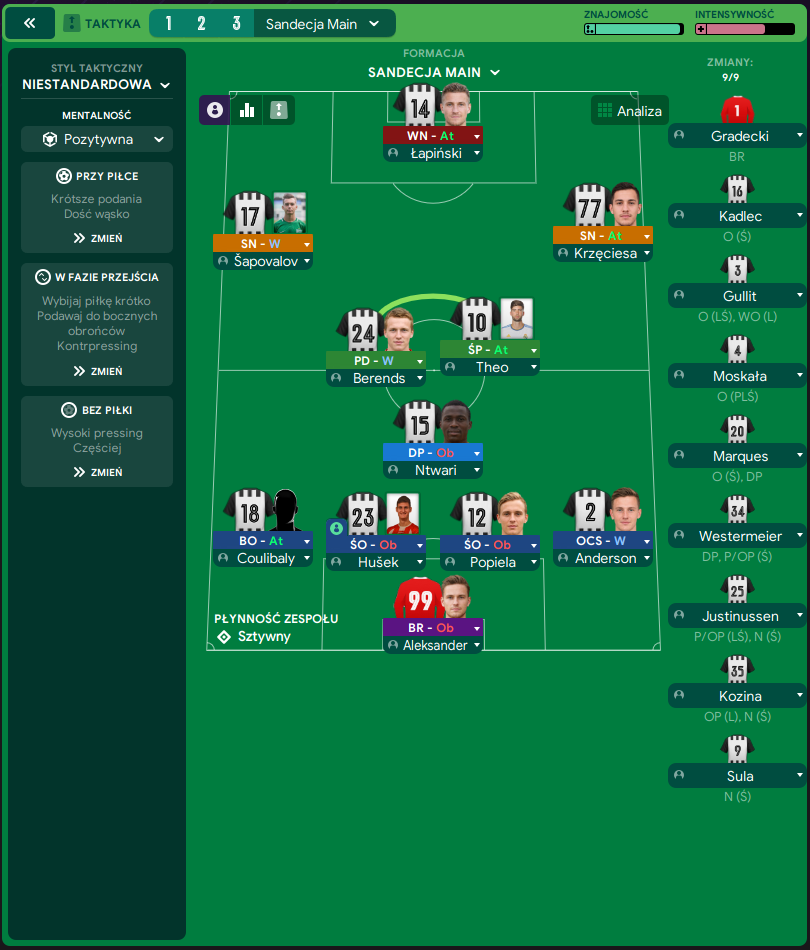
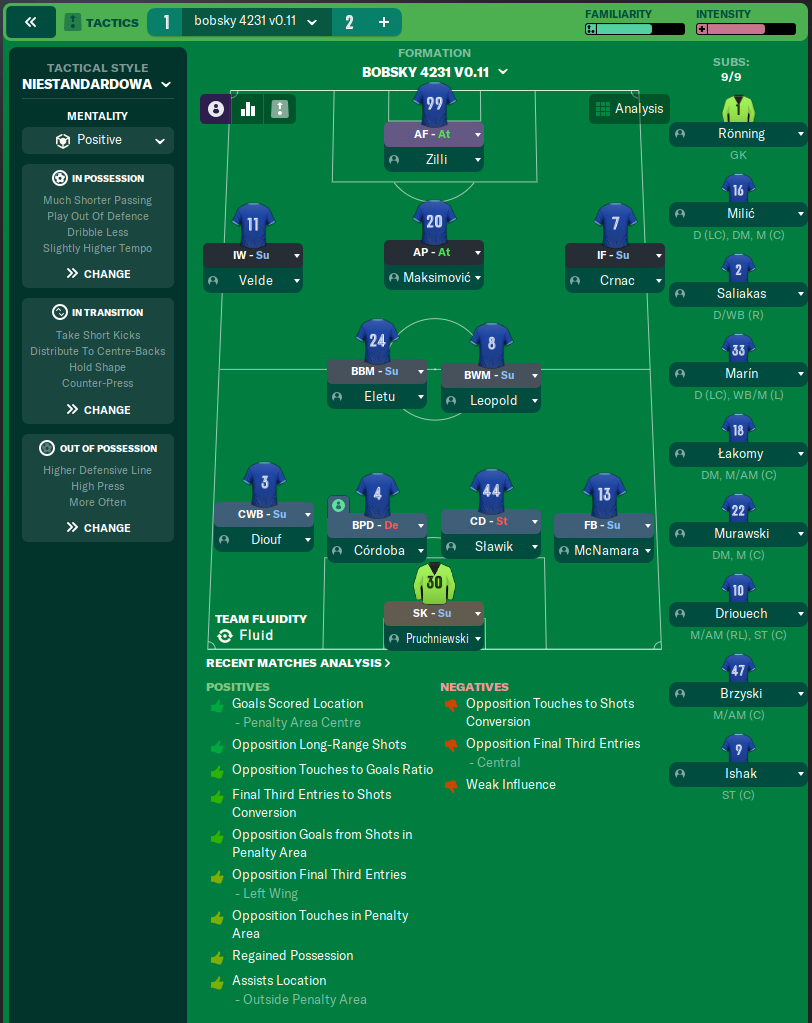
Guides for this formation
The tactical theory behind the 4-3-3 DM Wide: roles, instructions, and the trade-offs that decide whether the system holds up.
Foundations
Understanding the 4-3-3 Formation
Master the classic 4-3-3: player roles, tactical variations, and the trade-offs that decide whether it sings or stalls.
Read guide
Player pairings
Midfield Trios
Holder, runner, creator: the role distribution rule for three-man midfields, the AMC variants, and the antipatterns that break them.
Read guide
Playing styles
Gegenpressing: A Full Guide
Klopp-style gegenpressing in FM, including squad profile, line-and-press pairing, sustainable workload, and the antipatterns to avoid.
Read guide