Uploaded Tactic
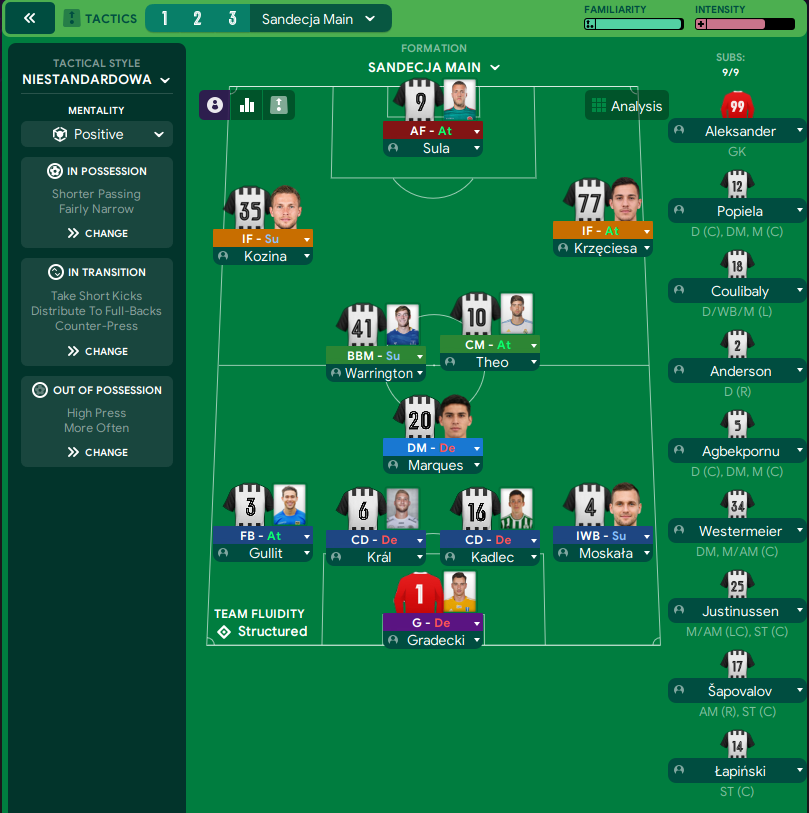
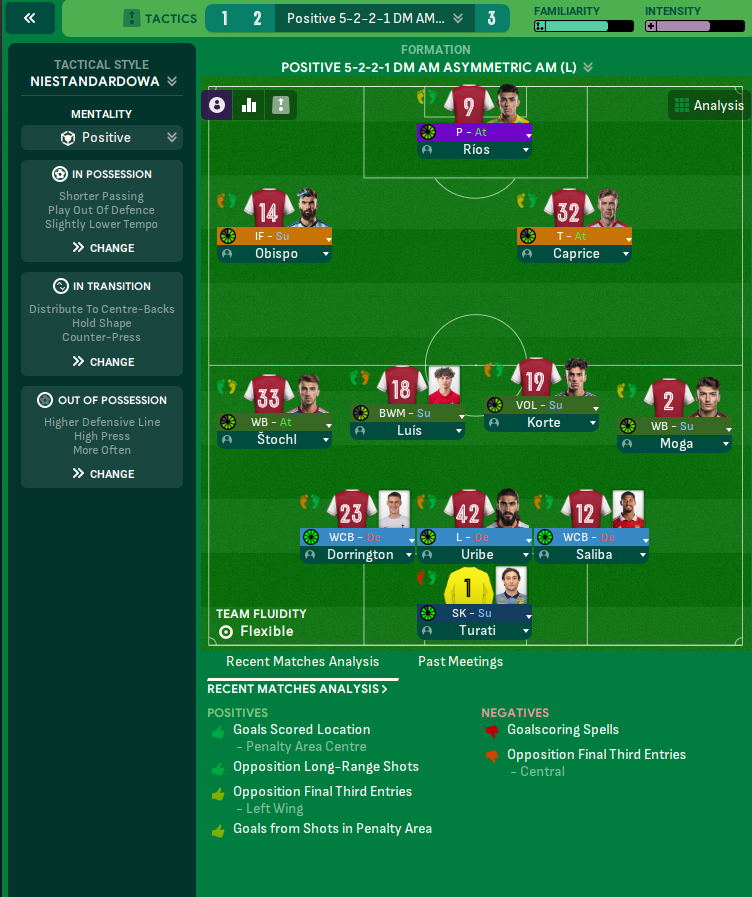
Formation & Style
Tactical Style:Niestandardowa
Mentality:Positive
Formation:4-2-3-1 Wide
Team Fluidity:Structured
In Possession
Shorter Passing
Fairly Narrow
In Transition
Take Short Kicks
Distribute To Full-Backs
Counter-Press
Out of Possession
High Press
More Often
Team Shape Without Ball
Shape:Compact Midblock
Description:Players maintain a tight formation to limit space while pressing opponents aggressively.
Evidence:High press instruction coupled with a structured team fluidity indicates a focused defensive shape.
Team Shape With Ball
Shape:Dynamic and Flexible
Description:Players interchange roles frequently, especially in the attacking third, leading to unanticipated movements.
Evidence:Use of inside forwards and an advanced forward facilitates such movements.
Phase Description
Attacking Play
Focus on maintaining possession with shorter passes while utilizing width provided by the full-backs.
Defensive Transition
Quickly initiate a high press to regain possession after loss, applying pressure around the opposition's defensive third.
Main Focus
Creating goal-scoring opportunities through combination play and interchanging positions in attack.
Key Strengths
Fluid Attacking Play
The combination of roles, particularly the IF and AF, allow for dynamic movement and interaction in the final third.
Strong Midfield Control
Having a DM and a BBM allows for strong defensive cover and transitional play.
Effective Use of Width
Full-backs and inverted wing-back provide width, which stretches the opponent’s defense.
Conflicting Directions
Inconsistent Pressing
High pressing may leave spaces behind if midfield is bypassed, especially with aggressive wing-backs.
Narrow Attacking Shape
The fairly narrow passing focus may limit options against well-organized defenses.
Defensive Vulnerability
Calling for short kicks might expose defence if executed poorly under pressure.
Tactical Suggestions
Adjust Width in Attack
Consider widening the attacking shape to create more channels against packed defences.
Implement Cover Instructions for Full-Backs
Utilize conservative instructions to ensure they are not caught out during counter-attacks.
Review Pressing Triggers
Specify pressing triggers to avoid being drawn out of position, leading to swift counter-attacks.
Ask Questions About Your Lineup
Related Tactics
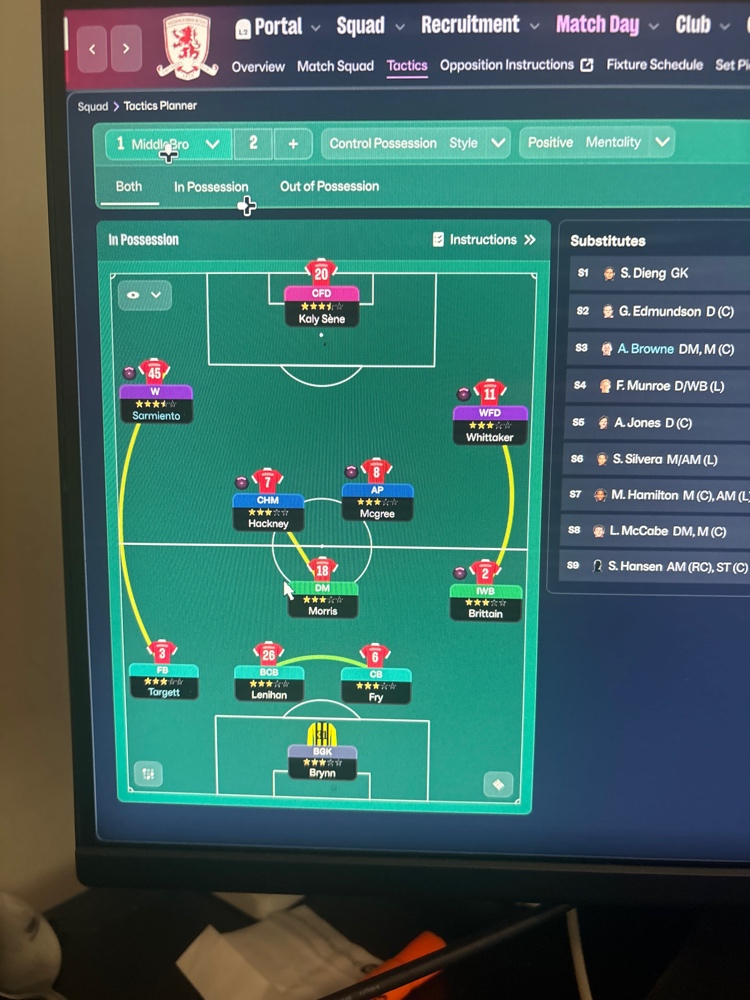
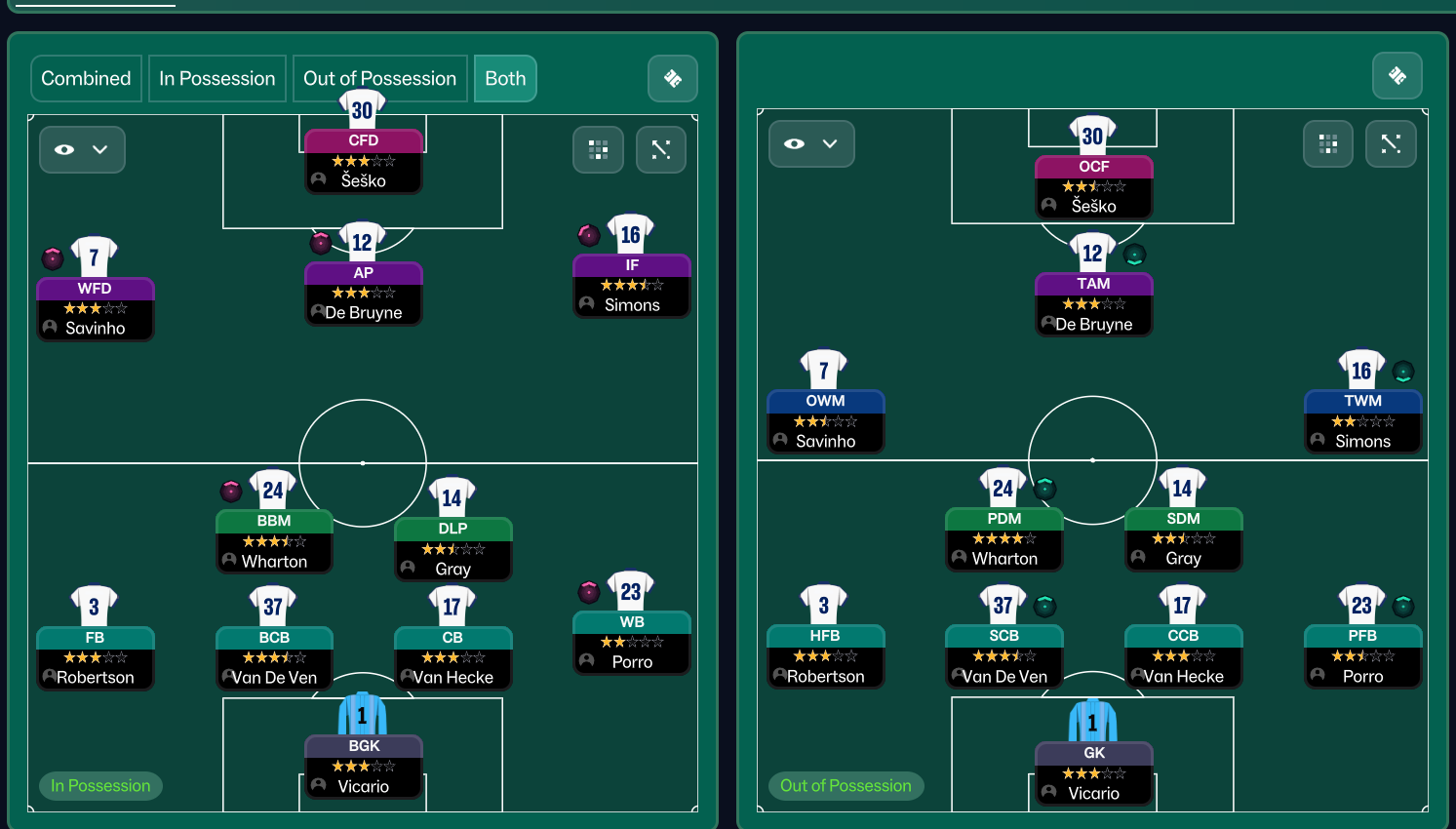
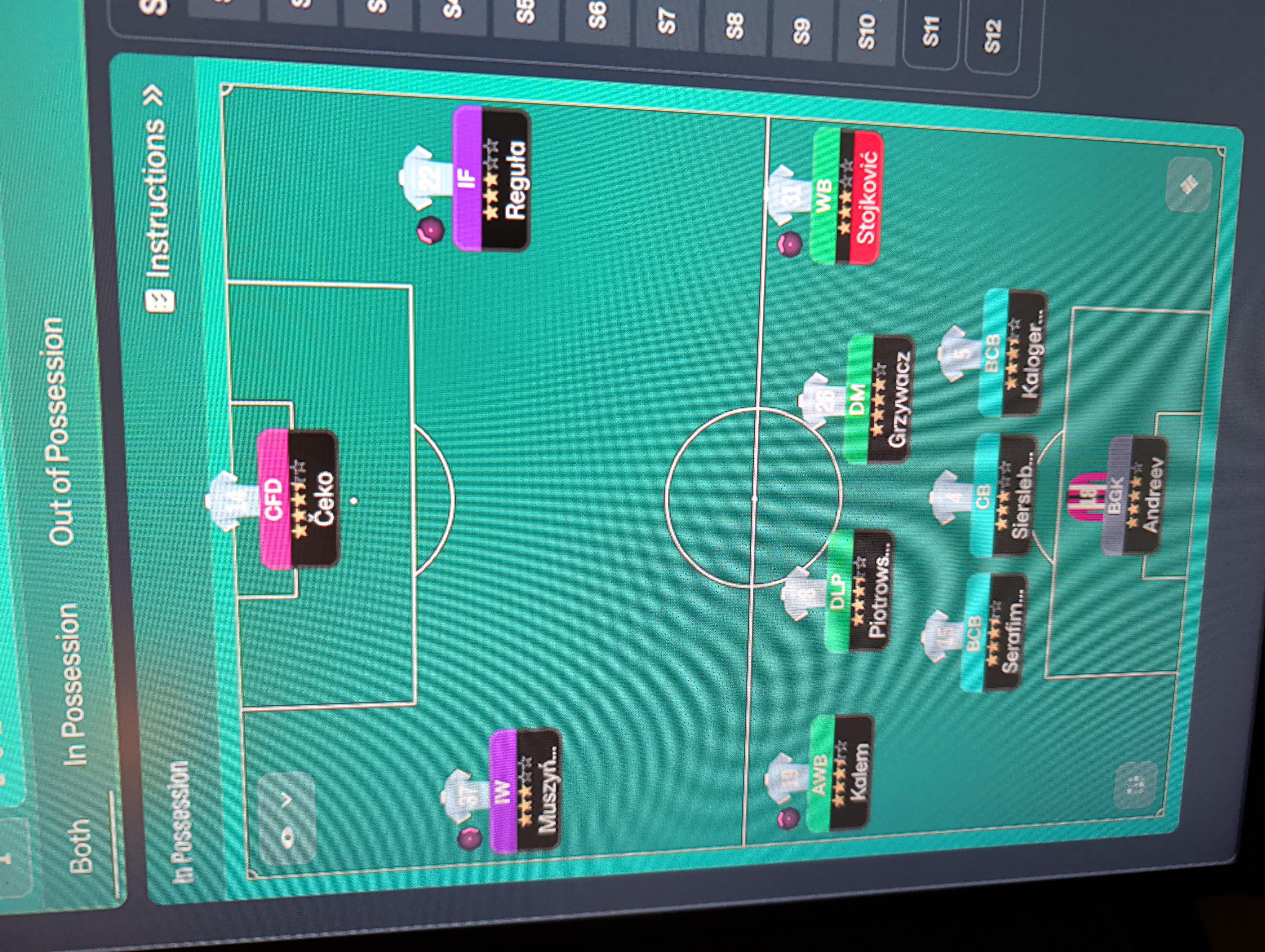
More Niestandardowa tactics
Guides for this formation
The tactical theory behind the 4-2-3-1 Wide: roles, instructions, and the trade-offs that decide whether the system holds up.
Player pairings
Midfield Pairs in 4-2-3-1 and 4-4-2
Double pivots and flat pairs in 4-2-3-1 and 4-4-2: when each pairing works, when it collapses, and the AMC unicorn that rescues both.
Read guide
Playing styles
Gegenpressing: A Full Guide
Klopp-style gegenpressing in FM, including squad profile, line-and-press pairing, sustainable workload, and the antipatterns to avoid.
Read guide