Uploaded Tactic
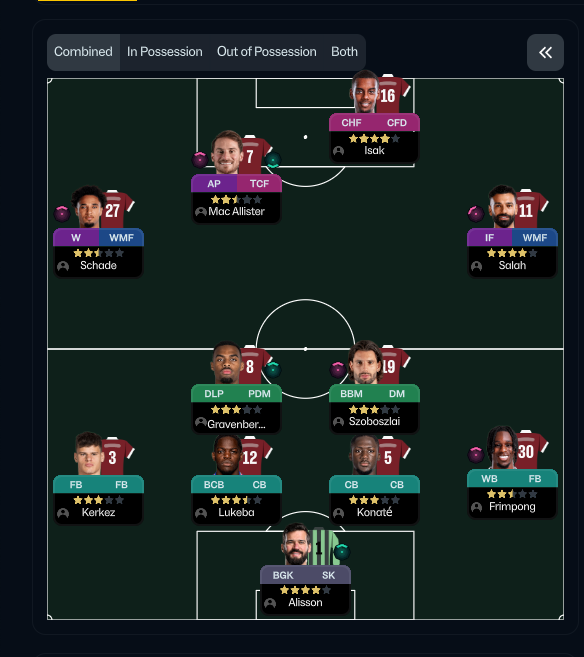
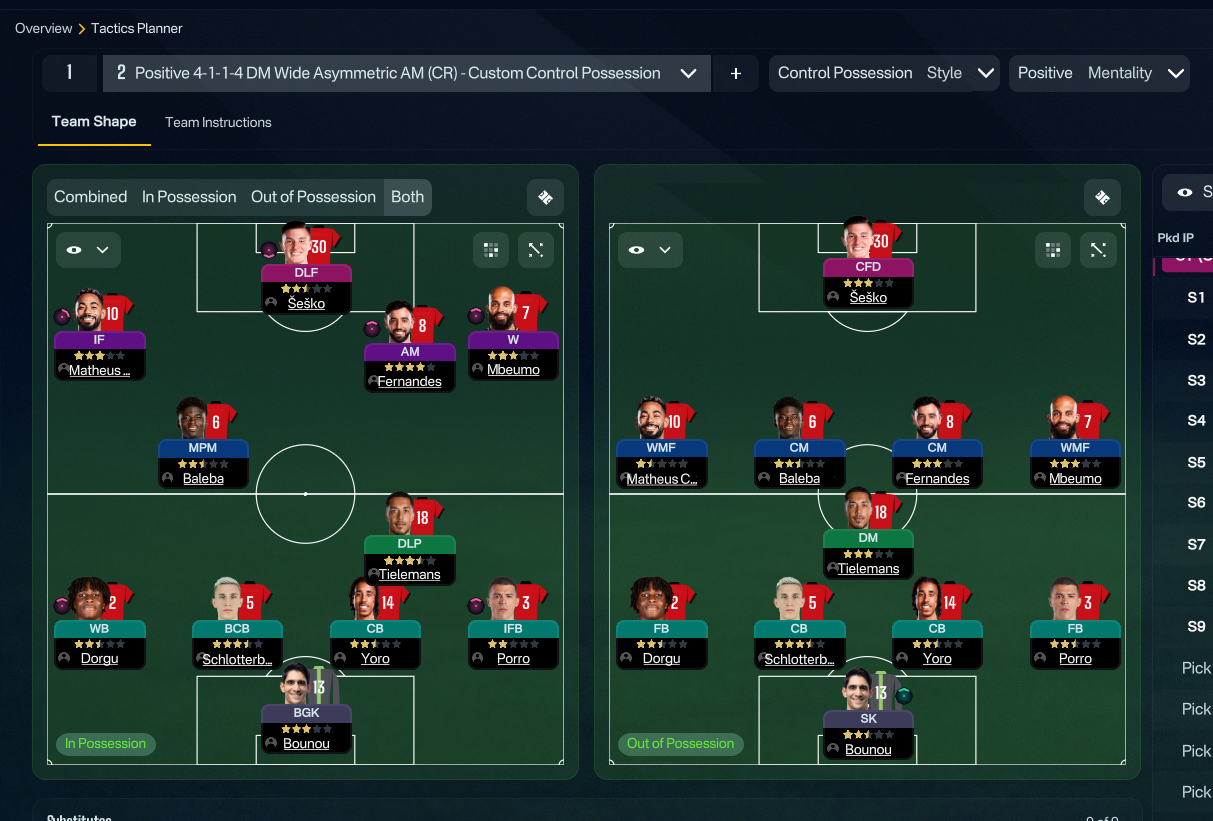
Formation & Style
Tactical Style:Control Possession
Mentality:Positive
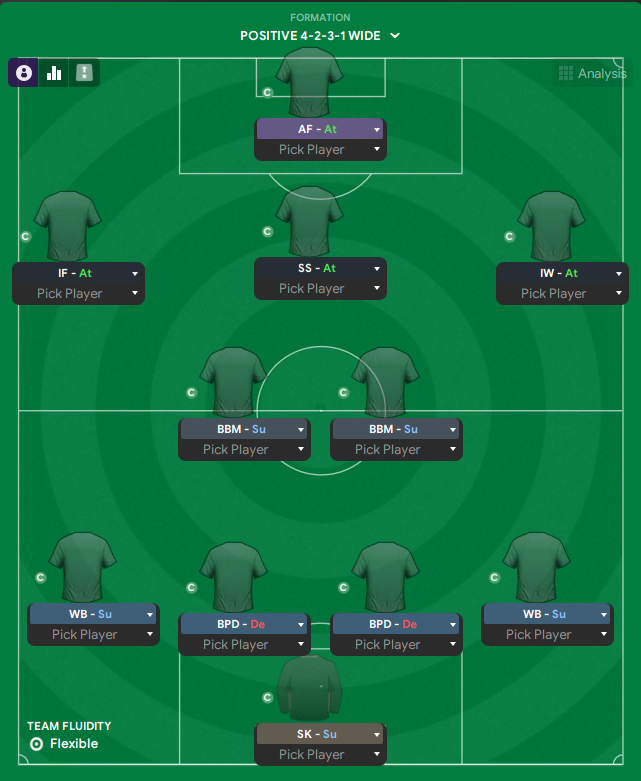
Formation:4-2-3-1 Wide
Team Fluidity:Structured
In Possession
Play Out of Defence
Focus Play Down the Left
Work Ball Into Box
In Transition
Counter-Press
Counter
Out of Possession
Higher Defensive Line
Higher Line of Engagement
Prevent Short GK Distribution
Team Shape Without Ball
Shape:4-2-3-1
Description:Compact structure with two defensive midfielders providing support to the back line while pressing opponents high.
Evidence:DM roles at [3,2] (DLP-S) and [3,3] (BWM-D) with a clear four-man defence.
Team Shape With Ball
Shape:4-2-3-1
Description:Dynamic front five with wingers stretching the pitch and the centre-forward looking to link play and finish.
Evidence:Winger at [6,1] (W-S), Inside Forward at [6,5] (IF-A), and Complete Forward at [6,3] (CF-A) drawing defenders wide.
Phase Description
Attacking Play
Utilizes width through wingers and a playmaker to create opportunities, focusing on possession and quick passing.
Defensive Transition
Quick to press after losing possession to win the ball back, utilizing the midfield to regain control.
Main Focus
Creating goal-scoring opportunities through combination play on the flanks.
Key Strengths
Technical Midfield Control
Possession is maintained through a combination of a Deep-Lying Playmaker and Box-to-Box Midfielder managing the flow.
Wide Player Versatility
Wingers and an Inside Forward create varied pathways for attack and opportunities for crosses into the box.
Solid Defensive Structure
A well-structured defensive line that can also initiate play from the back.
Conflicting Directions
Potential Vulnerability to Counter Attacks
With an aggressive pressing style, the midfield may become exposed if possession is lost quickly.
Midfield Overload Risk
Deploying three midfielders could be countered by opponents using their own three or more midfielders.
Wide Player Reliance
Over-reliance on width can lead to predictable patterns of play, making it easier for defenses to adapt.
Tactical Suggestions
Consider a More Fluid Shape
Switching to a more fluid formation like 4-3-3 could increase versatility in midfield and attack.
Adjust Defensive Instructions
Utilizing a lower defensive line could help mitigate vulnerability to quick transitions.
Explore Variation in Attacking Play
Includes both crossing and through-ball opportunities to diversify attacking options.
Ask Questions About Your Lineup
Related Tactics
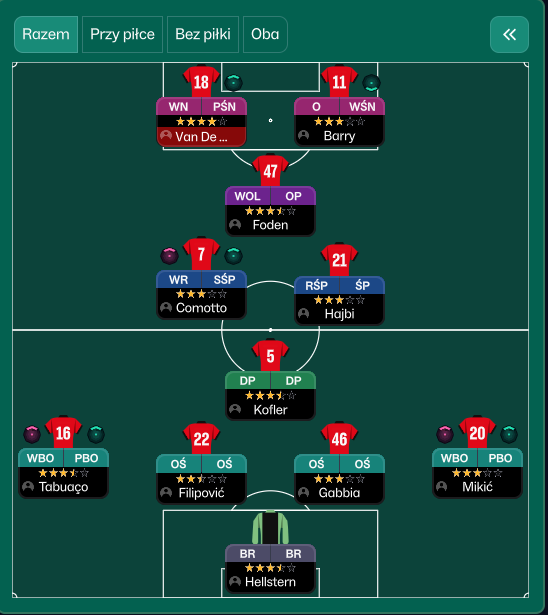
More Control Possession tactics
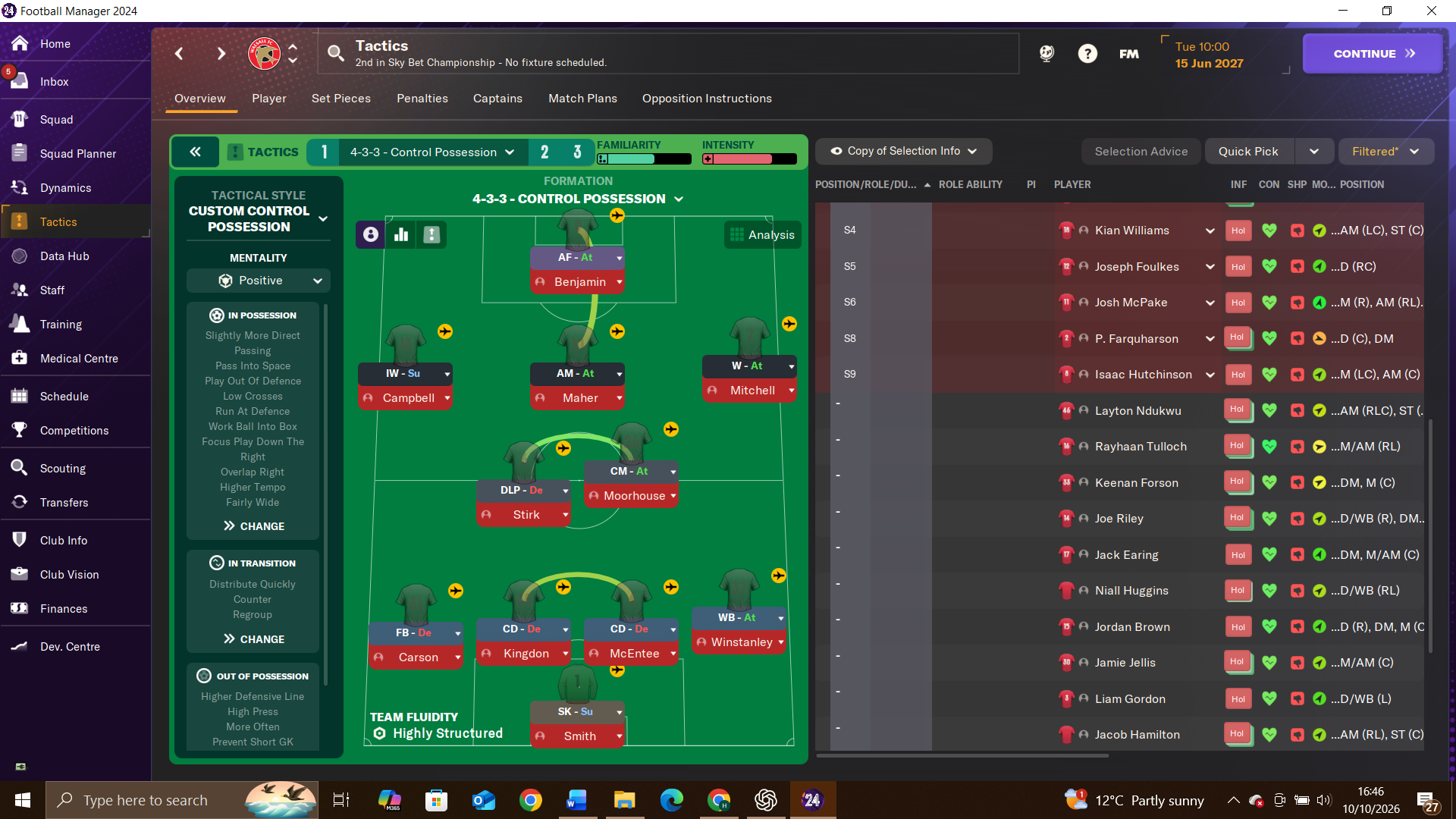
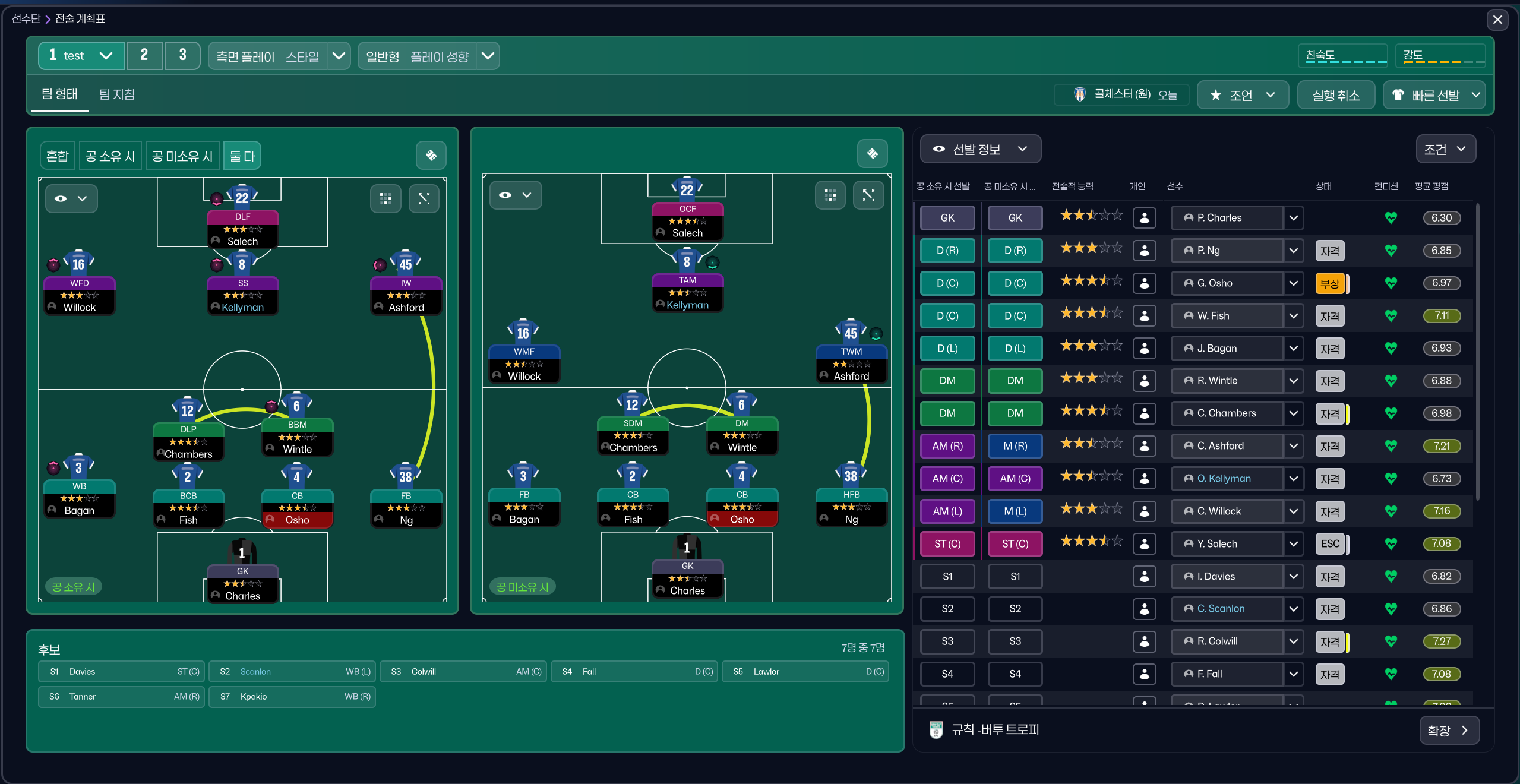
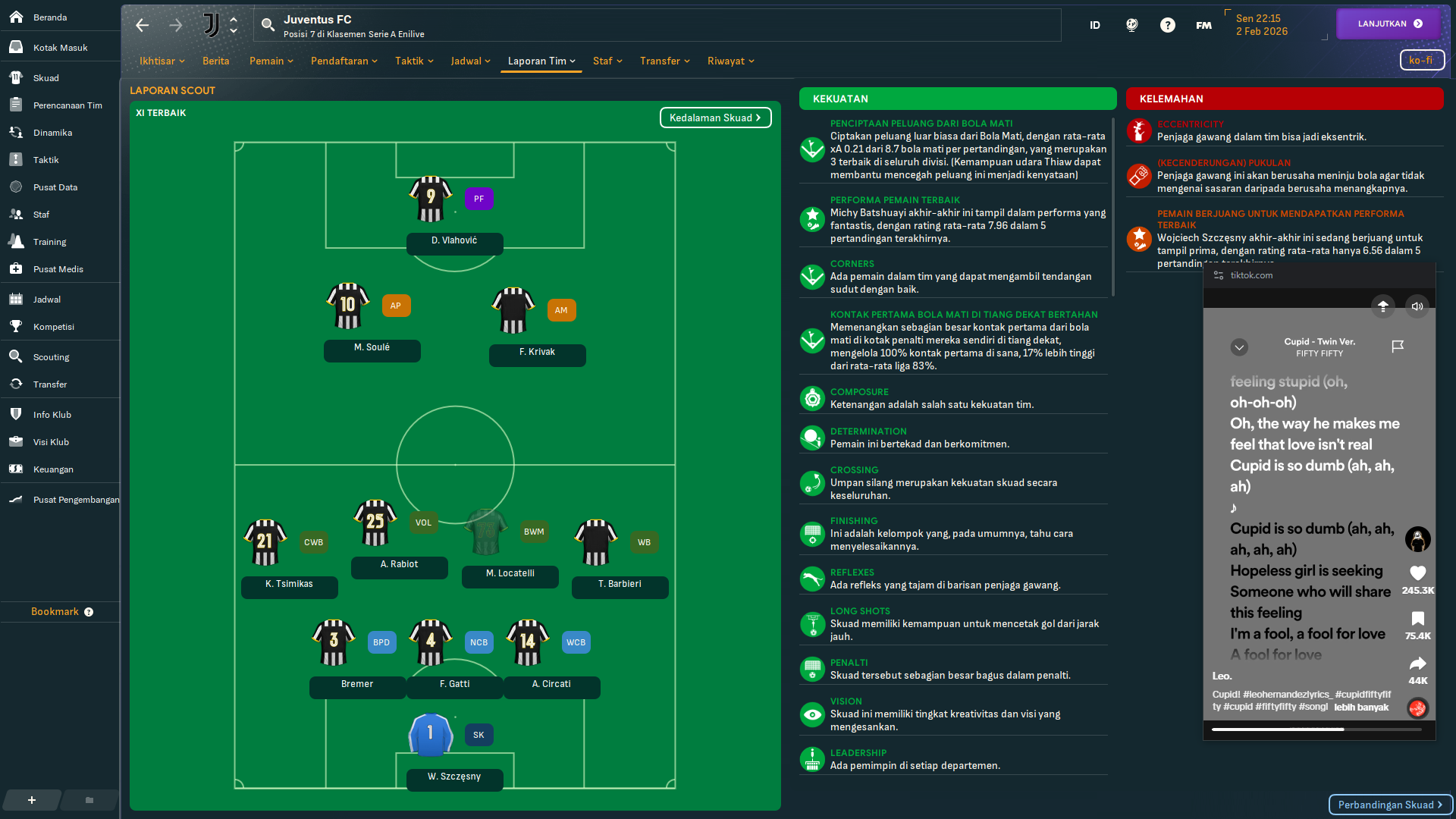
Guides for this formation
The tactical theory behind the 4-2-3-1 Wide: roles, instructions, and the trade-offs that decide whether the system holds up.
Player pairings
Midfield Pairs in 4-2-3-1 and 4-4-2
Double pivots and flat pairs in 4-2-3-1 and 4-4-2: when each pairing works, when it collapses, and the AMC unicorn that rescues both.
Read guide
Playing styles
Gegenpressing: A Full Guide
Klopp-style gegenpressing in FM, including squad profile, line-and-press pairing, sustainable workload, and the antipatterns to avoid.
Read guide