Uploaded Tactic
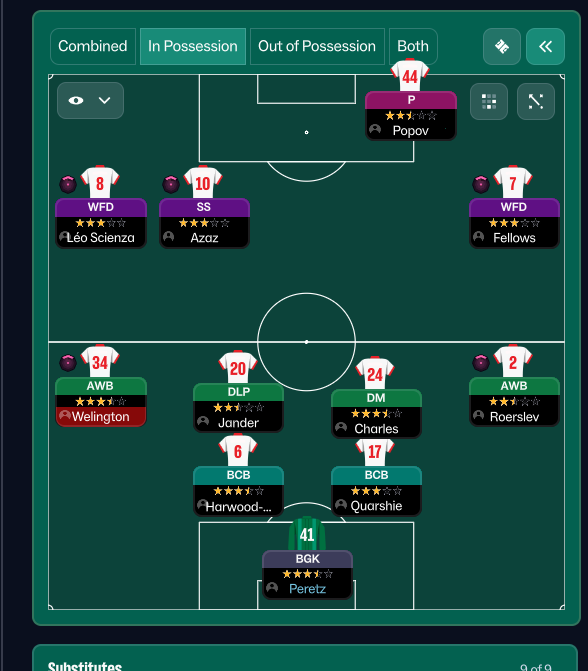
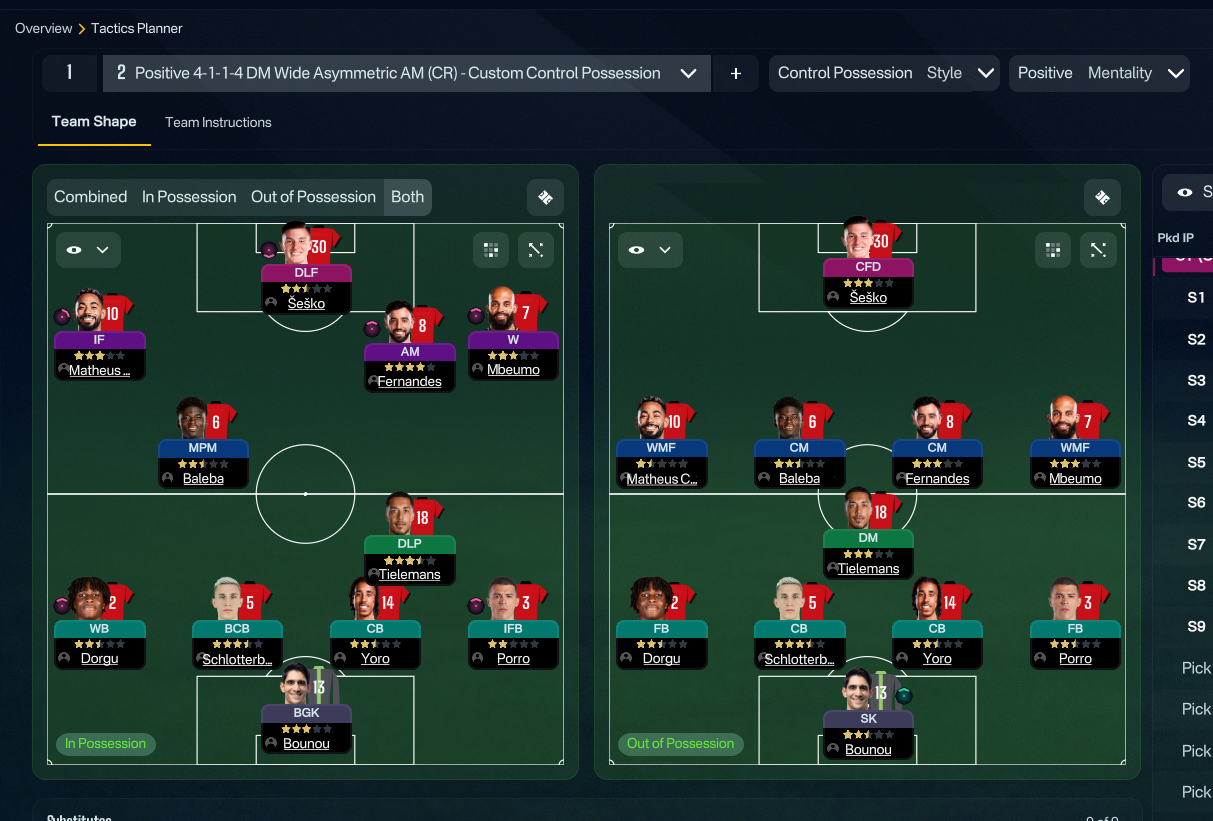
Formation & Style
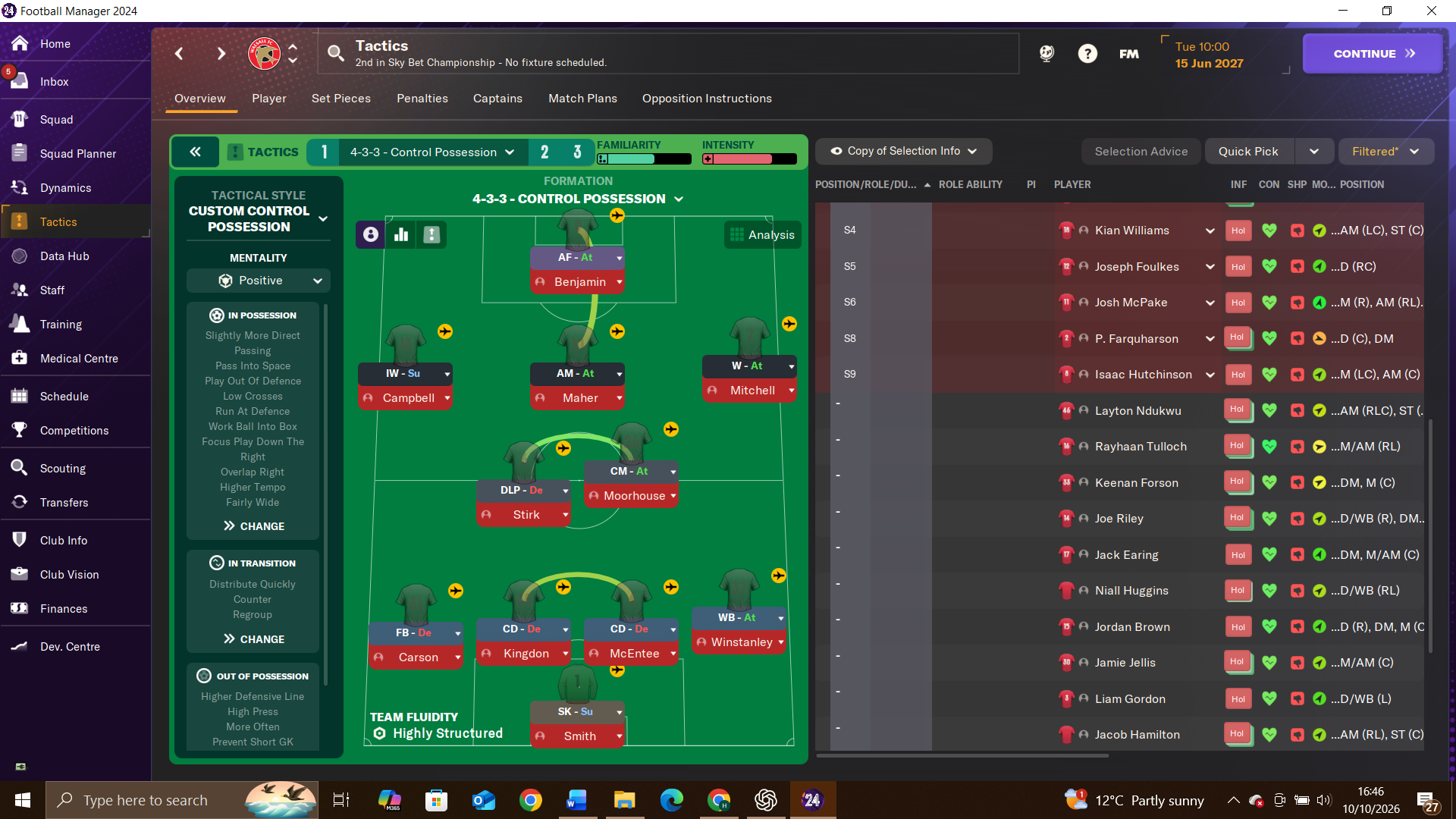
Tactical Style:Control Possession
Mentality:Positive
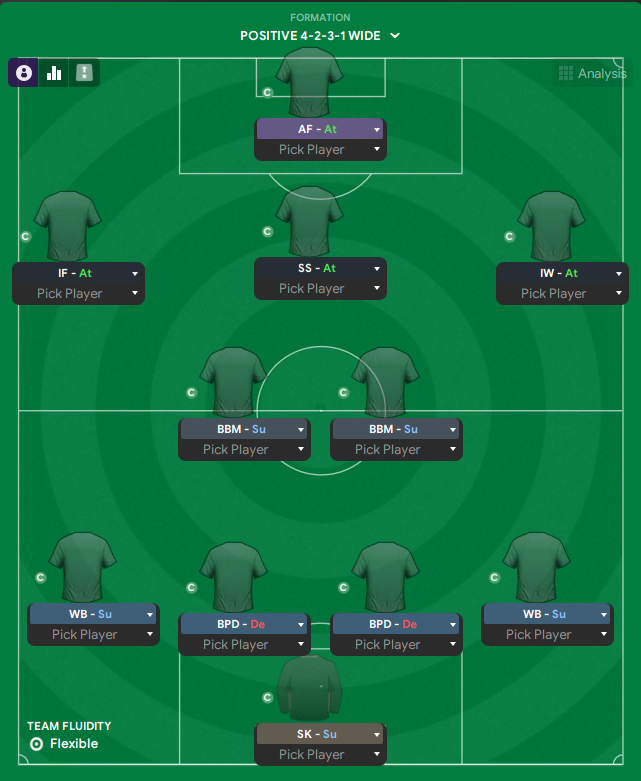
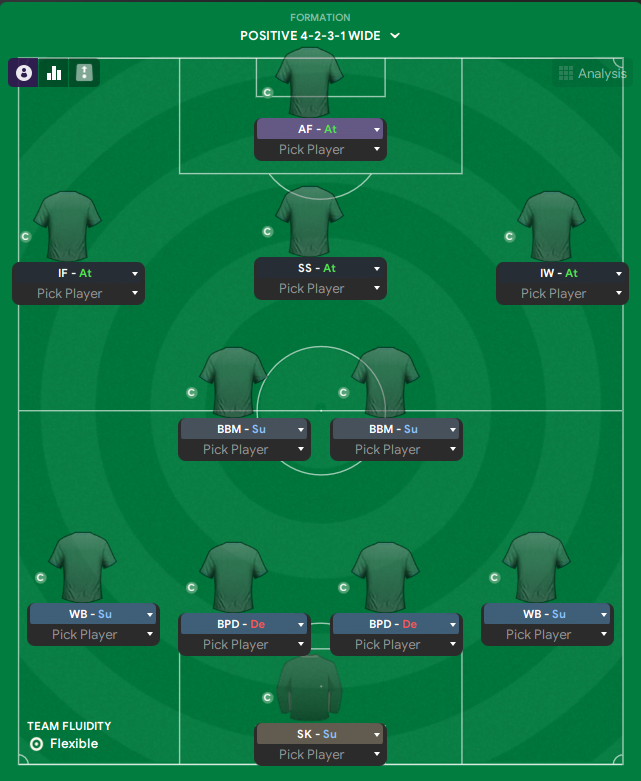
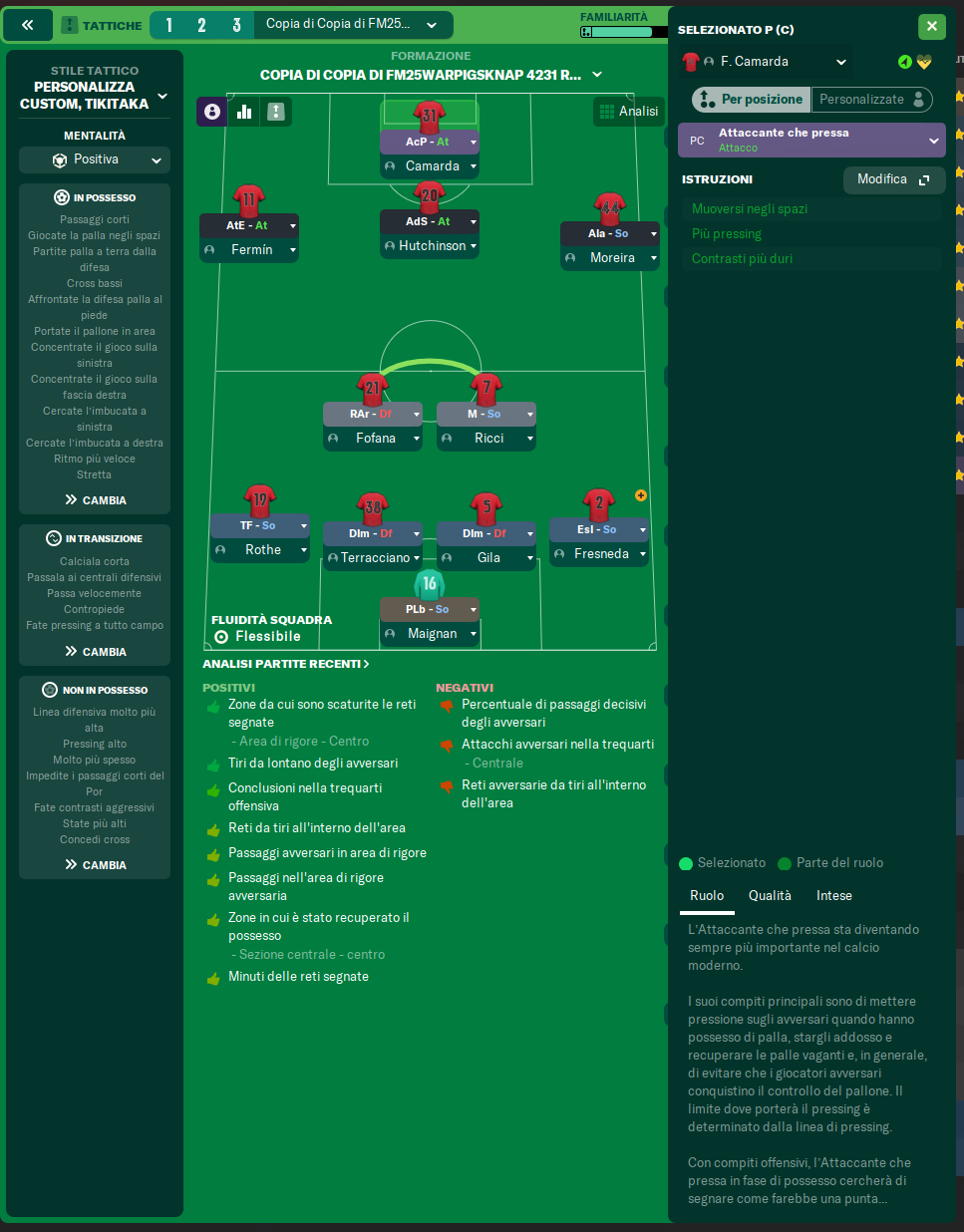
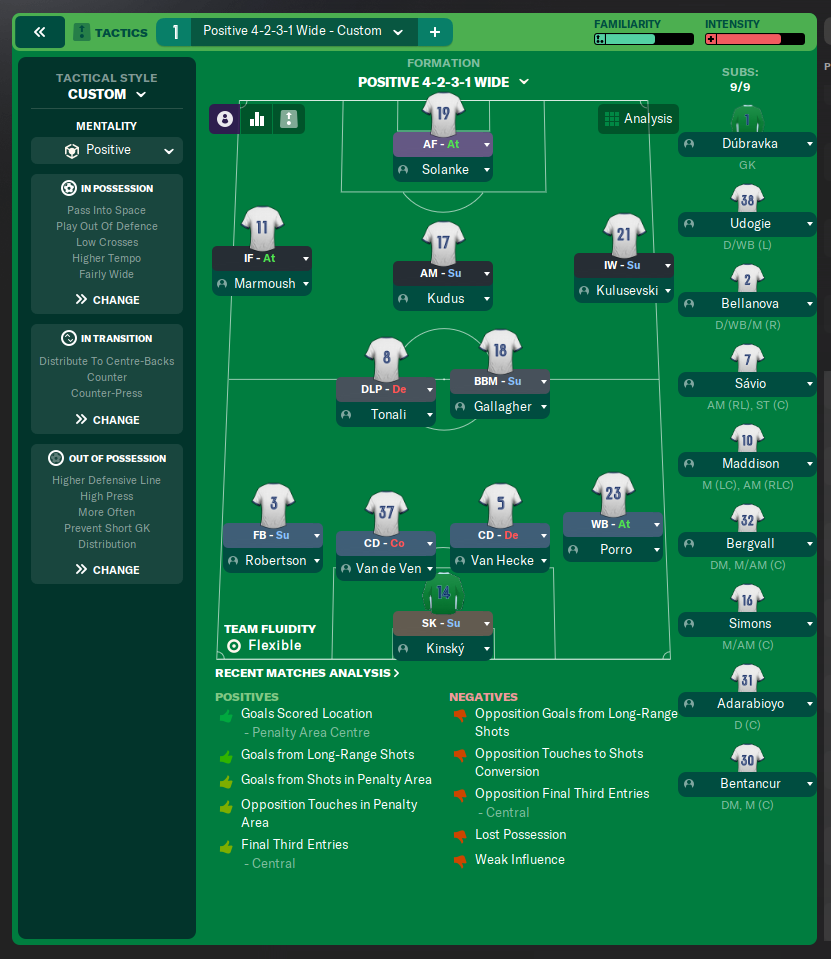
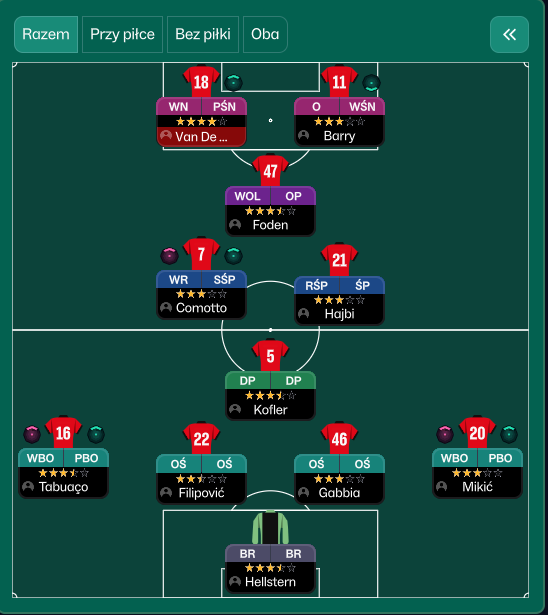
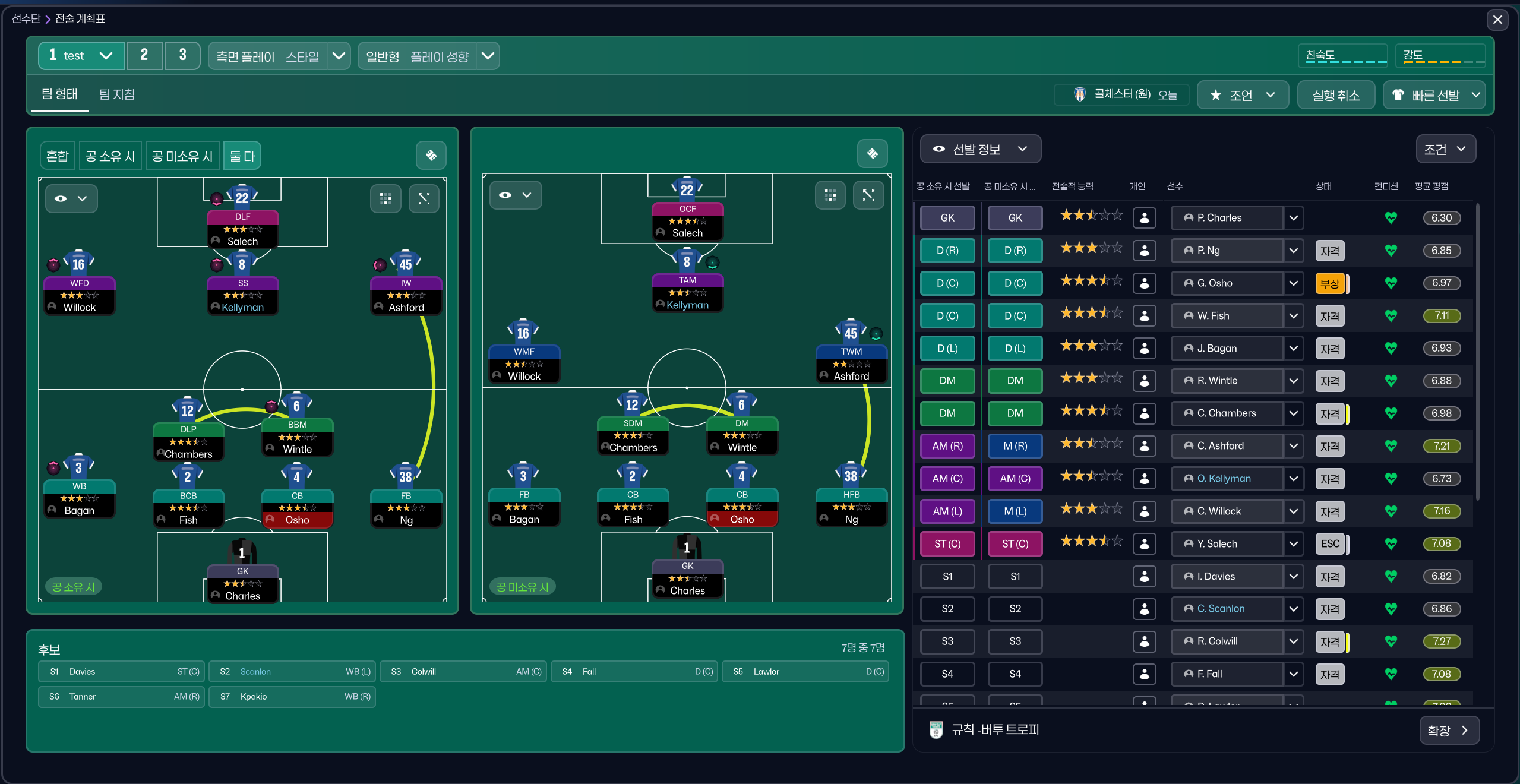
Formation:4-2-3-1 Wide
Team Fluidity:Fluid
In Possession
Play Out of Defence
Retain Possession
Higher Tempo
In Transition
Counter
Counter-Press
Goalkeeper Distribution: Distribute to Full-Backs
Out of Possession
Higher Line of Engagement
Higher Defensive Line
Prevent Short GK Distribution
Team Shape Without Ball
Shape:Compact and Coordinated
Description:The defensive line is set to engage high, but organized enough to avoid being caught out by fast counters.
Evidence:Higher Defensive Line and Prevent Short GK Distribution demonstrate intent to assert dominance.
Team Shape With Ball
Shape:Dynamic with Width
Description:Utilizing wide forwards and an advanced playmaker to stretch the opposition and create openings.
Evidence:WFD roles at [5,1] and [5,5] create width while the DLP at [3,3] links play effectively.
Phase Description
Attacking Play
Focuses on maintaining possession and gradually breaking down defenses through intricate passing.
Defensive Transition
Emphasizes quick recovery and immediate pressing of the opposition after losing possession.
Main Focus
Create goal-scoring opportunities through overlapping wing play and central progression.
Key Strengths
Balanced Midfield
With a Deep-Lying Playmaker and Defensive Midfielder, the midfield can control play and adapt defensively.
Wide Threat
The use of Wide Forwards allows for stretching the pitch and creating space in central areas.
Defensive Solidity
The combination of a Ball-Playing Defender and a stable DM creates a strong defensive foundation.
Conflicting Directions
Vulnerability to Fast Breaks
While the higher line can pressure opponents, it leaves gaps for pacy attackers.
Overlapping Full-Backs
Overlapping AWBs could isolate center-backs during transitional phases if caught out of position.
Reliance on Shadow Striker
Over-reliance on the shadow striker for goals might lead to stagnation if marked tightly.
Tactical Suggestions
Adjust Defensive Line
Consider a slightly lower defensive line to reduce exposure to pace.
Integrate Central Midfielder
Encourage the central midfielder to add more runs into the box to support the shadow striker.
Balanced Width in Attack
Ensure that the wide forwards also occasionally cut inside to free up space for overlapping full-backs.
Ask Questions About Your Lineup
Related Tactics
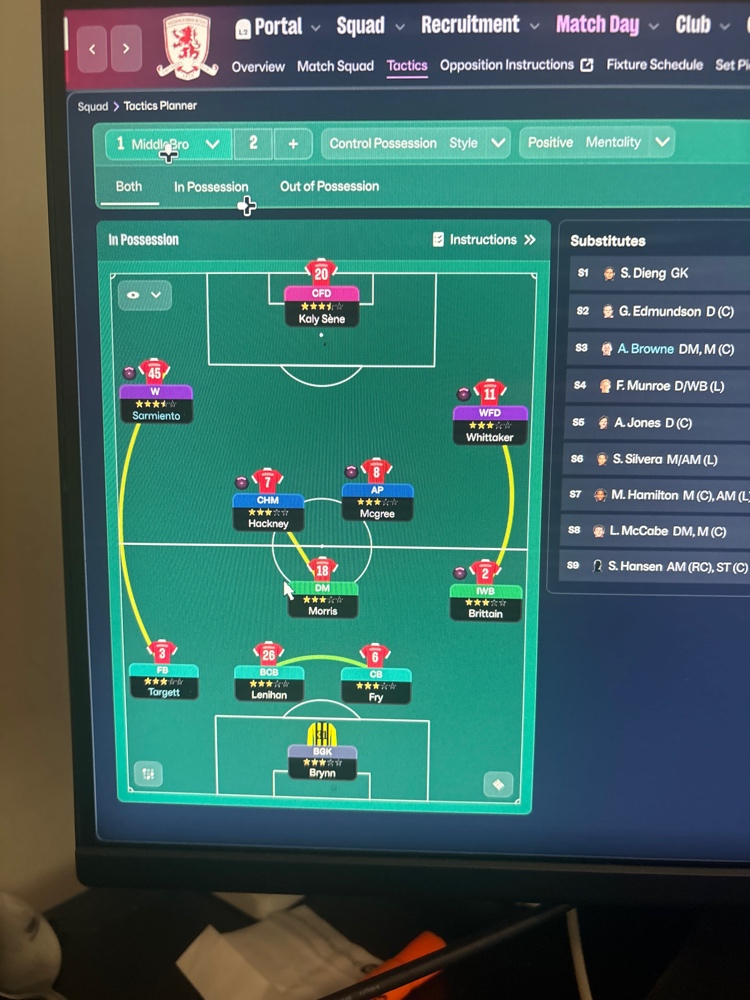
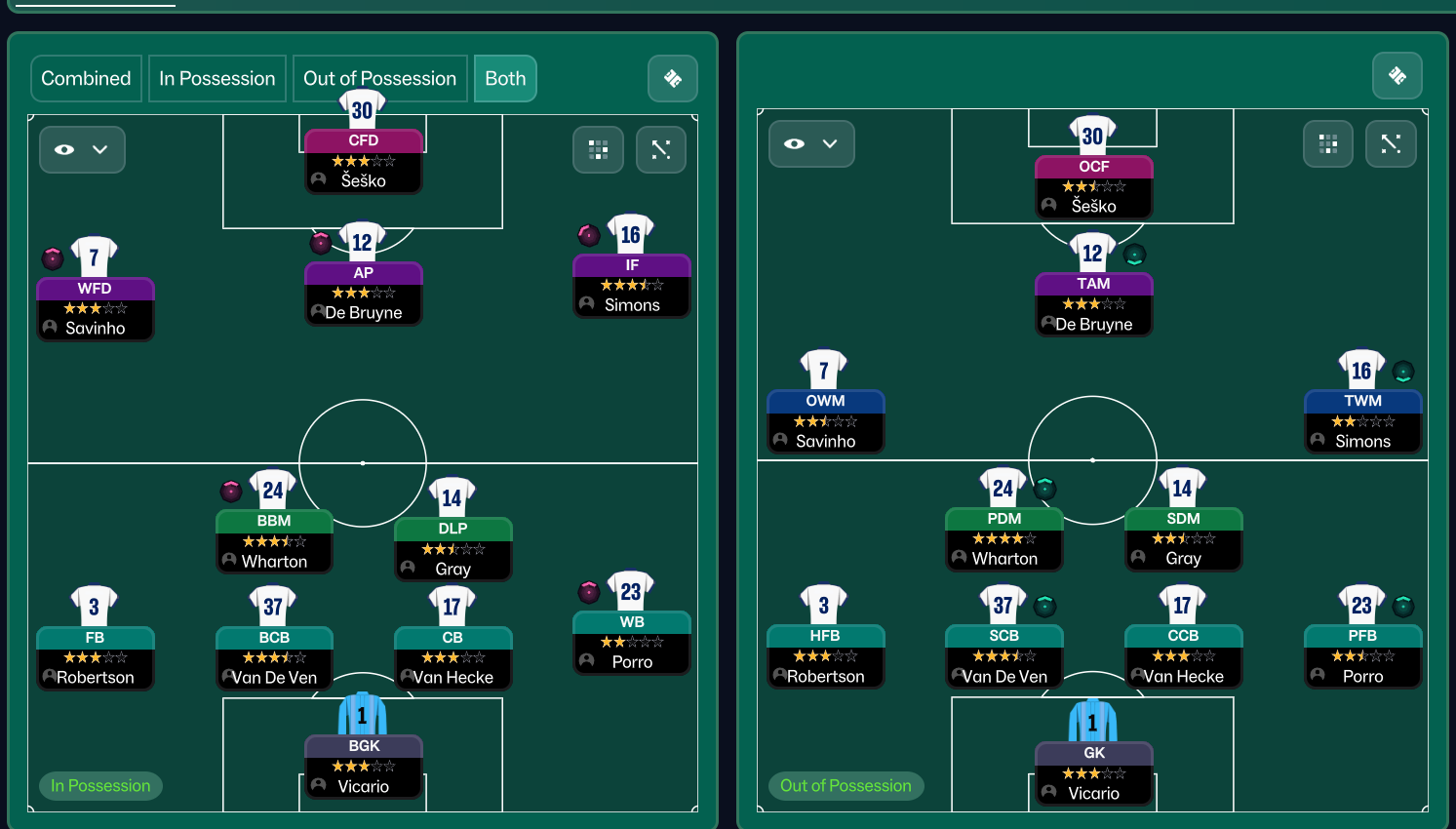
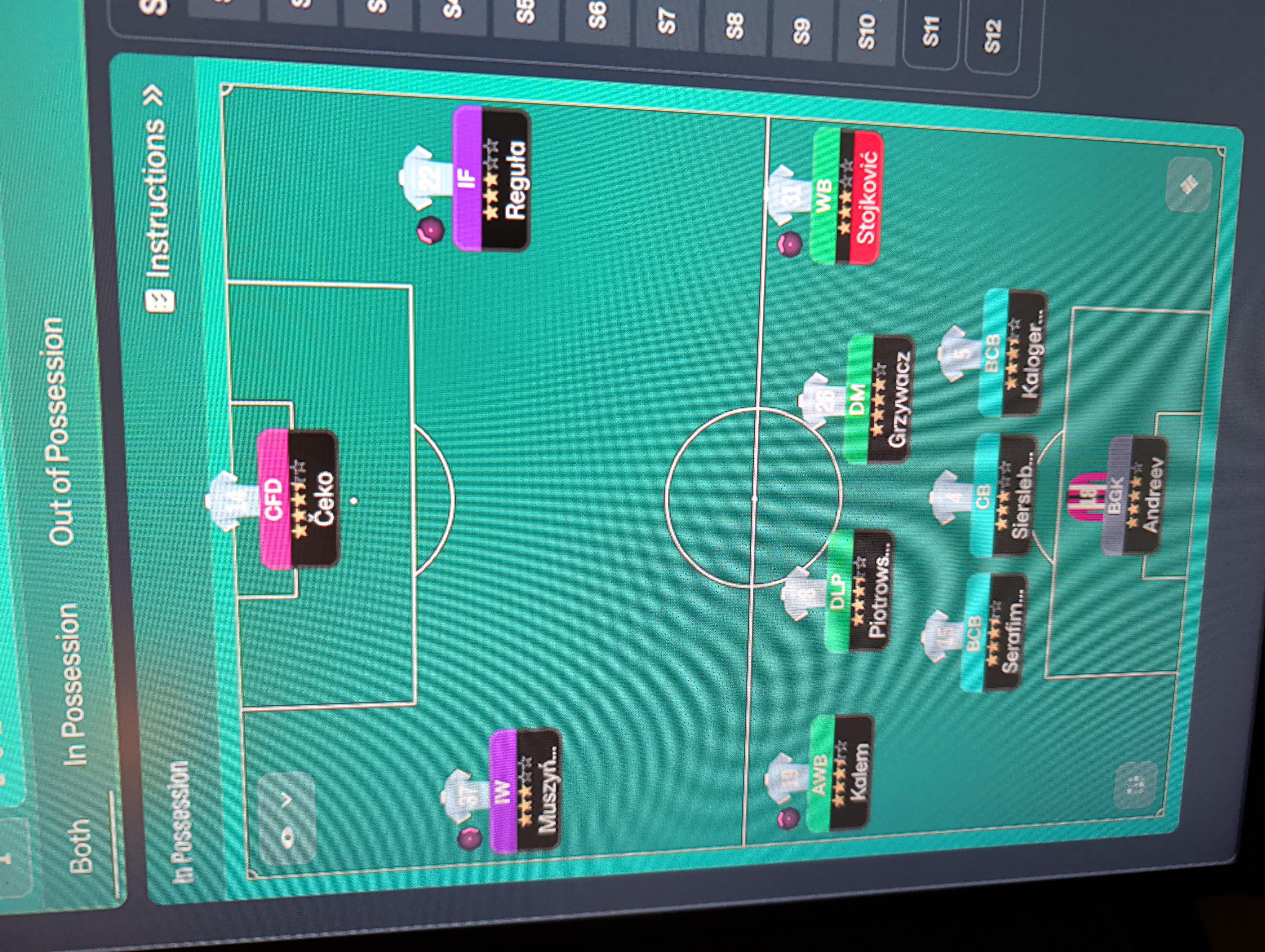
More Control Possession tactics
Guides for this formation
The tactical theory behind the 4-2-3-1 Wide: roles, instructions, and the trade-offs that decide whether the system holds up.
Player pairings
Midfield Pairs in 4-2-3-1 and 4-4-2
Double pivots and flat pairs in 4-2-3-1 and 4-4-2: when each pairing works, when it collapses, and the AMC unicorn that rescues both.
Read guide
Playing styles
Gegenpressing: A Full Guide
Klopp-style gegenpressing in FM, including squad profile, line-and-press pairing, sustainable workload, and the antipatterns to avoid.
Read guide