4-2-3-1 Wide (Attacking) Tactic
4-2-3-1 Wide
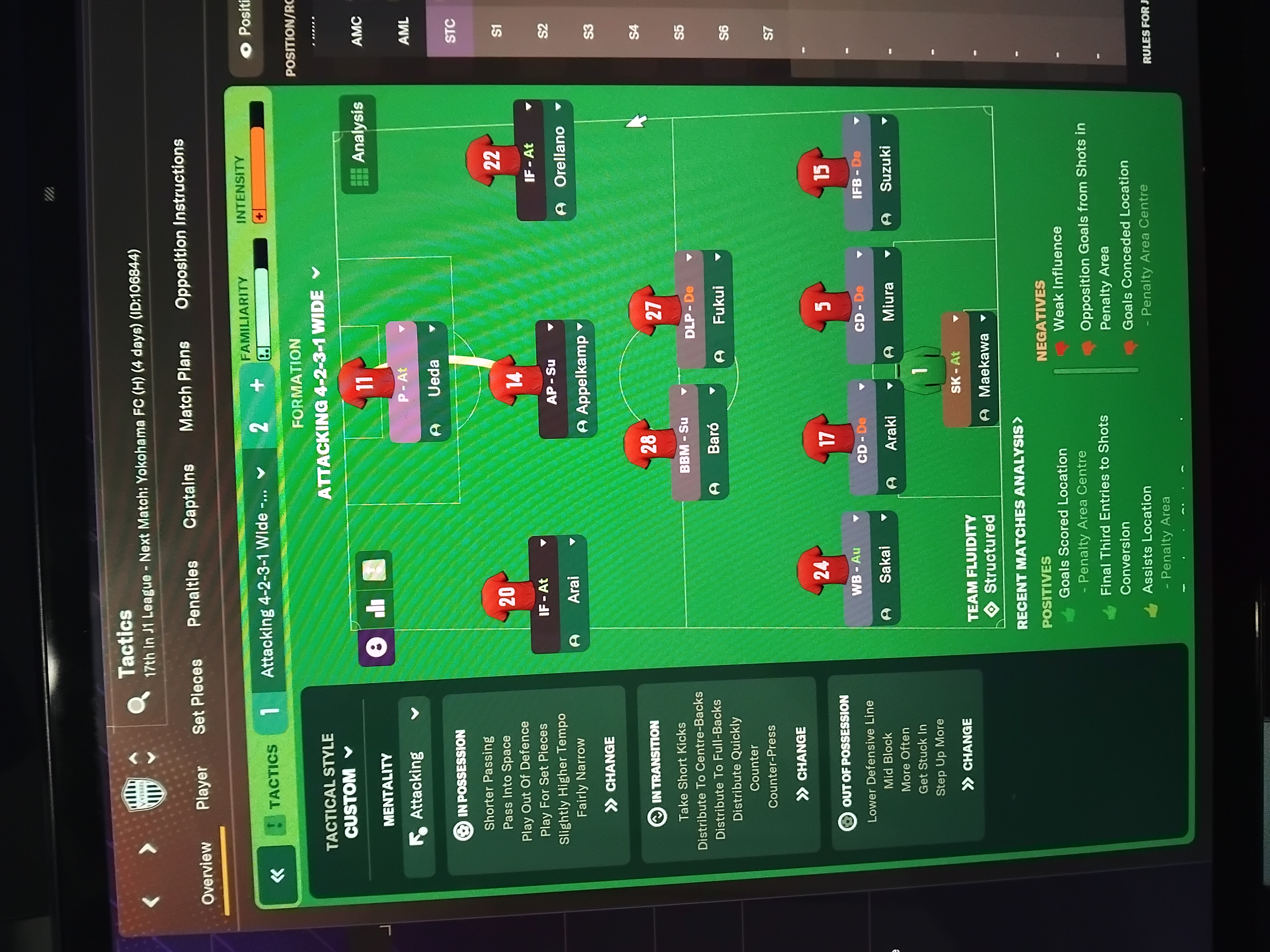
Emphasis on creating goal-scoring opportunities from the wings and through the center via the advanced playmaker. The wing-backs and inside forwards…
Loading tactical analysis...
Formation and style
Custom
Attacking
4-2-3-1 Wide
Structured
In possession
Shorter Passing
Pass Into Space
Play Out of Defence
Play For Set Pieces
Slightly Higher Tempo
Fairly Narrow
In transition
Take Short Kicks
Distribute To Centre-Backs
Distribute To Full-Backs
Distribute Quickly
Counter
Counter-Press
Out of possession
Lower Defensive Line
Mid Block
More Often
Get Stuck In
Step Up More
Player roles
GK
Sweeper Keeper
Attack
CD
No-Nonsense Centre-Back
Defend
CD
No-Nonsense Centre-Back
Defend
WB
Wing-Back
Attack
DLP
Deep-Lying Playmaker
Defend
BBM
Box-to-Box Midfielder
Support
IF
Inside Forward
Attack
AP
Advanced Playmaker
Support
IF
Inside Forward
Attack
P
Poacher
Attack
Phase description
The team focuses on short passing and quick transitions, utilizing the wing-backs to create width while the inside forwards cut inside.
Counter-press is employed immediately after losing possession to recover quickly.
Emphasis on creating goal-scoring opportunities from the wings and through the center via the advanced playmaker.
Team shape defence
4-1-4-1
When defending, the team transitions to a compact shape to limit space in the midfield.
Lower Defensive Line with a Mid Block strategy.
Team shape attack
4-2-3-1 Wide
The team maintains width through the wing-backs and employs overlapping runs for dynamic attacks.
Use of wing-backs (WB-A) and two inside forwards encourages width and space for the attacking midfielder.
Key strengths
Dynamic Wing Play
The wing-backs and inside forwards create an effective supply line, stretching the opponent's defense.
WB-A at [2,4] and IF-A at [5,2] & [5,4] promote width.
Pressing Post-Loss
Quick recovery tactics can disrupt opposing transitions.
Counter-Press instructional strategy indicates high pressing intent.
Conflicting tactics
Exposure to Counter Attacks
Higher attacking mentality may lead to vulnerabilities during defensive transitions.
Use of Lower Defensive Line may invite pressure in high-risk situations.
Defensive Fragilities
Players may be caught out of position when committing full-backs forward, especially with a lower defensive line.
WB-A at [2,4] can leave gaps if not tracked back effectively.
Risk exposures
Risk Exposures
Items
Defensive Transition
The team may lose control when transitioning from attack to defense.
Counter-Pressing may leave gaps if the initial press fails.
Wide Areas
Vulnerabilities exist on the flanks if wing-backs are caught upfield.
Reliance on WB-A could leave central defenders exposed.
Role synergies
Role Synergies
Items
DLP-De and BBM-Su
The combination allows for both stability and transitional play.
DLP-De at [3,3] and BBM-Su at [4,3] can effectively control the midfield.
WB-A and Inside Forwards
The synergy allows for wide play and assists in breaking down defenses.
Overlap potential of WB-A at [2,4] enhances the effect of IF-A at [5,2] and [5,4].
Suggested questions
How can the team improve on set pieces, especially defensively?
What adjustments can be made to better complement the inside forwards?
Are there opportunities to integrate more defenders in transition phases?
Related Tactics
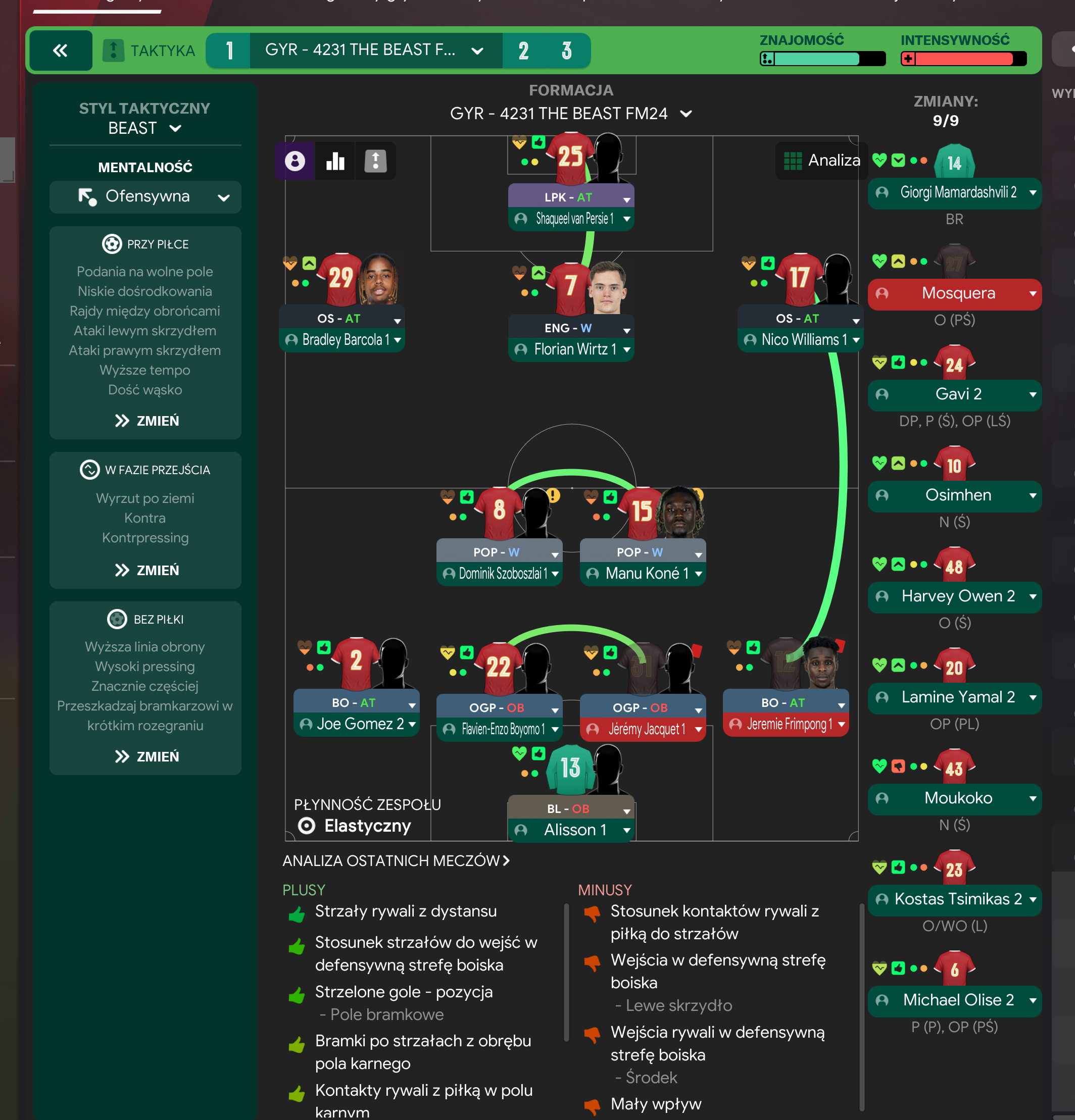
Gegenpress 4-2-3-1 Wide
Gegenpress
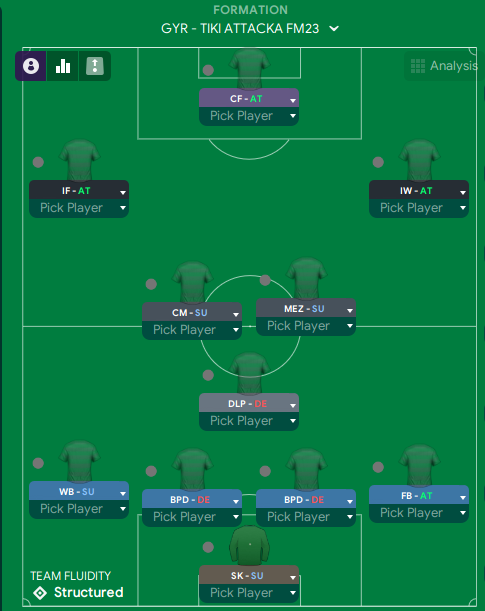
Tiki-Taka 4-2-3-1 Wide
Tiki Taka
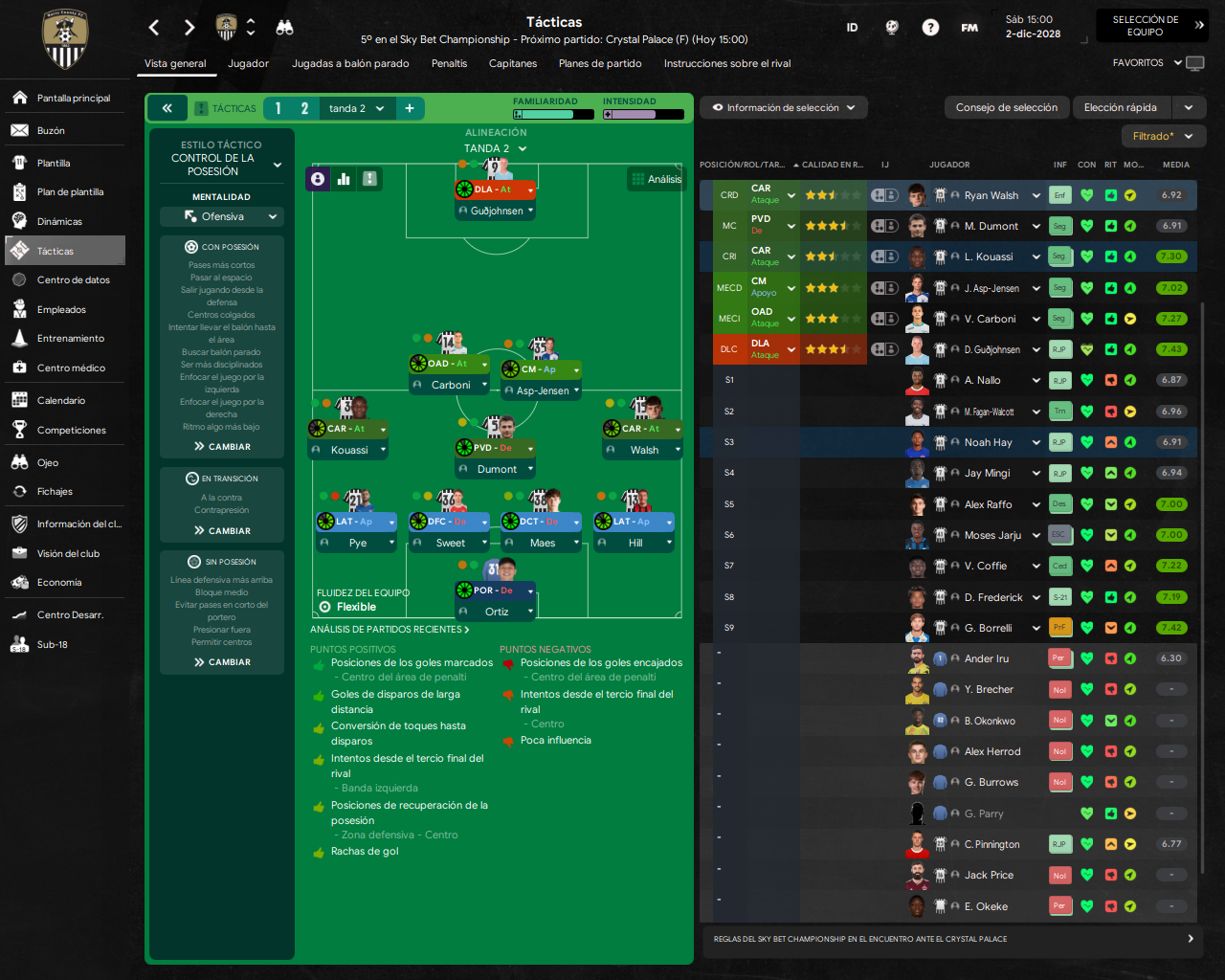
4-2-3-1 Wide Formation
Control de la posesión
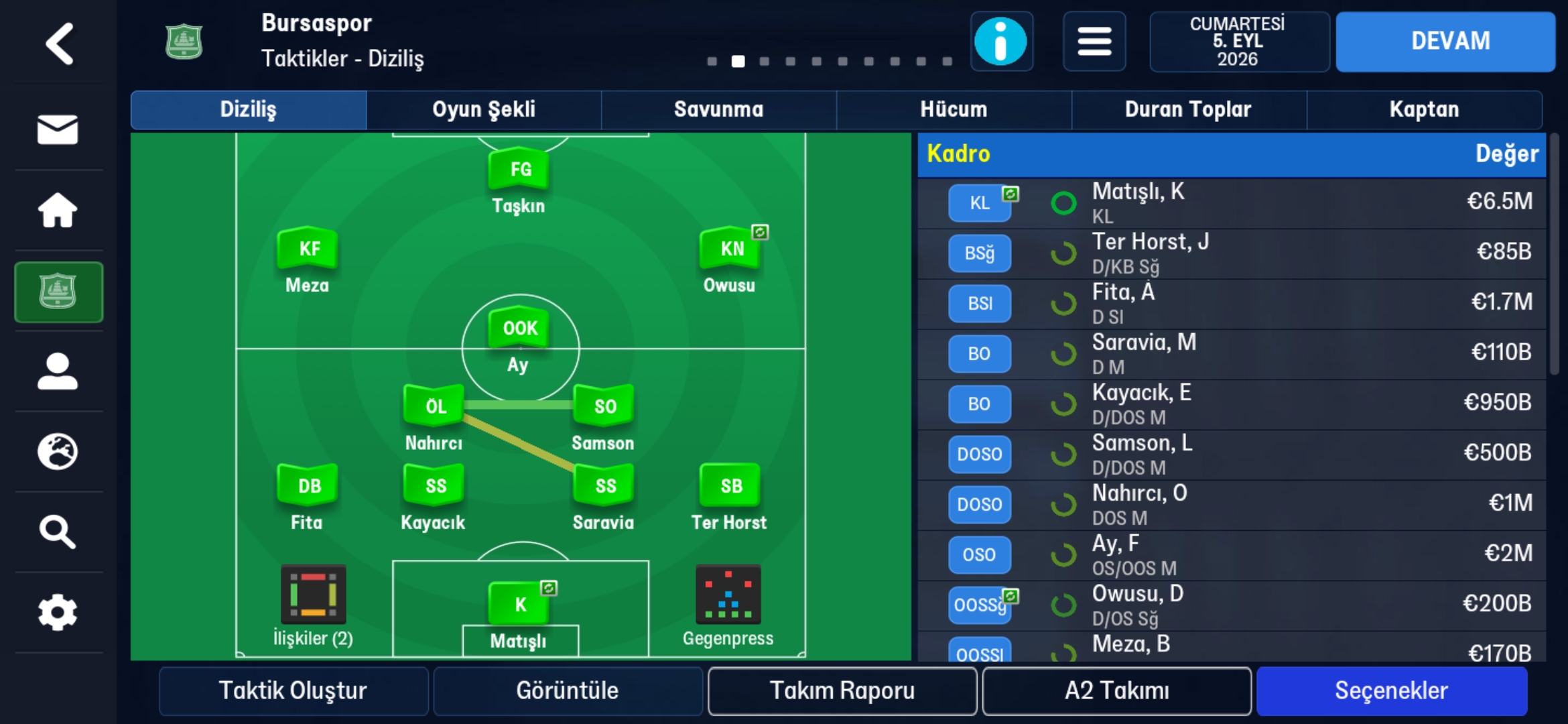
Gegenpress 4-2-3-1 Wide
Gegenpress
Gegenpress 4-2-3-1 Wide
Gegenpress
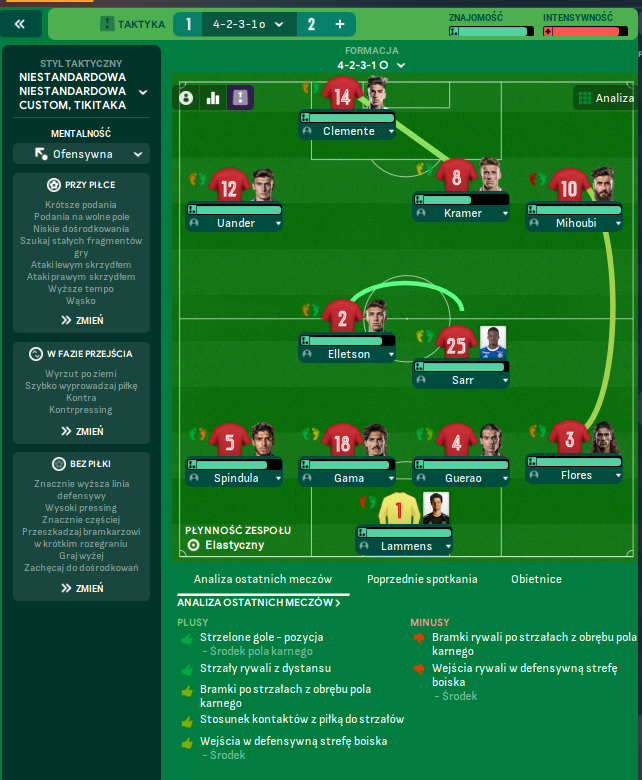
Tiki-Taka 4-2-3-1 Wide
Tiki-Taka
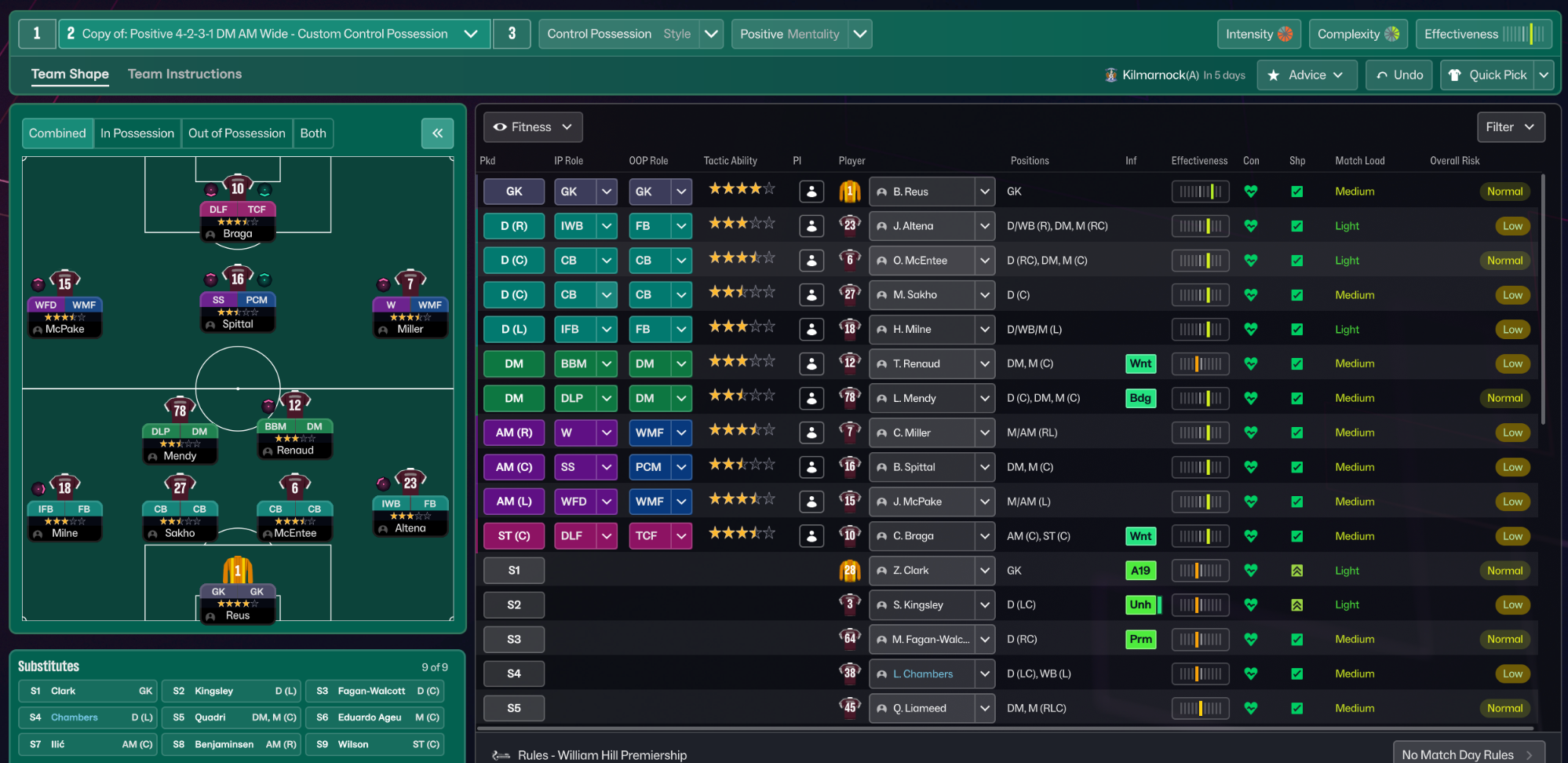
Control Possession 4-2-3-1 Wide
Control Possession
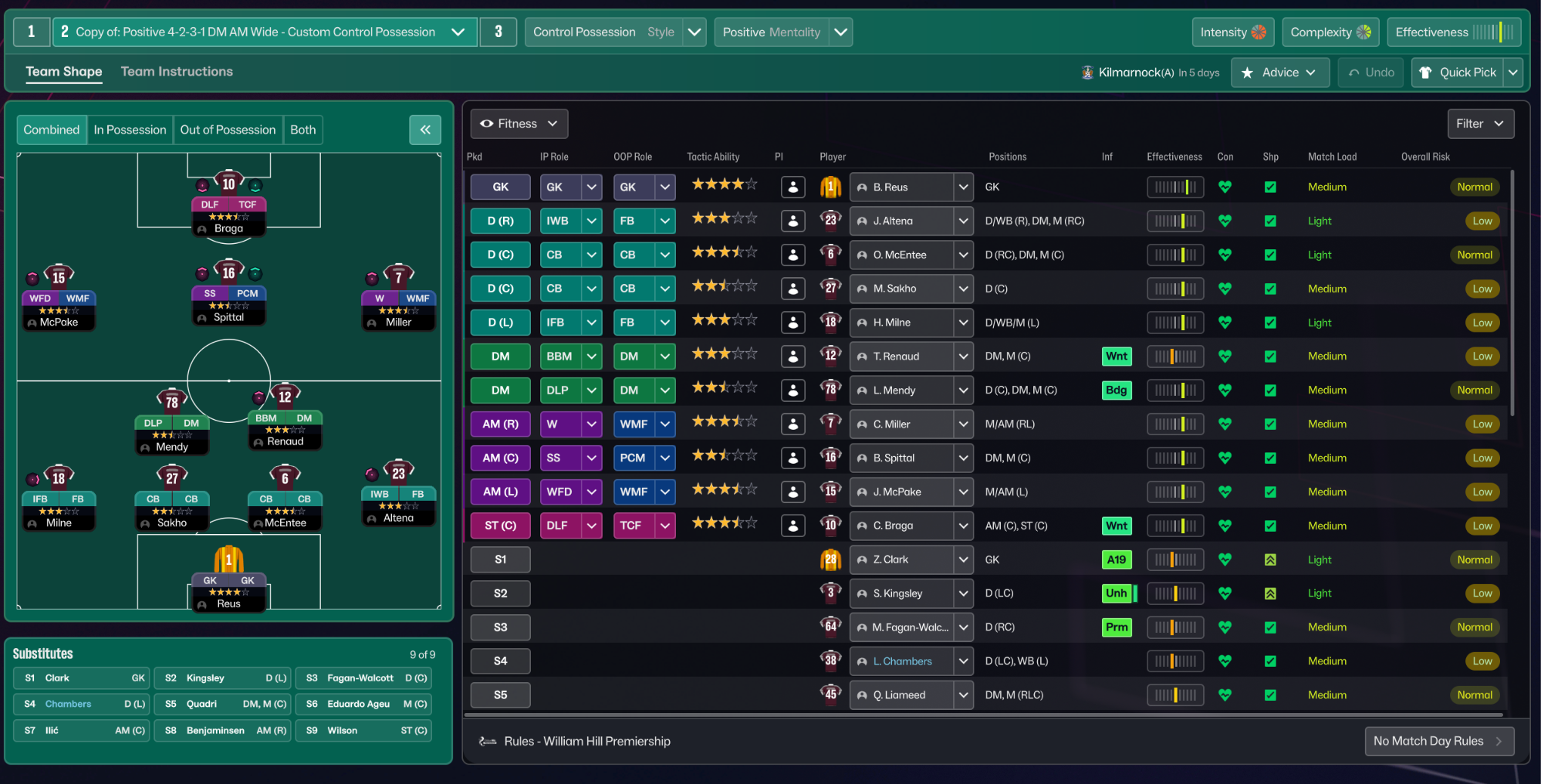
Control Possession 4-2-3-1 Wide
Control Possession
Guides for this tactic
The tactical theory behind the 4-2-3-1 Wide: roles, instructions, and the trade-offs that decide whether the system holds up.
Playing styles
Gegenpressing: A Full Guide
Klopp-style gegenpressing in FM, including squad profile, line-and-press pairing, sustainable workload, and the antipatterns to avoid.
Read guide
Player pairings
Midfield Pairs in 4-2-3-1 and 4-4-2
Double pivots and flat pairs in 4-2-3-1 and 4-4-2: when each pairing works, when it collapses, and the AMC unicorn that rescues both.
Read guide
Foundations
Width, Compactness, and Tempo
What Higher Tempo, Wider, and Narrower actually do in FM, plus the dial contradictions and antipatterns players run into most often.
Read guide