4-2-3-1 Wide (Positive) Tactic
4-2-3-1 Wide
Maximizing attacking width while ensuring defensive solidity. The inside wingers and wing-backs provide multiple width options, facilitating space…
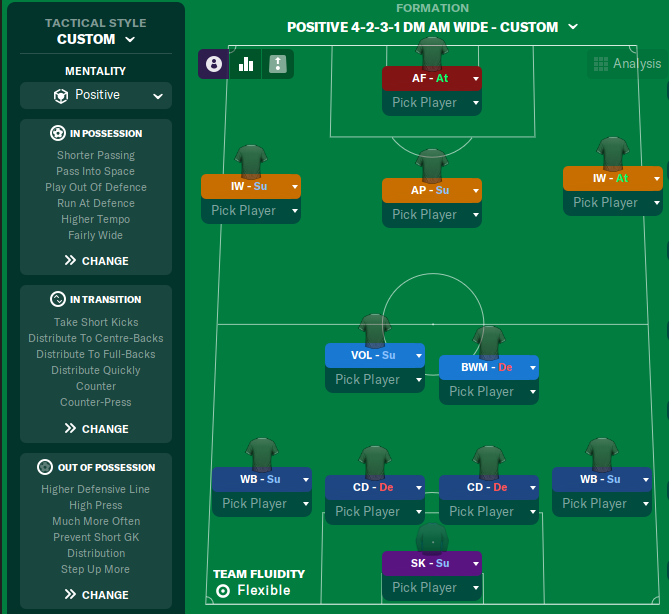
Loading tactical analysis...
Formation and style
Custom
Positive
4-2-3-1 Wide
Flexible
In possession
Shorter Passing
Pass Into Space
Play Out of Defence
Run At Defence
Higher Tempo
Fairly Wide
In transition
Take Short Kicks
Distribute To Centre-Backs
Distribute To Full-Backs
Distribute Quickly
Counter
Counter-Press
Out of possession
Higher Defensive Line
High Press
Much More Often
Prevent Short GK Distribution
Player roles
GK
Sweeper Keeper
Support
DC
Centre-Back
Defend
DC
Centre-Back
Defend
FB
Wing-Back
Support
FB
Wing-Back
Support
DM
Ball-Winning Midfielder
Defend
DM
Segundo Volante
Support
AM
Advanced Playmaker
Support
AM
Inside Winger
Support
AM
Inside Winger
Attack
ST
Advanced Forward
Attack
Phase description
Focus on building from the back with positional play, utilizing wing play from the WBs and inside forwards, supported by the AP.
Quickly transition into a compact defensive shape to limit space and pressing the opponent.
Maximizing attacking width while ensuring defensive solidity.
Team shape defence
4-2
A balanced shape with two defensive-minded midfielders providing protection to the back line and shielding against counter-attacks.
BWM-De at [3,2] covers defensive transitions while SV-Su at [3,3] supports the transition to attack.
Team shape attack
4-3
Utilizing width from the WBs and inside forwards, supported by the AP to create passing triangles and overloads.
IW-A at [5,1], IW-Su at [5,2], and AP-Su at [5,3] create opportunities in wide areas.
Key strengths
Dynamic Wing Play
The inside wingers and wing-backs provide multiple width options, facilitating space creation.
IW-Su at [6,1] and WB-Su at [5,1] work together to stretch the opponent's defense.
Solid Midfield Presence
Combination of BWM and SV supports both defensive solidity and attacking options.
BWM-De at [3,2] disrupts the opposition's play, while SV-Su can support attacks from deep.
Conflicting tactics
High Press vs Defensive Solidity
While high pressing can win back possession, it may leave the defense exposed against quick counter-attacks.
High Press instruction conflicts with potentially higher defensive line due to risk of spaces left behind.
Inverted Wingers and WB Roles
Inverted wingers may require space that could be encroached upon by support-seeking WBs, causing positional overlap.
IW-Su at [5,1] and WB-Su at [6,1] may conflict in wide areas.
Risk exposures
Risk Exposures
Items
Counter-attacks
High defensive line leaves spaces behind for fast counter-attacking teams to exploit.
The combination of High Press and High Defensive Line can exacerbate vulnerabilities.
Creativity Drop
Over-reliance on wing play can lead to predictable attacking patterns.
Dependence on IW-Su and WB-Su connection may stagnate if not varied.
Role synergies
Role Synergies
Items
Inside Winger and Wing-Back
Utilizing the overlapping run of the WB supports the inside wingers’ attacking runs.
IW-Su at [6,1] draws defenders while WB-Su at [5,1] can exploit the resulting space.
Ball-Winning Midfielder and Segundo Volante
The BWM provides cover while the SV can transition from defense to attack.
BWM-De at [3,2] assists in breaking up play, allowing SV-Su at [3,3] to join offensive moves.
Suggested questions
How can adjustments be made to better utilize the advanced forward’s role?
What changes can improve the effectiveness of the high press strategy?
Are there specific match scenarios where changing team instructions would be beneficial?
Related Tactics
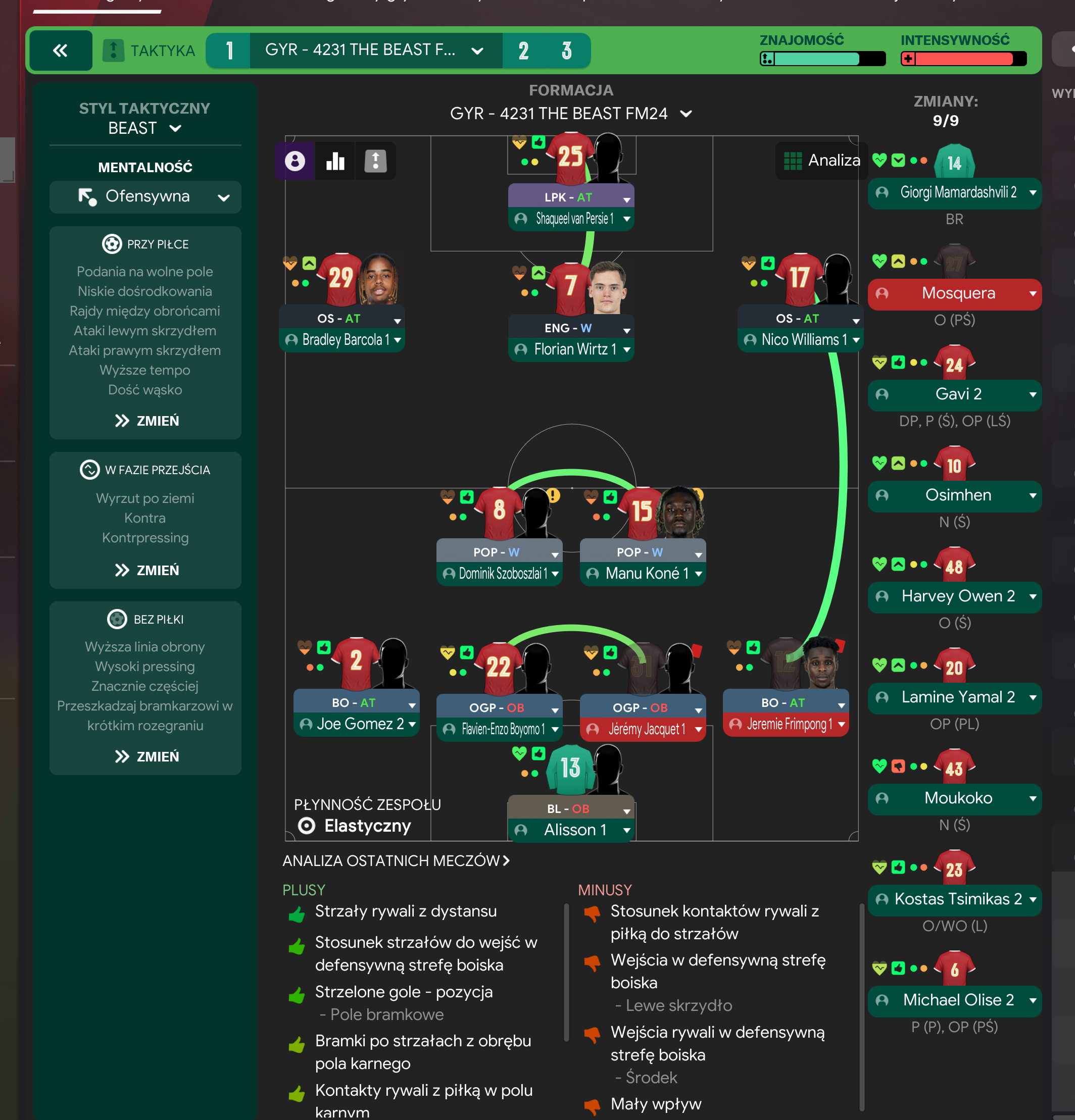
Gegenpress 4-2-3-1 Wide
Gegenpress
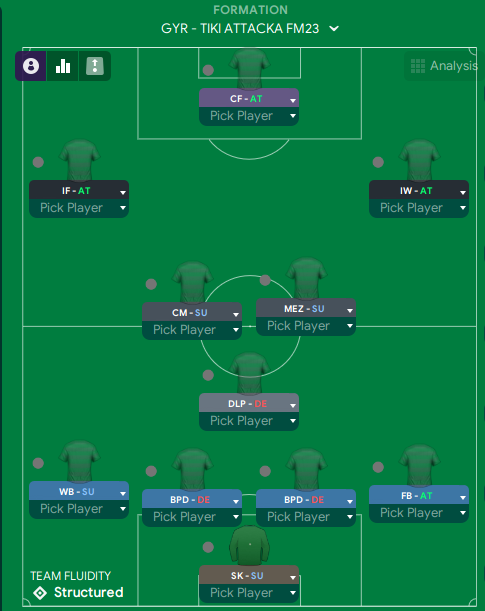
Tiki-Taka 4-2-3-1 Wide
Tiki Taka
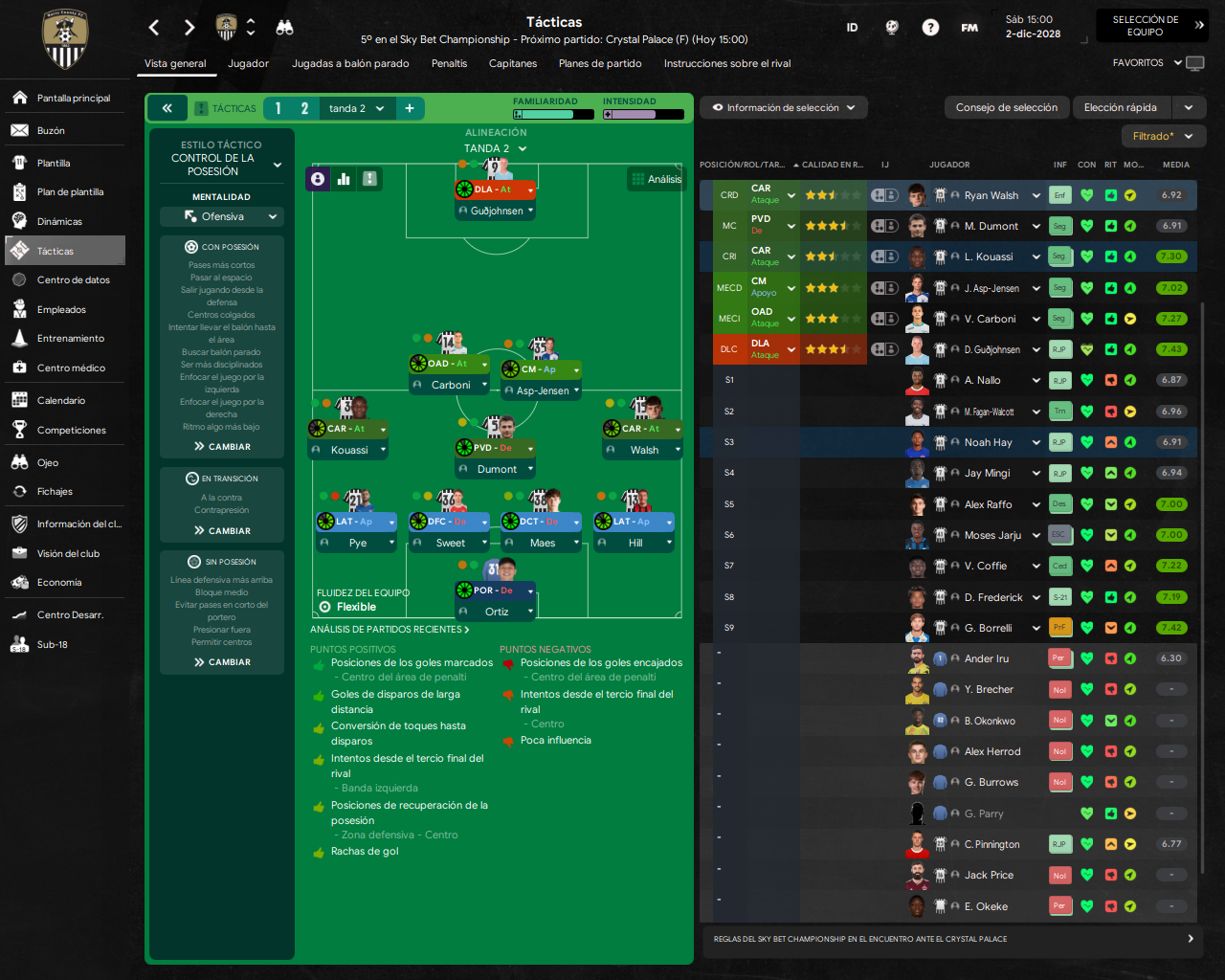
4-2-3-1 Wide Formation
Control de la posesión
Gegenpress 4-2-3-1 Wide
Gegenpress
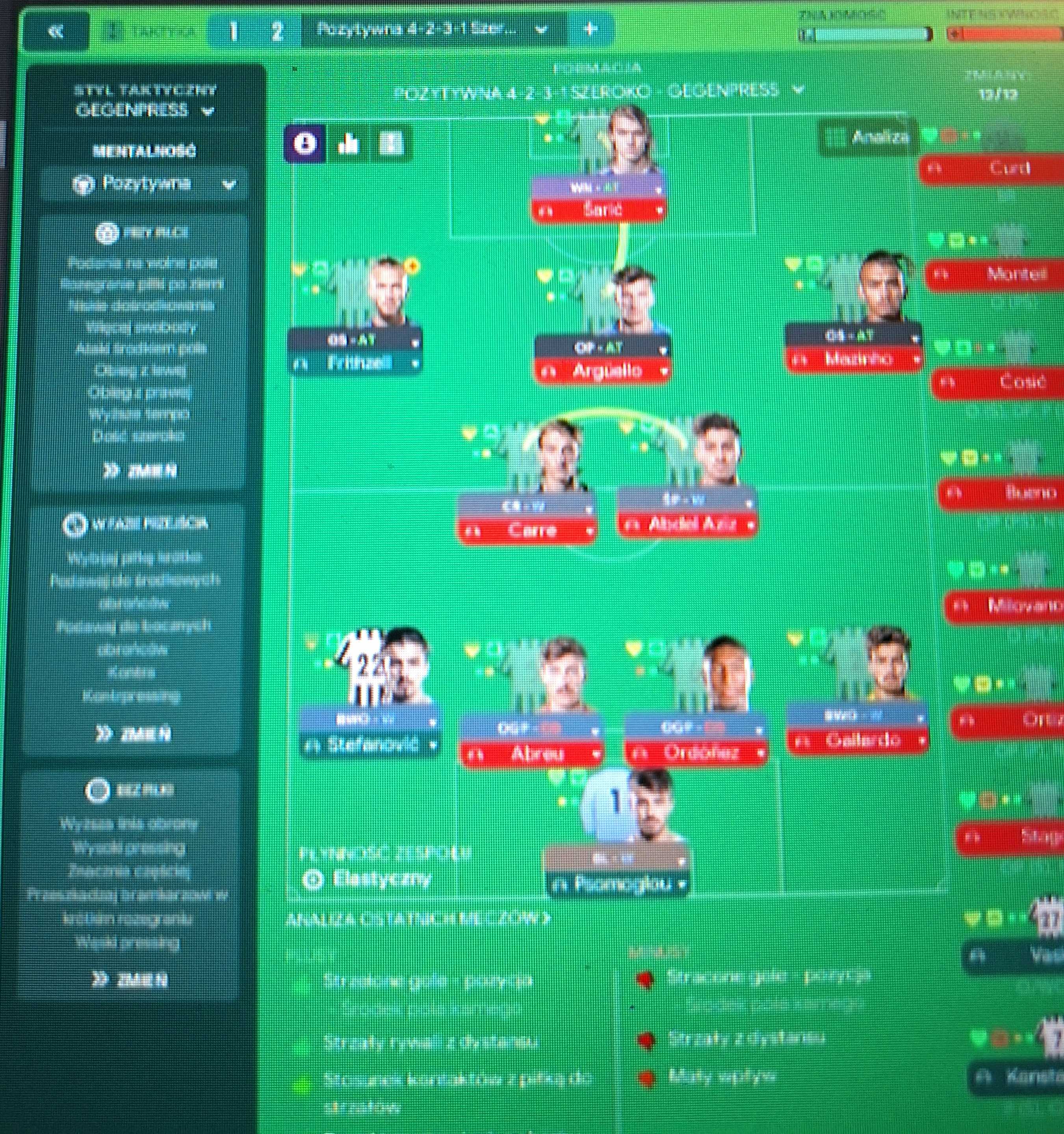
Gegenpress 4-2-3-1 Wide
Gegenpress
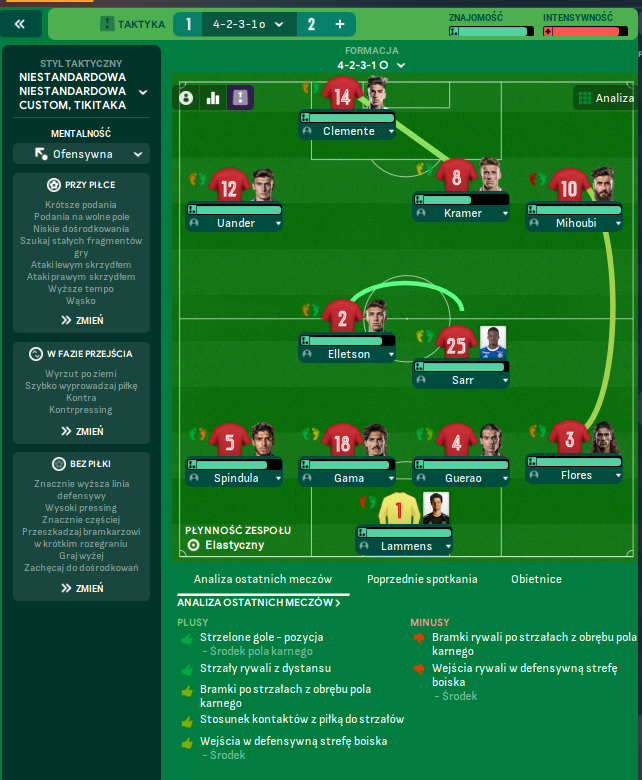
Tiki-Taka 4-2-3-1 Wide
Tiki-Taka
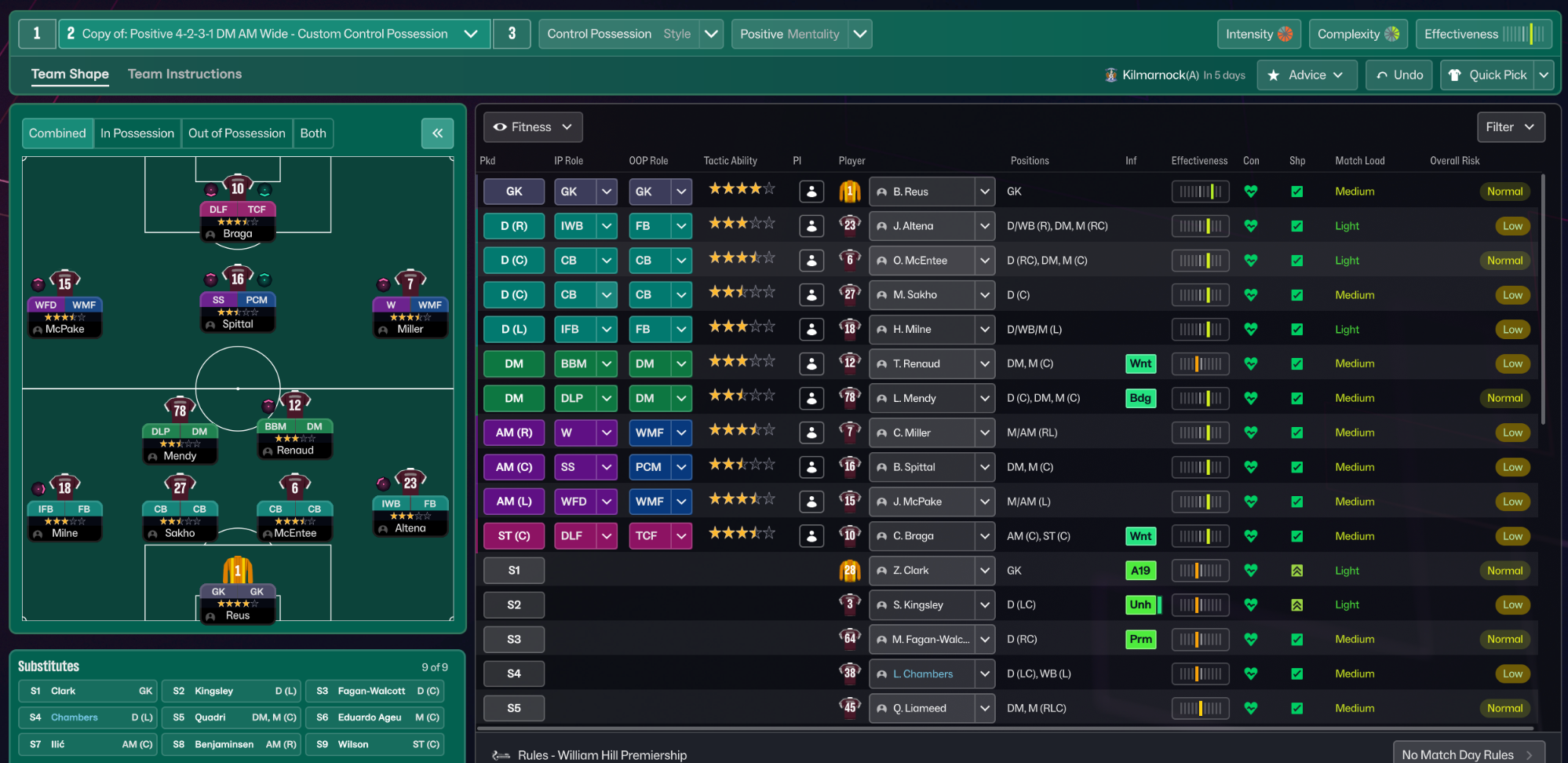
Control Possession 4-2-3-1 Wide
Control Possession
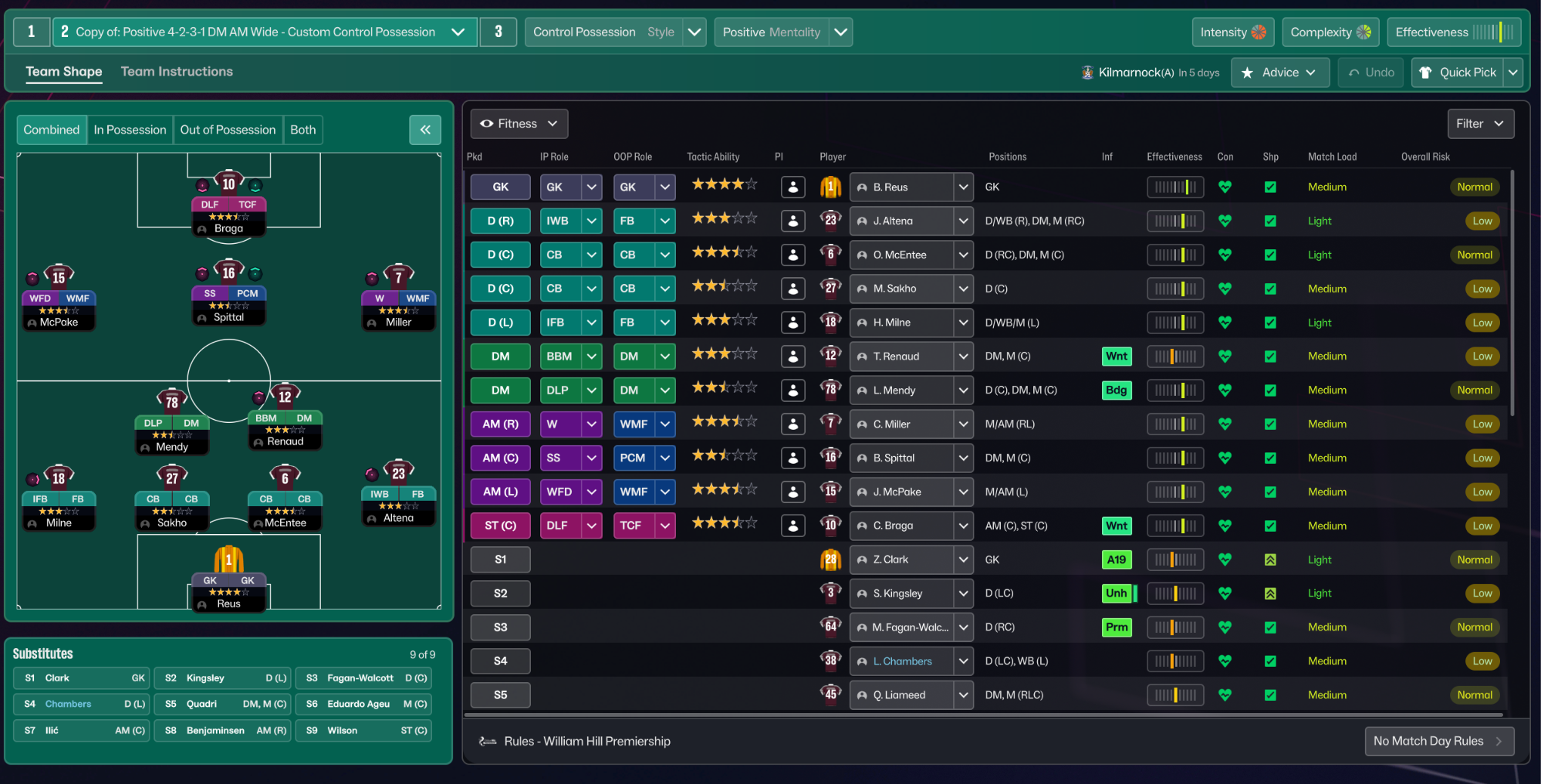
Control Possession 4-2-3-1 Wide
Control Possession
Guides for this tactic
The tactical theory behind the 4-2-3-1 Wide: roles, instructions, and the trade-offs that decide whether the system holds up.
Playing styles
Gegenpressing: A Full Guide
Klopp-style gegenpressing in FM, including squad profile, line-and-press pairing, sustainable workload, and the antipatterns to avoid.
Read guide
Player pairings
Midfield Pairs in 4-2-3-1 and 4-4-2
Double pivots and flat pairs in 4-2-3-1 and 4-4-2: when each pairing works, when it collapses, and the AMC unicorn that rescues both.
Read guide
Match preparation
Set Piece Mastery
Routines, takers, and target picks. How to turn corners and free-kicks into a reliable third of your goal output.
Read guide