Uploaded Tactic
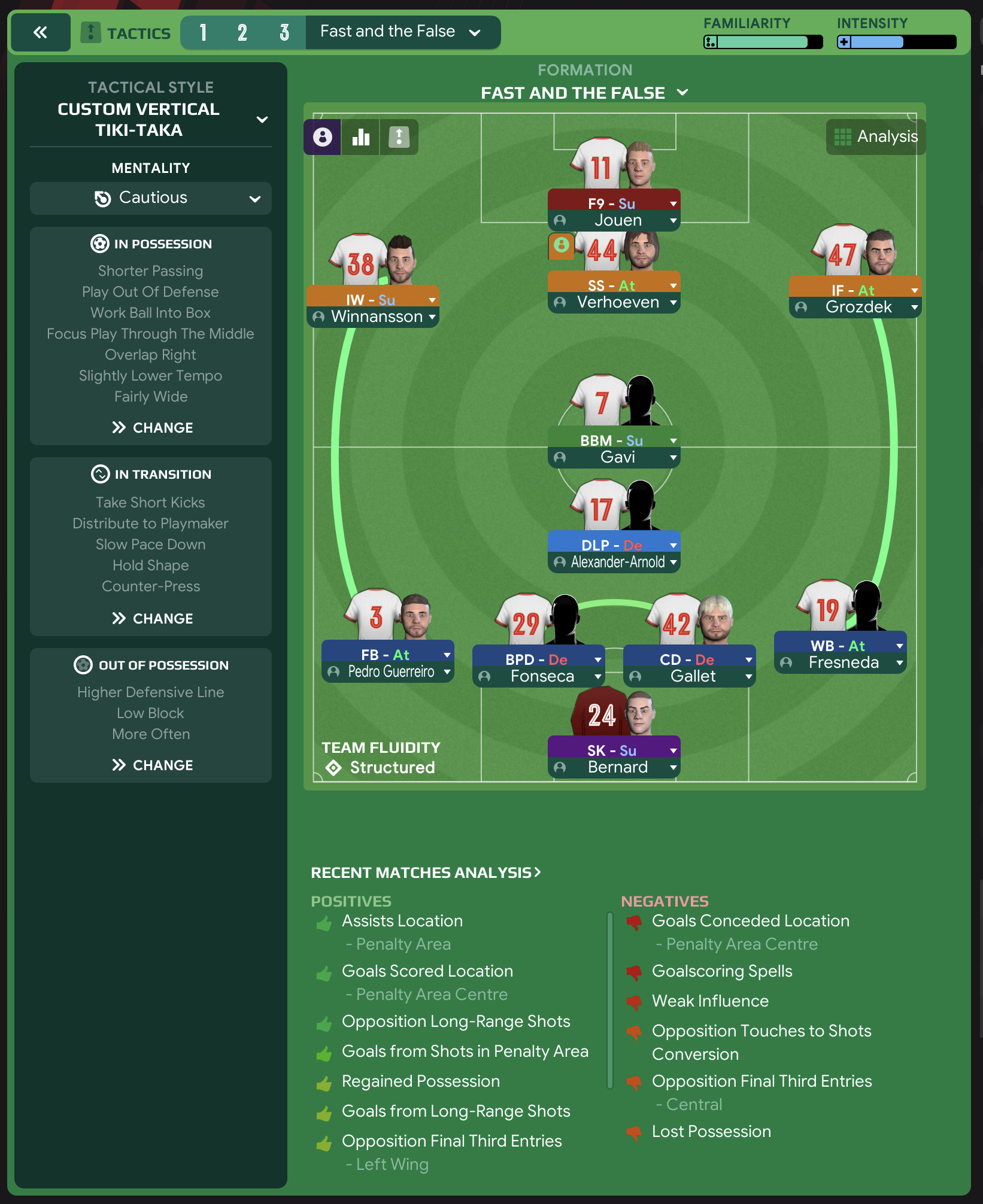
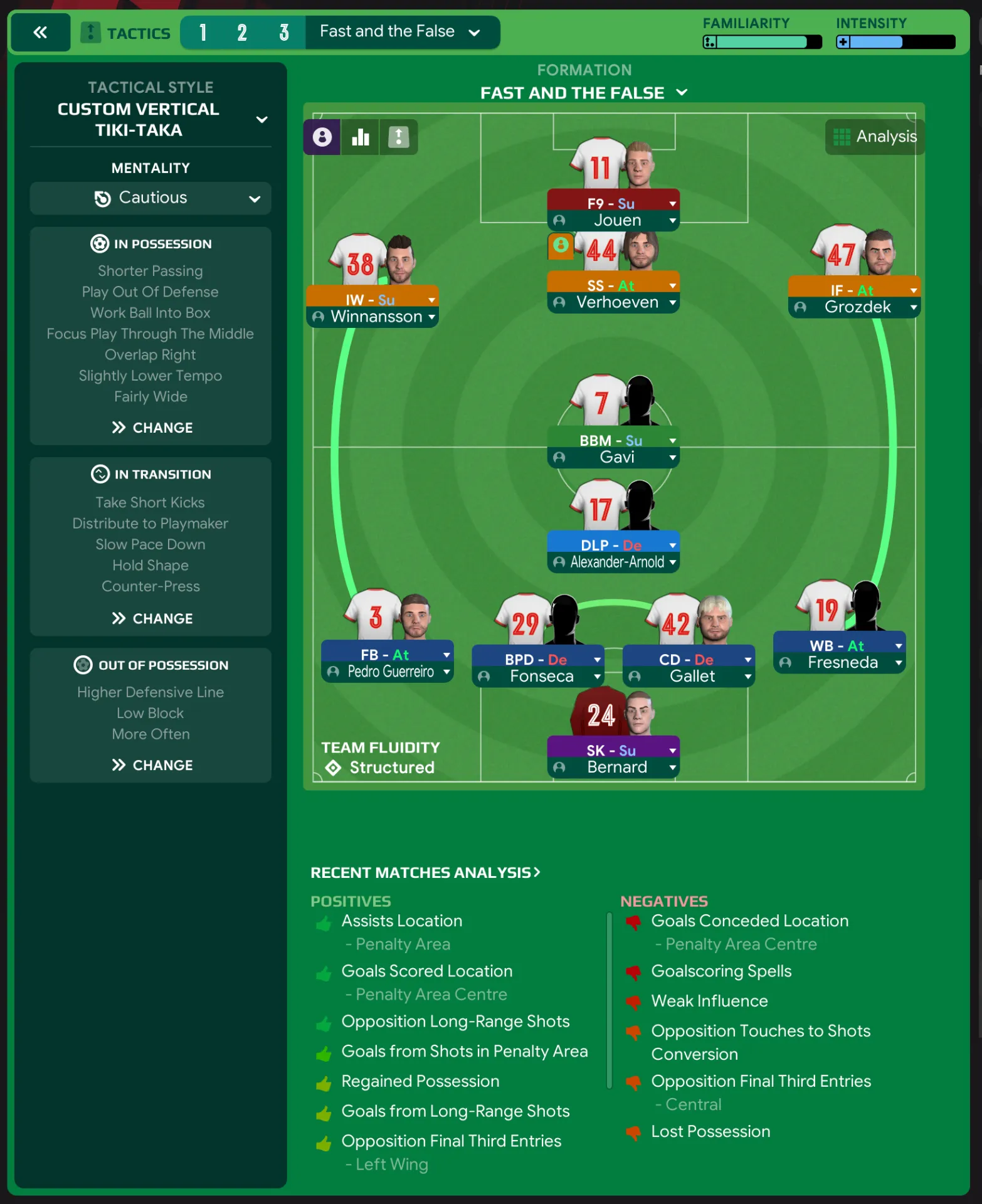
Formation & Style
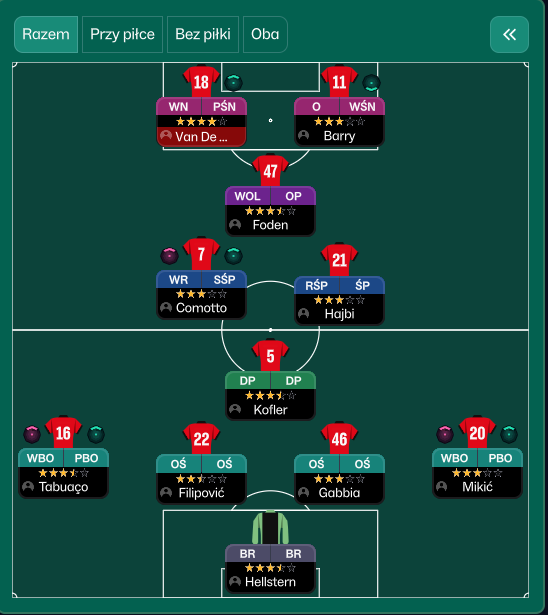
Tactical Style:Custom Vertical Tiki-Taka
Mentality:Cautious
Formation:4-2-3-1 Wide
Team Fluidity:Structured
In Possession
Shorter Passing
Play Out Of Defense
Work Ball Into Box
Focus Play Through The Middle
Overlap Right
Slightly Lower Tempo
Fairly Wide
In Transition
Take Short Kicks
Distribute to Playmaker
Slow Pace Down
Hold Shape
Counter-Press
Out of Possession
Higher Defensive Line
Low Block
More Often
Team Shape Without Ball
Shape:4-2-3-1
Description:A compact formation with two screening midfielders and a back four, allowing for quick transitions to offense.
Evidence:CB-Defend at [2,3] and [2,4]; DM-Defend at [3,3] creating a solid center.
Team Shape With Ball
Shape:4-2-3-1
Description:Fluid movement in attack, with emphasis on interchanging positions between the attacking players to create mismatches.
Evidence:IW-Support at [6,1] and IF-Attack at [6,2] providing width and enabling cut-ins.
Phase Description
Attacking Play
Utilizes possession-based style, prioritizing short passes and working the ball into the box, with a focus through the middle and right flank.
Defensive Transition
Counter-pressing and slowing the game down to maintain shape while preventing counter-attacks.
Main Focus
Attacking through central areas while supporting wide play through the overlapping full-backs.
Key Strengths
Possession Recovery
Effective recoveries allowing team to re-establish control quickly.
Fluid Movement in Attack
Interchangeable roles among forwards create confusion in the opposition defense.
Overlapping Full-Backs
Full-backs provide width, allowing for diverse attacking options.
Conflicting Directions
Static Wing Play
Reliance on wingers could lead to predictability if not balanced with midfield options.
Cautious Mentality
May hinder aggressive pressing and lead to lower intensity in matches.
Lack of Depth in Central Midfield
Could struggle against compact defenses if forwards become isolated.
Tactical Suggestions
Increase Pressing Intensity
To disrupt opponent's buildup play more effectively.
Adjust Midfield Dynamics
Consider deploying two DMs for better ball retention under pressure.
Broaden Attacking Play
Encourage wingers to cut inside to create more central overloads.
Ask Questions About Your Lineup
Related Tactics
More Custom Vertical Tiki-Taka tactics
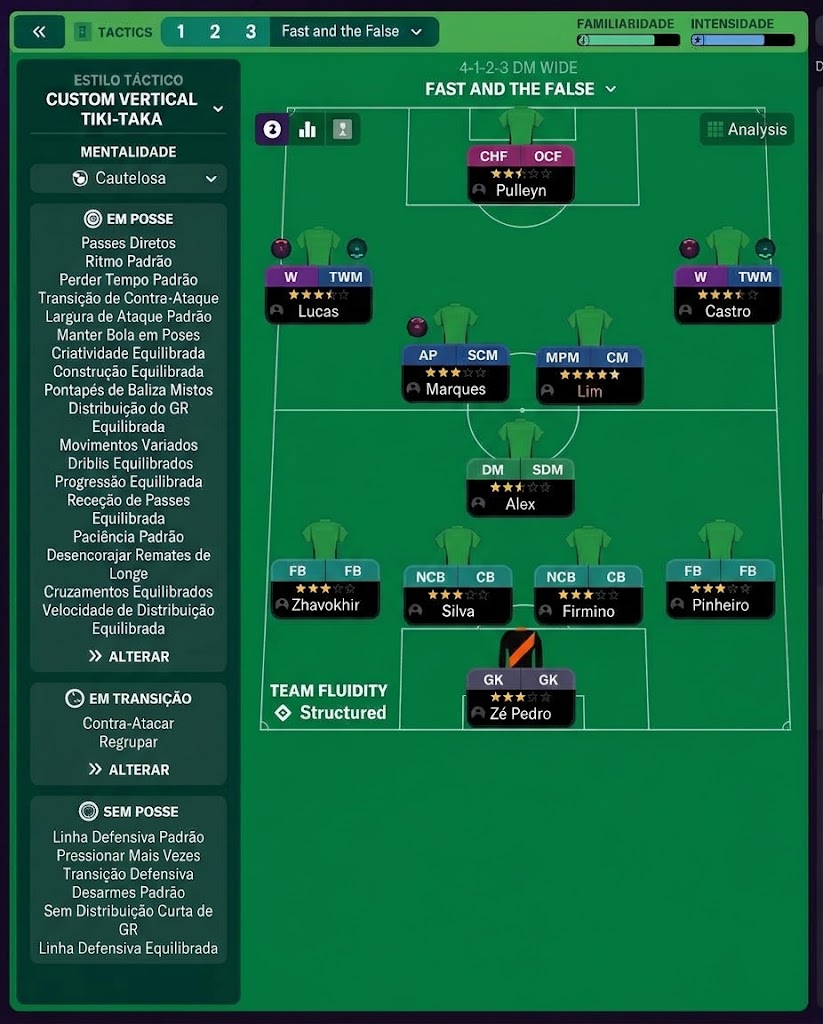
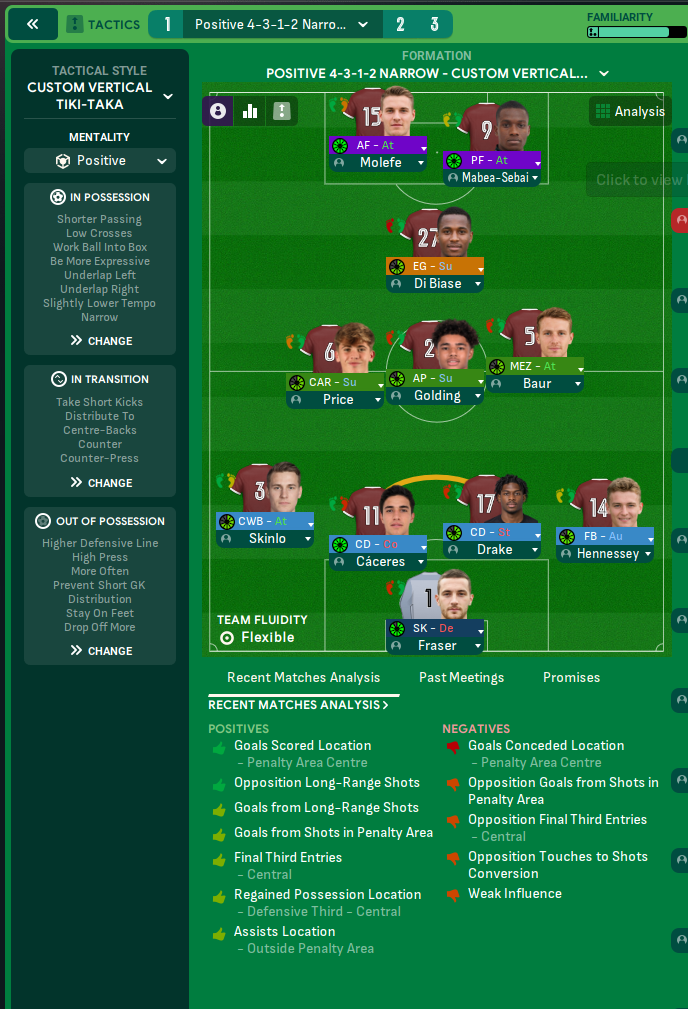
Guides for this formation
The tactical theory behind the 4-2-3-1 Wide: roles, instructions, and the trade-offs that decide whether the system holds up.
Player pairings
Midfield Pairs in 4-2-3-1 and 4-4-2
Double pivots and flat pairs in 4-2-3-1 and 4-4-2: when each pairing works, when it collapses, and the AMC unicorn that rescues both.
Read guide
Playing styles
Gegenpressing: A Full Guide
Klopp-style gegenpressing in FM, including squad profile, line-and-press pairing, sustainable workload, and the antipatterns to avoid.
Read guide